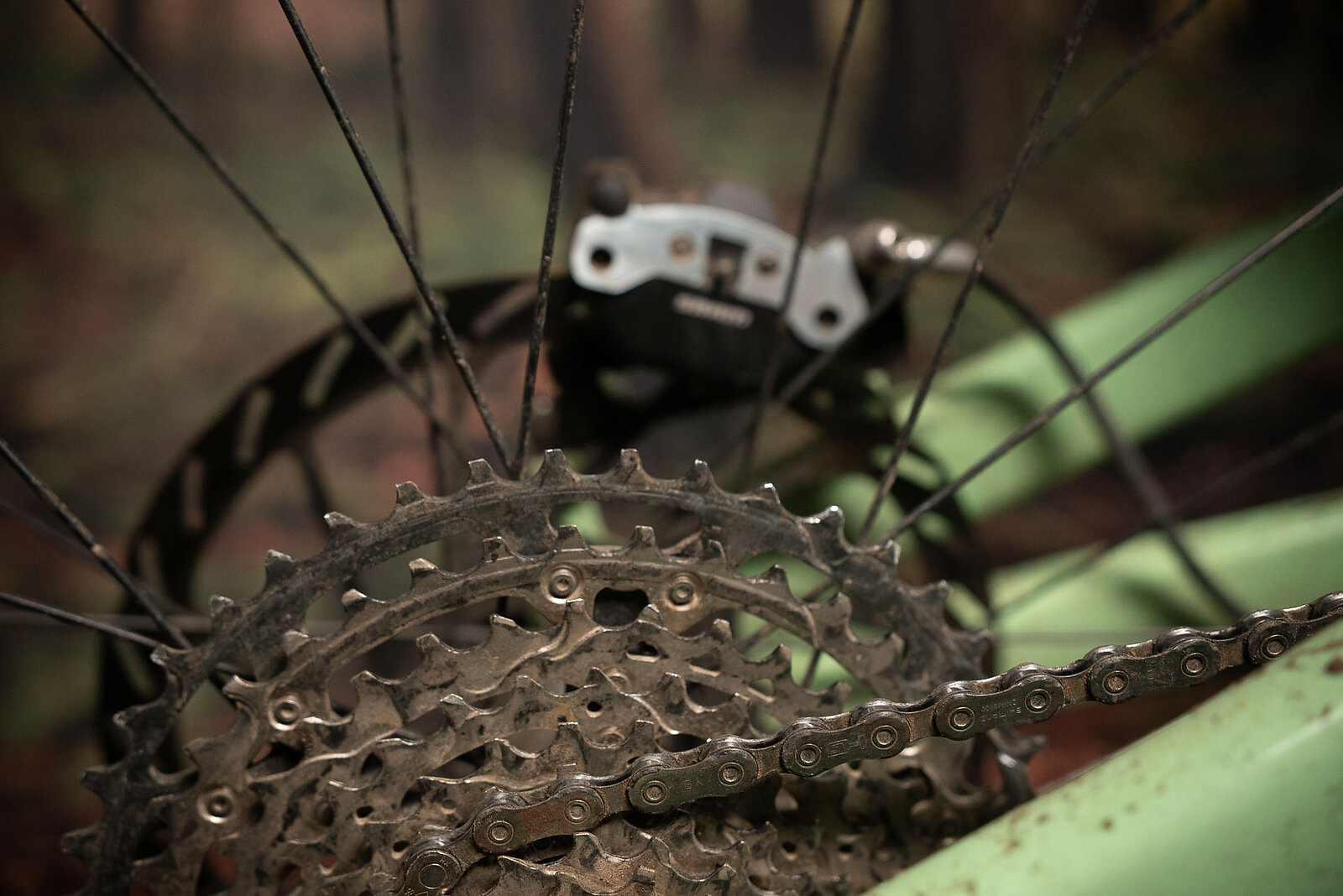
Shimano XT Mechanical Mid cage, great shifting.
Shimano has launched a bunch of drivetrains in the past 14 months. Last summer we got the full XTR-XT-Deore Di2 lineup, and this summer the brand followed it up with mechanical versions of Deore and XT. Apparently XTR will stay battery-only for the foreseeable future, but, unlike Deore, XT mechanical is available both in long (10-51T) and medium (9-45T) options.
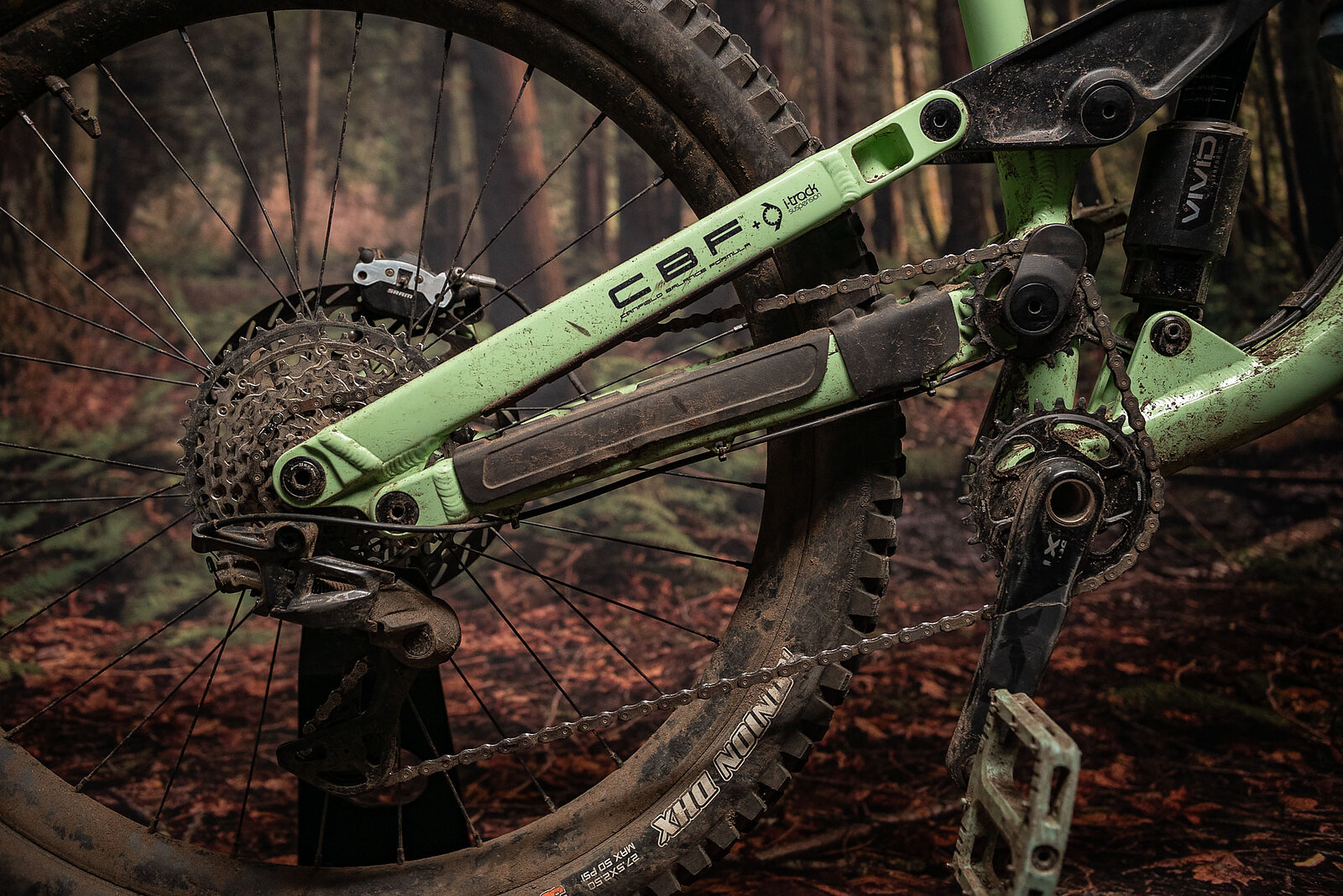
So, in a mirror of my experience last summer, I’ve been running a battery-free XT mechanical 9-45T drivetrain on the Taken Encounter for the past few months, and now it’s time to digest my feelings. But first, the short, glowing version: If I was buying a Shimano drivetrain right now, this is the one I would spend my money on.
Shimano XT Mechanical Overview
- Speeds: 12
- Cassette range: 9-45T
- Measured Weight:
- Derailleur: 360 g
- Cassette: 426 g
- Shifter and cable: 131 g
- MSRP:
- Derailleur: $170
- Cassette: $195
- Shifter: $85
Shimano XT Mechanical Options
Shimano is making a whole bunch of drivetrain options right now, so it’s worth doing a quick refresher on which parts are available in which configurations. XTR is available in two configurations, 9-45, or 10-51-tooth, but it’s only available with a battery-driven derailleur. XT is available in those same two cage lengths, but with Di2, or mechanical shifting. And Deore is only available in the 10-51-tooth configuration, but with, or without Di2.
What that effectively does is help focus each drivetrain’s target market. Deore can’t run the slightly more exotic, slightly lighter, slightly less-ranged cassette, and XTR can’t run without batteries. In the middle you’ve got XT which is available in pretty much whatever flavor you want.
Compared to XT Di2, you save a lot of money ($400 on the derailleur, $105 on the shifter), and negligible weight (115 grams at the derailleur, but you gain back around 40 grams at the shifter). Of course, you can mix and match bits and run that combo with XT or XTR cassettes, or even Deore cassettes if you opted for 10-51-tooth.
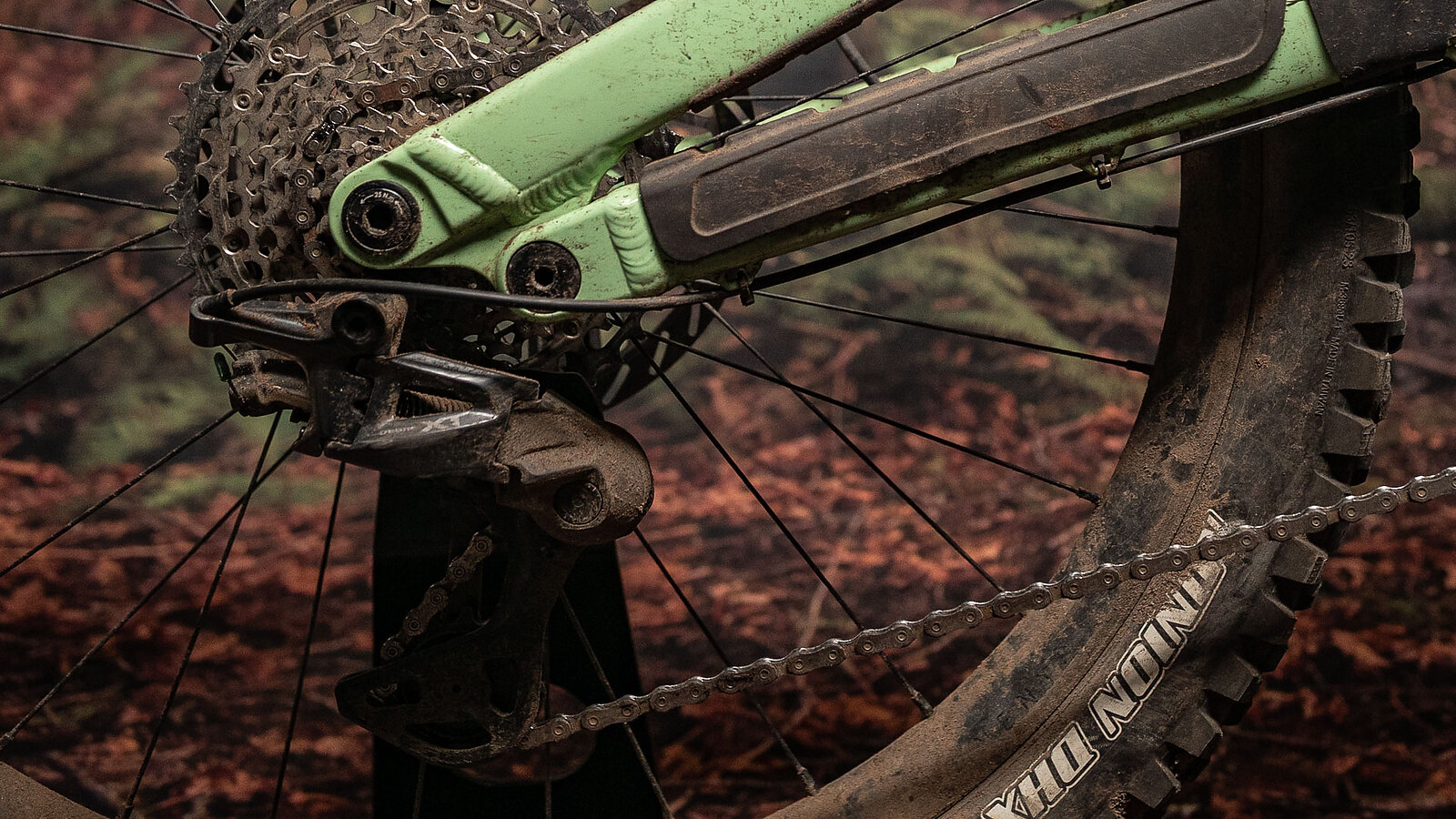
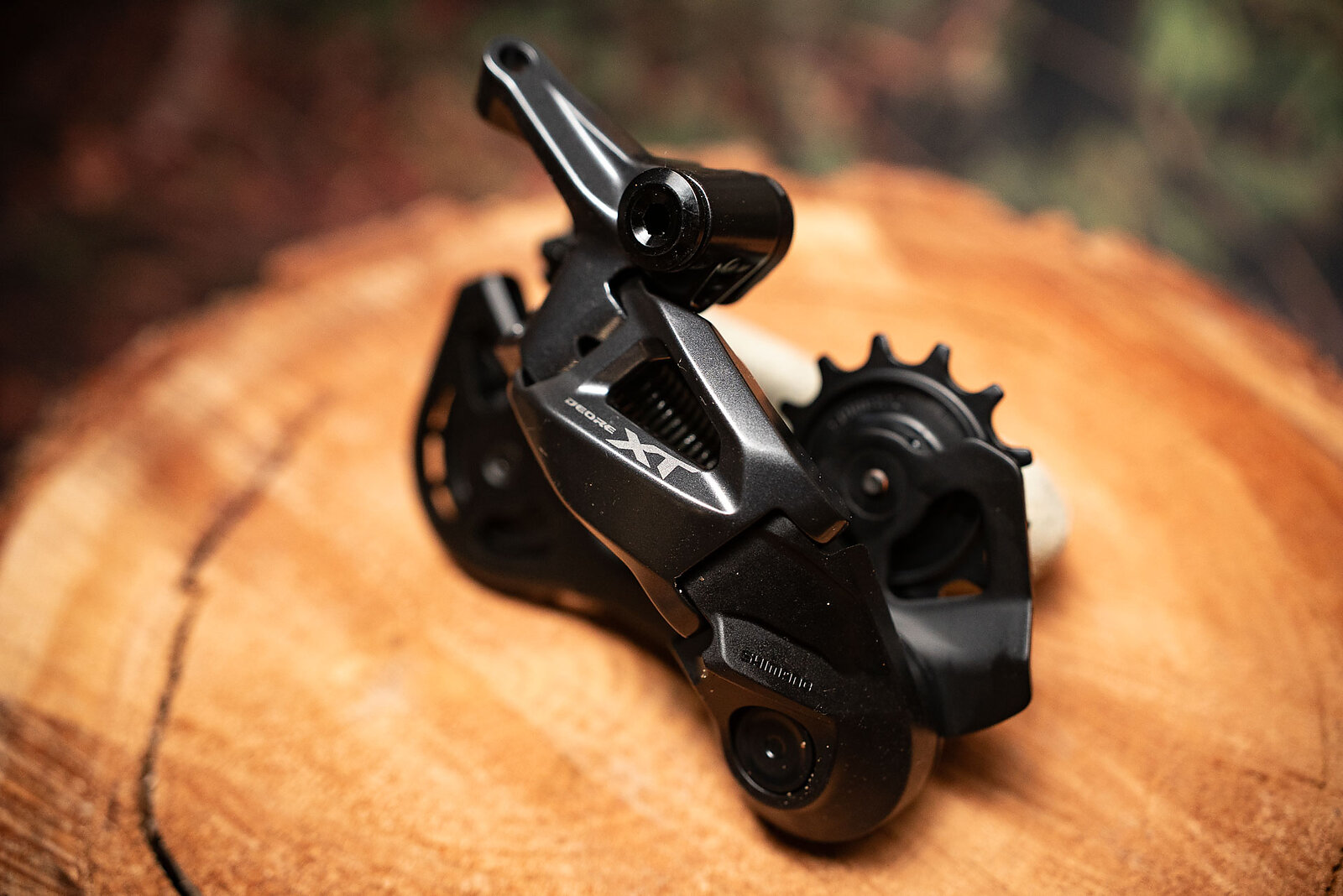
As I waxed on about in my XT Di2 review last year, the flavor I desire with current-gen Shimano is the mid-caged variant. It’s quieter (both in sound and chain feel), lighter, and, in my anecdotal experience, sharper-shifting. Yeah, if you downsize your chainring to match the smaller granny gear you’ll need to make sure your chain still clears your chainstay, but I have yet to run into a bike where that’s an issue.
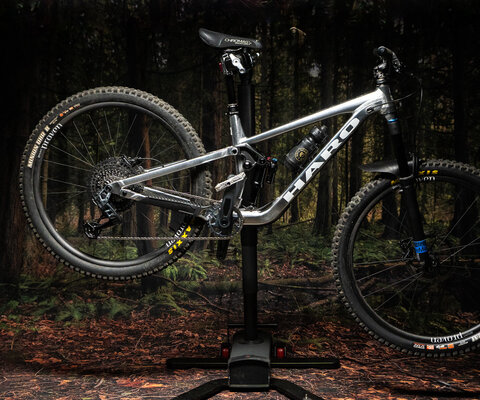
So, when I built up the Taken Encounter earlier this summer, it started out with XT Di2 9-45T, and then immediately got upgraded (side-graded?) to mechanical XT because I prefer my big burly bikes to not run on batteries.
Shimano XT Mechanical Installation and Setup
Shimano has released a bunch of drivetrains in the past two years, so my Shimano drivetrain setup is pretty dialed right now. That might help explain why this installation was so pain-free. But, if you like limit screws and adjustable B-tension, Shimano is still the brand for you. I had no issues getting everything installed and running smoothly.
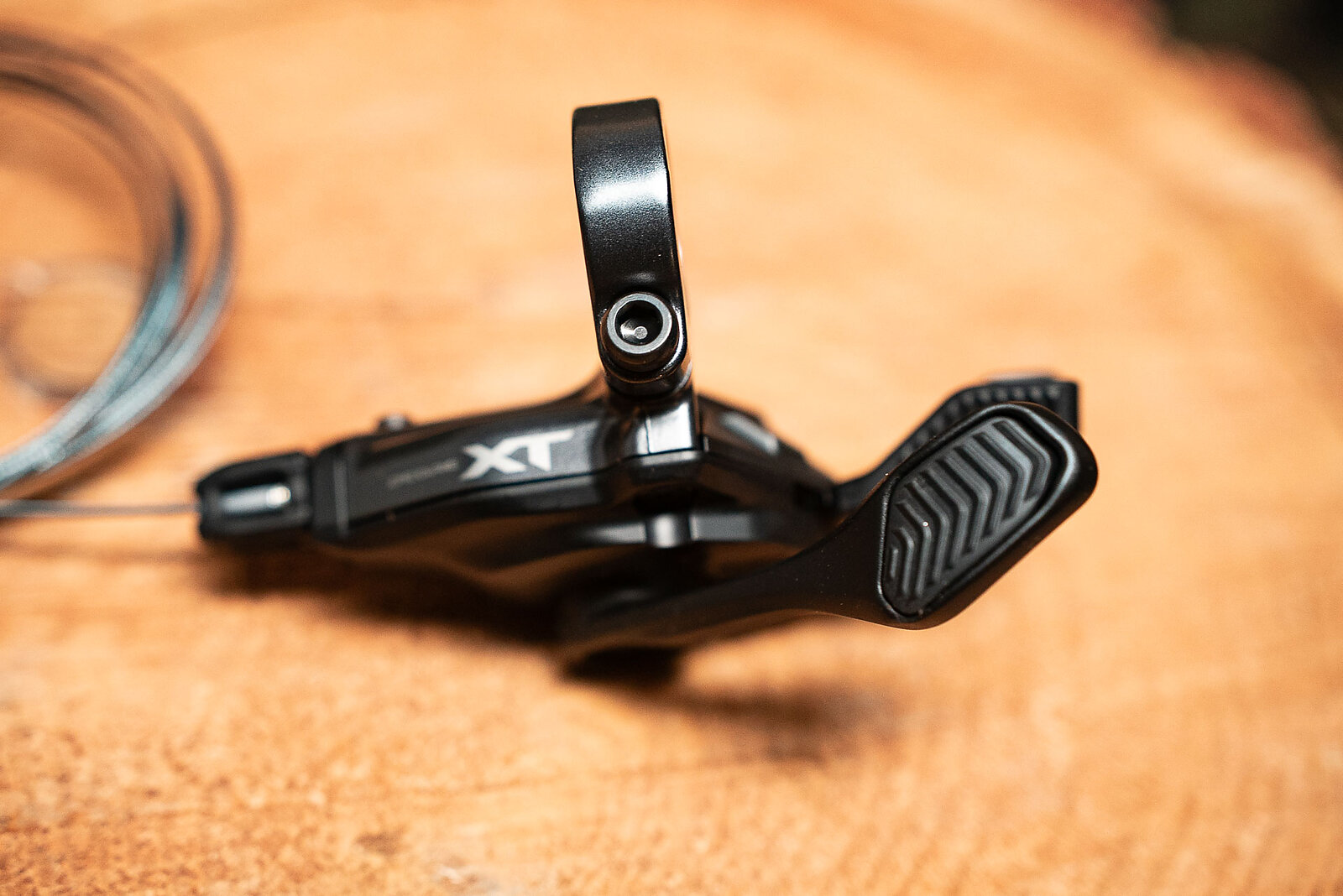
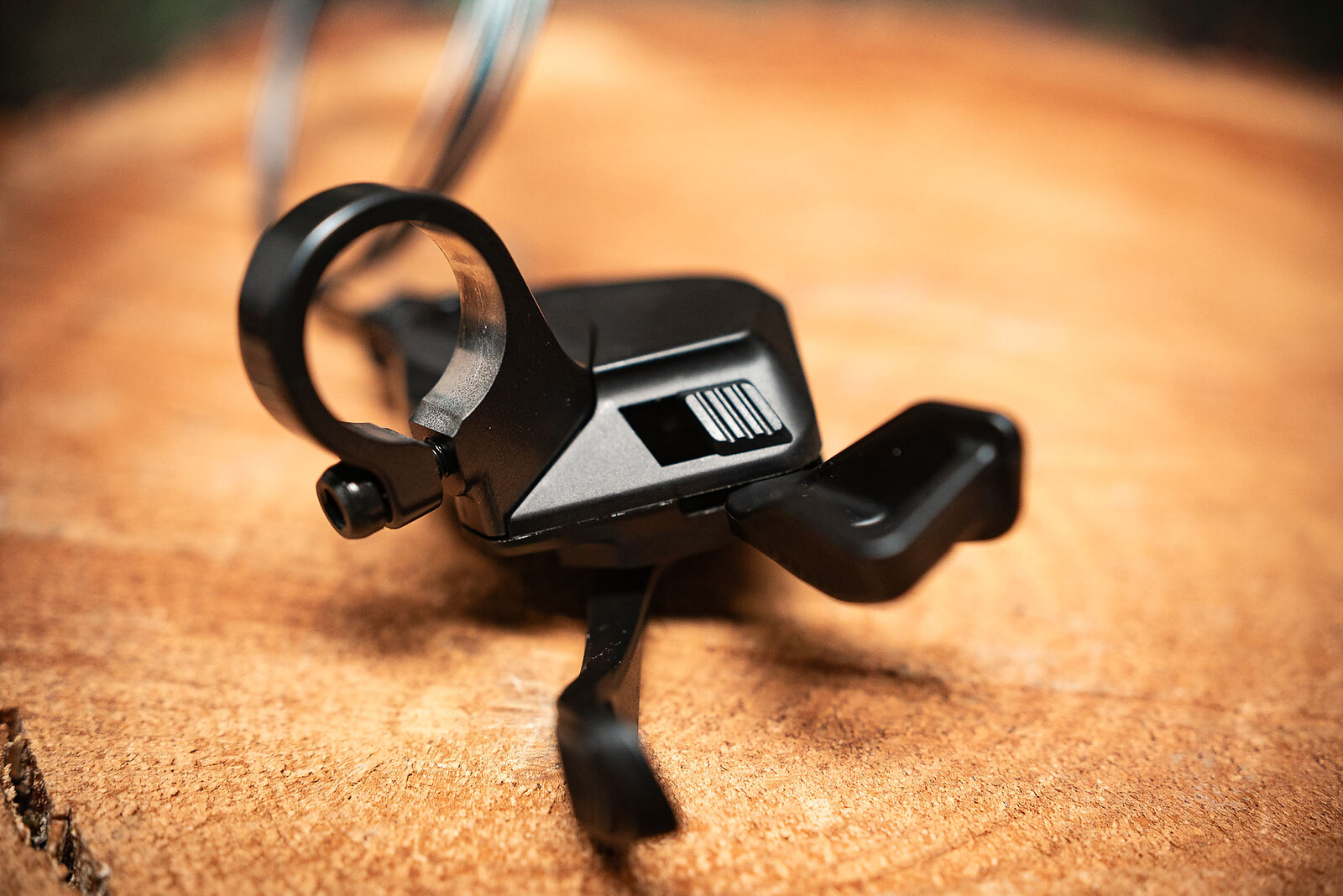
The one hiccup I ran into is that the discrete clamp version of the XT shifter doesn’t have any sort of hinge. So, if you, like me, are the sort of dork who runs wire-on grips, installing and removing it is a pain in the butt. Of course you can just opt for the I-Spec shifter, and then throw an aftermarket hinged clamp on to avoid this problem entirely but, still, I was a little annoyed.
Shimano XT Mechanical Performance
It’s always worth remembering that Shimano is really good at making mechanical drivetrains shift nicely. That comes in two parts: the shifter action is very light but, in my opinion, crisper than previous-gen XT, and then the way the derailleur moves the chain across the gears is also very tight and satisfying. Compared to, say, Eagle 90, it’s a lighter, cleaner, “better” feeling sensation. The gears don’t clunk into place quite as decisively as on a SRAM drivetrain, but there’s also no issues with shifting under load or ghost shifting. It’s a delightful sensation.
Clutch-wise, I really think this is a bike-dependent issue. Long cage XTR was very loud on my alloy Stumpy 15. Mid-cage XT Di2 was much better, and totally tolerable. On the Taken, I’ve run long-cage Deore, and mid-cage XT in both Di2 and mechanical configurations, and all three have been just fine, in part, I think, because of the Taken’s idler pulley. How much you care about Shimano’s decision to move to a dual spring design instead of a more traditional clutch is going to be a very personal question that's largely based on how loud your frame is with one of these drivetrains on it. I didn’t notice any difference between how the Di2 and mechanical variants performed in this regard.
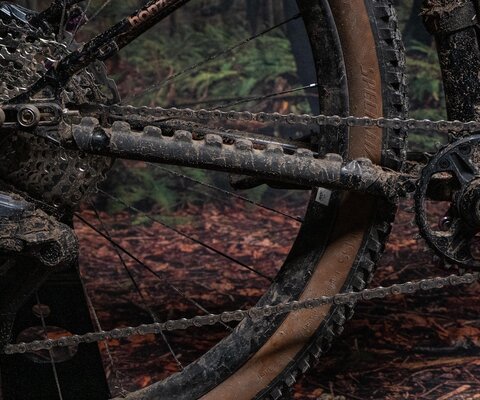
Durability-wise, I managed to slap a bunch of rocks in just a few rides with the mechanical XT derailleur. That’s not the drivetrain’s fault, the derailleur is tucked nicely out of the way, but is the result of me riding one trail, that’s very good, and very hard on derailleurs, four times in eight days. After the second violent rock smash, shifting was vague, with some ghost shifting in the middle of the cassette. I took a second on a gravel road climb to reset the barrel adjustment, and we’ve been rolling nicely since then.
It’s hard to definitively say that I would have broken an old mechanical XT derailleur in those instances, but given my (very poor) track record with previous-generation Shimano durability, I was stoked to have the more burly, more sleek current-gen on my bike in every situation.
Gearing Talk
When I reviewed XT Di2 with this same 9-45 cassette spread, I ran a 30-tooth chainring on my Stumpjumper and was quite happy. I could spin that bike up anything I wanted to and it had a great top end as well. So, I started out running a 30-tooth ring on the Taken. And I made it work, but it required more work. The Taken is a much heavier, much less efficient bike and, more importantly, I’m running super heavy Maxxis DHX tires that are harder to turn over.
So I spent a month grunting that 30/45 climbing gear before I relented and asked Shimano to send over a 28-tooth ring. With the 28T, you get a nearly identical climbing gear to a 32/51, with more rollover clearance at the bottom bracket, and a smaller cassette and derailleur. With that smaller ring I’m happy climbing the Taken up just about anything that I’d want to pedal.
This is another situation where it’s worth evaluating the bike and the trails you like to ride. I could get away with a 32T ring with this 45T cassette in many places on a lighter trail bike and be super happy. But, if my whole jam was pedaling very heavy bikes up very steep roads, I could see a 28T ring with a 51T cassette making sense. It’s rad that Shimano makes both cassette options available, but it’s up to you to make sure you use those options to the best effect.
For Now
Shimano released an impressive bouquet of drivetrain options over the past two years, and while I’ve enjoyed riding all of the variants, the mid-cage XT mechanical option hits my personal sweet spot the best. It delivers a great combination of value and performance that I think will appeal to many riders.
Learn More: Shimano.com