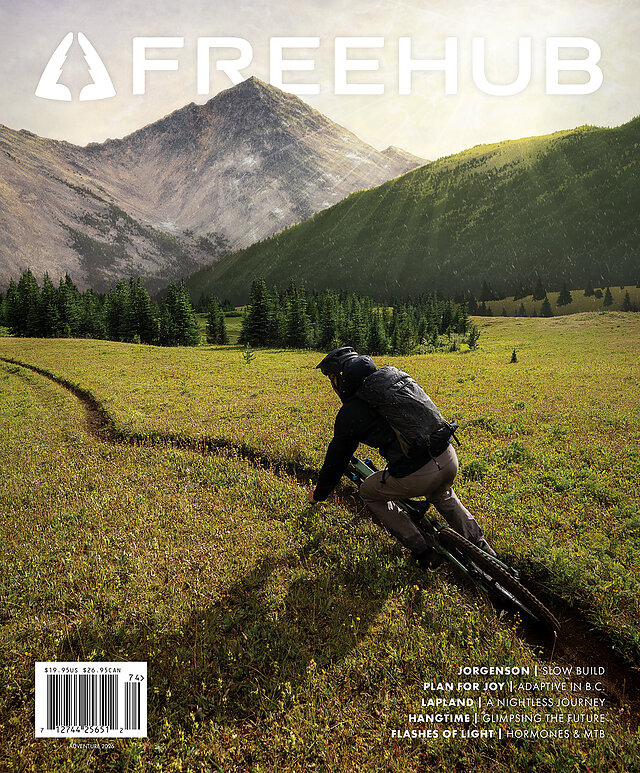
Welcome to Issue 17.4
This issue of Freehub examines what adventure, with all its characteristic uncertainty, can mean for those who seek it out and for those who find it knocking at their door whether they asked for it or not. Danielle Baker reports on the confounding symptoms that appear for many women during perimenopause and how they can dramatically affect athletic performance over time. Kurt Refsnider chips away at answering how one of the longest mountain bike routes in the world can keep up with maintenance. Caroline McCarley shares her experience of riding through continuous daylight in the northern reaches of Finland. And, in our cover story, photographer Blake Jorgenson captures the spirit at the core of big mountain lines.
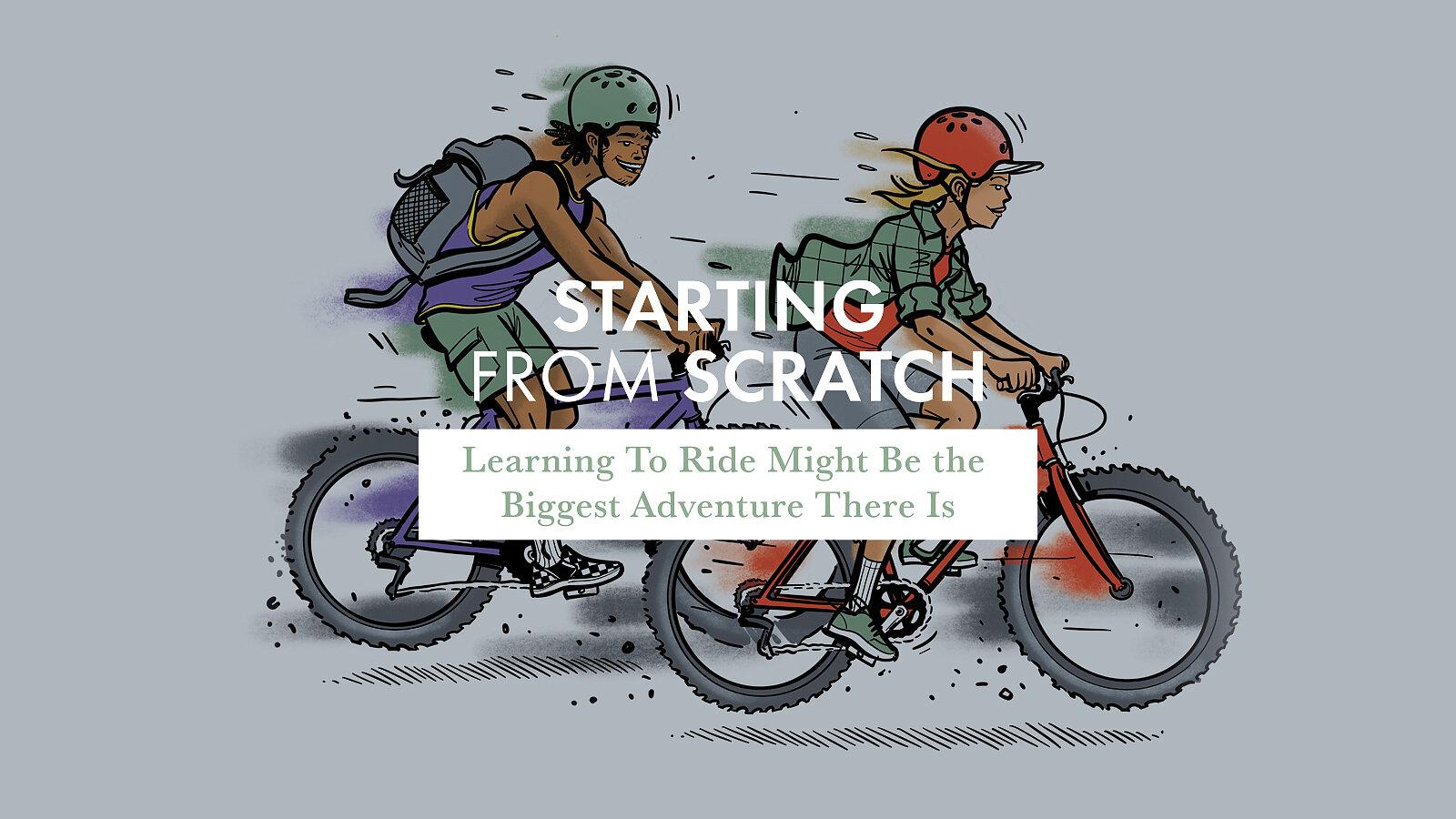
I remember the first time I got a glimpse at how tough this sport can be. I was bumbling down Mount Washington’s bike park on Vancouver Island with my then girlfriend, who was still new to mountain biking but really loved it—even with its challenges. One of them was about to present itself.
Where the trails all merged near the bottom, some armor-clad asshole came barreling from behind and yelled for her to get out of the way. She stumbled to the side of the trail and desperately bellowed, “I need somewhere to ride, too!”
It was one of those moments that tattoos itself onto your brain. It’s probably a good thing the guy made it onto the lift quickly since he was twice my size and I had a temper back then. That part’s better now, but what continues to trouble me is I’ve seen this same scenario play out 100 times since.
Words by Matt Coté
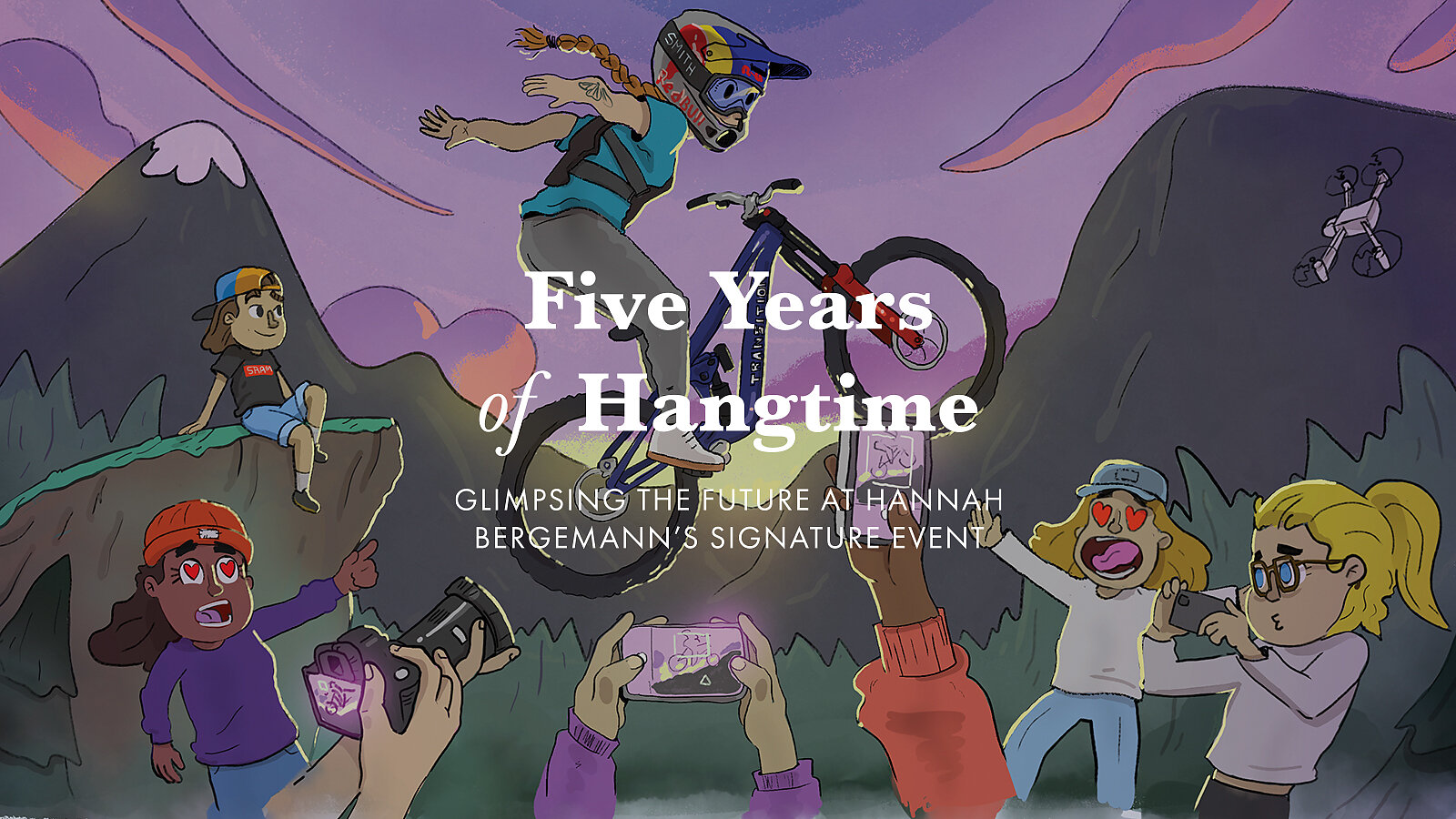
The evolution of women’s freeride has come a long way over the past several years: From a few dark horses who refused to take “no” for an answer—essentially any female freerider before 2019—to a field full of young girls shredding with sprawling industry support for many.
I can’t help but pinpoint one particular event and one particular athlete as game changing catalysts for this story arc: Hannah Bergemann’s Hangtime event, most recently held in Port Gamble, Washington. Like so many other women, Hangtime was a critical steppingstone for me to level up my riding. It was during the pandemic when I got laid off from my suspension tech job and joined the government mountain bike team, full time. I was finally free from the nine-to-five that bound me to normalcy, and I was able to focus on my game, baby. Within a year, I had managed to catch Hannah’s eye from a few states over, and she invited me out to her first attempt at hosting a freeride progression event for the ladies.
Words by Blake Hansen
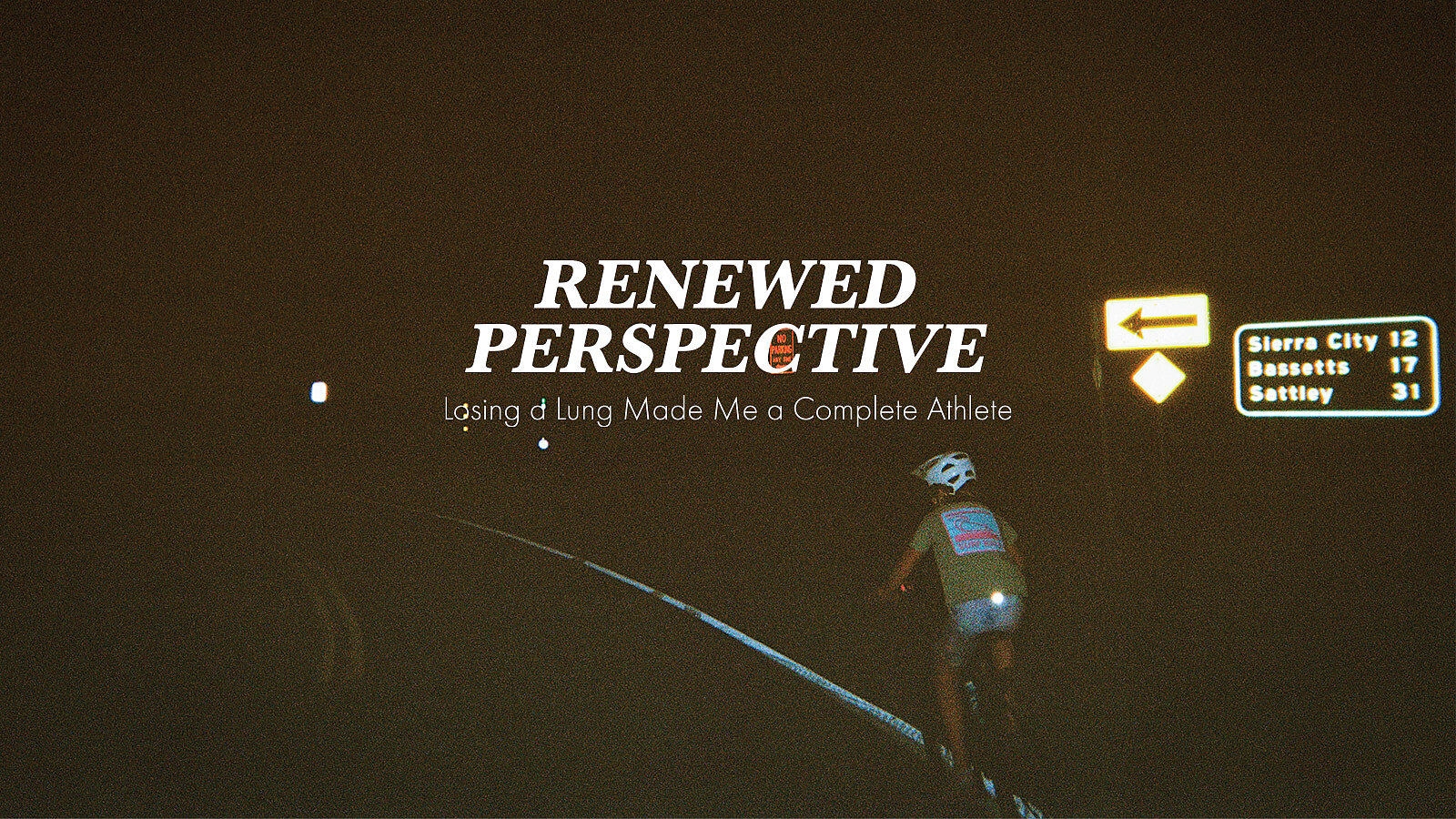
There’s a mountain bike race in Northern California that I’ve been obsessed with for 21 years. While the numbers don’t seem extraordinary—1,000 participants tackling 27 miles with 4,500 feet of climbing—the event is unmatched for its difficulty and prestige.
Temperatures regularly approach 100 degrees and, because riders start en masse, they pedal through suffocating clouds of dust that obscure bone-breaking rocks on the narrow trail. I’m writing, of course, about the Downieville Classic.
In the summer of 2025—at age 43 and long past my prime—I finally achieved my breakthrough athletic performance at this event. It was truly the best race of my life. What made the moment most special was that I was competing one year after losing my entire left lung to an aggressive type of cancer called synovial sarcoma. I never expected to be able to race again. For a few weeks, I didn’t expect to live long enough to see this race. But on race day, I was alive, able-bodied, and deeply grateful for every moment. The experience made me realize that an essential element had always been missing from my training plan: perspective.
Words by Dain Zaffke
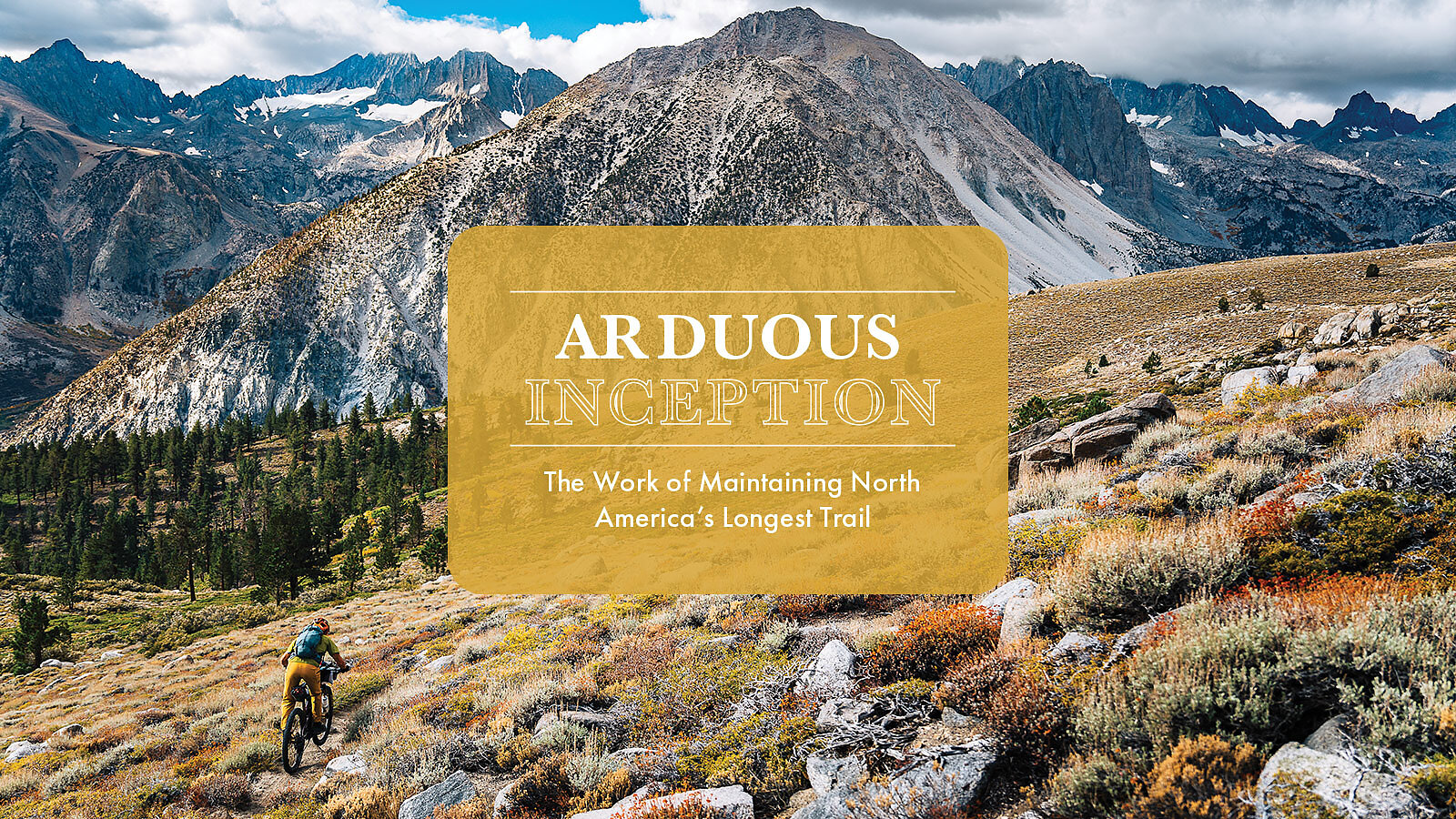
I sighed, leaned heavily on my handlebars, and stared blankly up the trail. A tangle of branches arched overhead, forming a head-height tunnel through which rutted, rocky singletrack ascended steeply.
My sigh was one of those I-really-just-want-to-find-some-where-to-camp-before-dusk exhalations. The map made it look like I’d probably have 2,000 feet more of this before the slope relented. It was a tough way to begin a 5,000-mile journey from Canada to San José del Cabo, at the southern tip of Mexico’s Baja California Peninsula.
Words by Kurt Refsnider
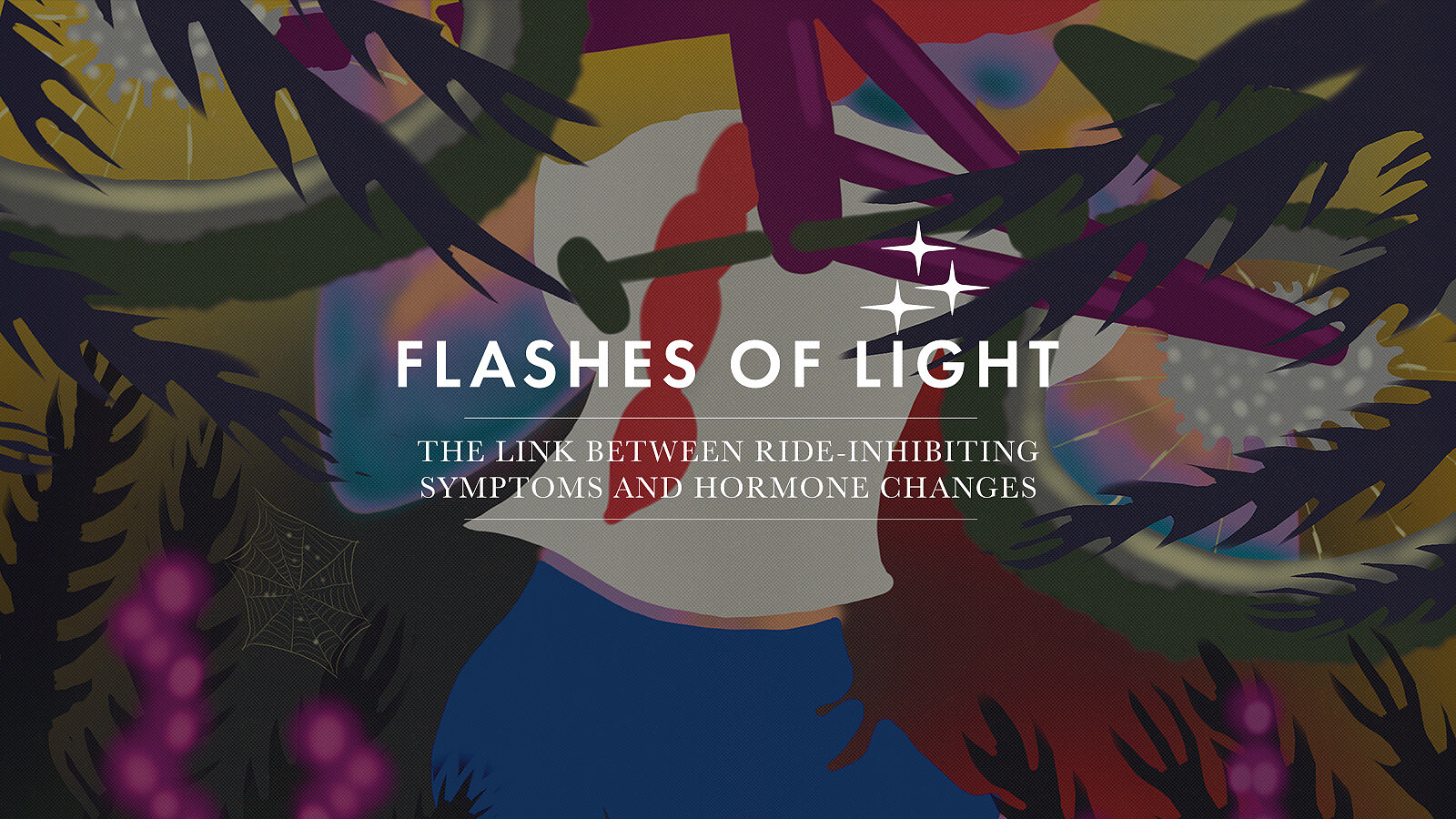
At 35, Kelli Sherbinin thought she was having a heart attack.
Stealing a quiet moment on her back deck in North Vancouver, she felt the sun warm her face as she breathed in the smoky aroma of her coffee. Thoughts of emails and errands faded beneath birdsong and the distant hum of traffic.
“I wasn’t doing anything—I was literally just sitting there,” she says. “My mind was calm.”
Then her heart began to race. Pressure built in her chest. As suddenly as it began, the episode passed, leaving her drained. She assumed her body was run down by the demands of racing, guiding, teaching, and running a seasonal business.
“That’s when I started seeing naturopaths and going for vitamin injections,” she says.
Despite the treatments, things got worse.
Words by Danielle Baker
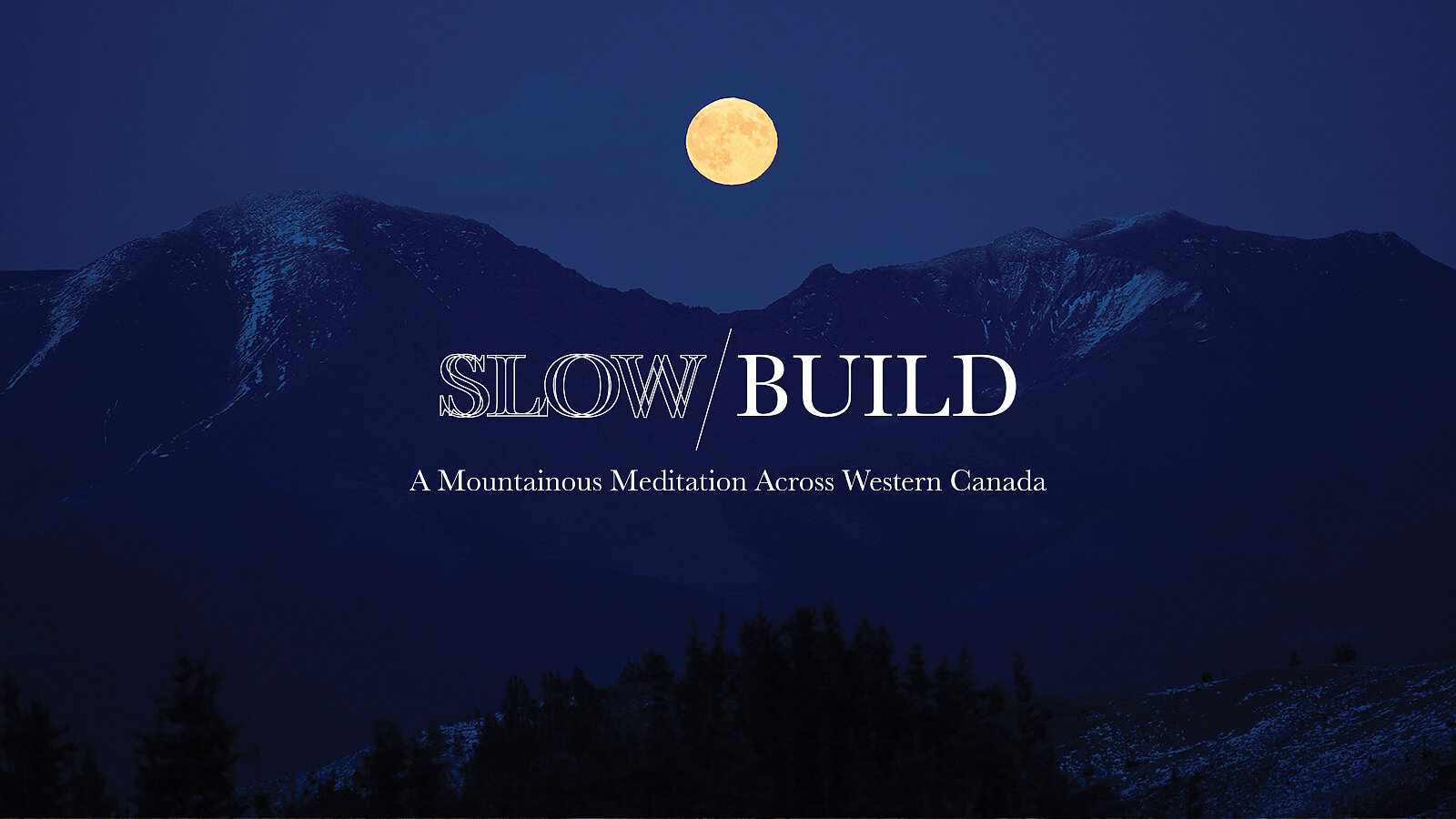
The mountains tower above the four riders, shrouding their miniscule frames in early morning mist. It’s a scene not uncommon in our sport’s annals of imagery, though the intention behind it is wholly counter to the ethos behind most modern, fast-paced media.
Seeking out a project without a defined timeline, veteran photographer Blake Jorgenson teamed up with pro riders Lucy Van Eesteren, Matt Hunter, Matty Miles, and Graham Agassiz to explore some of western Canada’s more remote terrain, accessed via old gold mining trails used by prospectors more than a century ago. The location, though, is hardly the point.
Words by Ian Terry
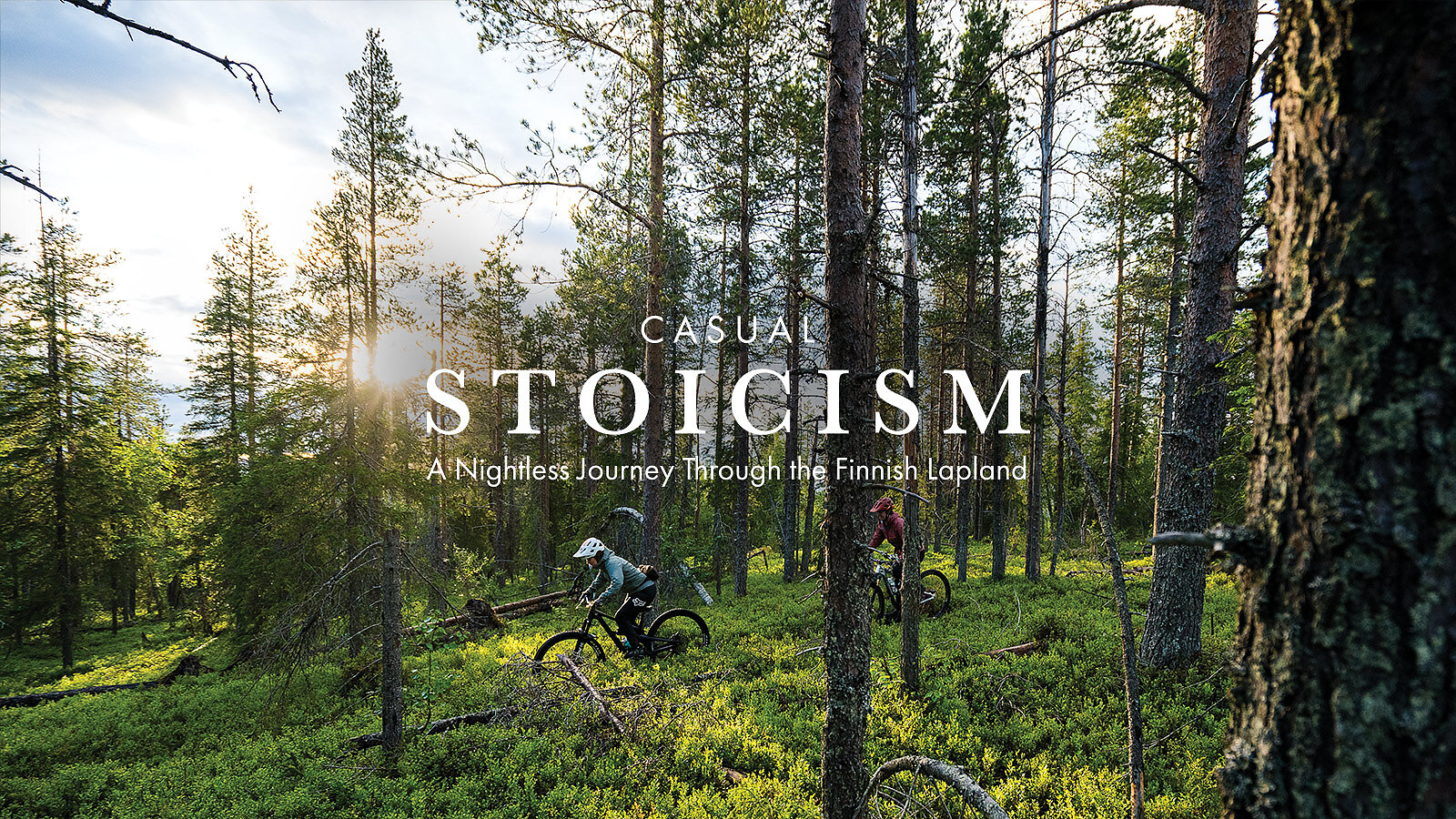
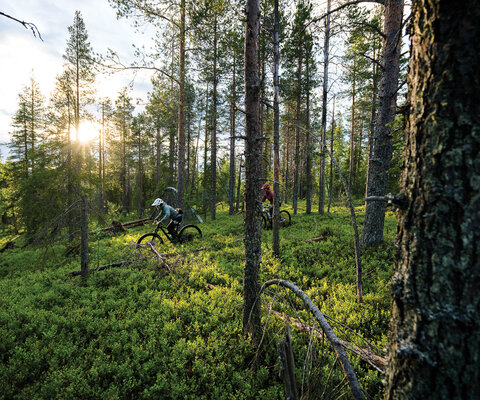
A hiss cracks into a roar, and I feel the heat seconds after the water slowly winds its way through the stacked stones. It comes with such force I feel like I’m almost knocked backward, even though I have tucked my head into my chest, bracing for impact.
Löyly, a Finnish word with no direct English translation, comes in full. It has ancient roots in Finnish folklore as the “spirit of life,” the soul of the sauna, beyond the steam itself. We’ve spent the day conquering singletrack, and yet this scorching steam rising from volcanic rock is conquering us.
Words by Caroline McCarley
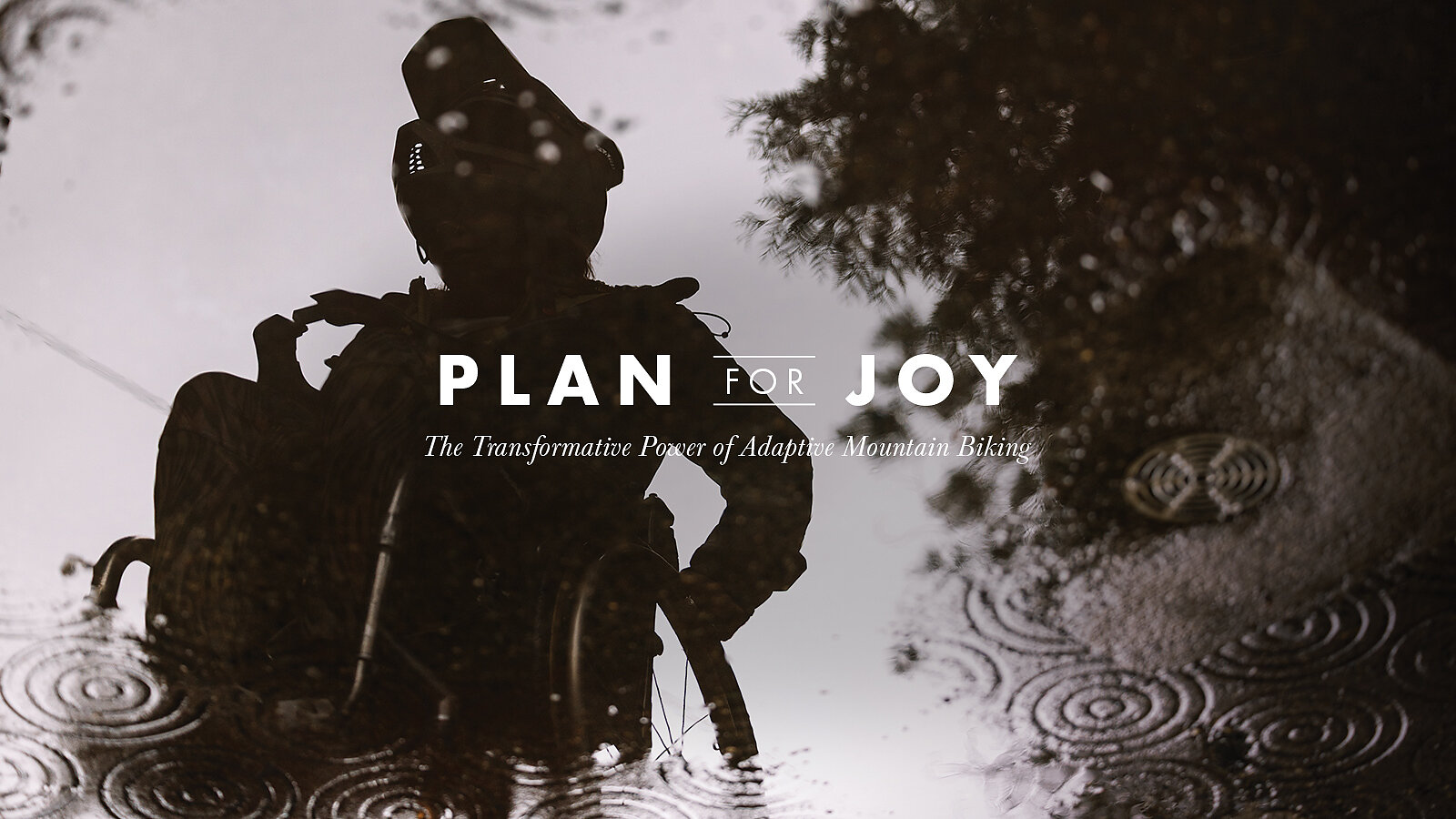
The ugly, jagged rock face is soaking wet. Slimy, even. There’s no real line down, exactly, just a wealth of unappealingly rough choices that all start vertical and become lumpier as the slab curves out. The whole thing is swirling in freezing mist too.
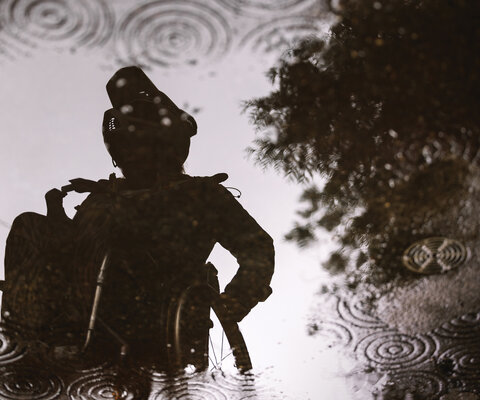
So, when Martyn Ashton plunges straight over the lip at full speed, feet first, without a pre-check or a second’s hesitation, we all hold our breath. He nails it. Whatever you think about adaptive mountain biking, know this: It’ll make your heart beat faster than a woodpecker’s beak.
There’s a paradox here. In order to throw caution to the wind and ride like there’s no tomorrow, Ashton—and every other adaptive rider—has to plan carefully, for a long time. The forethought required to simply go for a ride is about as far from spontaneity as you can imagine.
Words by Tim Wild