Taken Encounter Take II Going big with the aliens.
I’m used to getting questions about review bikes, but the Encounter has raised more than just about anything I’ve been on of late. “What’s that?” “Who makes it?” “Where even is Boise?” I’ve resigned myself to the inquisition every time I’m out on the bike. So, if you find yourself asking any of those questions, go read my initial review for some context.
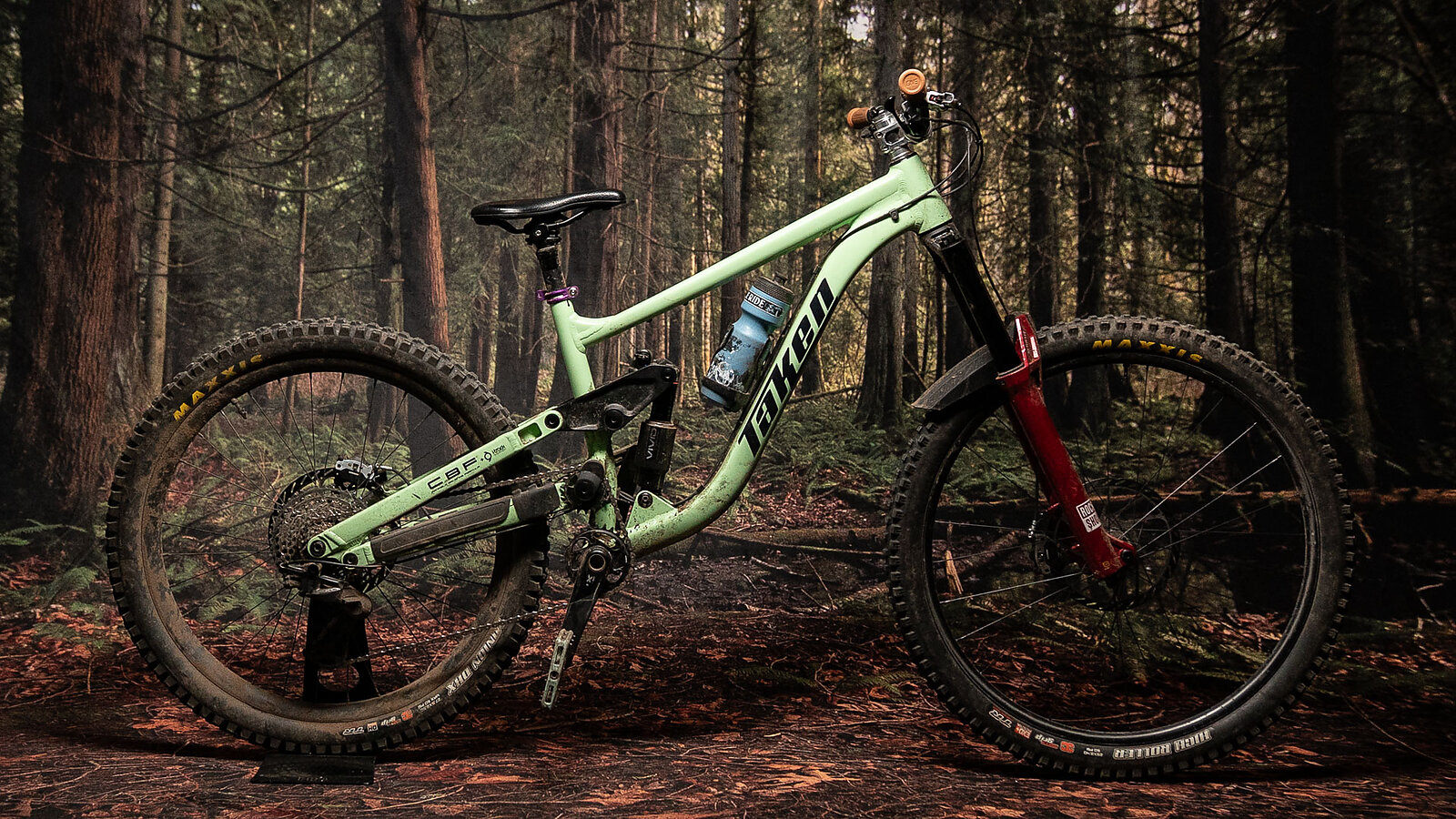
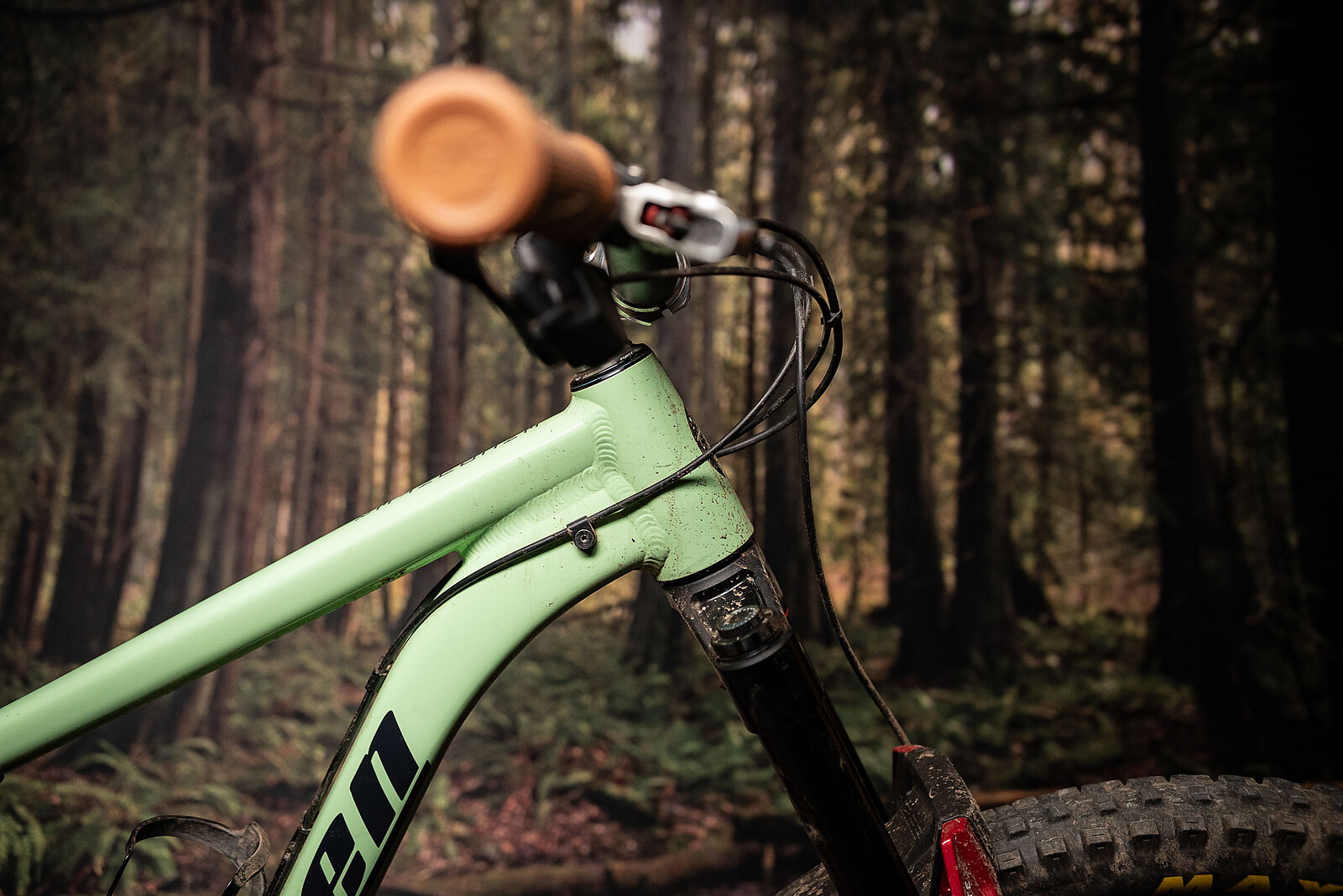
For the rest of you, here’s a short recap: The Encounter is a no-nonsense, high-pivot enduro bike with external routing, an aluminum frame, and aggressive geometry. In many ways it’s what bike internet comment sections claim to want so badly. I was quite infatuated after my first weeks with the Encounter, and now I’m back for round two with some more insights, and thoughts about the Encounter’s best use case.
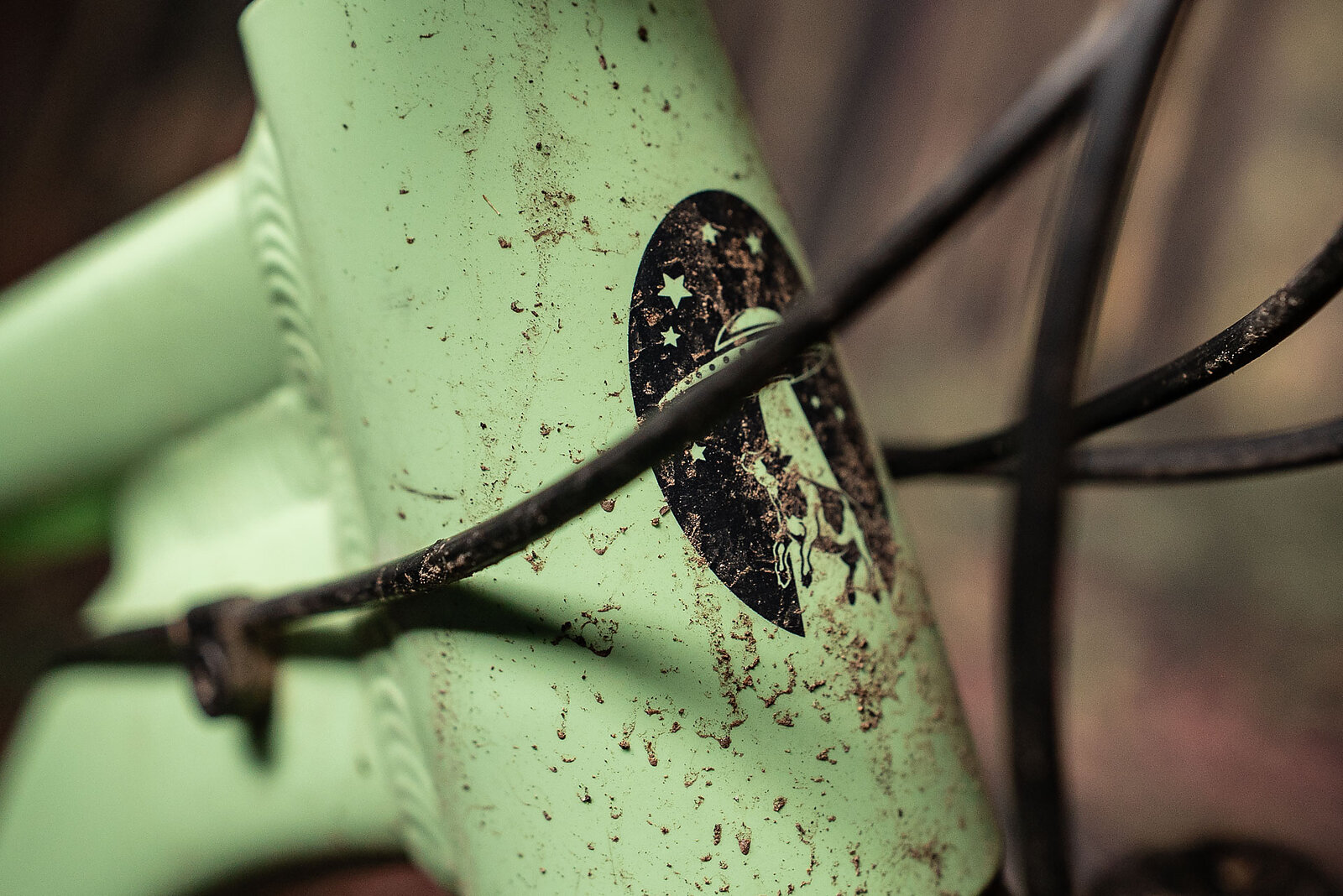
Frame Quirks and Details
The Taken is, on paper, a home mechanic’s dream: Simple standards, external cables, no weirdness. And on the stand that’s mostly played out. That said, I have learned a trick or two that’s worth sharing.
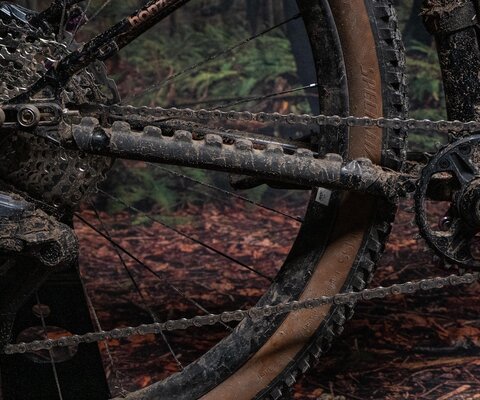
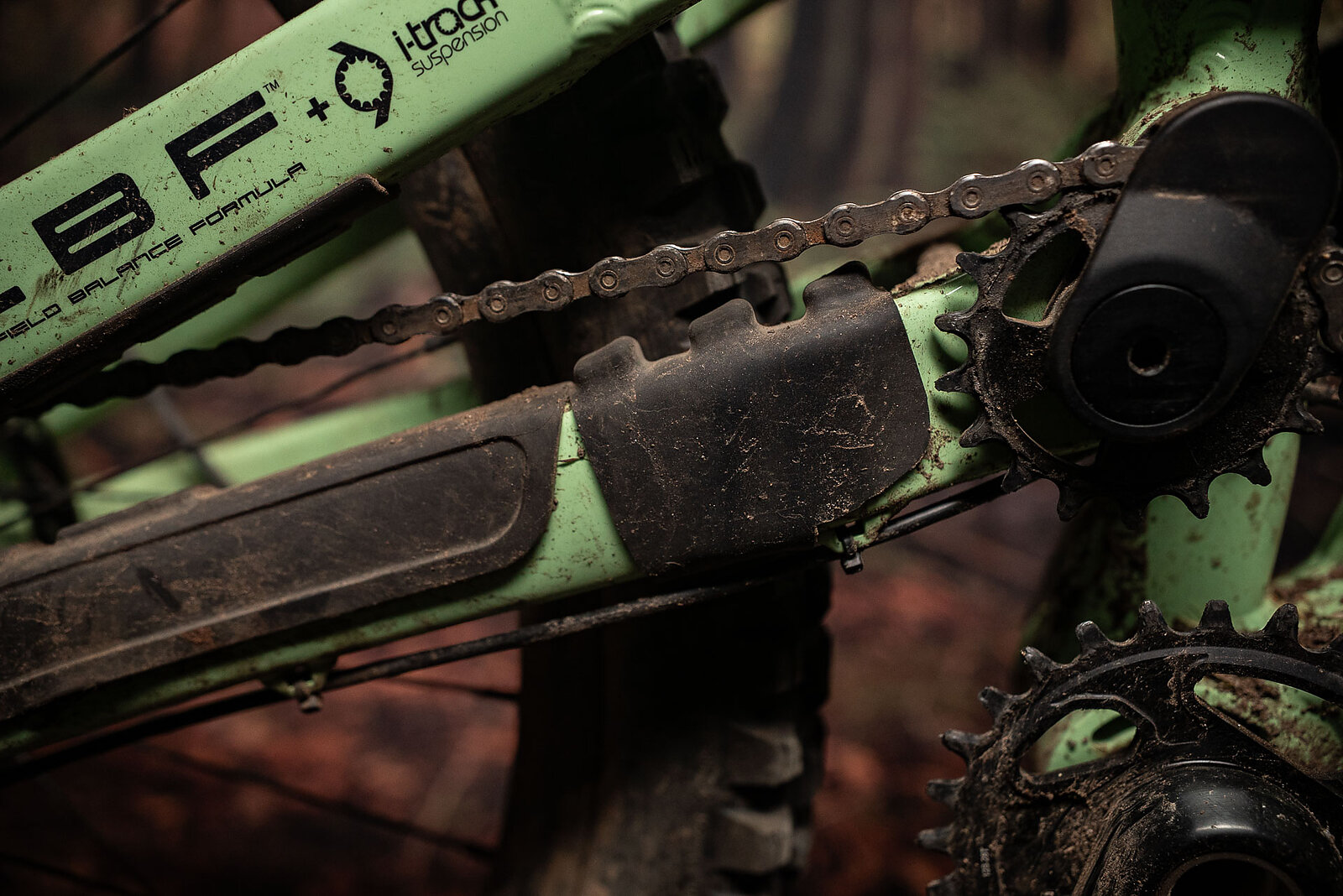
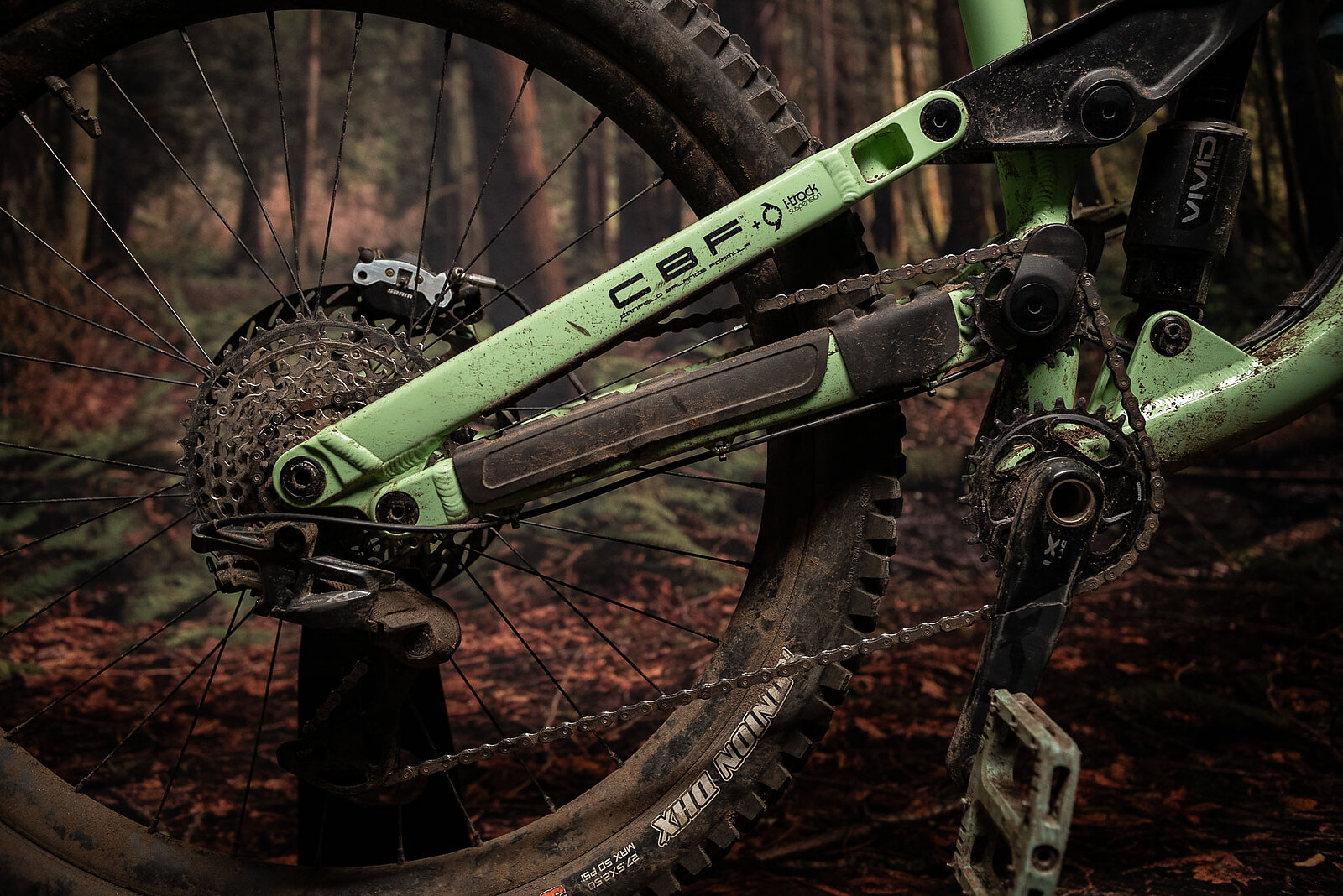
First, out of the box, running a Shimano XT Di2 drivetrain I got a little bit of chain slap. I remedied this with a short chunk of RideWrap’s VHS tape at the top of the chainstay. This isn’t an issue unique to the Taken—the Trek Slash has even more aggressive chain slap, and with that bike I had to replace the entire stock protector with aftermarket tape.
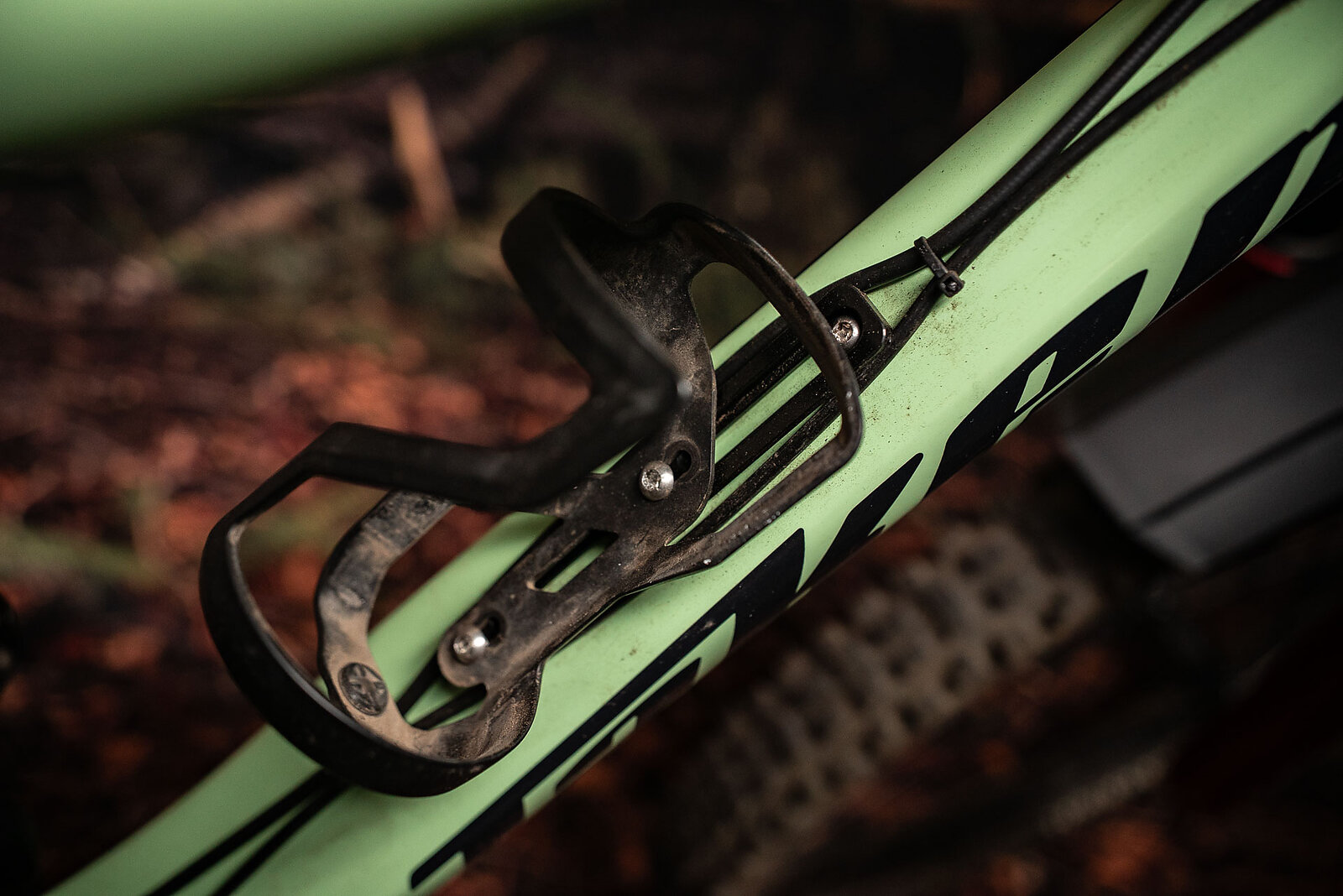
Second, the Encounter features a unique rocker link/shock layout that allows you to run the shock’s reservoir backwards, for more water bottle clearance. This is awesome, but the stock bottle bosses on the front triangle are positioned so far up the downtube that there’s not space for a full sized bottle, even though there’s plenty of shock clearance. I remedied this with Wolf Tooth B-Rad plate which allowed me to relocate the bottle lower down, so that I have tons of space for the biggest bottles. Not a big deal, but worth doing.
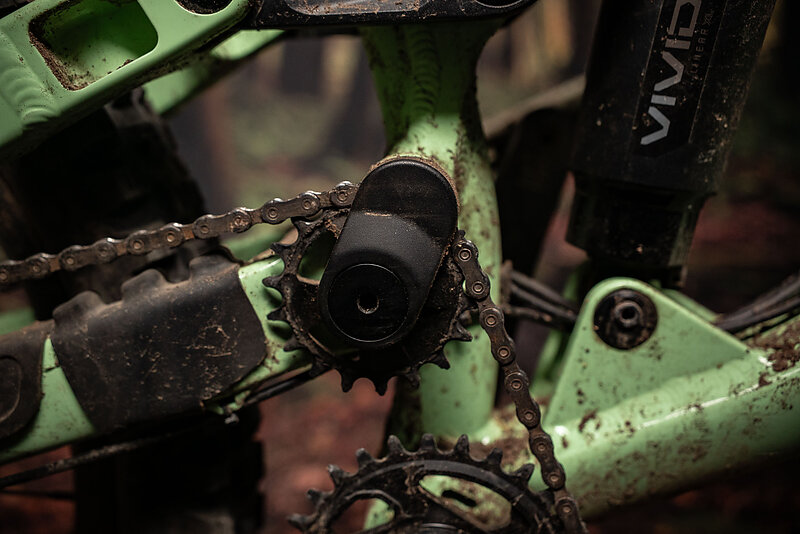
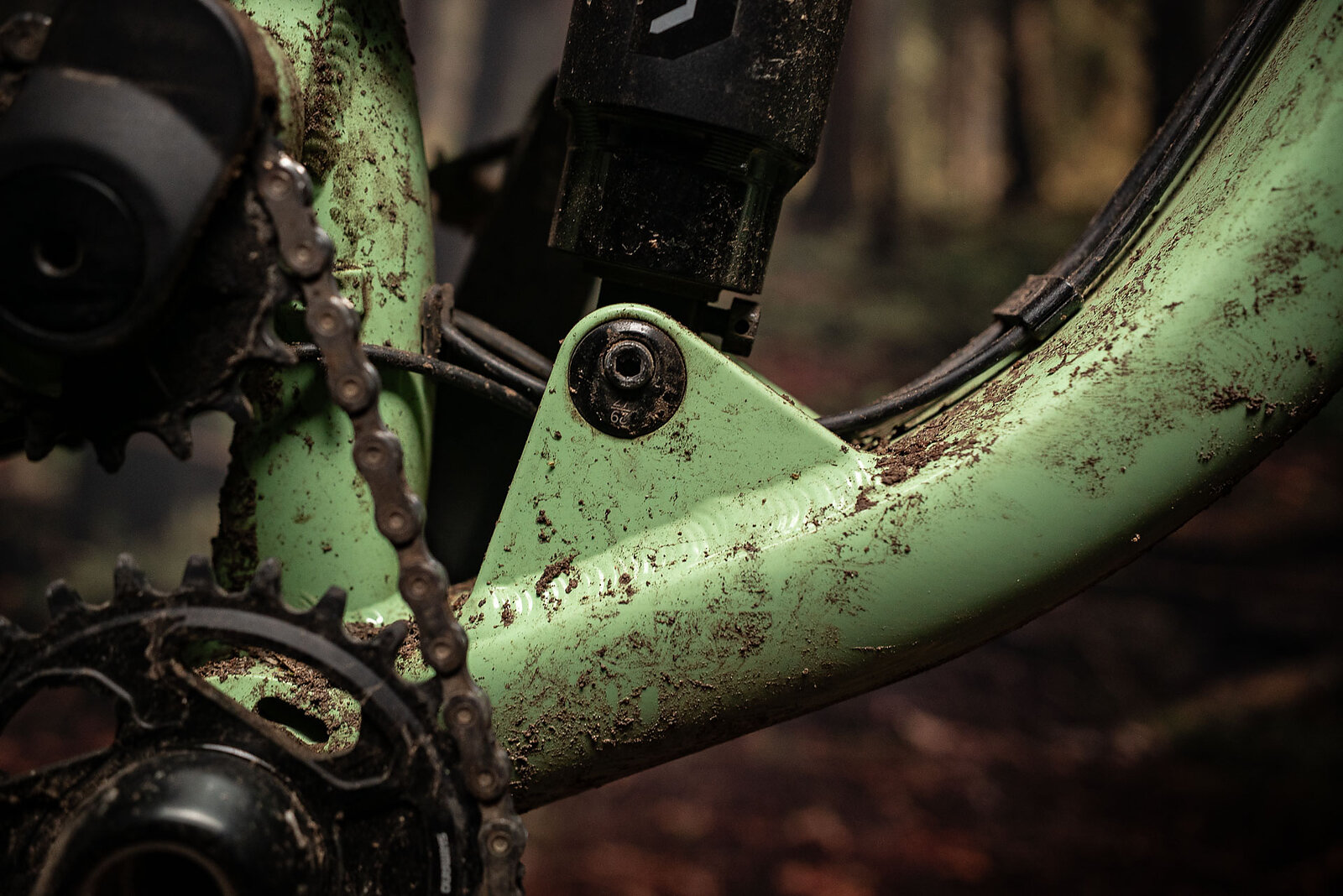
To check or tighten the main pivot, you’ll need to remove the idler and its guides. This is a fairly quick process, but not something I’d want to do on the trail, so I recommend checking and greasing all your pivots in the garage.
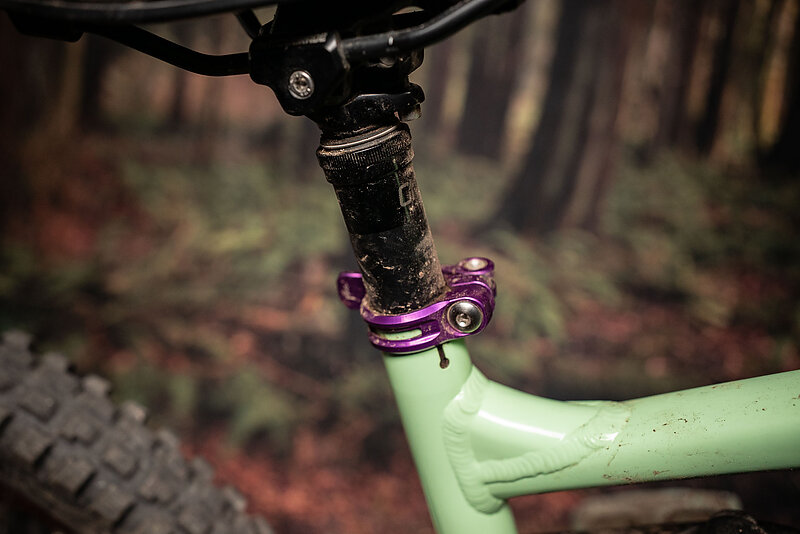
Finally, my one (very personal, not that important in the grand scheme of things) beef with the Encounter is that it has decent, but not great dropper insertion. I can just barely fit a 210-millimeter OneUp post, with an Anomaly Switchgrade in the Large frame, for my 33” inseam. That’s totally adequate, but I will admit that I’ve gotten somewhat used to running 240-millimeter droppers in most bikes, and I do miss it more than I should. If I owned the Encounter I’d probably track down a 150-millimeter Reverb, and then use a quick release seat post collar to double drop it. Most of my desire for a big dropper comes from the fact that this bike is absurdly capable headed downhill and, for me at least, works as a downhill bike replacement. With that in mind, I’m looking for as much saddle clearance as possible.
It’s also worth giving Taken one more kudos for external cable routing. I’ve swapped brakes and drivetrains around a fair bit on this bike, explicitly because it’s easier to do. Thanks Taken!
Adaptability
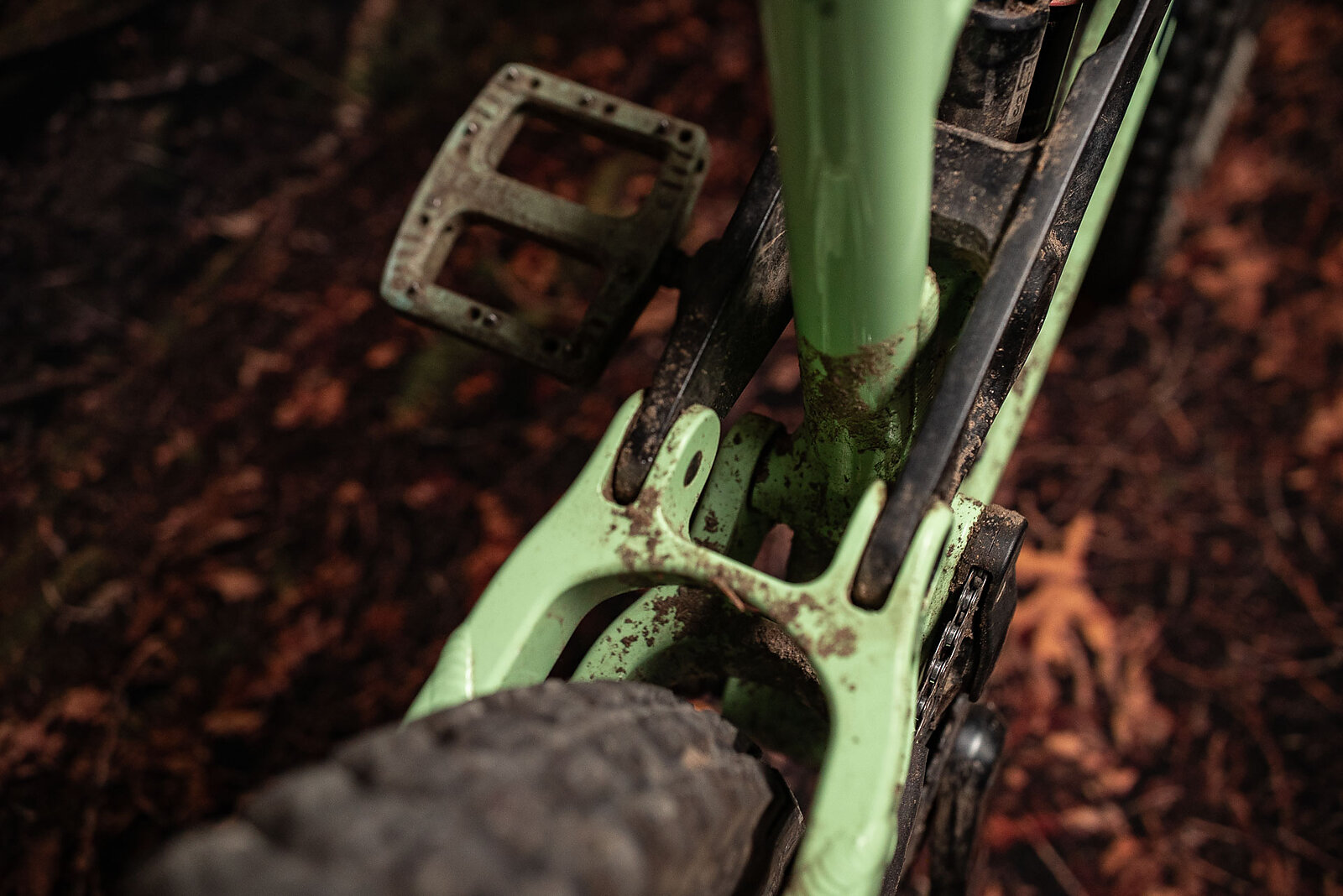
Thanks to the magic of metric shocks, Taken says the Encounter can be set up with anywhere from 153 to 175 millimeters of travel, and anywhere from a 160- 200-millimeter fork. And it has flip chips at the lower shock mount to swap from 29” to mixed wheels that almost (But not quite, this is important) preserve the geometry. So, of course, I had to experiment.
Running the bike 153/160 was an interesting experience that I think some folks will really dig, but wasn’t quite my cup of tea. I’d highly recommend running two 29-inch wheels if you drop the fork travel below 170 millimeters. That’s because, with the flip chip in the 29” position, you get slightly taller, steeper, longer geometry than with the 27.5-inch setup and, with the shorter fork, your bottom bracket gets awfully low with mixed wheels. In this shorter-travel, bigger-wheeled guise, the Encounter feels much more “trail” than in the longer travel, mixed-wheeled setup I primarily ran. The suspension is admirably efficient, and the bike can handle big human-powered days.
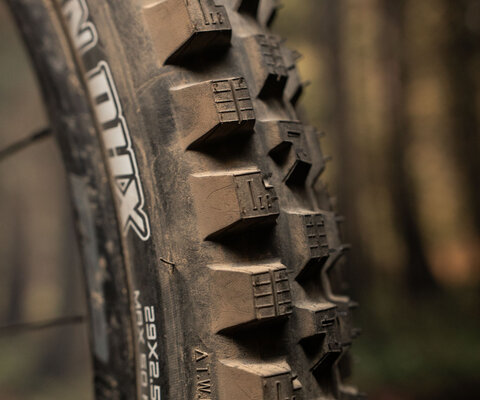
If you do go this route, I’d highly recommend some lighter tires to go along with the shorter travel. They’ll go a long way toward making this bike feel sprightly and well-rounded. That said, even with lighter tires, the shorter-travel Encounter is still a bit of a beefcake and, for my riding, I found myself vastly preferring the longer-travel setup.
The Encounter pedals really well regardless of what travel you’re running out back, so you might as well go all-in on the descents.
That said, for folks who maybe live somewhere with more mellow trails, but who still do a fair number of bike park trips every year, I can see the Encounter being a rad “two-settup” bike. Run it full 29” 150/160 at home, and then bump up the travel, throw on a smaller rear wheel, and go make poor decisions in Whistler for a week.
If anything, I’d be more tempted to throw a downhill fork on the front of the Encounter, single-speed it, and have a sick freeride bike.
More Ride Impressions
A friend asked me what I thought about the Encounter at the start of a ride, and I told him “Ya know, when you’ve got a hammer, everything looks like a nail, and this bike makes me want to pound nails.” Every time I look at the Encounter in the garage it triggers my desire to go ride gnarly trails. It’s fine on mellow trails—better than its numbers would suggest even—but it feels the most at home, the most itself, when things are steep, chunky, and aggressive.
This summer I’ve been treating the Encounter as a magic feather, or a safety blanket. If I’m going into the unknown I want to be on the Encounter because it has my back, and it’s the bike I most trust to handle whatever predicament I find myself in. It’s very point-and-shoot, without feeling too ponderous or planted to the point where I can’t play around on it. That’s a rad combination.
This bike has been a great reminder of why I prefer my big rig to be high pivot. Yeah, all the “it gets out of the way of bumps and eats chunder better” hype is mostly true. But more importantly, to me, the Encounter’s wheelbase lengthens as you get into the travel by up to 17 millimeters. I mostly notice that in two situations: First, in the runout for moves with big, chunky compressions it feels like the Encounter (and other high pivot rigs) do a better job of slowly crawling down, and through the runout. I find that it gives me more stability and more time to shut things down in those situations.
I also notice that lengthening rear end in a really positive way when I’m riding scree. I love the sensation of the bike getting longer and feeling more locked in as I push my feet into the turn. It creates a cool carving sensation that feels very similar to skiing. When you ride over the front, with light feet, it’s easy to snap back and forth between shorter, slashier turns where you break the rear wheel loose and throw rocks around. And then, as speeds pick up and you push through the pedals, the bike gets longer and feels more stable and locked in. It feels intuitively similar to flexing a ski through a turn. The harder you push, the more locked in it gets.
I found myself experimenting a fair bit with the Encounter’s rear suspension. I ended up adding two volume spacers to the rear shock and dropping pressure a little in an effort to make it feel more sensitive off the top. While I dig the mid-stroke platform and lively feel of the Encounter, I did find it to be a little less sensitive to smaller hits than I expected. The spacers helped quite a bit here, and I think an Ochain would help as well, because I’m getting some feedback through my feet, a bit of which is probably thanks to the clutchless Shimano drivetrain.
I also bounced back and forth between cockpit setups based on what fork I was running. With the previous generation Zeb and Manitou Mezzer LT I preferred higher rise, 50-millimeter bars, but with the newest generation Zeb I actually bumped down to 35-millimeter bars. That’s because the new Zeb feels like it rides quite high in its travel, which is rad, but meant that I struggled a little to get my weight over the front tire in mellower terrain. The lower bars made the bike feel more responsive, and less committing, in a quite positive way.
Where The Encounter Makes Sense
I can think of two primary riders who should gravitate toward the Encounter. The first is obvious, and is what I’d call the “core bro” (bro is a non-gendered term here). These are the folks who know that they love big, burly aluminum bikes, with external routing and simple standards. Maybe they’ve owned a Transition Spire, or a RAAW Madonna and they’re looking for something high-pivot. Regardless, they want a big bike that pedals fine and the Encounter fits that bill perfectly. For that group, hell yeah, you should definitely do your best to swing a leg over a Taken.
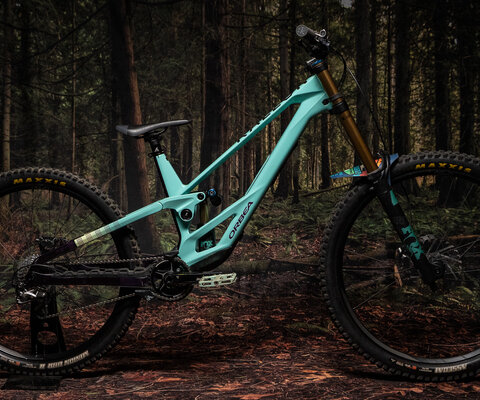
The second group is folks who might ride less aggressive trails most of the time, but who want a simple, capable bike that can adapt up and down based on terrain. This is the “lives in Boise (or whatever other town with good, but not terribly hard riding) but goes on riding trips to gnarlier places” demographic. For these folks, the more you value simplicity, and ease of serviceability over low weight, the more the Encounter makes sense. It’s much heavier and less “refined” than something like the Orbea Rallon, but by the same token, it’s simpler, less finicky, and easier to live with.
For Now
It’s somewhat absurd that the Encounter is Taken’s first foray into the mountain bike market. It’s better than any “first bike” deserves to be and, while it has some quirks, they’re generally small and solvable. It’s rad to see new brands come onto the scene and make it clear that they know what they’re doing, and who their audience is right out of the gate.
Learn more: Taken