The Suspension Cult A gnostic doctrine of alignment, kinematics, and damping.
This article isn’t about you, or your favorite suspension tuner, designer, or pundit. At least, it’s not meant to be.
Mountain biking has a suspension cult problem, and I’m tired of trying to communicate my thoughts about it in shouted conversations at dingy dive bars, or in quick bursts during ride breaks.
Mountain bike gear culture is beset with a multitude of small, charismatic, and gnostic personalities who lead vocal groups of believers who adhere aggressively to whatever particular dogma said leader espouses. They are the true believers. They have seen the light. And anyone who doesn’t agree with them is probably paid off by “big bike industry money” or an idiot who doesn’t know how to ride bikes.
This isn’t an attack on those leaders, or those followers. These are all passionate riders doing their best to improve the mountain biking experience. Instead, this is a critique of the rhetoric and language that are too prevalent within this space.
What Is a Cult?
“Cult” is a scary word to throw around. So let’s get the hard part done early. I am intimately familiar with cults because I grew up in one. Mine was aggressively Christian Nationalist, and it’s increasingly gaining traction under the current regime. But it took me years to see it as a cult, because cults are kind of like pornography—they’re hard to define, but easy to spot. It’s very difficult to make a hard and fast demarcation between “fervent group of believers” and “cult.” But, here are some helpful things to look for, courtesy of Cult Recovery 101. I’ve picked the points that seemed most relevant, and added my own notes in italics:
- The group is focused on a living leader to whom members seem to display excessively zealous, unquestioning commitment. (Usually a single rider or engineer who “JUST GETS IT” when all the big brands don’t.)
- The group is preoccupied with bringing in new members. (They’re constantly in the comments of tenuously-related articles, plugging their favorite.)
- The group is preoccupied with making money. ("Buy my thing or your bike will suck.")
- Questioning, doubt, and dissent are discouraged or even punished. (If you don’t agree with them you’ve been paid off by “big suspension” or are just bad at riding.)
- The leadership dictates sometimes in great detail how members should think, act, and feel. ("No! You have to go through this super weird setup procedure, and bleed your brakes this special way to get the full benefit!")
- The group is elitist, claiming a special, exalted status for itself, its leader(s), and members. ("We’re here to save you from all the mediocre suspension mainstream brands are pushing on you.")
- The group has a polarized us-versus-them mentality, which causes conflict with the wider society. ("If you haven’t ridden this fork, you just wouldn’t get it, and if you don’t like it, you’re an idiot.")
- The group’s leader is not accountable to any authorities. (Again, “The Industry” is not to be trusted, and is out to get them. This includes independent reviewers, as well as mainstream outlets.)
Does any of that sound familiar? I can think of seven or eight brands and suspension tuners (or more accurately, suspension internet personalities) who check all or most of those boxes.
Freehub doesn’t have comments (yet), but go to any other review site or bike forum, and you’ll see all of these behaviors play out in real time. The same goes for social media. Anytime a new product is announced, there’s a vocal bevy of “experts” armchair-quarterbacking it, and explaining why their favorite suspension dude (it’s always a dude) is way better at making bikes squish. Hell, sometimes the leader goes on the offensive by posting long, emotionally-charged rants to social media about how bad the mainstream options are.
“Haters and low QI people can not believe/imagine how few millimeters can really change the quality of your ride,” wrote one of the more prominent suspension preachers in a recent post on Instagram. "They’re wrong."
Like so much cult-speak, there are kernels of truth laced into broader, wild statements. We’ll start with the most common accusation: Mainstream reviewers are either bought off by “Big Suspension” (Fox and RockShox) or are incompetent riders who don’t understand their suspension, or both. This is easy to disprove. I am privileged enough to be friends with a couple of past and present, full-time, professional gear reviewers. These are principled people, who couldn’t care less about who is buying what ads on their website or with their publication. They also all ride a lot—really freaking hard—and think carefully and critically about the things they write about. I’m not trying to gas these folks up, they’re my competition after all, but the idea that they’re incompetent or morally compromised is laughable, and ties into a larger national trend of people voicing their distrust in news media and spreading disinformation to forward their personal agenda. Dunking on over-worked, underpaid journalists and other experts is in vogue.
Professional engineers and designers in the bike industry are subject to similar attacks. Of course, these career paths are difficult and tenuous enough that the folks who end up in these positions get there only through remaining incredibly passionate about making and riding fun bikes. They ride the things they make, and they have no incentive to not make them good.
The idea that the broader cycling industry and media is paid off or doesn’t know what “good” suspension feels like, is one of the core tenets of all the suspension cults. If that fundamental belief is so far off base, I’m not surprised when other claims start to crumble.
Suspension Fostering Cultish Behavior
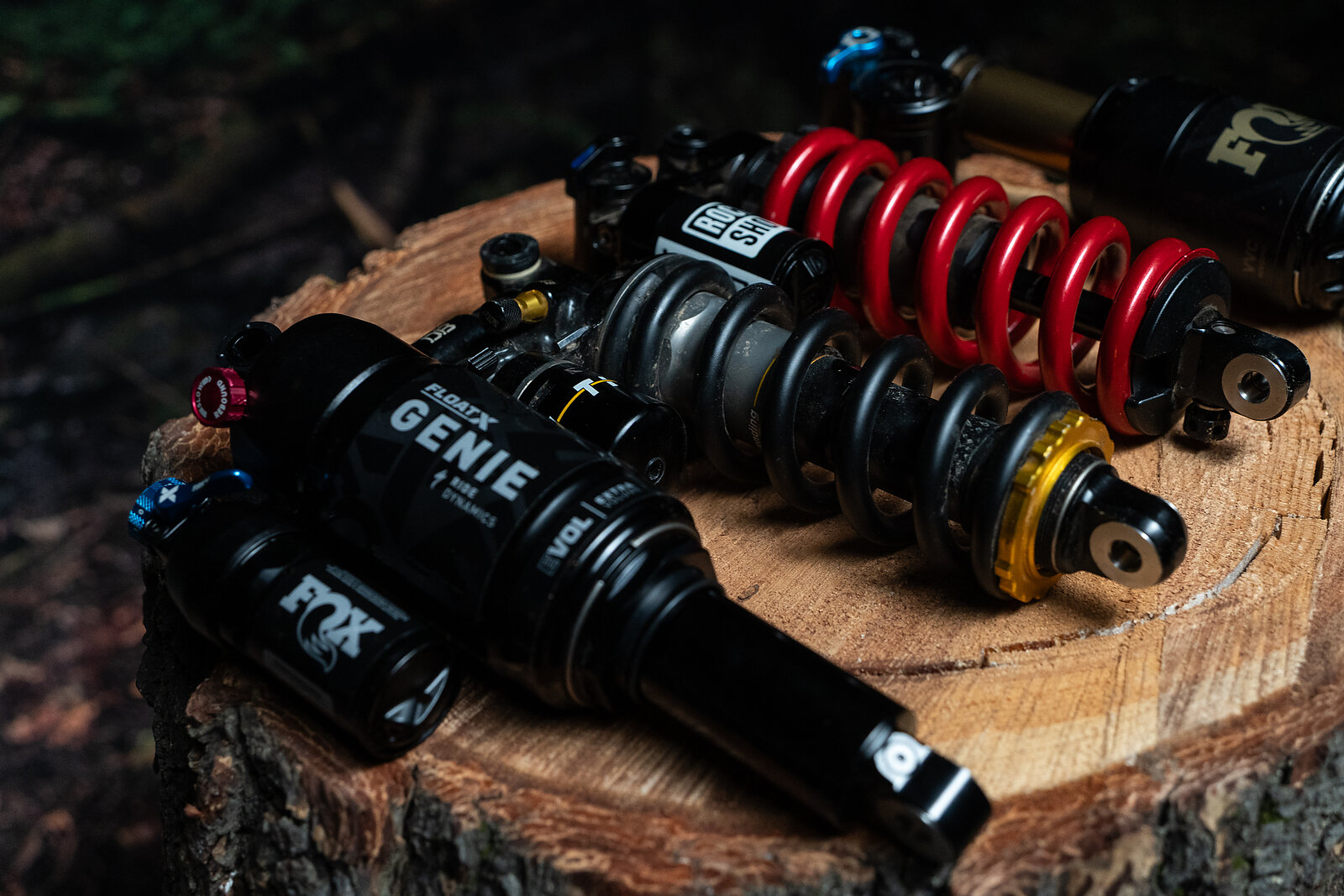
Suspension nerds drink and distribute the most Kool-Aid, but a few other fringe cases come up: There are plenty of culty chain waxers, a few Shigura cultists, and a slew of “weird geometry” (extreme rear center, stack, offset, stem shape, etc) folks. Far and away though the most vocal and successful cults are suspension related.
Some of them will re-align your lowers. Others burnish your bushings. Still others will re-tune your damper, or replace it completely with one of their own design. And a select few make linkages, or complete forks and shocks. To be clear, I’m not accusing anyone who does any of those things specifically as a cult leader. Instead, I’m pointing out that the discourse around them is uniquely culty. Many of these products work, to some extent or another, but the way that they are advertised is straight out of the Scientology handbook.
At their core, these cults sell two ideas: first, “mainstream” suspension is garbage and, second, that their “secret sauce” is the only true way forward.
How many glitzy videos purporting to show how undersized Fox or RockShox bushings come from the factory have you seen? Just buy this expensive burnishing kit, and your stanchions will slide as perfectly as those in the video. Don’t worry about messing it up and introducing bushing play!
How many reels have you seen of forks (often set up incorrectly) that “bind from the factory” and just need a re-alignment? Is that re-alignment just a sketchy dude in a garage whacking them with a hammer? I don’t know, they always cut away for that part. It doesn’t matter. The narrative is that mainstream suspension is garbage, and the narrative must be illustrated.
The second part is harder to demonstrate. It’s much easier to tear down an opponent than it is to explain why you’re superior. Some brands use charts and graphs. Others just talk in intangibles, claiming more traction, more support, a feel that’s both more linear and more progressive. They throw a wall of adjectives at the customer, and, because the customer just saw such a damning indictment of the competition, they’re easily convinced.
Earlier, I said these are “gnostic” cults. Gnostic cults are some of the earliest Christian cults, and they’re based on the idea that the leader, and by extension his followers (again, it’s always a dude) have some special knowledge that sets them apart from the general population. This knowledge is always that the cult leader’s product is the bomb, and everyone else’s sucks.
The Problem With Suspension Cults
The short and universal issue with all cults is that, at their core, they create a more polarized atmosphere and decrease society’s capacity for critical thought and collaborative growth. We’re seeing that play out in real time in America right now. It’s not very much fun.
But in mountain biking, the same breakdown occurs. When your leader has the only right answers, the level of discourse goes down. Folks get aggressive, shrill, and defensive, all of which are enemies of productive conversation. Any good points said cult leaders might be making are lost in all the noise. It’s much easier to throw the baby out with the bathwater than it is to sift through all the bullshit, all the angry comments and false accusations, and figure out what actually has merit.
And that sucks. Mountain biking needs change. It needs folks to say things like “These front derailleurs aren’t great, what if we figured something else out?” “What if I could push a lever and drop my seat post without getting off my bike?”
But the more aggressive and dogmatic the suspension cultists get, the more they undermine any valid points they may be making.
How To Move Forward
I don’t have a single tidy answer. The whole point of cults is that they’re hard to identify, and hard to get out of. But here's something to consider: Everyone I know in the mountain bike industry is working hard, in their own interests, which, as fellow mountain bikers, directly align with yours. So, maybe consider not bashing other players just because they’re big and popular. They’re trying to make bikes better, not fleece you. They’re not perfect, but they’re also not part of some vast conspiracy to make your trails less fun.
The same goes for bike reviewers. If your special cult leader won’t send outlets a product to review, it’s going to be damn hard for them to write a review of it. Contrary to popular opinion, this job does not pay well enough that we can just buy boutique forks off the shelf to review. The playing field is level, for anyone who actually plays on it. But if you’re going to just throw rocks from the sidelines, move along.
Finally, I find that this landscape makes the most sense when I look at it in terms of options instead of extremes. Nuance rules supreme. Thinking of suspension products in terms of simple “good and bad” is rarely productive. Mainstream manufacturers are doing their best to make products that work as well as possible for as many people as possible. Smaller brands have the freedom and flexibility to create more niche products, or products that address specific issues. It’s up to you as a customer to figure out if those products make sense for you, and it’s also up to you to think through how you evangelize for them. Do you, at 120 pounds riding desert, kitty-litter love this very flexy fork? Sick! I’m stoked for you. But if I try it and find that at 220 pounds, riding in the Pacific Northwest, it’s scary as all hell to ride hard, that doesn’t make it any worse for you.
We all have the option to elevate the discourse every time we talk about suspension on the internet, or in real life. And if we all make a small effort to avoid cultish thinking and language, we all benefit.
Healthy Alternatives
Not all cults are bad, here are a few solid alternatives to the current landscape:
The Cult of Service Intervals. If you service your fork or shock, it rides better. It’s quick, it’s affordable, and it doesn’t require some mystic guru with a bushing reamer and a creative damping philosophy.
The Cult of Starting With Recommended Settings and Bracketing From There. No, seriously, brands put an absurd amount of time and miles into figuring out good baseline settings. The least you can do is to try them. Once you’ve tried them, you can start to experiment and dial them in, with a thoughtful bracketing process. Don’t just crank your compression because you heard from your buddy who heard from a mechanic that your favorite pro racer does it. Actually ride the same section of trail, back-to-back, while only changing one variable at a time.
The Cult of Riding Your Bike More, and Speculating on the Internet Less. Instead of talking trash about products we’ve never ridden, let’s go for a bike ride. These bits are meant to squish after all, and they’re not doing anyone any good in the garage.
Bikes are fun. Cults suck. More bikes, less cults, less internet, and we all win.