Amflow PL Carbon Pro Is this the future?
With the benefit of hindsight, it feels like Amflow hit the market in a trickle, and then burst quickly into a wave, like a dam giving way. A year ago the brand was an outlier making absurdly powerful bikes that bent, or outright broke some definitions of e-mountain bikes. And now it feels like the original PL Carbon I’m reviewing is everywhere.
At Sea Otter this spring, the brand announced two new models along with a new Avinox drive system that’s featured in other brands’ bikes, but so far those have been slow to release out into the wild. Anecdotally though, for the e-bike aficionados, if it doesn’t have an Avinox motor, nobody’s buying it. So, as we enter this new age of whirring motors and excessive watts, it’s worth taking an in-depth look at the bike that started it all: the Amflow PL Carbon Pro.
Amflow PL Carbon Pro Details
- Travel: 150 mm (rear) 160 mm (front)
- Wheel Size: 29” or mixed 29/27.5”
- Size Tested: Large
- Build Tested: Carbon Pro
- Head Tube Angle: 64.5°
- Motor: Avinox M1 (850W power, 105Nm Torque)
- Battery: 800 Wh
- Measured Weight: 46.37 lbs (21.03 kg)
- MSRP: $10,199
Amflow PL Carbon Pro Motor and Battery
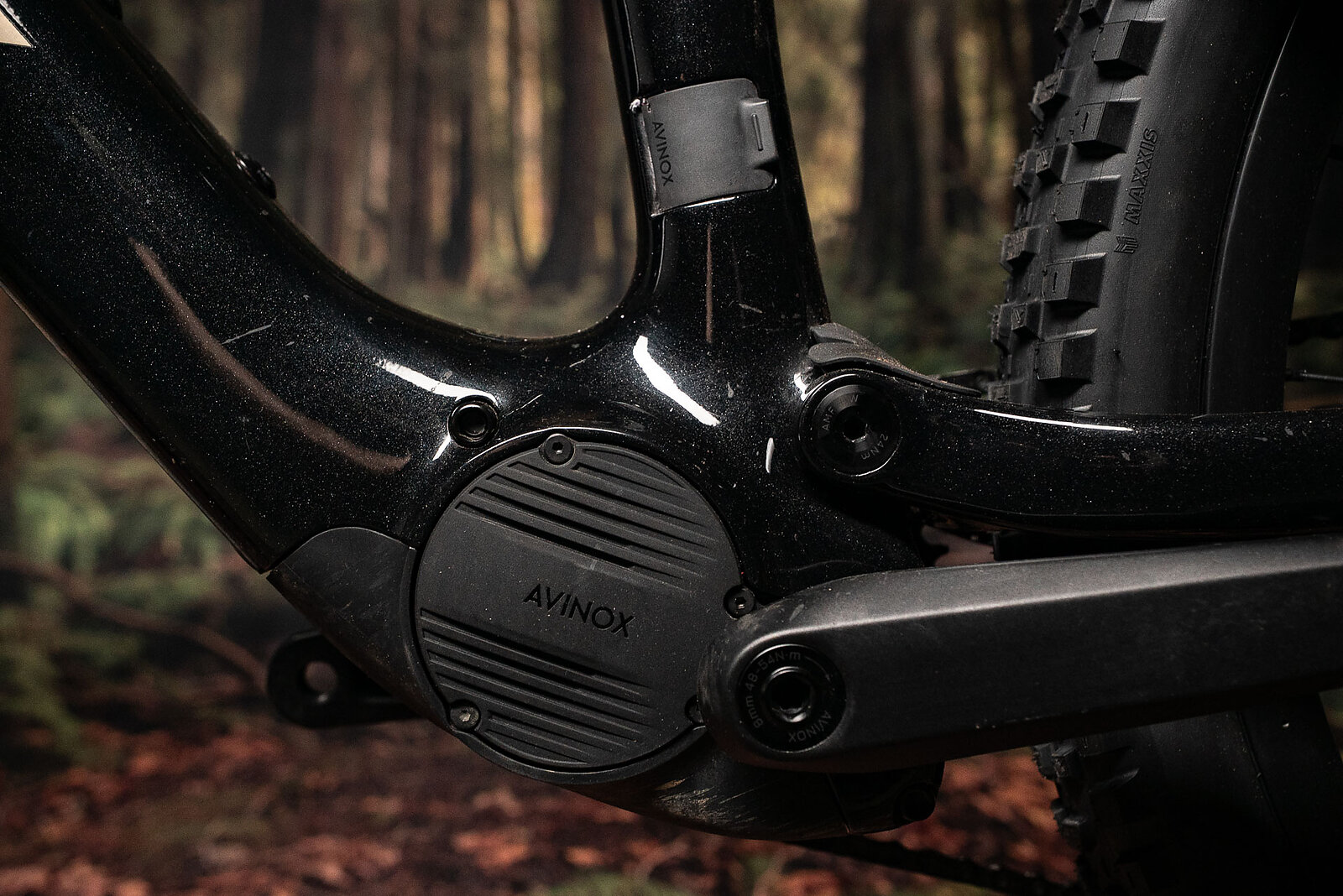
In part thanks to the PL Carbon Pro, the e-bike market is defined by what motor system a bike is based around. And, until this spring, Amflow had the hottest motor around, the Avinox M1. This motor is light, quiet enough, and very powerful. And Amflow has made it easy to flirt with, or outright eliminate Class 1 e-bike restrictions in both power and top speed. I’m not going to belabor that point here, but I remain convinced this horse left the barn nearly a decade ago when the mountain bike industry decided to embrace motorized bikes. It follows then that bikes like the Amflow are the logical extension of that progression, not some aberration.
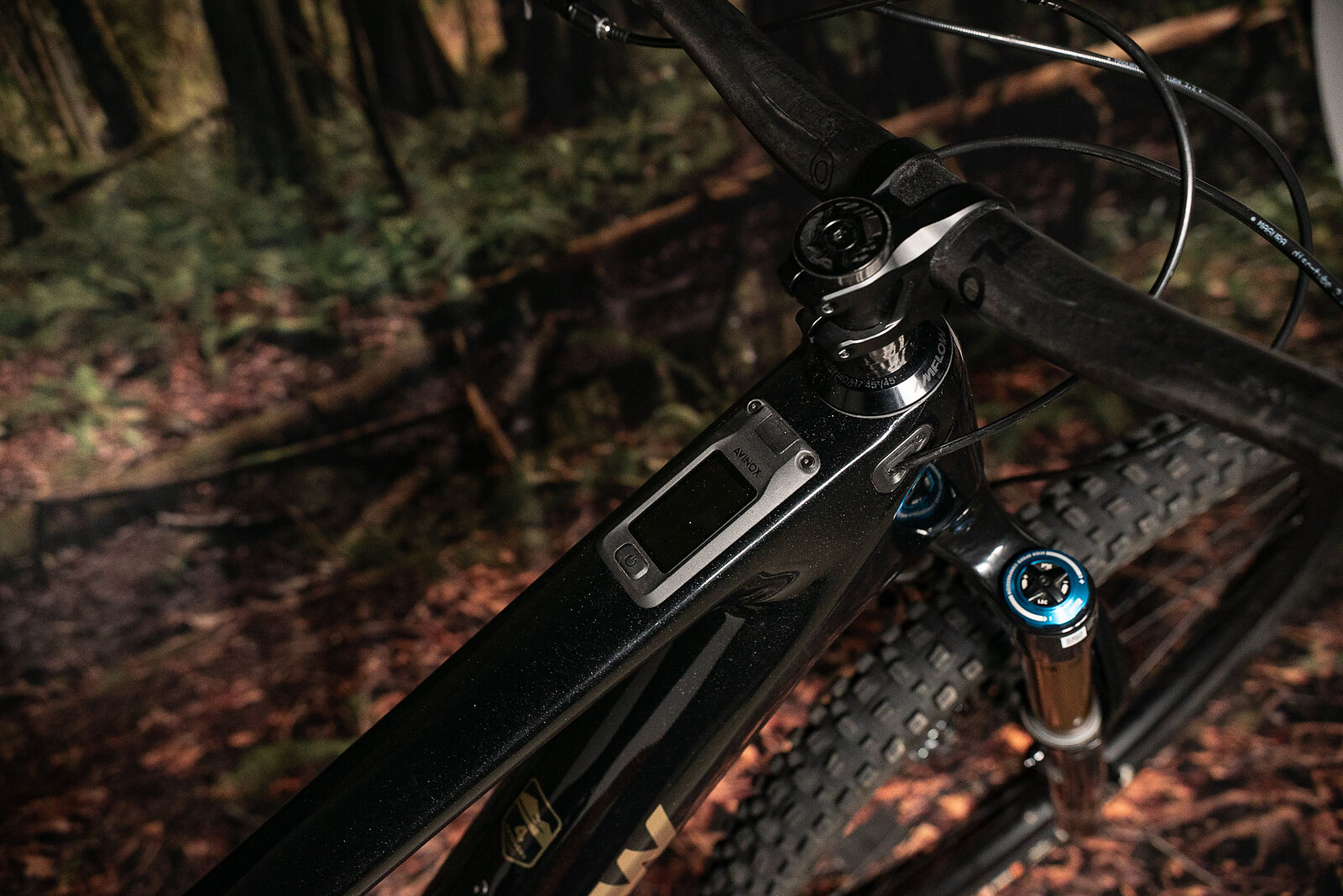
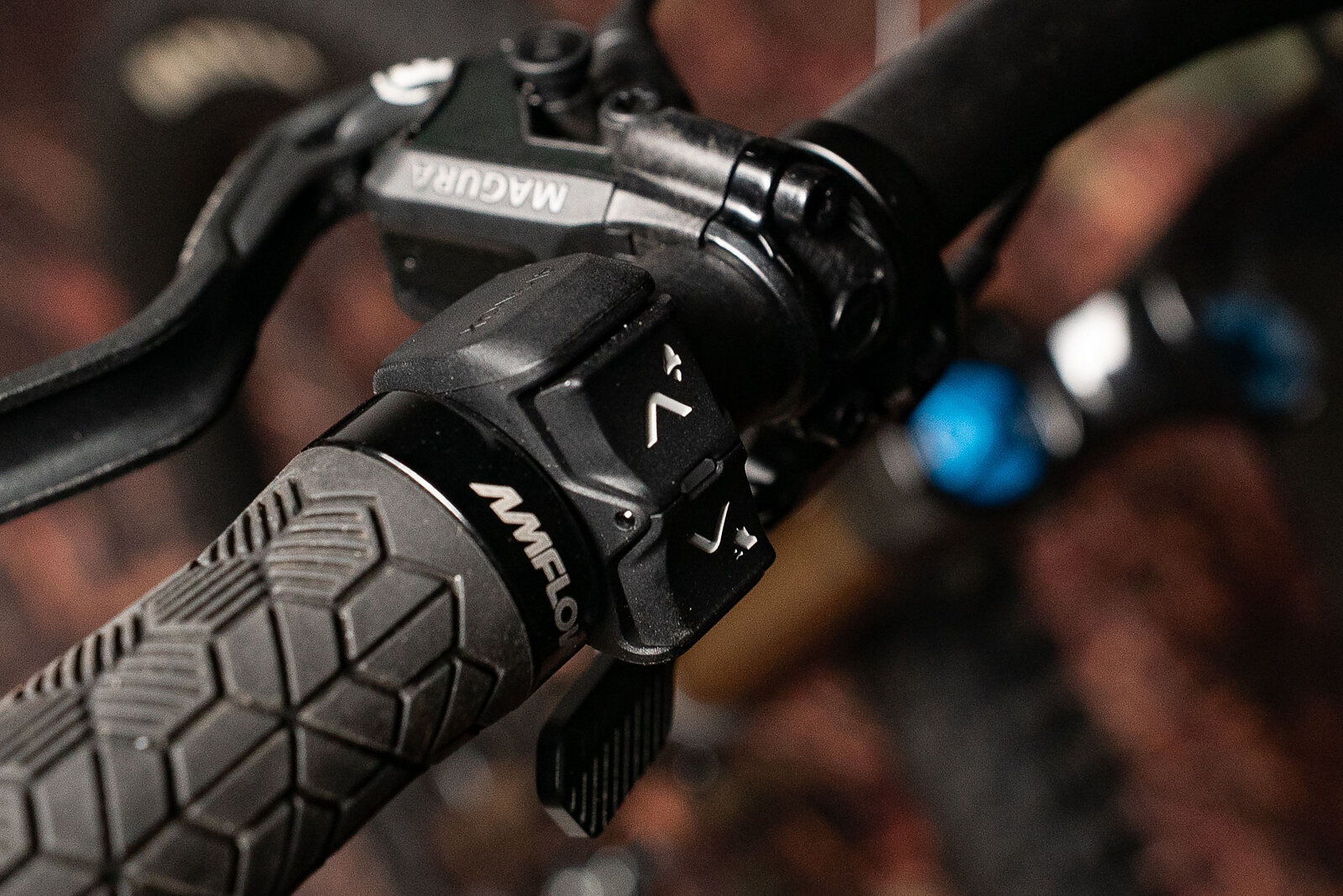
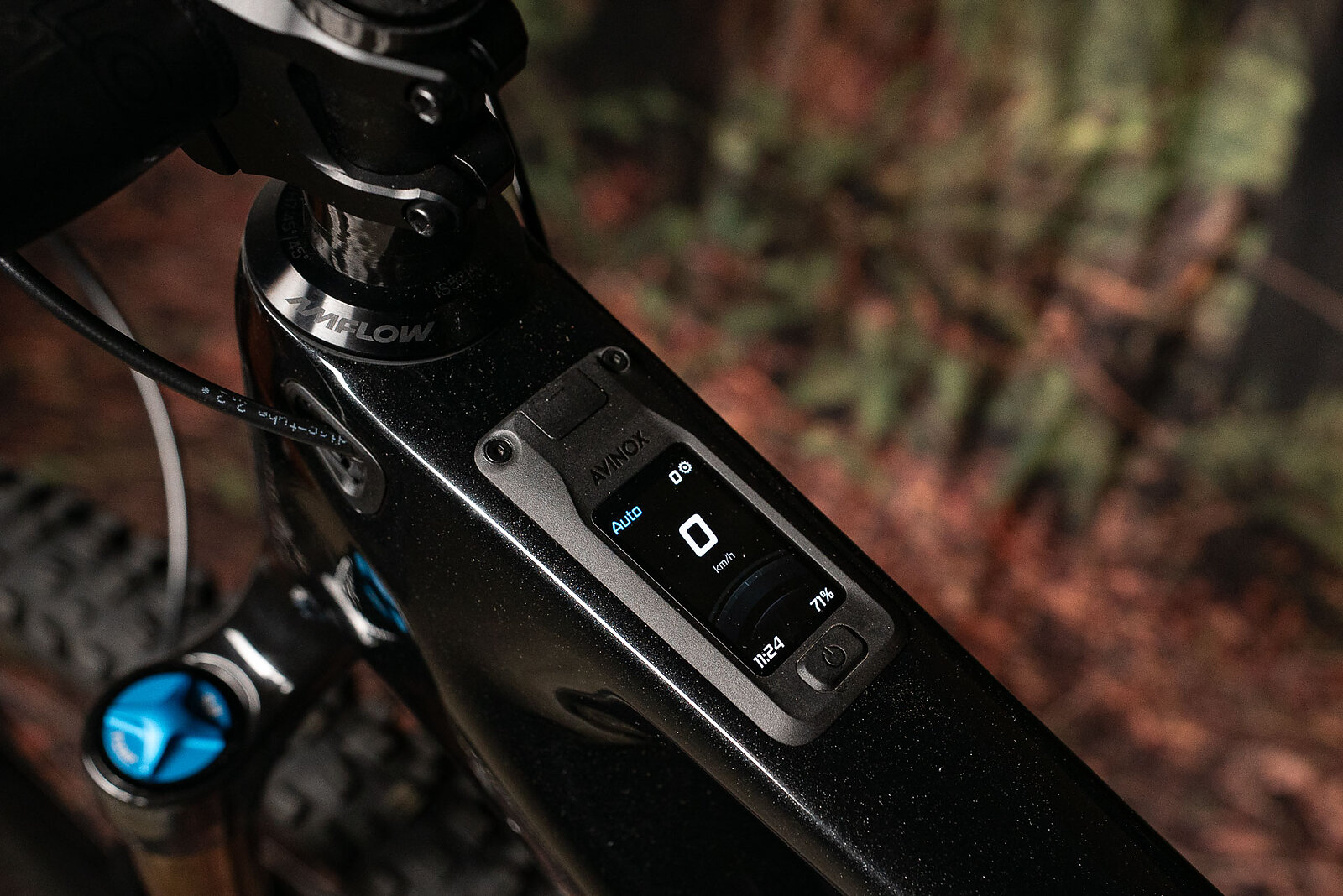
Instead, let’s talk about how all that speed and power is implemented. Amflow provides two wireless controllers, the one on the left switches modes and the one on the right allows you to navigate the display. The display also has a very good touchscreen, so I never really used the right controller, and would probably eliminate it on a personal bike. Both controllers have good ergonomics, and I didn’t find myself accidentally switching modes on the fly, an issue I have with Bosch controllers.
The PL Carbon Pro comes with an 800 Wh battery, that is removable, but you’ll need to drop the motor to do so—no hot swaps here. I burnt through that battery quickly, and have no interest in the smaller 600 Wh option. We’ll get into this further down, but I don’t think the Amflow is necessarily less efficient than other e-bikes. Instead, it lets you go faster, with less work, which inevitably leads to faster burn times.
The Avinox M1 system is fairly quiet uphill, with maybe just a touch more motor noise than Bosch’s highest-end systems. Headed down, there’s an occasional click from the motor, but nothing loud or distracting.
Going into this review, I expected to mostly notice the Avinox M1’s power. And, yes, it’s quick as hell. But my biggest takeaway instead was how smoothly and predictably that power was delivered. The M1 is less “scary” and easier to keep under control than other systems, even those with less watts available. Compared to the Bosch CX Race system, the Avinox almost feels like a four-stroke dirt bike, compared to the Bosch’s two-stroke vigor. It has less initial bite, less overrun, and takes more time to spool up. I lost traction with the rear wheel significantly less on the Amflow than some other bikes, and rarely found myself having to brake on climbs, or freak out about controlling the overrun. Folks who have become fully accustomed to the Bosch system, and run it in Race mode consistently might feel like the Amflow is a touch dull, but personally, I’m a big fan.
Amflow PL Carbon Pro Geometry and Intentions
The size large PL Carbon Pro has fairly “normal” geometry, with a 64.5-degree head tube angle, 475-millimeter reach, 445-millimeter chainstays, and a 77-degree seat tube angle. It’s definitely not progressive, or cutting edge, and I do wish the seat tube angle was a touch steeper, and the stack a little higher than 628 millimeters. But those issues are easily solved by pushing the seat forward and putting higher rise bars on the bike.
That geometry puts the PL Carbon firmly in modern “trail” or “all-mountain” bike categories. I’ve heard folks wishing it was longer and slacker, more aggressive. And, while I get that desire, my time on the PL Carbon doesn’t leave me feeling like that at all. The current geometry sets it up to be fun and capable on a wide variety of trails, and I rarely found myself wishing for a slacker layout. Some of this is personal preference, but as e-bike geometry gets more “aggressive” I find that I notice the downsides of all that extra weight more. The bikes start to feel ponderous and position me as a passenger, not a pilot. That’s not a sensation that I enjoy, so I prefer a “sharper” geometry, even for trails that I’d typically ride on a meat-powered bike with a degree or so slacker head tube angle.
The same goes for the rear suspension. At around 20 percent, it’s not the most progressive linkage around and, again, I prefer that to the gooier, less active feeling that I get with more progressive rear ends.
Finally, I think both the geometry, and suspension tie in nicely with the PL Carbon’s frame flex and feel. This is not the stiffest bike around, by a long shot. I’m a bigger person, at 210 pounds, and the PL Carbon didn’t ever feel too flexy, but I was also never tempted to put a stiffer fork on it. Stiffer forks don’t make every bike better, instead they can lead to an unbalanced sensation and, for this bike, the stock Fox 36 felt ideal.
Amflow PL Carbon Pro Frame Details
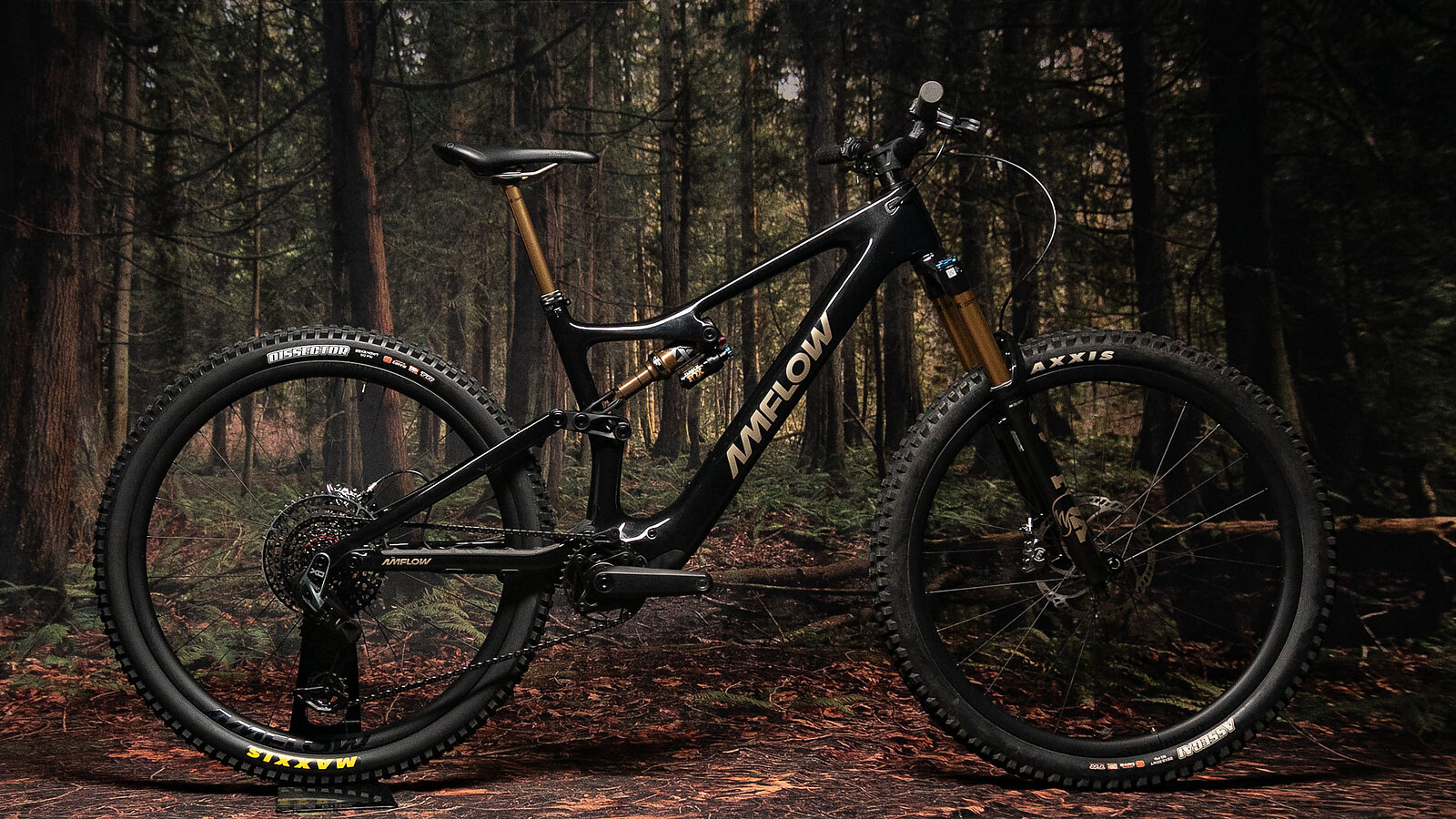
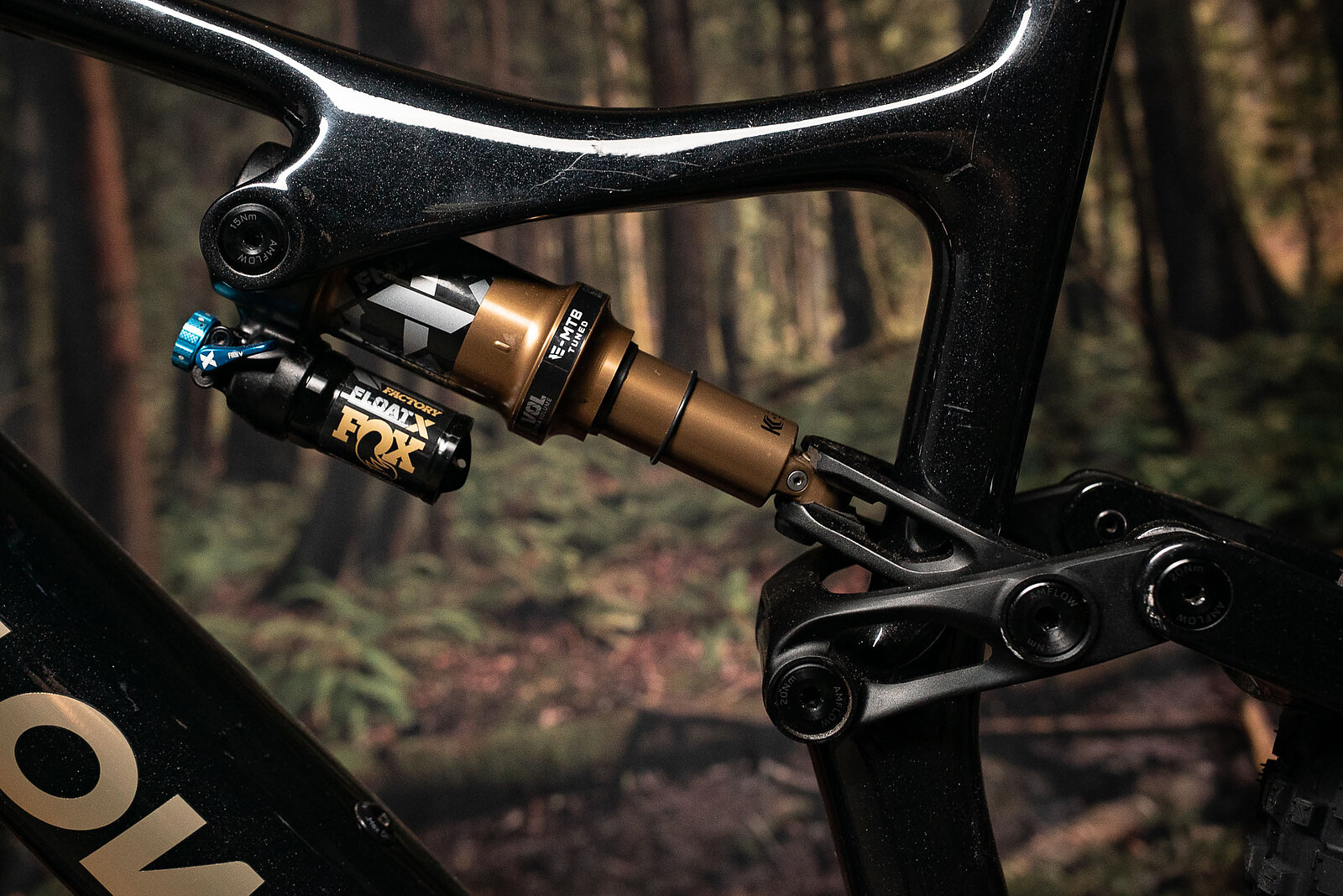
The PL Carbon isn’t the fanciest, most refined, most detail-oriented frame, but it gets the job done, mostly. However, the trunnion-mounted shock, driven by a yoke, is a near-unforgivable choice. Bikes with this yoke layout famously have a reputation for eating shocks thanks to side loading, and adding the rigidity of a trunnion mount to this equation means that even more of those forces will be directed into your expensive squishy bits. Luckily Amflow has remedied this on the second gen bikes that dropped this spring.
There’s a flip chip on the seatstay that allows you to swap between wheel sizes while maintaining geometry, and while the chain slap protection isn’t the most aggressive, it does a good job of quieting down the drivetrain.
Water bottle fitment is tight on my size Large frame, but I can get one in there, and didn’t have any issues with it interfering with the shock. All-in, this isn’t the most premium feeling frame on the market by a long shot, but it’s entirely adequate.
Amflow PL Carbon Pro Build
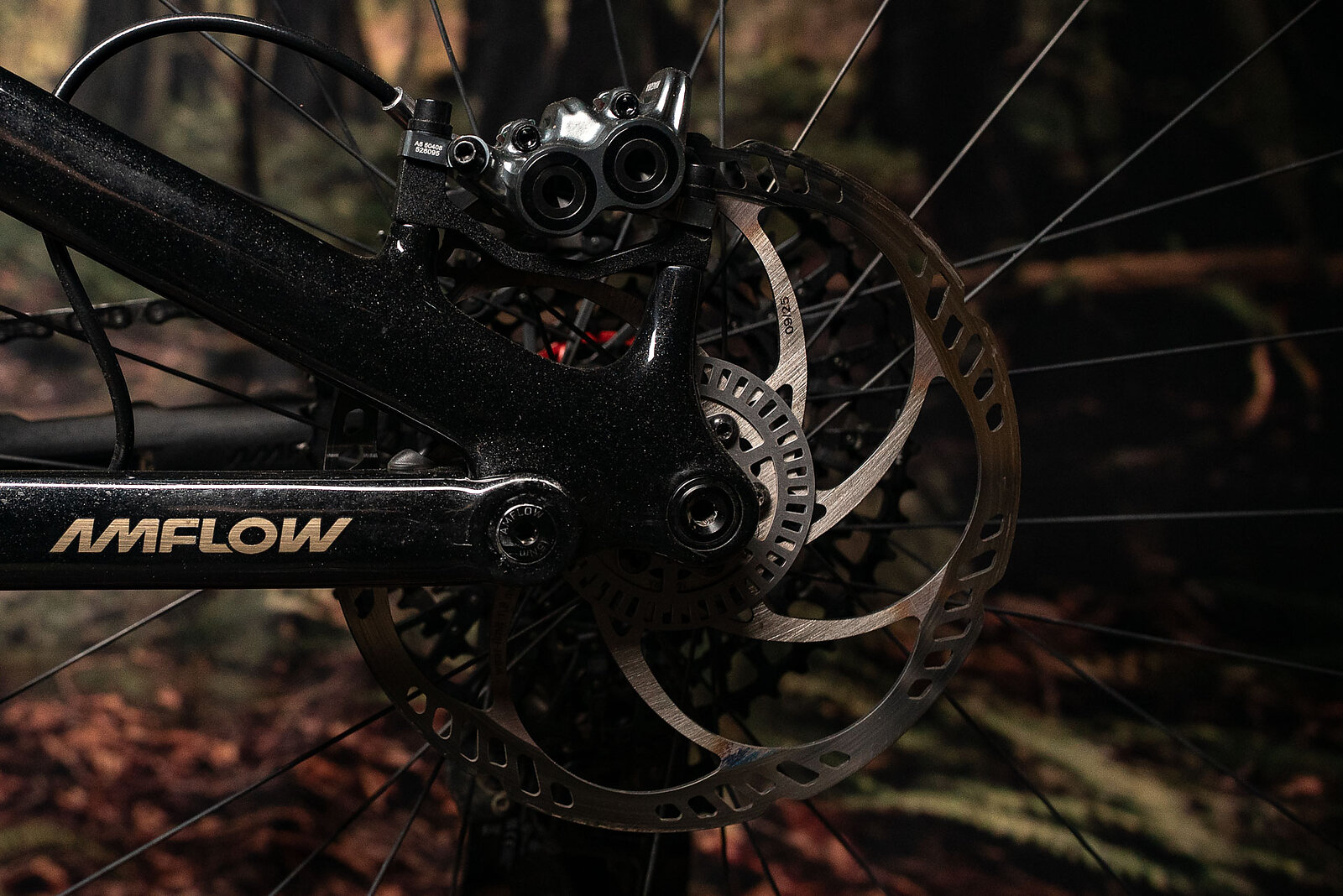
This highest-end PL Carbon comes with an interesting mix of bits. The SRAM XO drivetrain is great, and is hardwired to the battery which I appreciate. Similarly, the Fox Float X and 36 fork are solid options. The Magura MT7 brakes aren’t the most mainstream option, but I was quite happy with their lever feel and power.
The stock, 180-millimeter Fox Transfer dropper is nice, but most similar bikes are coming with droppers in the 200-millimeter range. I dropped a 210-millimeter OneUp post in, and would have bumped up to 240 millimeters, but the bike’s kinked seat tube didn’t allow for enough insertion.
The PL Carbon comes with no-name carbon bars and a fancy looking stem. I am not a huge fan of unbranded carbon bars. Dental work is expensive. Luckily, or not, I had a crash right out the gate that dinged the bars, so I swapped on a set of 50-millimeter OneUp bars that also solved my stack woes.
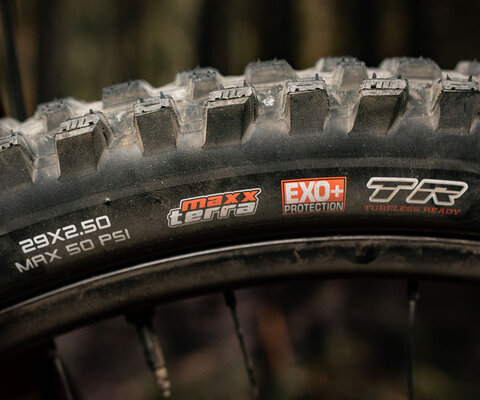
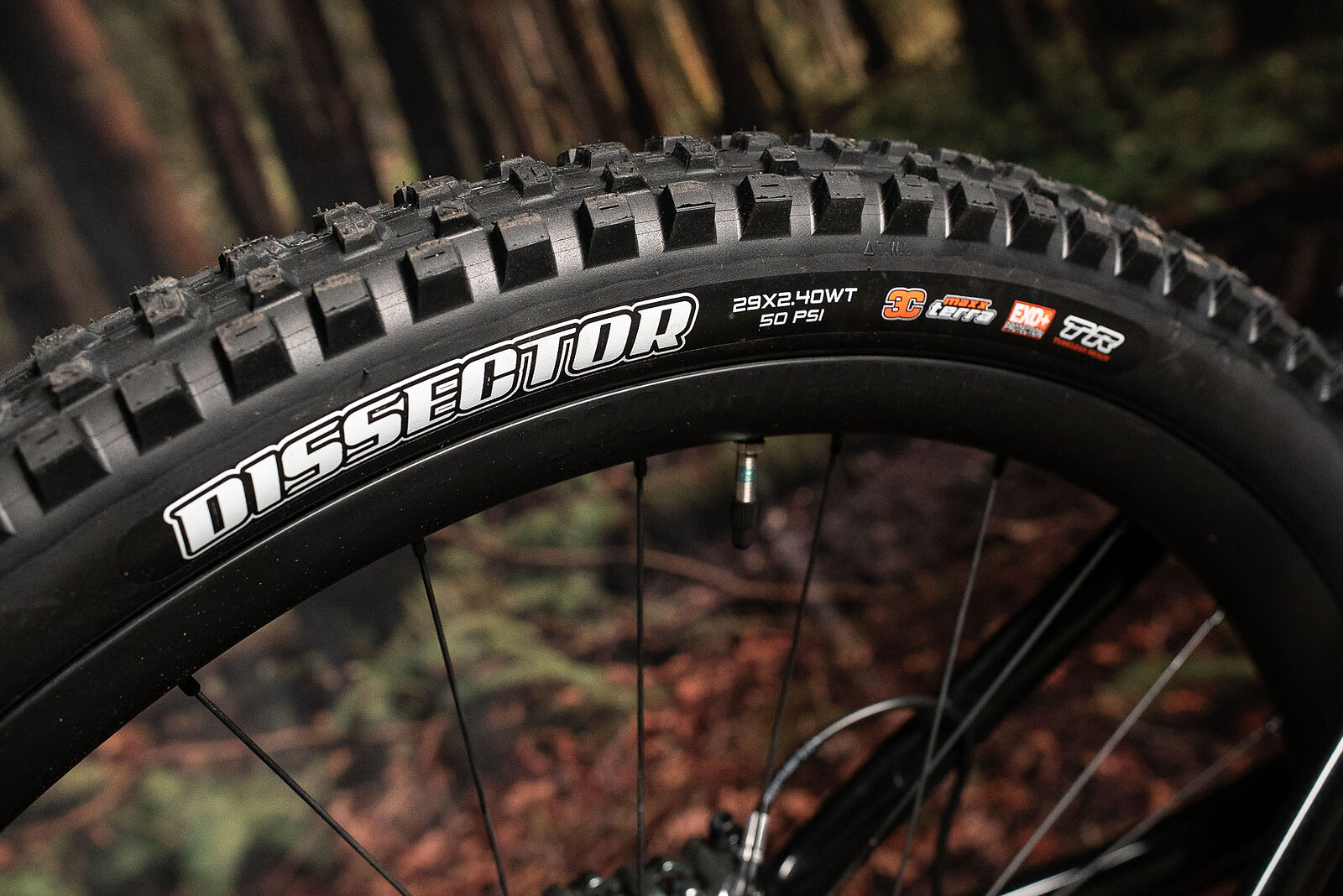
Finally, the stock wheels are carbon, similarly unbranded, and come with Maxxis Assegai and Dissector tires, both in MaxxTerra compound and EXO+ casing. That helps with keeping the weight down, but I didn’t find them to be adequate for the type of riding I like to do, so I swapped on a set of Specialized’s radial tires which were much better. I also pretty quickly swapped to a mullet wheelset, and have no desire to go back. On e-bikes with anything more than 130 millimeters of travel, I don’t have any interest in 29-inch rear wheels, but I do appreciate that Amflow allows you to choose.
Riding the Amflow PL Carbon Pro
Going uphill in Boost or Turbo mode is a pretty drastic performance shift from most other e-bikes, although the new Aventon Current feels like it’s playing in a similar space. You can do less work, while going uphill faster on this motor system. That’s especially evident on gravel road climbs, where, if you’re not careful, you can absolutely drop your friends on comparable full-power e-bikes without breaking a sweat. On singletrack climbs it’s much less apparent, because there power matters less than technique. On techy climbs I really appreciated the PL Carbon’s geometry and motor control. It doesn’t allow you to take a ratchet and then brap up tech sections like Bosch’s Race mode does, instead it rewards more consistent pedal pressure, and a more traditional riding style. That means it doesn’t lose traction as easily, and I had fewer “tire spinning even as I get off the bike” moments than on some rigs.
Headed down, the PL Carbon Pro feels tight and snappy. Some of that is due to its weight. It’s a fair bit lighter than many full-power e-bikes, and that makes it easier to play around, and change direction on it. But the geometry and suspension tune also get some credit here. I found myself more likely to step up to steeper trails and bigger moves on the PL Carbon than on longer travel, more aggressive bikes like the Pivot Shuttle LT simply because I felt more in control on the Amflow.
That’s a little counter-intuitive, but I’ve realized that with motorized bikes, I’m much more comfortable on a “sharper” bike that I know the limits of, and can move around aggressively than I am on a “safer” bike that reacts to my inputs less immediately or predictably. The Amflow doesn’t plow as aggressively, and isn’t as stable, but it does respond better to rider inputs. The more actively you ride, the more you’ll probably appreciate the Amflow, but if you’re looking for an e-bike that allows you to assume a neutral position and then just hold on through any terrain, you’ll probably be best suited looking elsewhere.
I’ve been riding the PL Carbon Pro hard for a few months, and haven’t had any issues with creaks or scary noises. However, I did have a weird incident where the cassette backed off my (personal, not stock) rear hub. It started dragging and fouling in the Transmission derailleur and caused a lot of drag. I don’t know what caused this issue, I’ve moved cassettes around on e-bikes a fair bit in the past, and have never had one back off, but the Amflow is more powerful than most other e-bikes, which might mean it’s more capable of backing the cassette off the hub? Regardless, I caught it before it caused any major issues and it was a fairly easy fix.
Finally, Class 3 mode: it’s easy to bump the bike’s max assist speed limit up to 28 miles per hour with a couple swipes of the touch screen. This might be a controversial take, but I don’t think that higher speed limit changes anything on the trail. I have yet to climb anything that was flat and open and wide enough to get anywhere near that speed limit. When riding on singletrack, the difference between 20 and 28 miles per hour is hypothetical, you’re never really touching either while pedaling. But, on the road, it’s a huge difference. 28 miles per hour allows me to stay in the flow of traffic on most roads here in Bellingham and makes for a much safer, more convenient experience than e-bikes that run up against that 20 miles per hour limit. I’m not in the market for an e-bike of any kind but, if I was, it would need to have Class 3 capabilities, simply because that better suits it to the only truly positive e-bike use case: as a car replacement. Unfortunately, I don’t think that’s consistent with this bike’s target audience, and I am sure we’ll continue to see e-bikes strapped to the back of trucks at the trailhead.
Disruptor?
I was, in some ways, late to the game riding this bike. I got it in hand to review as the initial hype wave was breaking over, and the logical result of that, the new Avinox M2S system was cresting the horizon. So the Amflow is no longer the hot new kid on the block, and instead we’re living in the world it helped shape.
And shape it did. It’s been wild to watch the e-bike discourse coalesce around this system. This Amflow PL Carbon Pro came onto the market as a weird upstart, and is ending its product cycle as one of the most “disruptive” products around. So does it live up to the hype? Is it game changing? Yes. Obviously. The game has been changed. This bike laid the groundwork for the Avinox-apocalypse that took Sea Otter by storm.
But it is funny, after the fact, to actually ride the dang thing. Yeah. It’s powerful, and it’s fairly light, and I quite like how it goes downhill. It’s a solid e-bike. But, it’s not some crazy night-and-day difference. It’s not like e-bikes sucked, and now they don’t. Instead, it’s indicative of how much bike development has plateaued. It doesn’t feel like the Amflow is a giant leap “better” than the existing market. Instead it feels like it made two of the small incremental steps we’re used to, at once. And that small jump was enough to upend the tenuous Jenga tower that was the e-bike industry.
So yes, the Amflow PL Carbon Pro is a "disruptor" but I’d add the caveat that the world it disrupted was prime for a kick in the pants, and now we get to deal with that aftermath.
For Now
In a vacuum, the Amflow PL Carbon Pro is a good e-bike. It’s quick and powerful on the way up, and has a predictable, active feel on the way down. That alone makes it worthy of consideration. Add the effect it’s had on the e-bike landscape and you get a genuinely interesting ride.
Learn more: Amflow