Orbea Rallon Enduro A taut thoroughbred
Last winter I reviewed the downhill configuration of the Orbea Rallon, and since then I’ve been riding the pedalable enduro version on a wide variety of trails, with a pretty broad swath of different setups and components.
When the Rallon’s unique 2-in-1 configuration was announced there was plenty of speculation as to whether this was an enduro bike that you could throw a dual crown on, or a downhill bike that you could fit a dropper post into. A lot of my time on the Rallon has been spent trying to suss out that divide, as well as figure out what sort of rider it’s best suited for. I also experimented with some off-menu options, so we’ll dive into how those shook out as well.
Orbea Rallon Enduro Details
- Travel: 170 mm (rear) 180 mm (front)
- Wheel Size: 29” or mixed
- Size Tested: Large
- Build Tested: Frame Only
- Head Tube Angle: 63.2°
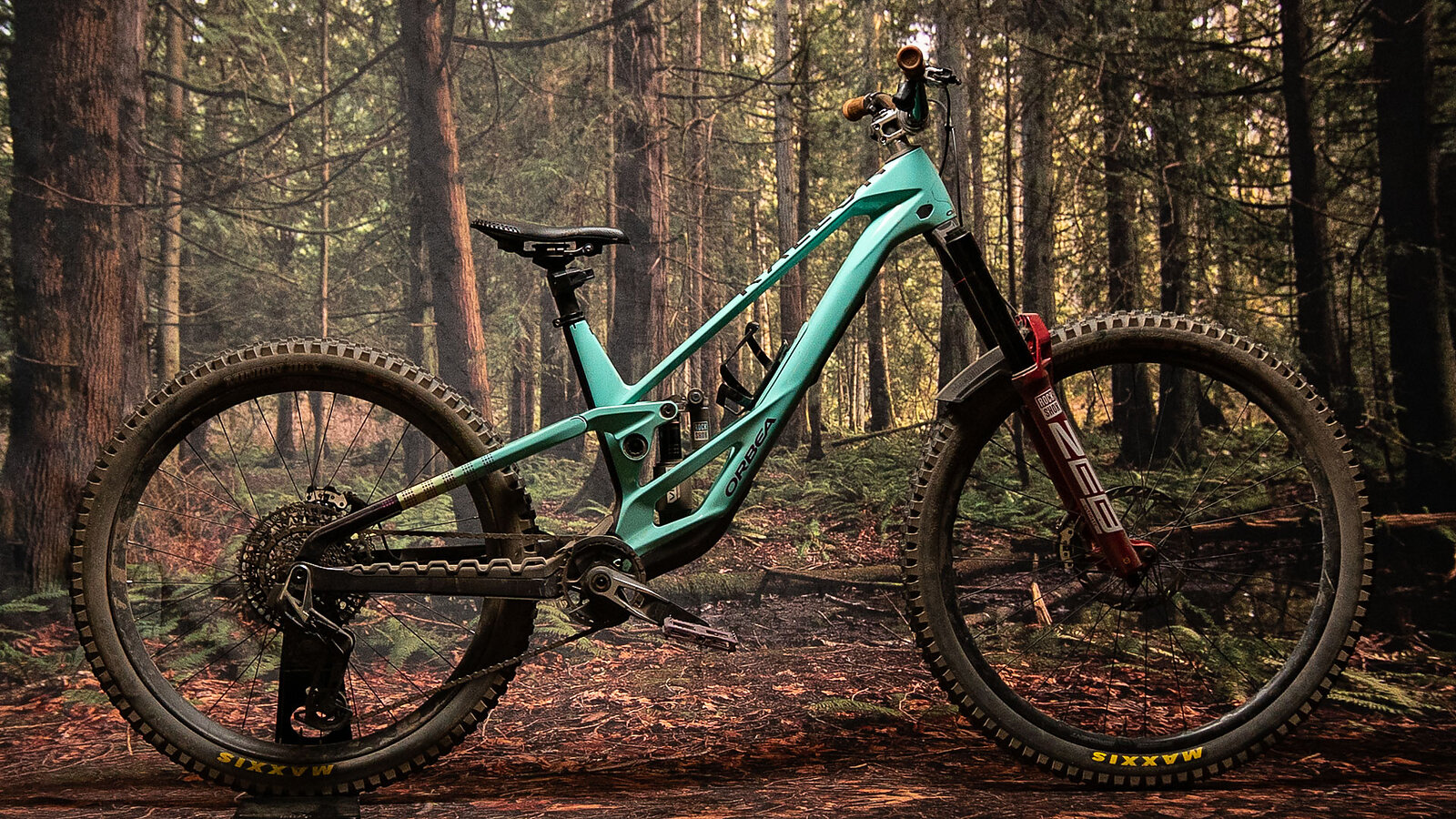
- Weight: Build as pictured: 35.75 lbs, 16.22 kg
- MSRP: $4,409 (frame only)
Rallon Enduro Options
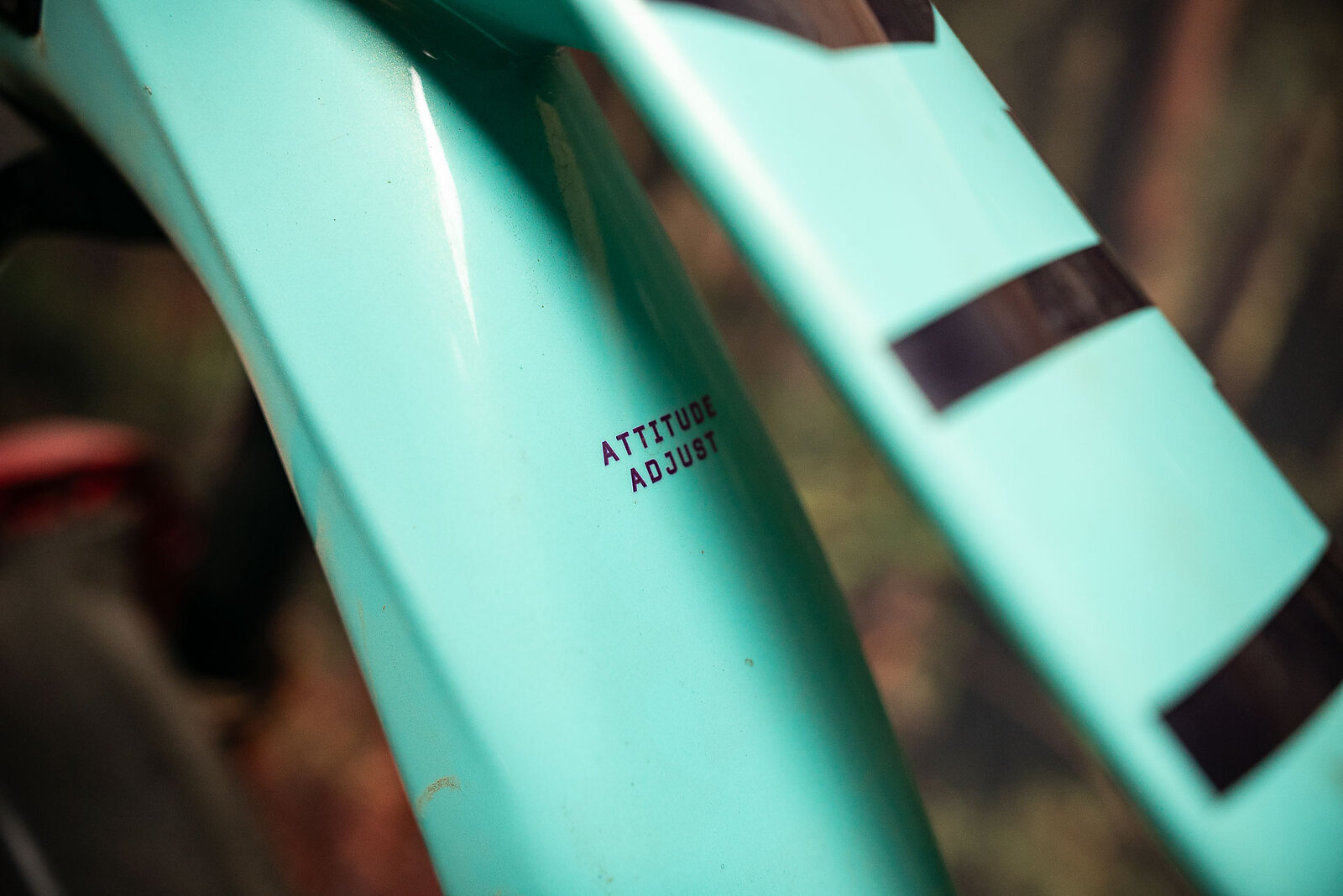
Thanks to its modular nature, the Rallon has enough adjustment options to make my brain ache. The head tube angle is adjustable with the included swappable lower cup and bearing, from 63.2° up to 64.8°. Out back, you can get the Rallon with either 442 or 450-millimeter chainstays, but you do have to buy new stays to swap between rear center lengths. Then, thanks to the swappable Gravity Link, you get a four-way flip chip for linear and more progressive suspension curves for either 29” or 27.5” rear wheels. You’ve also got an optional frame weight to add almost 400 grams of weight to the bottom bracket area.
I spent most of my time riding the Rallon Enduro in the slackest head tube position (63.2°) with the long chainstays (450 millimeters), and a 27.5” rear wheel in the more linear setting. But, as we’ll get into deeper in this piece, there’s nothing stopping you from running the Rallon with the DH Gravity Link for 200 millimeters of rear travel and—spoiler alert—that actually ended up being my favorite setup for the Rallon.
Rallon Enduro Frame Details
I already covered most of the Rallon’s frame details in my DH review, so give that a read if you want to get into the weeds. The short version is that everything on the Rallon feels thoughtful and carefully made, but there are a few small frustrations I ran into.
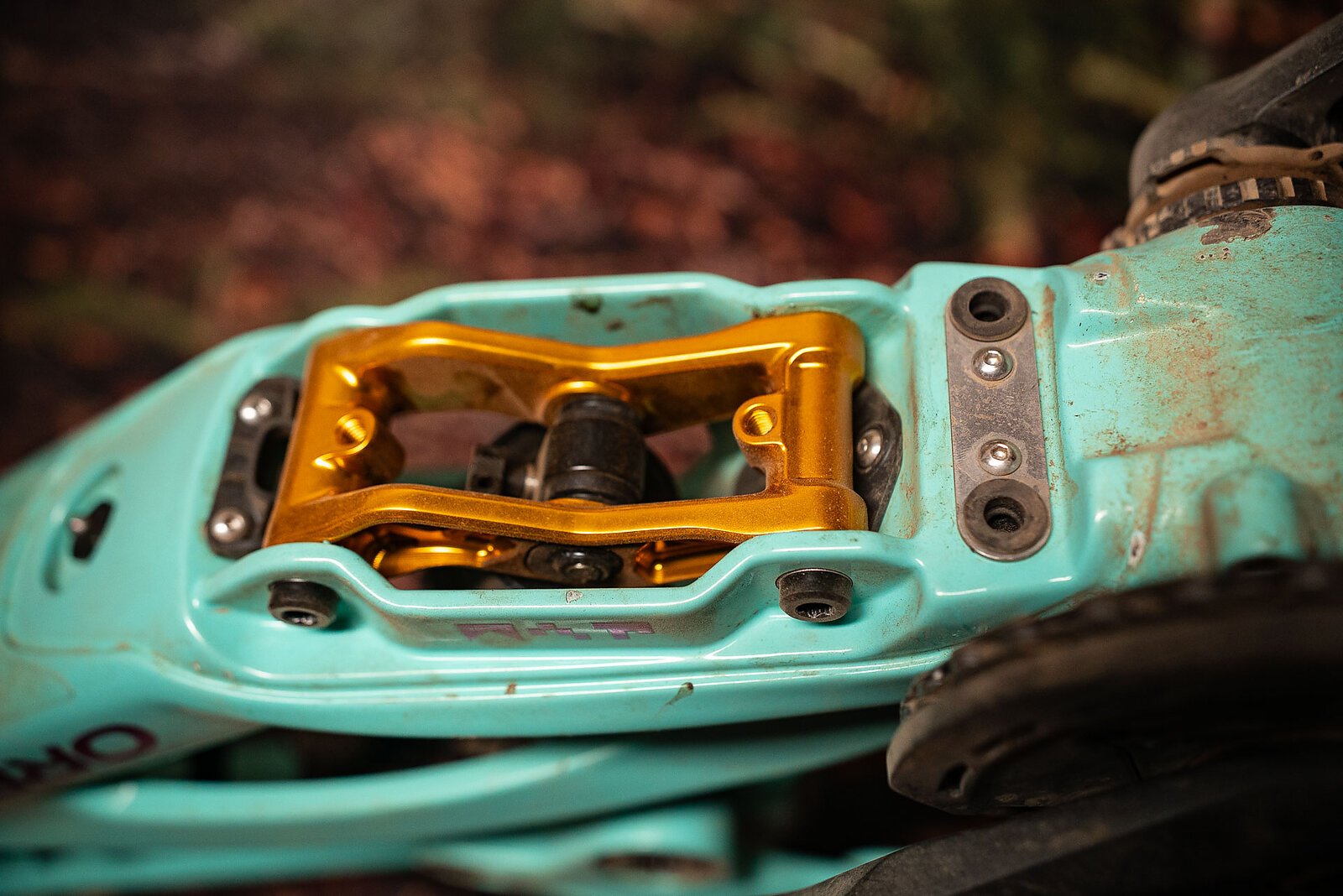
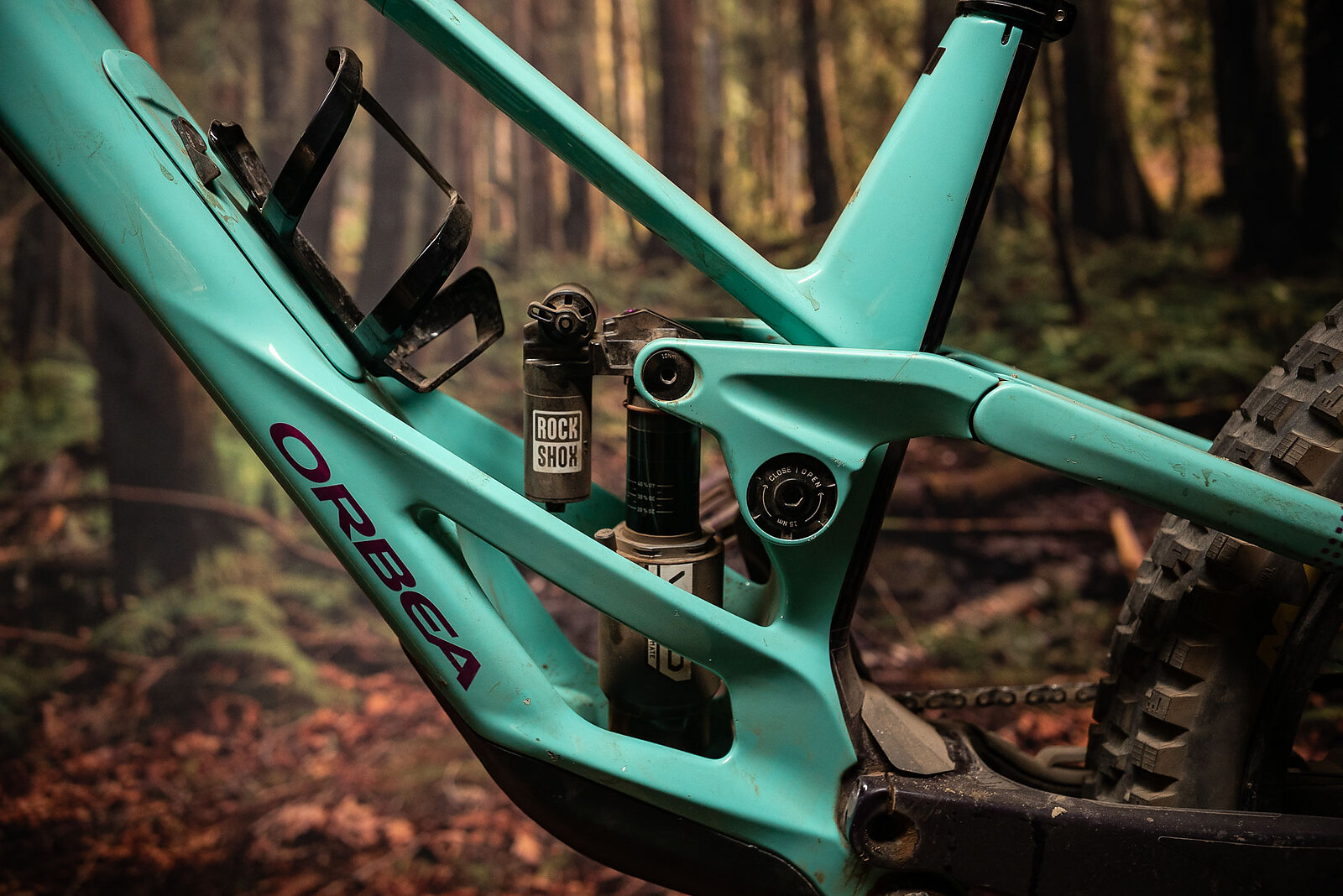
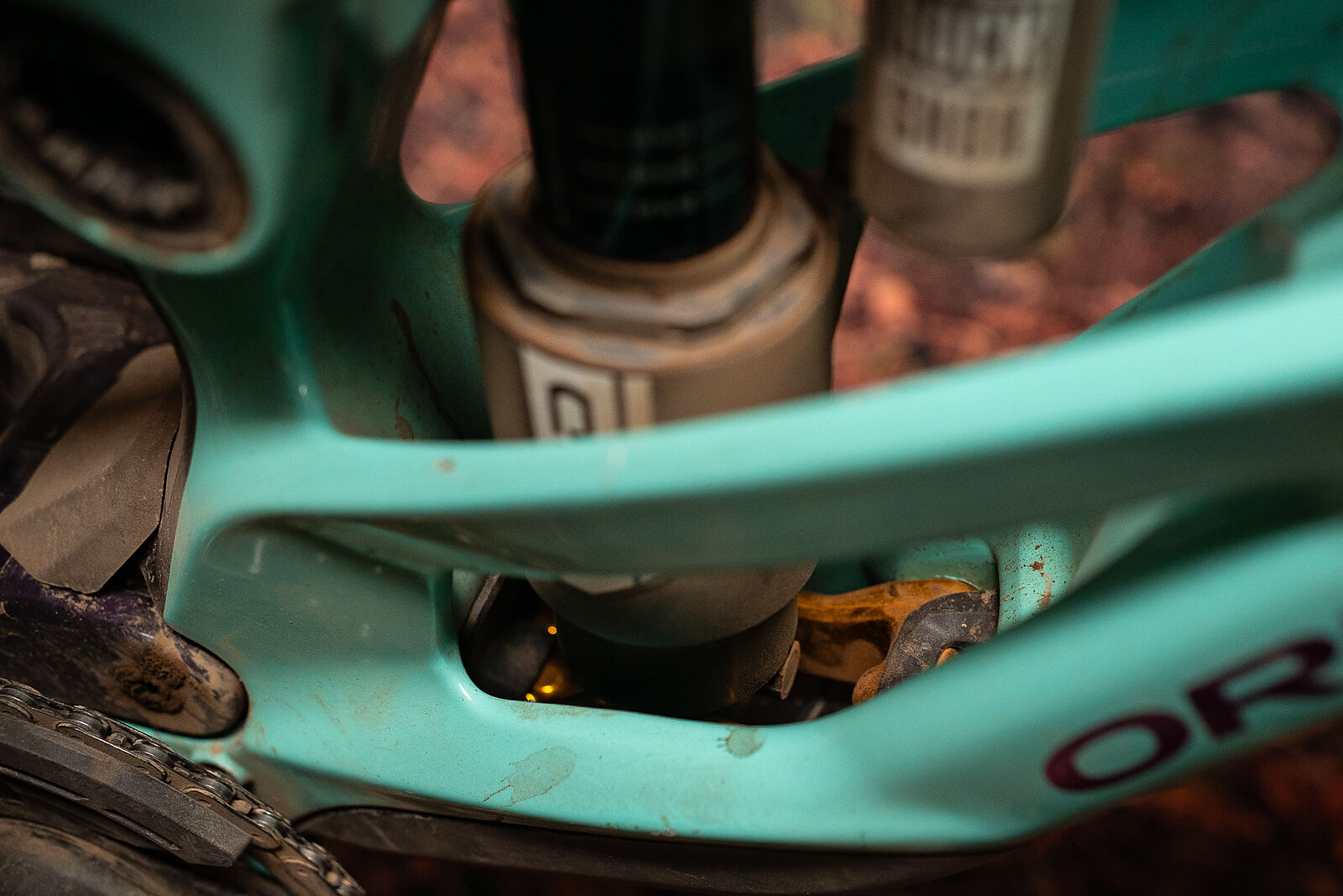
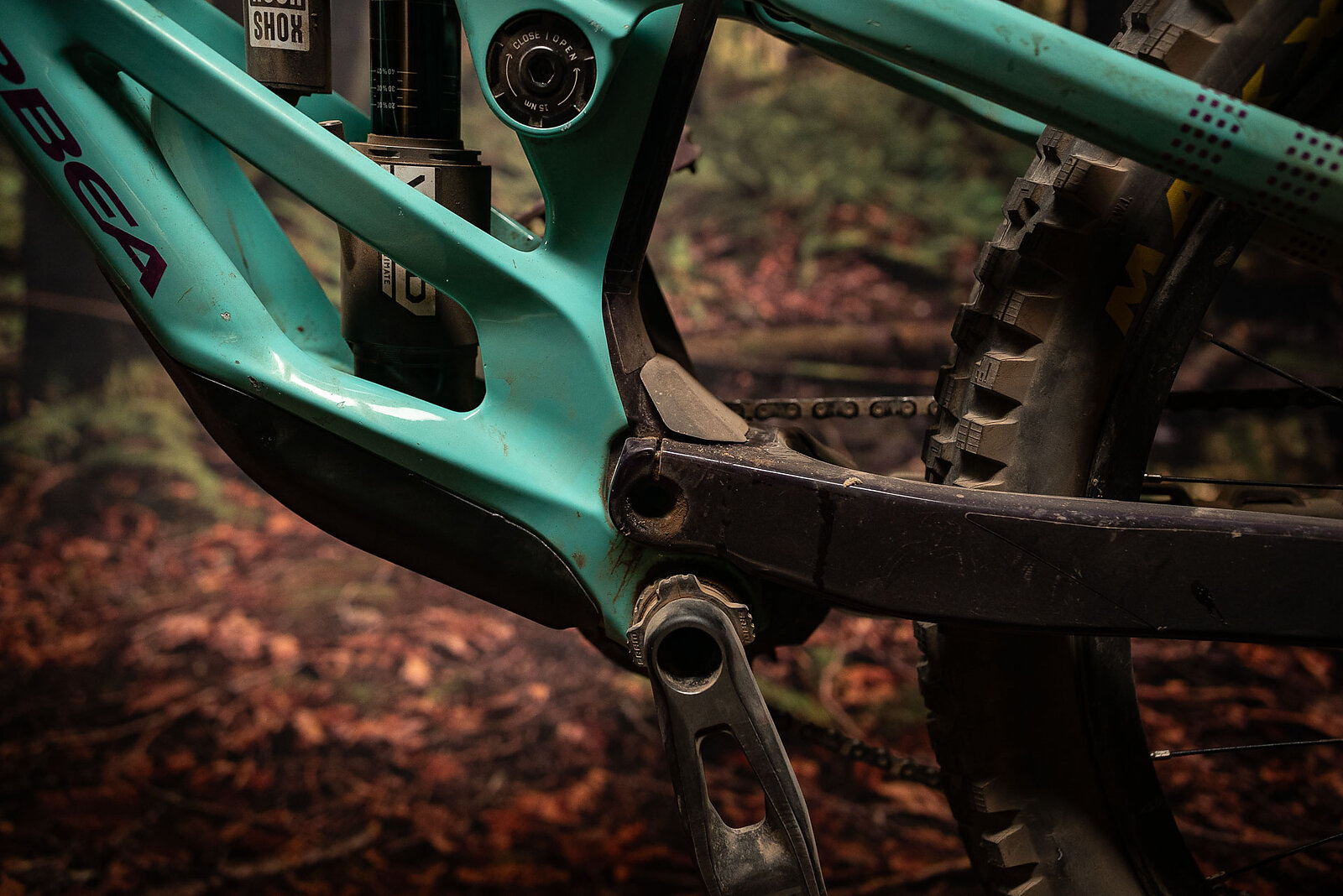
First, the cover for the downtube/bottom bracket area can get rattley, and likes to accumulate grit and mud. It’s a good idea to keep an eye on it and to keep it as clean as possible. The design around the lower shock mount also makes it challenging to adjust your rebound, so try to keep fiddling to a minimum there.
The internal storage is great and the Rallon has room for a water bottle in the front triangle, although I found that larger 22-ounce bottles rattled a lot on the top tube. That’s an important attribute of this bike—it has impressive acoustics, so any sort of creak or rattle gets amplified through the frame.
Finally, in my downhill review, I commented that the cable and hose routing was pretty easy to work on. And, it was for that initial brake swap. But when it came time to swap between downhill and enduro mode, I found it quite frustrating and had to pull the main pivot, as well the shock and Gravity Link to get everything routed.
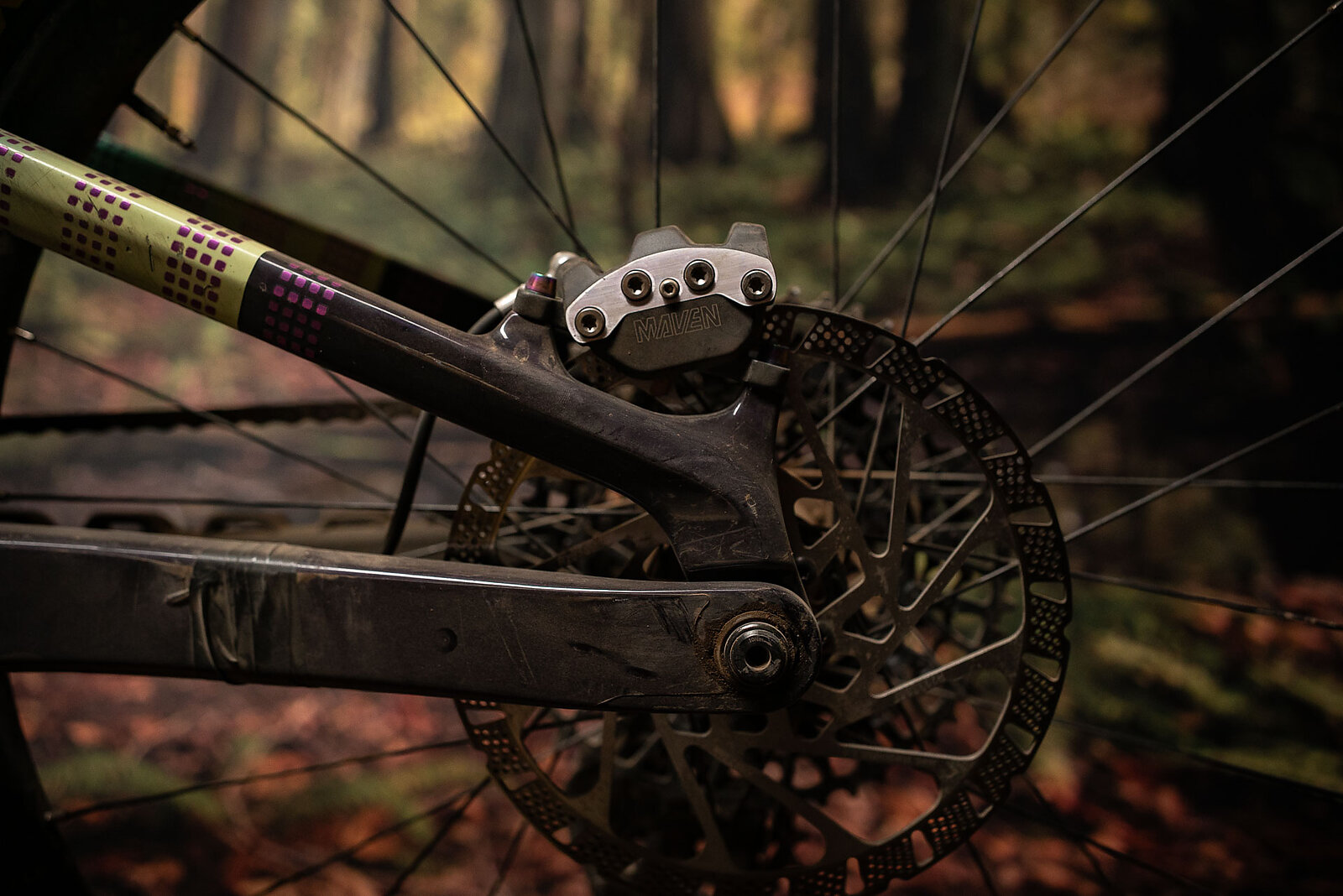
Finally, for some reason Orbea specs the Rallon with a native 203-millimeter rear post mount. This was a terrible decision when Orbea first made it, and is even more frustrating now that Shimano brakes come with 200-millimeter rotors. I ran a +17-millimeter adapter for a 220-millimeter rotor which was fine, but the whole situation was annoying and felt petty. Go 180 or 200 millimeters, but, especially now that Fox and Shimano are on the 200-millimeter game, don’t give me that extra 1.5 millimeters of post.
Rallon Enduro Geometry
The Rallon has fairly modern and predictable geometry. Its 475-millimeter reach, 650-millimeter stack, and 450-millimeter chainstays all felt bang on for me at 6’2”. I experimented with the mid and steep head tube angles, but the slackest 63.2° setting really isn’t that slack and I got along with it quite well. As we’ll get into later though, I can imagine riders building a more trail-focused Rallon and digging the steeper head tube angle.
A Note on Anti-Squat
In these reviews I rarely post suspension kinematic charts, and the Rallon is a great example of why. Orbea says the Rallon has drastically less anti-squat in Enduro mode than in DH mode, but that’s a confounding statement because none of the relevant pivot points on the bike change between the two modes. Instead, the rider’s center of gravity (hypothetically) might change, based on a different riding position, and the instant center changes based on a potentially smaller chainring and larger cassette cog. So, the same basic frame layout can generate wildly different lines on the graph just based on assumed parameters that are never divulged to the riders reading that graph.
I’ve had conversations with a few different engineers at large bike companies who have agreed that while visualizations of anti-squat and anti-rise can be useful tools, reading too much into the graphs that any company puts out is a fool’s errand because if you don’t know what gear ratio it is being calculated around and what center of gravity is being assumed, you can’t actually compare graphs between brands.
All that to say, on paper, swapping the link between DH and Enduro should make the Rallon pedal drastically better. But in reality, as we’ll get into later, the Rallon also pedals quite well with that DH link in.
Riding the Rallon Enduro
The Rallon is a delight to climb. It’s fairly light (that 35.75-pound weight is with 220-millimeter rotors and the new, quite heavy Maxxis DHX tires, but no frame weights). The 78.8° seat tube angle and 450-millimeter stack put me in a comfortable, upright position that allowed me to sit and spin efficiently up just about everything. I used the climb switch for gravel climbs but even with it wide open there was very little pedal bob.
Going downhill in its stock 170/180 millimeter configuration, with a 62.5-millimeter stroke shock, the Rallon has quite a nice blend of traction and support. It’s definitely not the most plowy or most settled enduro bike I’ve ridden, instead I felt like it encouraged me to jump into or over obstacles, but then had enough juice in the rear end to mop up my mistakes. I’ve spent a bunch of time on big enduro bikes with 180-millimeter Zebs between me and the front wheel, and the combo of longer-than-average fork and supportive and less active rear end on the Rallon was quite interesting. It’s less of a sledgehammer, and more of a razor sharp machete that favors precision but doesn’t fault you too much when you fall short.
As such, it lent itself to a more active riding style, and I found myself making the most of flatter sections of trail, pumping through obstacles, and reaching for optional gaps. The Rallon jumps quite nicely and doesn’t feel like it wastes as much of the energy you put into it as bikes like the Trek Slash or Taken Encounter. But, on the flipside, it doesn’t generate quite as much traction as either of those bikes, or even as the new Yeti LT, and doesn’t have the same velcroed, super safe feeling manners on chunky run-outs. I experimented both with and without the frame weight, and much preferred the Rallon with as much weight as possible at the bottom bracket.
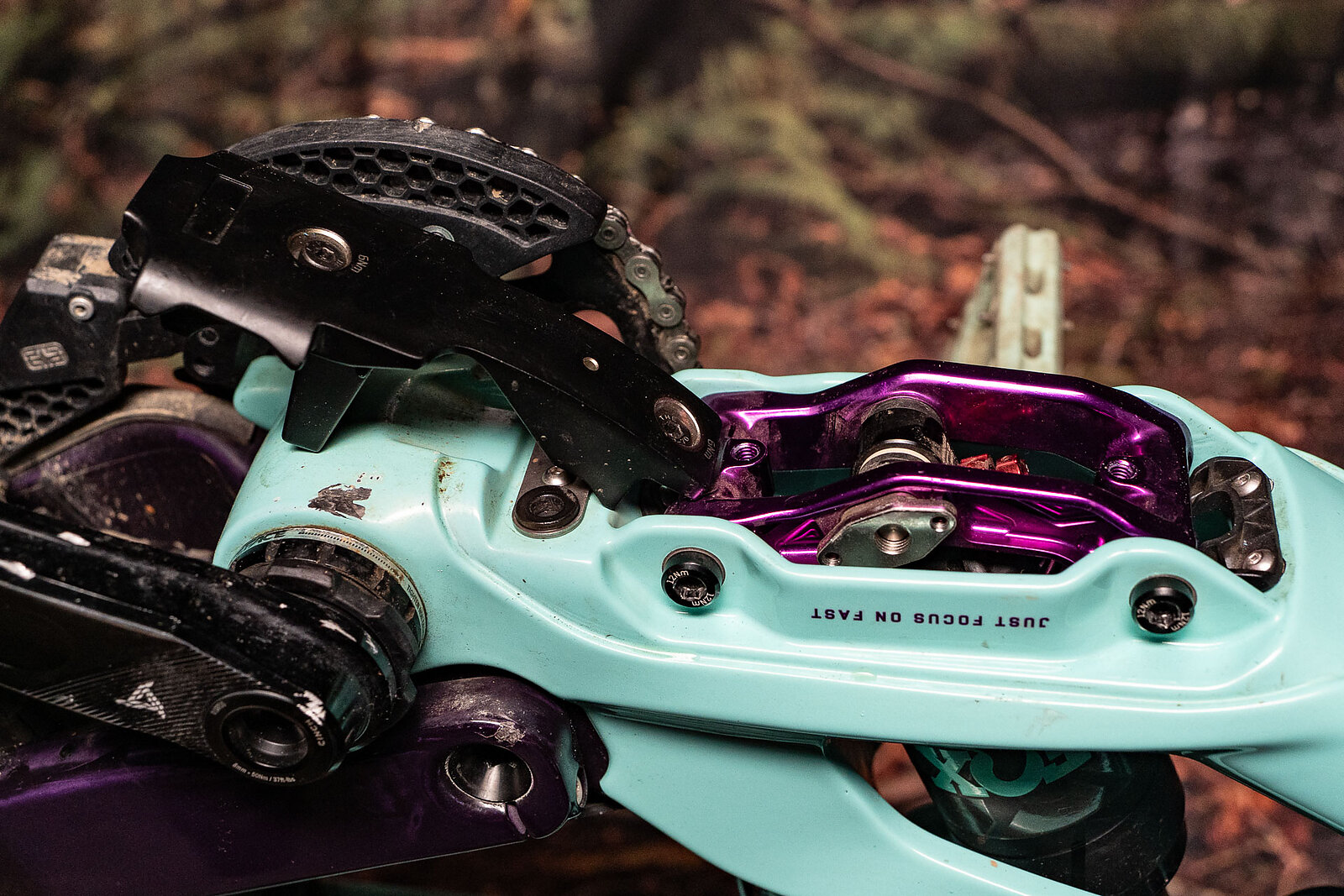
I did notice a “taut” feeling through the pedals and ended up running the Rallon with a Sidekick rear hub for a while before swapping the new Ochain on. Because of that taut feeling, and the fact that this is a fairly slappy and loud frame, I think the Rallon is a great candidate for the chain-decoupling device of your choice.
I ran into quite a bit of frame noise toward the end of my time on the Rallon, and had to chase down several creaks, pops, and rattles. The Rallon is a pretty loud frame and it takes more maintenance to keep it quiet than other enduro rigs I’ve put a similar number of miles onto.
Leaving the Menu Behind
Given its low frame weight and playful nature, I could easily imagine running the Rallon with a 60-millimeter stroke shock and a 170-millimeter fork as a lighter, quicker, more trail-oriented bike.
But, thanks to a delay in getting my hands on the Enduro Gravity Link, I actually found myself going the opposite direction. I ran the Rallon for a few months with the DH link and 225x75-millimeter shock combined with a 12-speed drivetrain and 180-millimeter fork. And, for my riding at least, this was the combo to beat.
If you don’t care about nerd math, just believe me when I say that the 6-millimeter difference in axle-to-crown affects the rest of the bike's geometry less than swapping from the slackest to steepest headset settings. If you do care about nerd math, you should really mess around with a triangle solver sometime. For the purposes of this experiment, I focused on the vertical leg of a right triangle where the opposite angle is the head tube angle, and the hypotenuse is the fork’s axle to crown. The change in the length of that leg is indicative of the change in height of the head tube, and thus the change to the bike’s geometry.
With the stock Fox 40, that dimension ranges from 1,191 millimeters at the slackest head tube angle to 1,279 millimeters in the steepest. With the Zeb, you’re ranging from 1,266 millimeters to 1,179 millimeters, neither of which drastically affect the geometry.
I ran a 50-millimeter rise bar, as opposed to the Rallon DH’s 20-millimeter stock option and partied on.
The Rallon with a 180-millimeter fork and 200 millimeters of rear travel is friggin' rad! I ran the stock downhill rear shock without a lockout, and pedaled several four-thousand-foot-plus days with zero frustration or issues. The Rallon with 200 millimeters of travel and no lockout bobs less than the 150-millimeter Evil Following, locked out.
And, headed downhill, it’s noticeably cushier and more planted than the 170-millimeter version. It handles smaller chatter better and plows harder, without compromising too much pop and playfulness. If I owned a Rallon, I would track down a 190-millimeter air spring for the Zeb and figure out some sort of 225x72.5-millimeter stroke shock to have a long-travel freeride machine.
For most of this spring and summer, the 180/200-millimeter Rallon was my bike of choice for any ride that included hard trails and lots of climbing, and it was an absolute delight.
The Dream of the 2-Beer-DH-Bike
In my review of the DH Rallon I mentioned my dream of the "2-Beer-DH-Bike," a bike that I can swap from bike park mode to pedal mode in the time it takes my companions to drink two beers. Initially I thought the Rallon might be that bike but, ultimately, it ended up being the bike that erased that dream. If I had SRAM’s wireless DH Transmission, I could pretty easily swap between DH and Enduro mode in the twenty minutes it takes my friends to slam a couple cold ones. But I don’t really want to.
The best part about dedicated downhill bikes is that you can put a bunch of bike park wear and tear into them without affecting your pedal bike. They act as sponges for abuse. But the Rallon is not that absorbent of a sponge. It requires more care and maintenance to stay quiet and smooth than other bikes in this class I’ve ridden, and feels higher strung. Maybe, more importantly, it’s so dang capable in its pedalable, 200-millimeter guise, that I’d be happy on the “Enduro+” version for anything short of full-on downhill racing. And, if I was racing downhill, I’d probably reach for a more smashy bike anyway.
The dream of the 2-Beer-DH-Bike is dead not because the Rallon killed it, but because the Rallon demonstrated to me that it wasn’t the ultimate goal worth striving toward.
For Now
Orbea’s latest Rallon is one of the more adaptable bikes around. And, with some experimentation, I found that it excelled even further outside of the framework Orbea created for it. If you’re looking for a taut, capable enduro bike that still retains plenty of playfulness and a responsive feel, the Rallon is a great place to start. And it sure doesn’t hurt that it can transform into a downhill bike as well.
Learn more: Orbea