Maxxis DHX A race-winning beast.
Spy shots of a new Maxxis downhill race tire have been popping up for well over a year, and internet speculation has been rampant. Would this tire be the long-awaited DHF II? Maybe the “Boost Bro Special Edition?” Well, it’s both, and neither. The folks at Maxxis say that when they set out to update the current Minion DH line to meet the needs of modern downhill racers the team ultimately decided to create a totally new model instead of tweaking the existing DHF or DHR II. That makes a whole lot of sense. The DHF tread pattern is more than 25 years old, and is still one of the most popular trail and enduro tires around, so why mess up a good thing?
Instead, Maxxis spun off a new tread pattern that also serves as the launch platform for a new, burlier downhill casing. That casing has already racked up 76 World Cup podiums, 24 wins, and 14 elite wins (and counting). And the result of that new tread pattern? The new dry-conditions, race-focused DHX. When you put this tire under the likes of Jackson Goldstone and Aletha Ostgaard, it’s fast as all hell. But what if you’re not on the cutting edge of World Cup racing? How does it perform for the rest of us?
Maxxis DHX Overview
- Sizes Available: 29x2.5” 27x2.5”
- Compound: MaxxGrip
- Casing: New DH
- Weight: 29”: 1543 grams, 27.5” 1319 grams
New Maxxis DH Casing
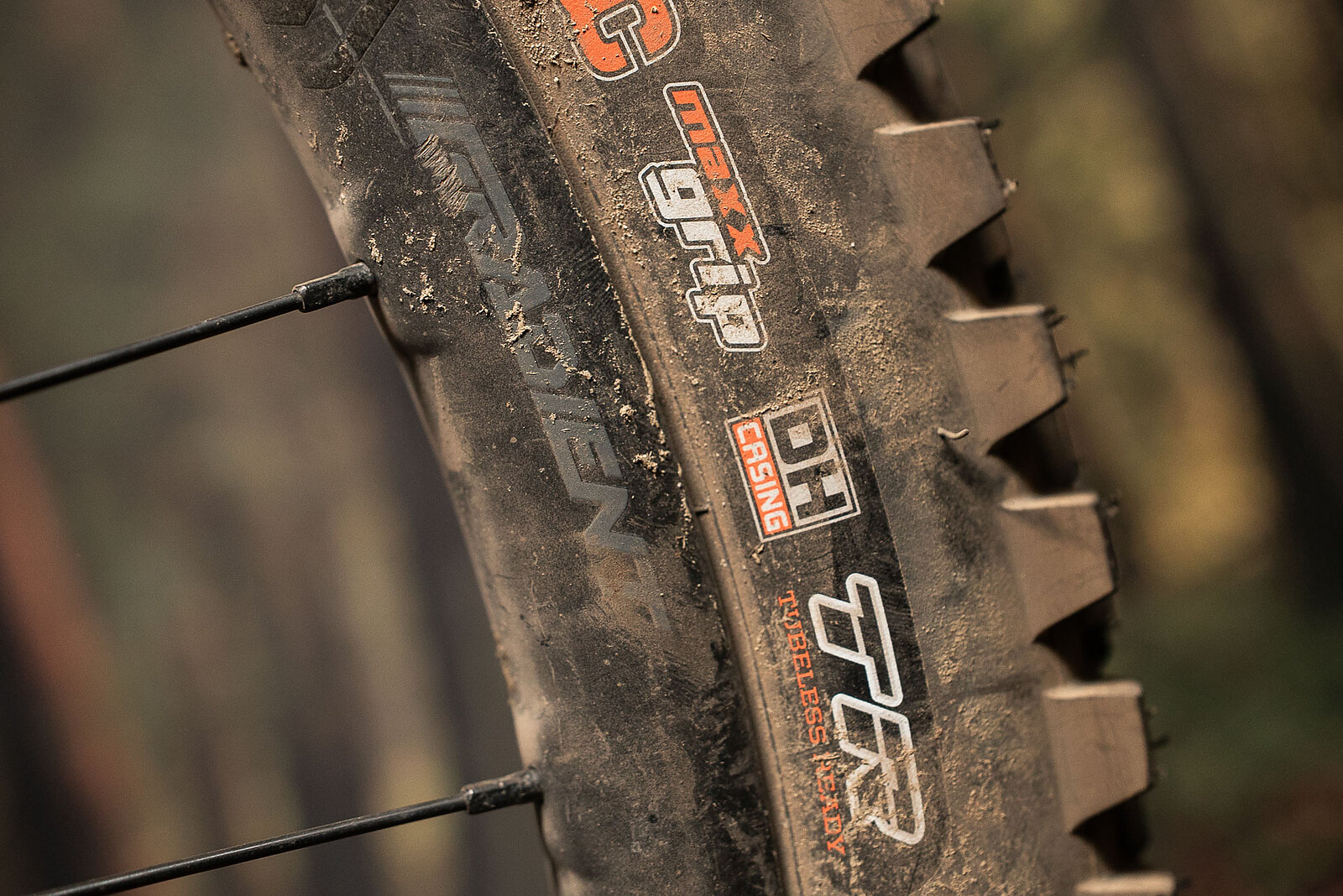
The DHX isn’t just a new tread pattern tacked on to Maxxis’ existing casing. Instead, it heralds the launch of an all-new DH casing that will be available on the DHX, Assegai, High Roller III, Dissector, and DHR II. Instead of jumping on the radial bandwagon, Maxxis says that there’s more performance to be eked out of traditional casing designs. The list of hits on the casing is somewhat predictable, it’s meant to be more supple through chatter, with more support in high-g moments, and more resistant to slashes and punctures.
To do this, Maxxis has added a harder butyl insert at the bead, and a new “high tech” 120 TPI casing material. Overall, this new casing is burlier than the old DH casing, but Maxxis says it weighs about the same amount, tire-to-tire. That makes sense, given that the DHX is a bit heavier than a comparable Assegai, while also having much burlier knobs. Another benefit of this new casing is that you can run lower pressures (as opposed to the higher pressures most radial tires require). Maxxis says to drop your pressures 2-3 PSI from normal, for slower rebound and better small bump absorption, without losing any sidewall support.
Maxxis has put together a fair bit of marketing copy trying to explain how this new casing affects ride feel, but I’d sum it up in two words: MORE SMASH! This new DH casing is meant to stand up to the demands of fast riders on big bikes charging through the roughest terrain possible. But a great casing is nothing without the knobs to match.
Maxxis DHX Tread
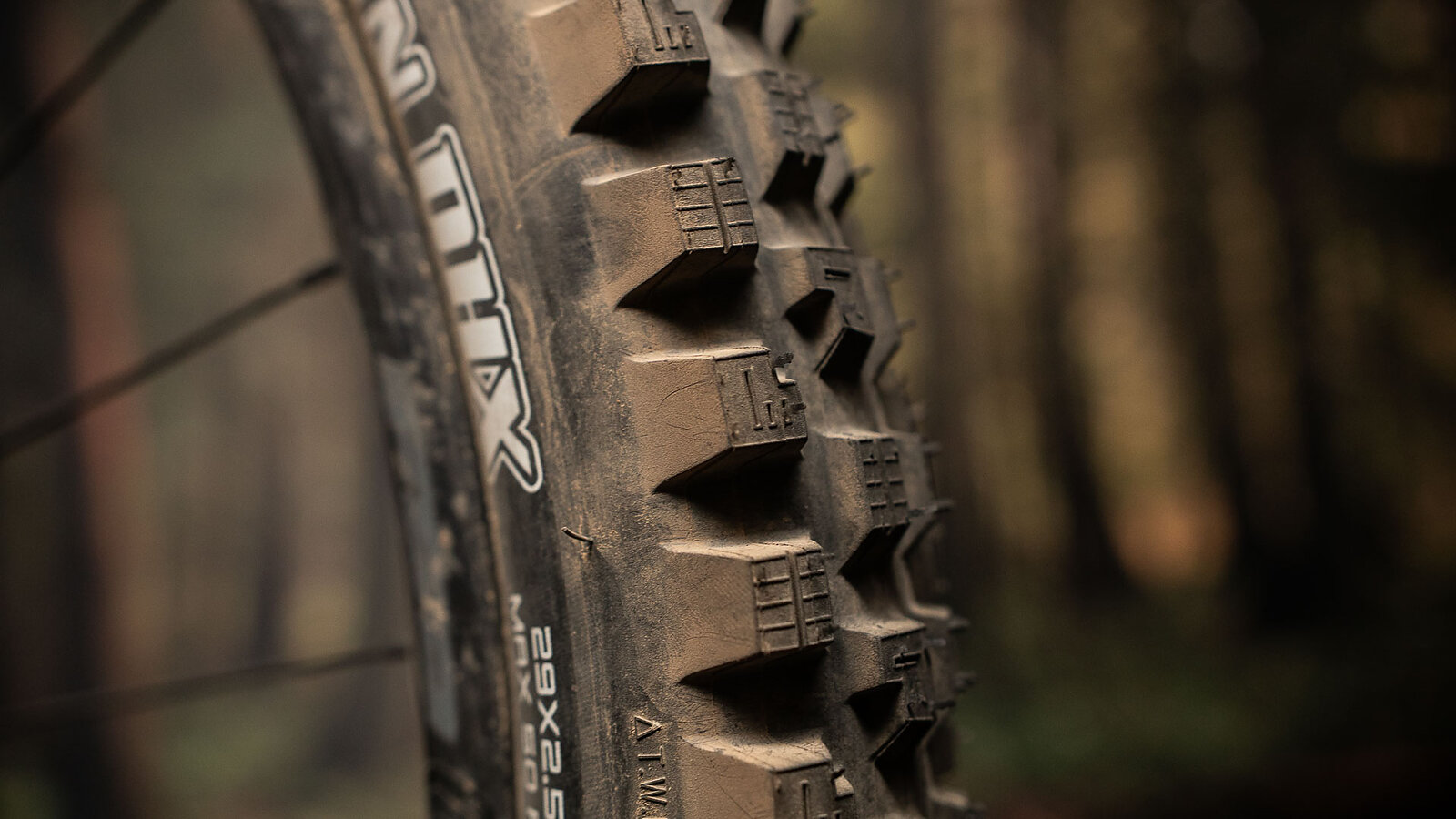
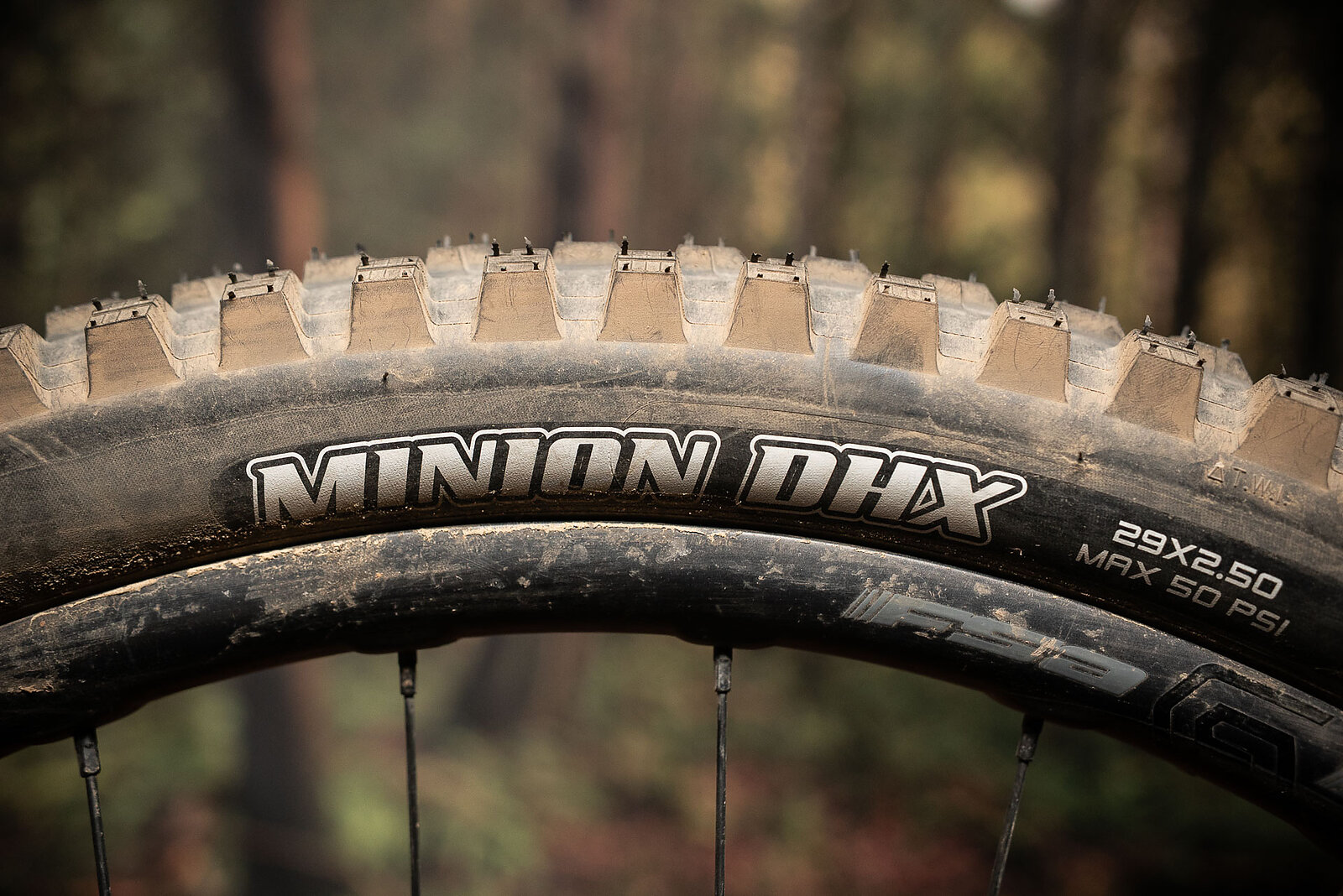
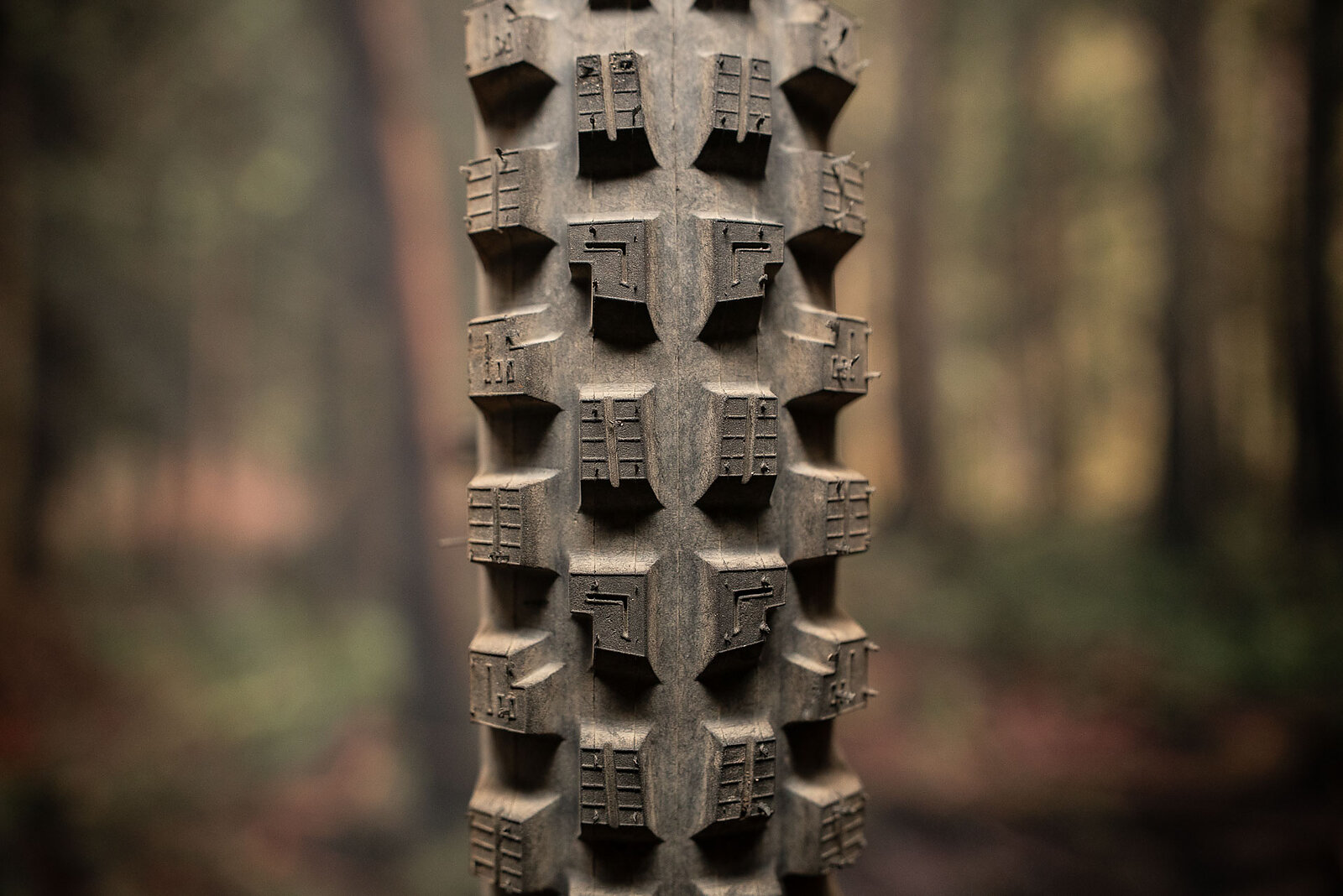
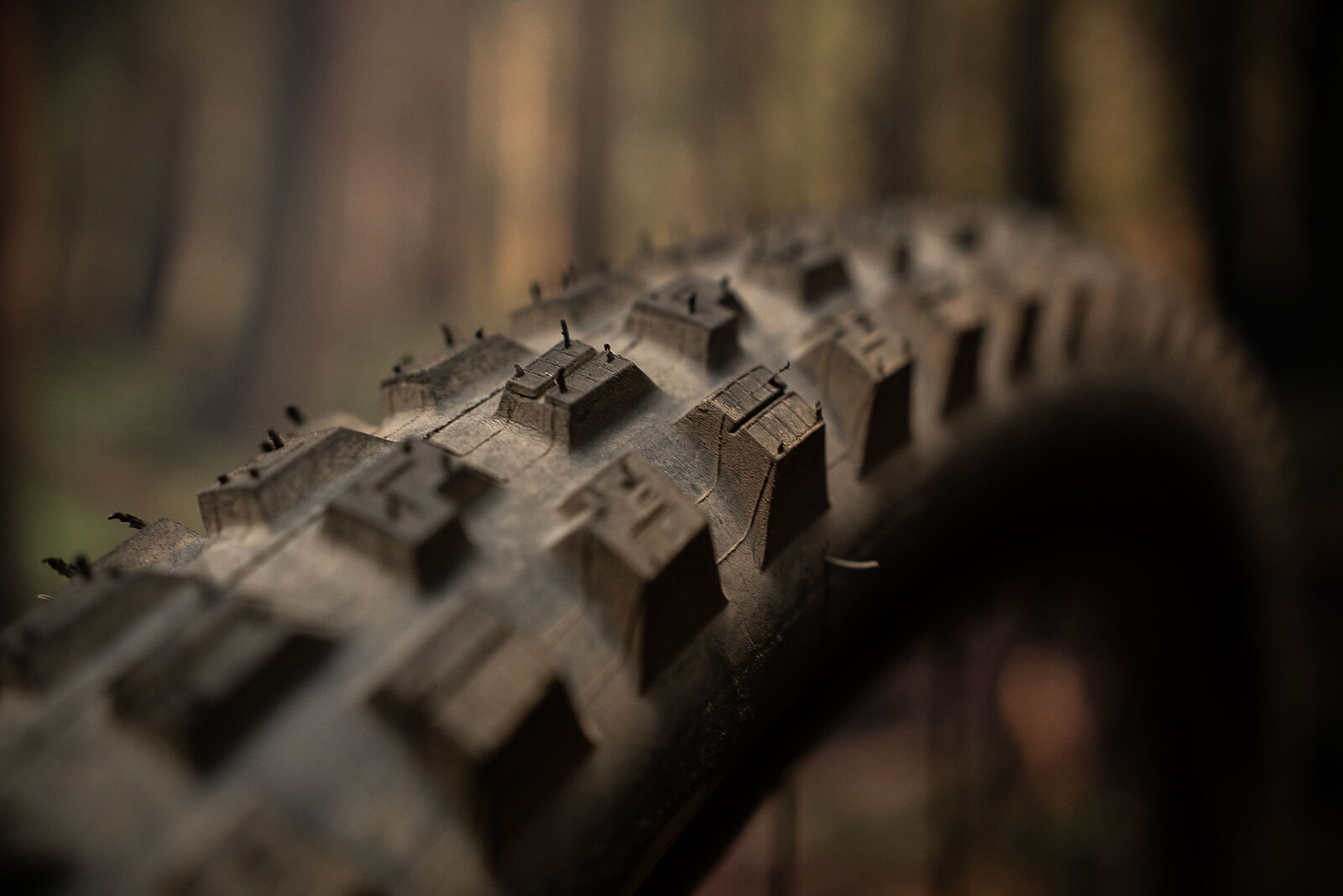
When the DHX first broke cover, folks online were full of speculations. “It’s basically just a Specialized Hillbilly.” “It’s a DHF for people who don’t know how to turn” and so on. In reality, it’s somewhat challenging to come up with a good analogous tire. The DHX’s center knobs run a 2-2 pattern, with alternating rectangular and L-shaped knobs. There’s a small (not as big as on the DHF) gap to alternating and opposing rectangular and L-shaped side knobs reminiscent of a DHF or DHRII but larger in every dimension. And the knobs are big. All of them are quite large, which, along with the fat 2.5” casing means that they dwarf the 2.4” Specialized Cannibal.
When you look down at the tire while it’s spinning, it has a similar profile to a DHF, with a smaller transitional gap and wider, burlier look. All of the knobs feature shallow siping and a ton of support, especially on the cornering knobs, which should have a good platform to resist squirming in berms.
Maxxis says the DHX is happy on the front or rear of the bike, and that its recommended use case ranges from bike park laps, to dry downhill racing, to aggressive e-bike riding.
Performance
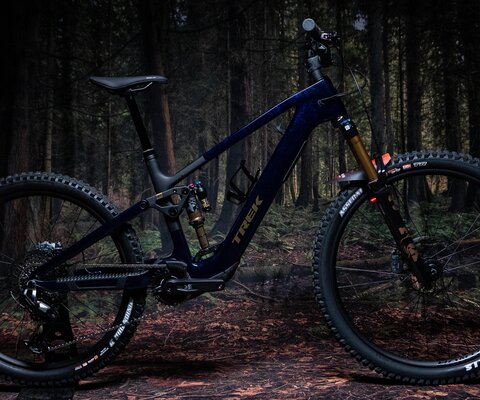
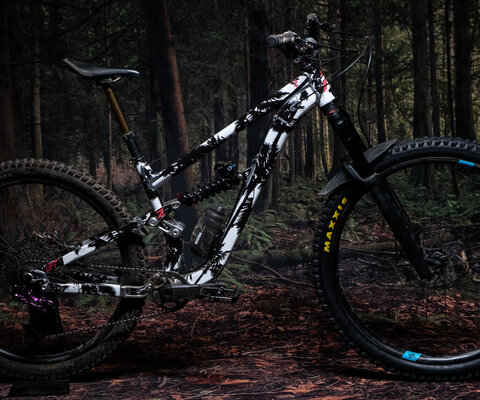
The DHX is billed as a dry-conditions tire, and luckily I’ve been blessed with some very dry conditions to ride it in. I started out with DHXs on the front and rear of an Orbea Rallon, before moving them to a Taken Encounter, both of which are super burly enduro bikes that are happy at the bike park.
While the DHX might not be purpose-built for pedaling, it rolls quite nicely. Yes, I did notice the weight, but it’s notably faster-feeling than a High Roller III, or Assegai. That translates both to climbing comfort, and carrying speed when descending. It’s efficient-feeling enough that I would be stoked to mount a DoubleDown version to the front and rear of an enduro bike down the road, if Maxxis decides to manufacture lighter casing options with this tread.
Headed downhill, the DHX feels like a tank in a very positive way. The new Maxxis DH casing is smashier, and damper than any downhill casing I’ve ridden recently, including Specialized’s new Radial casing. I started my time on the DHX without knowing that Maxxis recommends running slightly lower pressures than normal with the new DH casing, but I quickly found myself dropping pressure anyway. I’m happy to run 19 PSI up front, and 21 out back, and could probably drop even further without compromising support since I haven’t had a hint of casing squirm yet.
I think the knob design is also contributing to that squirm-free-sensation. These knobs are so beefy and supported, and on high-g rock moves or very supported corners I never felt any deformation or unpredictable movement.
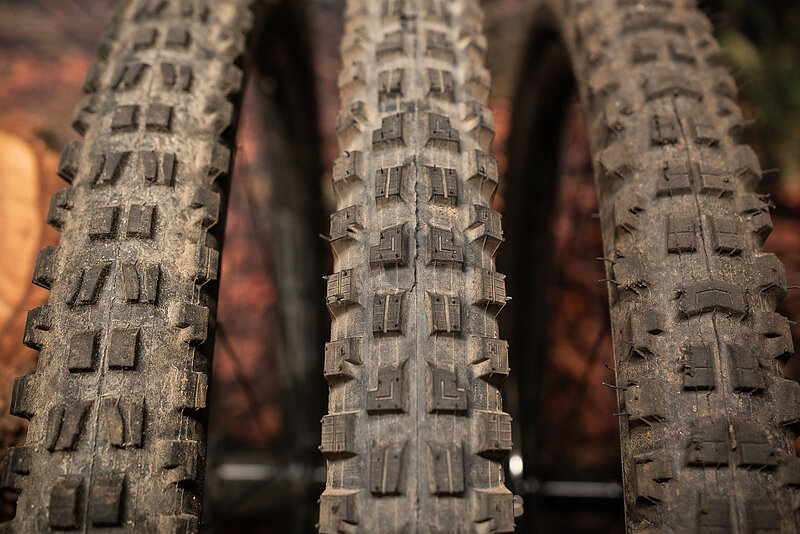
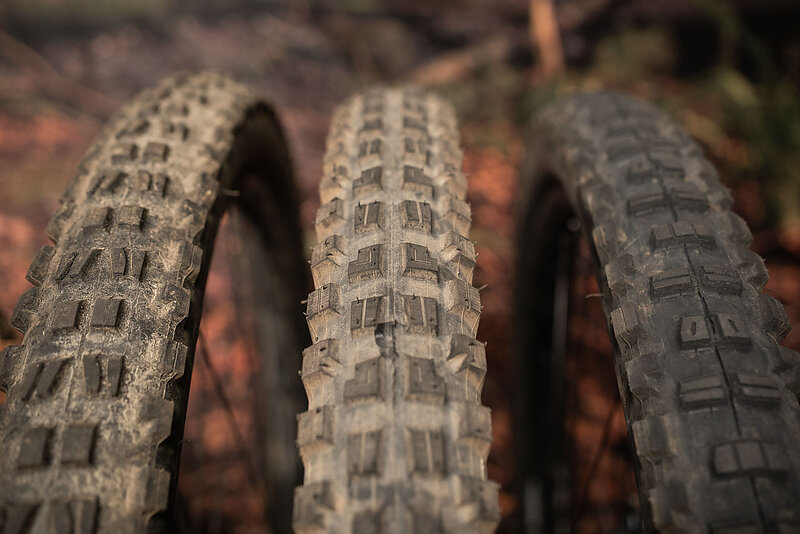
There’s a valid contingent of folks who are frustrated with how the Assegai handles in loose-over-hardpack conditions. They find it unpredictable and don’t get the cornering grip they desire. My personal experience is that the Assegai has pretty good grip at just about any lean angle, instead of feeling more like a DHF that has absolutely excellent grip once you get it on edge, with an empty intermediate zone that you don’t want to spend too much time in. The DHX is much more like the DHF in this regard, with a smaller intermediate zone. It grips quite well on edge, and is absurdly fun to rail supported berms with. It also has a nice, consistent level of traction when braking and doesn’t have any sort of weird unpredictable drift zones when things get squirly.
I don’t have a ton of time on the DHX yet, but my initial read is that when I’m riding blind or defensively, on non-bike park trails, the Assegai might feel a little “safer.” It delivers an absurd level of traction when braking and allows you to corner without committing as hard to the turn. The DHX on the other hand feels best when I’m pushing hard and committed. It wants to be used and smashed, it wants to be on edge, and is less happy poking its way down the trail and reacting to obstacles instead of proactively pushing through them.
For typical summer bike park conditions, I think the DHX is going to be hard to beat, and it’s great to see Maxxis is making it in the hard-wearing MaxxTerra compound.
I’ve been on a bit of a summer gravity tire hunt over the last few years. The Assegai is solid when speeds are lower, and there’s less support, but it’s far from my favorite in bike park conditions. I’ve been really stoked on the Specialized Cannibal in loose-over-hard conditions, and for all-round summer gravity riding, but the new DHX takes everything I like about that tire and bumps it up a notch. It’s a mean, aggressive feeling tire, that’s predictable and doesn’t require any big changes to my riding style.
For Now
The new Maxxis DHX is a great tire for the world’s fastest racers, as proven by its impressive pre-launch pedigree. More importantly, that confidence translates well to everyday riders. If you’re looking for a gravity-focused tire for typical summer mixed conditions, the DHX is a standout option.
Learn more: Maxxis