Yeti LT What lies beyond infinity?
When Yeti debuted the MTe last year pretty much everyone who swung a leg over one—myself included—had high praise for the Sixfinity suspension layout that replaced the Switch Infinity sliders present on Yeti’s meat-powered bikes. To this day, that MTe is still my favorite descending e-bike I’ve ridden. Which led to the obvious question: When was this suspension layout coming to meat-powered bikes? Or more specifically: When was this suspension layout coming to meat bikes that we could actually buy? Yeti's downhill athletes have been riding a high-pivot Sixfinity bike for several years now, but that rig has yet to hit the market for us mere mortals.
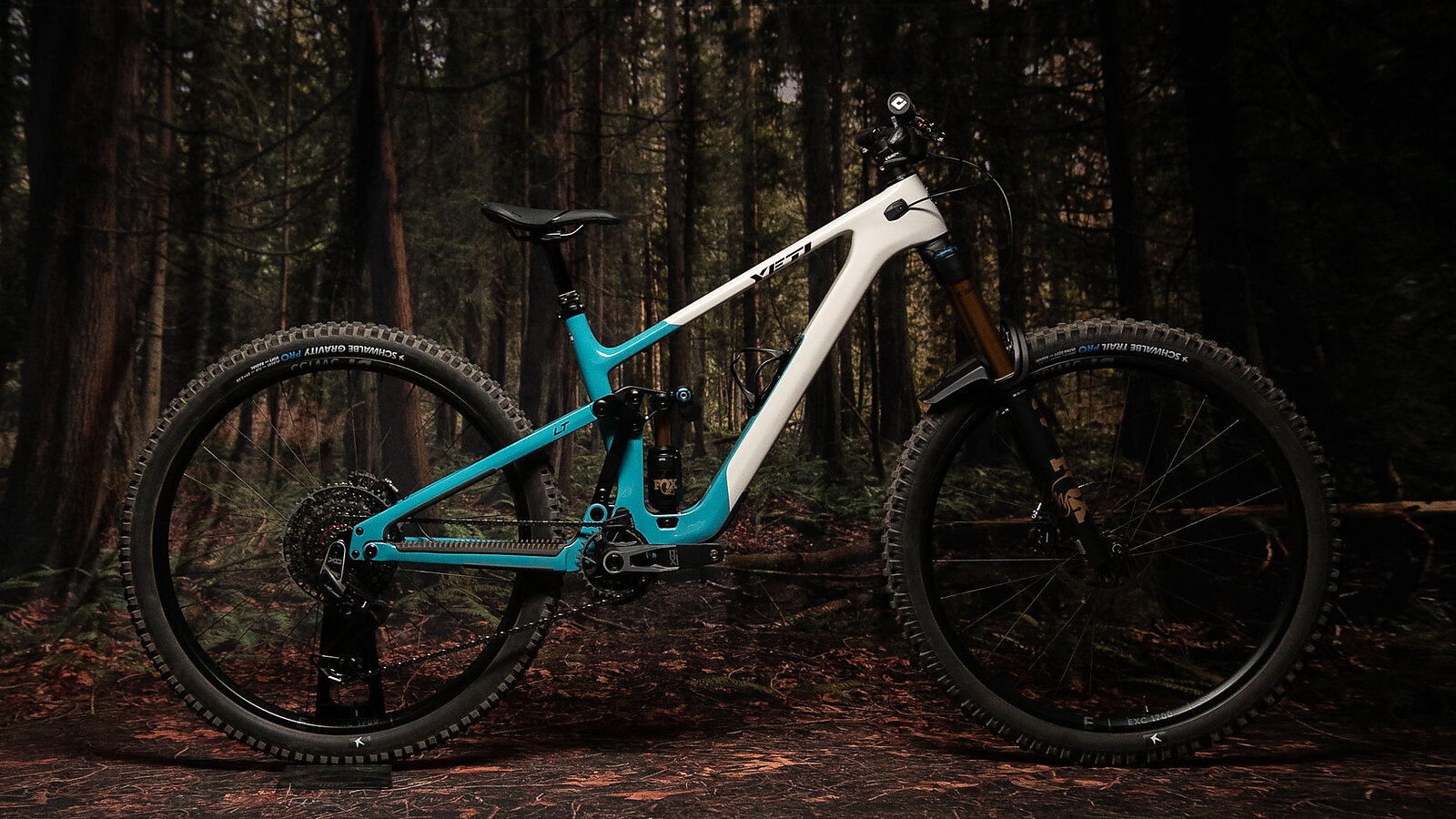
But now the wait is over, with the simply-named Yeti LT stepping into the all-out enduro race spot in Yeti’s lineup. I’ve spent the last month getting to know the new LT, and working my way through its raft of geometry and kinematic adjustments, so now it’s time to weigh in.
Yeti LT Details
- Travel: 160 mm (rear) 170 mm (front)
- Wheel Size: Mixed or full 29”
- Size Tested: Large
- Build Tested: XO
- Head Tube Angle: 63.5° - 64°
- Weight: 36.625 lbs, 16.61 kg
- MSRP: $10,200
Yeti LT Origins
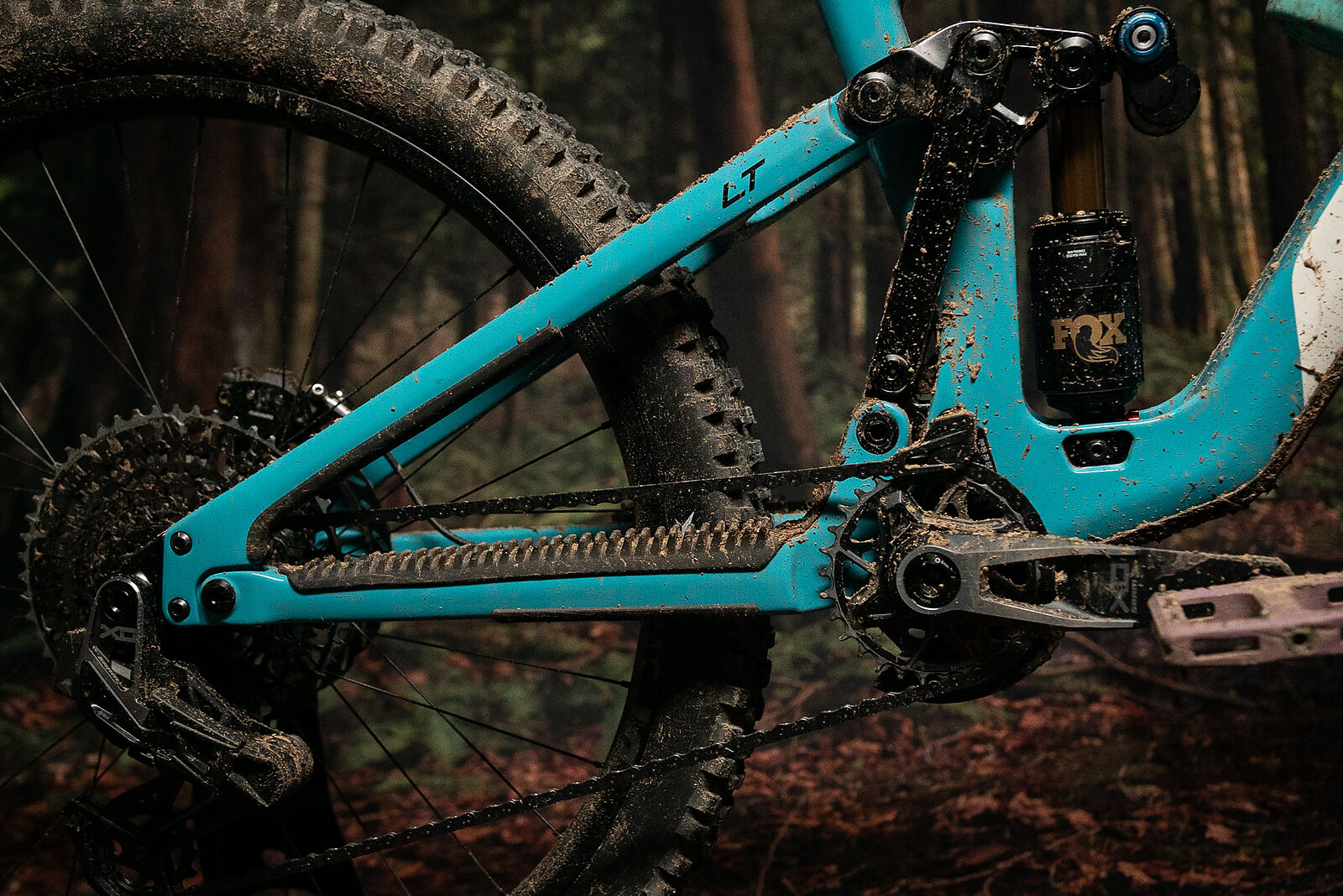
According to Yeti, the Sixfinity suspension design found on the LT has been in development for more than a decade. Back in 2016 Yeti’s engineering team put together an aluminum test mule using the Sixfinity suspension layout in an effort to create a more tuneable alternative to Switch Infinity that worked around the constraints of e-bikes. That mule led to the 160E, which has been widely hailed as one of the best descending e-bikes of its era, along with the Special Projects DH Bike. From there Yeti cut an initial carbon mold to explore the suspension layout further for meat bikes. That proved successful, leading to one more carbon prototype, with a huge number of adjustment points for geometry and kinematics that eventually evolved into the LT. The LT retains a surprising number of those adjustments, making it one of the more tweakable production bikes on the market.
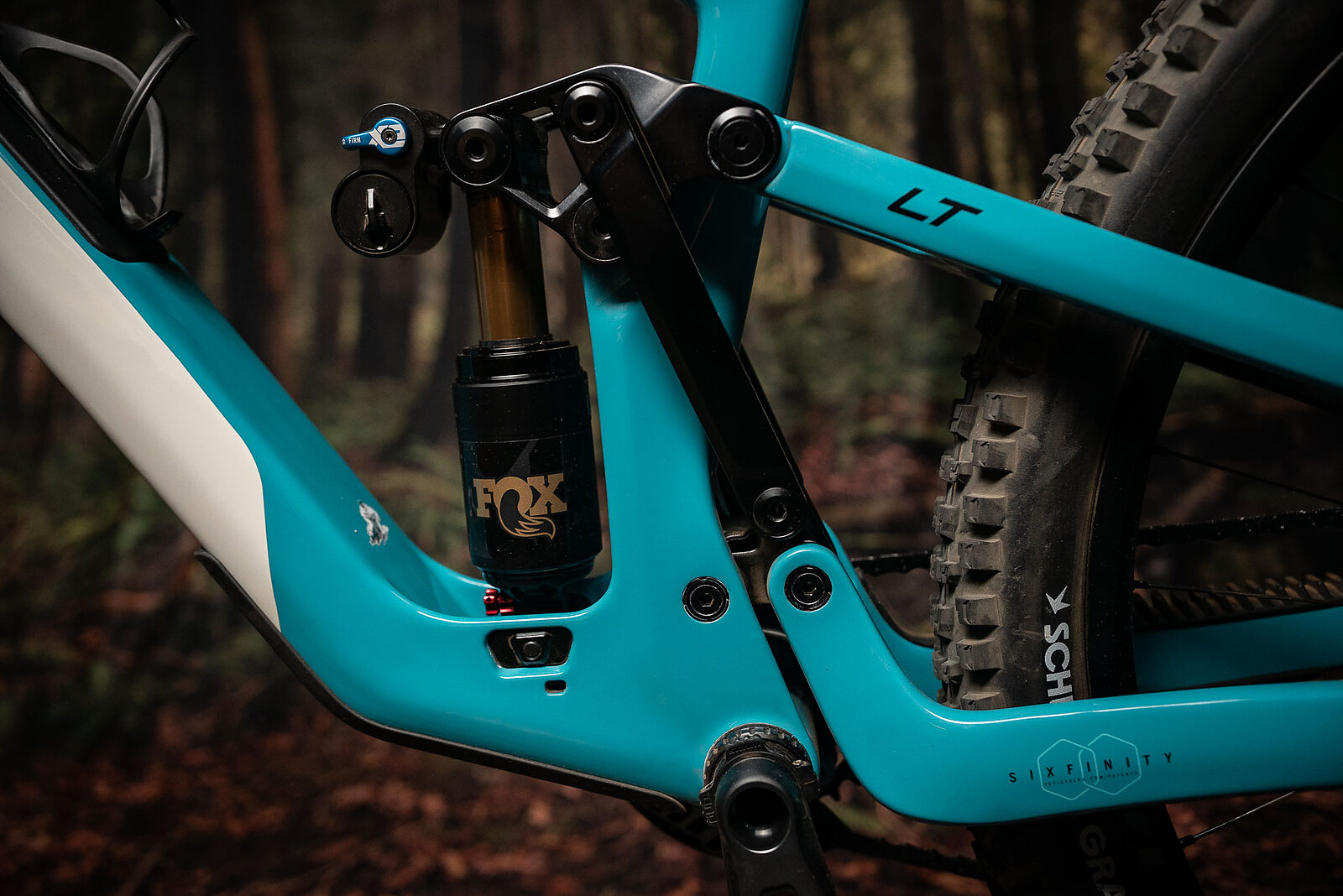
The Sixfinity suspension system acts somewhat similarly to the slider rails of Switch Infinity bikes in that it changes the position of the rear suspension’s instant center depending on where the bike is in its travel. Effectively the rocker link pulls the “timing link” (the long, diagonal link) which changes the position of the “switch link” that the traditional-looking four-bar rear triangle is mounted to. That allows Yeti to tune the bike to have high anti-squat early in its travel, at sag, and then fall off rapidly, and Yeti says this curve is optimized for human riders versus the e-bike optimized kinematics of the MTe.
The name of the game here for Yeti is tuneability, adding extra members to the suspension system creates more options to make fine adjustments to the bike’s kinematics. Over the last few years we’ve seen more and more brands embrace the simplicity of Horst link bikes, but I predict that we’re about to see a wave of six-bar bikes that, similarly to the LT, add bearings and members in an effort to eke just a little more performance out of their rear suspension.
Yeti LT Frame Details
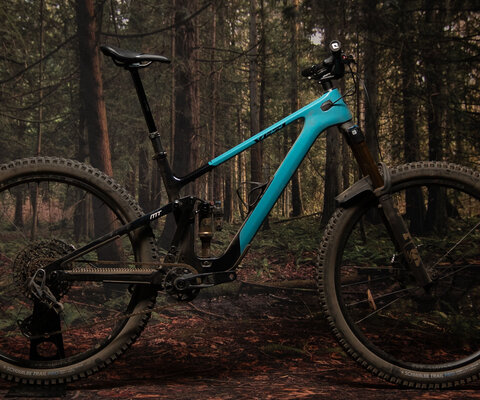
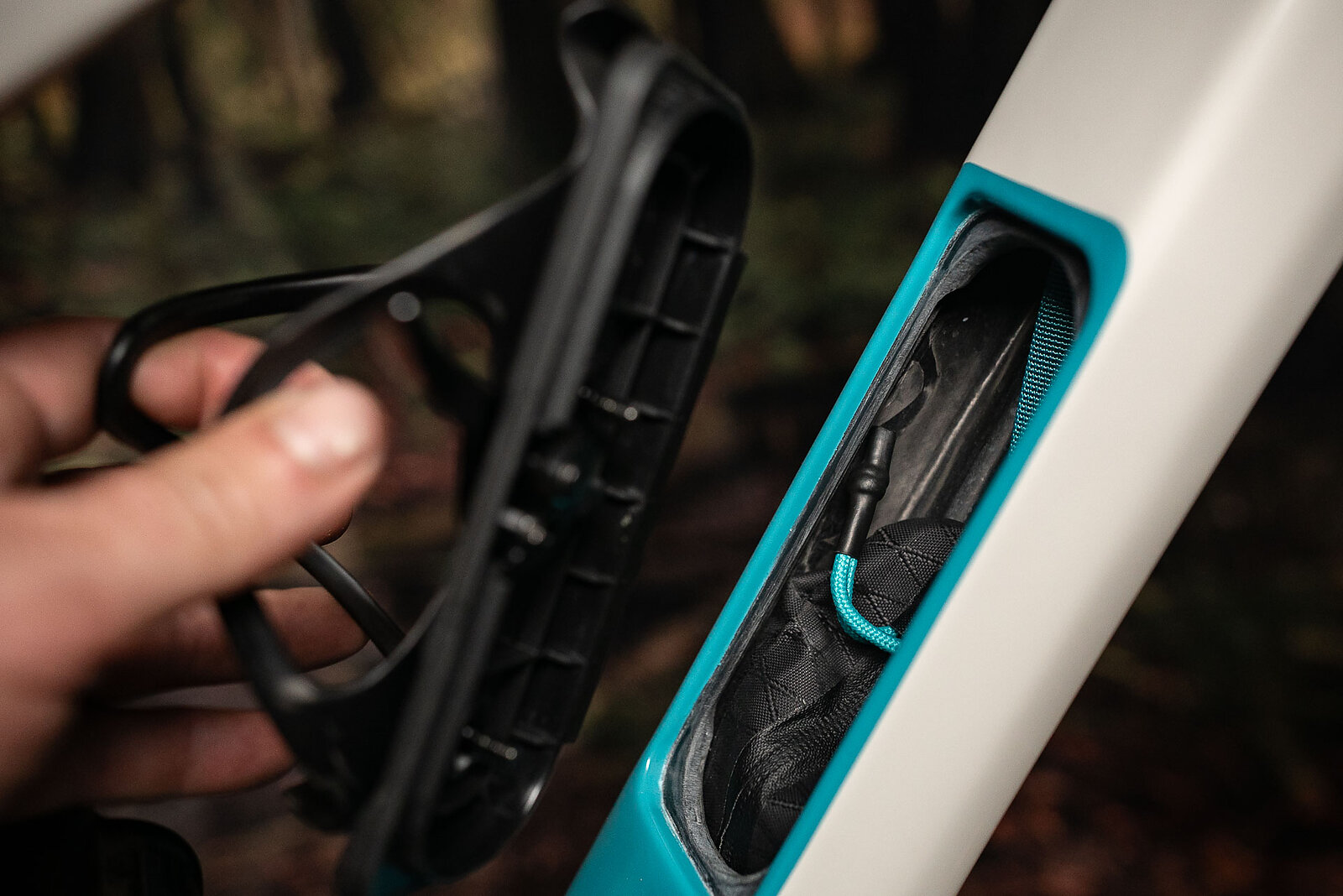
The LT’s frame feels very “Yeti” by which I mean it’s premium, with thoughtful details. It will only be available in Yeti’s highest end “Turq” carbon, with the price tag, and weight savings to match. The Cavity in-frame storage is secure and easy to use, and there’s a small fender on the rear linkage, and accouterments for cable-routed drivetrains if you so desire. There’s also storage for an AirTag or Tile tracker in the downtube protection, and all the rubber throughout the bike is sturdy and soft, making for a very quiet ride.
But the big story, for me at least, is the LT's adjustability. To start, riders can choose between three lower shock positions, for 15, 20, or 25-percent progression through the travel. Then, at the rocker link/seatstay junction, there’s a flip chip for 29-inch rear wheels or 27.5 with a second chip available that splits the difference at “27.5 slack”. Finally, at the rear axle, the LT comes with fully swappable dropouts, with the ability to add 10 millimeters of rear center length.
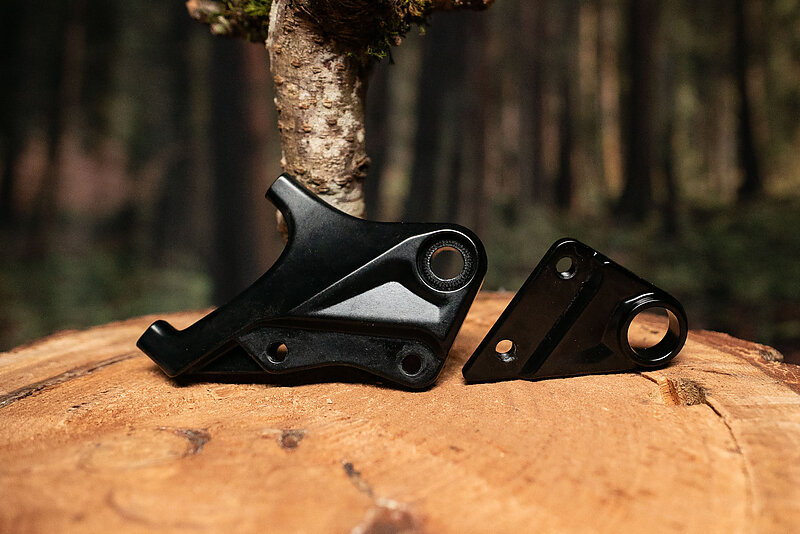
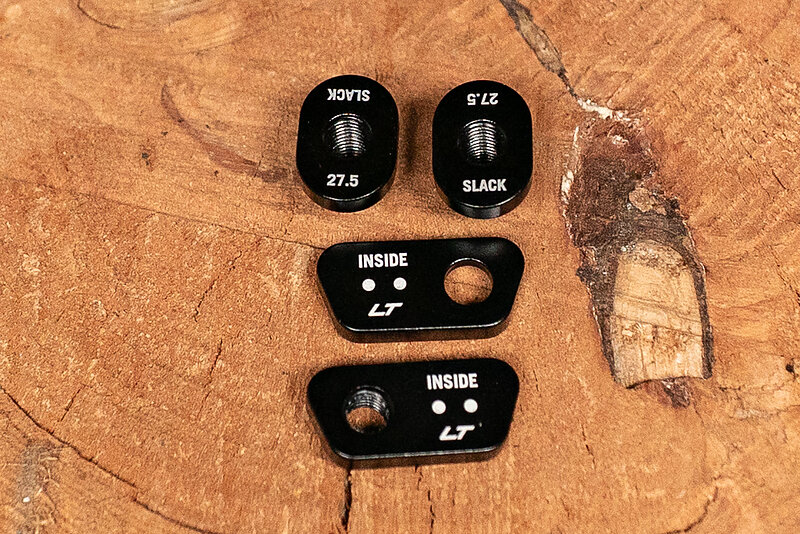
All of these adjustments make an appreciable difference, and are easy to swap, which I really appreciated since I worked my way through every permutation. I’ll talk about how each of those setups compares lower down. Interestingly, Yeti says the frame is dual-crown compatible, but don’t expect to see Yeti’s freeride athletes on it, since its geometry isn’t optimized for their needs. On that note, the existing SB bikes will continue in Yeti’s lineup for the time being as a slightly more affordable alternative.
The big picture for the LT’s frame details is that they're easy to work on and easy to live with. It’s short on weird standards or frustrating details, which makes me quite happy.
Yeti LT Geometry
Here, again, the LT is quite “Yeti” with a definitive focus on race pace over all else. In its stock form, the LT has a 64° head tube angle and 77.5° seat tube angle. The Large I’ve been riding has a 485-millimeter reach, a 635-millimeter stack, and 455-millimeter rear center. But, in 27.5 slack mode, the reach drops by five millimeters, the stack gets four millimeters higher, and the head tube angle drops to 63.5°. And of course, you can bolt on the longer dropouts for a quite long 465-millimeter rear end. That rear end scales by size, with the Small defaulting to 439 millimeters, the Medium starting at 442 millimeters, and the XL starting at 465 millimeters, with the option to add 10 millimeters to each.
Aside from those chainstay lengths, the LT is fairly “normal.” It’s not the longest, lowest, slackest enduro bike around, and its stack height is fairly low, which Yeti says comes at the behest of the race team, but its geometry is all thoroughly modern, and you’ve got room to play around and figure out what you like best.
Yeti LT Build
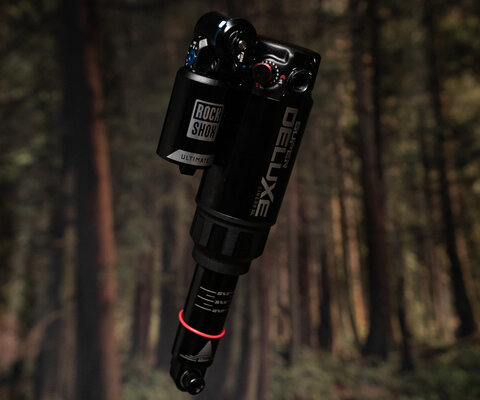
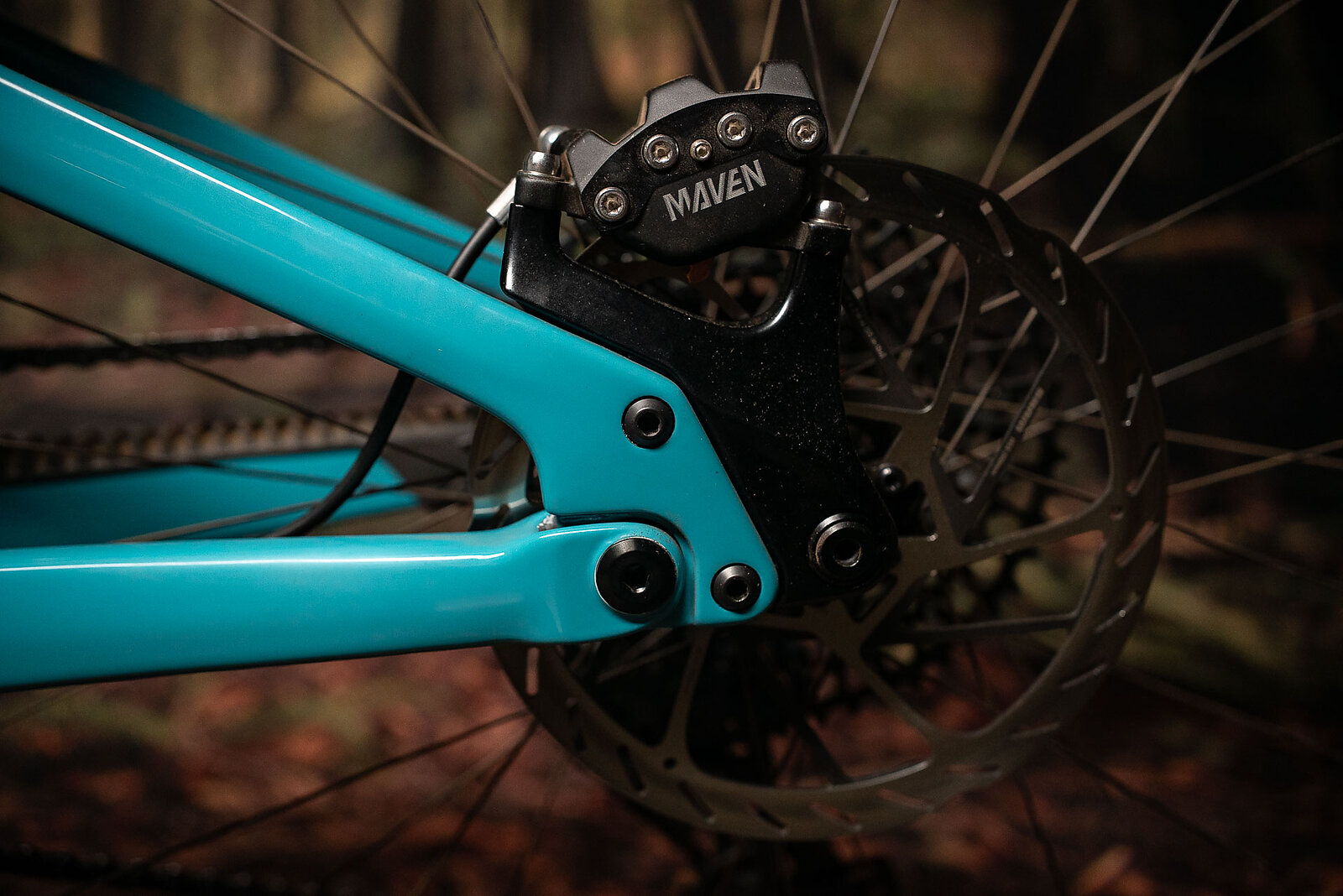
I rode the top-end XO build of the LT, and it, unsurprisingly, was quite good. XO Transmission is still excellent, and I’m still a fan of the Maven A1 brakes found on the LT, over the new B1 version. Fox’s latest version of the Float X2 and 38 fork are both great, and DT Swiss’ EXC1700 Evo DEG DF carbon wheels are quite nice. I experimented with the DEG DF deadband system, but found that the LT doesn’t have much drivetrain feedback, so it wasn’t as big of an upgrade here as on some other bikes. I am still a fan of the Schwalbe Magic Mary/Albert radial tire combo, and it feels well-suited to the LT’s intentions.
Although I didn’t ride it, it’s worth shouting out the XO/90 build Yeti is offering. It features the drivetrain I’d run if money was no object, with an XO crankset, chain, and cassette mated to a mechanical Eagle 90 shifter and derailleur. That’s a cool combo that eliminates the battery, but saves a bunch of weight over a full Eagle 90 setup. I’d love to see builds like this available on more bikes.
All-in, the LT’s build feels dialed for a modern enduro bike. I did swap out the 210-millimeter Fox Transfer for a 240-millimeter version because I like big droppers, and after a few rides I also threw on a 50-millimeter rise and 800-millimeter wide handlebar because the 35x780 millimeter stock option was a bit low and narrow for my tastes.

Riding the Yeti LT
The LT has a whole bunch of wheel size, rear end length, and suspension adjustments, and I tried most of them. I started out in the stock MX setup, with the chainstays in the “short” position, and the suspension progression in the middle. This was fine, but I knew I wanted to go slacker. First though, I gave the bike a ride in the full 29” setup. I think the MX vs. full 29” swap is the most predictable adjustment on the bike. At this point, it feels like most folks are pretty set in their wheel size ways. Personally, I’m a fan of how smaller wheels get out of the way, and handle in tight, steep terrain, so I stuck with the MX setup for most of my time on the LT.
In that stock MX setup the LT was good, but it felt a little more like a big trail bike than the charger I was looking for. So I swapped it into 27.5” low mode. That half a degree made a big positive difference, and put the bike in a more safe and comfortable stance for steeper terrain and bigger moves. The seat tube angle is still adequately steep here, so I didn’t see a huge dip in pedaling performance. But, I still longed for the more traction-heavy feel of the MTe, so I threw the suspension chip in the 25% progression mode. For my riding here in Bellingham, this 27.5 Low x high progression mode was by far my favorite.
But, I had to go further, so I swapped in the +10-millimeter chainstay dropouts. With these installed with either a 29 or 27.5” rear wheel the bike felt absurdly stable, with a whole bunch of front end grip. But, for my riding at least, the LT’s stack isn’t quite high enough to let it feel balanced on steeper trails. Instead, it felt like I was being pushed over the front of the bike in a disconcerting way when dropping into steeper chutes. It felt like trying to drive a ski that’s mounted too far forward, there wasn’t enough support up front, and the rear end felt a little ponderous.
That said, I didn’t find any of the combinations to be fully “bad.” If I was trying to go race in typical enduro terrain, I think the long chainstay, full 29”, linear suspension option would make a ton of sense. It’s so supportive and stable feeling. But, if that was the only way to run this bike, it would be pretty alienating to a large swath of the market. Similarly, if the LT was only available in the MX slack, big progression, shorter chainstay mode that I preferred, I don’t think it would work as well in Yeti’s home Front Range terrain. The LT is in some ways an audacious bike for the brand, so it’s probably a good thing that it’s so adaptable.
Regardless of how I had the LT set up, a few things stayed consistent. First, although this isn’t the lightest bike on paper, it carries its weight quite well. It’s quite efficient when you’re on the pedals, even with the suspension open, and I found myself reaching for it any time I was headed out to pedal a big ride on proper trails. Headed downhill, that translates to it feeling quite playful and sporty. Yes, it can plow—especially in the longer, slacker modes—but I found that it felt best with a more active riding style where I popped and pumped through terrain instead of just dropping my heels.
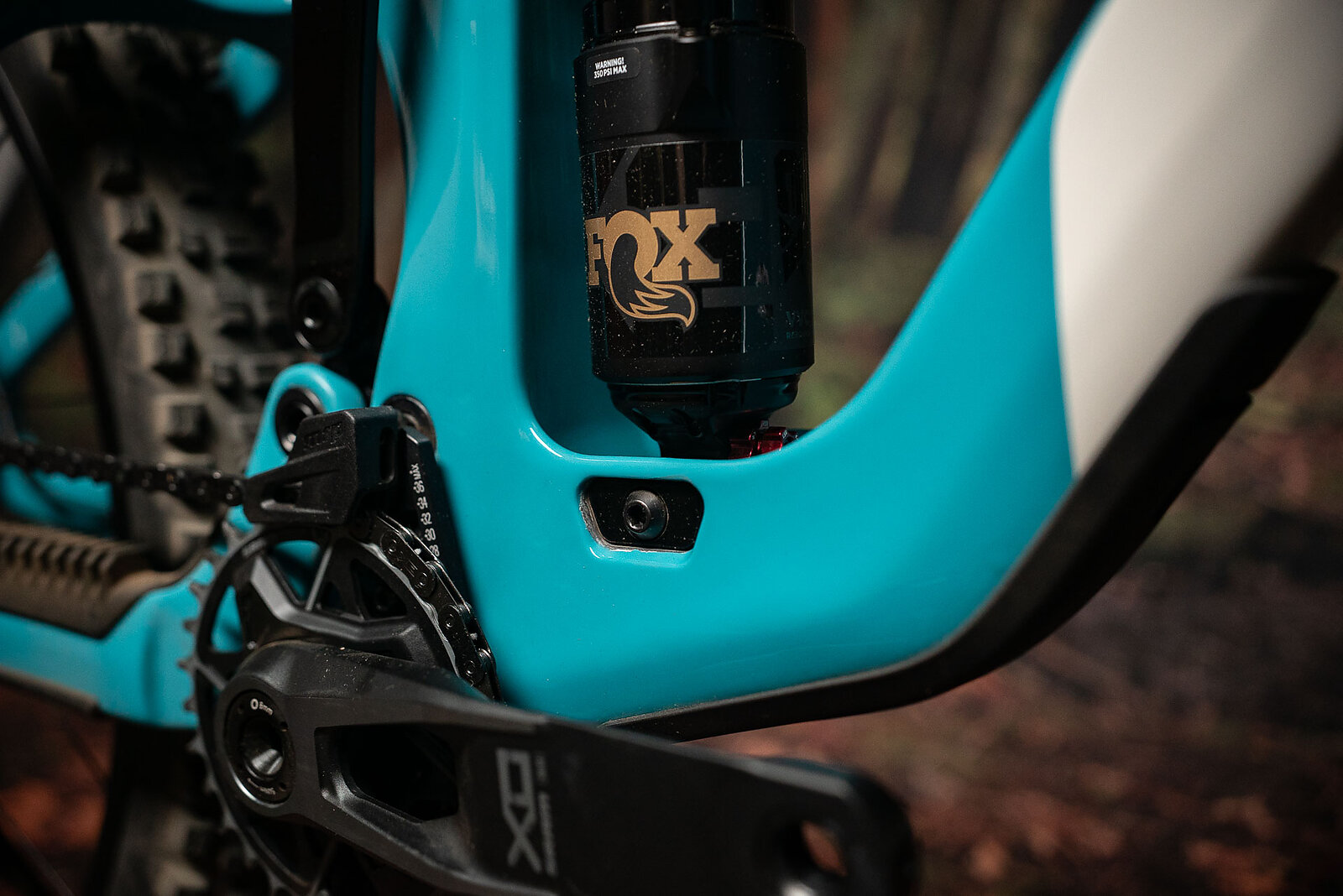
Second: I really like how Sixfinity rides. It’s not quite as pronounced on the LT as on the MTe, probably thanks to the MTe’s motor, but this system delivers gobs of traction without ever feeling dead or gushy. That was especially obvious when braking and cornering in tenuous terrain, where traction was at a premium and the consequences were high. This rear triangle delivers a really nice combination of pop and traction.
Those two factors combine to make the LT one of the better “if you’re only gonna own one bike, it might as well be big” rides I’ve been on recently. I wouldn’t hesitate to go on huge rides on the LT, and it will happily eat big climbs and miles on mellower terrain without feeling too stupid. But, when the going does get tough, it has plenty of juice to handle whatever the trail throws at you.
I’ve been on two similar bikes recently: the Devinci Spartan, and the Santa Cruz Nomad. The Spartan is only available in alloy, weighs two pounds more, and costs a lot less, but it has a similar “up for anything” attitude. That said, the Spartan feels significantly more “solid” (probably thanks to its weight) and “safe” on bigger moves. The more my desires leaned away from enduro racing and toward freeride, the more I’d be looking at the Spartan. The Nomad on the other hand is quite a bit lighter than the LT, while also being a bit slacker. That makes for an interesting combination. I found the Nomad to excel when I was on my game and pushing, but not when I was riding more defensively. The LT is more forgiving here, and its rear suspension is much more traction-forward. That’s an interesting combination since the Nomad’s geometry feels safer when I’m pushing myself on bigger moves, but the LT feels more cushy and easy to ride elsewhere.
Finally, it’s worth mentioning: I took, by far, my biggest crash of the last few years on the LT. It was absolutely not the bike’s fault (decent sized rock roll, slimy conditions, lost the rear tire on a log in the runout) but I hit a tree head-on with the LT while going quite fast. I put almost all of the impact through the bike’s head tube, and it was one of those crashes where everyone was convinced that I’d both broken the bike and some bones. However I somehow walked away with no issues, and the bike was shockingly fine. I’ve never smashed anything that hard with a carbon bike before, and I was stoked to see the LT take the hit and keep on ticking, since I was several thousand feet of technical descending from home.
For Now
Yeti’s new LT has some big shoes to fill, and fill them it does. It’s the rare bike that rides as good as it looks, and it’s got some very nice lines. If you’re looking for a versatile big bike that you can tweak and experiment with to dial in to your riding style and terrain, the LT is an excellent option.
Learn more: Yeti Cycles