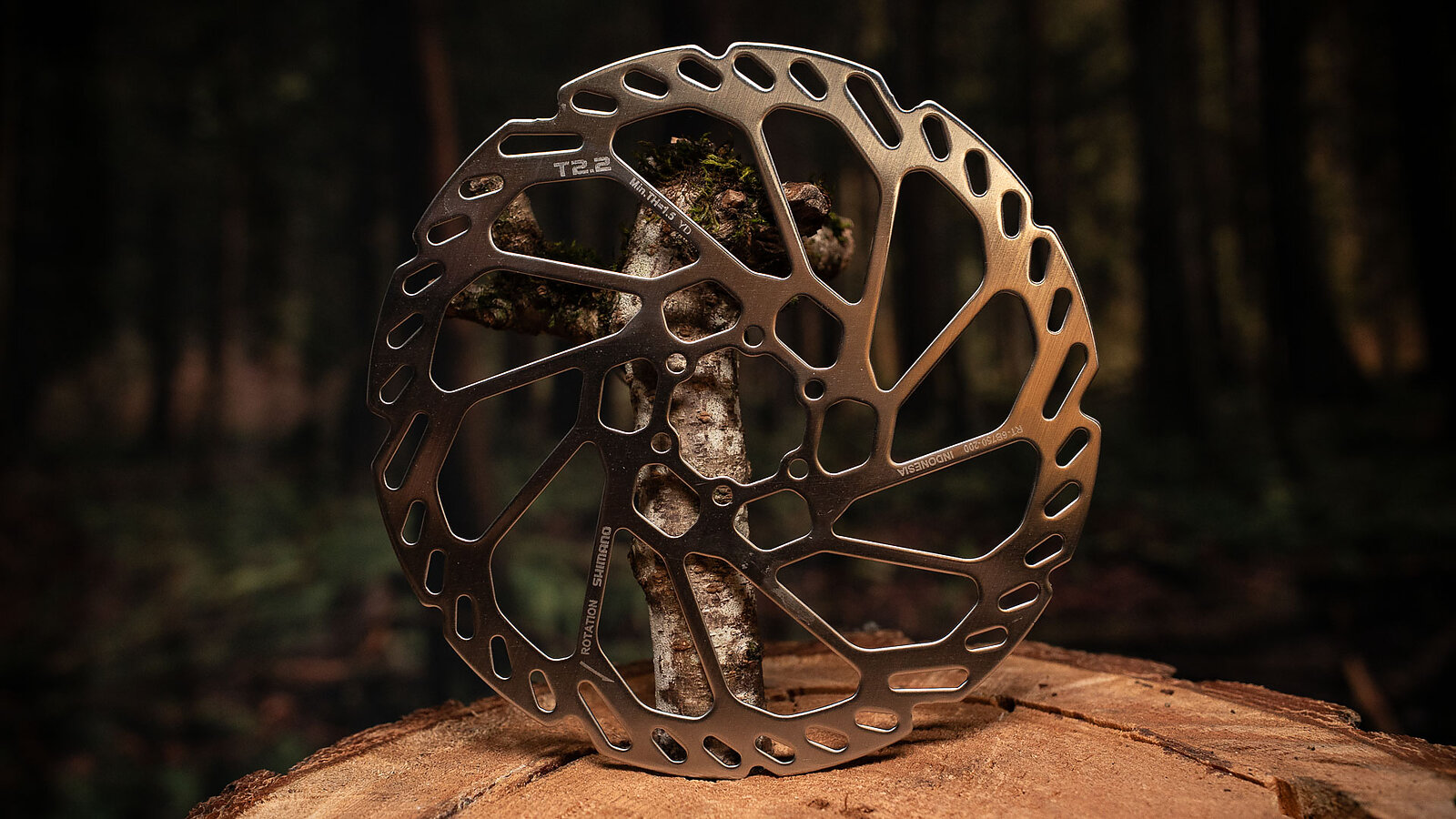
Shimano 2.2 Millimeter Rotors Finally, a standard that’s easy to love!
Earlier in June, Shimano came in hot and heavy with a flurry of new releases including mechanical versions of its new XT and Deore groupsets. Those were big, important launches of groupsets that we’ll see on thousands of bikes. And then, somewhat under the radar, Shimano also launched new brake rotors. Somewhat anticlimactic, right? Wrong!
I am so damn excited about these rotors for two very small, dimensional reasons. First, they’re 3 millimeters smaller in diameter than old Shimano rotors, coming in at 200 or 220 millimeters. And second, they’re thicker, at 2.2 millimeters instead of the 1.75 millimeters of the old versions. These two dimensions matter a lot, both for convenience and performance—to the point that they’ve fundamentally changed my relationship with Shimano brakes. So let’s get into it.
Shimano 2.2 Millimeter Rotor Overview
- Thickness: 2.2 millimeters
- Sizes Available: 200, 220 millimeters
- Standards: 6 bolt or Centerlock.
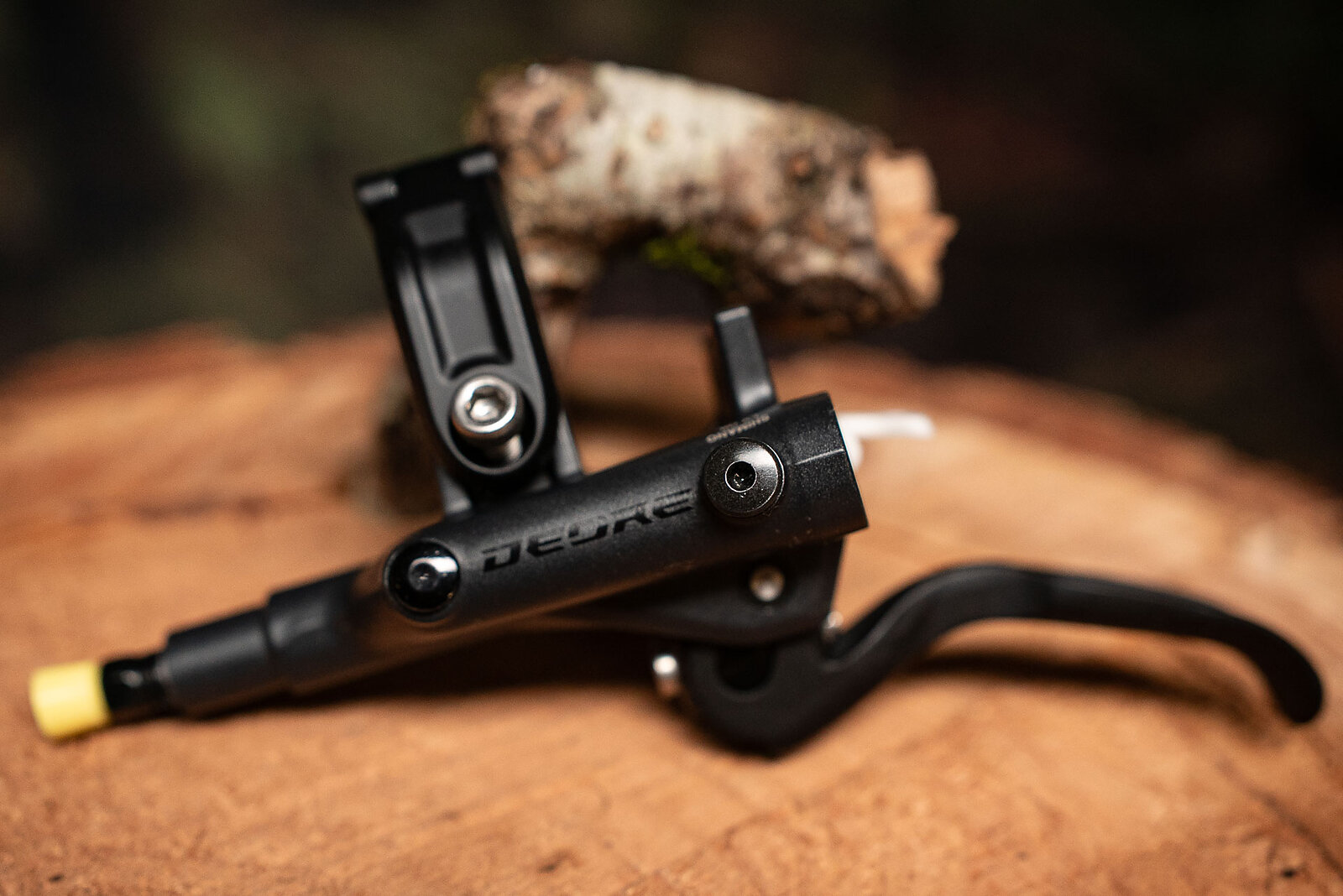
- Compatibility: Current generation (low-viscosity fluid) Deore, XT, and XTR brakes
- Weight: 226 grams for 200 millimeter rotor
- MSRP: $60-$80
Who Even Cares About Inches Anymore?
Before I throw my bag of +23 millimeter mounts, and 1.5-millimeter thick washers into the Salish Sea in celebration, let’s talk about inches. Mountain bike standards are a terrible swamp of mixed units, and for too long Shimano has maintained that the rotor size between 180 and 220 millimeters should be 203 millimeters because that’s (about) equal to eight inches. I am honestly so torqued about this that I can’t even write about it coherently right now. So here’s an editorial I did for another publication.
I hate 203 millimeter rotors. I hate the adapters they require, and I especially hate the fact that some forks and frames (looking at you Orbea) come stock at 203 millimeters meaning that I can’t run 200 millimeter rotors and I have to run a 17-millimeter adapter to run 220’s. 203 millimeter rotors are frustrating, but can be adapted around. 203 millimeter frames? Ugh. No!
On top of that, eight inches isn’t even 203 millimeters, it’s 203.2. If you’re going to be an overly-precise pedant, take it all the way.
I want to live in a world with a clean 20-millimeter jump between every rotor size. I want to live in a world where the only washers on my brakes go above the friggin' caliper, not below. I want to live in a world that makes sense, and thankfully, Shimano has finally taken steps toward that brighter future. Now we can only hope that other brands follow suit.
Thick Rotor Features
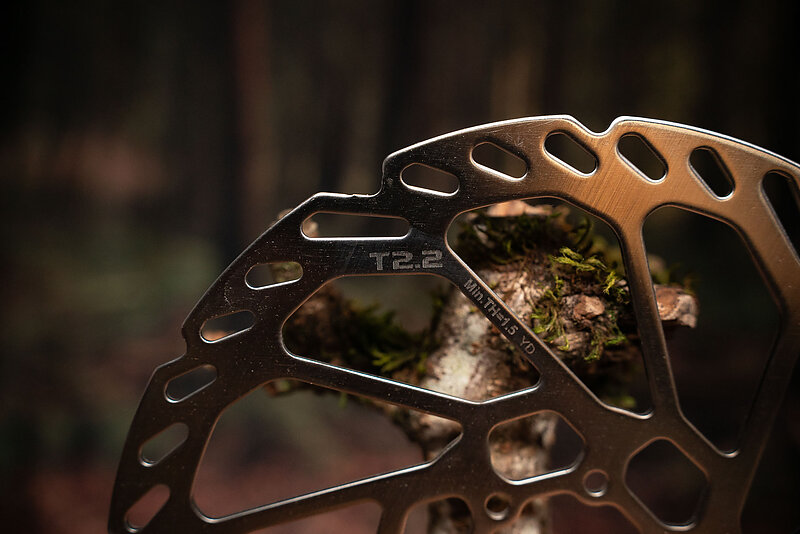
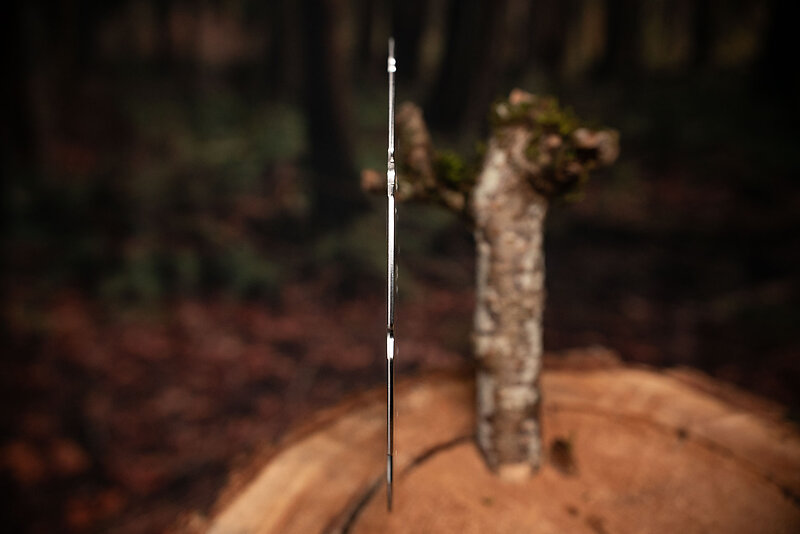
Shimano didn’t just change the diameter, these rotors also got thicker, at 2.2 millimeters, up from the 1.75 millimeters that’s been Shimano’s standard for ages. Shimano says this helps with durability, brake feel, and consistency under prolonged bouts of braking. The new rotors also have a new hole layout that Shimano says helps tune the friction between the rotor and the pad. They’re only available in 200 or 220 millimeter sizes, and you can get them in 6-bolt or centerlock mount patterns.
For comparison, SRAM’s HS2 rotors are 2 millimeters thick, are available in 160-220 millimeter sizes, and weigh about 20 grams less than Shimano’s in the 200-millimeter size.
Shimano says these new rotors are only compatible with its newest generation of brakes, the Deore, XT, and XTR options that use the new low viscosity fluid, and that you can use them with metallic or organic pads. I will just say that I’ve been running SRAM HS2 rotors in various Shimano brakes for years (remember, I hate 203-millimeter rotors) and there’s a good chance that these new thick Shimano rotors will be backwards-compatible with more brakes, as long as you’re OK with a more in-depth caliper alignment and rotor straightening process to eliminate rub. They'll start out with a very low lever throw (which I dig) but that will gradually grow as the pads wear in, until it's the same as it would be with thinner rotors.
Shimano Thick Rotor Performance
I’ve been running these new thicker rotors in the 200-millimeter diameter front and rear, paired with Shimano’s new Deore brakes and metallic pads on a Taken Encounter. That bike is as burly and capable as any pedal bike I’ve ridden in recent memory, so I figured it would give these brakes a good workout.
For context, I’ve been content with the new Shimano XT and XTR brakes with the old, thinner rotors on trail and cross-country bikes, but I’ve been happier with their lever feel and power when paired with SRAM’s HS2 rotors. It’s an appreciable step up. Now, these even-thicker rotors deliver another appreciable improvement. This combination is the most powerful, most consistent, and all-round best Shimano brake I’ve ever run. I’ve run various Saint, Zee, XT, SLX, and XTR brakes for well over a decade, mixing and matching rotors and pads in an effort to get more power and consistency, and these new rotors finally give me what I’ve been searching for that whole time.
The brakes still feel very Shimano, with a nice light lever feel (not quite as light as Dominions, or the newest Maven B1), combined with a crisp but not too aggressive bite point, and consistent power through the stroke. There’s not as much absolute power on tap as the Maven has, but there’s enough for my 220 pounds, on a big bike, pointed down the steepest “normal” trails around. That’s the first time I’ve ever been able to type those words about a Shimano brake, which is pretty exciting!
I have long struggled with getting the bite point of Shimano brakes to fall where I want it. Some of that is due to the bike point adjustment on more expensive brakes not really doing anything. But, with these Deore brakes and the thicker rotors, I can get that nice immediate bite that I’ve been looking for, without having to resort to arcane bleed tricks. Again, a nice upgrade from my usual experience.
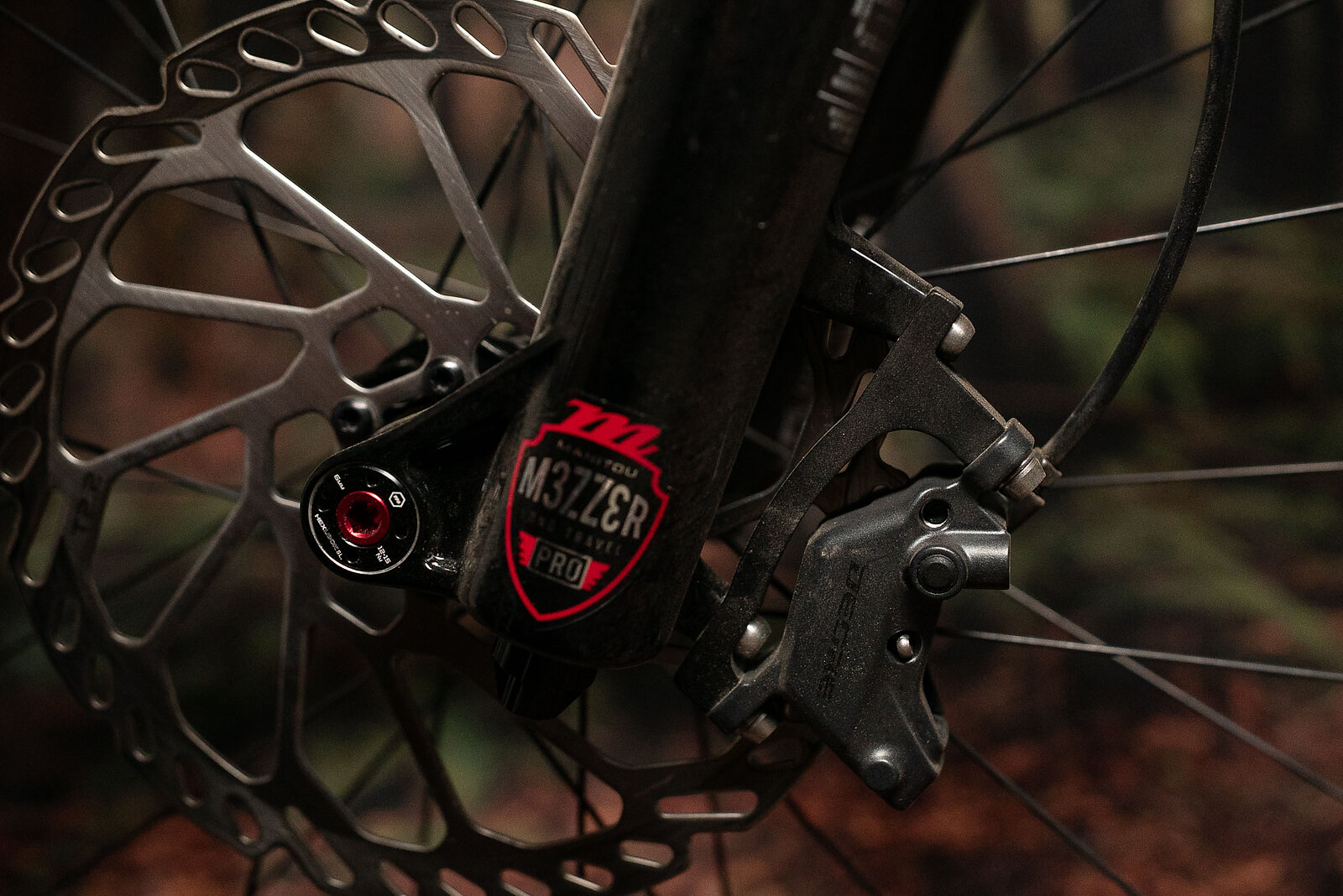
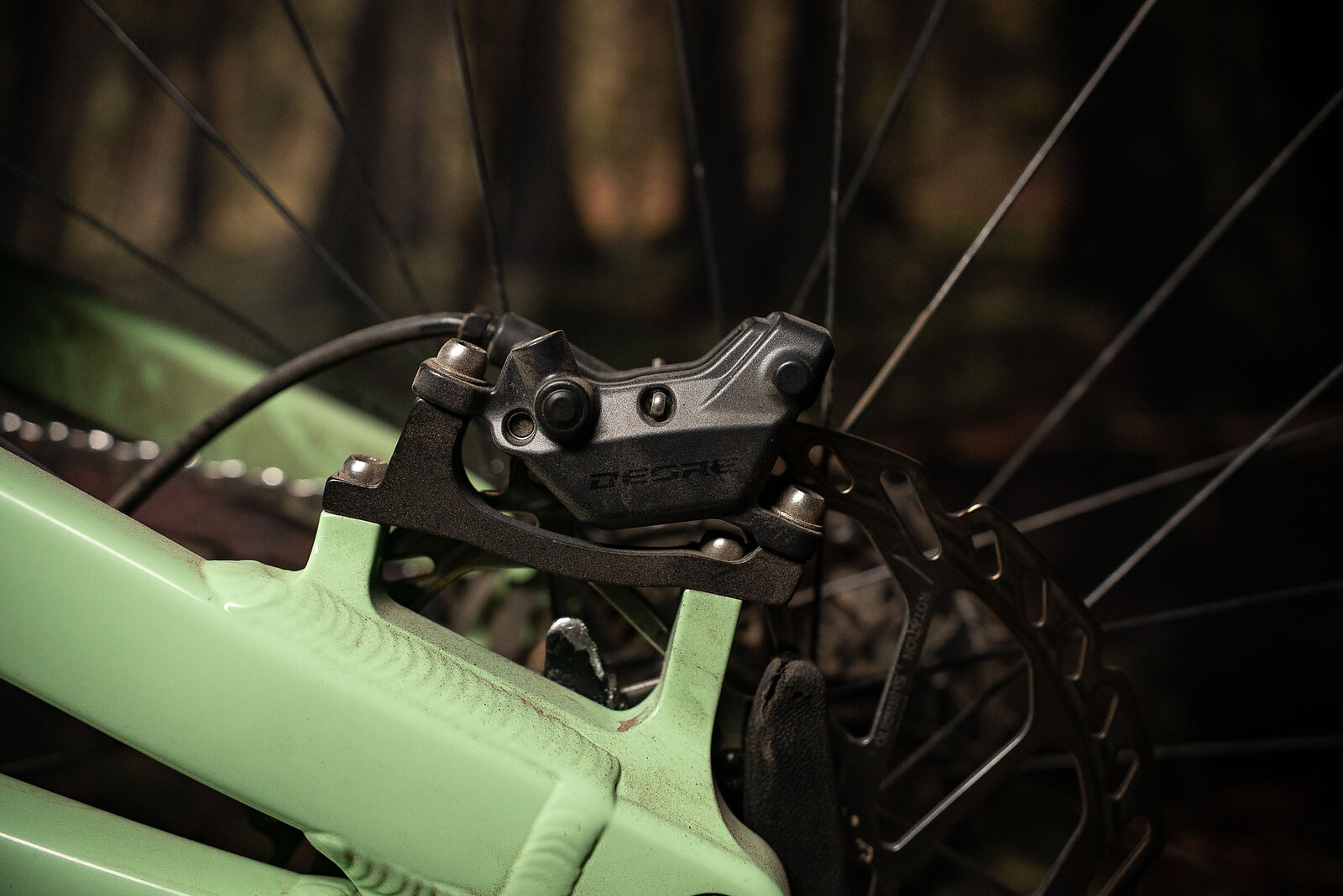
These Deore brakes don't feature the new oval pad hole that the new XT and XTR models feature, but they do have a tighter tolerance around the pads, which makes an impact in pad rattle, but doesn’t eliminate it completely. With the Deore brakes, I noticed this movement not as an audible rattle, but rather as a slipping sensation when riding steep stepped terrain on the front brake. There’s a little lurch as the pads lock onto the rotor and slip in the caliper that’s also evident when you just lock the brake and rock the bike back and forth in the parking lot. It’s not a huge deal, but it’s there and took a couple of rides to get used to and filter out.
In terms of heat management, these start to get a little loud and wooden feeling at a similar rate to Hayes Dominions. That means they’re not quite as forgiving as Mavens, but are still plenty fine for most rides. You can't upgrade to finned pads (the hose gets in the way) but I could jump to 220-millimeter rotors, which I would probably do if I mounted them to a downhill bike. As it is though, it’s really refreshing to feel content with a Shimano brake without having to max out all its power.
For Now
For a long time now my relationship with Shimano brakes has been good but not great. They’ve been fine in most situations, but when things really get serious, I’d rather have Dominions or Mavens between me and a crash. But, with the new 2.2-millimeter thick rotors, Shimano has upgraded up the power, feel, and heat management of its brakes in an appreciable way. Combine any current generation Shimano brake with these rotors and you’ve got something that can handle most trails, under most riders. Is there still room for something even more powerful? Sure. But, for now, I’m a happy camper. And I can finally throw out all my adapters! That’s worth a celebration in its own right.
Learn More: Shimano