Orbea Rallon DH Fast, pretty, and fun.
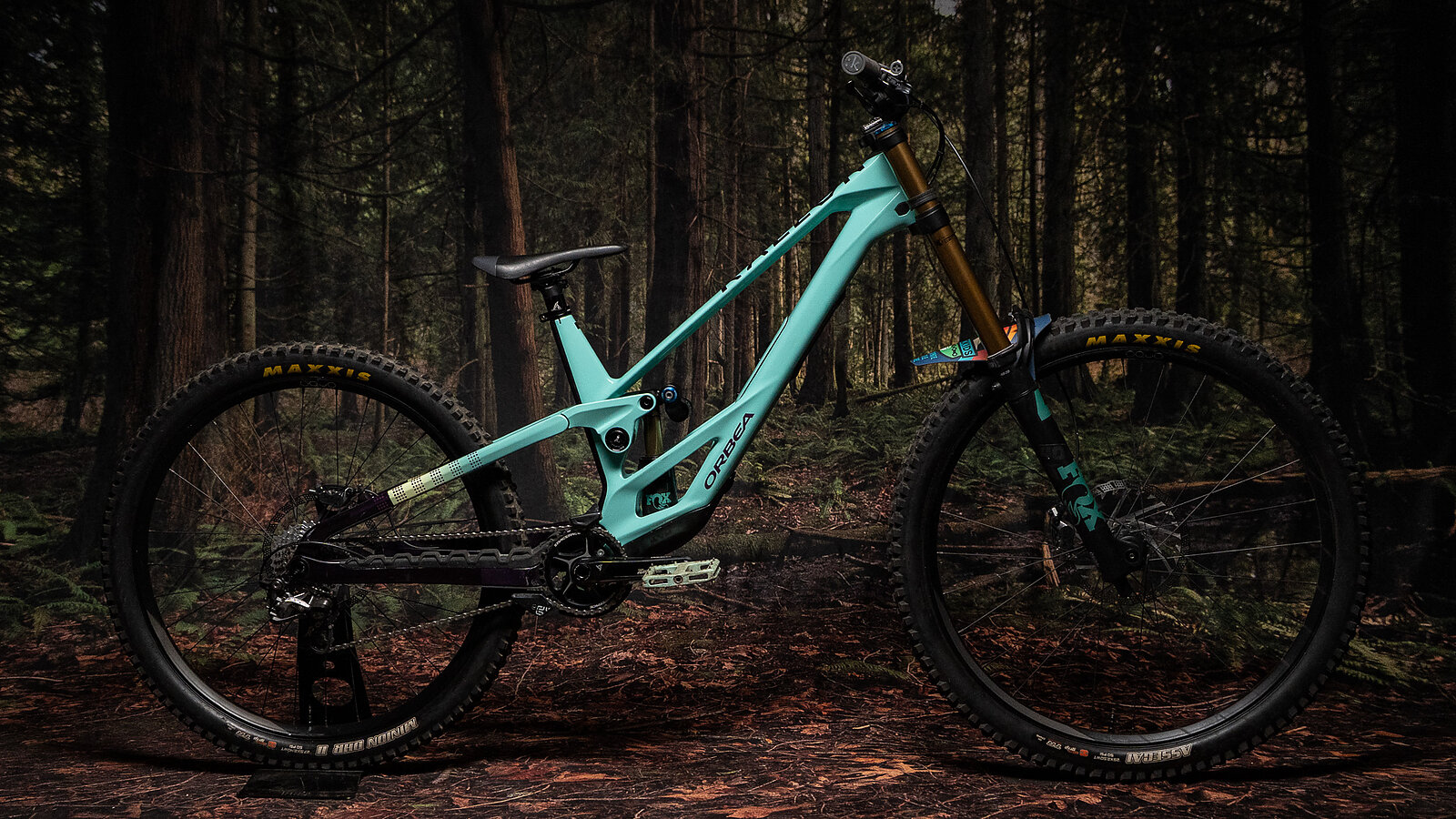
Orbea’s latest Rallon might just have been the hottest bike of 2025. It checks all the boxes: swappable between downhill and enduro modes, optional weight system, adjustable geometry and leverage ratio and, of course, it’s also a looker.
The Rallon is fast too. Tahnée Seagrave dramatically revealed the bike by ripping off its diaper as she climbed to the top step of the podium for the first World Cup of the year, and then won two more races, coming in third in the overall. It’s hard to ask for more from a bike’s debut year on the circuit. The fastest folks in the world can ride this bike very quickly downhill, which is sort of the point.
But what about the rest of us? The has-beens, the never-weres, the thoroughly mediocre masses? I got my hands on the new Rallon DH last fall, and have spent the last few months shuttling and pushing it uphill to find out how it performs on normal trails, ridden by a normal person.
Counterintuitively, I spend about an equal number of hours on the downhill bike over the winter as I do during bike park season. There’s something about the wetter months that draws me to steep, dank shuttle trails, so I got to ride the Rallon on a nice mix of tight, old-school tech, as well as some much faster, wide open laps up north of the border.
Orbea Rallon DH Details
- Travel: 200 mm (rear) 203 mm (front)
- Wheel Size: Mixed
- Size Tested: Large
- Build Tested: D-LTD
- Head Tube Angle: 63.3-64.4
- Measured weight: 36.19 lbs, 16.41 kg (with optional weight block)
- MSRP: $8,299
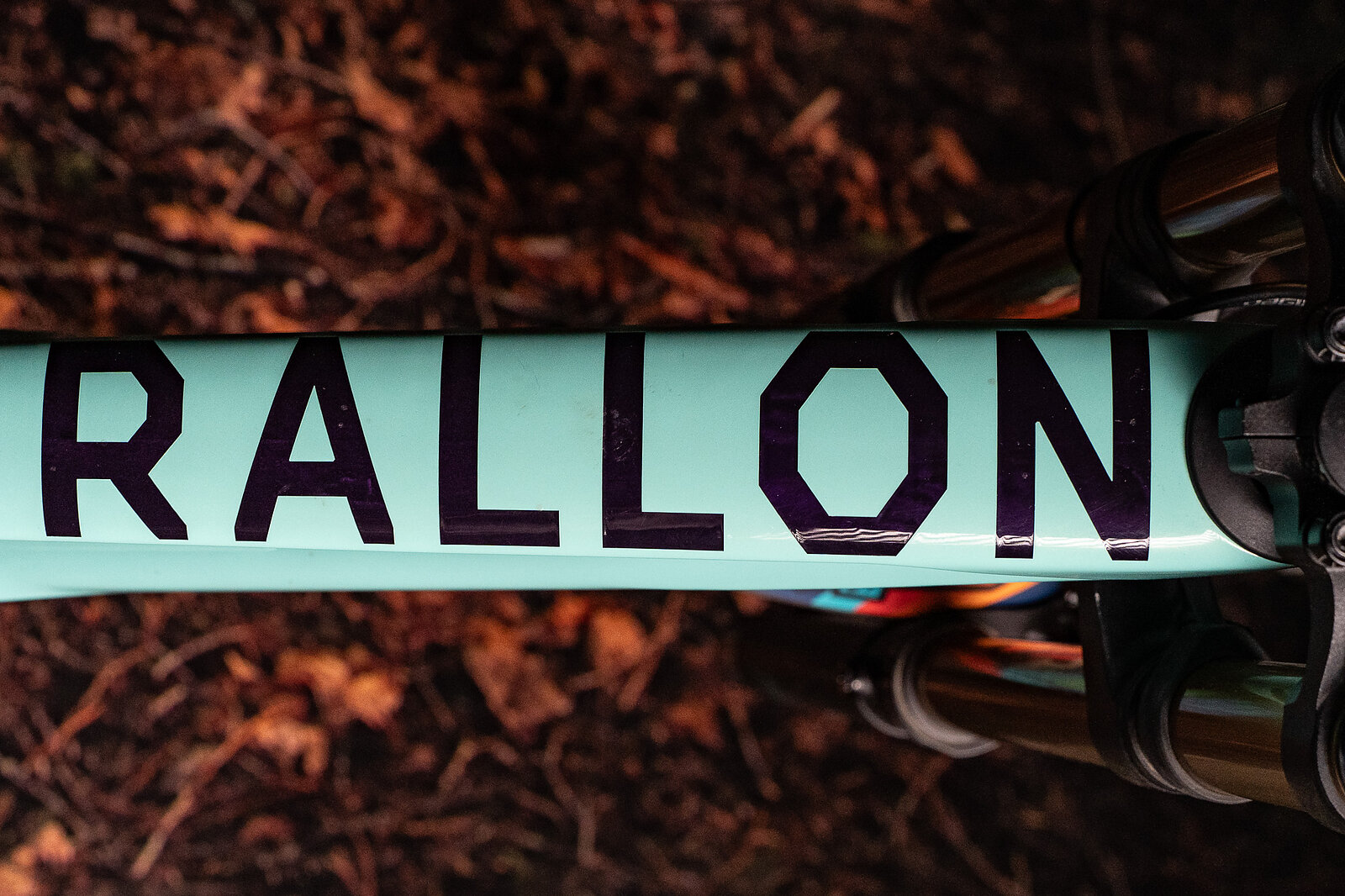
Two Bikes in One
The biggest trick up the new Rallon’s sleeve is its ability to swap from downhill mode to a pedal-able enduro bike with a different lower link, shock, fork, dropper, and drivetrain. I’m gearing up to do that now, and will have a followup review of the Rallon as a pedal bike later in the spring, so look for that in a few months. I’m also quite interested in experimenting with how quickly that swap can be done.
For the last few years I’ve been searching for a mythical beast that I call "the two-beer downhill bike." Most of my friends’ trips to British Columbia are the sort of affairs that involve a fair bit of shuttling and bike park riding, but also some big alpine pedals. And I believe—or at least I want to believe—that with a bike like the Rallon, I could swap between downhill crusher mode and pedal mode in the time it takes my friends to drink two beers. That feels like a reasonable timeframe, where they wouldn’t be waiting excessively on me, but I’d still be able to make the swap. So when I review the Rallon Enduro, I’ll include a section on timed parts swaps, and get to the bottom of this question.
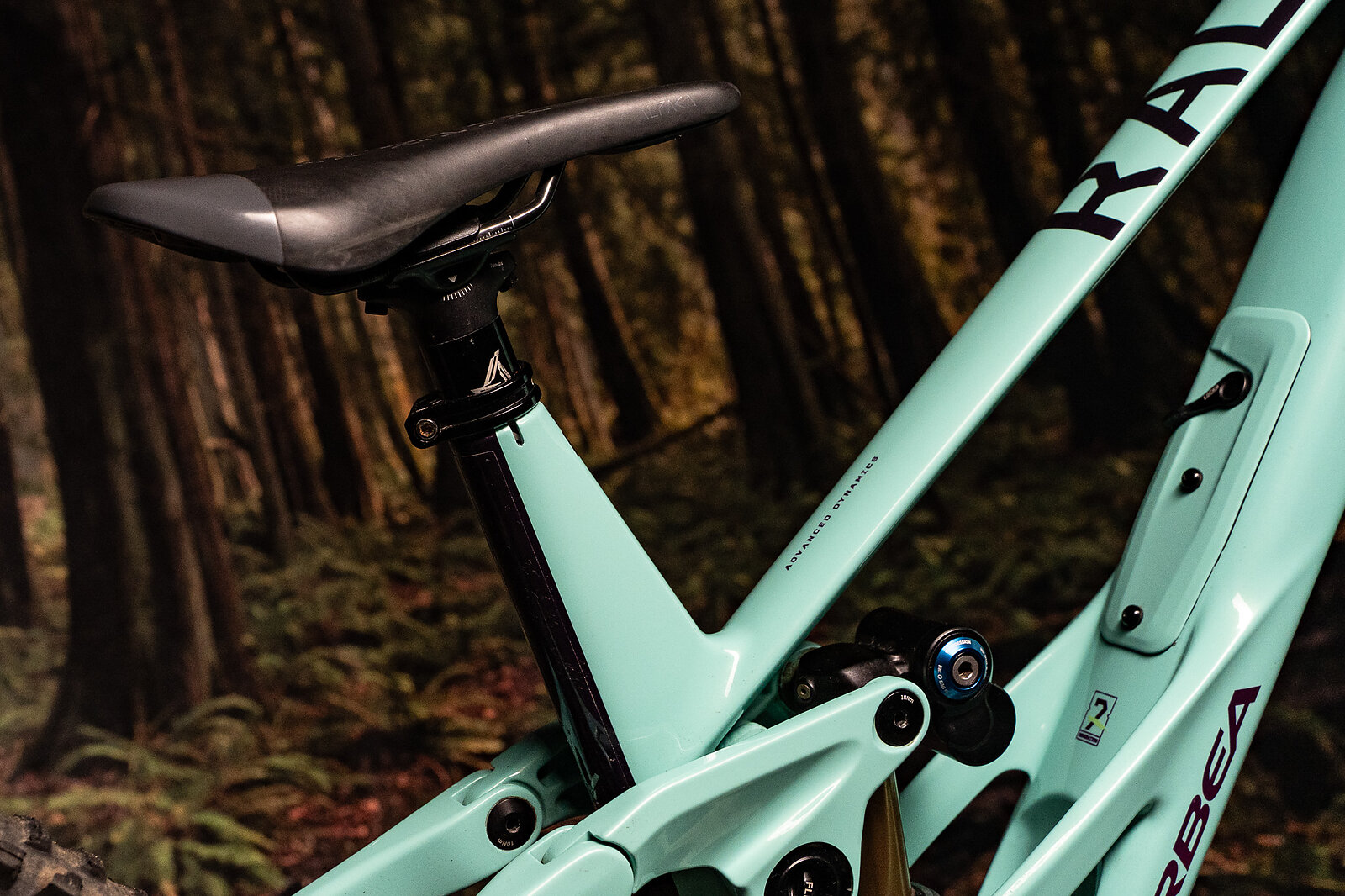
Orbea Rallon Frame Details
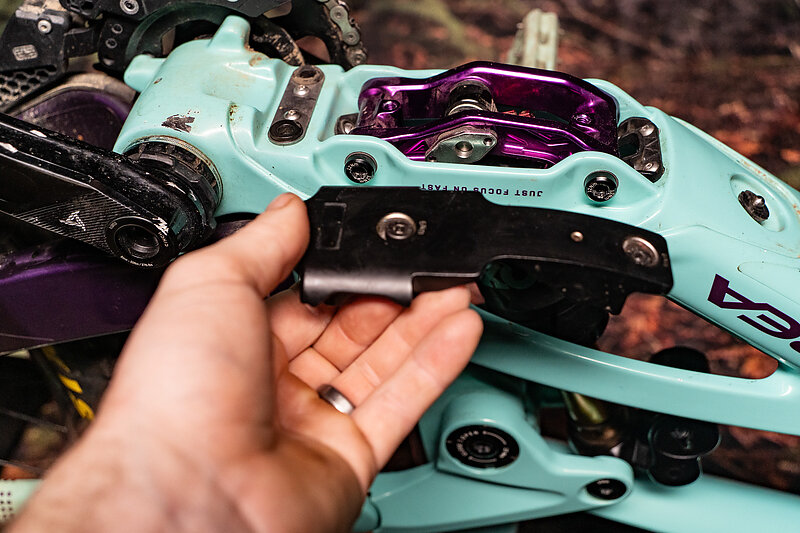
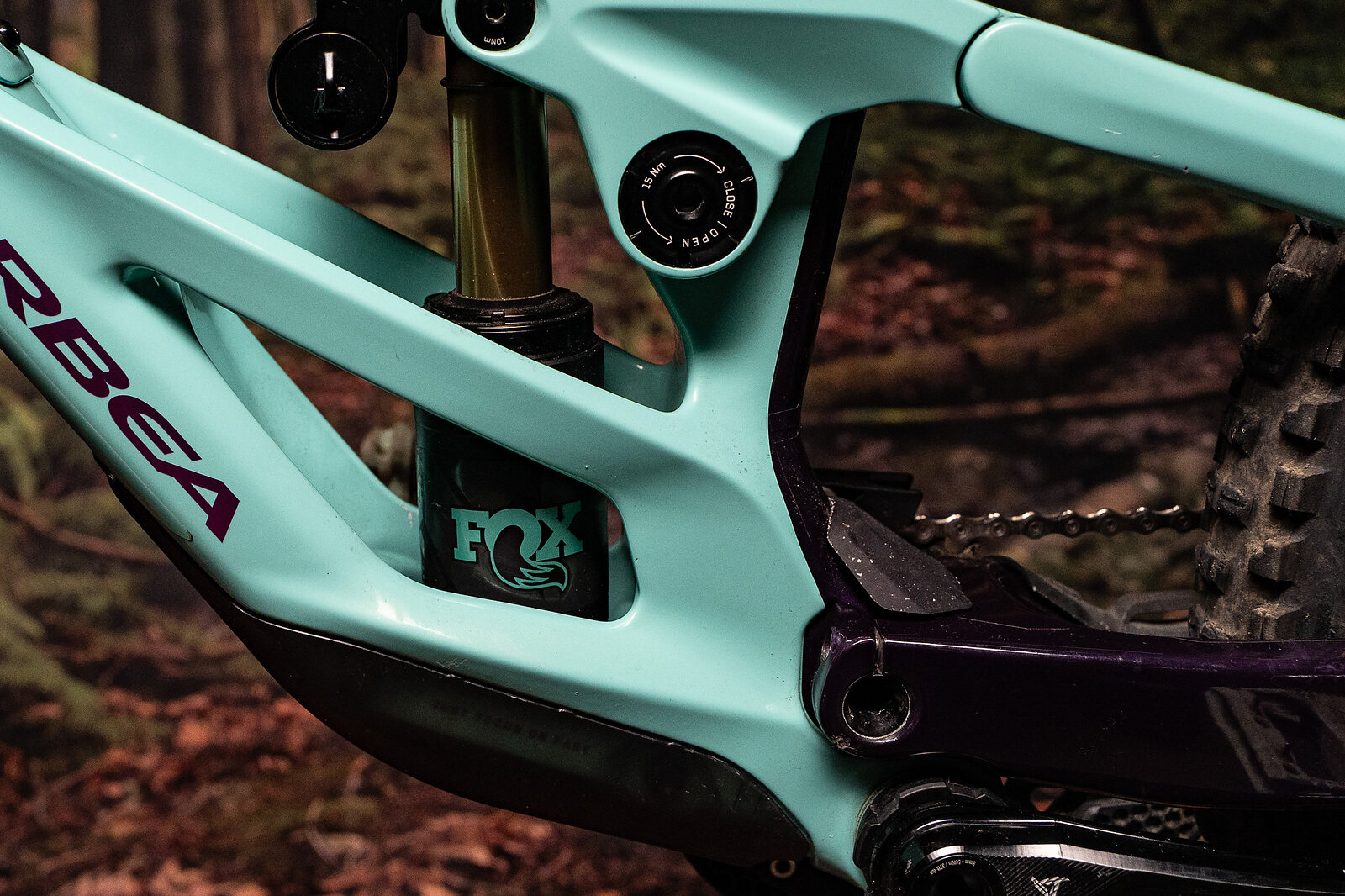
The Rallon is a big, ambitious project of a bike, and it’s got a bunch of dialed little frame details. The most important is probably the Gravity Link. This encompasses the lower shock mount, which has a flip-chip to choose between 25- and 30-percent progression, as well as serving as the mount point for Orbea’s weight system. The Rallon comes with a 583-gram weight that bolts into this link and gives you extra mass down low. We’ll get into how that affects the ride later on. The Gravity Link has a trick, tool-free cover.
Unfortunately, I found that grime had a tendency to accumulate around the link and inside the cover. It's a good idea to pop the cover, and let everything drain out the bottom every time you wash the bike. Otherwise an impressively large amount of organic matter can accumulate in there. The other downside of the Rallon’s shock configuration is that the rebound dials on the stock Fox Float X2 aren’t super accessible. It’s not a big deal to pop the cover and twist them though, and once they’re adjusted, you should be good to go.
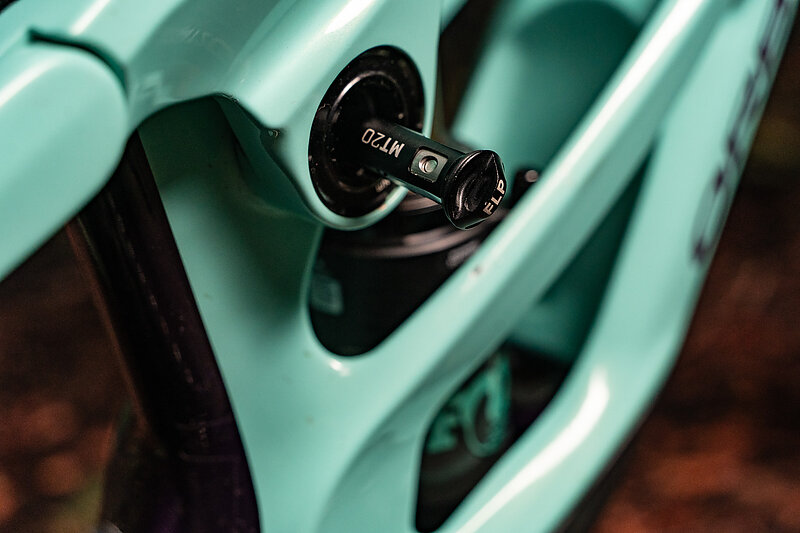
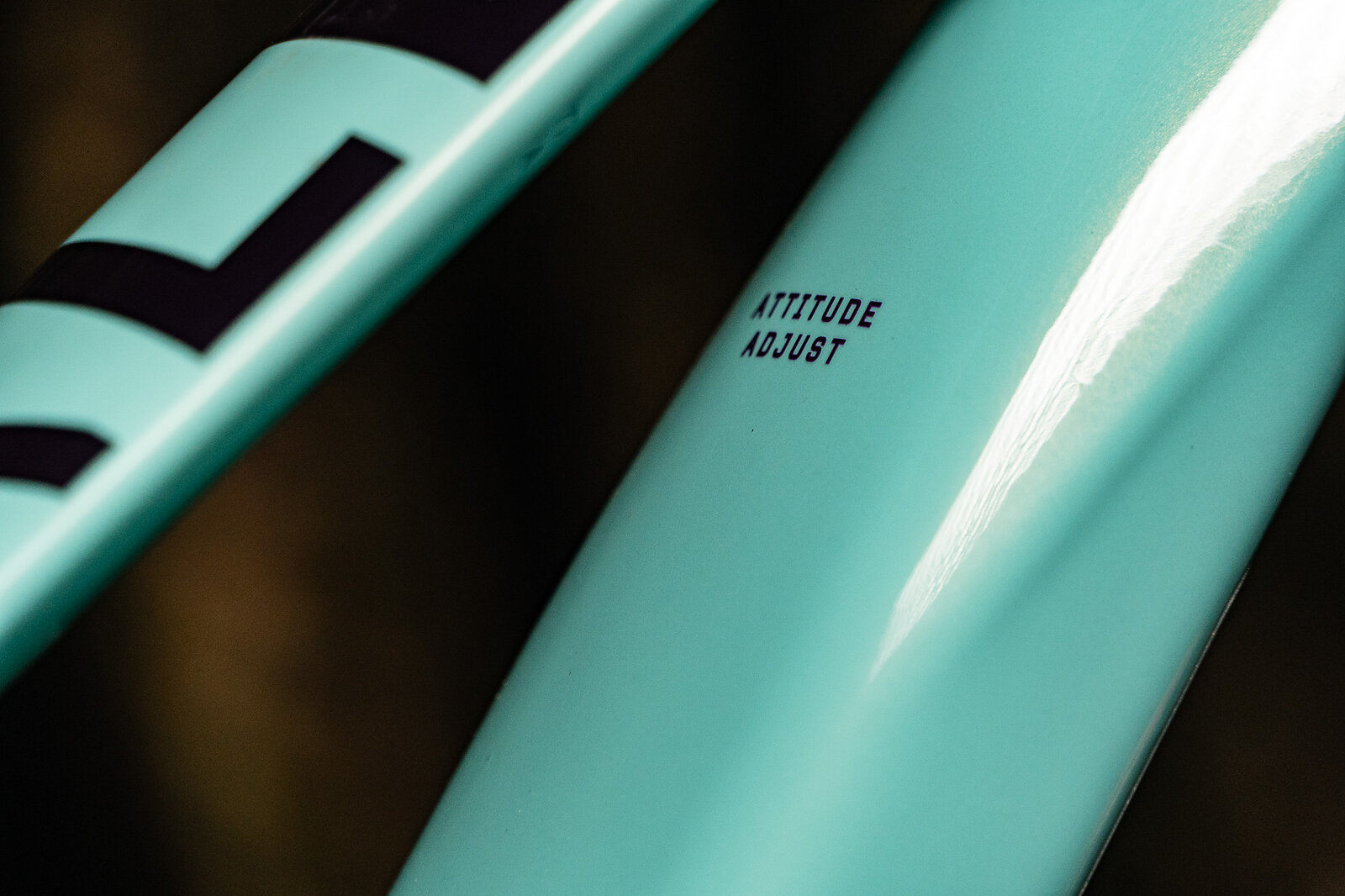
The Rallon’s other adjustment comes at the head tube. The lower headset cup is Orbea’s own proprietary design, and keys into slots in the carbon frame. You can adjust between +/- .75° with one cup, or run the neutral cup to keep things at the stock 63.8° head tube angle. I ran the Rallon for a day with that stock head angle, and then bumped down to the slackest option for the rest of my riding. It’s a fairly easy change to make, the biggest hassle is removing the upper crown from the fork.
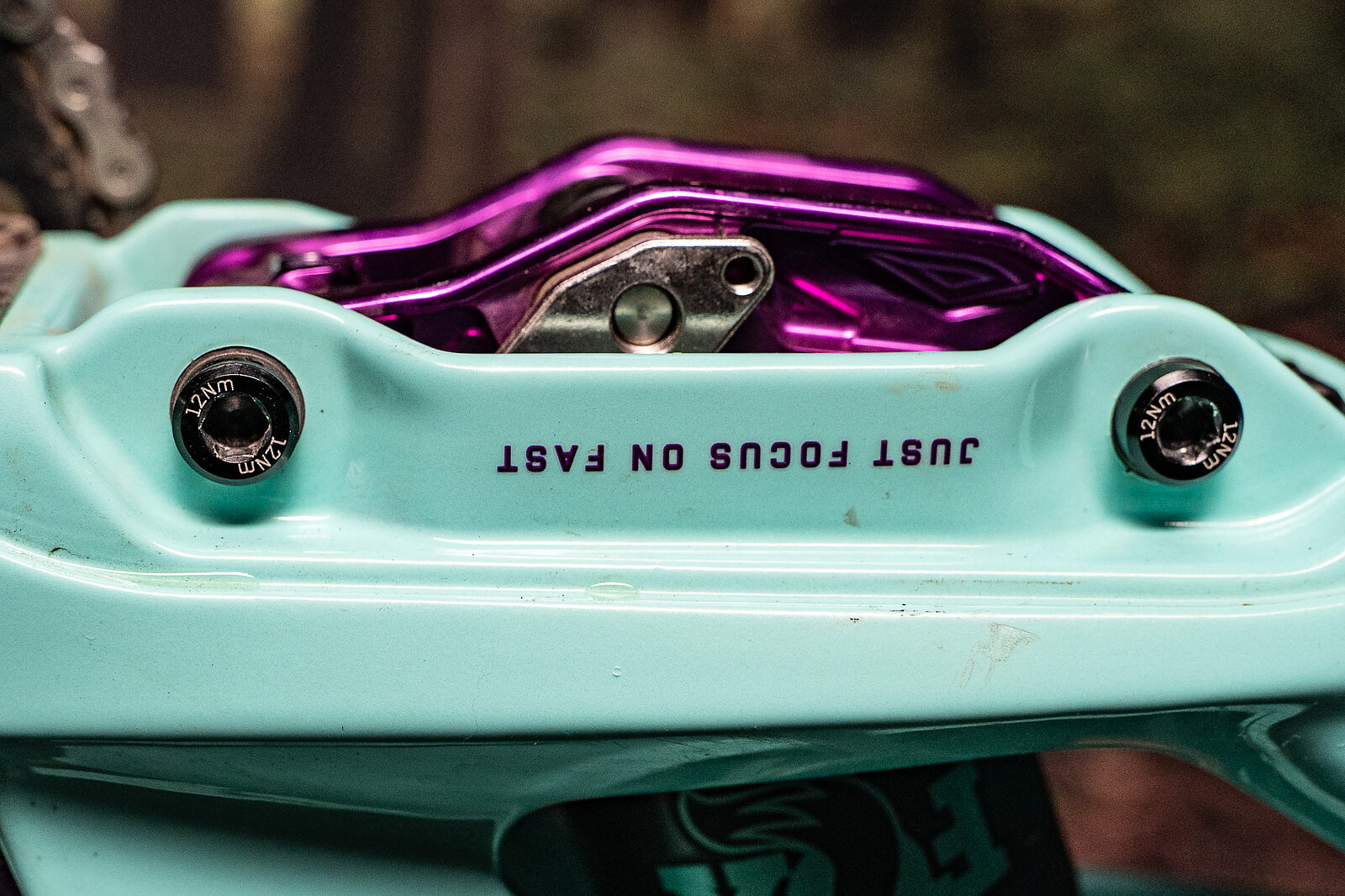
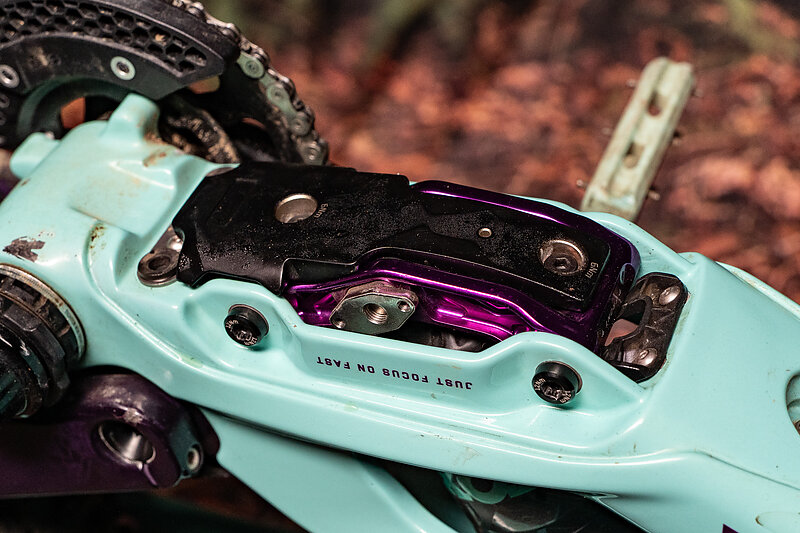
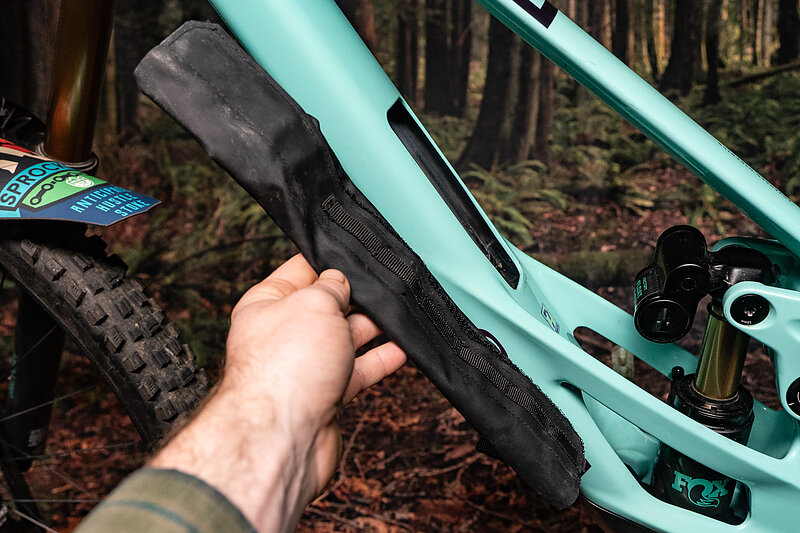
The rest of the Rallon’s frame details are modern and dialed. Because the frame can be pedaled, it has room for a bottle cage, and insertion depth for a 240-millimeter dropper. It also has one of the biggest and best internal storage compartments I’ve used. It’s not the deepest, but it’s very wide, which I found made loading it up easier. The cable routing is all internal and because I swapped brakes halfway through the testing, I became intimately familiar with how it works. The routing between the front and rear triangles is some of the best I’ve seen, with no need to pull the main pivot to get the cable to bridge the gap. My only frustration was that the ports at the head tube are rather small, so you’re probably best off pulling the fork and sticking your hand up inside the head tube to get things routed.
The Rallon comes with a sweet multi-tool in the upper pivot. Unfortunately, mine fell out somewhere on Cypress Mountain in North Vancouver.
One other small detail that I find a little annoying is that the Rallon’s rear brake posts are set for 203-millimeter rotors. That means running 200s leaves you with less-than-ideal pad/rotor contact. When I swap to enduro mode, I’ll throw on a +17 millimeter adapter and a 220-millimeter rear rotor.
Orbea Rallon Geometry
The Rallon DH I’m reviewing here can only run mixed wheels, but, in enduro mode, it can handle full 29-inch as well. You can choose between two different chainstay lengths—a shorter 442 millimeters, or the 450-millimeter version I tested. You also can swap around the headset cup to get anything from a 63.3 to a 64.4° head tube angle.
The size large I’ve been riding has a 473-millimeter reach, 450-millimeter stack, and 78.7° seat tube angle. At 6’2”, it felt right at home.
The Rallon isn’t the absolute longest/lowest/slackest downhill bike on the market, but it does have fairly “normal” geometry for the class, and I felt right at home from my first ride.
Orbea Rallon Build
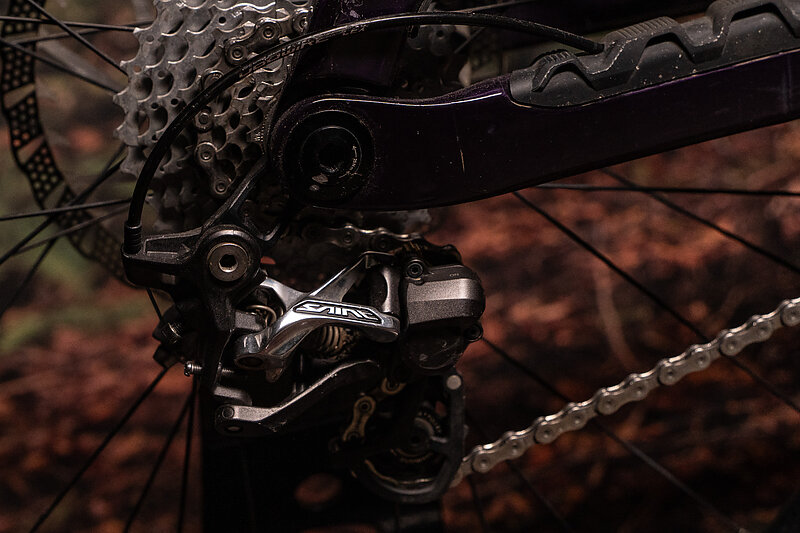
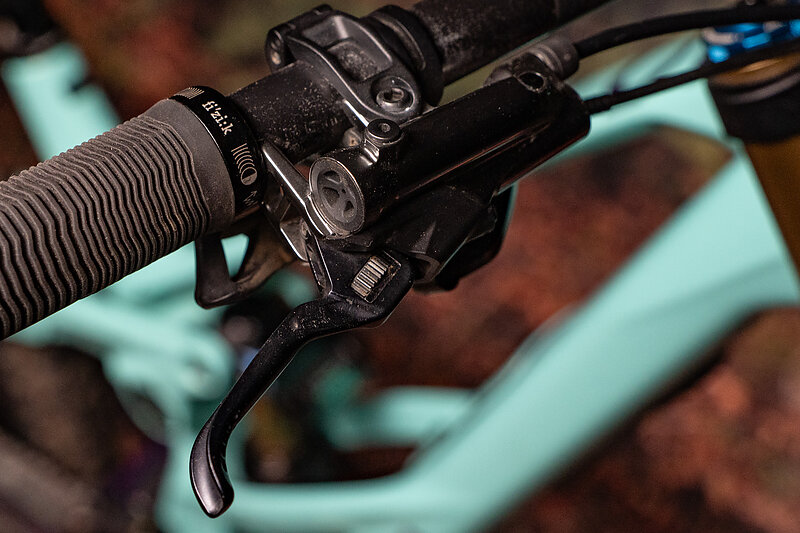
The Rallon DH is only available in one build, the D-LTD I rode. It features a Shimano Saint drivetrain, new XTR brakes (paired to Galfer rotors), and a Fox 40 and Float X2. It also has a nice selection of Orbea parts, from the cockpit to the wheels. The Oquo Mountain Control wheels stood out. I haven’t had this good of durability luck with alloy wheels in a long time. The Rallon comes stock with DH casing, MaxxGrip Maxxis Assegai and DHII tires, although I swapped on a High Roller III for most of the testing given the loose and wet conditions we’ve been dealing with.
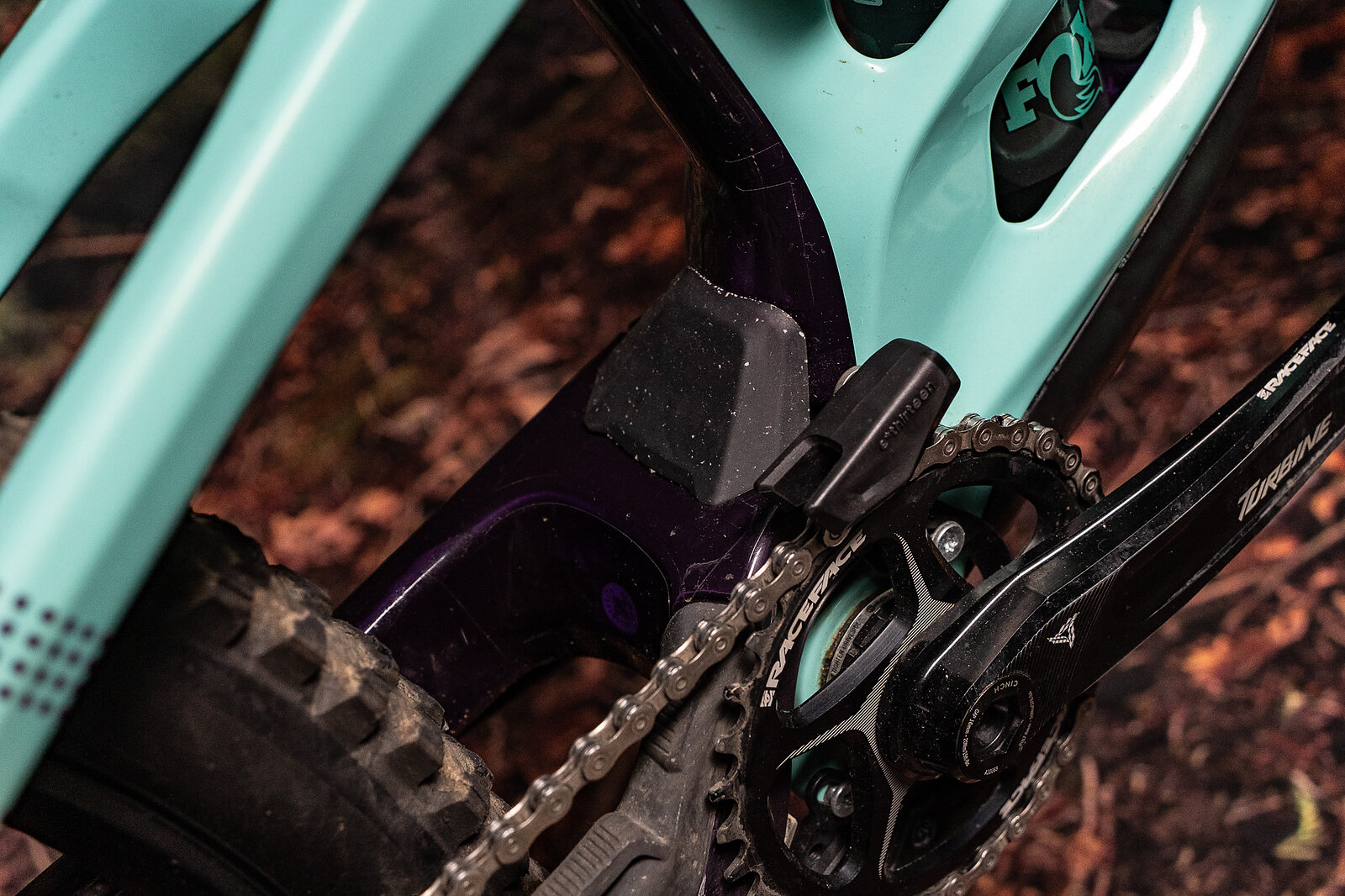
The Fox suspension has been excellent, but I do think the brakes and drivetrain let the Rallon DH down a little. The Saint derailleur lets the chain slap around more than I’d like, and the Rallon has a fairly loud frame, so that noise gets amplified. I also found that the Saint drivetrain doesn’t shift under load, or as precisely as previous-generation SRAM GX DH.
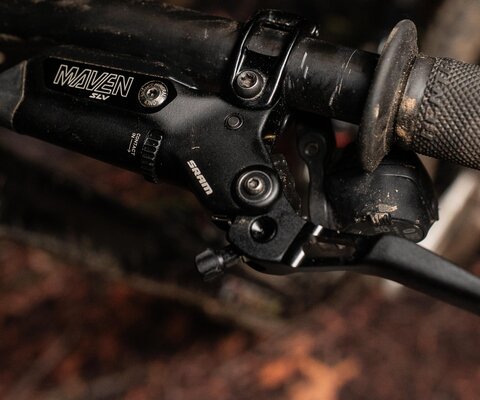
The XTR brakes are obviously adequate for downhill bikes but, even with the thicker Galfer rotors, I found myself searching for more power. Luckily I was able to swap in a pair of SRAM Mavens partway through the test period and really appreciated the boost. I’m quite excited to (hopefully) see Shimano bring a new Saint group to the market. I get why brands spec the current line, but it falls short of the competition in pretty much every regard.
Riding the Orbea Rallon
The disclaimer here, as always, is that I’m not a World Cup racer. I’m not even a weekend racer. I’m just a fairly average guy, who really likes riding downhill bikes. And I really liked riding the Rallon. There’s been this ongoing conversation in my friend group about downhill bikes that are still “fun” for normal riders, who aren’t trying to go fast. The vast majority of folks I know who own downhill bikes aren’t racing, but want to have something big and burly for scary moves, steeper trails, and situations that require smashing. So that’s what I used the Rallon for. And it worked really, really well in those scenarios.
The Rallon has a low-slung frame, and thanks to that weight hanger, has an even lower weight distribution. In my notes from my first ride on the Rallon, I compared it to a scooter, where it feels like I’m driving with my feet nice and low to the ground. That feeling is complimented by the Rallon’s suspension feel. It’s not the magical bump-devouring feeling that some high pivots deliver, but it does a really good job of smoothing the trail without removing essential feedback or dulling the experience. I’ve ridden downhill bikes that feel “dead” or a little boring if you’re not pushing at the limit. The Rallon is a really nice contrast to that—it feels lively and quick, without being unstable or scary. It’s not just a bike that makes sense on a race course, under a racer. It’s really fun on the steeper, slow, jump-filled, and techy shuttle trails around Bellingham.
My personal downhill bike is a Marin Quake, which is explicitly designed as a more playful, less speed-focused ride, but I found that the Rallon’s combination of suspension feel, weight, and center of gravity actually made it more fun to jump and flick than the Marin. The Rallon begged me to reach for gaps instead of dropping my heels and plowing, not because it couldn’t plow, but because it made those gaps really fun. I found myself pushing into side hits that I usually ignore on heavier-feeling bikes.
Going into my time on the Rallon, I was a little worried that I wouldn’t be able to have fun on this bike, that it would be too race-focused for a schmuck like me. And instead it was quick, dynamic, and so much fun to play around on. It gave me the confidence to take on faster trails and bigger moves, and then also encouraged me to find side hits and slashes on those trails.
Flex wise, the rear end of the frame is definitely softer than the front triangle, but I didn’t find the contrast to be jarring. The rear wheel conformed around roots nicely, but I never felt like I was folding it in supported corners, although bigger or more speed-focused riders may fair differently.
I did several back-to-back runs swapping around the weight system and progressivity. The difference in ride feel with and without the weight is quite noticeable, and, for my riding, I prefer the bike with the weight in just about every situation. It feels much more planted and quiet through chunder. That said, I’m a big dude (220 pounds right now) who is used to throwing 40-plus-pound bikes around. So, for smaller riders or more trick-focused riders, the lighter configuration probably makes a bunch of sense.
I ended up preferring the more linear shock position with the Float X2. I upped pressure in the rear shock several times during testing, ending up closer to 25-percent sag than the recommended 30-percent. That gave me a little more support, and a more sure-footed feel when loading the bike, without negatively affecting the Rallon’s trail-smoothing performance.
I have a lot of gushing notes about this bike, typed into my phone between shuttle laps. And, as I try to make sense of them, and the Rallon, I think that the biggest thing that stood out to me was how this bike balanced suspension feel, weight, and perceived weight. When I wanted the bike to feel like (lifting it into the truck, flicking it through a tight move, popping off a side hit) it did. It maneuvers more like a trail bike than some of the enduro bikes I’ve been riding recently and I can’t wait to go pedal it. But, on the flip side, when I needed it to be stable and “heavy” it was. When I dropped my heels, death gripped the bars, and committed to plowing, the bike tracked better and deflected less than I expected it to. That’s a really cool duality, and I’m excited to see how it plays out in the enduro version of the Rallon.
For Now
With the Rallon, Orbea made a bike that can win World Cups and that’s rad. But, there are only a handful of folks in the world who can push downhill bikes to that level. For the rest of us, the Rallon is a very fun, very versatile ride that doesn’t require you to be chasing milliseconds to reap its rewards.
Learn more: Orbea Bikes