SRAM Ochain R More durable and easier to work on.
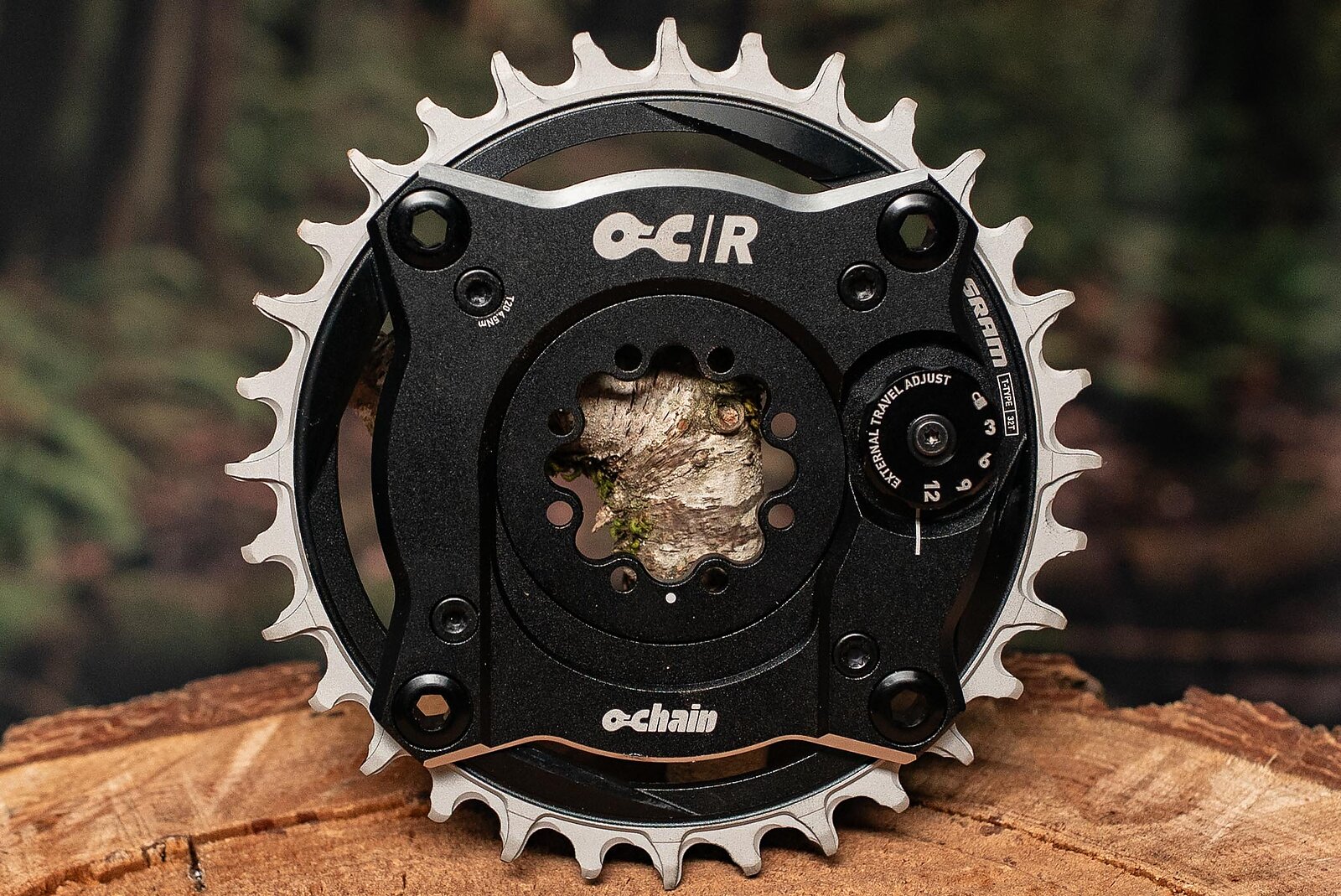
Ever since SRAM acquired Ochain last year, inquiring minds have wondered how it would affect the brand’s products. Now, we finally have an answer, and the short version of that answer is: not much for now. SRAM just dropped the first official SRAM Ochains and they look and function pretty much identically to the classic versions. Though there are some important differences under the hood, as well as some things to note when it comes to compatibility. I’ve been getting time on the newest version of the Ochain R, so I’ve got a breakdown of the changes, along with some riding impressions.
But first, what hasn’t changed: Ochain is still meant to absorb pedal kickback and other suspension and drivetrain forces and quiet down your ride. SRAM calls it “feeling faster” which, given my experience with several different bikes with Ochains over the past year, is pretty accurate. The previous generation Ochain is my favorite way to quiet down pedal feel on longer-travel bikes, so I was intrigued to see what SRAM changed with the new version.
SRAM Ochain R Overview
- Fitments Available: SRAM 3-bolt or 8-bolt
- Modes: 0,3,6,9, or 12°
- Weight: 232 g (Ochain and 32T SRAM XX chainring)
- Price: $350
What’s New?
No, SRAM hasn’t integrated Flight Attendant into Ochain, or added any batteries. Instead, the changes are nearly exactly what I’d ask for as an existing Ochain aficionado: the new SRAM branded version is supposedly more durable, with a better sealing system, and is easier to service.
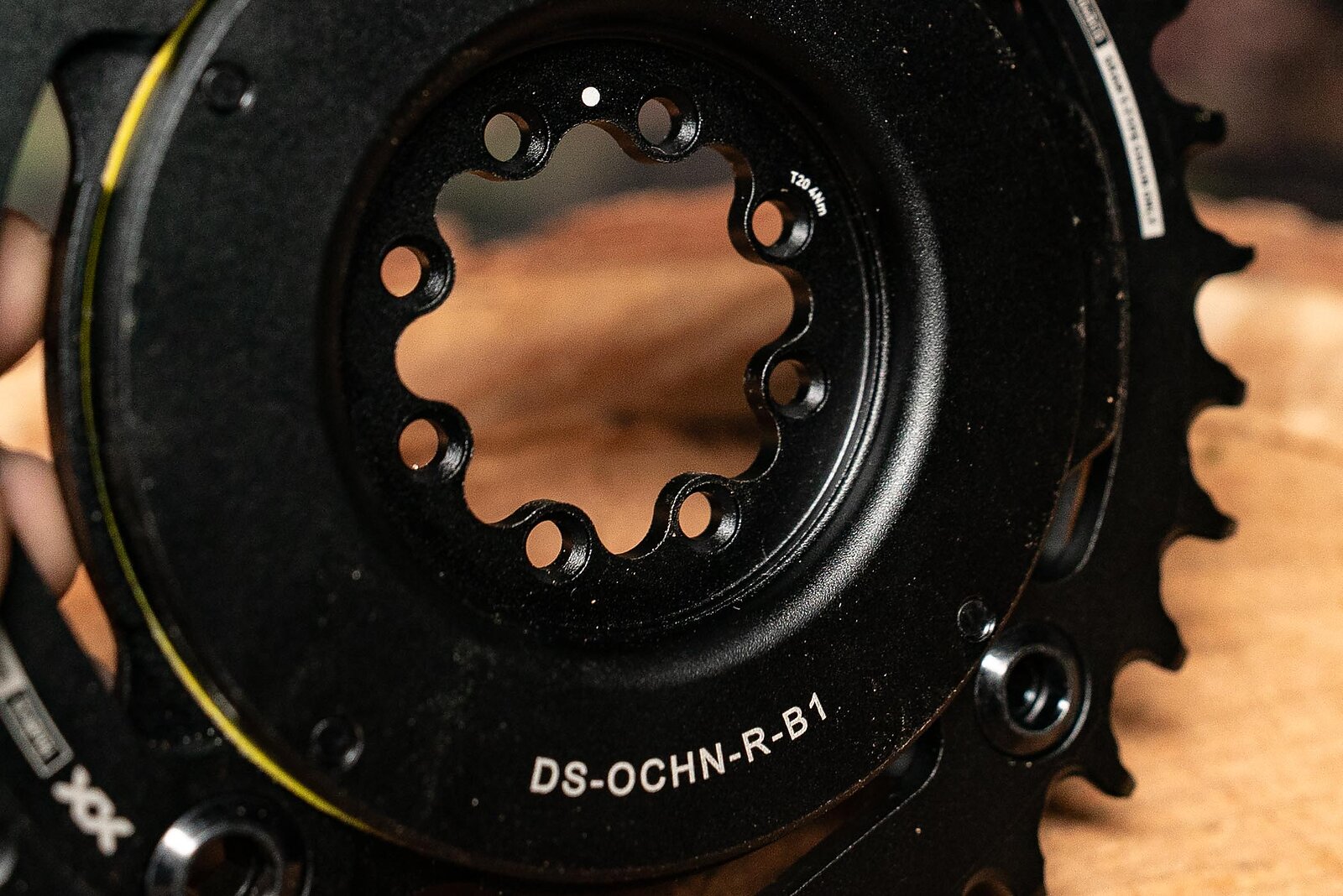
The new version of the Ochain is designated as the “B1” version, and is manufactured at SRAM’s facilities in Taiwan, instead of in Italy. SRAM says that the chassis has been updated to meet higher standards for durability and impact resistance. And inside, it features new gasket materials, and a new double lip silicon seal. The previous version used a fiddly and somewhat frustrating wax paper seal system that made rebuilds a bit of a hassle, but thanks to the new seals, SRAM says the service intervals are now 100 hours for an elastomer replacement and 200 hours for a full rebuild versus the 75 hours for elastomers, and 150 hours for a full service that the old one required. I did a quick lap through the new service manual, comparing it to the old one, and it does look a little simpler and easier to do for home mechanics. Once I’ve got a bunch more hours on this version, I’ll do a back-to-back teardown of both new and old Ochains and take photos for a comparison article.
Otherwise, the function and design of the new Ochain is identical to the old one, and the pricing drops $100 from the previous version. Additionally, SRAM is releasing a new $90 upgrade kit that allows you to add external adjustments to the previously internally-adjustable-only Ochain N and E.
Understanding the Ochain Lineup
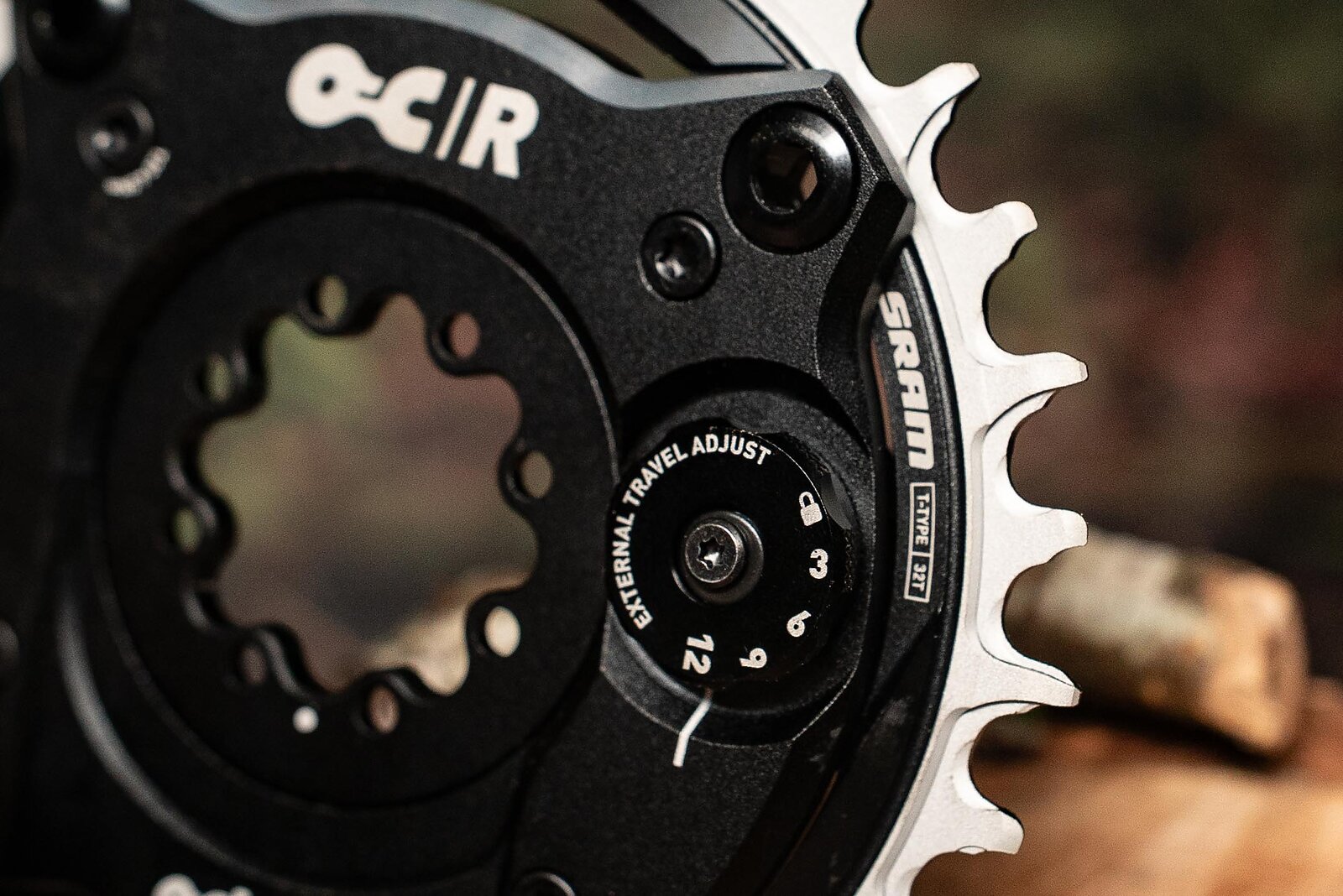
SRAM is making four Ochains, and it’s easiest to think of them as two parallel sets: One for meat bikes and one for e-bikes. The Ochain R ($350) that I’m reviewing is the high end meat bike version with external travel adjustment. The more affordable ($285) Ochain N is only adjustable if you take it apart, or, if you buy the $90 upgrade kit. Personally, I prefer to run the R on pedal bikes, where I tend to run it locked out on the climbs, and wide open on the descents. On my downhill bike I run the N, in the biggest 12° mode.
On the e-bike side, there’s the Ochain S ($350) that has the same adjustment system as the R, and the Ochain E ($285) which is equivalent to the N. Just like the N, you can upgrade the faceplate on the E to make it adjustable if you so desire.
Ochain Compatibility
Unsurprisingly, the new SRAM versions of the Ochain only support SRAM crank standards. That means that if you want to run something else, you’d better grab the previous version ASAP, or just give in and run SRAM 3 or 8-bolt cranks. On the e-bike side, the Ochain S and E are only compatible with Bosch’s BDU38 standard found on the CX gen 5 motor. It will be interesting to see what that means for SRAM’s Powertrain motor system.
The new Ochain is still compatible with 104-BCD chainrings, and SRAM is selling XX versions. The smallest you can fit is 32 tooth, and there will be 34 and 36 tooth versions available as well. Similar to the previous version, you can combine different mounting bolts and spacers to dial in your chainline.
Riding the SRAM Ochain
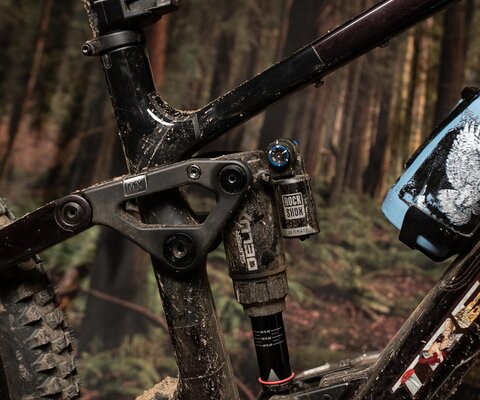
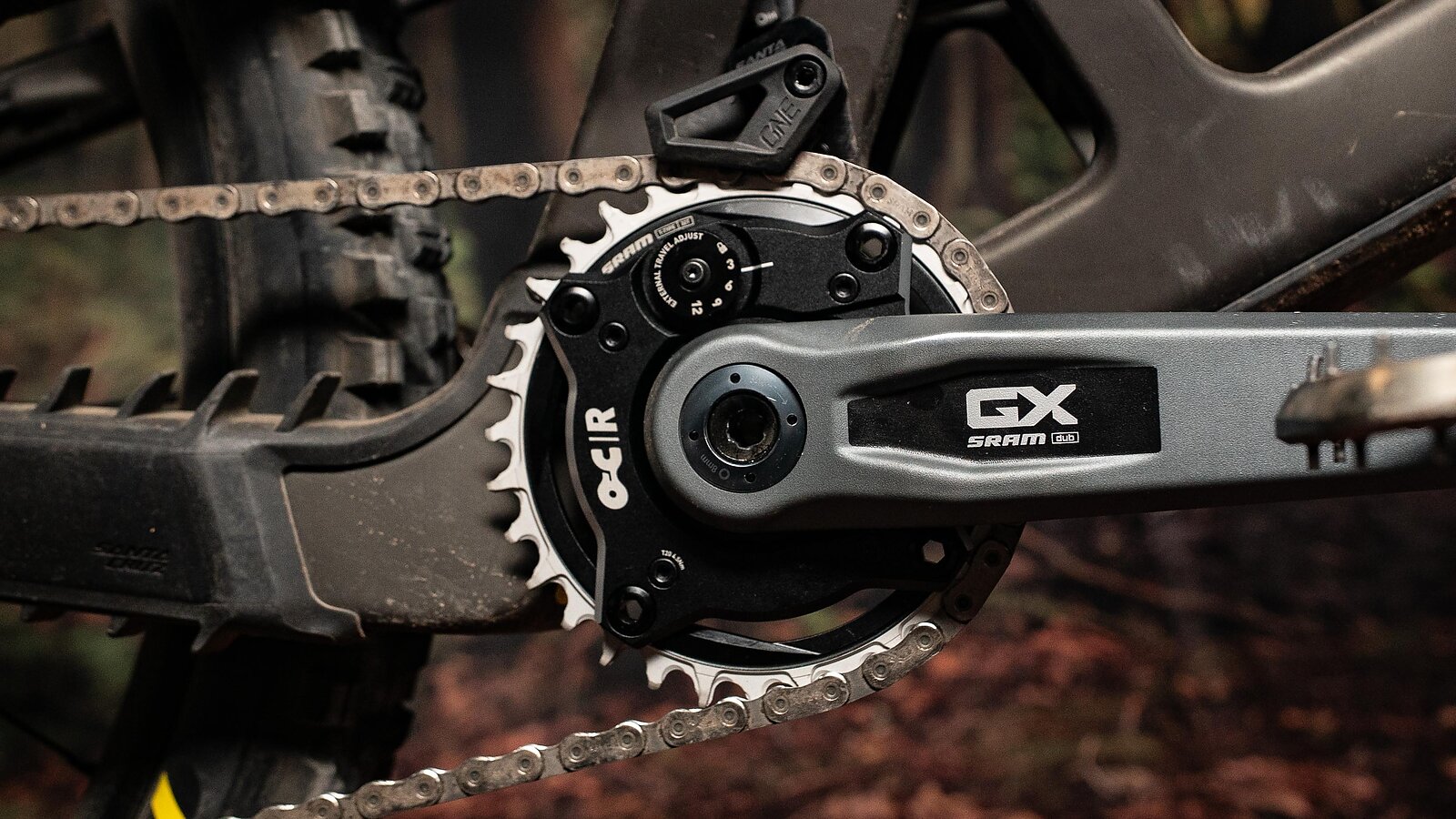
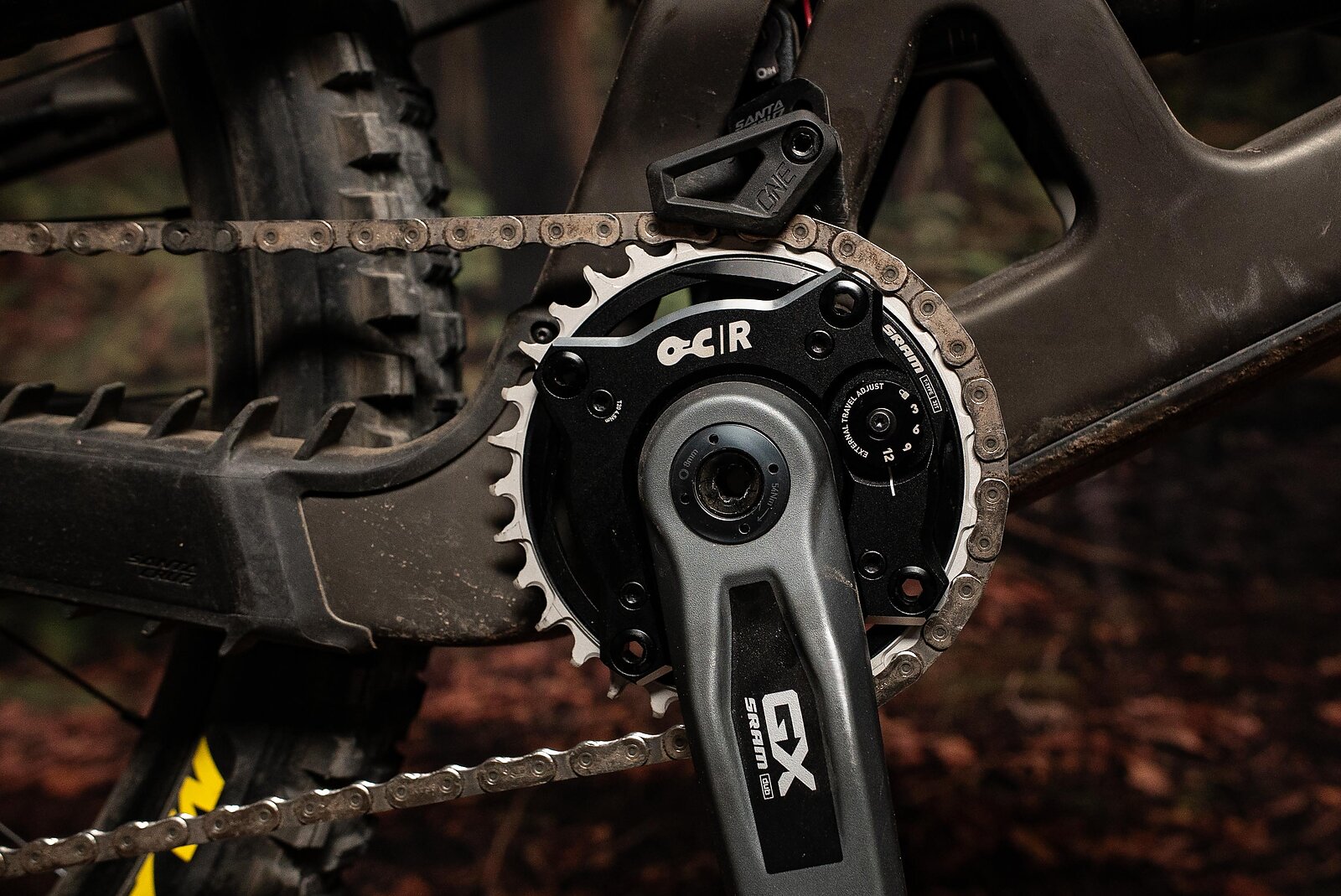
I installed the Ochain on a new Santa Cruz Nomad, since it’s a bike that could benefit from a little less pedal feedback. The hardest part of the process was removing the DUB crank bolt. I ended up resorting to a breaker bar and ratchet strap, but once the cranks were off it was a very simple process to swap in the new Ochain R and chainring. The Ochain R and 32T XX chainring weigh 154 grams more than the stock 32T GX Transmission chainring, which isn’t nothing, but is added to the best part of the bike possible.
Just like the previous version Ochain, you need to gently weight the pedals and pull out on the knob to adjust the travel. I found that the previous generation Ochain could be a little hard to adjust, and I resorted to using a stick to pry the knob out a few times. This new SRAM one is easier to adjust and the knob feels smoother. I prefer to run the Ochain fully closed (0°) for long climbs, and fully open (12°) for long descents. For more rolling trails, 6° is a great choice but, honestly, I’d be totally happy with a two-position, fully closed or fully open Ochain.
The new SRAM Ochain feels exactly the same as the regular Ochains I’ve been running for a year. It has a nice quiet, soft pickup when you’re ratcheting the pedals, and does a noticeable job of quieting down drivetrain feedback through my feet.
I’m hyper-aware of the “is pedal kickback even real” conversation on the internet, and I tend to believe that whether or not it’s caused by traditional “suspension compression causing the pedals to move” kickback, or other forces, the Ochain does make a real difference on many bikes. My drivetrain sounds and feels quieter with the Ochain installed. There’s less yanking on my feet through fast, square-edged hits.
It’s a little ironic, but I’ve found that the original Ochain was most noticeable when used in tandem with non-SRAM drivetrains. I’ve found that it quiets down the un-clutched Shimano Di2 drivetrains to a more notable extent because they tend to have more chainslap and noise than a SRAM Transmission drivetrain.
I’ve run both the Ochain and e*thirteen’s original Sidekick back-to-back on the same bikes, and I’ve found that they’re subtly different. The Ochain does a better job of eliminating the forces through my feet and quieting the bike down, but the Sidekick does deliver a remarkably fast-rolling, smooth-feeling ride. For most bikes, I prefer the Ochain because I think it does more, and you can easily lock it out for longer climbs.
This is a bit of an edge case, but I’ve also found that when surfing scree with the rear wheel fully locked, I really appreciate the little bit of play the Ochain delivers. It lets me shift my weight around, and move the cranks, without having to backpedal or open up my brakes in a hairy situation.
I’ll include more thoughts on how the Ochain performs on the Nomad in my full review of that bike, as well as a followup piece when it’s time to service it.
For Now
SRAM’s first changes to the Ochain are safe and positive. This is one of those products that already worked quite well, so it’s great to see SRAM focus on making the user experience better with increased durability, longer service intervals, and better sealing.
Learn more: SRAM