Reason to Stay Embracing the Rugged Roots of the Snowshoe Highlands
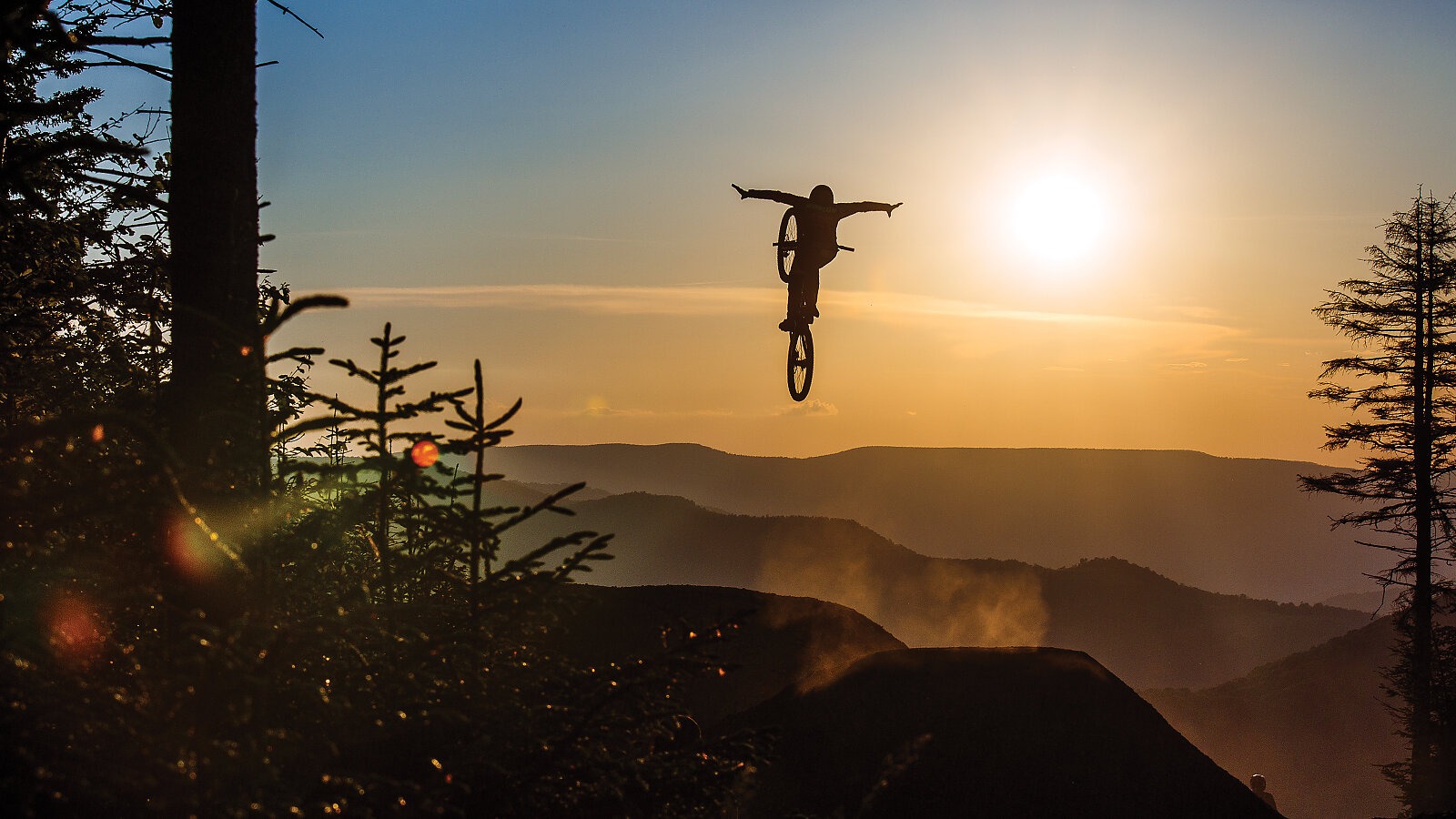
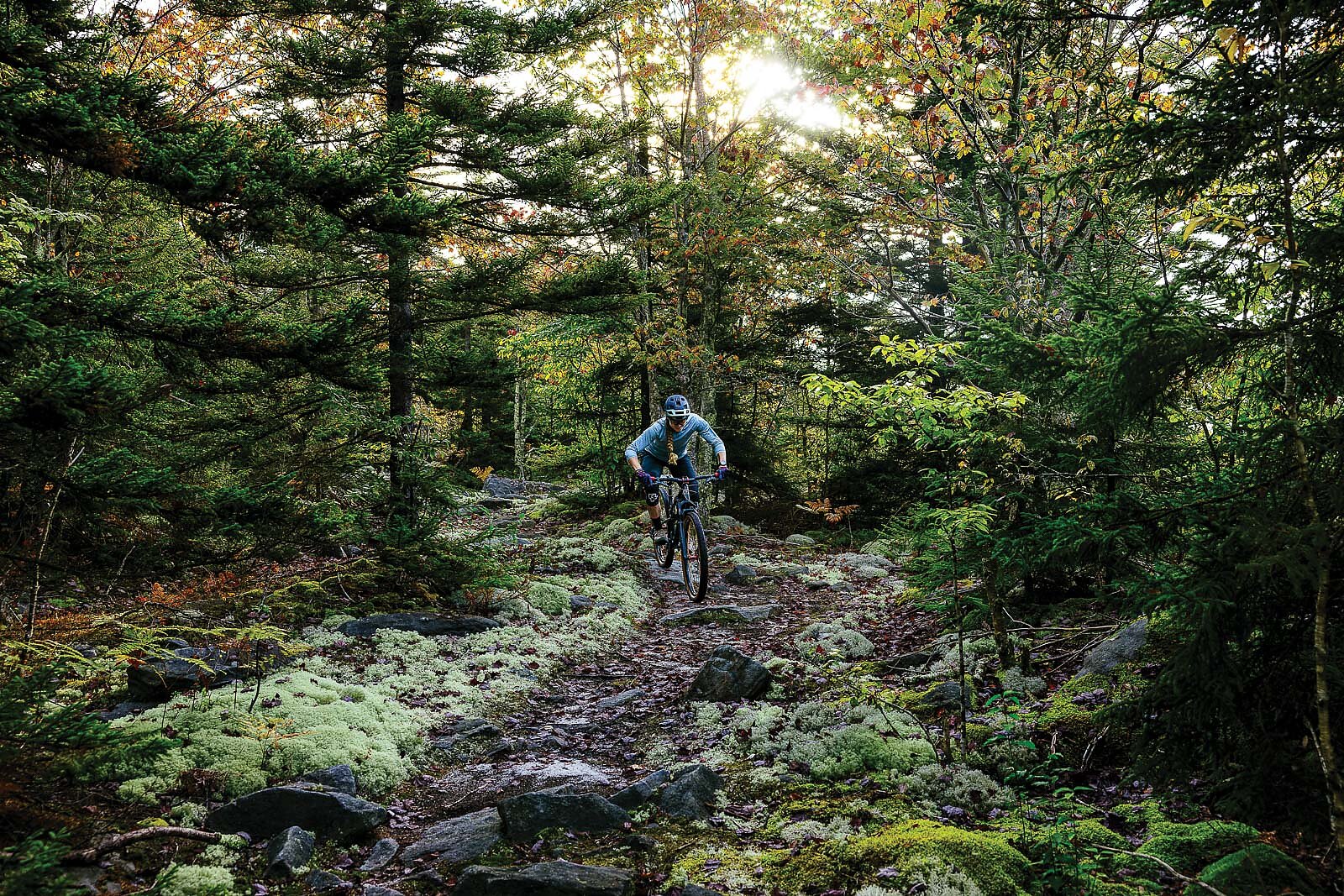
As the sun sets beyond evergreen trees atop Cheat Mountain, an evening ride becomes blanketed in amber light that dances upon dense patches of moss, waving pockets of ferns, and soft spruce needles.
Tight turns and unmanicured rock gardens invite riders to slow down and take note of their surroundings. At first glance, the forests of Appalachia appear as a flat canvas of green, but the evening light exposes rocky nooks, steep chutes, meandering streams, and an immense world of flora and fauna hidden within the seemingly monotone expanse. More than a change in appearance, the golden hues imbue a feeling of warmth and connection to these ancient Appalachian Mountains.
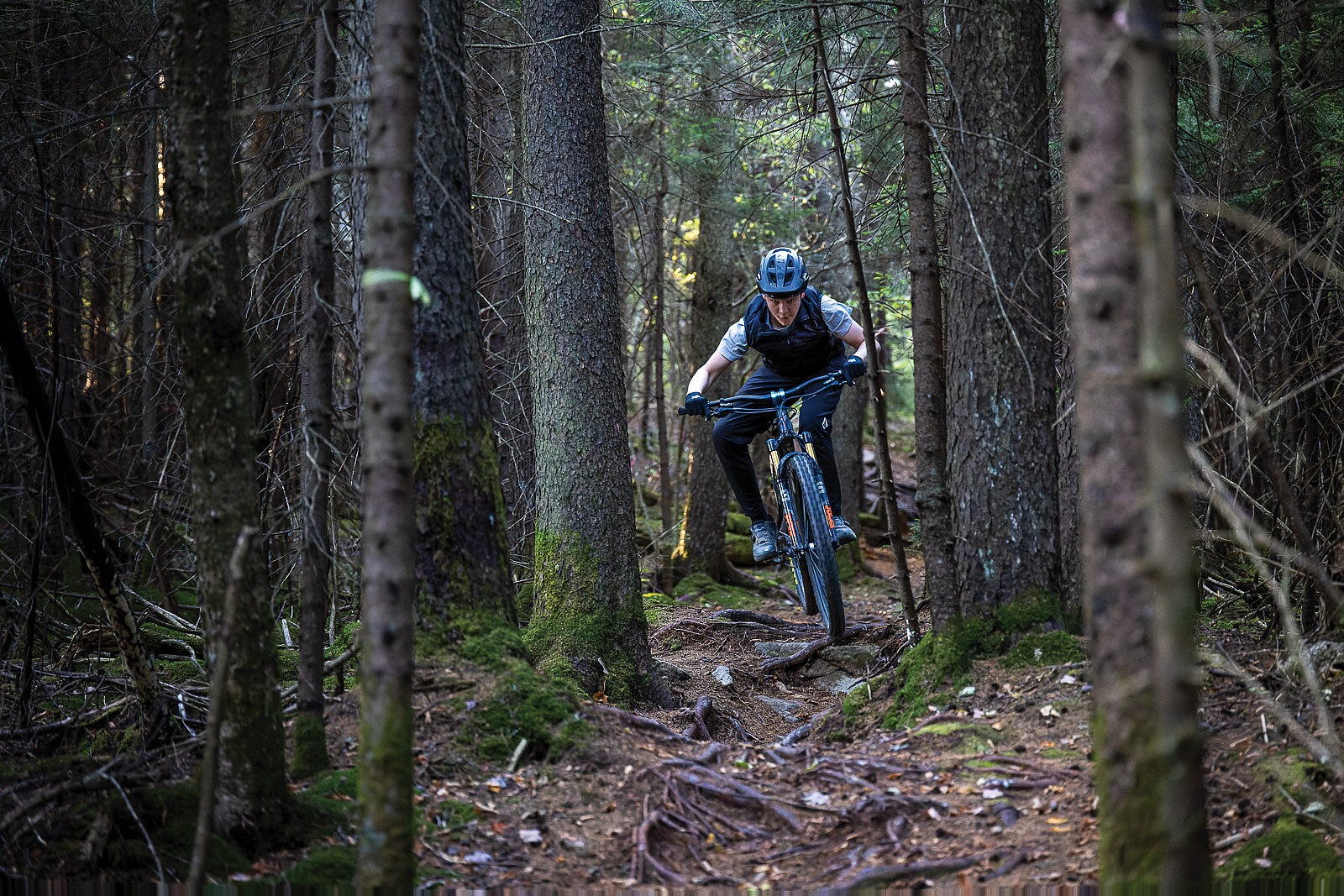
About 300 million years ago, the Appalachians were as tall as the present-day Himalayas. But years of weathering and erosion, punctuated by geologic bursts of uplift, softened the once-towering peaks into rolling ridges and valleys dissected by boulder-filled creeks. In the world of outdoor adventure sports, the Appalachian Mountains are often overlooked due to their relatively small stature and general lack of expansive views. In West Virginia, it’s far more common to traverse a trail ensconced in rhododendron thickets and lush cinnamon ferns than it is to ride along an exposed ridgetop. Local mountain bikers relish in the region’s challenging trail features—janky rocks and off-camber roots are abundant— but the reason many chose to settle here is the secluded nature of the mountains themselves.
“It’s just so beautiful, and you hardly see anybody out there,” says Greg Moore, vice president of Pocahontas Trails, a chapter of the International Mountain Bicycling Association (IMBA) in Pocahontas County, West Virginia.

Pocahontas County is nestled deep within the heart of central Appalachia. It’s a region isolated from major hubs of human activity and occupied by far more trees than people. Moore first came to Pocahontas County in the early 1990s to race at the Fat Tire Festival, a weeklong mountain bike festival that featured group rides and a cross-country race in Slaty Fork.
“It was the gnarliest stuff I’d ever ridden at that point,” he says.
The narrow, hand-cut trails haven’t changed much since. They weave through dense yellow birch and red spruce forests and follow old railroad grades—relics from when the county was almost entirely logged in the late 1800s and early 1900s.
“You’re constantly maneuvering left and right, dodging features, and rolling over rocks,” says Moore. “You just can’t measure it in miles.”
Because Pocahontas County averages 42 inches of annual precipitation (with some pockets receiving far more), Slaty Fork’s steep and rugged trails are often coated in slick slime or thick layers of mud. Here, even the most skilled riders are often pushed to their limits. But the rainforest- like conditions are a point of pride for locals who at the very least tolerate and at the very best excel at riding in the rain.
“It can’t get any worse, and it’s so good,” says Eric Lindberg, the founder and president of Pocahontas Trails who moved to Slaty Fork in 2007.
When mountain biking arrived in Pocahontas County in the mid ‘80s, the scene centered around the Elk River Touring Center in Slaty Fork. Along with offering guide services, shuttles, and bike repairs, Elk River hosted the annual Fat Tire Festival, which began in 1985, and the notorious Wild 100, a 100-kilometer endurance orienteering race with an elevation gain of 8,000 feet or more depending on the route.

“You got your map at seven in the morning and you had six checkpoints to navigate to,” Moore says. “Bushwhacking was allowed, so you could just hike straight up and over the mountain to the next checkpoint … if you could find it. Numerous people spent the night in the woods.”
In 1999, another punishing bike race, the 24 Hours of Snowshoe, popped up just 12 miles up the road at Snowshoe Mountain Resort. Each summer, thousands of mountain bikers from around the country descended upon the resort to see who could log the most laps around its technical backcountry trail system within a 24-hour period.
“The first year there were like 500 teams, and it was a mud fest,” Moore recalls. Races, festivals, and nonstop rides defined the burgeoning mountain biking scene in Pocahontas County through the early 2000s. But, according to Moore, everything changed in September 2001.
“After 9/11, people quit coming to Slaty Fork,” he says. “It turned into a ghost town.”
Overseas travel to the United States declined drastically after 9/11 due to safety concerns and tightened budgets following a global economic recession. Moore also attributes the decline in visitation to the development of mountain biking trails in other regions, meaning fewer bikers had to travel to Slaty Fork to ride. The lack of riders led many backcountry trails to deteriorate or disappear altogether. Determined to keep the trails open, Lindberg suggested starting a nonprofit called Pocahontas Trails to maintain and preserve the region’s trail systems. Moore immediately signed onto the effort.
“There were grants that were going into the Monongahela National Forest to improve our trails,” Lindberg says. “But you don’t improve an old-school trail—not with a machine for darn sure. It became of question of ‘How do we have a voice and help this process along?’”
Since Pocahontas Trails began more than a decade ago, it’s grown from a steady cadre of five or six members to more than 50 today. The scope also expanded from trail maintenance, which Lindberg emphasizes is still the most important piece of the puzzle, to building new trails and bringing back festivals and races including the Slaty Fork Enduro, hosted by the West Virginia Mountain Bike Association. While a dedicated crew worked to revive Slaty Fork’s trails, others began investing in Snowshoe’s downhill scene. When Snowshoe’s bike park opened on May 15, 2003, the trails were best suited for adrenaline junkies eager to test their mettle on two wheels.
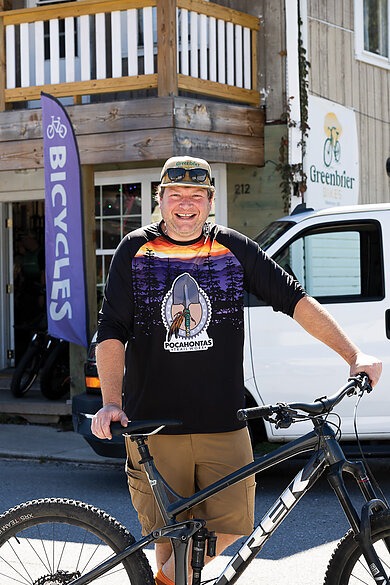
“The alphabet trails were very steep, very technical, pretty gnarly lines that were burning up brakes,” says Scott Guyette, owner of Greenbrier Bikes in Marlinton, West Virginia. “It was very intimidating for people that don’t ride regularly or who weren’t exposed to that kind of riding.”
“The alphabet trails were very steep, very technical, pretty gnarly lines that were burning up brakes.” — Scott Guyette
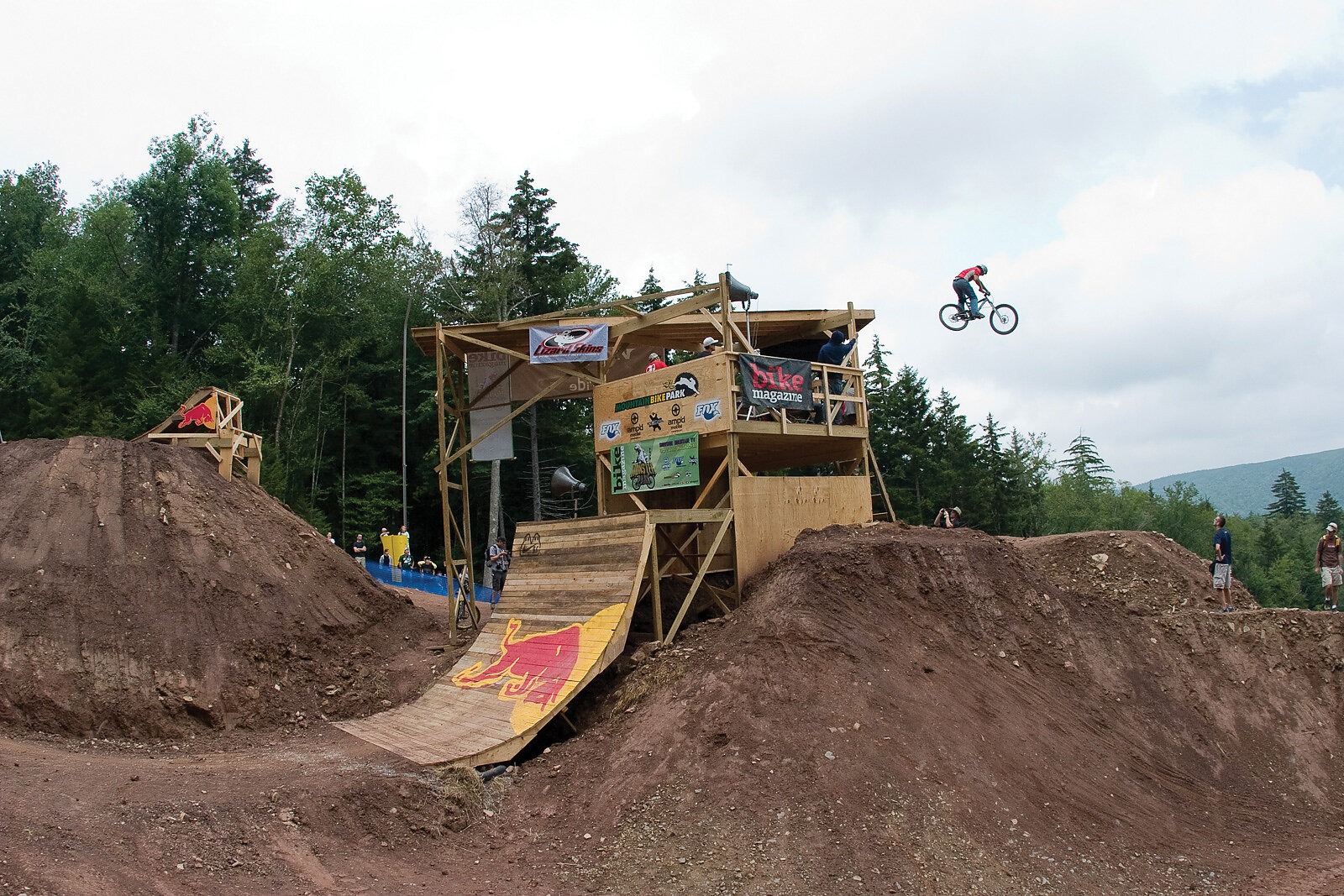
Embracing the rugged nature of Snowshoe’s terrain, the resort hosted the Bike magazine Monster Park in 2005 and 2006, a slopestyle event that featured massive wooden drops, wallrides, quarterpipes, and a series of sprawling gap jumps. To Guyette, Snowshoe’s ability to host events that attracted some of the best riders in the world was a major draw, ultimately inspiring him to move to Snowshoe in 2011. The concept of machine- built flow trails wouldn’t arise until a handful of years later.
“You used to have to be some crazy madman that was a glutton for punishment to be drawn to the sport, but we’ve slowly learned how to make the park more welcoming to beginners and families,” says Austin Barga, a bike patroller who moved to Snowshoe in 2004.
Over the years several beloved black diamond, fall-line trails were eliminated to make room for green and blue flow lines that would make the business more financially sustainable.
“Those were tough choices to make,” says Ken Gaitor, vice president of mountain operations at Snowshoe. Today, the Snowshoe Bike Park features a hearty blend of approachable lines along with the old-school alphabet trails, providing something for everyone from first-time riders to the best racers in the world. For Barga, Guyette, and Gaitor, the ultimate reward for the long hours and difficult decisions needed to put Snowshoe on the map as a mountain biking destination came in September 2019, when the resort hosted the final round of the UCI Mountain Bike World Cup. Leading up to race day, riders from around the globe arrived at Snowshoe ready to battle for coveted World Cup titles in the cross-country short track, cross-country Olympic, and downhill disciplines.
The treacherous and demanding downhill course began with a large dirt jump and sweeping switchbacks on dusty, hardpacked dirt—uncharacteristic conditions for West Virginia. A consequential gap jump followed that launched riders down the mountain and into the steepest section of the course, which featured latticed roots and huge rocks. Just one misstep would throw riders off track, costing them precious time in a race that would ultimately be decided by a fraction of a second.
“When I was taking course walks with the riders and their coaches, they kept talking about how flat it was. I just kept thinking, ‘What you do you mean? I can barely stand up right now,’” Gaitor says.
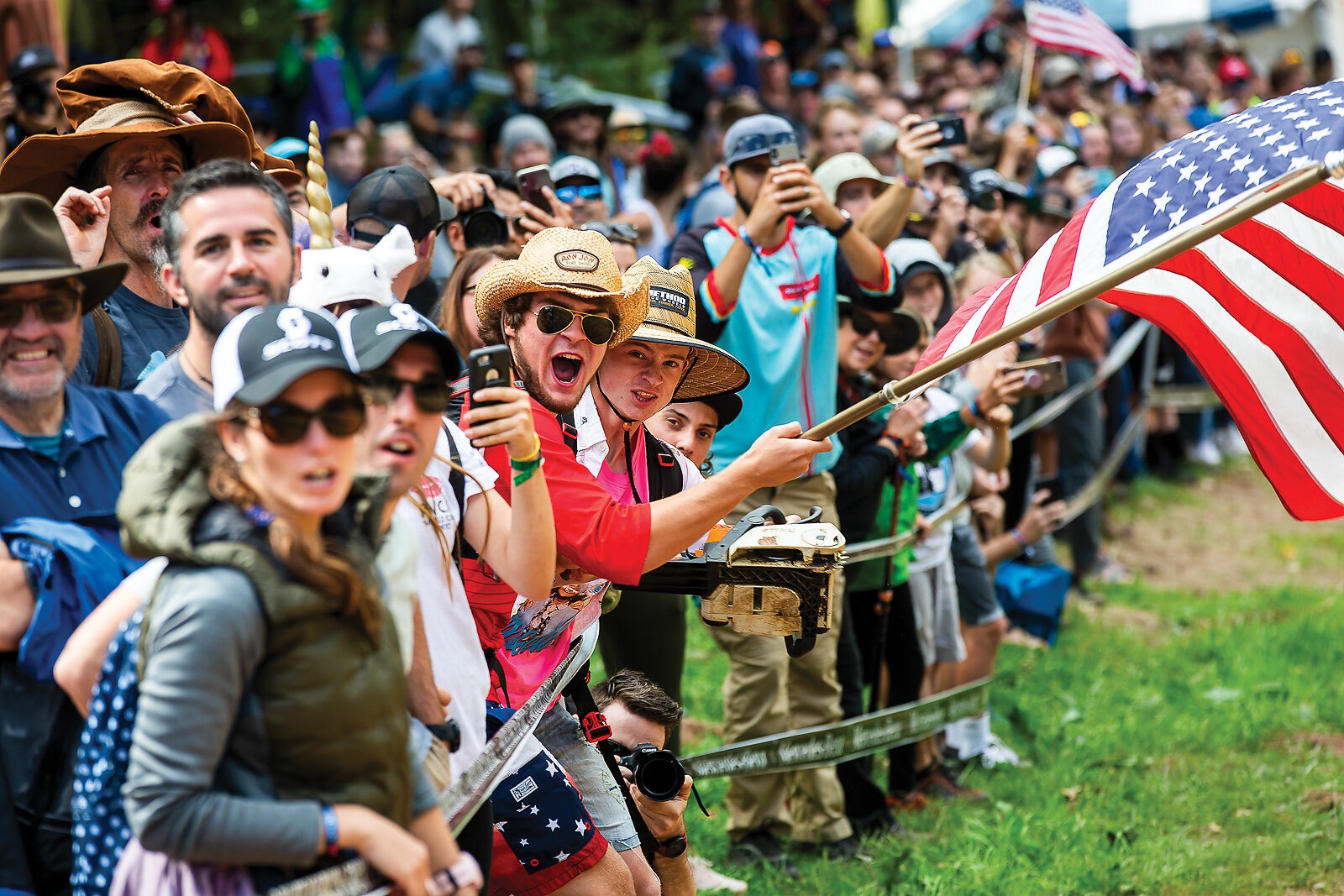
When race day arrived, spectators gathered along the entire length of the course, clanging on bike frames and screaming as loud as their lungs allowed. Fans, embracing their Appalachian roots, sported overalls, banjos, and jugs of moonshine. Bigfoot even showed up donning an American flag cape to cheer for the racers.
“It was the most surreal party in the woods,” says Guyette. “I hiked down the course with my daughters and about halfway down we ran into a makeshift stage full of Oompa Loompas playing instruments. Every kid within 100 yards joined the band while, just a stone’s throw away, the fastest racers were blazing by.”
While Snowshoe may not have the lengthy or steep terrain of other World Cup venues such as Mont-Sainte-Anne in Quebec or Switzerland’s Champéry, it undoubtedly delivered one of the most difficult and memorable races of the season, sparking Red Bull Bike to call it “The Greatest Bike Race Ever Seen”—a nod to both the course and the wild Appalachian spectators who showed up in droves to boost the venue’s atmosphere. The success of 2019 led to more World Cup races at Snowshoe, with UCI cross-country and downhill races from 2021 to 2023, and the UCI Mountain Bike Marathon World Championship in 2024. “
Watching the world of biking enter into our small world was magical,” says Barga. “It was a confirmation of what we’ve always believed that we were.”
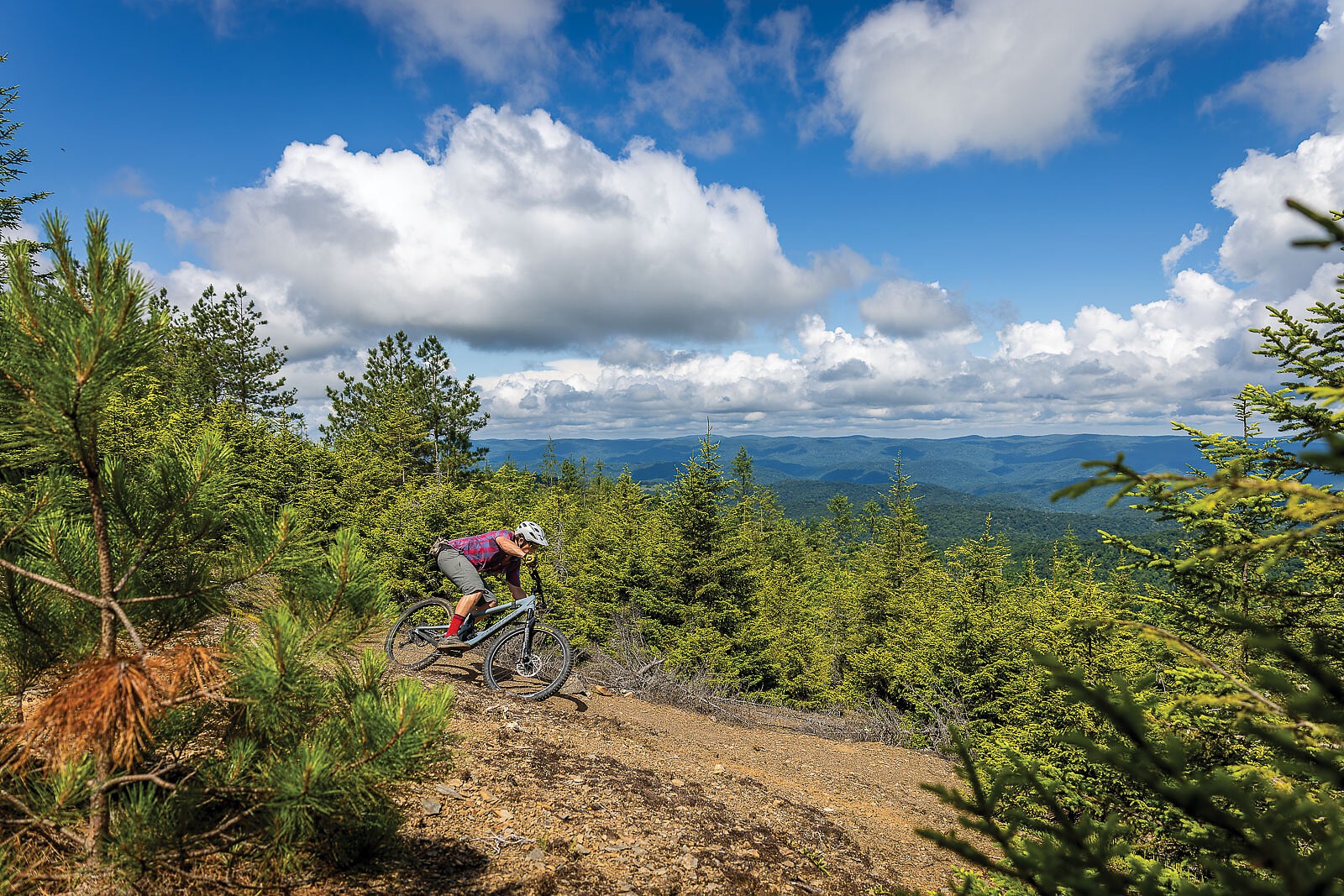
On a 44,000-acre parcel just north of Snowshoe, Lindberg and others are now working to restore a different perspective of what West Virginia once was. The Mower Tract of the Monongahela National Forest spans the ridgetops of Cheat Mountain and Shavers Mountain in Pocahontas and Randolph counties. After the massive red spruce harvest of the early 1900s, the area continued to be logged and strip-mined until the early 1980s when the United States Forest Service (USFS) purchased the land from the Mower Land and Lumber Company with help from The Nature Conservancy and the Trust for Public Land. As a parcel of land that’s been forever altered by the extraction of natural resources, it looks more like a part of Montana gone astray than a piece of the Mountain State. Compacted slopes are now coated with tailing ponds, invasive grasses, and the strange silhouettes of non-native Norway spruce and red pine. Despite the otherworldly appearance, the USFS and its partners are committed to restoring the red spruce ecosystem that once defined the Mower Tract. Since 2011, they’ve reclaimed more than 1,800 acres, established nearly 2,000 wetlands, and planted 800,000 native trees. Along with their restoration efforts, they shored up the access road, established campsites, and invited trail experts to provide input on how to expand outdoor recreation opportunities.
Despite the otherworldly appearance, the USFS and its partners are committed to restoring the red spruce ecosystem that once defined the Mower Tract. Since 2011, they’ve reclaimed more than 1,800 acres, established nearly 2,000 wetlands, and planted 800,000 native trees. Along with their restoration efforts, they shored up the access road, established campsites, and invited trail experts to provide input on how to expand outdoor recreation opportunities.
“I gave them maps and said, ‘Where do you want to go?’” says Jack Tribble, Greenbrier District Ranger for the Monongahela National Forest. Unlike most land owned by the USFS, the Mower Tract was so heavily disturbed that trailbuilders had a blank canvas on which to cut their lines.
Lindberg and the Pocahontas Trails crew jumped at the opportunity and shared ideas for creating several stacked loop systems as well as longer backcountry trails that connected the Mower Tract to Snowshoe and other areas throughout the region. Over the past decade, Lindberg has spent nearly every week camped out at the Mower Tract exploring remnant and regenerating patches of forests while building new trails.
Today, roughly 18 miles of trail exist. Some weave through tall hardwoods and hemlocks, while others meander through mined lands now dotted with big-tooth aspen, fire cherry, and red spruce saplings. This past summer, Lindberg and fellow trailbuilder Bruce Wohleber completed a winding descent down Snyder Knob—once the tallest peak in West Virginia before its top was blasted off for mining. No coal was found. Along the top of the route, visiting hikers and bikers can still view drill holes in a massive boulder. These bores now act as a physical marker of failed plans for more blasting. The Mower Tract trails are a hoot to ride, but the experience of exploring them on two wheels extends far beyond biking. They serve as a connection to the state’s history of resource extraction as well as its future in restoration and recreation.
“We planted trees that we’re not going to sit in the shade of,” says Tribble, noting that red spruce can live for up to 400 years. “We want trails to be built and maintained not only for mountain bikers, but for hikers, birders, hunters, and all the folks in the area so they can see what the future of this mountain could look like.”

While Pocahontas County’s roots in mountain biking extend back to the ‘80s, the past decade has seen a steady rise in trails and tourism geared toward riders looking for a remote and raw experience. A large part of this rise is attributed to the efforts of a small group driven by a deep-rooted appreciation for the land and the people who call it home.
“We have a common passion for building our communities to be great places to recreate, work, and live. That’s the string that holds us together,” says Chelsea Faulknier, who grew up in Pocahontas County and is now the executive director of the Pocahontas County Convention and Visitors Bureau (CVB).
The group, known as the Snowshoe Highlands Area Recreation Collaborative (SHARC), includes Faulknier, her predecessor Cara Rose, Tribble, Lindberg, Gaitor, Sam Felton (the mayor of Marlinton) and others who want to see Pocahontas County continue to grow its outdoor recreation opportunities in a way that benefits local communities. When the group started meeting in 2017, one of its first goals was to become an IMBA Ride Center. The process of applying for the designation was expensive and time-consuming, but it provided a roadmap for SHARC to address gaps in trail systems and bike-centric resources. In 2019, the Snowshoe Highlands Ride Center became the first IMBA Ride Center in West Virginia, earning bronze status. The next year, it was promoted to silver.
“It’s a testament to our local experts and the real culture that’s always been here,” says Faulknier. “Now, it’s just being recognized and built upon.”
The Snowshoe Highlands Ride Center currently consists of 385 miles of trails spread across eight regions. Slaty Fork, the Mower Tract, Kennison Mountain, Seneca State Forest, and the backcountry trails at Snowshoe give riders a taste of West Virginia’s finest singletrack.
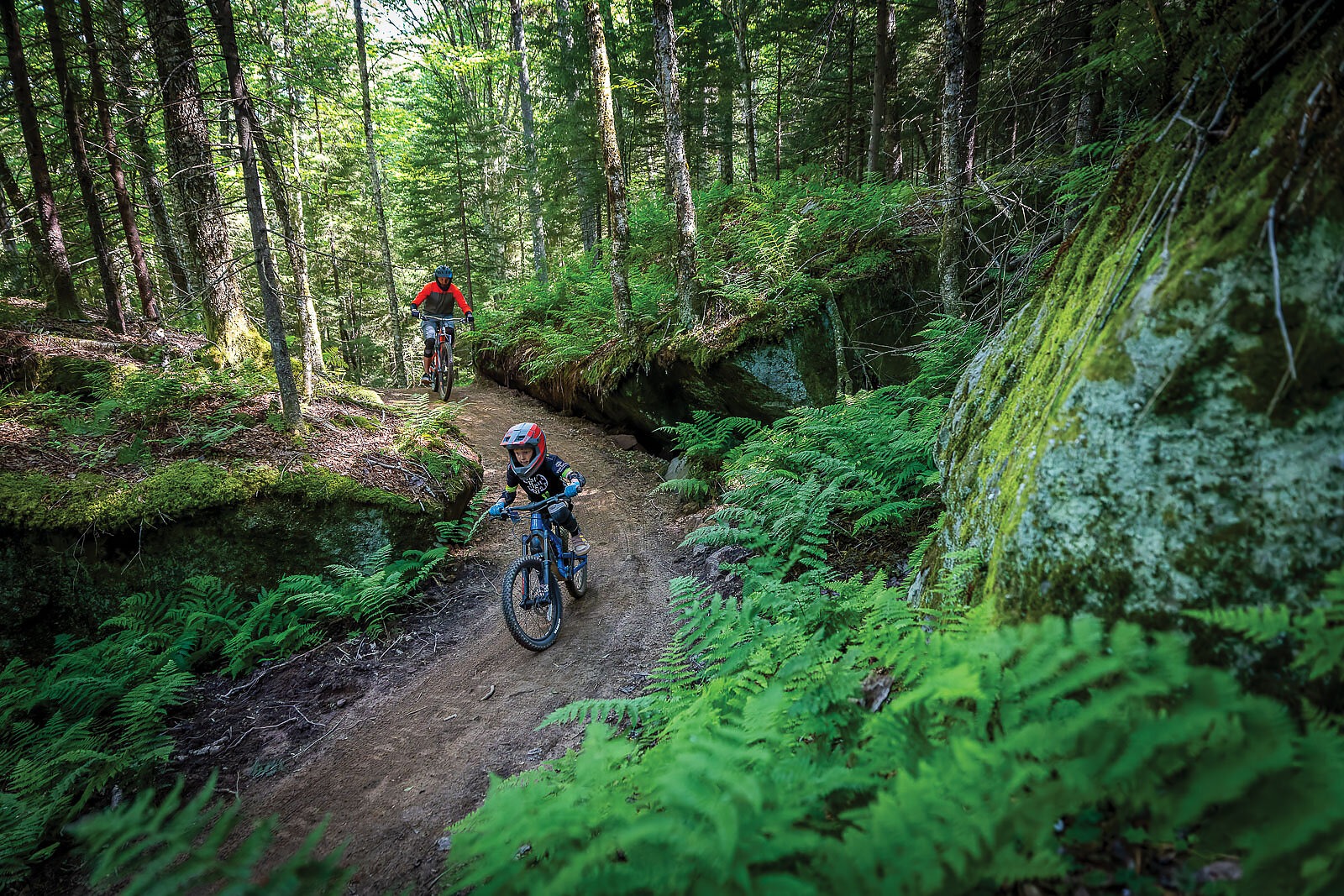
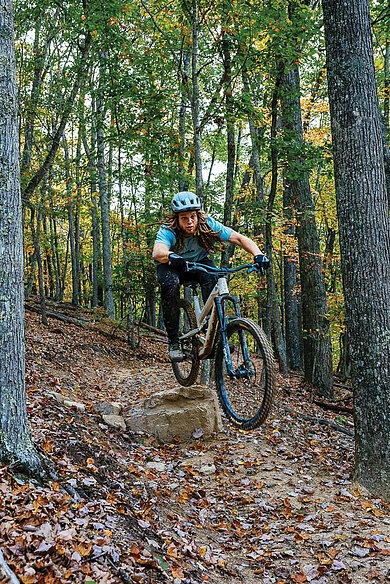
“They offer both adrenaline and the solitude of the magic moss that defines our backcountry,” Barga says. The Greenbrier River Trail and trails at the Green Bank Observatory, home of the largest steerable telescope in the world, provide more approachable, yet equally scenic pedaling opportunities.
“There’s so much technical riding here that you can ride for days and never clean a trail perfectly,” says Guyette. “And there are welcoming and beginner-friendly trails that I can take my five-year-old on and she’ll have a blast.” SHARC’s next goal is to become the first IMBA Gold Ride Center on the East Coast.
To get there, theteam acquired funding to establish a five-year trail maintenance program and began construction on the Monday Lick trail system in Marlinton. With nearly 30 miles of singletrack ranging from machine-built flowy blues to hand-built, technical blacks that take advantage of natural features, it offers a variety of fun riding right from town. As locals continue to invest in growing and maintaining the region’s expansive network of trails, they haven’t lost sight of what makes adventuring in Pocahontas County unique. When Lindberg attended an IMBA summit in Bentonville, Arkansas a decade ago, he heard the keynote speaker describe the boom in machine-built flow trails.
“He said they’re a lot of work and they’re all going to be the same,” Lindberg said. “Old-school, rooty, rocky singletrack is going to be where it’s at in the long run. And that’s Pocahontas County.” Another way in which the region’s recent explosion in mountain biking has embraced its roots is by focusing less on bringing visitors in and more on giving locals a reason to stay.
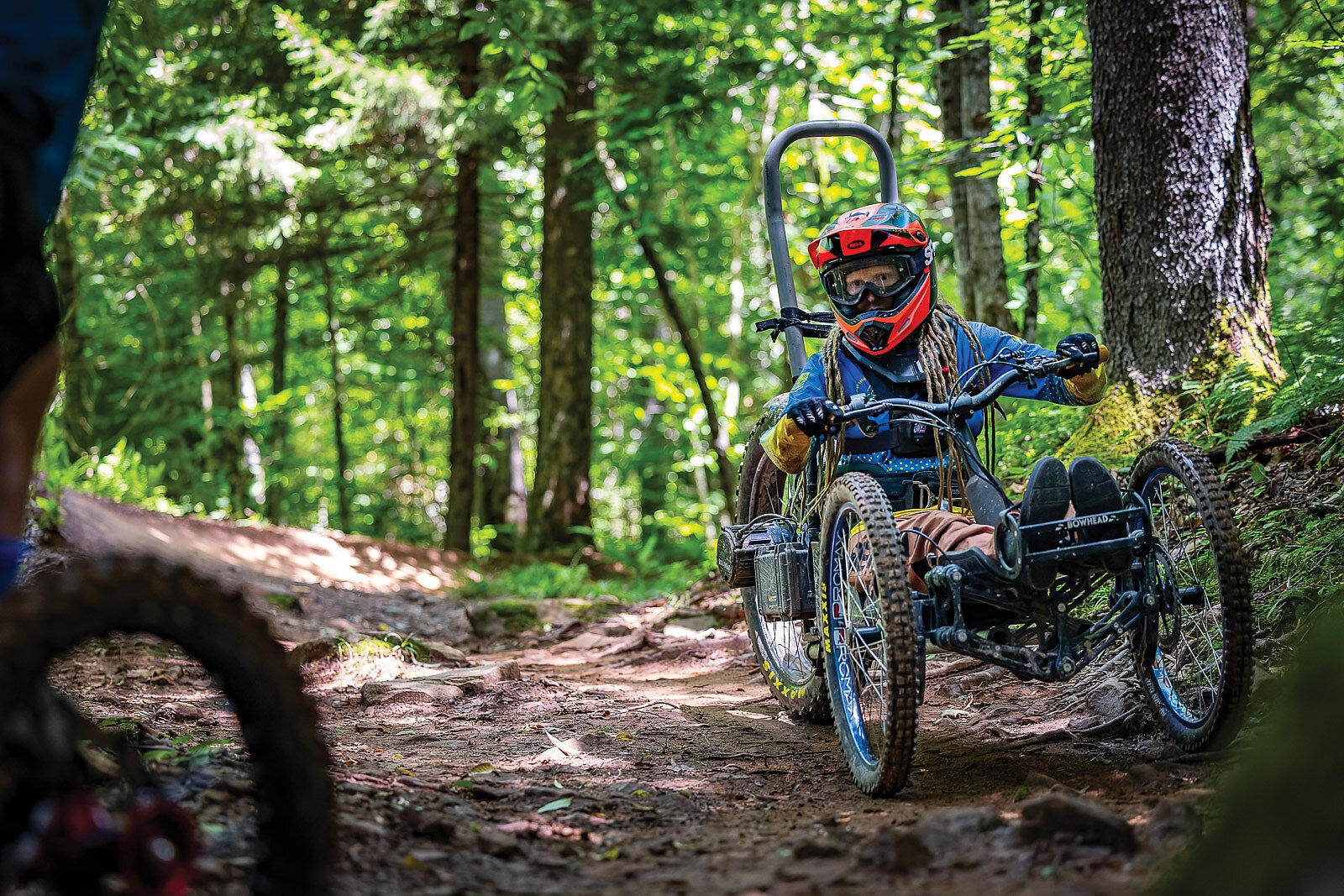
Another way in which the region’s recent explosion in mountain biking has embraced its roots is by focusing less on bringing visitors in and more on giving locals a reason to stay.
“How many people do you know that leave West Virginia because there’s not enough opportunity?” asks Gaitor, who grew up in Summers County in the 1970s and watched as many of the state’s mountainous landscapes were destroyed for natural resource extraction.
“These resources are a curse and a crutch,” he says. “In Vermont, they’ve done it right. They didn’t have coal—lucky for them—so they figured out another way.”
After leaving West Virginia for a few years, Gaitor was drawn back to the state with a renewed passion for creating opportunities for folks who want to build a life here. Through his role at Snowshoe Mountain Resort, the largest employer in Pocahontas County, Gaitor oversees 150 employees in the summer and nearly 350 in the winter. In 2024, the resort offered benefits to seasonal employees for the first time.
“If you want, you should know that you can stay here, enjoy nature, and just live a fulfilled existence,” says Gaitor.
In some ways, it’s easy to see the value of investing in outdoor recreation tourism and the infrastructure necessary to support it. Despite recognizing the need for a dedicated bike shop in Marlinton, Guyette wasn’t sure Greenbrier Bikes could be a sustainable, full-time business when he opened the doors in July 2021. But the steady growth in mountain biking, the UCI World Cup events, and the IMBA Ride Center designation have all played a role in revitalizing the town of Marlinton and helping him keep the shop’s lights on.
“In the past three or four years, new coffee shops, music scenes, restaurants, and farmers market stores have opened,” says Guyette. “These businesses aren’t solely reliant on cycling, but they’re definitely propped up by it.”
Yet, in other ways, there’s a desire to hold on to elements that draw a certain type of person to want to spend their life in Pocahontas County. The dynamic weather, rugged mountains, and isolated nature of the region make it possible to disappear into the woods and connect with an immense and humbling world. Central Appalachia is one of the most biodiverse places on Earth, a fact that is rarely taken for granted in the Mountain State.
“Just in the last six weeks, I’ve seen a young coyote, bobcat, turkey, grouse, and bear cub. In the morning, I watch the sunrise with Mars and Jupiter overhead,” says Lindberg. “You gotta enjoy what’s here, and what’s here isn’t just a piece of dirt.”