Outbound Lighting Portal More light, for more time.
We’re in the depths of night ride season here in the Pacific Northwest, which means I’ve just about hit my stride. This might be blasphemous, but I’ll take a dreary winter night lap to a mid-summer, blown-out, too-hot, too-sweaty lap anytime. For the last three years, Outbound Lighting’s Evo (bar) and Hangover (helmet) lights have been illuminating trails for me. Those two lights have been damn near perfect. I love how simple they are to operate and how unobtrusive they are to get set up and swap between bikes and helmets. For me, getting out to ride at night is all about removing barriers and inconveniences. There are plenty of excuses not to go out and get wet and muddy when you could be watching TV indoors, so the wire-free, easy-to-live-with nature of Outbound’s light system is a great addition to my life. And it doesn’t hurt that the brand is run by passionate people doing their best to play this stupid capitalism game in a way that hopefully helps riders and makes the world a better place.
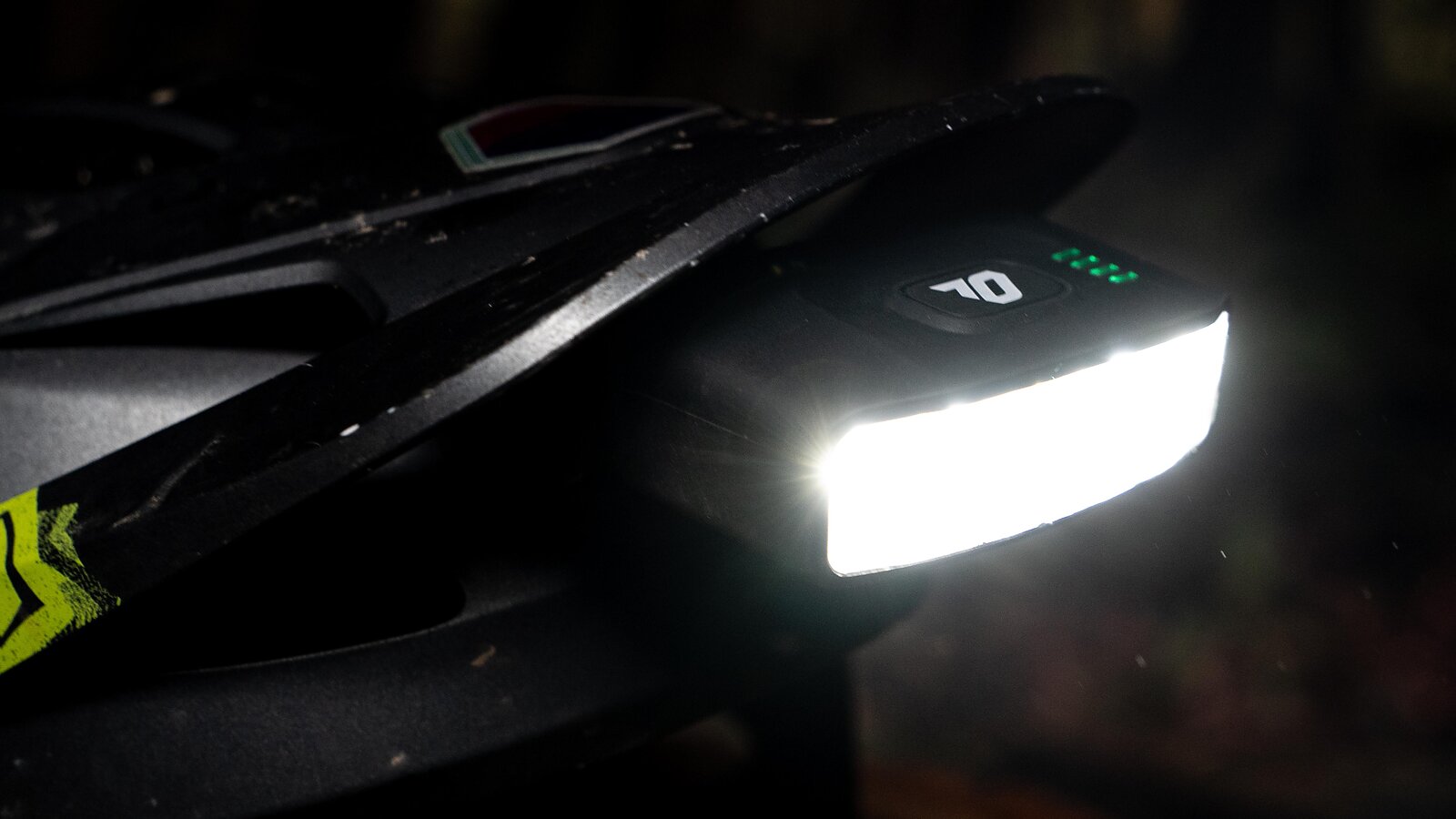
When Outbound released the new, bigger, brighter, longer-lasting Portal helmet light last year I was intrigued. I didn’t have any real beef with the Hangover, but I had found myself wishing it had a little more battery capacity. And maybe more light would be more better too? So I’ve spent the last few months night riding with the all-new Portal, and it’s time to weigh in. Because the Hangover is so good, this is actually one of the more nuanced reviews I’ve written in recent memory, because, as we’ll see, I don’t think this is necessarily a clean-cut case of “Newer, bigger light is way better for everyone.”
Outbound Lighting Portal Details
- Lumens: 1650 Lumens on High, 500 on Medium, and 250 on Low.
- Battery Capacity: 3.6V 5000mAh (18.0Wh)
- Measured Weight: 169 g
- Price: $185
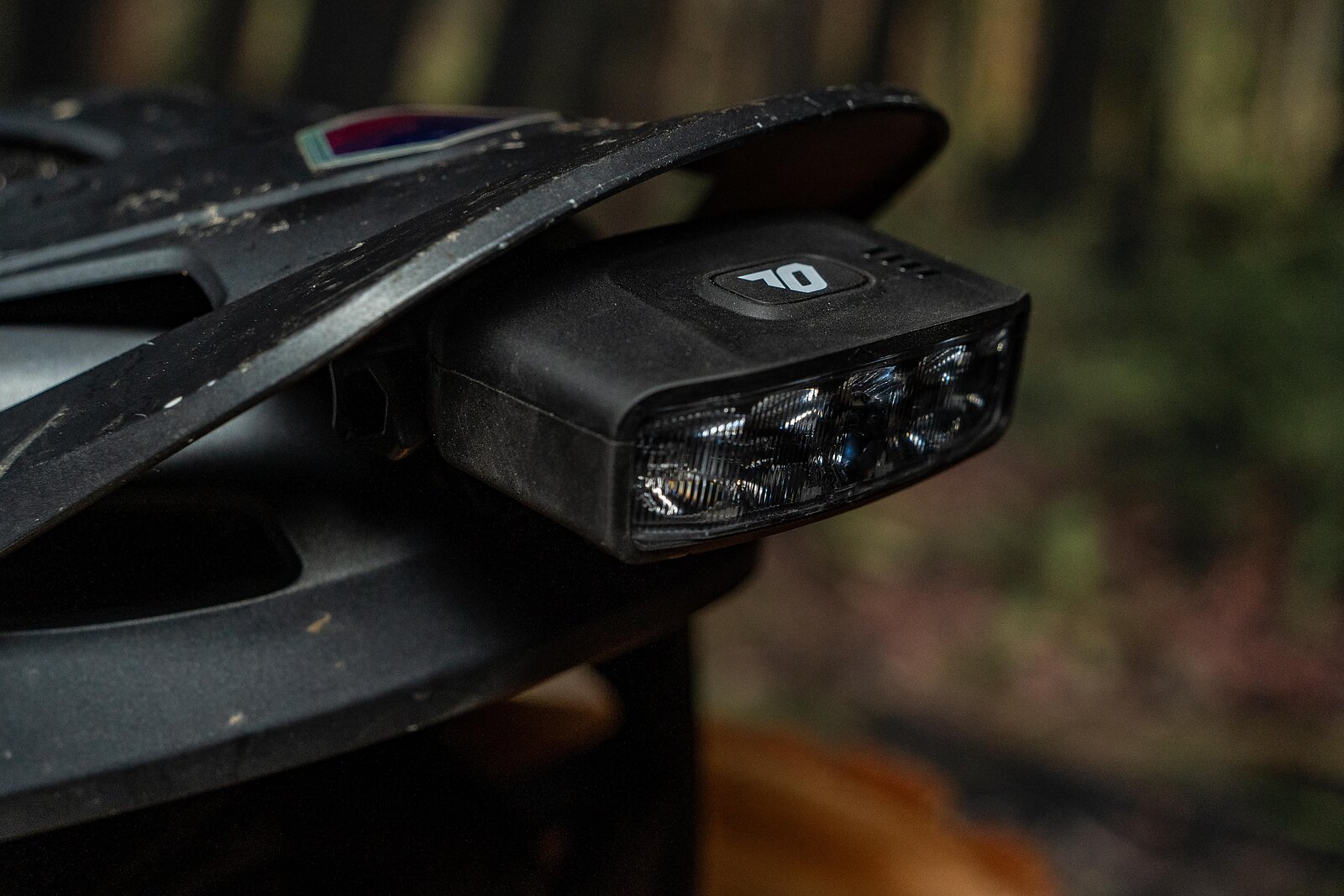
The Portal by the Numbers
The marketing story for the Portal is pretty simple: it’s a slightly bigger, heavier light than the Hangover, and in exchange you get more light that lasts longer. So it’s worth running a quick comparison: The Portal is predictably a little heavier (65 grams heavier according to Outbound), more expensive ($65 more), and bigger. In terms of performance, Outbound is adamant that stated lumens don’t tell the whole story, and that the total amount that a light puts out is less important than how it uses it. As we’ll discuss later, my experience with the Portal definitely backs that up. But lumens are the simplest metric we have, so it’s worth comparing them, along with runtime.
In its highest setting, the Portal puts out 1,650 lumens and the Hangover puts out about 1,000. And, the Portal gets a bigger (18Wh) battery vs. the Hangover’s smaller 12.6Wh unit. In “High” mode, both lights should run for the same 65 minutes. That means the Portal can put out more light, for the same amount of time as the Hangover.
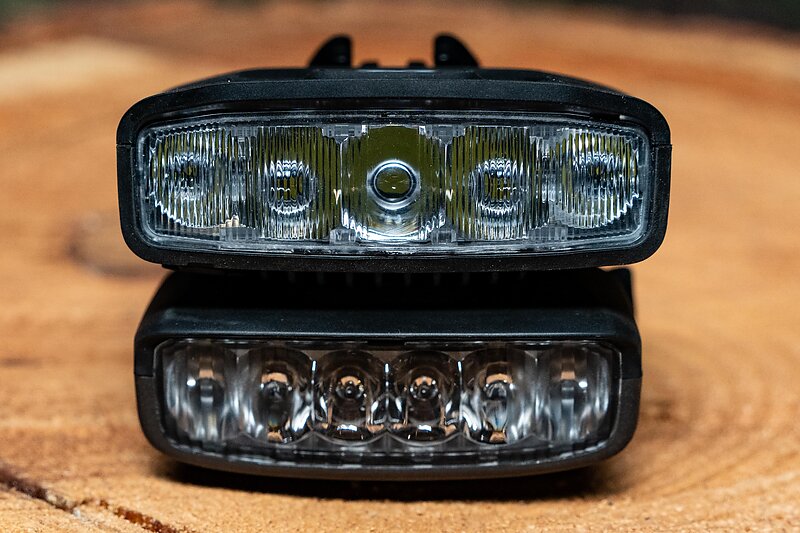
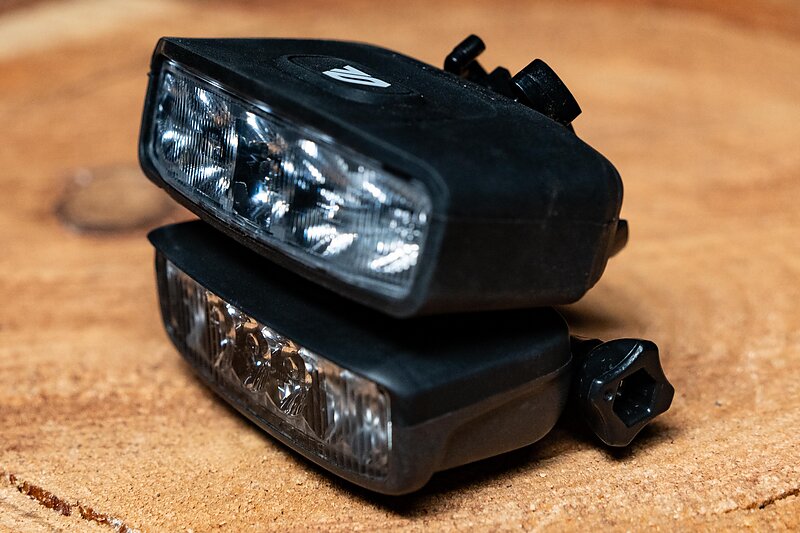
Outbound Lighting Portal Features
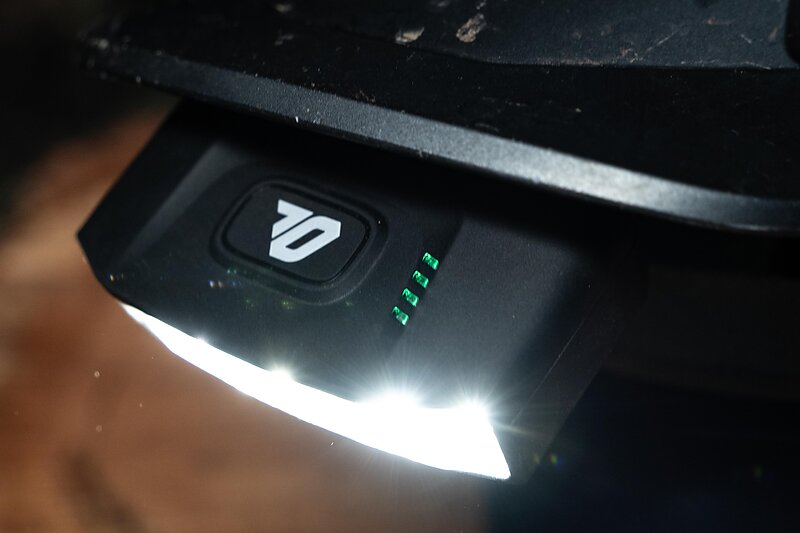
Outbound’s lights are fairly simple, with a “just ride yer bike” vibe that I get along with super well. The Portal is charged with a USB-C port, and just like other Outbound lights, supports pass-through charging, so you can run it off an external battery pack for longer rides. The Portal has four primary modes, along with two emergency flashers. The default mode when you turn the light on is “Adaptive.” It starts out blasting full power for the first five minutes, then, for the next half hour, it gradually and gently dims. Outbound says that this allows your eyes to adapt to the darkness, while also maintaining your battery life.
When I first got Outbound lights, I was a little confused by the Adaptive mode. However, it’s pretty dang simple: I don’t notice the dimming effect (which is the point), so I just always descend in Adaptive mode. If you hit the main button once while the light is on, you’ll pump to “High” mode which just keeps it from ever dimming. Another tap and you’re in the Medium mode, which puts out about a third the lumens of High, and the last tap puts you in Low mode, which puts out half of Medium. Predictably, run times increase massively as you go to lower power modes.
You can also swap out the mount bracket on the Portal to run it in Outbound’s bar mount. It looks like a simple procedure, but I haven’t done it, because I prefer to default to the helmet mount if I only have one light.
In my experience, Outbound’s lights are extremely durable and weatherproof, and if you do run into an issue (or your dog chews on your light) the folks at Outbound will do their best to hook you up and get you back on the trail. Anecdotally, I’ve heard a bunch of very positive customer service stories.
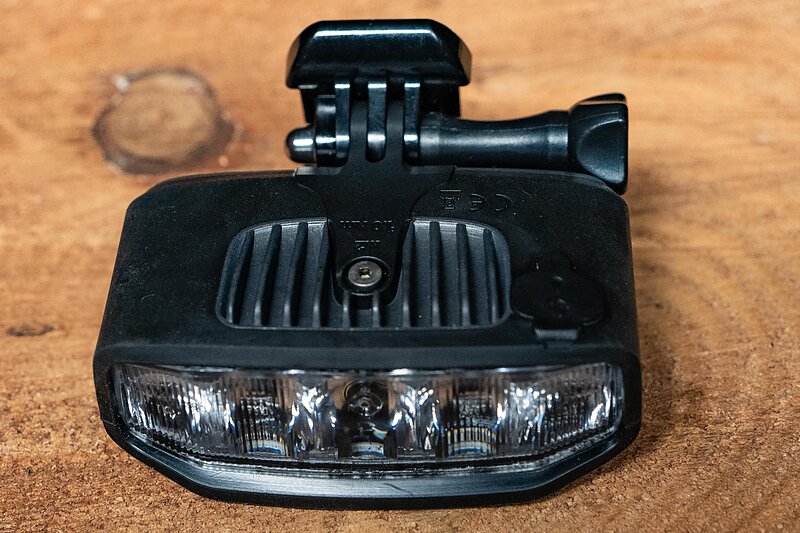
On Trail With the Portal
For most of my night riding, the Hangover was entirely adequate. I’d typically climb with the bar-mounted Evo on its lowest mode, and the Hangover turned off. At the top, I’d turn both on to Adaptive mode, and party on. That worked really well for shorter rides, and rides with definitive tops and bottoms. But, on a few longer rides where we covered more rolling terrain, I found myself having to work to conserve the battery of the Hangover through the entire ride. It’s really nice to have both lights on for rolling trails and more technical climbs, but, because I don’t like fumbling for buttons as I ride, I’d often leave the Hangover in too high of an output mode and end the ride with barely any battery left.
I also have generally terrible eyes and bad night vision, so I found myself wondering if more light would benefit me on technical descents. In addition to putting out more light than the Hangover, the Portal also has a wider, narrower beam, which I thought might help with my peripheral vision through corners.
I think Outbound really nailed the relationship of output and beam pattern with the original Evo and Hangover combo, and in some ways the Portal feels like their loud little brother who is a little overpowering in some scenarios.
Tom at Outbound is fond of saying that lumens aren’t the best way to measure a light’s usefulness, and the Portal is a great reminder. In its full power mode, paired with the Evo, I found it to create less useful contrast in some trail situations than the Hangover did. Yes it was brighter, but in a “squinting through my outstretched hand as Gandalf the White (né Gandalf the Grey) reveals himself at the edge of Fangorn Forest” sort of way. My eyes took a minute to adjust to the Portals’ beam after a climb in the dark.
With the Hangover and Evo, I would typically climb with the Evo on its lowest mode, and the Hangover turned off. But, if I hit a techy section of trail or a small descent in a rolling trail, I’d turn the Hangover on, in its default adaptive setting and leave the Evo in low mode. This combo wasn’t perfect, but it worked really well for my eyes, with a minimum of faff. But, when I did the same thing with the Portal it was way too bright, and felt like it created hot, overexposed spots that were distracting, and weren’t leveled out enough by the Evo. It wasn’t terrible, but I did feel a little like a deer in the headlights. And yes, I could have swapped through the Portal’s modes and put it in a lower setting, but I barely have the coordination to manage one button push on the fly, let alone several.
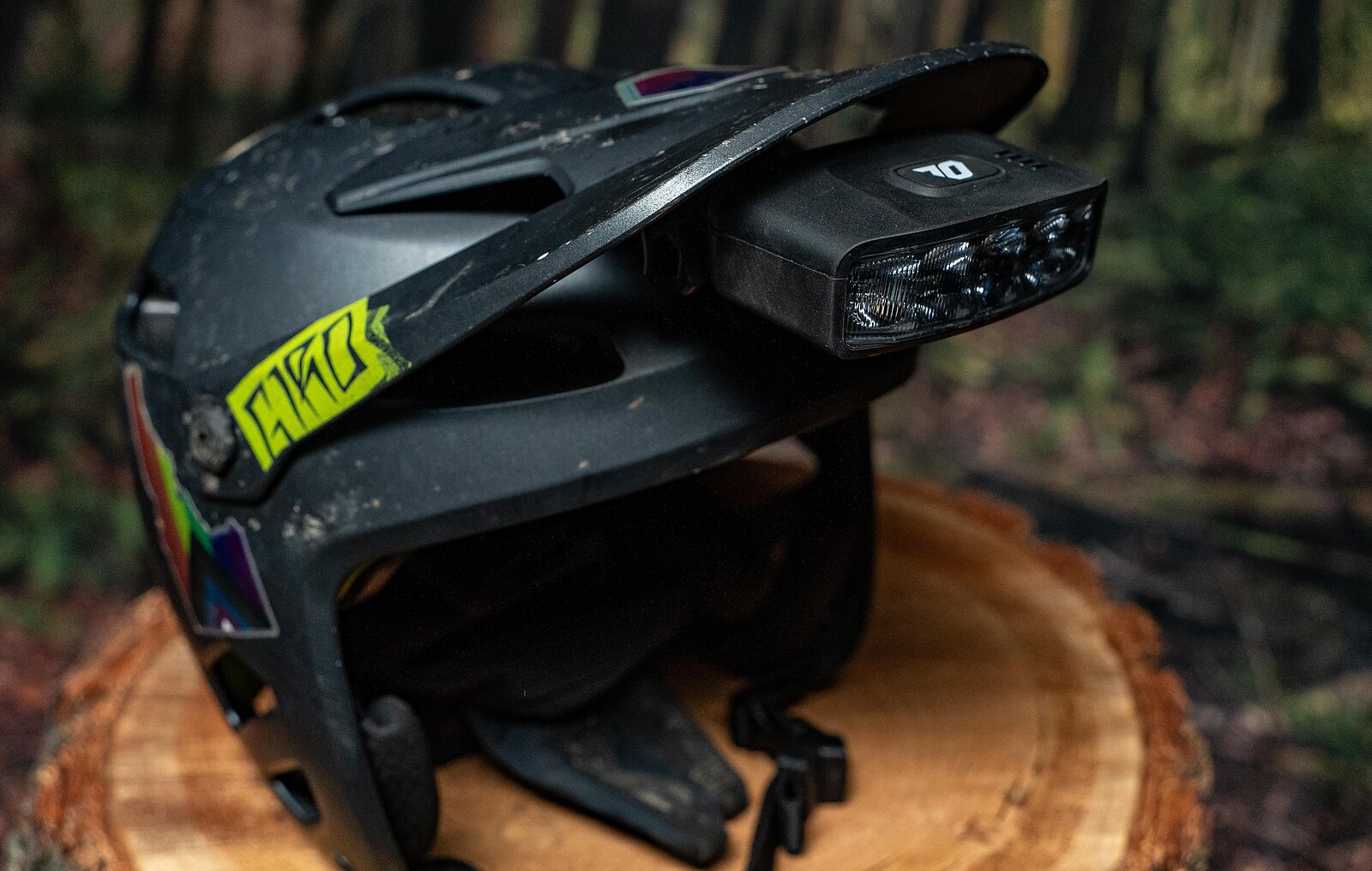
After a few rides, I figured out how to use the Portal to its best advantage for my riding, and now I’m fully converted and have handed off my Hangover to my partner.
The Portal is at its best in three situations: first, I can leave it on while I’m climbing, or riding rolling trails, without worrying about the battery. I tend to run it in the Medium setting as a default, turning it off for gravel road climbs, and all the way up for descents. Outbound says I should get four hours of runtime in that setting, which is more than plenty for my night rides. So, instead of turning my helmet light on and off for rolling trails like I did with the Hangover, I just let it run.
Second, when I am riding a faster, or more technical descent, the wider beam and more peripheral vision does come in handy. It still doesn’t feel quite as balanced with the Evo as the Hangover did, but I’ve become accustomed to the greater output, and appreciate it now, instead of hissing and recoiling back into the dark.
Finally, I prefer the Portal to the Hangover as an “oh shit” light. On rides where I don’t plan to ride at night, but might need to, I tend to just slip my helmet light into my pack. The Portal delivers much more usable light without the Evo than the Hangover, and allows me to ride faster with just one light if I do end up out after dark.
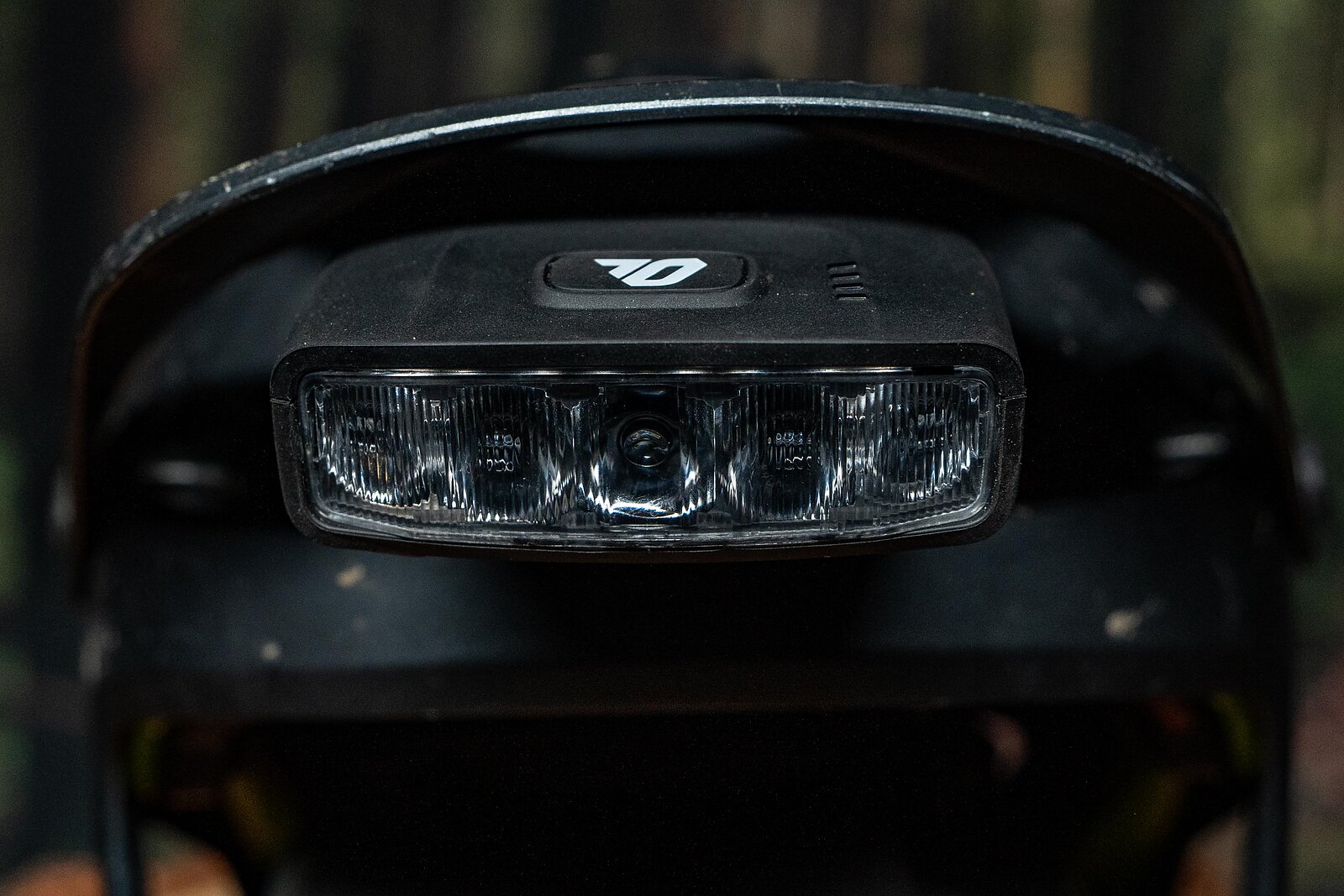
The last big discussion point is weight. Some folks won’t run lights with an integrated battery because they want to minimize weight on their helmet. Personally, I find the few extra grams to be much less obtrusive than having to route a wire to an external battery in my pack. I don’t notice the small weight difference between the Portal and the Evo, but I also mostly run the Portal on the brow of a Giro Tyrant, which wraps around my head and is more secure than most half shells, and I probably have an extra 65 grams of sweat and dirt in my helmet at all times anyway.
For Now
On paper, the jump from Outbound Lighting’s Hangover helmet light to the Portal seemed simple: more light, more time, more party. But, in practice, I found that the Portal isn’t universally “better.” Instead, it’s different, and offers a separate weight/price/light/time proposition that will appeal to a different customer. That’s actually pretty cool. It drives me nuts when companies release a product, and then immediately follow it with something hot and new, claiming that you need to upgrade immediately.
That’s not how Outbound does things. Instead of exhorting the existing customer base into “upgrading,” the Portal expands that audience. If you’re happy with your Hangover, awesome, go ride your bike! If you want a little more run time and a little more cushion of battery to run your light on long climbs or rolling rides, the Portal is a great choice.
Learn more: Outbound Lighting