Desert Rising A Lifetime of Singletrack Overlooked No Longer
In the mid-1970s, when Dale Shewalter began mulling the idea of a trail that would traverse the entire state of Arizona from Mexico to Utah, mountain biking was just a glimmer in the eyes of a handful of misfits—and certainly not in Arizona. Yet through his vision to create a statewide trail for non-motorized use, Shewalter became one of the earliest advocates for mountain biking in the Grand Canyon State.
The idea came to Shewalter after years of rambling the parched mountains around Tucson. Having long dreamed of connecting these stunning landscapes, he set off in 1985 to explore how far he could go on existing backroads and paths. That original 750-mile expedition cemented Shewalter’s vision of “experiencing Arizona, the diversity and the beauty of our landscapes and our cultural history, one step at a time.”
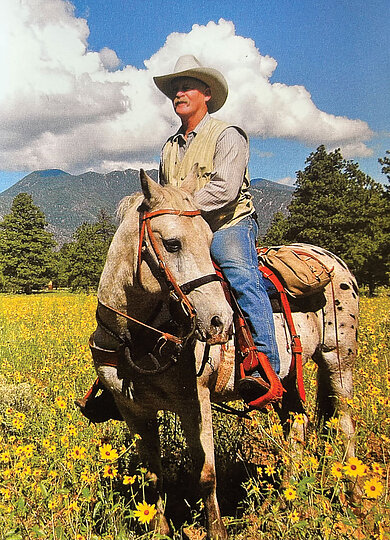
A schoolteacher from Flagstaff who favored hip-hugging Wranglers and cowboy boots and hats, Shewalter was an unlikely mountain biking champion. Archival footage depicts him exploring on foot and horseback with friends from the ranching community.
“Dale Shewalter was the OG of the Arizona Trail, and mountain biking in the state owes him a lot,” says Scott Morris, a Tucson local who would become intrinsically linked with the trail. “He was a hiker and a horseman, but he also rode bikes, which is part of why mountain bikers got a place at the table.”
Around this time, a small cadre of riders was pioneering ultradistance bike racing, including the inaugural 2004 Tour Divide from Canada to Mexico. Morris took on that challenge, then decided he wanted to create a route of his own that kept the Tour Divide’s ethos but traded dirt roads for singletrack. He crafted a bike-friendly route from Mexico to Superior, Arizona, that followed the Arizona Trail (AZT) where possible but took advantage of other trails when the official AZT passed through wilderness. He launched the AZT300 race in the spring of 2005 and followed it up four years later with a 750-mile course (AZTR) all the way to Utah.
The AZT was officially completed in 2011, less than a year after Shewalter passed from cancer, though reroutes continue. According to John Schilling, who took over race-director duties from Morris in 2019, of the current 836.6 miles of riding on the full AZT bike route, 555.5 miles are singletrack and 227.5 miles are dirt road. Today, the AZT—a single trail—offers about the same amount of singletrack as Crested Butte, Colorado, and almost three times as much as Moab, Utah. Despite those stats, Arizona isn’t widely considered among North America’s top riding destinations.
“We haven’t had the marquee trails,” says Joe Hazel, trail coordinator for the Flagstaff Biking Organization (FBO). “Moab has The Whole Enchilada. In Whistler, there’s Lord of the Squirrels. Crested Butte has the 401 and 403. Arizona hasn’t had those destination trails.”
The AZT notwithstanding, that is changing. “It’s fair to say Arizona hasn’t always been regarded as a world-class mountain biking destination. We’ve been playing catch-up,” says Shawn Stenmark, the director of trail maintenance at Hawes, an east Phoenix trail system that’s become one of the state’s hottest destinations. “But what we’re seeing now is that people have started to understand the model, to figure out how to work with land managers and get the grants. And the riding here is blowing up.”
Ask any Arizona local to characterize the state’s mountain biking, and the only consensus seems to be variety. “The landscape diversity is second to none. There’s the Sonoran Desert, huge canyons like the Grand and the Salt River, scrublands, forests, high alpine,” says Schilling. “The geology constantly changes too, from basalt to granite to red rock sandstone that rivals Utah. Arizona has it all.”
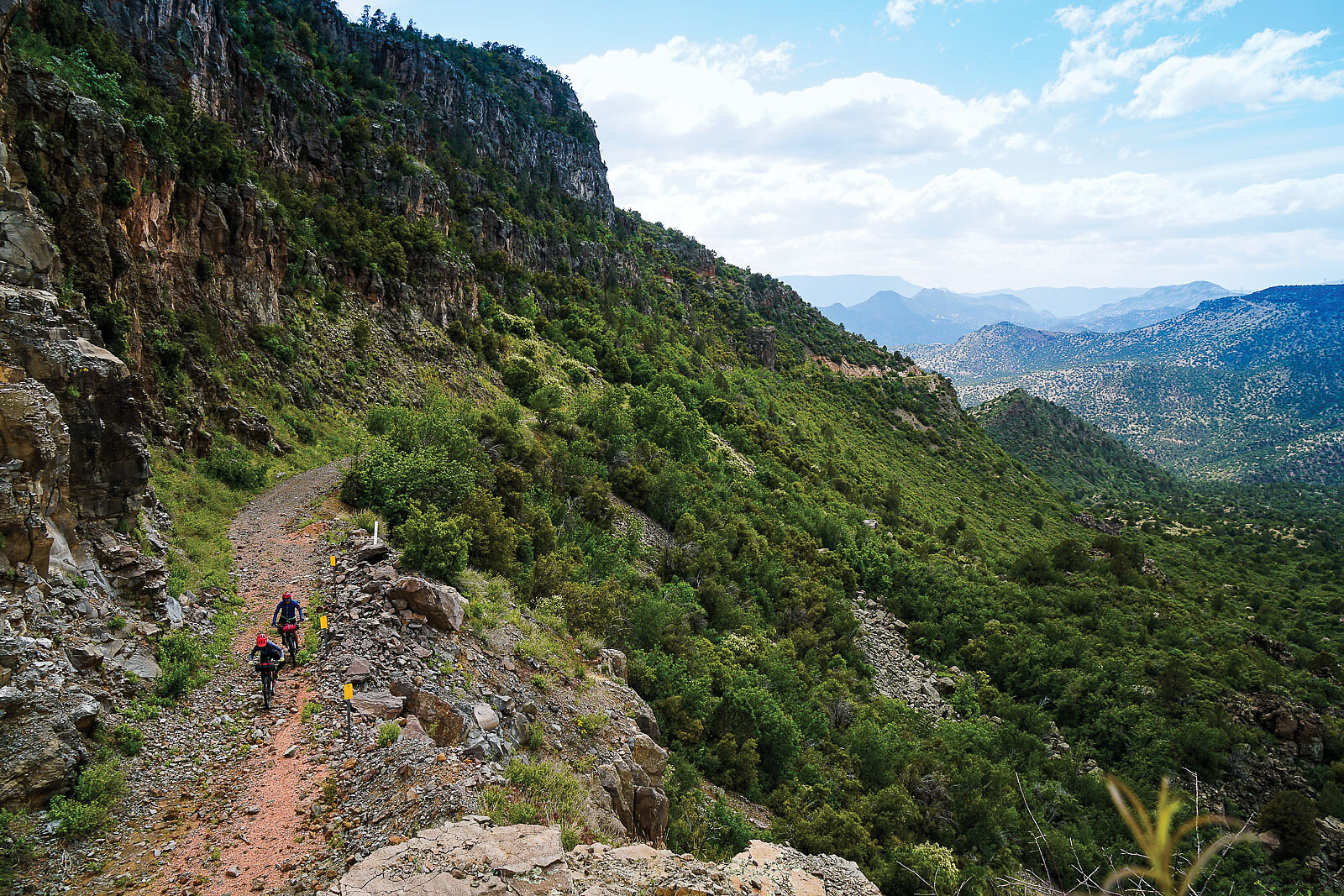
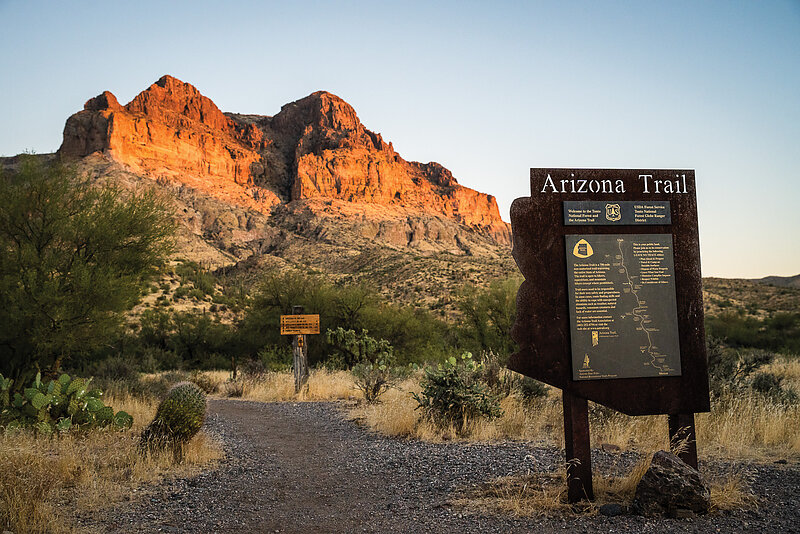
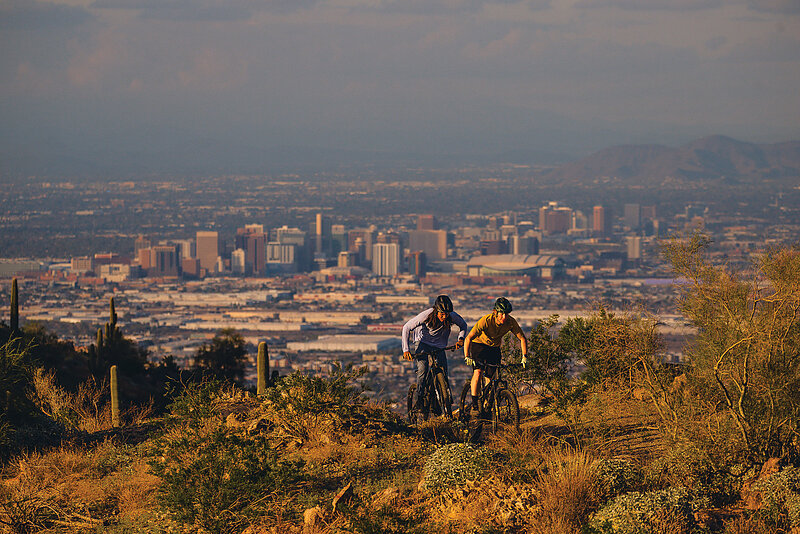
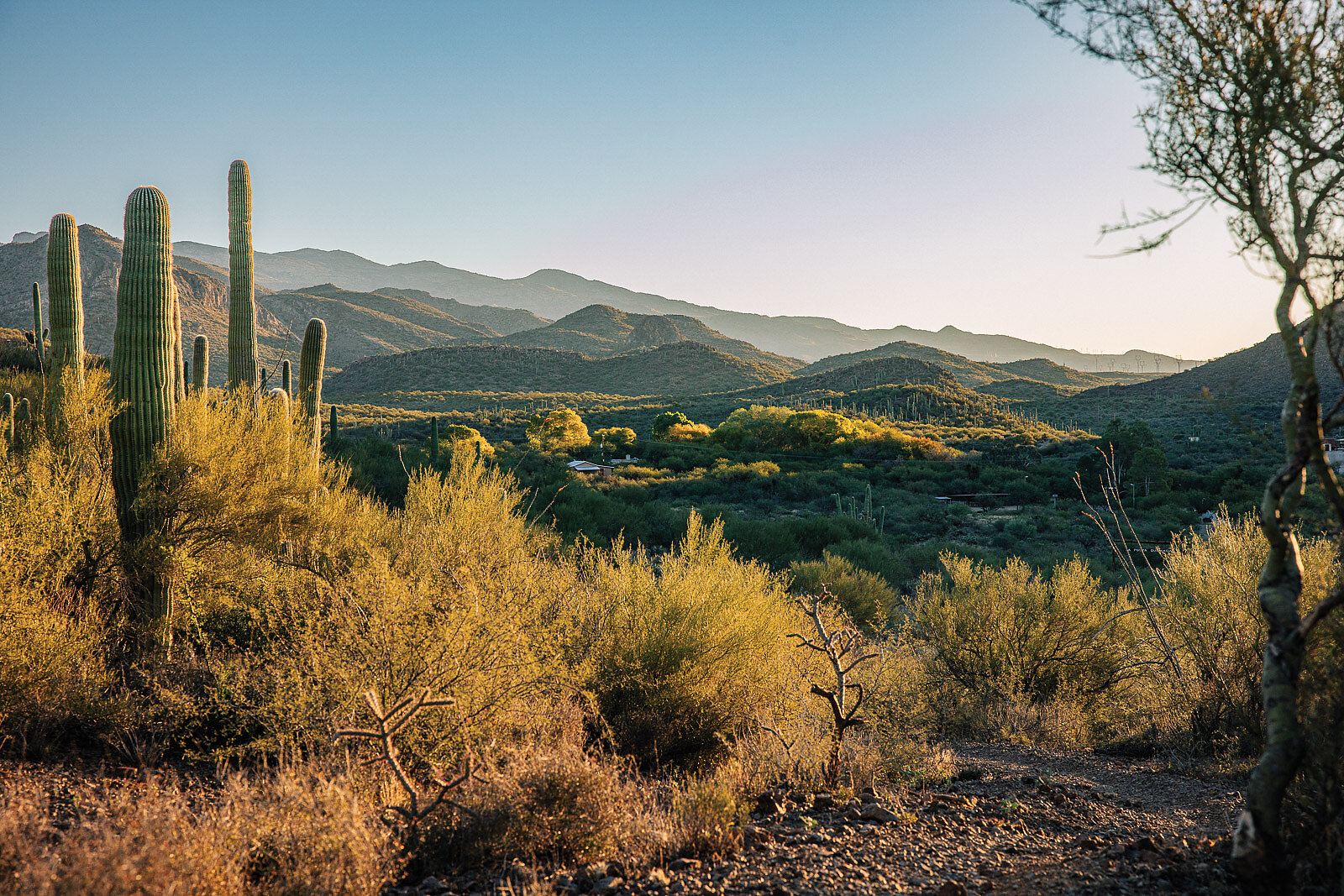
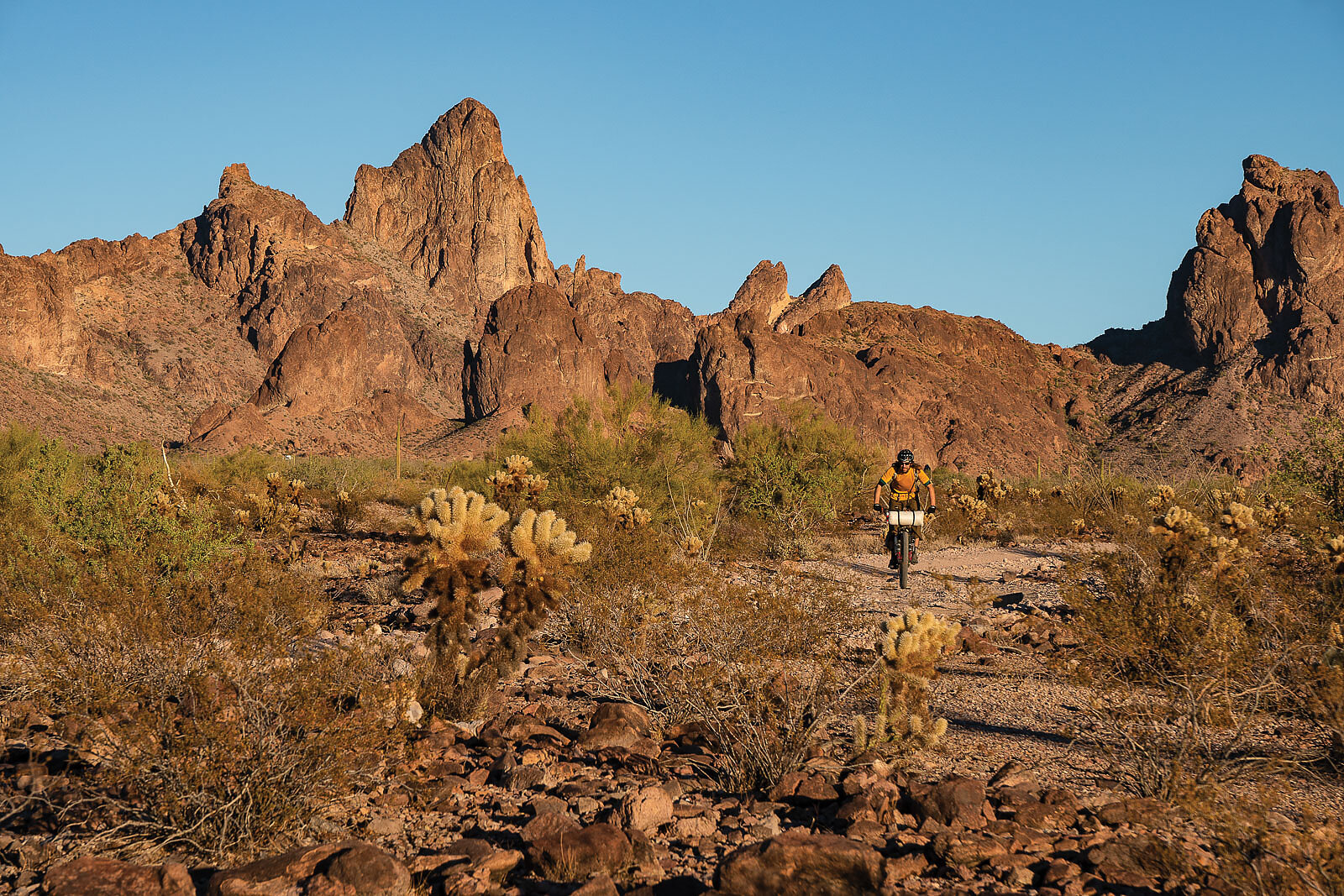
A trip along the AZT is an ultimate sampler—not only does the trail link many of the state’s biggest riding centers, it also takes in wild country you’d never otherwise encounter. Between the trail’s southern terminus at the Coronado National Memorial and its first resupply in Tucson, 140 miles later, riders traverse four mountain ranges: the Huachucas, with serrated ridgelines buffered by banks of aspen and ponderosa; the Canelos, with granite slabs decomposing to kitty-litter singletrack; the Santa Ritas, where flaxen slopes mingle with low forests of juniper and manzanita; and the craggy minefield of the Rincons, at the foot of Mount Lemmon.
The AZT clambers from Tucson, at 2,388 feet, up the south flank of Mount Lemmon to 9,171 feet, then plunges to the north. It’s a rugged climb—or, for glass-half-full riders, a 10,000-foot descent.
“You like Moab’s Whole Enchilada?” says Art Alcantara, who ran the Tucson Off-Road Cyclists and Activists (TORCA) trail advocacy group with his partner Tara for more than a decade. “We have three of those.”
Alcantara is talking about Red Ridge, which drops down the north side of Lemmon; the Cañada del Oro trail, an easterly plunge lost to the Buster Fire in 2020; and the Lemmon Drop, the area showpiece, taking in high-angle slabs, slow-tech climbing, no shortage of hike-a-bike, a forest of porcupine cacti, and miles of waterfall drops and boulder fields.
“The Lemmon Drop is as good as mountain biking gets,” says Tara Alcantara, whose company, Home Grown Mountain Biking Tours, has been shuttling and guiding mountain bikers on Mount Lemmon descents, AZT adventures, and Tucson shreds for more than a decade. “But it’s serious: only 30 miles, no jumps, all natural … I bet 10 percent of people who start it finish.”
Herein lies one of Arizona mountain biking’s conundrums: Of the state’s massive web of trails, much of the best riding isn’t for the faint of heart.
“A lot of towns are building flow trails, and Tucson has some of that. But much of our riding is authentic and gritty and committing,” says Todd Sadow, a fixture in Tucson since he launched Epic Rides’ 24 Hours in the Old Pueblo race in 2000. The trails used for the racecourse at Willow Springs are some of Tucson’s most approachable, fast and flat with constant slalom turns through patches of walking stick cholla and prickly pears. Says Sadow: “It’s become a destination.”
A few other town systems offer high-speed desert cruising like Willow Springs, including 87 miles at Honey Bee Canyon and 28 miles of urban playground at the Fantasy Island Mountain Biking Trails Park. But Tucson’s signature hubs are mostly chunky and demanding. At Starr Pass, in the Tucson Mountains, the trails are riddled with bedded rock and babyheads. The 50-Year trail system in Catalina State Park has slab rolls, rock drops, and endless chutes-and-ladders-style bouldering that take practice and nerve. And the Tortolita Mountains north of Tucson are so tight and rocky you’ll want pads.
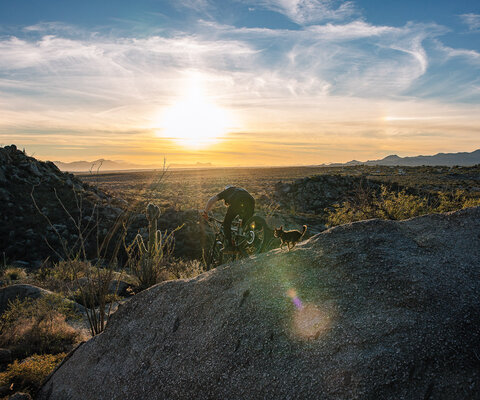
No matter where you ride, the Sonoran Desert is inescapable. Between rocks and cactus, there isn’t a soft landing for a hundred miles, which is why so many trails have names like Pincushion and Acupuncture. There are also jumping cholla, plants that will shoot thorny appendages at you if you ride too close. And the weather is extreme, with summer lows around 90 degrees and blizzards possible on Mount Lemmon year-round.
This is the authenticity, the grittiness that Sadow referenced.
“This isn’t Moab or Crested Butte, tourist towns you can go feel like you’ve experienced in three or four days,” he says. “Tucson is an incredibly livable town. And we have trails that will challenge you today, tomorrow, and for years.”
Tempting as it might be to winter in Tucson—and a who’s who of mountain bike racing does that, including Sofía Gómez Villafañe, Russell Finsterwald, Keegan Swenson, and Matt Beers—the AZT pushes inexorably north after Lemmon. The stretch from Oracle to Superior brings the trail’s most remote passages, swoopy, fast-and-loose desert pounding, blasting in and out of sandy arroyos, up and over desiccated ridges, and dodging the occasional javelina or Gila monster.
This stretch holds arguably the best riding on the AZT. From the mining town at Kelvin, the trail teeters above the Gila River before clambering into a hanging valley festooned with granite domes and towers, then negotiating a stony minefield down to the trailhead at Superior. It feels much more remote than the 37 miles suggest, a magical hideaway at the foot of the five-million-strong conurbation of Phoenix.
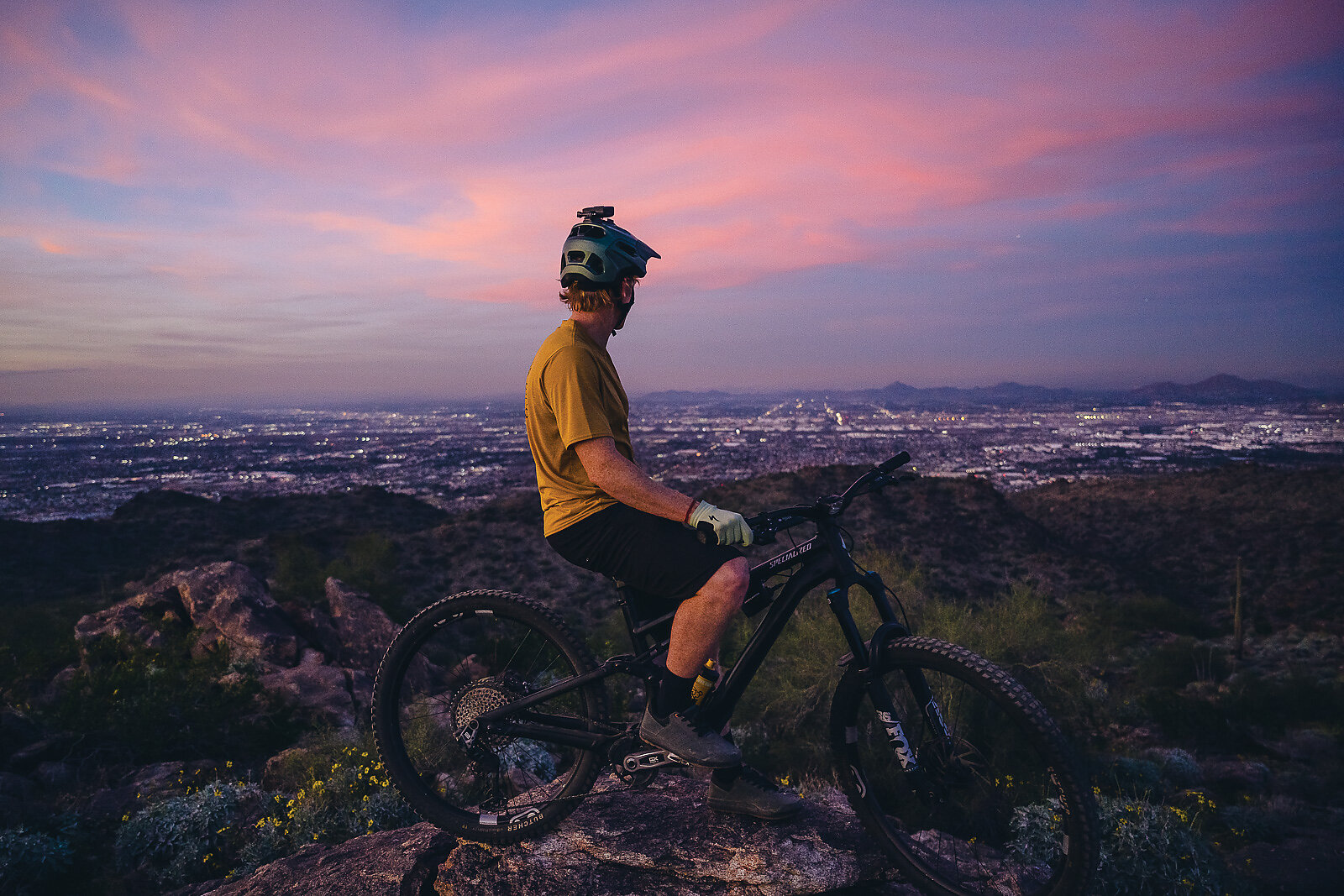
Believe it or not, Phoenix—yes, sprawling, overbuilt, artificial, water-challenged, hot-enough-to-kill-you-much-of-the-year Phoenix— might just be Arizona’s most underrated mountain biking resource.
“We fly under the radar,” says Chris Cocalis, president of Pivot Cycles, whose headquarters sits less than a mile from the rocky hardlines of South Mountain. “People think Arizona mountain biking, and they think Sedona. They think Prescott, where there’s an insane amount of new trails. But Phoenix has more world-class riding than both of those places combined.”
Ground zero is the South Mountain Park & Preserve, the fourth-largest city park in the United States with some 150 miles of mountain biking trails. Like many of the trails in Tucson, South Mountain is best known for committing lines and brazen moves on cheese-grater slabs and boulders. RockShox and Fox Factory set up here each winter to test their suspension. Trek Bikes and Norco Bicycles—and of course Pivot—put new bikes through the paces here. And there might be no place better to test than the National Trail, more than 15 miles of rock-balancing, line-finding, boulder-crawling fun that traces the South Mountain crest.
That’s just one in a scrum of trail hubs around the city. The McDowell Mountain Regional Park, east of Scottsdale, is almost double the size of South Mountain (and the second-largest city park in the country) and offers approachable desert flow-style trails. McDowell, along with two other regional parks, White Tank Mountain and Estrella Mountain, have even built mountain bike racecourses.
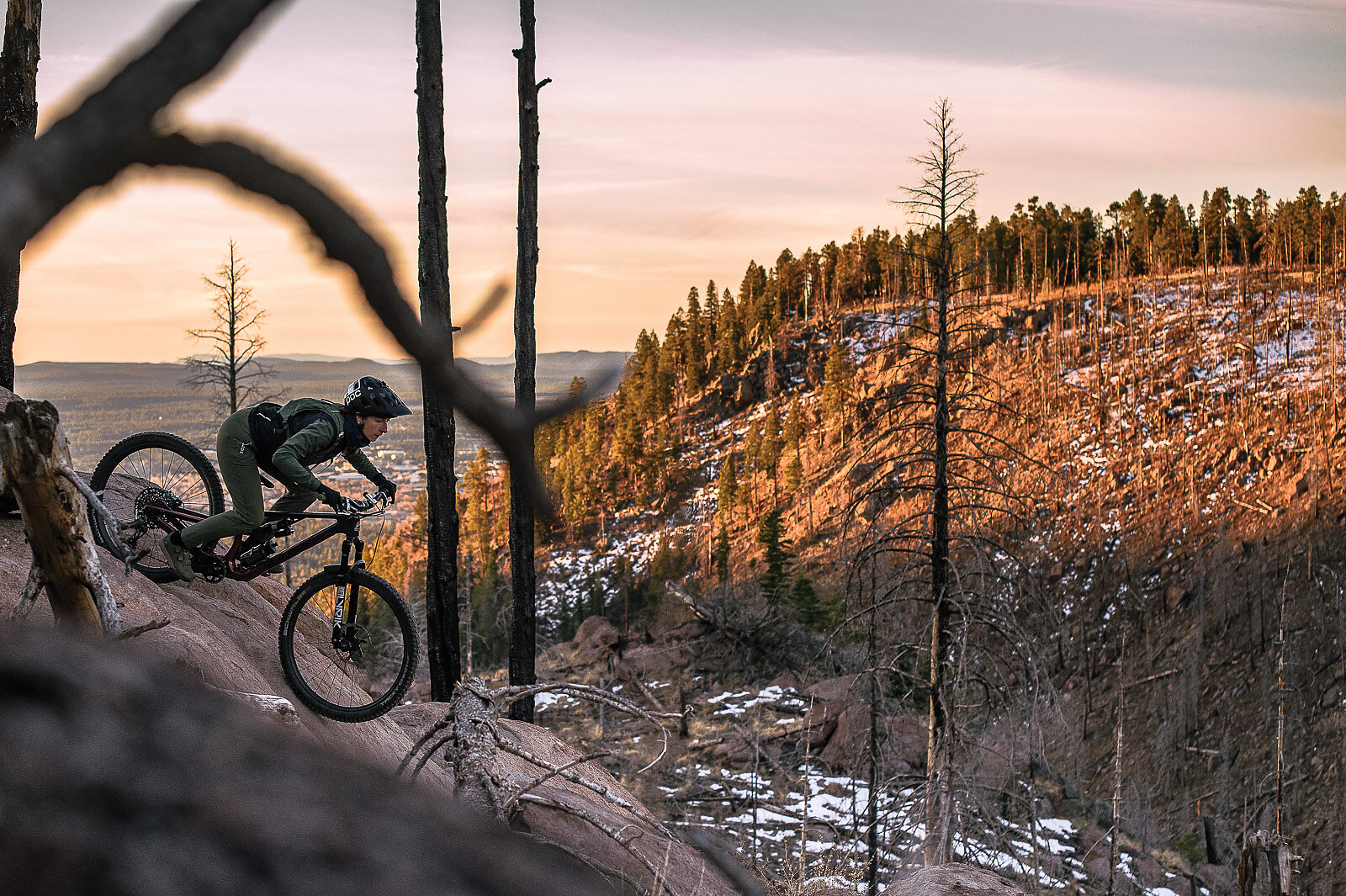
After founding Titus Cycles in Phoenix in the 1990s, Cocalis considered moving to Denver when he launched Pivot in 2007. But he realized that no place could compare to the riding out his office door. “When the population of a place grows, the riding usually gets pushed out. But I can’t think of any other city in the world with riding that compares to here,” says Cocalis. The Phoenix Valley offers more than 600 miles of singletrack.
That number continues to grow, thanks in part to local advocacy groups such as the Hawes Trail Alliance (HTA). Launched in 2018, this mountain bike-driven nonprofit has singlehandedly transformed a social trail network on the east side of town into a full-service riding hub in the Tonto National Forest. While many bootleg areas like Hawes eventually get shut down, the HTA created a master plan with 75 miles of trail and worked with the U.S. Forest Service to implement it within five years. Before the work, the trails were good but scrappy, shifting and changing with the monsoon patterns. Now, the entire system is purpose-built, with trails ranging from double-black enduro runs to feature-rich jump lines to flowy cross-country.
“I think the scope of what we have made is impressive,” says Stenmark. He credits the Forest Service’s engagement and support, as well as the HTA’s huge volunteer network. “We have trails like Red Mountain Rush, with 1,100 feet of descending in three miles. And only a few riders in the state can ride every feature on Boulderdash, but every obstacle has three lines for varying abilities.”
He says Hawes—and Phoenix in general—is a hidden secret: “Anywhere you live, you have four or five places to ride within 45 minutes. Some of them are world-class.”
But if the trails are so good, why aren’t more people flocking to Phoenix? “We’re getting on the radar,” says Stenmark. “It’s just a matter of time until the media and the marketing catches up with the work.”
Mountain bikers take the two biggest diversions from the official AZT around Phoenix, first bypassing west of the lush Superstition Wilderness, then weaving east to miss the thorny Mazatzal Wilderness. After the heat and desert haze of Phoenix, it’s a breath of fresh air to leave behind the baking saguaros and climb into scrub oak and juniper country, even though this passage entails large stretches of dirt roads and pavement.
“We are committed to building singletrack around the wilderness areas for mountain bikes,” says Matthew Nelson, executive director of the Arizona Trail Association (ATA). Once the official walking route has been fully realigned on trails in the next five years, the complete riding route will take another 10 to complete. Asked why the ATA is so committed to cycling, Nelson says that mountain bikers have played an important role in development. “I tell managers all the time, ‘Stop running your trails like country clubs.’ Mountain bikers are a great user group. They get engaged, show up, and do the work.”
Past the Mazatzals, the climb up the rugged Mogollon Rim is infamous—steep and loose, with lots of hike-a-biking—but the reward is cooler temps and sinuous, shady trail through ponderosa country. From here, it’s tight singletrack and bedded rock at around 7,000 feet to the next big resupply points: Sedona and Flagstaff.
The AZT doesn’t pass through Sedona, but the town’s renowned riding is roughly 20 miles away, and to skip it would mean missing some of the state’s most iconic trails. Arizona has lots of great riding away from the AZT, including the breezy, evergreen trails outside of Pinetop-Lakeside, site of Epic Rides’ Tour of the White Mountains race, and the recently opened Graham Cracker route, a 17-mile, 6,700-foot, enduro-style descent near the southeast town of Safford.
Perhaps the best-known trails outside the AZT corridor are in Prescott, an hour and a half southwest of Sedona, where the city has constructed nearly 300 miles of trail in 17 years. There’s gymnastic, slow tech at The Dells, the 56-mile Prescott Circle Trail that loops town, and, most recently, a 25-mile gravity flow park called Bean Peaks.
“This is likely the first Forest Service-sanctioned gravity flow system in the West,” says Chris Hosking, Prescott’s Trails and Natural Parklands manager. He credits the project and Prescott’s growing trail network to the Forest Service’s willingness to collaborate, as well as to thousands of hours of local volunteer trailbuilding time. “The Whiskey OffRoad put us on the map,” says Hosking, referring to the Epic Rides race that launched in 2005. “It demonstrated the power of recreation to drive tourism, and that has fueled local interest and investment in building trails.”
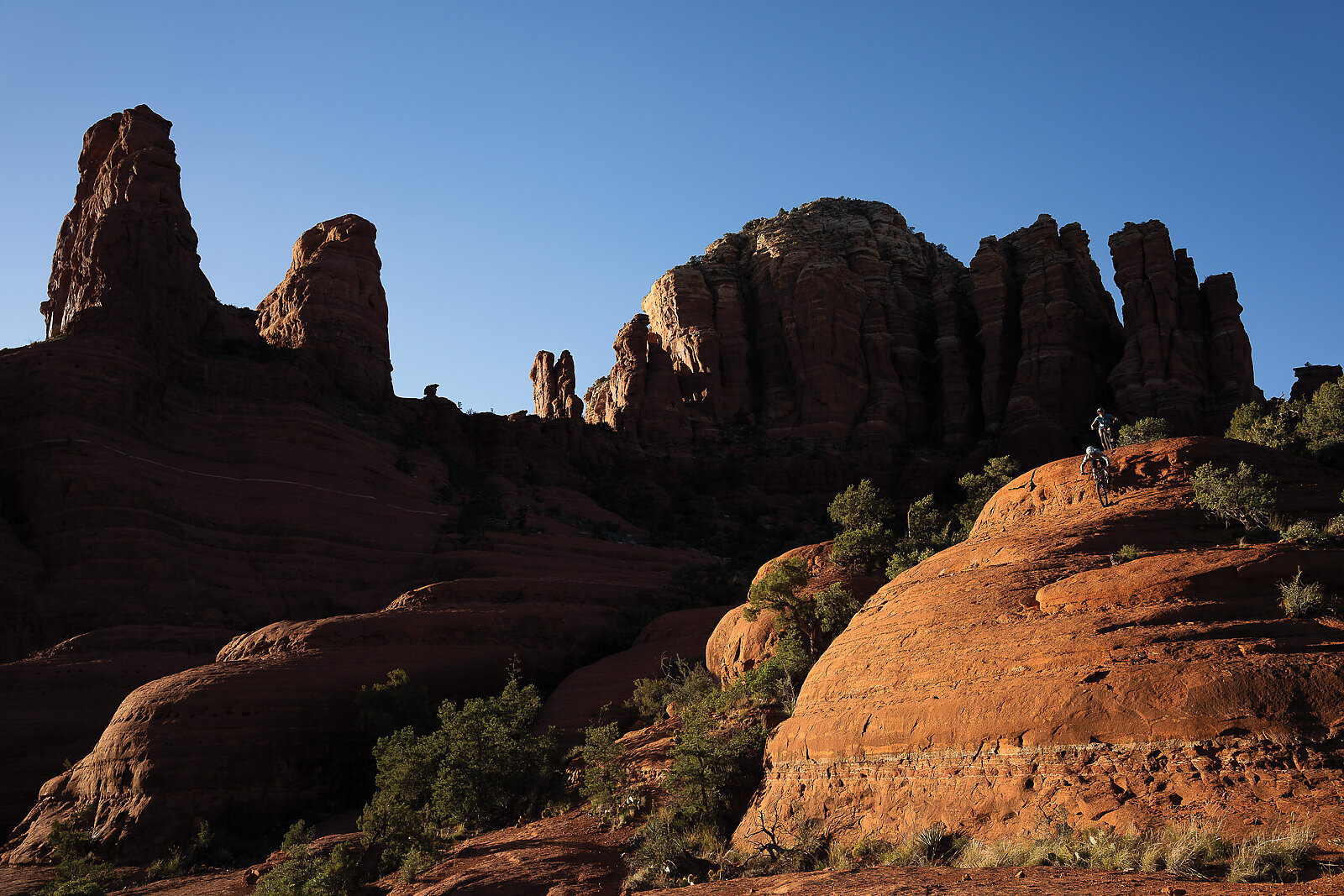
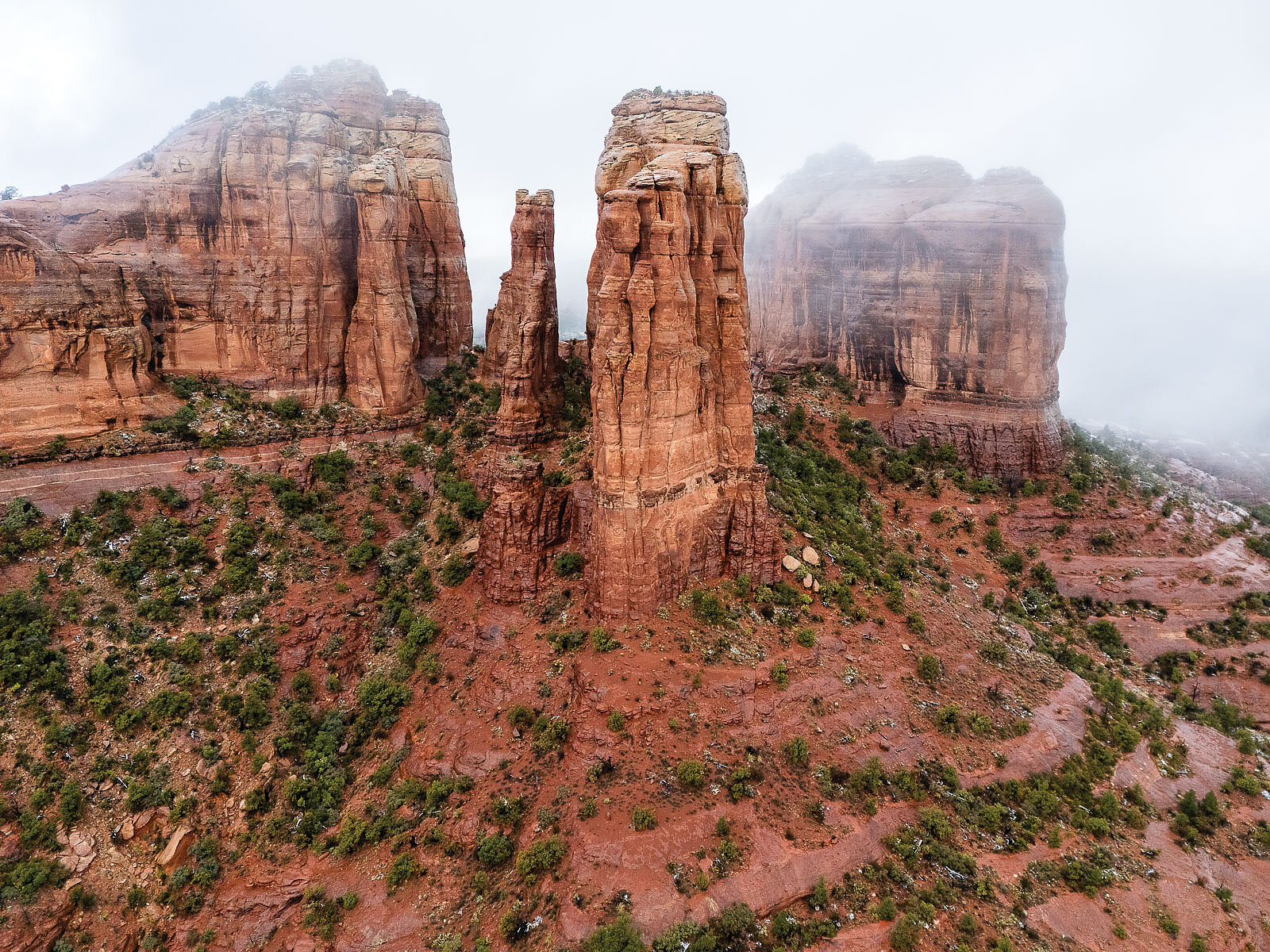
It’s a similar story to Sedona, arguably Arizona’s first and best mountain biking test case. Fifteen years ago, it was mostly famous for crystals and vortexes. Since then, trail miles have almost doubled, thanks to lots of engaged locals and a Forest Service district open to riding. Today, mountain bikers pour into the town to play on slickrock. It’s an easy comparison to Moab—red rocks, stunning desert towers—but the parallel stops there.
“We have more soil, more plants, more singletrack. And it’s all more accessible,” says Mike Raney, owner of Thunder Mountain Bikes. “In Moab, even the shorter rides, like Mag 7, are an all-day affair. In Sedona, you start with breakfast at Whole Foods, pedal to anything—Hogs, Hiline, Hangover, all the destinations—and still get yourself back to the pizza shop for lunch.”
The trails aren’t your average singletrack, either. The Hangover trail climbs Moab-style slickrock, then traverses a handlebar-wide hanging veranda before plummeting down slabs so steep your hands hurt. The Hiline trail is a slow-speed tech climb to views most people only dream of, then a slippery plunge down sandstone gullies. The Hogs are a redrock playground so fun it feels as if it should have been built—but it’s natural. And in the last year, the town has added Ground Control, a smashing, high-speed descent north of town, and Hardline, a technical alternate to Hiline.
Those are the Sedona A-lines, but even the moderates here—Mezcal, Chuck Wagon, and Slim Shady— are memorable. Arriving here via the AZT from the east sets up the town’s biggest descent, Schnebly Hill to Munds Wagon trail, which might sound lackadaisical (wagons and all) but actually delivers a 2,000-foot roller coaster through sandy washes, creek crossings, and perpetual red rock step-ups and drops. In any other place, this is a destination; in Sedona, it’s not even in the top 10.
“I’ve ridden a lot of the best places—Crested Butte, Durango, Moab, Whistler—and Sedona is still the place I want to be,” Raney says, with one caveat. “Seasonality is Arizona’s curse—and blessing.” The winter riding is better than anywhere. But it’s also the season when a lot of people trade bikes for skis. Because Arizona doesn’t offer as much high-season, summer riding as other places, many mountain bikers don’t think of the state as a riding mecca.
Enter Flagstaff, an hour north of Sedona.
Like Phoenix and Tucson, “Flag” is a working town, not tailor-made for tourists or mountain bikers. But sitting at almost 7,000 feet, it’s rideable from early summer to late fall, when the rest of the state is scorching
There’s always been fast and flat ponderosa riding south of Flag and crispy, scraped-in bootleg trails north of town. But trails built just for mountain biking are new. The FBO began advocating the Forest Service for downhill, mountain bike-specific trails in 2006, but there was fierce environmental opposition, followed by two wildfires in 2010 and 2019 that ravaged the landscape. The FBO kept pushing, and eventually a master plan was approved for Mount Elden, including the relocation of unsanctioned trails, plus the establishment of up to four directional gravity trails.
Since the plan’s 2022 approval, the FBO has helped construct 75 miles of trail above town, including a machine-built flow trail with 850 feet of vert called Full Sail and a handbuilt, natural-surface tech line with 1,000 feet of drop called Meteoride. Two more double-black downhill trails—The Reserves— are in the works, set to launch in 2026 and 2027.
“It felt like we were two decades behind for a while,” says the FBO’s Hazel. “But now we’re on the map.”
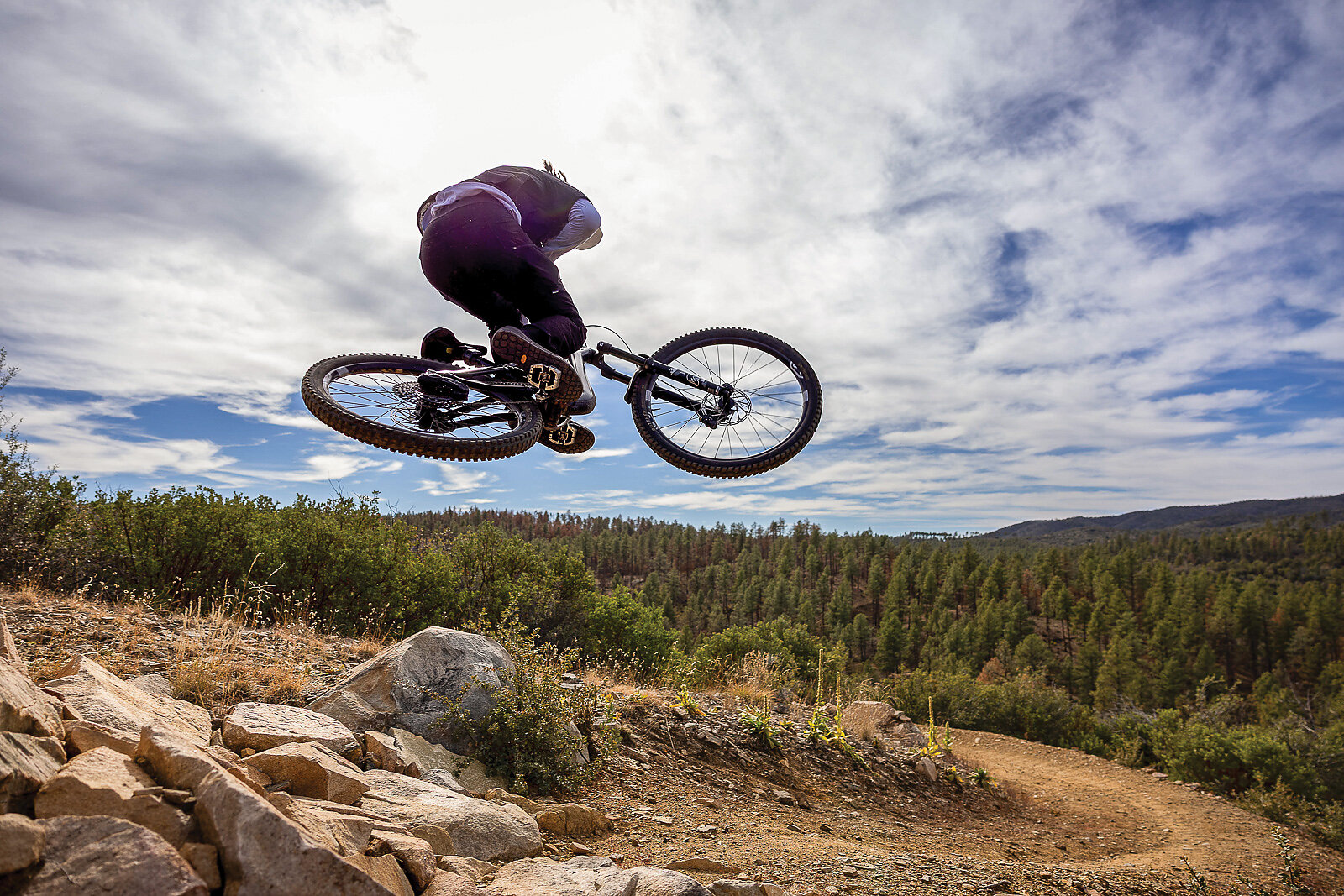
Like Raney, Hazel sees Flagstaff and Sedona as the perfect complement to one another, with big-mountain, high-alpine riding in his backyard during the warm months and mesa-style red rocks just down the road when the weather turns.
“It’s kind of the whole state,” he says. “There’s great riding anywhere you look, any time of year. It’s tough to imagine any place with more variety.”
From Flagstaff, some 200 miles of AZT remain to reach Utah: around the north side of Mount Elden, over the west shoulder of towering Humphreys Peak, and then singletrack that snakes through the ponderosas.
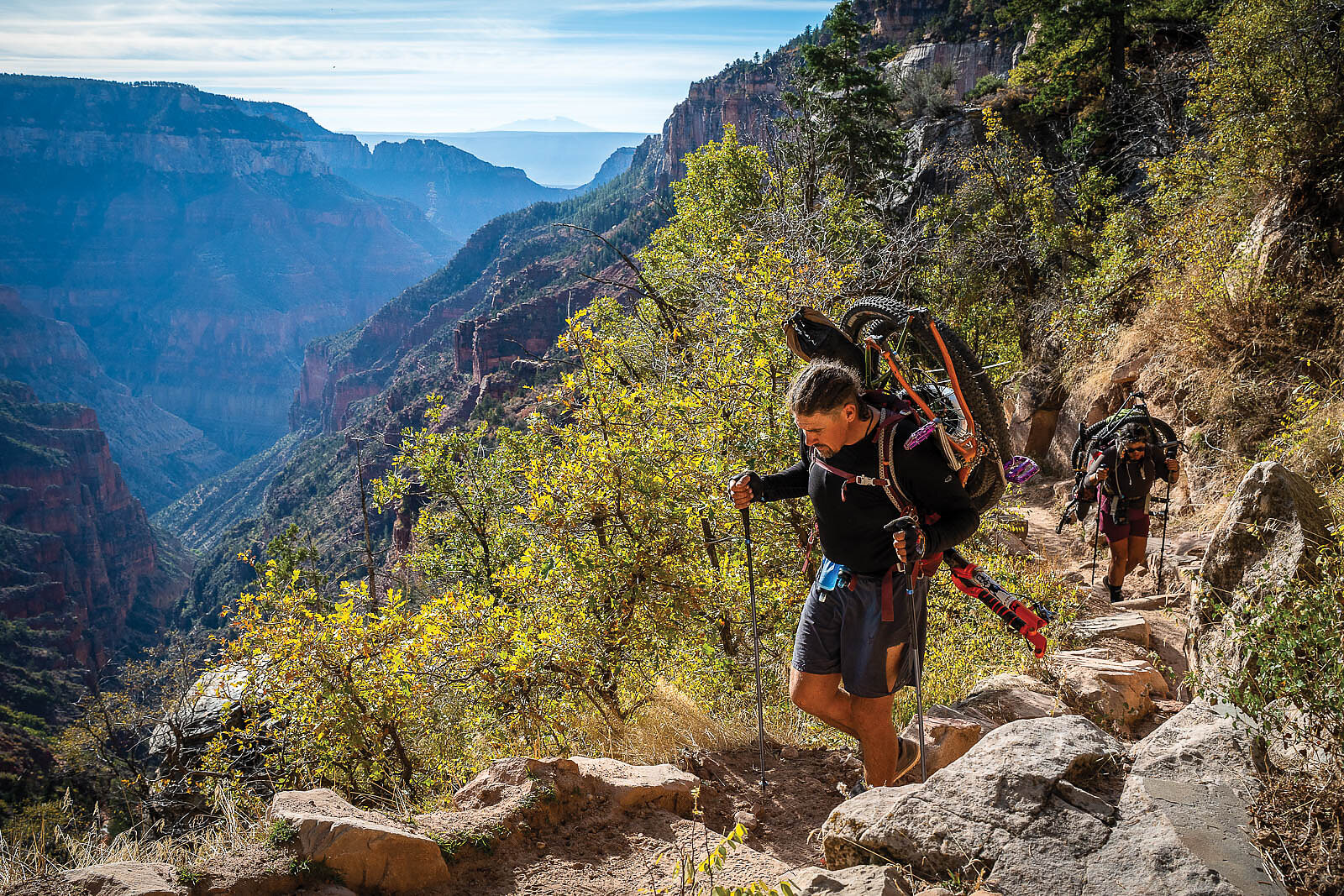
Yet one final snag awaits. To complete the AZT, mountain bikers must disassemble their bikes, load them on their backs, and hike 28 miles across the Grand Canyon.
“People love it and people hate it,” says Morris, who pioneered the Arizona Trail Race and opted to include the Grand Canyon in the route. “But it’s a testament to the state. I couldn’t imagine the ride without it.”
The ATA is in conversation with the Navajo Nation about a link trail that would potentially allow cyclists to trade the Grand Canyon portage for riding miles to the east. Nelson says it would be a compelling collaboration if the Navajo Nation were amenable, but he also imagines that many would still choose to hike. Concludes Nelson: “The portage across the Grand Canyon is almost as intrinsic a part of the AZT experience as the Grand Canyon is part of Arizona.”