Long Term Review: Trek Fuel LX / MX / LXMX Supreme versatility.
It’s been about five months since Trek launched the new Fuel family. I hopped on the stock Fuel LX and reviewed it when it was released, but since then I’ve actually purchased my own Fuel frame, along with several sets of links, to use as a long-term test rig for drivetrains, suspension, and other components. That versatility is a big part of why I gave that bike my Editor’s Pick. There are so many good bikes on the market right now, and the Fuel stands out thanks to how effortlessly it shapeshifts and how straightforward and easy to love it is in each of its configurations.
So, in this update, I'll dive into the longer term liveability of the Fuel, I’ll compare the MX and LX versions, as well as the off-menu LMX configurations, and I’ll also include comparisons to a few other bikes in this class.
Living With the Trek Fuel
Trek’s current generation of frames is generally delightful to work on and live with, and the Fuel LX is no exception. Most of the standards are, well, standard, so parts are easy to come by. Everything is accessible, the cable routing is straightforward, and the details are dialed. So here’s a quick rundown of what’s stood out over the last almost half-year.
If you buy a complete bike, or a frame-only from Trek, it will come with a headset, and you won’t really have to think about it. But, the Fuel uses a slightly-less-common 49-millimeter upper bearing headset. It’s easy to track down bearings and cups from Trek, or a variety of aftermarket suppliers, but here in Bellingham at least, I wasn’t able to find one locally. Not a big deal, and you are slightly better set up to run angle-adjusting headsets with that larger cup, but worth noting.
The second standard that’s barely worth noting is that the Fuel comes with 180-millimeter rear brake posts. In recent years, we have seen a shift towards many brands spec'ing 200 millimeters as the smallest rear rotor size. I’m sympathetic to the argument that lighter riders will benefit from the ability to run 180-millimeter rotors, and it’s cool that Trek is keeping them in mind here, even though I personally would never run smaller than 200 millimeters on a bike this capable. In my opinion the only truly wrong answer here is frames that default to 203-millimeter rear brake rotors, which set riders up for some weird adapter sizes.
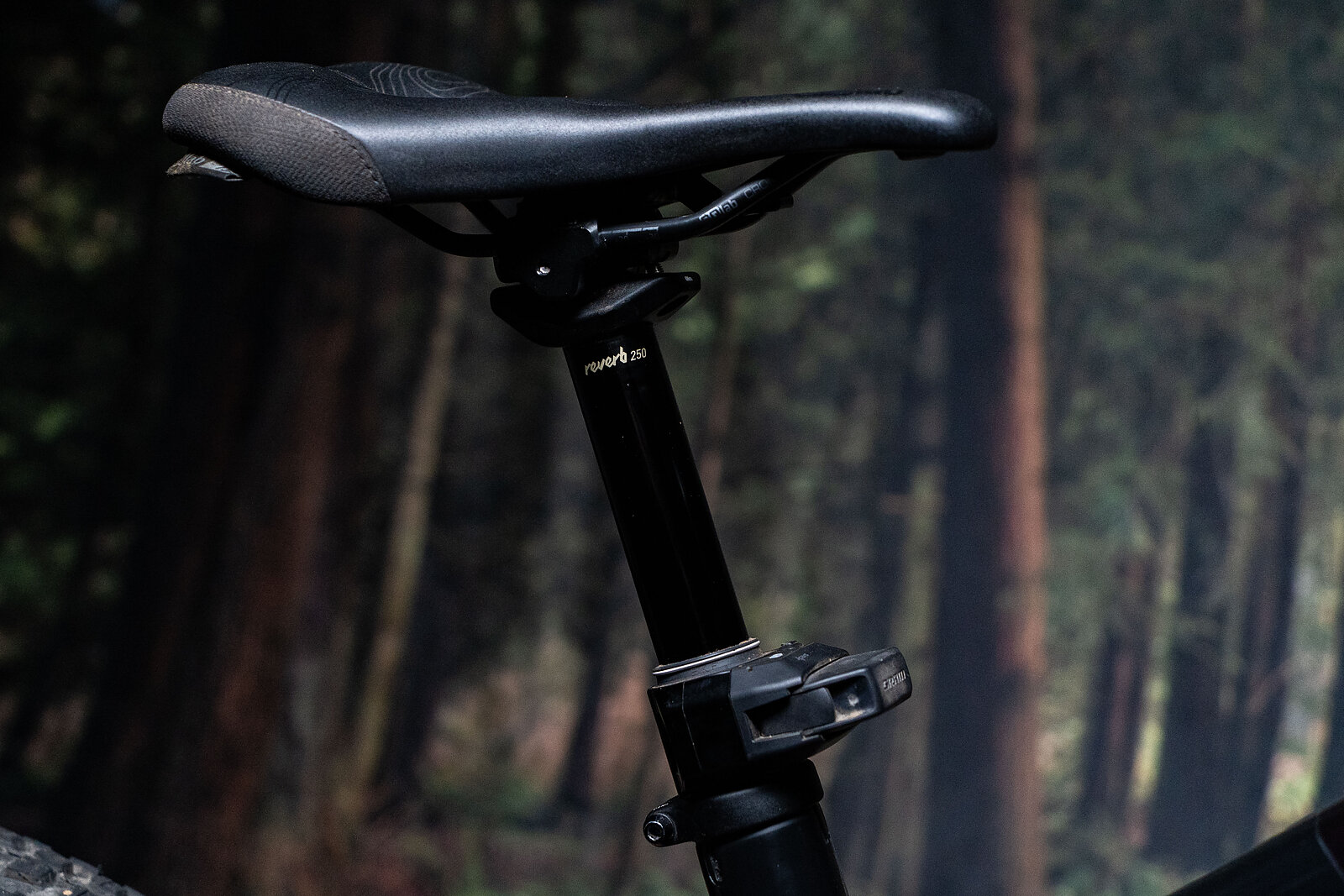
In terms of other details: the Fuel’s cable routing system is easy to work on, and quiet. I appreciate that Trek includes everything you need to block up holes if you’re running wireless components. I also appreciate that I can run a 250-millimeter RockShox Reverb slammed in the size Large with my 34-inch inseam and 165-millimeter cranks.
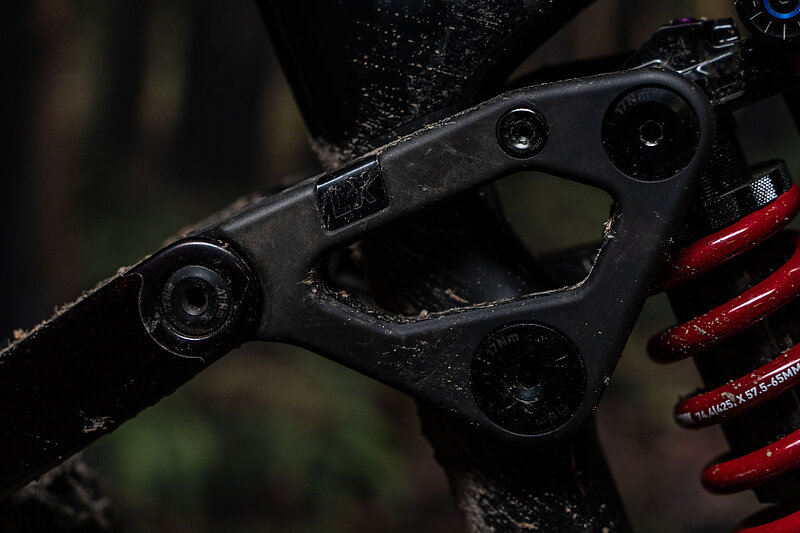
When you purchase aftermarket links, they don’t come with the bolt-on bridge, so you do need to swap that out when changing rocker links.
The Fuel LX is a very quiet frame. There’s very little to hear in terms of cable slap or drivetrain noise, and so far mine has stayed creak-free. I ran the Fuel for a few months with an e*thirteen SideKick rear hub, and while it did help isolate drivetrain movement from my feet, it made significantly less of a difference than it has on other bikes. Ultimately, I swapped back to a regular hub, because I think the layout of the Fuel’s rear end is calm and quiet enough that it’s not worth adding weight and complexity to quiet it down even more. That’s a cool contrast to bikes like the Specialized Stumpjumper where something like an OChain or the SideKick makes an immediate and appreciable positive impact.
Otherwise, I’ve been riding this bike hard. I’ve taken a few of the biggest crashes and cases of my life on this frame (one of which I was sure should have broken the frame) and it’s still running smoothly and looking good.
Fuel LX vs. MX vs. LMX
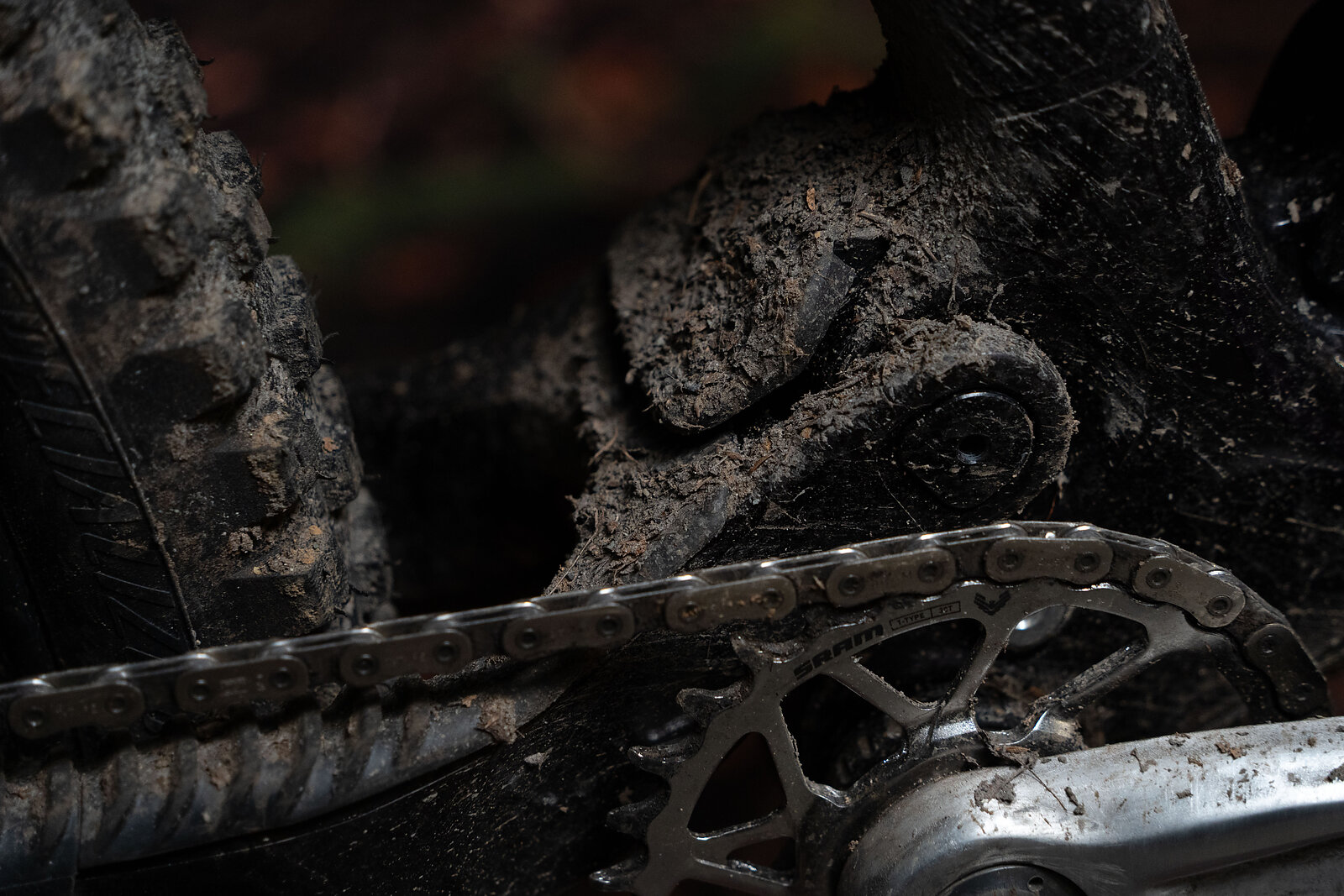
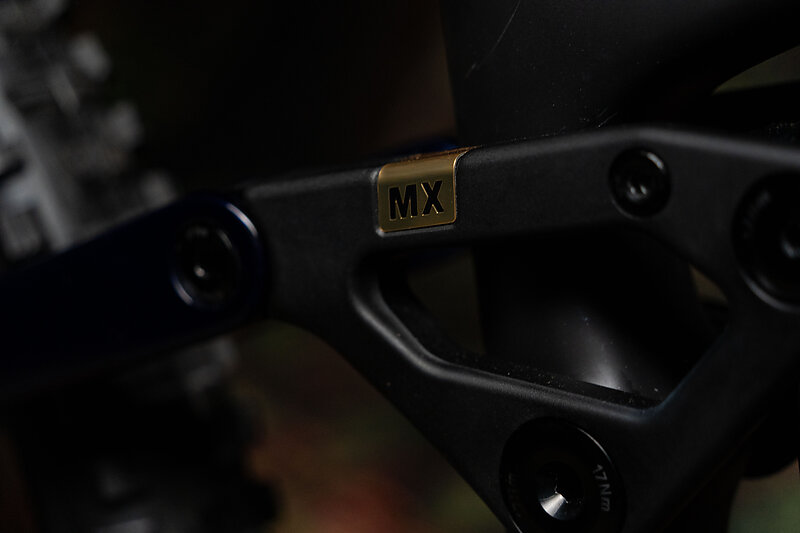
The big story with the Fuel is its three interchangeable rocker links, and its two lower shock mounts. Rocker links cost $100 each, and each corresponds to a model in the lineup, and a specific stroke shock. So there’s the 140 millimeter EX link (paired with a 60 millimeter stroke shock), the 150 millimeter MX link (also with a 205x60 millimeter shock), and the 160 millimeter LX link (bump up to a 205x65 millimeter shock). Then, there’s “regular” and “high” lower shock brackets. In stock form, you’re supposed to run the “high” bracket with the MX and its 27.5” rear wheel, and the regular bracket with both the EX and LX. But, you can mix and match strokes and links. The potential combinations get a little mind melting, so we’ll cover three of the most common: the full stock MX, the fully stock LX, and the LMX hybrid.
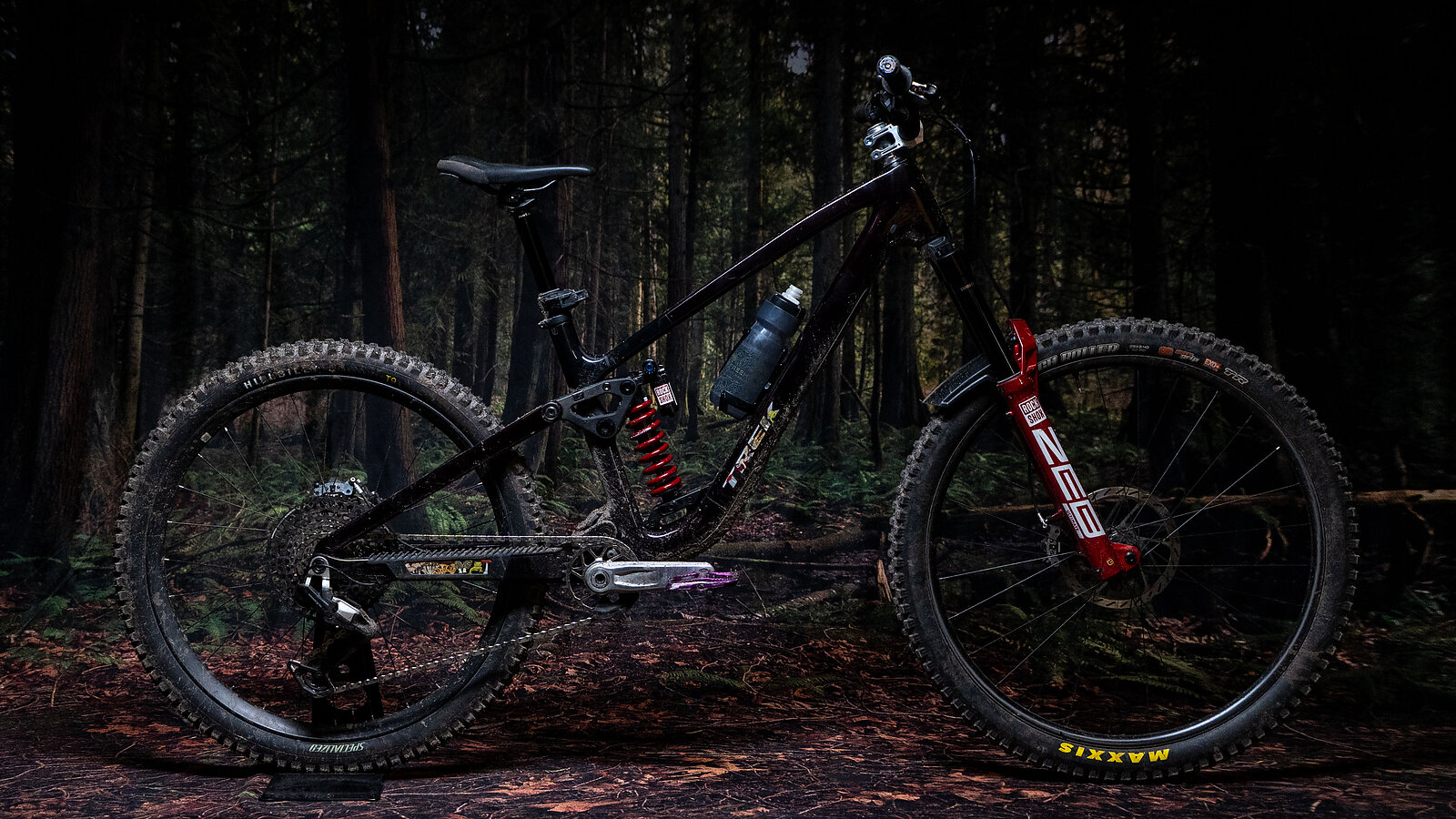
I started out running the Fuel in the stock LX form, with a 170 millimeter fork, and 160 millimeters of rear travel, paired with 29” wheels. Going into the review, I was positive that I’d immediately want to default to the LMX hybrid, simply because I tend to prefer 27.5” rear wheels on anything with more than 140 millimeters of rear travel. And yes, I do love the LMX, but I was surprised by how well I jived with the LX, and how worthy of a bike it is in its own right.
The stock LX is much more of a leggy trail bike than the MX. By that I mean it feels significantly better suited to all-day up and down rides in a wide variety of terrain. I took the LX on a ten day trip to the interior of BC, where we did a bunch of alpine riding, along with some steeper shuttling. And for that kind of trip, I’d take the LX over the LMX every time. It does a better job of eating the miles, dealing with tricky climbs, and rolling through square edged chunder. Some of that is thanks to the bigger rear wheel, but it’s also a little steeper, and a little higher off the ground than the LMX, and those geometry tweaks make a big difference.
For me, the distinction between the sweet spot of the LX and the LMX is narrow, but important. Going on a ride where the descent is the focus, but there’s also going to be a whole bunch of other “mountain biking” before and after you get to the rad sick gnar? The LX is definitely the move. Only focused on the steep, deep, and scary? Jump right to the LMX. And yes, Trek makes the Slash for those sorts of rides, we’ll get into that comparison later.
Standing on top of something that scares you? Neither bike will give you any excuses not to ride it, they’re both super capable. But, if I’m out explicitly looking for trouble, I’d rather be on the LMX than the LX.
Conversely, on mellower terrain, the LMX is more of a handful. It feels slower, more sluggish, and less efficient both up and downhill than the LX.
The MX is a bright contrast to both the LX and LMX. Bumping down to a 160 millimeter fork, lighter tires, and an air shock makes for a significantly more engaging, playful ride. The MX is absolutely plenty of bike for most riders, in most places, and I wouldn’t hesitate to ride the occasional bike park or shuttle day on it, but it doesn’t have the same confidence-inspiring traction and geometry as its siblings. If, for example, I was planning a trip where I’d ride bike park one day, and then pedal mellower trails the next, I’d rather be overbiked on the pedal day with the LMX than underbiked at the park on the MX.
Finally, there’s what I’ll call the MLX. You can run the bike with a 65 millimeter stroke shock, and 170 millimeter fork, MX rocker, and high lower shock mount. That gets you a 162 millimeter travel mullet rig, with a 63.5° head tube angle. In this configuration the bottom bracket is about a centimeter higher than the LMX. I haven’t ridden this setup much, because I don’t really want a taller, steeper long travel variant of the Fuel. However, I do think this setup might make a lot of sense on the electrified version of the Fuel, the Fuel+ and I’m excited to try it out there. A little more pedal clearance, and slightly steeper geometry might be a whole bunch of fun on an e-bike, and I’ll cover that in my full review of that bike.
Fuel Comparisons
Based on its incredibly modular nature, the list of bikes that you could compare to the Fuel is massive. So we’ll hone in on just a few.
First: Trek’s very own Slash. Initially I wasn’t sure why Trek would even make an LX version of the Fuel when the Slash exists. But in practice, they coexist well. In my experience, the Slash is one of the biggest, smashiest, most capable 170 millimeter bikes on the market. So having a significantly lighter, snappier, more well-rounded bike, with almost the same travel numbers opens up your pool of potential customers.
I love the sixth gen Slash. It’s such a brute, in the best way possible. It handles steep, scary, fast terrain incredibly well. But, it’s not light, and the extra idler pulleys add some drag when you’re climbing. I’ve pedalled some very big days on an alloy Slash and been just fine, but the Fuel LX is significantly more efficient over the course of a day. And it handles rolling or traversing trails much better than the Slash does. The LMX variant narrows that gap to the Slash, both up and downhill, but it’s still a notably better bike for big, all-day rides.
I found that with the Slash I was almost always overbiked if I wasn’t shuttling or riding at the bike park, whereas the LMX feels better suited to a wider variety of casual rides. Bikes, and brand lineups exist on a spectrum. Some brands' biggest pedal bikes don’t feel as aggressive or capable as the LMX (Pivot’s Firebird comes to mind here). But, because Trek made the Slash so mean, and so capable, there’s room beside it for the Fuel.

In my initial review, I mentioned that I’ve spent the last year making a Specialized Stumpjumper 15 progressively more and more capable, and that right out of the box, the Fuel LX outperformed my best efforts. So let’s dive into that comparison.
This summer I ran my Stumpy with a Cascade Components mullet link to give it 156 millimeters of rear travel, and a 170 millimeter Zeb. So, pretty dang close, on paper at least, to the Fuel LMX. On the trail, the difference in geometry, and specifically length between the two bikes stands out the most. There are a bunch of small changes to reach, stack, chainstay length, and wheelbase that all compound to create a pretty different feeling and fitting bike.
On the trail, the Fuel feels significantly more stable, and more appropriate for my height. I am 6’2” tall, and a lot of folks with similar dimensions are running S5, or XL frames. However, due to terrain and riding style, I prefer a slightly smaller bike. Trying to “endurofy” the S4 Stumpy made it feel just a little too small, where the Large Fuel fits me better, and that translates to more confidence and higher speeds, without it ever feeling ponderous or too long. Of course, that’s a comparison of two very modified bikes. So what about the stock Stumpy mullet vs. the stock Fuel MX?
Here the gap narrows a lot. The Fuel feels a little longer, both in reach and wheelbase, but I notice more of a difference in suspension feel. When run with the stock Genie shock, the Stumpy is more active off the top of the stroke, before transitioning into the supportive end stroke. It feels a little like a feather bed on top of a dense memory foam layer, where the Fuel feels rounder deeper in its stroke, but not as active off the top, like a spring mattress.
I’d happily run either of these as my primary trail bike, since they’re both quite fun and versatile. At the end of the day, I think the Stumpy is great for people who know what suspension travel they desire, but want to experiment with geometry via its headset and chainstay adjustments, whereas the Fuel is perfect for folks who are more interested in adapting the bike between different travel configurations.

The third comparison that struck me is to Transition’s Patrol. I owned a Patrol for a few years, and it very much plays in the same space as the Fuel LMX. When run with a 170 millimeter fork, the Patrol is a little longer than the Fuel, but for me, I think the biggest differences come down to versatility and frame details. A Patrol gets you external brake routing, where the Fuel comes with internal storage. The Patrol has a flip chip between high and low, the Fuel can adjust to any one of four different configurations. At the end of the day, I’d be happy owning either of those two bikes, but the Fuel gets my nod thanks to dropper insertion, and my track record with Trek’s bikes staying quiet and tight over longer periods of time.
For Now
Other than the gathering 32 inch stormclouds on the horizon, 2025 was generally a quiet year for "innovation." It feels like we’ve cracked the formula for making a good mountain bike, and I can imagine brands asking riders “what more do you even want this bike to be able to do?”
The new Trek Fuel stands out because instead of trying to one-up the existing paradigm it shapeshifts to meet multiple performance goals. It can very easily be three or four different, and good mountain bikes with some suspension and linkage swaps. Will every rider take advantage of that? Of course not. But every standalone version of the Fuel that I’ve tried has been more than competitive in its class. That makes it a really easy bike to love, and recommend.
Learn more: Trek Fuel