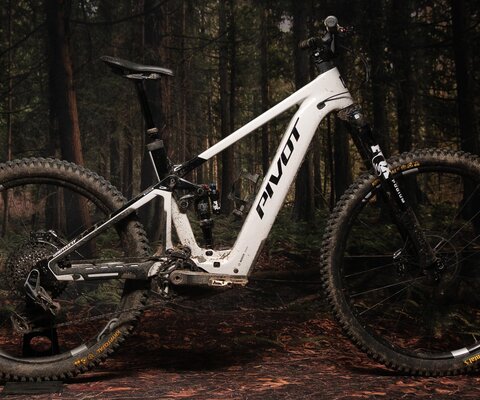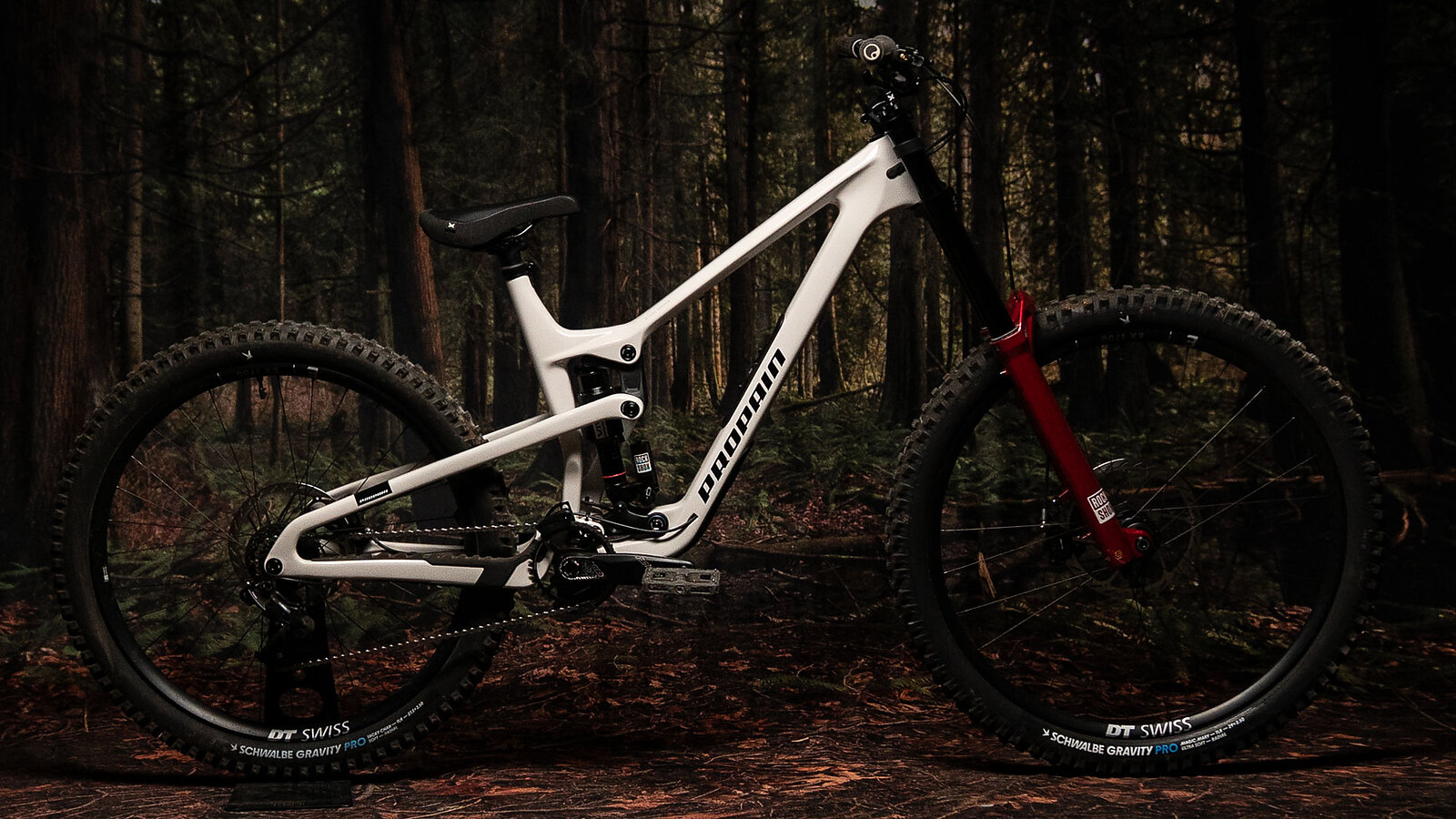
Propain Spindrift CF Dual Crown Is this freeride?
Let’s just get this out of the way at the top. I love downhill bikes that aren’t quite actually downhill bikes. Call them what you will: “park builds” “freeride bikes” “super-duper-enduro” I don’t care, I’m a sucker for a dual crown fork combined with bottle bosses and at least the hint of an ability to pedal. So when Propain announced dual crown builds of its Spindrift freeride bike, I was eager to swing a leg over one.
The advent of these dual crown builds means that there are now four Spindrift options in Propain’s lineup, and riders can custom-configure each to their liking. There are two frame options, the Spindrift Carbon (reviewed here) and an aluminum version which, unlike most of its alloy compatriots, has genuinely different geometry from the carbon frame. So you can choose your frame and base geometry, and then choose either a dual crown or single crown build from Propain’s menu, before you get into the nitty gritty of customizing every detail.
I’ve been riding the carbon-framed Spindrift Dual Crown with a custom build picked out from Propain’s build configurator, and so far I’m a fan.
Propain Spindrift CF Dual Crown Details
- Travel: 180 mm (rear) 200 mm (front)
- Wheel Size: 29” or mixed
- Size Tested: Large
- Build Tested: Custom
- Head Tube Angle: 63.1°
- Weight: Build as pictured: 34.25 lbs, 15.54 kg
- MSRP: $6,304 (as pictured)
Propain Spindrift CF Dual Crown Options
As I mentioned above, you get to choose between carbon and aluminum frames. While most brands make frames from both materials with identical geometry and kinematic numbers, the alloy Sprindrift is a fairly different beast. It’s almost a degree steeper at the head tube angle, with a different leverage curve.
Once you’ve chosen your frame material, Propain offers fully custom builds with the option to swap everything from suspension supplier to grips. Heck, you even have the option to spec your Spindrift with a single speed drivetrain (although unfortunately that option does cost more than the GX DH base). The options don’t stop there though, since you also have the option to run the Spindrift with dual 29-inch wheels or with a mixed wheel setup.
The only options not on the table (yet) are the ability to buy a complete Spindrift straight from Propain with a 12-speed drivetrain and dropper post, combined with a dual crown fork. Perhaps we’ll see that niche option in the future if enough people demand it.
Propain Spindrift CF Dual Crown Frame Details
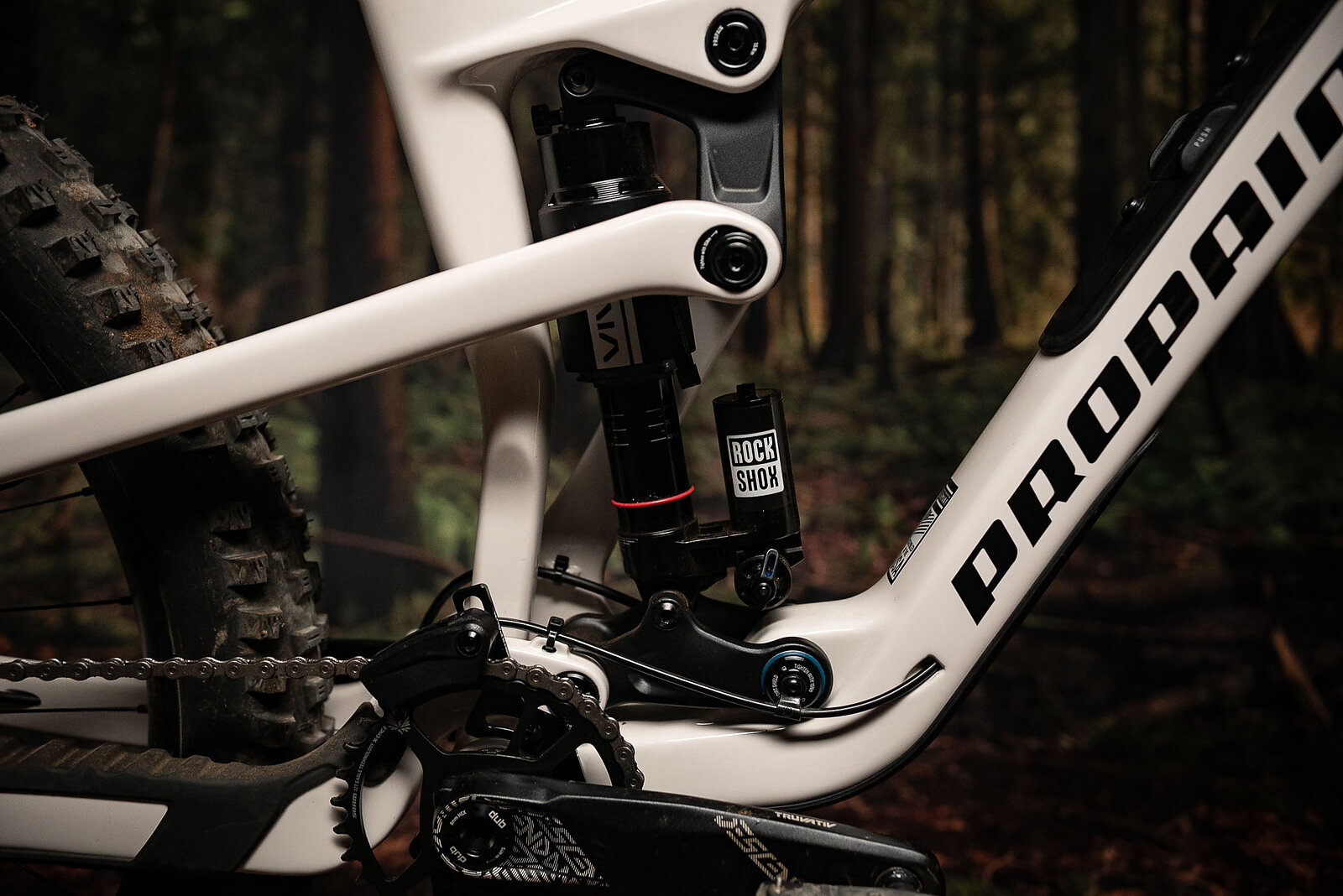
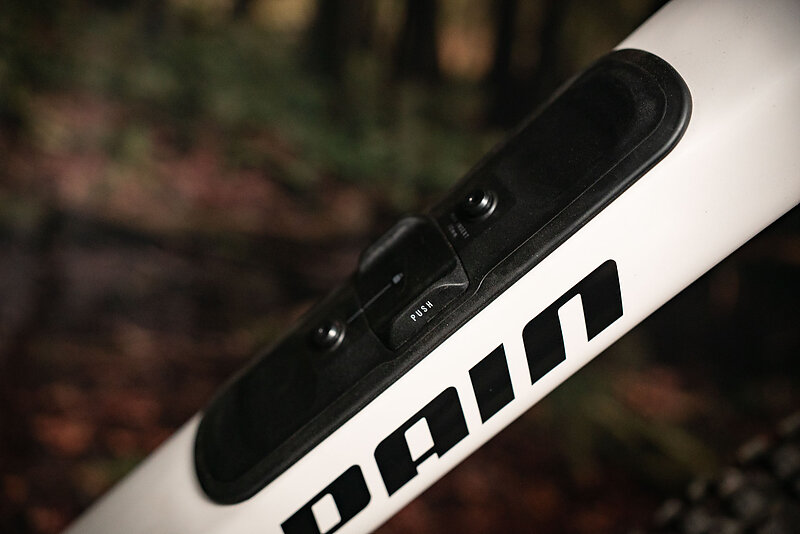
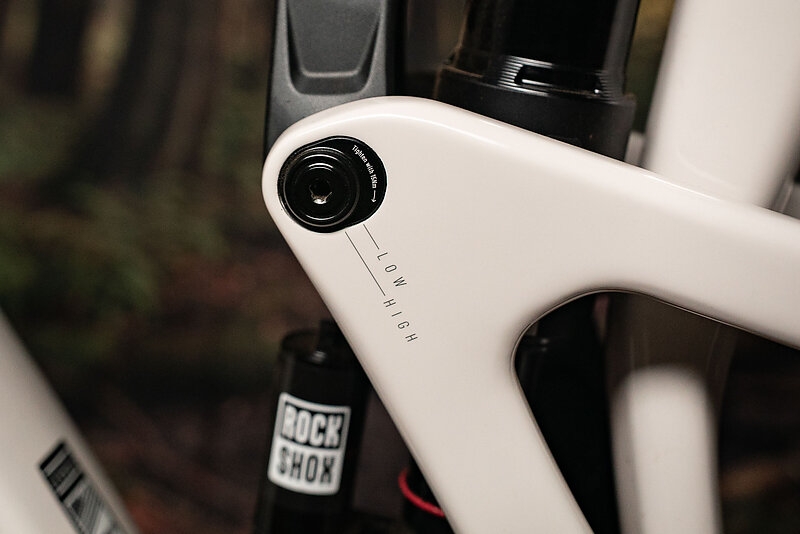
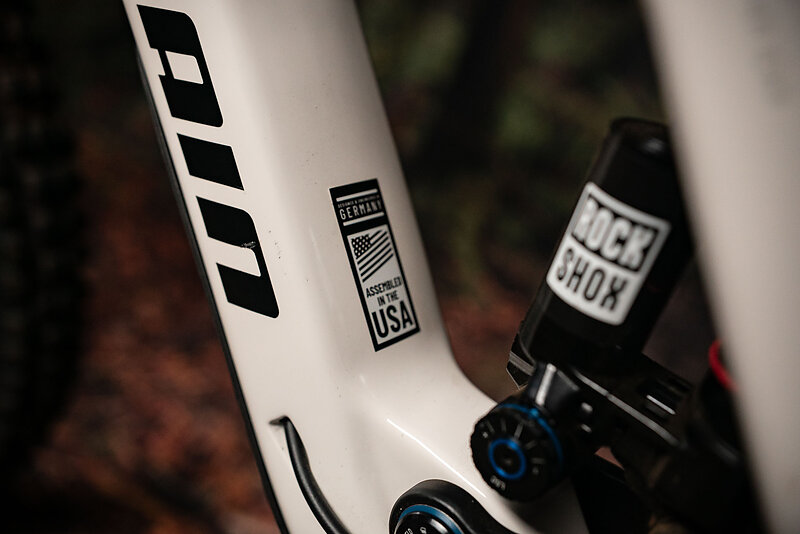
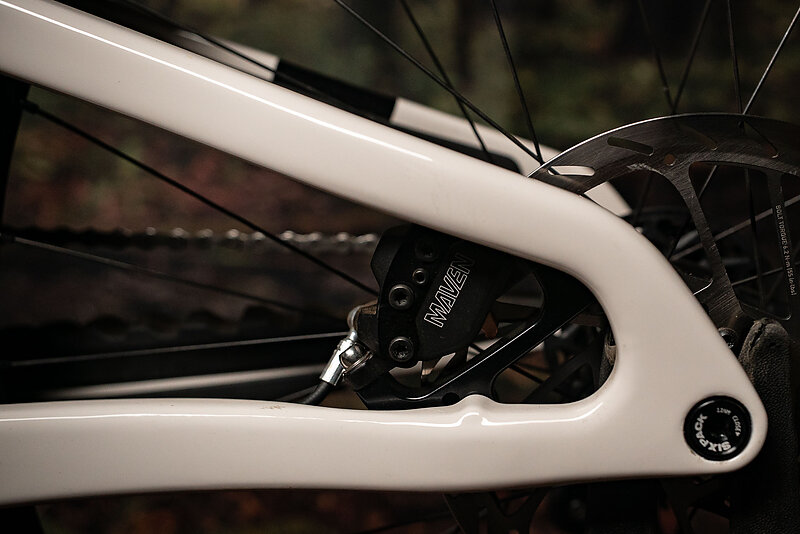
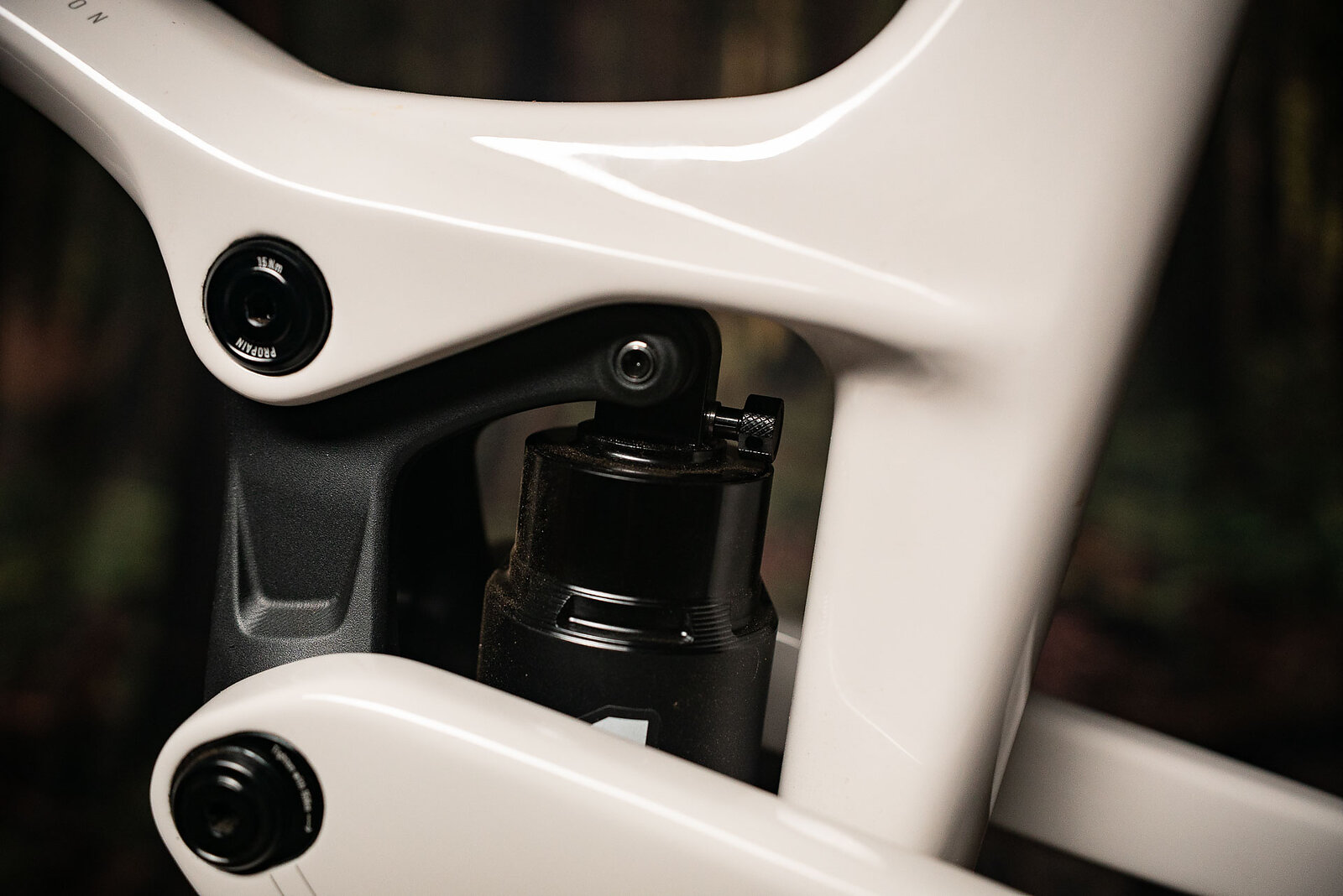
This should be obvious, but the Spindrift Dual Crown is built around a pedalable frame, so you get all the niceties you’d expect. Those include a 148-millimeter rear end, Universal Derailleur Hanger, routing for a dropper post, and bosses for a water bottle on the door to the internal frame storage. There’s also a flip chip to choose between wheel sizes, and a trick little flippable brake mount that adapts from 180 to 200 millimeter rotors. Do I wish it flipped between 200 and 220? Yep, but I’m a big dude who loves big brakes.
All-in, the Spindrift’s frame feels “nice” with no big issues. The one frustration I did have was that the door to the internal storage has a tendency to rattle when there’s a full bottle in the cage. It’s pretty noisy, and I ended up descending with the cage empty. If I was trying to ride park laps with a bottle I’d probably throw a ski strap around the bottle and downtube and call it good.
Otherwise, the bike is fairly quiet with good chain-slap protection and no weird rattles or creaks so far.
Propain Spindrift CF Dual Crown Build
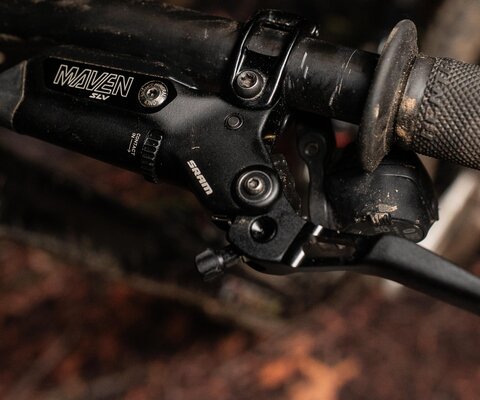
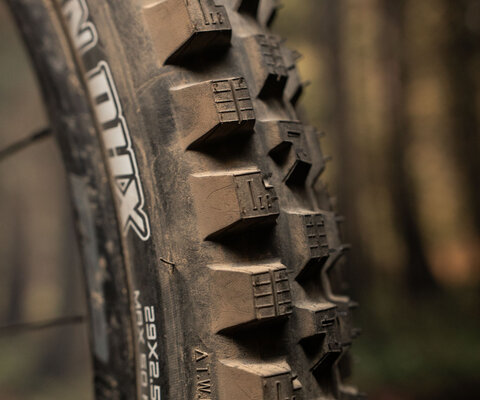
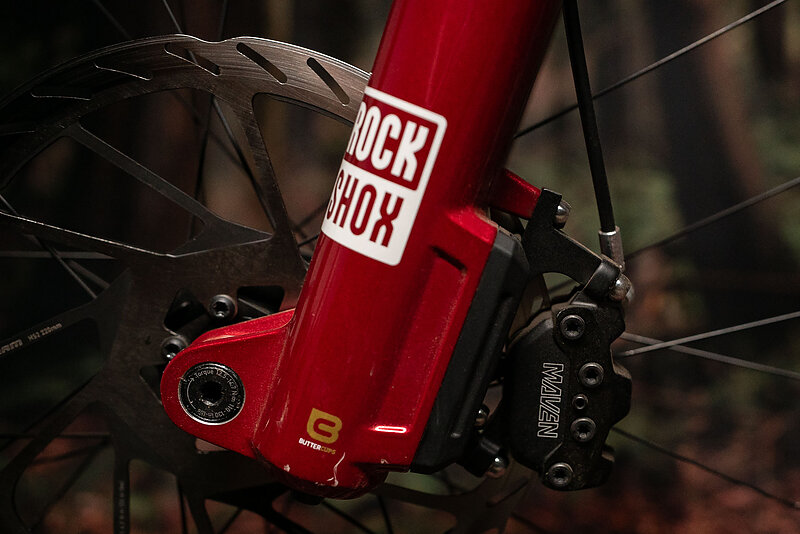
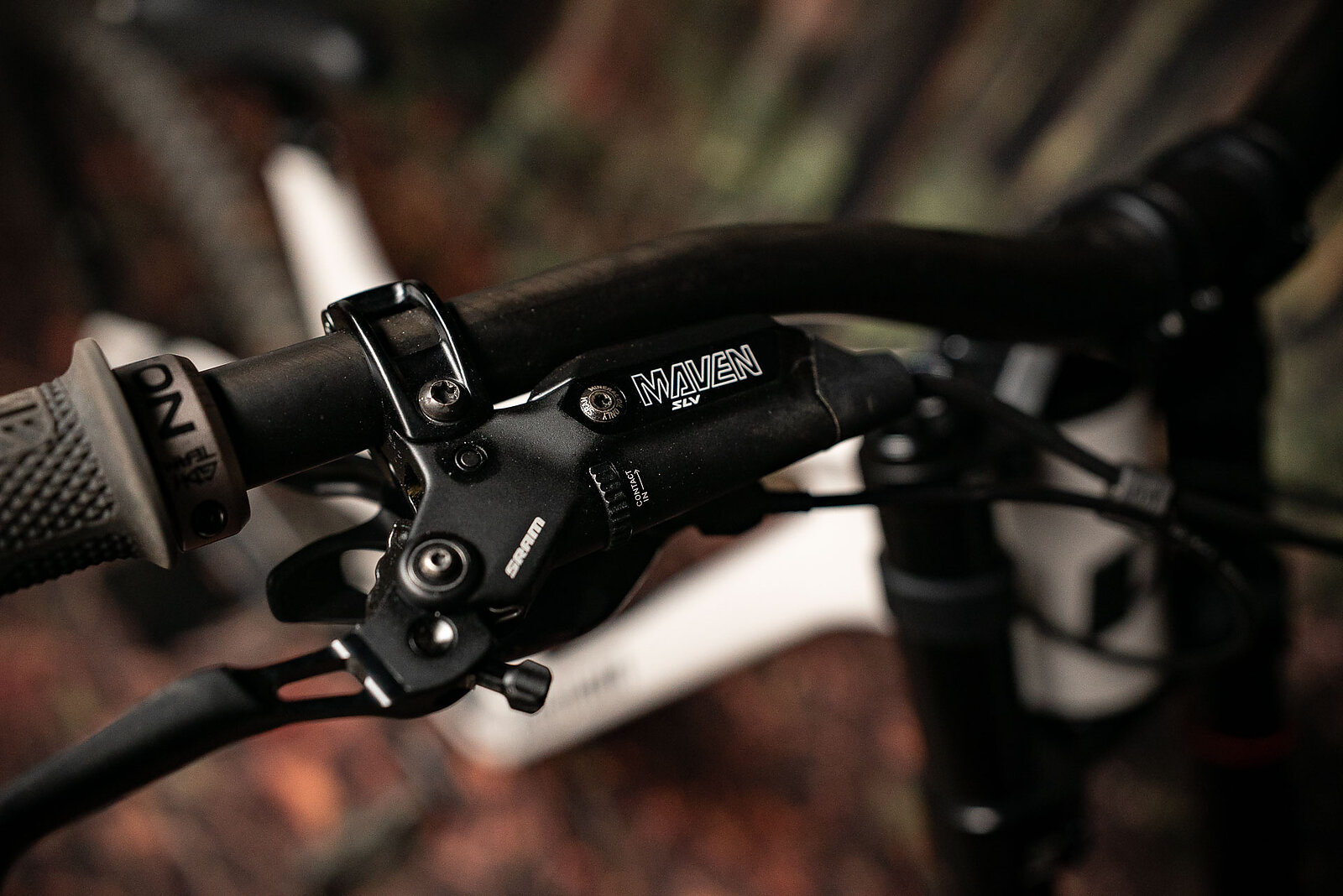
All of Propain’s bikes come with custom builds, so I slapped mine together in the brand’s online bike builder. RockShox handles the squish with the excellent BoXXer and Vivid Ultimate. SRAM handles propulsion with a GX DH drivetrain ( tried and true) and braking with Maven Silver brakes. One warning here—the bike came with organic pads installed, which for my riding at least, don’t cut it. I swapped them out after the first ride and had a much better time. I went with a Schwalbe radial Magic Mary and Tacky Chan combo, both of which have been excellent for Bellingham’s summer riding. I also went with a 50-millimeter OneUp bar, because high hands on a big bike are rad.
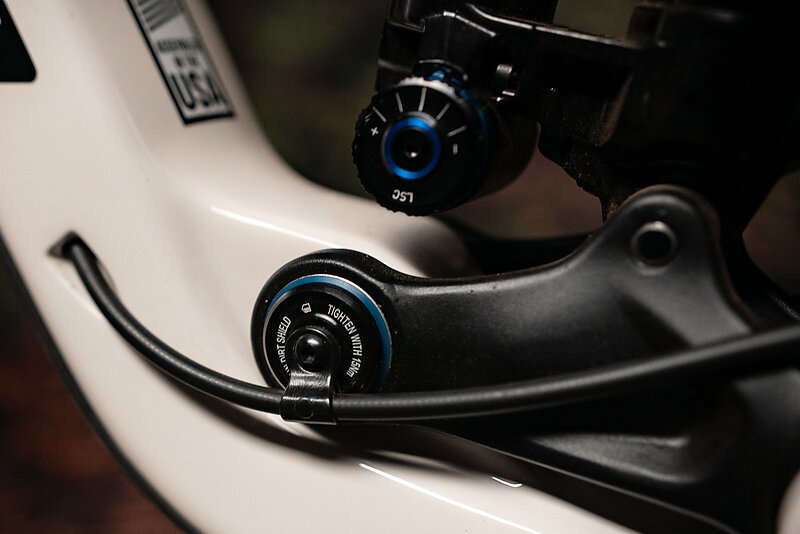
The only option that I didn’t spring for was an Ochain. It’s rad that Propain offers this option, and, as we’ll get into further down, I think it’s a solid upgrade for the Spindrift if you’re trying to build a more plush “DH” feeling bike.
Propain Spindrift CF Dual Crown Geometry
I dove into this in my review of the Orbea Rallon Enduro but the actual axle-to-crown difference between a 180 millimeter single crown fork and a 200 millimeter dual crown one is actually quite small. As such, the Spindrift’s geometry doesn’t change much between the regular and dual crown builds. The head tube angle gets a touch slacker (63.5 to 63.1°) and the reach shrinks a tiny bit (485-481 millimeters), while the stack grows by three millimeters to 639 millimeters. All those numbers, combined with 445 millimeter chainstays in all sizes make for a pretty typical “freeride fit” for my 6’2” frame. All those numbers are fairly similar to my personal Marin Quake, another 180/200 millimeter freeride bike, other than the chainstays, which are 15 millimeters longer, which does have a noticeable (and positive) effect on the ride feel.
Riding the Propain Spindrift CF Dual Crown
I’ve found that jumping on a full-on downhill bike after spending most of my time pedaling around long-travel enduro bikes can feel a little jarring and intense. But bikes like the Spindrift CF go a long way toward making that transition to and from the pedal bike easier. Riding it feels much more like riding a big, beefy enduro bike than it does hopping on some purpose-built race machine. For my riding style, that’s awesome, and I got along with the Spindrift Dual Crown quite well.
The extra smashability of the dual crown fork makes a noticeable difference when the moves get big and steep, or the trails get faster. When I’m pushing into big compressions it’s hard to beat a 200-millimeter BoXXer up front. But, unlike some bikes I’ve put dual crowns on, it feels like the Spindrift’s rear end does a decent job of keeping up with the front. It’s nowhere near the monster truck sensation of a true downhill bike, but the flipside is that the Spindrift is happier to make the most out of side hits, pop out of corners, and generally play around than longer travel bikes. It also has a really nice, consistent, supportive feeling on bigger jumps and berms. The rear end isn’t the stiffest, and when I was really pushing I could feel some lateral flex, but it was never the disquieting, wheel-buzzing kind.
The Spindrift is fairly light, and that really stands out on the trail, it’s super easy to bounce between lines and move around, the word “flickable” comes to mind.
That’s an interesting contrast to the Marin Quake. On paper the two bikes are fairly similar, but the Quake is a fair bit heavier, and the rear suspension feels more biased toward traction and plowing than the more supportive Spindrift. But the Quake’s chainstays are 15 millimeters shorter in their default position. That leads to an interesting sensation where the bike’s geometry feels really “playful” and not that stable. It wants to jam into holes and pop out of them, instead of plowing through them, and I found myself in a “hanging off the back and letting it all hang out” body position on the Marin often. The bike just feels much smaller.
In contrast, I feel better centered between the Spindrift’s wheels, without feeling like I’m losing too many of the benefits of a shorter rear end. It puts me in a safer position to attack steeper trails, and allows me to ride more neutrally.
I did find the Spindrift’s suspension to prioritize support over traction more than I would like, and I’ll probably end up throwing an Ochain on in the future, just to open up the rear end a little and help divorce my feet from the trail better. If I was buying a Spindrift with the intention of riding a bunch of tech trails, I’d definitely go with the Ochain from the factory.
The other advantage that the Propain has over the Marin is that you can set it up as a pedal bike. Propain doesn’t have the best seat post insertion, so I’d probably combine a 180-millimeter post with a quick release clamp, but for rides or trips that involve some pedaling, I wouldn’t hesitate to throw a wide range drivetrain on the Spindrift and get after it. It has a great pedaling platform and feels plenty efficient to eat up bigger days.
The other bike that the Spindrift reminded me of a little was the Orbea Rallon. The Rallon can be set up as a true downhill bike, and in that setting it feels like a bigger, more aggressive stallion than the Spindrift, but in its pedalable guise, the suspension feel is fairly similar, with both feeling more taut and efficient than their travel numbers might imply.
That not-too-agro character makes the Spindrift an appealing proposition for folks who want a big bike, and don’t care about speed. Rest confident knowing that the bike has your back when things get hairy, and spend your energy on trying to make the most of every lip on the trail.
For Now
It’s great to see Propain offering a dedicated dual-crown build of the Spindrift. Big bikes that can be pedal-powered or loaded onto lifts are so much fun, and the Spindrift offers a fun addition to that field.
Learn more: Propain