Specialized Levo X The most ethical e-bike.
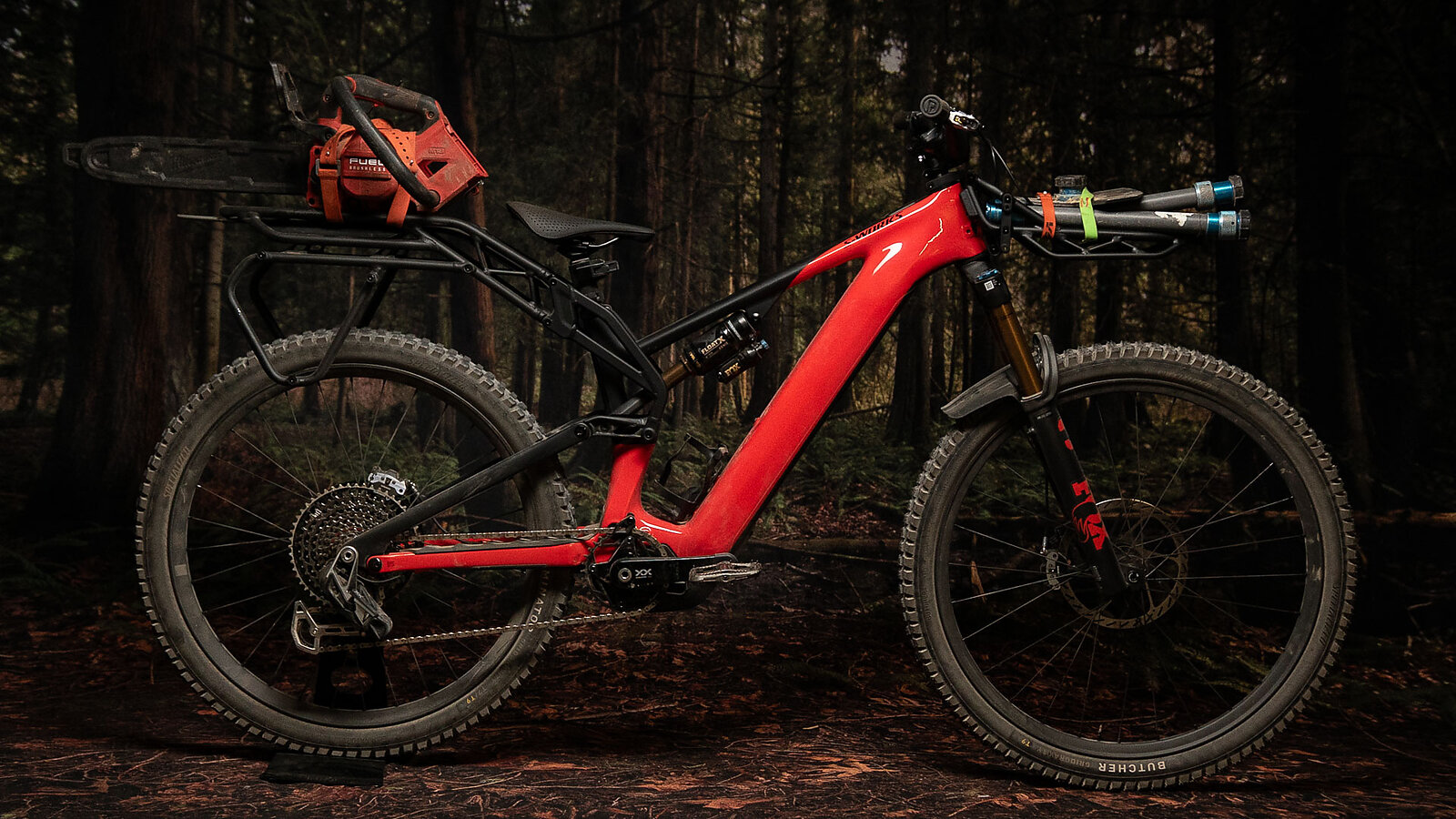
When Specialized dropped the Levo 4 last summer it was actually just the first bike in a string of Levo-themed releases. We got the Levo 4 Alloy, the Levo R, and the Levo Evo before finally coming back around with the subject of this review: the Levo X. The Levo X is, according to Specialized, “the introduction of Electric Overland” with its integrated rack system. The marketing copy for this e-bike was, honestly, pretty cringey. It conjured up images of conspicuous consumption, huge overlanding rigs with their silly traction boards and little ladders, destined for a lifetime of mediocrity in mall parking lots. But, if you can get past that silliness, I think this bike and, more specifically, the rack system it comes with (which is available on its own) is, by far the best, most ethical, most positive-future-painting e-bike I’ve ever reviewed.
In fact, I’d go so far as to say that I wish the Levo X was the only e-bike that existed. So let’s get into why these racks matter, and what I mean by that claim.
Specialized Levo X Rack Details
- Weight Capacity: Front: 10 kg (22 lbs), Rear: 12 kg (26.46 lbs)
- Panier standard: MIK 3-Pin
- Compatibility: Levo 4 carbon and alloy, Levo R, Levo Evo
- Weight: Front: 676 g, Rear: 2,289 g
- Price: Front: $170, Rear: $250
Everything But the Racks
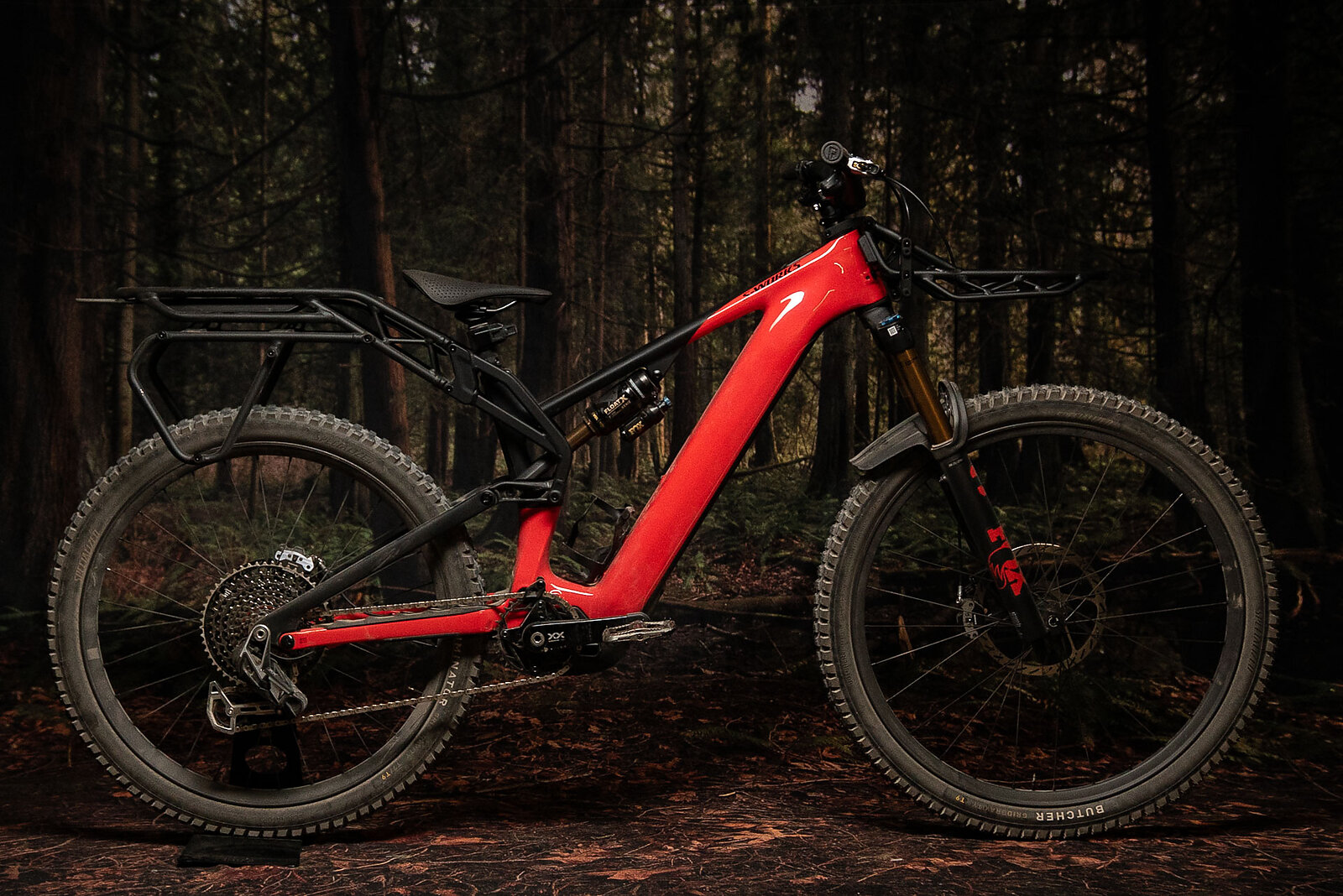
I reviewed the Levo X racks mounted to a S-Works Levo X build carbon bike. I’ve already written quite a bit about the alloy Levo, so instead of treading old ground, let’s talk about why the Levo is such a great platform for these racks.
My review of the regular Levo could be summed up as “not my favorite e-bike to descend on, but at least it’s a very capable hoss, with a bunch of smart features.” And those smart features (the ability to swap the battery with one bolt, the SWAT chamber in front of the battery, the super-dialed app, and the ability to set it up as a Class 3 bike) all set the Levo up as the perfect platform for these racks. It’s a really solid, practical platform.
The Levo S-Works I rode had a few upgrades that made it even better-suited to hauling gear around on those racks. The 220-millimeter HS2 rotor up front helps slow you down when the load is heavy, and the Fox 38 fork delivers more support and a stiffer platform than the 36 found on the Levo Alloy I reviewed. Finally, the DH casing Butcher and Eliminator tires are a great fit for a bike like this.
Mounting the Racks
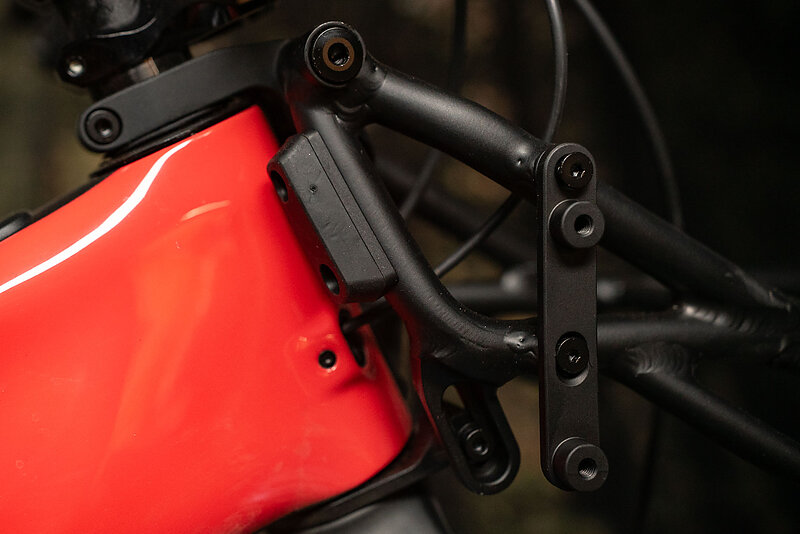
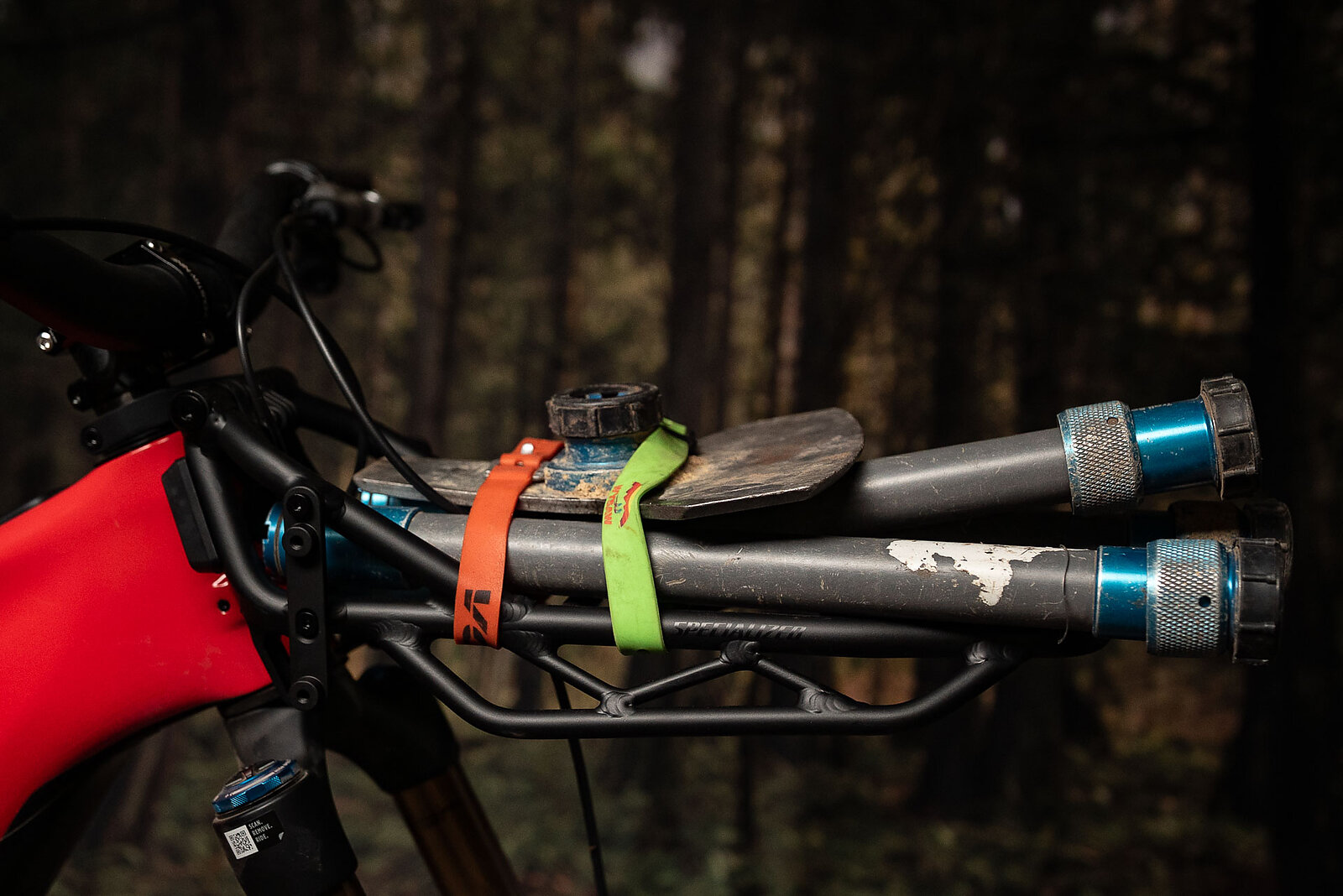
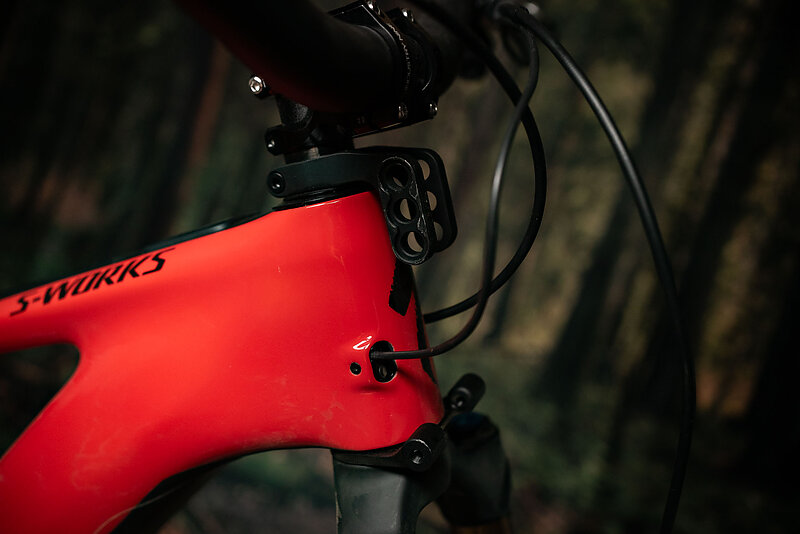
The front rack mounts to a custom crown race and a custom headset spacer. It’s fairly quick and easy to install and remove, and takes just a few minutes using the SWAT tool in the head tube. It’s got an optional mount for a light, as well as two sets of bosses for water bottles.
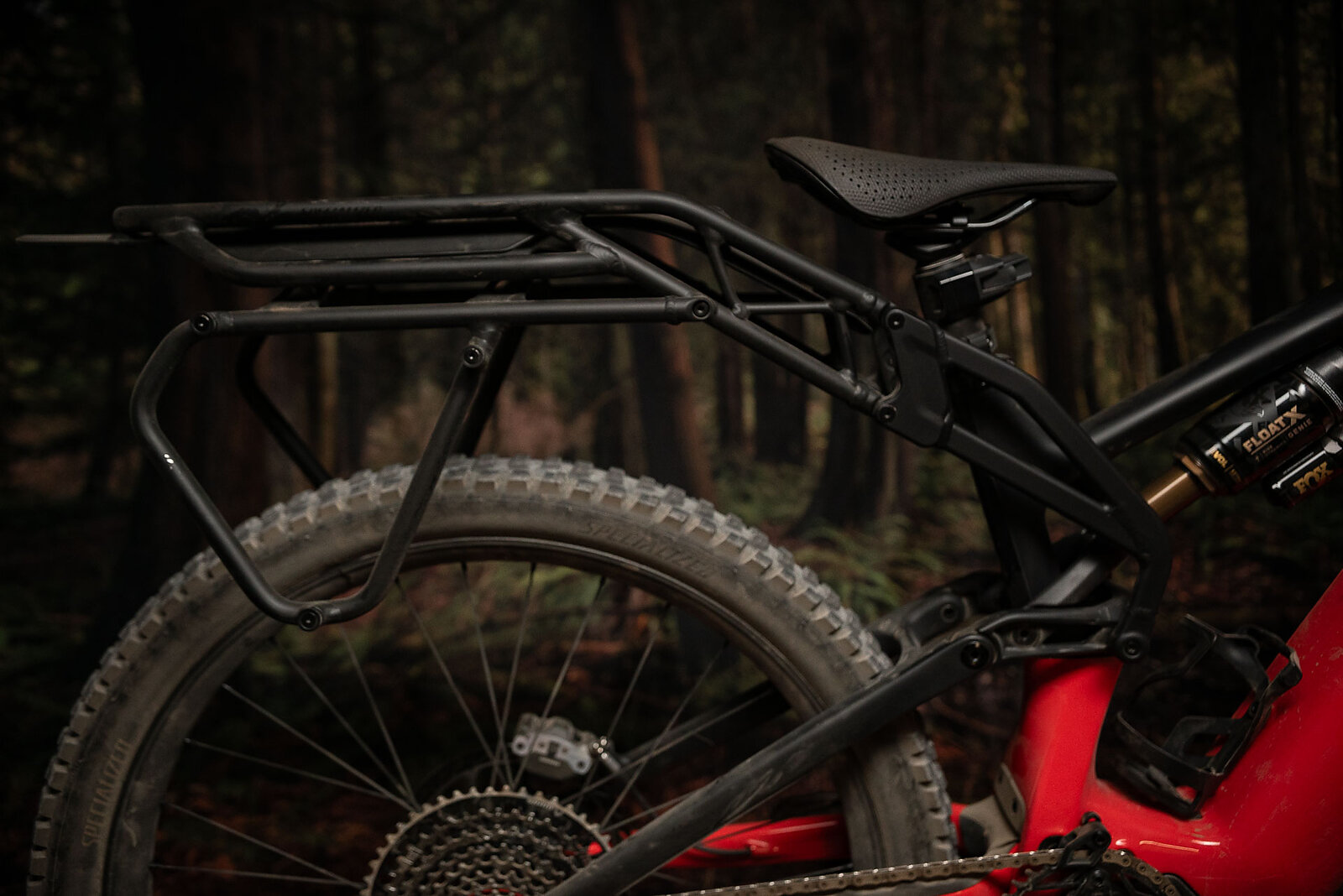
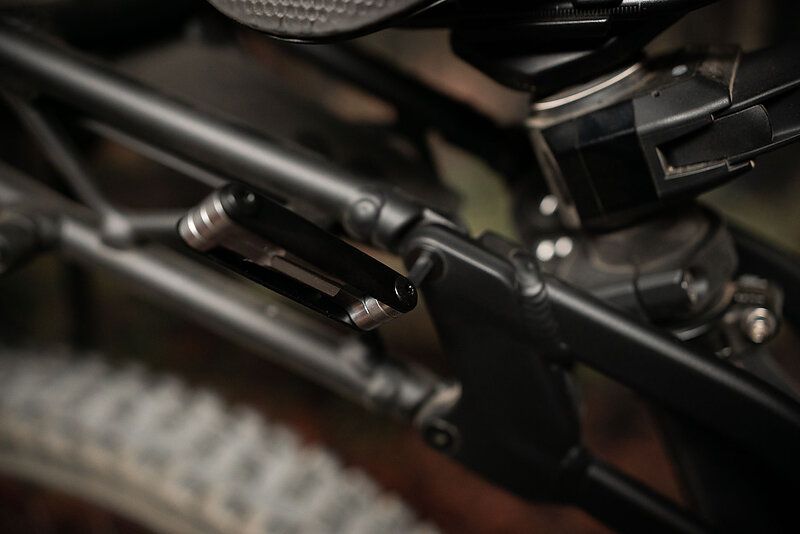
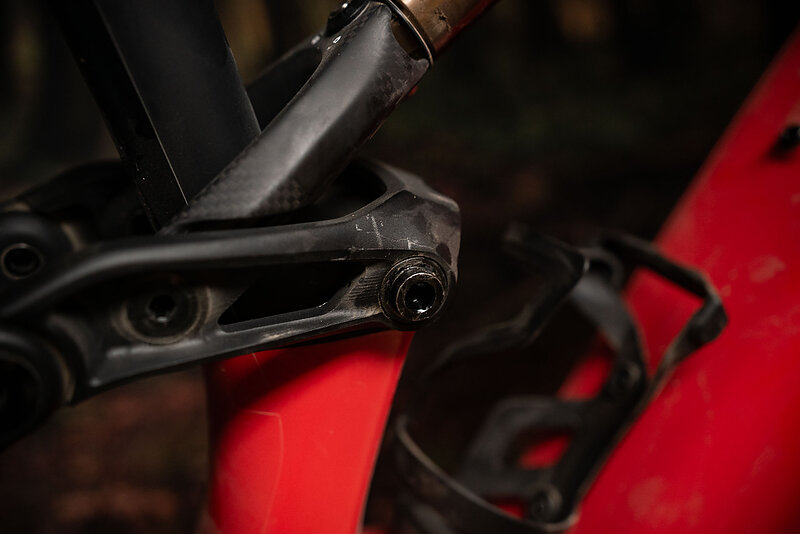
The rear rack is a more involved affair. It comes apart into two pieces, with a “base” that clamps the seat tube, and then bolts through the center of the rocker link. Then, the actual rack part uses four more bolts to lock the long rear rack, fender, and pannier flaps onto that bracket. Users can remove just those four bolts and take most of the rack off or remove four different bolts, and take the whole thing off. I get what Specialized is going for here, but I never found a scenario where it made sense to leave the bracket on, so I’d either fully remove the rack, or fully install it without ever running just the bracket.
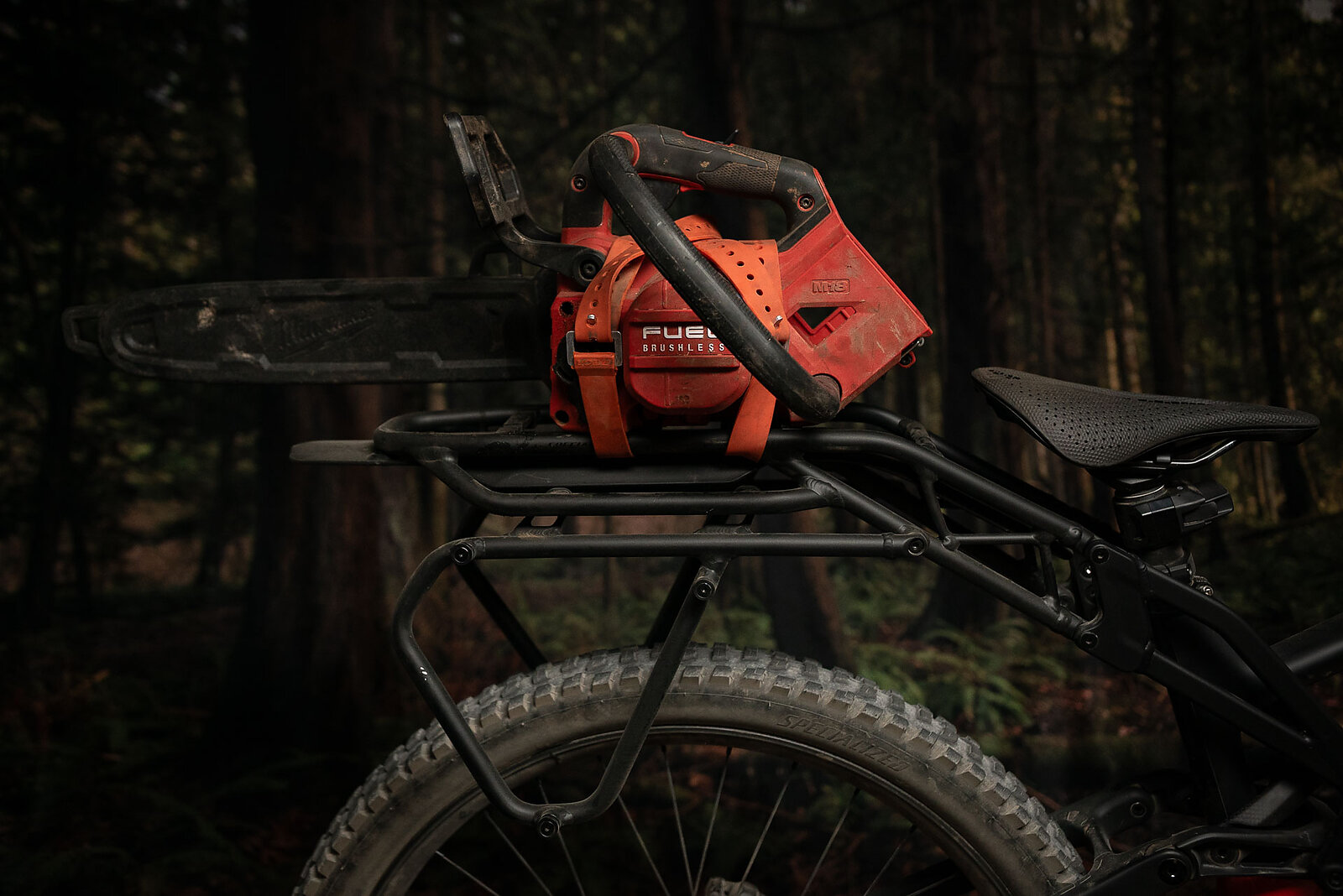
The rear rack takes just a few minutes to install, again with the included SWAT tool. And it’s a full-featured rack. There’s a fender running underneath it, and the top rail has standardized brackets to mount bags as well as pegs on each side to hang quick-release panniers. Somebody obviously put a lot of thought and care into this thing and it shows.
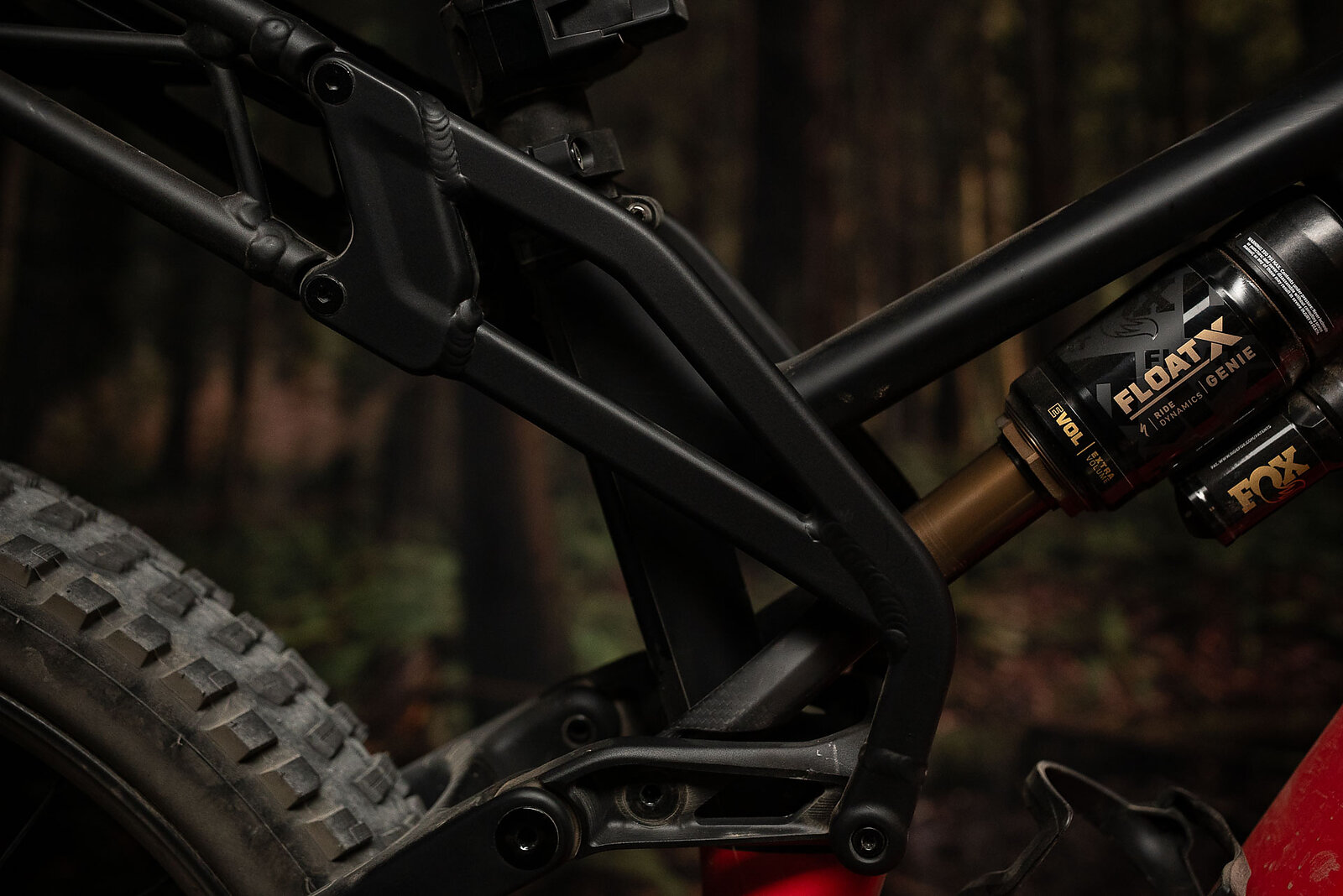
Why Sprung Weight Matters
For the uninitiated, there are two ways to mount gear to your bike: either as sprung weight or unsprung weight. Unsprung weight is mounted “before” the suspension—directly to the axles, or the rear triangle, or the fork legs. This is the most common way to mount loads on bikes. It’s easy to accomplish, it’s easy to build sturdily, and there are a gazillion racks out there that allow you to carry gear as unsprung weight.
Unfortunately I can tell you from experience that adding a bunch of unsprung weight has large negative effects on how a bike rides. Instead of letting suspension smooth out the trail, it amplifies inconsistencies in terrain, making your bike feel significantly less capable and more scary and squirly. It’s tolerable on a hardtail, but less than ideal on a full suspension bike.
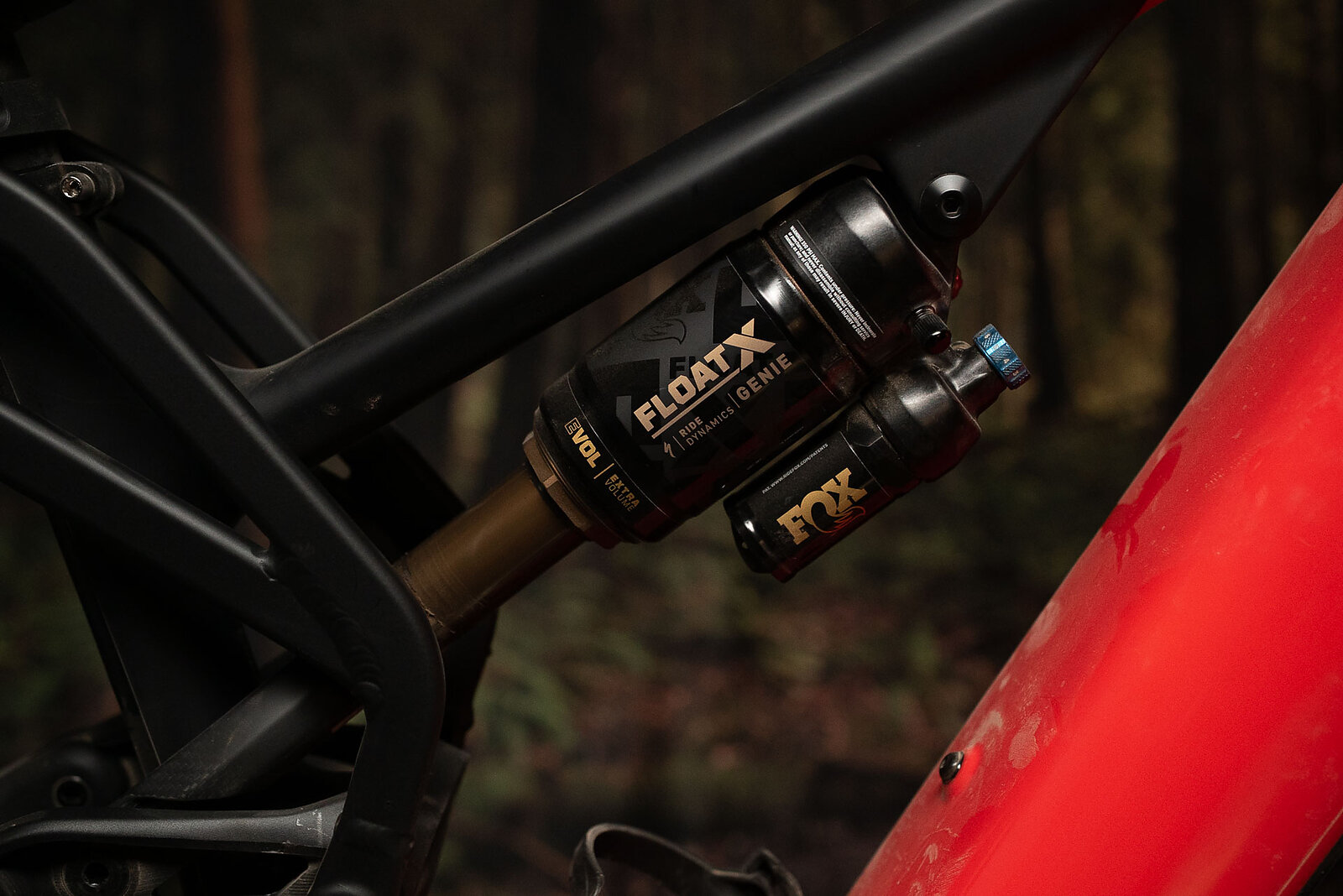
But, the Levo X’s racks jump through a bunch of hoops to carry their load as sprung weight. This means that your bike’s suspension treats it the same as it would a heavier rider. It’s easy to adjust your spring weight and damping to compensate and it makes for a much more predictable and consistent ride. I’m not aware of another unsprung cargo rack with this much carrying capacity, and that’s what sets this rack apart.
Bike Setup
Installing the racks is super easy. Setting up suspension to compensate for the added weight is a little more tricky. Depending on the load, you can easily end up with nearly 50 extra pounds on the bike. I ended up setting up both the fork and the shock according to the manufacturer’s recommendations for someone about 30 pounds heavier than me. I also ran 35-40 PSI in the tires just to make sure they didn’t squirm or pinch. This setup isn’t ideal when you’re riding “naked” or unloaded, but I actually dug the more firm, responsive feel, and I’d much rather be too stiff without a load than terrifyingly squirmy with one.
Capacity and Practicality
On paper, 22 pounds up front and 26 out back doesn’t sound like much but, in practice, it took some doing to get anywhere close to those limits. It’s also worth noting that those limits are for riding the bike on trails. 26 pounds as you’re hammering through braking bumps is quite different from 26 pounds cruising the bike path, and I wouldn’t hesitate to add more weight if I was just spinning around town.
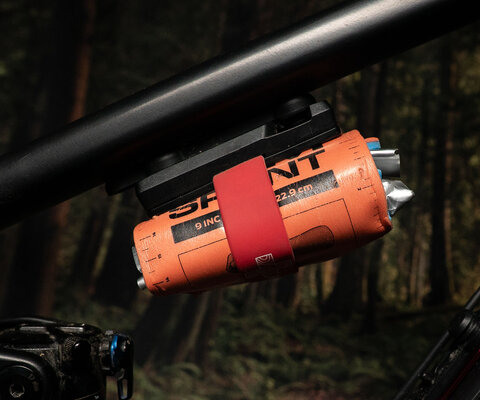
I was lucky enough to review the Levo X while I was working on a perfect project for its talents. I helped rebuild a trail on Galbraith in Bellingham, Washington that had been logged. It’s about five miles and 1,200 feet of climbing from my house to the trail—a chill ride on a meat bike if I’m not carrying a load. But, with a chainsaw, rock drill, handsaw, loppers, three-pound sledge, draw knife, hand chisel, splitting wedges, impact driver, nails, TimberLOK screws, and enough food and water for digging, it’s an absolute slog. I’d have burnt more calories carrying tools in to dig than I would have actually working. Or, I could drive. But that would be stupid.
With the Levo X, I could strap my Milwaukee top-handle chainsaw and its battery (about 13 pounds total), along with a bag of fasteners, chisels, and wedges to the back rack. Up front, I carried my Milwaukee hammer drill and its battery (another 12 pounds), along with the impact driver. Then all I had to carry in my backpack were a few small hand tools, food, and water. I experimented with a few different mounting methods and found that rubber Voile ski straps worked the best to keep things secure and rattle free.
I’ve done a fair bit of time hauling chainsaws uphill in a backpack on foot, on meat bikes, and on e-bikes. For my body, at least, the issue is not the weight of the load, but how long I spend carrying it. My back isn’t great and starts to scream pretty quickly with the saw added to the pack. E-bikes make a big difference here, basically halving the time I spend with that weight swinging around. But the Levo X takes it to another level. It feels absolutely insane to ride uphill on an e-bike without the saw on my back. I barely noticed it back there on the climbs, and I never had to pull over and take my pack off to rest my back.
When the bike is fully loaded, the combined weight of it, me, and the load, is probably pushing 350 pounds. But the Levo’s motor is absurdly powerful, and I never had an issue getting up gravel road climbs or typical blue singletrack climbs. Yes, gear choice matters more than when you’re unloaded, but as long as I could keep the pedals spinning, the Levo X kept the load headed uphill.
Going downhill is another story. With just the saw and some accessories mounted to the rack, the bike feels deceptively normal. Yeah, it’s heavy, but it hides that weight really well. It feels like a really heavy e-bike that corners and absorbs bumps normally. That’s actually quite dangerous if you're not paying attention, because it lulled me into a false sense of security and on my first lap back down from digging I felt good enough to hit a fairly large drop—realizing midair that the saw was right where I usually put my butt when I’m setting up to land. I rode it out—barely—and resigned myself to mostly keeping my wheels on the ground when riding loaded.
On flatter, sanctioned trails, I can ride faster and smoother with the saw mounted to the Levo X than I could with it on my back. It’s much more comfortable and an all-round better experience. On steeper, unsanctioned trails, I’m better off with the saw on my back, just because I need to be able to get further back on the bike than the rack allows for.
Why All of This Matters
I have voiced my skepticism of the moral value of e-bikes plenty of times before, so I won’t go into it too much here, but the more I have to ride e-bikes for work, the more I’m convinced that they’re a fundamentally different and inferior form of recreation to riding a meat-powered bike. However, they’re an absolutely incredible tool for moving through the mountains and cutting down on our dependence on cars. Unfortunately, the industry en-masse seems focused on making and selling e-bikes that perform as bad facsimiles to the human-powered experience—pale shadows of the real thing. The Levo X paints a compelling alternative. Instead of trying to be something it can’t, it answers a different, very real need. It allows riders to carry more into the woods and do more with whatever they carry.
I wish this is the direction all e-bike evolution had headed, instead of focusing on building almost-dirt-bikes with long pegs/short cranks that are meant to be loaded into cars and driven to the trailhead. If the Levo X was the only e-bike on the market, there would be less entitlement, more trail work, and less car trips. Most recreational e-bike rides leave me feeling dirty and a little empty, hyper-aware of the human-powered experience I’m missing out on. In contrast, riding the Levo X home after a long day of trail work leaves me with my cup more full than it’s ever been on a motorized vehicle.
The first time I rode the Levo X, I cruised the bike path home as the sun set, and burst into my house heady with joy. “Babe!” I exclaimed, “I just had the best day ever! I can’t believe I just rode my bike with my saw from home, dug all day, and never touched a car!” I’m a simple man, with a simple hierarchy of needs, and the Levo X scratches my itch to be a contributing member of mountain bike society in a way I never knew I needed.
Who’s It For?
The Levo X took a lot of flack when it launched. Honestly, the whole launch copy and marketing schtick felt pretty out-of-touch with a core mountain bike audience, and the fact that the racks were featured on a $12,000 S-Works build didn’t help. I’m sure there’s a target audience for that bike, but I’m not in it.
Instead, I think pairing the Levo X rack system with whatever flavor of Levo R, Levo Regular, or Levo Evo fits your wallet makes a ton of sense. If I was a professional trail builder, I’d be eyeing the Levo X and figuring out how to mount brackets for a RotopaX system to haul fuel to the dig site.
If I was a regular person considering buying some flavor of Levo versus buying another e-bike, this rack system would absolutely make that choice for me. It transforms an expensive toy into a practical vehicle. Use it to grab groceries, haul packages to the mail, carry your tools out to dig. Heck, you could figure out a mount to tow your downhill bike deep into the mountains or pull your canoe to the lake. Use your imagination, drive your car less, pedal more.
For Now
When I look at an e-bike in the garage, I usually see a one-dimensional object—a toy that lets me do less work on a bike ride in exchange for a worse ride back down. But with the Levo X I see a tool that opens worlds of possibilities. That’s the highest compliment I can give an e-bike.
Learn more: Specialized