2027 Manitou Mezzer LT Pro G2 More travel, more sensitivity.
This has been the summer of updated long travel forks. We got a new 38, a new Zeb, and not one but two new versions of Manitou’s Mezzer. I’m a long-time Mezzer aficionado, the original review fork that I got my hands on more than three years ago still gets regular time in the rotation, most recently on the Zink Bikes Vacay. So when Manitou announced a new Mezzer, and the new burlier, longer-travel Mezzer LT, I was excited to get my hands on the new fork.
Historically, Manitou’s forks have done a really good job of filling in holes and gaps in the existing market. They tend to deliver a slightly different travel/weight/stanchion diameter proposition than Fox or RockShox, which, when combined with the ultra-adjustable, dual-positive air chamber layout, means they often better serve the needs of riders who perhaps aren’t the priority of more mainstream manufacturers. For example, the previous generation Mattoc lived in this cool “more than a Pike, but lighter than a Lyrik” space, and the previous generation Mezzer bridged the Lyrik/Zeb gap really nicely. So going into this review I had high hopes for the new Mezzer. They were mostly met.
2027 Manitou Mezzer LT Pro G2 Overview
- Travel: 160, 170, 180, or 190 mm
- Weight (170 mm, fender, 197 mm steer tube ) : 2,224 g
- MSRP: $1,199

The New Manitou Mezzer
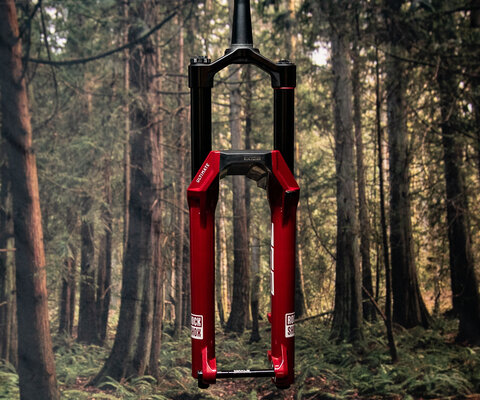
The new Mezzer LT still looks like a Mezzer. It’s still got 37-millimeter stanchions and Manitou’s signature reverse arch which is meant to increase stiffness without bloating weight. But inside there are some changes. The Mezzer LT gets thicker, untapered stanchions which should make it 9.7 percent stiffer fore and aft than the previous gen Mezzer, and 18 percent stiffer in the same direction than the new Mezzer Pro. Both versions of the new Mezzer feature the same “Micromanager” alignment insert which sits inside Manitou’s Hexlock axle dropouts and should allow the fork to better settle itself for optimal bushing alignment.
But the most important changes happened with the spring and damper. The new Mezzer still features a dual-positive design, but Manitou has adjusted the volume ratio between the IRT and main air chambers in an effort to give the fork a broader range of usable adjustment. There’s also a new ASP (Active Spring Piston) which is a small coil spring that suspends the fork through the first few millimeters of its travel. This should allow it to be even more supple off the top before the air spring kicks in.

On the damper side, there’s still a non-adjustable hydraulic bottom out that controls the last 30 millimeters of the fork’s travel to prevent harsh bottomouts, and apparently Manitou put an incredible amount of energy into this new damper and tune. The most obvious change is the addition of a high speed rebound knob, but there’s a lot going on inside as well.
Manitou still uses a bladder-backed damper design, but a bunch of work has gone into its architecture in an attempt to make it more consistent, more reliable, and to make sure that the adjustments can function independently from one another.
The Mezzer keeps the same fender design (I get along with it fine, but some folks might find it too floppy) and the same bleed screws (take care not to cross thread them!) as well as the same awesome, easily adjustable travel feature. This makes it easy to change your fork’s travel without buying a new air spring. Speaking of travel, the regular Mezzer runs anywhere from 140-170 millimeters of travel, while the LT runs 150-190 millimeters.


Manitou Mezzer LT Setup
We’ll talk about Manitou’s setup in general, before we dive into my particular saga with the Mezzer. I would describe Manitou’s setup procedure as easy if you read the instructions, and easy to mess up if you don’t. Manitou’s instructions are great, use them! Manitou’s dual-positive design means that there’s more space to tune in a perfect-for-you spring curve. On the flipside, if you set it up wrong, you can get a more exotic-feeling “wrong” curve than your typical “it’s too soft, or it’s too hard” spring setup. I’d always recommend starting with Manitou’s stated spring pressures, and always making sure to fill the IRT chamber first.
For me, setting up a Manitou fork’s air spring is a two step process. First you set your basic spring weight, and then you can mess with the ratio of the two chambers to dial in the IRT ramp. Typically I’ll tune that specifically to a bike, and how its rear end feels in an effort to get things more balanced. It’s an extra step, but it’s fairly easy to do and it can really pay off, especially if you’re looking for something a little outside the ordinary in terms of mid and end stroke support.
I started out with the Mezzer LT set to 170 millimeters of travel on the Yeti LT. I set it up to Manitou’s recommendations for my weight (210ish pounds), and used Manitou’s guide as a starting place for high and low speed compression settings. On the compression half of the stroke, the fork felt incredible. It breaks into its travel incredibly smoothly, with more perceived sensitivity than any fork I’ve ridden this year, and I really appreciated the mid stroke support that I was able to tune in with that IRT. But, even when fully closed, the rebound was fast for my preferences. Quite fast. So let’s go on an (important) tangent.

Rebound Preferences
Most of my suspension preferences are fairly middle-of-the-road. I get along well with most brands—including Manitou's—recommended starting points. However, as a bigger dude, riding in the Pacific Northwest, I tend to run my rebound slower than average. On Fox and RockShox forks I’m generally two-thirds-ish closed. I still have room to go slower, but I’m on the slow end of the spectrum. That’s how it goes—higher spring rates to deal with my weight plus bigger impacts that I want slow, controlled recovery from, mean that I don’t want my fork to be super quick on the rebound stroke. And the Mezzer LT was super quick.
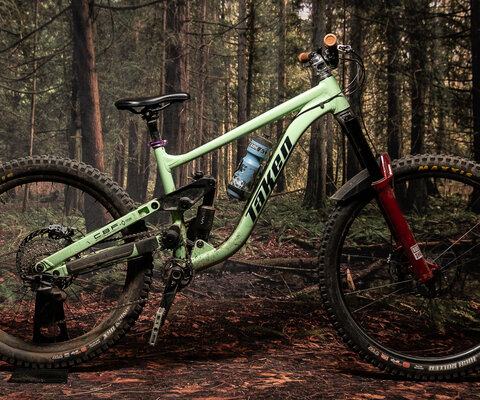
I rode it both at 170 millimeters on that Yeti LT, and at 190 millimeters on the Taken Encounter, and on both bikes I noticed an interesting divide: On super steep trails, I got along with the Mezzer LT just fine. It was supple, supportive, and while the fast rebound was noticeable, it wasn’t problematic. But as soon as it flattened out into more traditional “enduro” territory, the fork felt too fast and uncontrolled. I noticed some top-out clunking, and the fork just felt generally too-active and unpredictable.
That was interesting because on the previous generation Mattoc, I ran the rebound all the way closed, and could have used a couple more clicks, but on the old Mezzer, I was closer to two thirds of the way closed. So I emailed Manitou to make sure there wasn’t something wrong with my fork.
I (and my friends) have dealt with Manitou’s customer service a few times, and it’s been consistently exceptional. This situation was no exception. They were helpful and prompt. I sent the fork back to the folks at Manitou, they confirmed that nothing was wrong with it, and adjusted the rebound tune to a more closed tune they’d tested while developing the Mezzer. Apparently this new-to-me tune was designed for folks who, like me, are heavier and tend toward slower rebound preferences. Ultimately the folks at Manitou say they went with the lighter tune in an effort to "create maximum traction and wheel control for a wide variety of riders." So the rest of these riding impressions will cover my experience with that heavier tune.
If you find yourself in a similar boat to myself, wishing for a slower rebound option, Manitou says: "Any rider who has questions about tuning that our guides do not cover is encouraged to reach out to our customer service team. This includes if the stock rebound tune does not cover their preferences and a firmer (or lighter) tune is needed. We can work with the rider to understand their individual needs and retune the damper or send the necessary shims if they would like to perform the service themselves." That's a rad option for folks looking for something a little different.

Riding the New Mezzer LT
With the new, slower tune, I can find my sweet spot without fully maxing out high or low speed rebound, which allows the fork as a whole to shine. The beginning of the Mezzer LT’s stroke is absurdly supple, and it moves over the slightest undulations in the trail. This makes it feel ridiculously traction-forward, in a good way. But, when you get deeper into the stroke, the air spring allows you to tune in great midstroke support so that it never feels divey or like it’s going too deep into its travel. It’s an interesting sensation of having my cake and eating it too that makes the Mezzer LT super compelling for folks looking for the most active, traction-forward option. I rode some of my steepest trails of the summer, and committed to some of its more hectic moves for the first time on the Mezzer LT, in part because braking traction into big rolls felt so good and controlled, and also because that air spring does a really good job of handling big compressions without ever feeling harsh on the smaller stuff.
Under big compressions, especially when set to 190 millimeters, the Mezzer isn’t quite as solid and stiff feeling than say the new RockShox Zeb, but it’s still notably more torsionally stiff and safe feeling than the Fox Podium. That puts it in a cool place because it’s also quite a bit lighter (almost a pound!) than the Zeb, and it’s one of a very few single crown forks that can go to 190 millimeters. All that to say, the stiffness is totally adequate for me at 210 pounds, and I think most folks will feel just fine with it.

Compared to the old Mezzer, the new LT is radically different. It’s so much more active feeling and is smoother throughout its travel. One of the things I liked about the old Mezzer is that it was very supportive, and I always wondered what the breakdown of that support between damping, spring, and chassis friction was. The new LT makes me think that a lot of it was coming from the chassis friction, because the new chassis is absurdly supple and smooth in comparison. That might be less of a concern here in Bellingham in the summer when traction is abundant, but take me somewhere like the Rockies, or the East Coast, where I’m less focused on support, and more on small-bump compliance, and the new Mezzer LT makes a whole bunch of sense.
This can equate to a feeling of the fork being under-sprung, but, after experimenting with a range of air pressures, I think that’s just because I’m not used to suspension that moves through the first third of its travel so easily. I think I’m getting a similar dynamic ride height to what I’m used to, but that the Mezzer is doing more work and being more active to achieve that. And the more that super supple and active feel matters to you, the more you should be considering a Mezzer.
There's also plenty of space in the Mezzer LT's compression tune to close or open it up on the fly to suit your terrain. While I have mostly been running pretty neutral compression settings (-4 from closed for both high and low speed compression) I've experimented with more open and more closed setups, and I've been impressed by how consistent the fork feels even when the compression is nearly closed. There hasn't been any weird harshness or spiking, and, for bigger jump trails it's awesome to be able to dial in a few clicks of low speed without compromising the fork's performance. Even with more compression damping, the Mezzer stays absurdly sensitive and smooth off the top of its stroke.
That sensitivity, combined with the Mezzer LT’s low weight, reasonable price ($100 less than a Zeb), and massive amounts of tuneability, create an interesting value matrix for the Mezzer. As it stands, I’d happily run it on the front of longer travel enduro and freeride bikes. But I think it makes even more sense for riders with less purpose-built mountain bike trails, with less support, and more of a need for all-out traction. However, if you, like me, prefer a slower rebound tune, it’s worth double checking with Manitou, and investigating tweaking that out of the gate.

For Now
I hold a lot of affection for Manitou as a brand because I think it does an excellent job of filling in important gaps in the suspension market, and its service manuals and adjustability are hard to beat. The new Mezzer LT continues on that legacy with an incredibly active and supple feel, a wide range of travel options, and plenty of stiffness and support for most riders. That’s a winning combination.
Learn more: Manitou