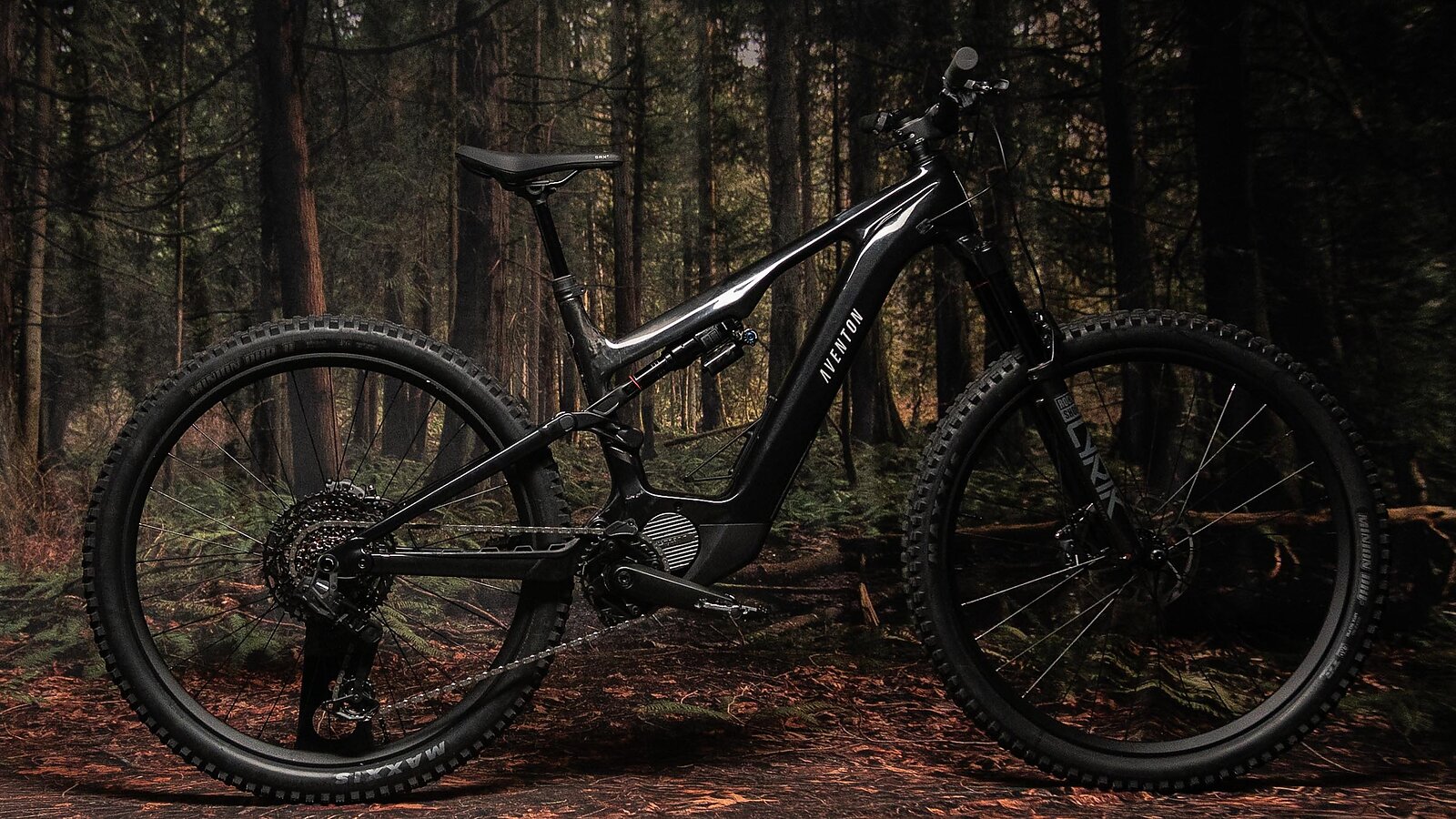
Aventon Current EXP A strong start for a fresh face.
Aventon has, by volume, made an absolute ton of e-bikes though, up until now, none of them have been full suspension mountain bikes. The brand cemented itself as a player in the e-mobility space with a lineup of commuter, cargo, and fat e-bikes. The Current shouldn’t come as a surprise given that Aventon recently announced its sponsorship of freeride legend Brett Tippie. What is a bit surprising, though, is how well—on paper at least—the brand’s first foray into e-MTBs meets the current moment.
Aventon Current EXP Details
- Travel: 140 mm (rear) 150 mm (front)
- Wheel Size: 29”
- Size Tested: Large
- Build Tested: EXP
- Head Tube Angle: 64.6°
- Motor: Aventon Ultro X (850W power, 120Nm Torque)
- Battery: 800 Wh
- Measured Weight: 53.37 lbs (24.21 kg)
- MSRP: $5,999
One of the themes of this review is that in some ways the Current is a fairly “average” bike in relation to the market, while in others it's a major outlier. The info block above is a great example. The weight, geometry, and suspension numbers all feel like really safe bets—stick the top 20 most popular e-bikes into a spreadsheet, average them out, and you have something pretty close to the Current.
But the price and the motor stats for that price are major outliers. The Current is downright affordable in today's market and very powerful, rivaling the S-Works motors in Specialized’s current lineup for almost a third of the price. And that’s for the top-end carbon front triangle, aluminum rear Current EXP. The all-alloy Current ADV is $1,400 less. So, my big question going into my time on the Current was “what compromise, if any, does it make to hit those stats?”
I’ve had a few weeks now of rallying the Current hard on my home trails to form a solid answer to that question.
Aventon Current Motor and Battery
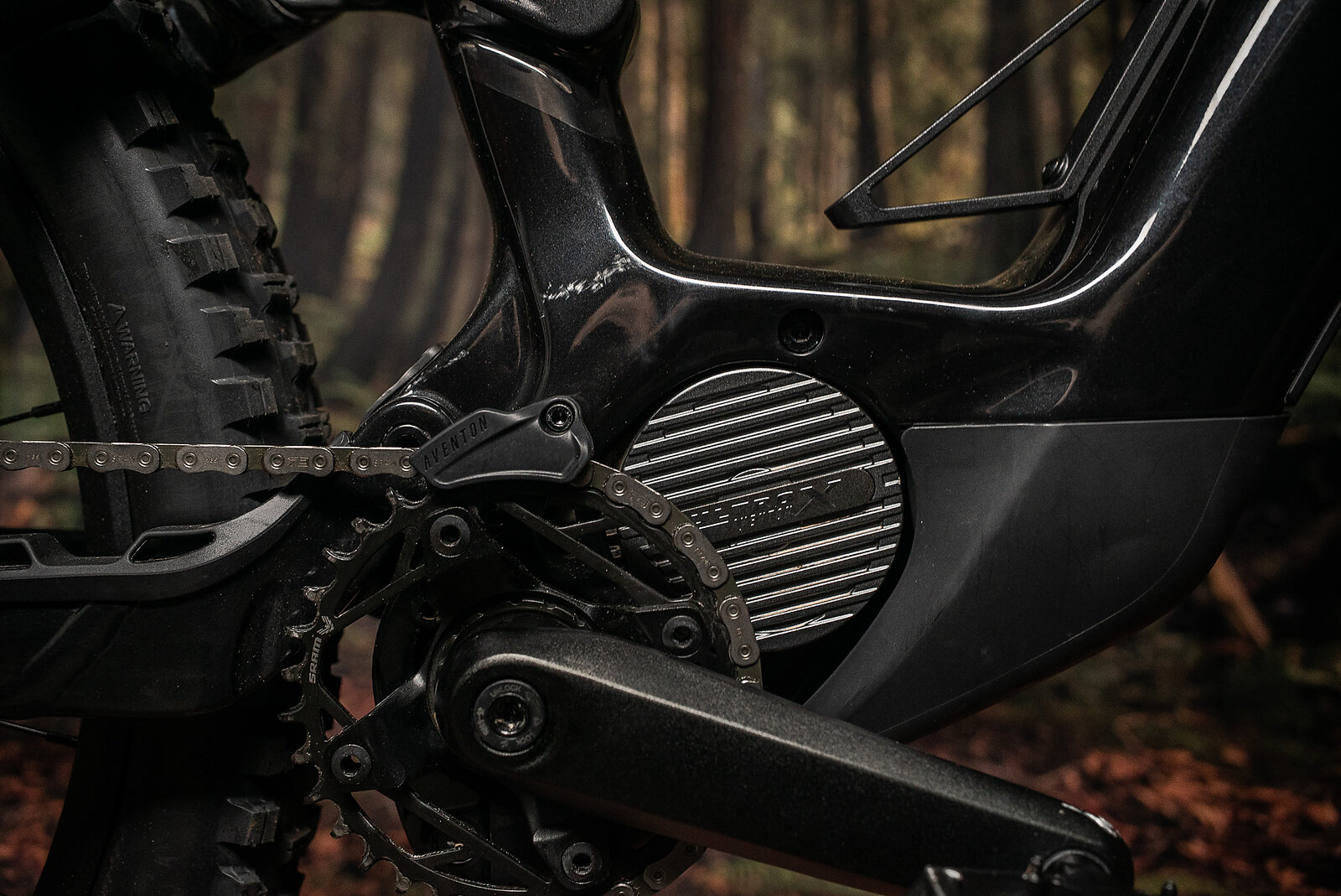
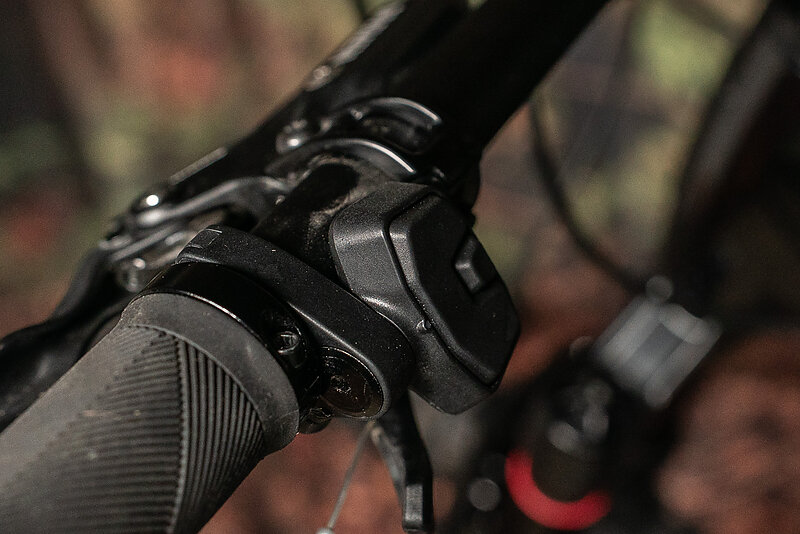
Aventon uses a house-branded motor system called the Aventon Ultro X. It’s very full-featured. In addition to the handlebar remote, it’s also got a touchscreen and a dialed app. My philosophy with e-bikes is that I tend to just hop on and ride them, sticking with the stock power modes and controls until I run into an issue that I want to tune around. The Aventon worked very well out of the box. It’s intuitive and I got along well with the stock power modes but if you want to tweak curves, track your bike’s location, or unlock a 28-mph Class 3 mode, it’s easy to go deep. My one beef here is with the handlebar mounted remote. It feels really cheap and takes up a bunch of space on the bar. I had to do a fair bit of fiddling to get it to a comfortable place with my controls and I’m worried that I’ll accidentally break it off with an errant knee. It’s a totally acceptable remote for a commuter bike, but not great for a mountain bike.
The battery is easy to remove with just a few bolts. It’s not quite as fast to swap as the current Specialized system, but it’s totally reasonable to do in a parking lot. Battery range is a huge can of worms and most of my testing happened in the cold and wet which is especially bad for battery life, but I got similar range out of the Current as I did with the Specialized Levo R in similar modes and conditions.
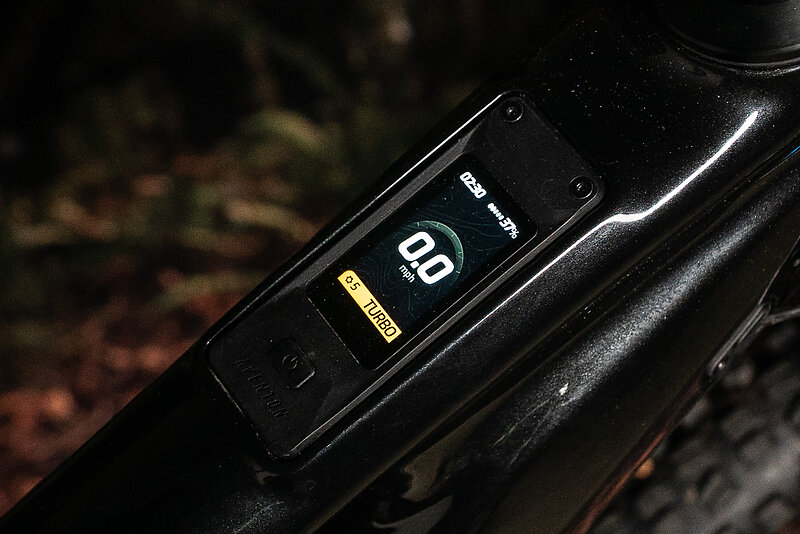
The motor is good. Really good. In my ride-notes from the Aventon I wrote: “It feels like Aventon figured out the 'e' part of e-bike and then built the bike around it.” The Ultro X delivers power very smoothly, with an intuitive overrun. It feels very similar both in terms of power, and fluidity of power delivery to the current Specialized system, which is a huge compliment. It’s a little smoother, and noticeably more powerful than the Bosch Gen 5 Race system, although, out of the box, Bosch’s Race mode has noticeably more overrun on tap.
I tend to run e-bikes in their most powerful mode all of the time, but the Current EXP only allows Boost in 30-second bursts. That actually worked out perfectly for me though. It was just enough to help me blast through techy sections and then relax back into a more normal cadence.
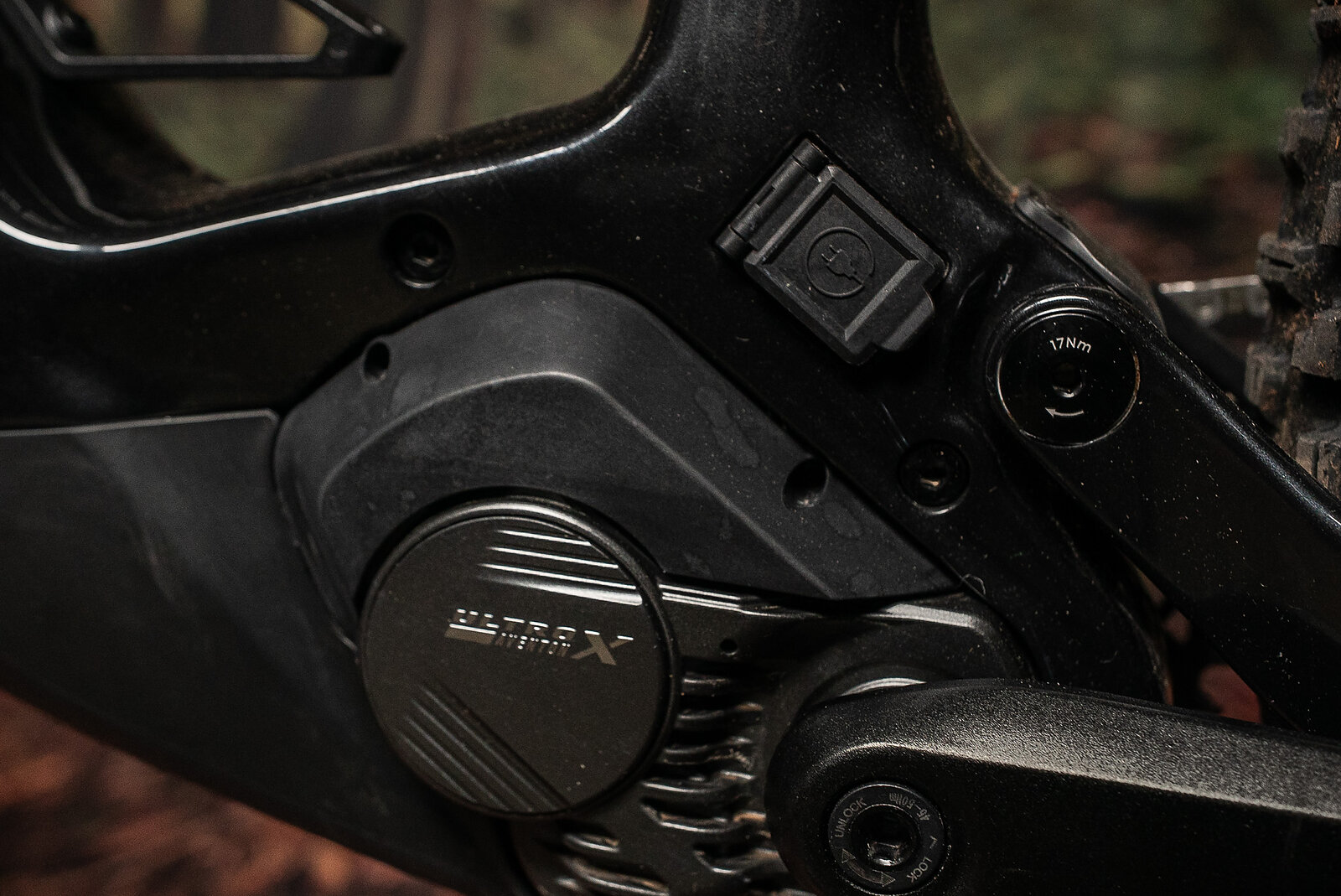
Performance wise, this motor and battery system is right up there with the current class leaders. That said, it did have more clutch rattle than the Bosch and Specialized motors I’ve ridden recently. It wasn’t the end of the world but it was noticeable. The other thing I noticed is that the Current’s charger port felt more fragile than any of the other e-bikes I’ve ridden recently. The door feels flimsy, the cable and charger itself don’t feel very durable, and it doesn't charge the bike super quickly. I didn’t have any issues, but I can imagine shearing this charger cable off in the port pretty easily if you’re not careful.
Aventon Current Geometry
As I mentioned up top, the Current has very normal geometry for this travel bracket. The 64.6° head tube angle, and 76.6° seat tube angle are right on trend. The size Large I reviewed has a 475.3-millimeter reach, 634-millimeter stack, and 445-millimeter chainstays. Again, none of those are weird or outrageous in the least, and I was able to hop on the Current and feel right at home out of the gate.
The geometry, or more specifically, the geometry options, are a place where Aventon saved money. Good geometry is free, but adjustable geometry is not. Compared to bikes like the Specialized Levo, or Pivot Shuttle LT, the Current doesn’t have any stock options to mess with geometry. It does have a ZS56 headset, so you can buy cups to play with the head tube angle or reach if you desire but, honestly, the bike’s stock geometry is good enough that I wouldn’t be tempted.
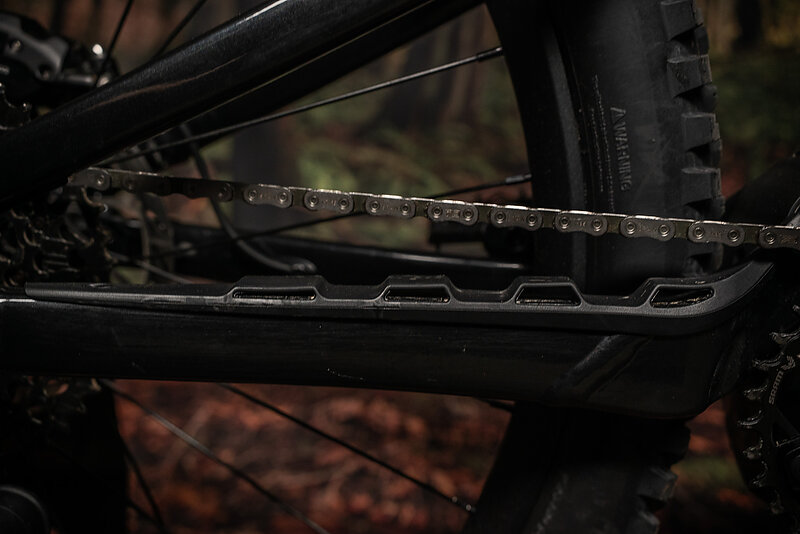
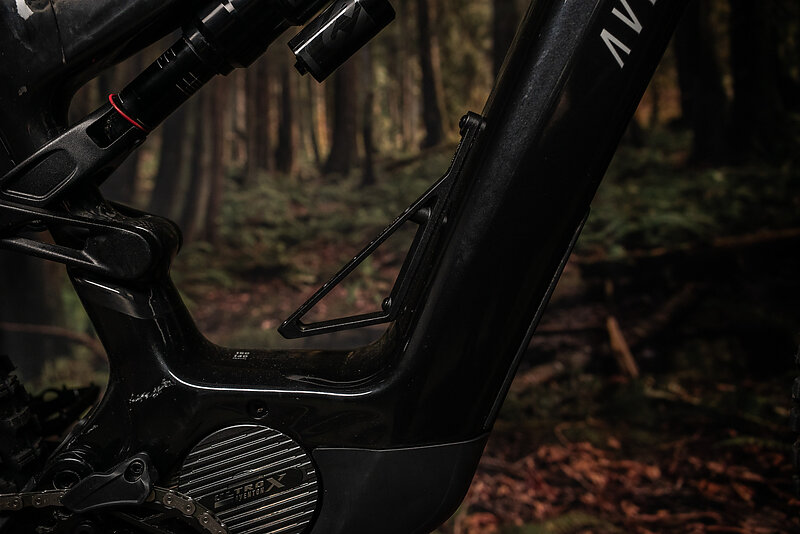
Here, again, the Current’s standards are all quite normal. It’s got a 148-millimeter wide rear hub, a 31.6-millimeter seat tube, the aforementioned ZS56 headset (without any cables running through it), and native 180-millimeter post rear brake mount. That’s not to say that there’s nothing interesting going on here though.
The Current ships with a bottle cage riser, which helps keep the bottle from fouling on the frame. You can also run a bottle cage on the down tube like normal, but in either direction, bottle fitment was tight on my size Large and I’m not optimistic about fitting a normal bottle on smaller sizes.
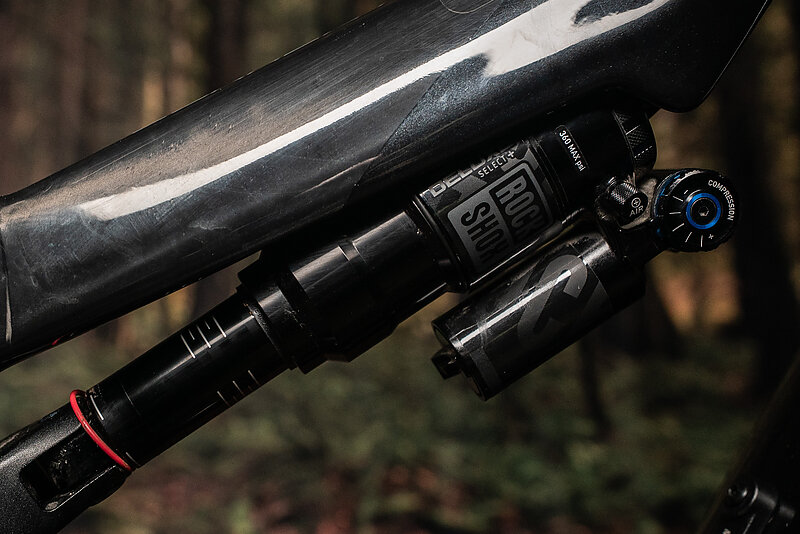
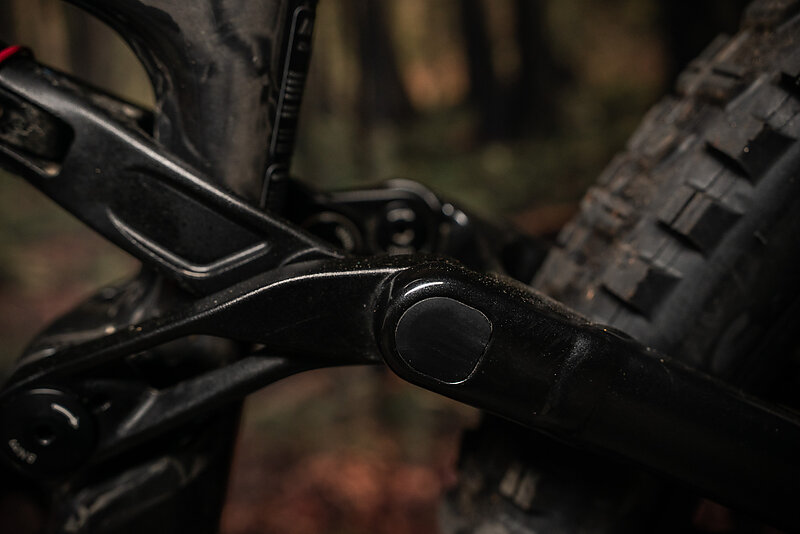
Most of the Current’s pivot bolts are accessed from the inside, which is fine, but does mean a trailside bolt check takes longer, especially since you’ve got to pull the rear wheel to tighten the chainstay pivots. It does make for a sleeker look though. And the Current’s shock lives in a little shrouded ditch in the top tube, which means you’re limited in fitment. Aventon says not to run a coil, and I’d be careful with anything larger than the stock Super Deluxe.
All of the Current’s frame details work just fine, they just don’t feel quite so refined and dialed as, say, a Pivot. That’s not necessarily a huge deal, and how much that matters to you is a very personal question for you and your wallet.
Aventon Current EXP Build
The Current’s build is quite interesting. I’ll preface this section with a disclaimer: you could totally buy the Current EXP and run it stock (maybe swap out the tires and grips) and have an awesome time. For the price, this value is great. But part of my job is really examining the parts specs bikes ship with, and this is one of the most interesting combinations of parts I’ve seen in a minute, so I’m going to go deep.
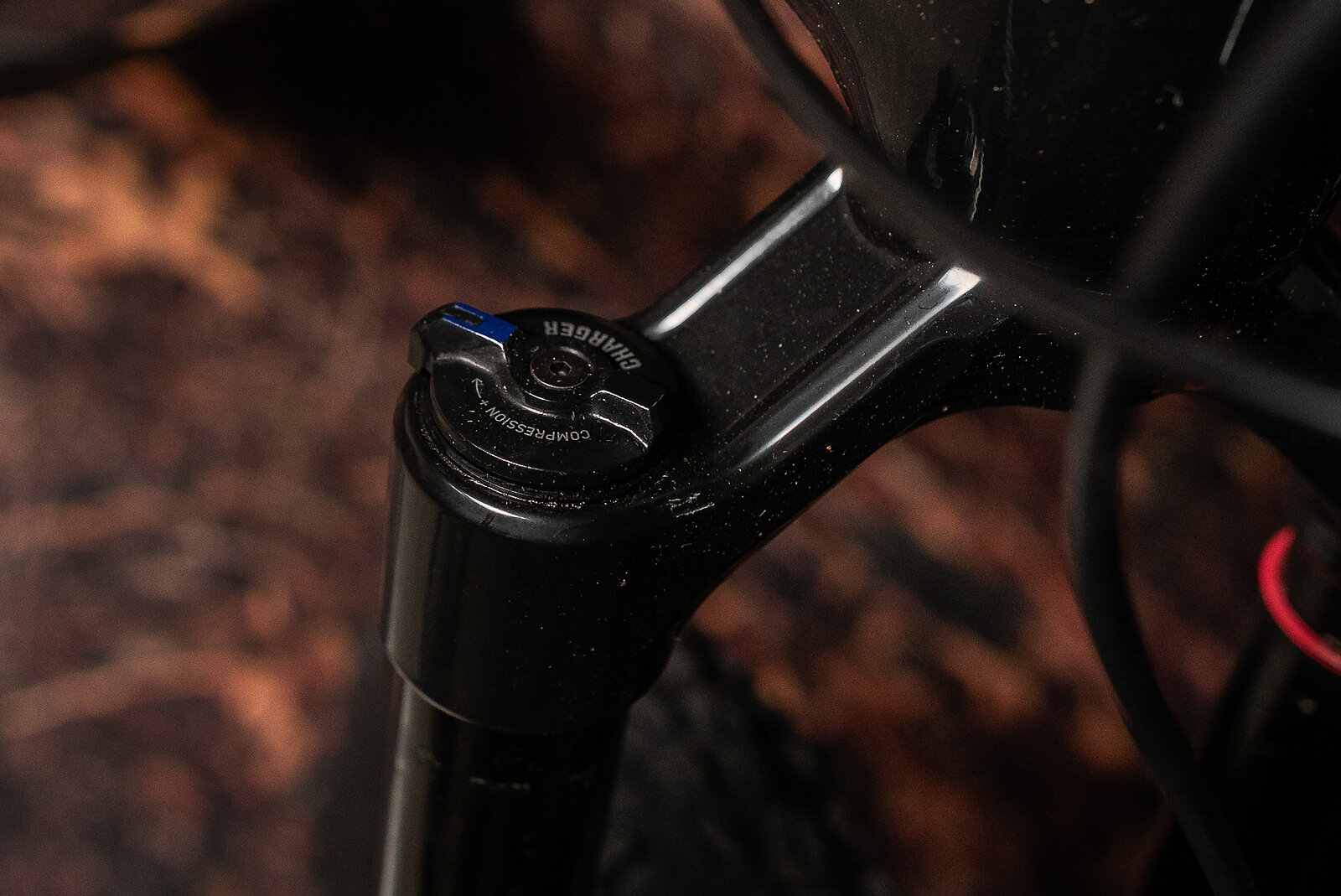
It comes stock with a nearly top end RockShox Super Deluxe Select+ and a nearly bottom-end Lyrik Base. I really wish those priorities were flip-flopped as most riders will notice a nice fork more than they notice a nice shock. I was able to make the Lyrik work reasonably well but I ended up with much more than the suggested air pressure, along with running both rebound and compression completely closed and adding two volume spacers over the stock zero.
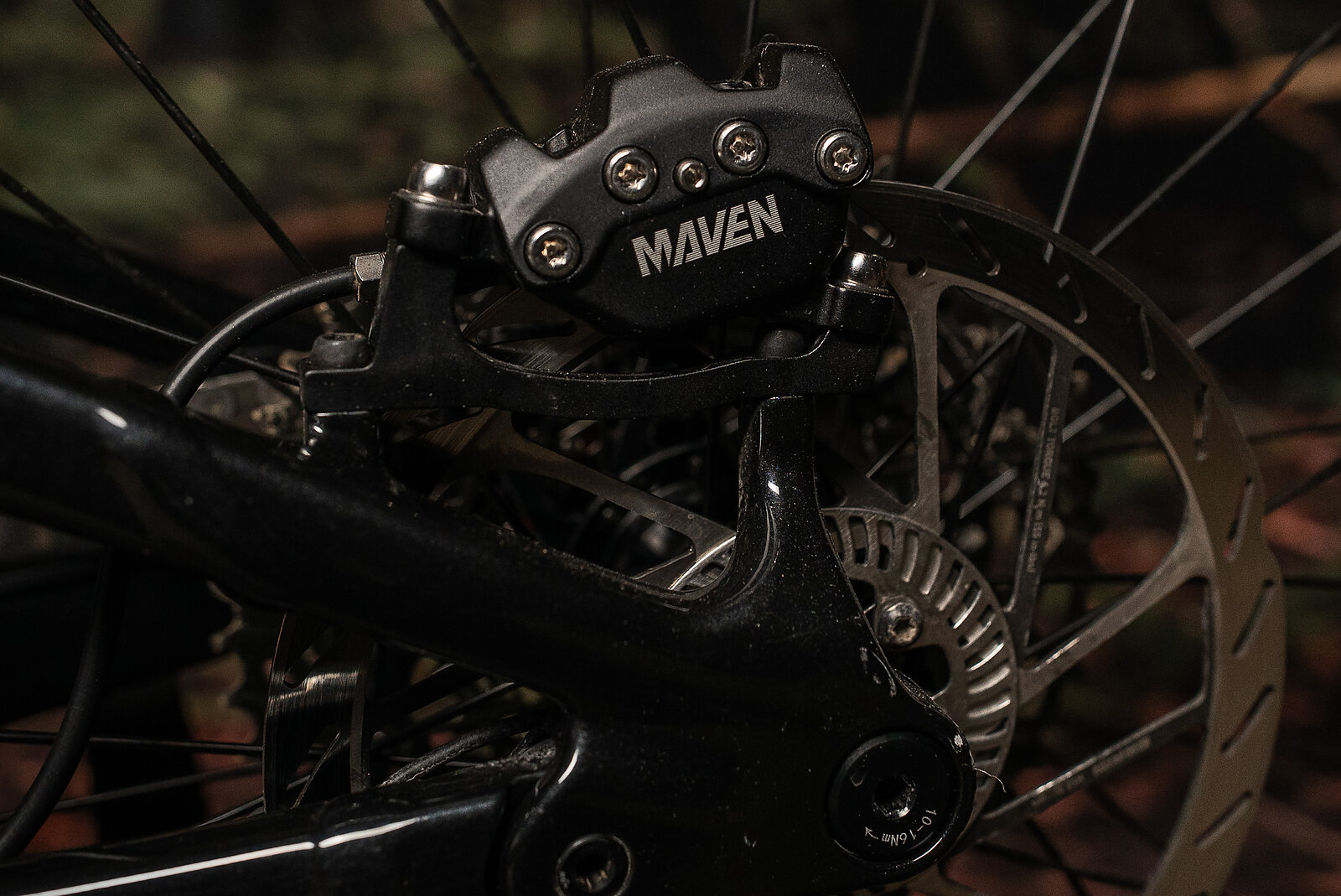
SRAM’s Maven Base slows things down. The Maven Base is a quite good brake, but I’ll split ways with the rest of the mountain bike press and say that I prefer the more affordable Bronze’s lever feel and power delivery to the more light and gushy Base. Yes, it’s lighter, but I still prefer the Bronze. Luckily SRAM makes plenty of choices here, and I think most folks will dig the Base.
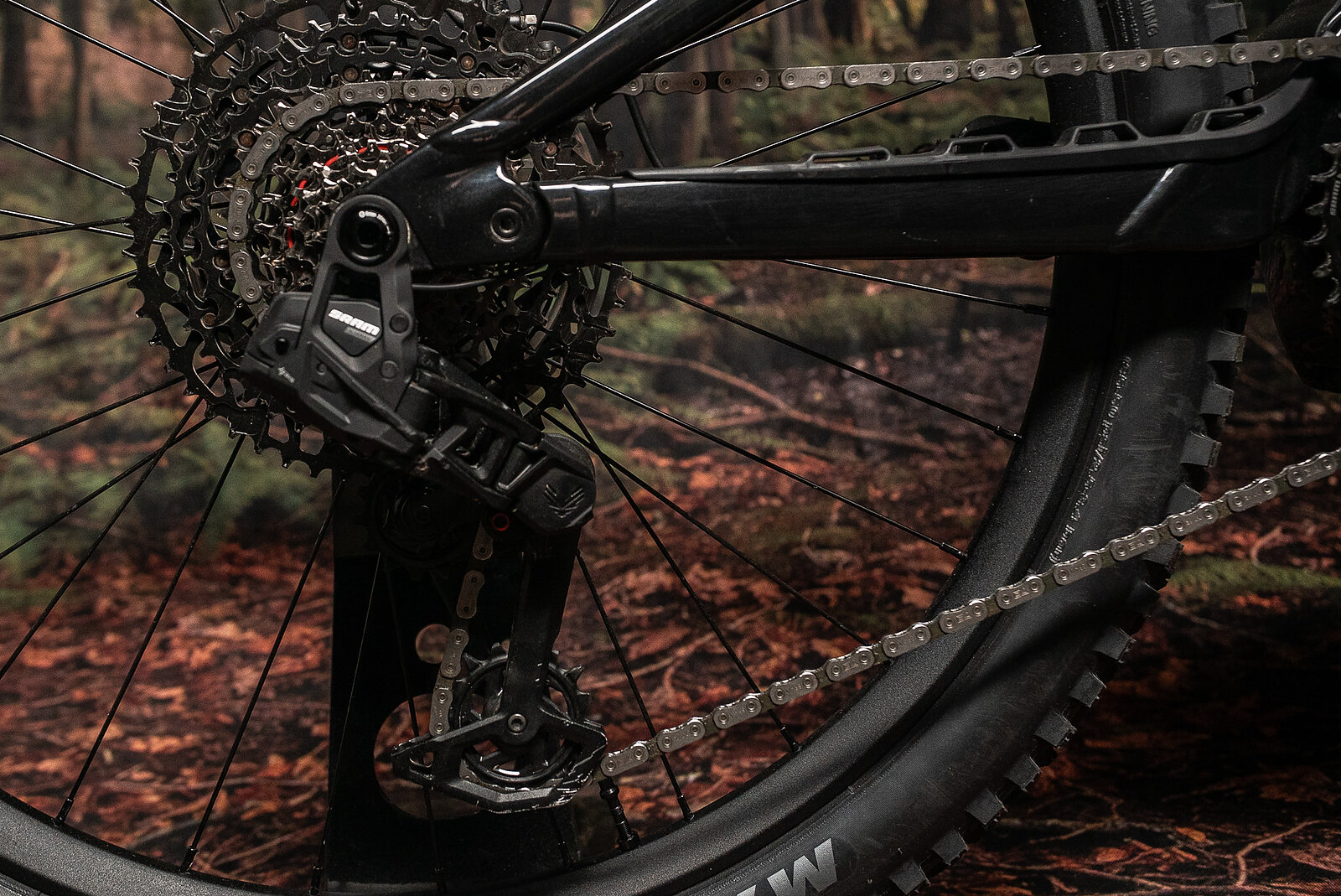
SRAM’s S1000 Transmission drives the back wheel. This drivetrain is super interesting. It’s not available on its own and only comes on complete bikes. It feels, to me at least, like an awkward transitional option from before SRAM made cable-driven Transmission. It pairs an almost-GX wireless derailleur with a more affordable two-piece cassette that runs on an HG driver body. That means if you want to upgrade to a lighter cassette, you’ll also need a new driver body or hub. I’d prefer to just get Eagle 90 since it’s lighter and more rebuildable, but I get that folks like electronic shifting. And the Current does ship with the derailleur directly wired to the battery which is nice.
The Current comes with no-name wheels, stem, and handlebar, and they performed about as well as you’d expect. The wheels could use a true after a few rides, and I may have already bent the handlebar a little. I’d swap in my own cockpit immediately. I don’t like cheap cockpits because dental work is expensive, and this cockpit had me thinking about the fine folks at Barkley Boulevard Dental Care more than I would like.
The Current ships with a 170-millimeter X-Fusion dropper post on the size Large. That’s pretty short for the current times, and the stock dropper was sticking and almost impossible to drop within the first 10 miles of riding. After I pulled it apart, cleaned, and greased it, it ran a little better.
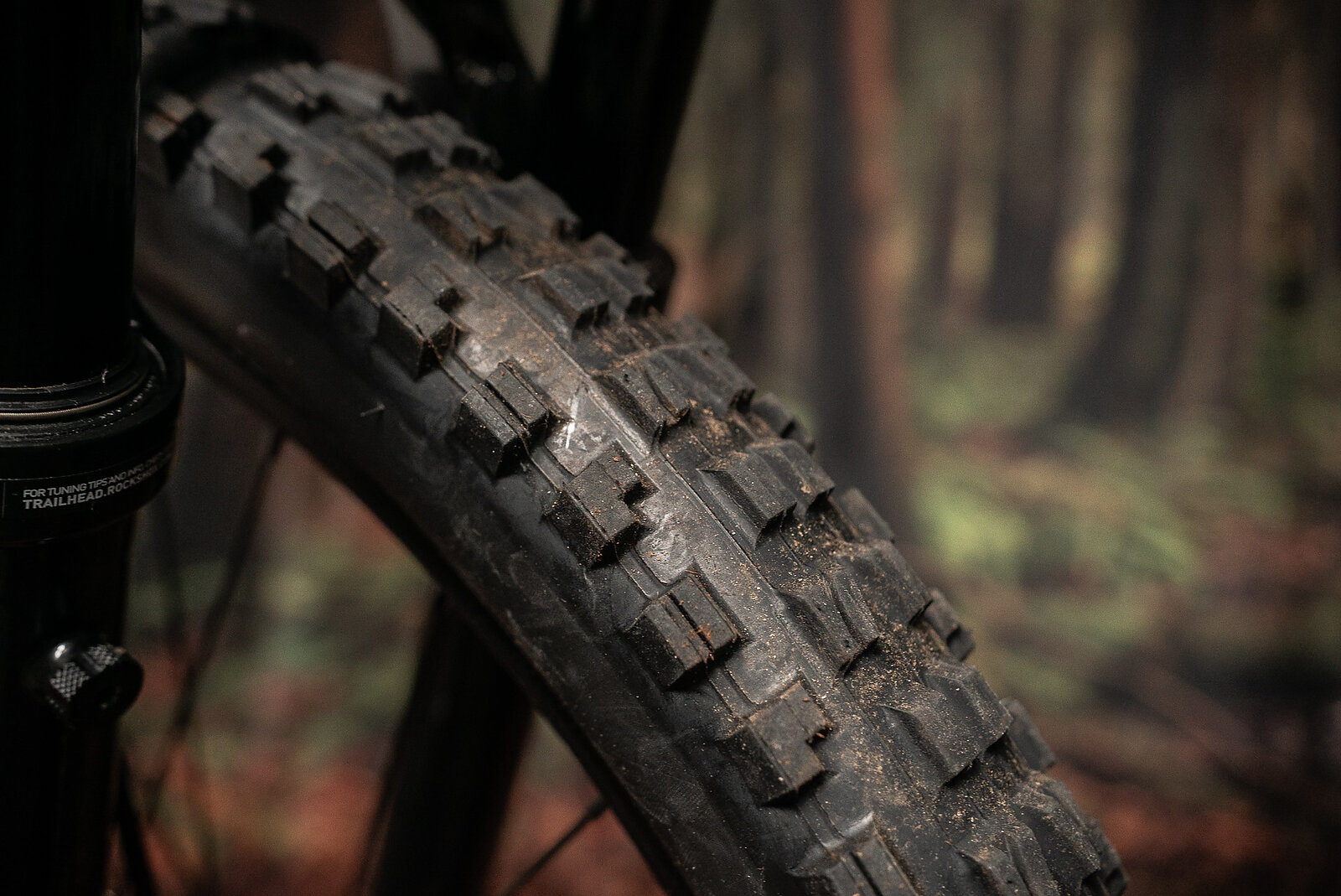
Finally: the tires. The tread patterns (DHF and DHRII) are appropriate, but the casing (EXO) and compound (dual) aren’t. Not a big deal, but expect to swap these out immediately if you plan to ride this bike on real trails in any sort of weather.
While I was riding the Current I kept imagining myself as the product manager. Could I afford better tires if I went with a mechanical drivetrain? What would it take to make the cockpit feel less cheap? What if the fork was a Select Plus and the shock was a Base? The value matrix of the Current is quite interesting. I think it makes sense for two types of customers though: existing Aventon customers who just want their first e-MTB, and aren’t super discerning, and folks who see the value of buying a complete bike and then gradually upgrading most of the components. For the price, that second route makes a fair bit of sense. You could put together a pretty balling Current for less than the price of most other e-bikes.
Riding the Aventon Current
Out of the box, the theme for the Current was “this motor is really good, these parts are not set up right, and thus I can’t really tell what the bike is doing.” The stock cockpit, tires, and fork really held it back. But once I swapped out the bars and grips, put new tires on it, and added air, spacers, compression, and rebound damping to the fork, it made a lot more sense.
Going uphill this is one smooth and powerful ride. The combination of solid motor and neutral geometry make the Current a very fun bike to climb technical singletrack on. It’s not the absolute most glued to the ground, traction-heavy e-bike around, but it’s one of those bikes that’s fun to carry a high average speed with, just pushing through terrain quickly. Yes, it can haul up a fireroad, but I found myself looking for singletrack climbs instead because the Current makes them fun and engaging.
Headed downhill, the Current EXP is, again, pretty neutral. It falls squarely into that jack of all trades, master of none category. It’s easy enough to loft of jumps, but it didn’t leave me searching for every sidehit. It can handle more technical trails and bigger moves if you upgrade the tires, but it doesn’t have the most precise and capable feeling chassis and suspension in this class. It doesn’t generate as much traction as the Specialized Levo, but also doesn’t have as defined and predictable of a platform to pump and push into. I rode a pretty wide variety of trails on the Current EXP, from steep and techy with bigger compressions, to rolling singletrack, and it handled them all fine without ever feeling like it had a specific niche where it excelled. This is a really “neutral” bike, which means it’s a good blank canvas to tweak to suit your riding style and terrain.
The two most similar e-bikes I’ve ridden recently are the Specialized Levo R and the Pivot Shuttle AM. The Current doesn’t have the super playful party mentality of the Levo R, or the tight and composed feel of the Shuttle AM. Both of those bikes feel more refined, more targeted, more sure of who their intended audience is. I don’t think that’s just because of spec choices either. The Current’s chassis feels more flexy and less precise than either of those bikes, and its weight distribution feels less balanced. It’s not a huge difference, but it’s there.
All in, we’re talking fairly tight margins here—things that plenty of riders might not notice, or, might even prefer. And, again, you can buy a Current for significantly less than half the price of either of those other bikes.
For Now
Aventon’s first foray into the world of electric mountain bikes is impressive. The motor and power system in particular stand out in terms of power and refinement. The Current EXP’s spec isn’t the most well-rounded, but its price makes it quite easy to justify upgrades down the road. That means the Current EXP is a great first e-bike, either for someone new to mountain biking or for a more experienced rider looking to electrify their experience.
Learn more: Aventon