Pivot Shuttle LT Long-Term Review Long-hauling on the LT.
When Pivot released the latest version of the Shuttle LT I was ready for launch day with my initial review, based mostly on time spent on the trails it was designed on, and for, around Phoenix. But, since then, I’ve been riding the Shuttle LT on my home trails here in Bellingham, so it’s time to weigh in with a long-term durability report, as well as updated impressions based on the significantly wetter miles I’ve been putting on the Shuttle LT.
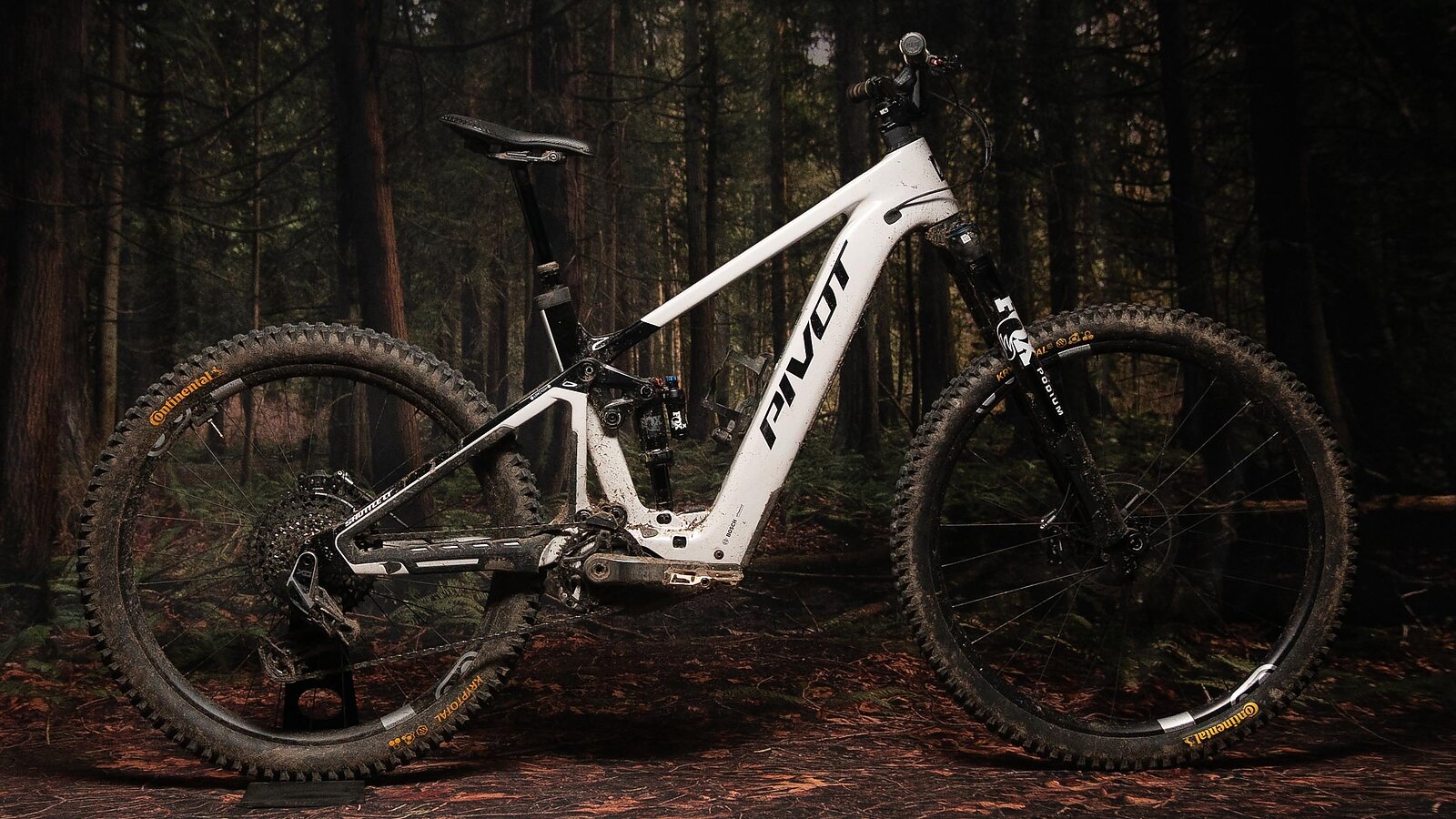
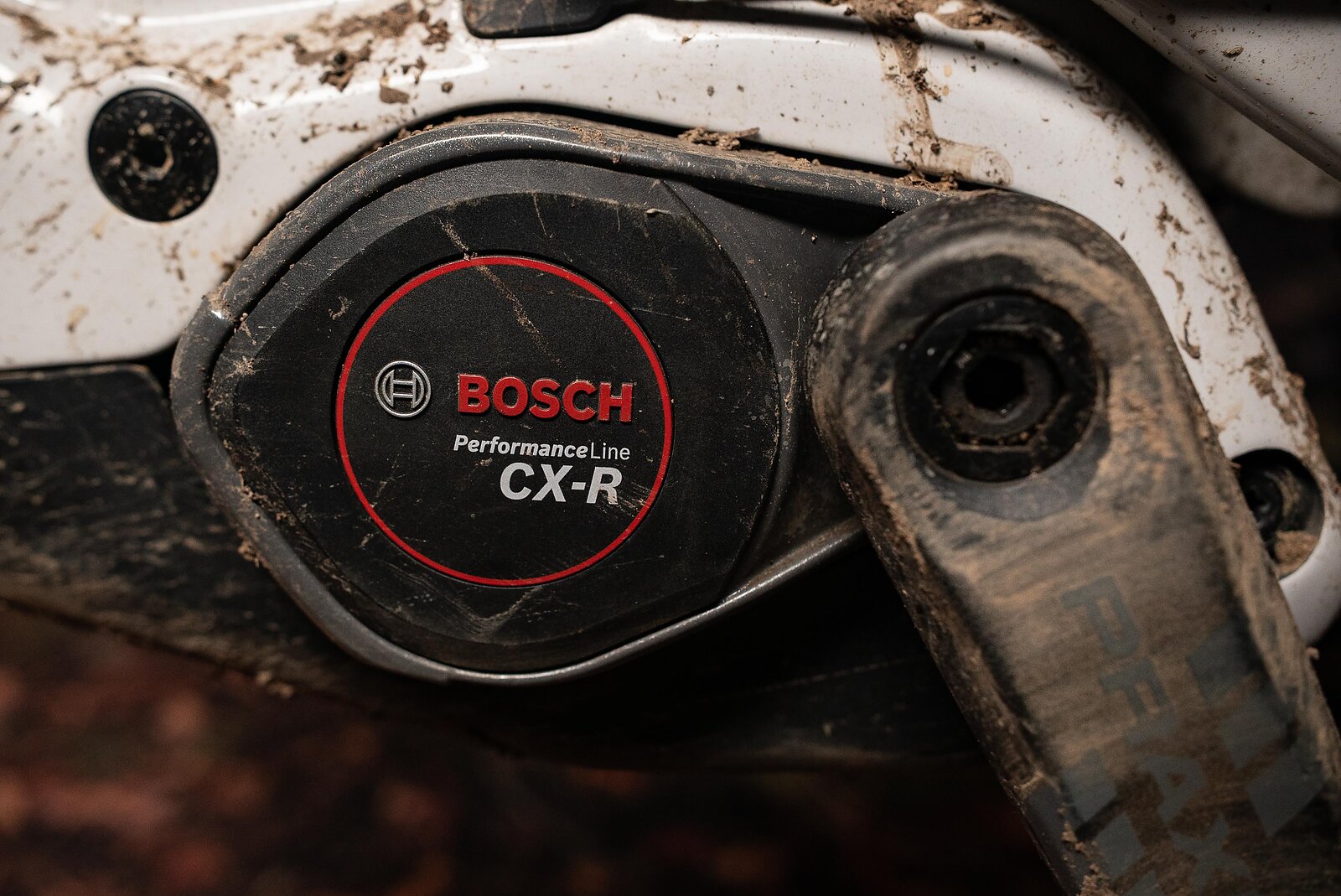
I won’t retread most of the information from that initial piece, so if you’re not familiar with the Shuttle LT, give it a read to get up to speed, and then check back. But, the short version is that the Shuttle LT is Pivot’s longest-travel e-bike, with 165ish millimeters of rear travel, and a whole bunch of options to adjust the suspension’s leverage rate and the bike’s geometry, including Pivot’s sweet new “Slacky McSteepTube” adjustable seat tube angle. It’s powered by Bosch’s Performance Line CX-R motor, and comes with an easily-swappable 800 Wh battery.
Big picture, the Shuttle LT is interesting for two reasons. First, it’s one of the most adaptable and adjustable bikes in this class. Second, it’s a refined, dialed e-bike, from a premium legacy brand that doesn’t come specced with an Avinox motor. That means that it’s at the vanguard of the motor wars. Does all of Pivot’s experience, and attention to detail, coupled with a less-powerful motor outweigh the pure wattage that Avinox systems put out? We’ll jump down that rabbit hole soon, but for now, let’s talk about the important part, how the Shuttle LT rides.
Long-Term Ride Impressions
I spent several days riding the Shuttle LT in Phoenix, which was a mixed blessing. It provided valuable context for why Pivot makes so many decisions that leave me, as a PNW-focused rider scratching my head, and was a great introduction to the sort of trails that the Shuttle LT was purpose built for. But, on the flip side, riding unfamiliar trails blind on an unfamiliar bike doesn’t set me up to be as insightful as I’d like about how it actually performs. So I was stoked to get it onto familiar trails here in Bellingham.
I made a couple of changes right out the gate: I threw a 240 millimeter dropper on it, just because I could, along with 50 millimeter rise bars, to get the cockpit a little higher for steeper riding. I also put the seat tube adjustment in the steeper position, and ended up running the shock flip chip in the more linear position for most of my time on the bike. Finally, I installed the (aesthetically divisive) Podium fender up front.
The big thing that stood out to me about the Shuttle LT in the desert was its combination front-end traction, matched with a certain sharpness and precision in its handling. It felt snappier, and like less of a plow than similar bikes I’ve ridden. And that held true in Bellingham. With e-bikes, I’ve found myself to be happy bumping down 10 or so millimeters in travel at both ends of the bike than I would prefer on a meat bike, simply because it helps mitigate some of the ponderous, motorized sensation that often accompanies these bikes on the descent. But, to a certain extent, Pivot’s suspension platform on the Shuttle LT helps mitigate that “couch rumbling down the trail” experience. The Shuttle LT is easier to maneuver and change direction on than bikes like the Specialized Levo 4.
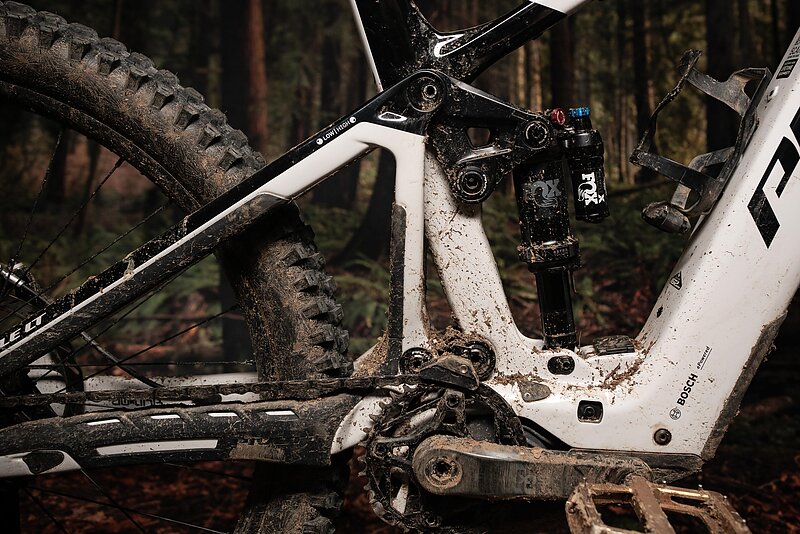
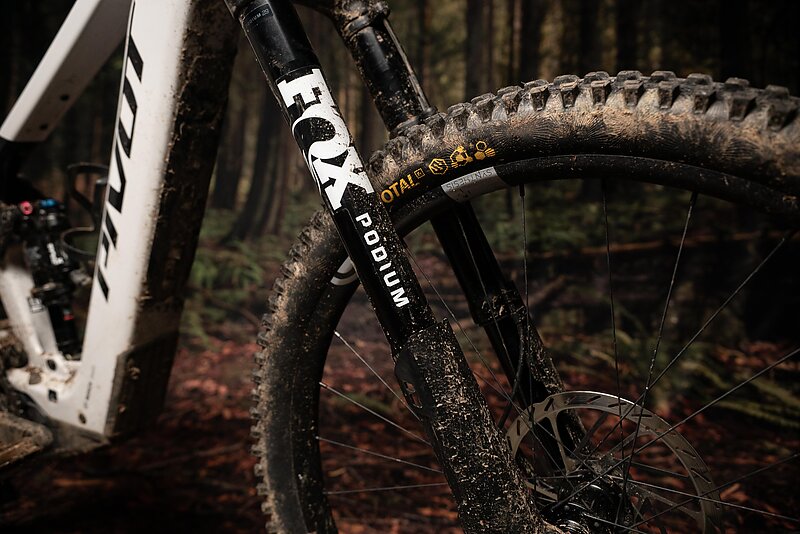
On the flip side, it doesn’t create quite as much traction, especially when things get rooty, steep, and wet. The rear wheel doesn’t feel quite so planted and glued to the ground. That’s an interesting contrast to the front of the bike. The Fox Podium is absurdly supple and traction-forward, which creates a somewhat stark contrast with the rear suspension feel when traction is at a premium. It’s not necessarily a negative sensation, but it is different, and interesting, and I think some folks will really dig it, while others might find themselves trying to tune that out of the fork.
Bosch’s recent motor update, which affects the CX-R unit in the Shuttle LT, delivers more torque and helps make the Shuttle LT an even better climber. It doesn’t make it “faster” in most situations, but instead it gives you a little more margin for error when it comes to gear selection and line choice. This is another place where I really notice the Podium. It feels more glued down on climbs than any 38 or Zeb I’ve ridden. That’s awesome a lot of the time, but, when it comes time to make more explosive, poppy moves, I feel like it takes a little more effort. Some of that is probably down to its extra weight, and it’s not a huge deal, but I did find myself noticing it. I think the Podium tends to make bikes feel “bigger” or “slower” headed uphill, and the Shuttle LT is no exception.
Bigger picture, in Arizona, the decision tree that led to the Shuttle LT felt incredibly obvious. On those dry, off-camber, unsupported trails, the Podium was a boon up front, and the Shuttle LT’s sharper-feeling handling set me up to move it around through tight, technical moves. It felt like the biggest bike I’d want to ride in the desert, in a good way. Out west, where things are steeper, better supported, and less chunky, I found that the Shuttle LT lent itself to a more active, engaged riding style than other e-bikes, and dulled the trail less.

Livability Update
I’ll touch quickly on the Shuttle LT’s spec and durability, before talking frame details. It came with the (at the time unreleased) new Float X shock from Fox. I can’t say definitively that this shock is miles better than the old version, but it does feel really good, and eliminates some of my noise and too-fast rebound tuning frustrations with the old one. I’ve already covered the Podium in detail, but I’m quite interested to see what lies in the future for this platform, and compare it to the new 38.
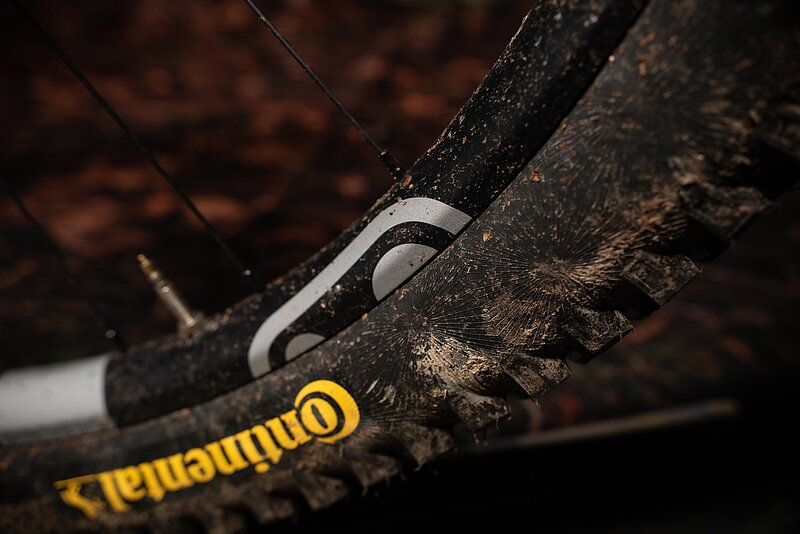
The SRAM XO Transmission drivetrain has been great, along with the Maven brakes. The alloy Crankbrothers wheels have held up to some poor line choices and big cases, but could use a true now. I’m a big fan of the Enduro casing Continental Kryptotal tires front and rear, with the Super Soft compound up front, and Soft out back. That combination matches the bike’s intentions well.
I bumped up to 50 millimeter rise bars, and a 240 millimeter dropper post, and appreciated both, but also didn’t feel like the 35 millimeter rise bars and 210 millimeter dropper were misses in the original spec. I’m just a little tall for most large bikes, and so I like to maximize stack and drop.
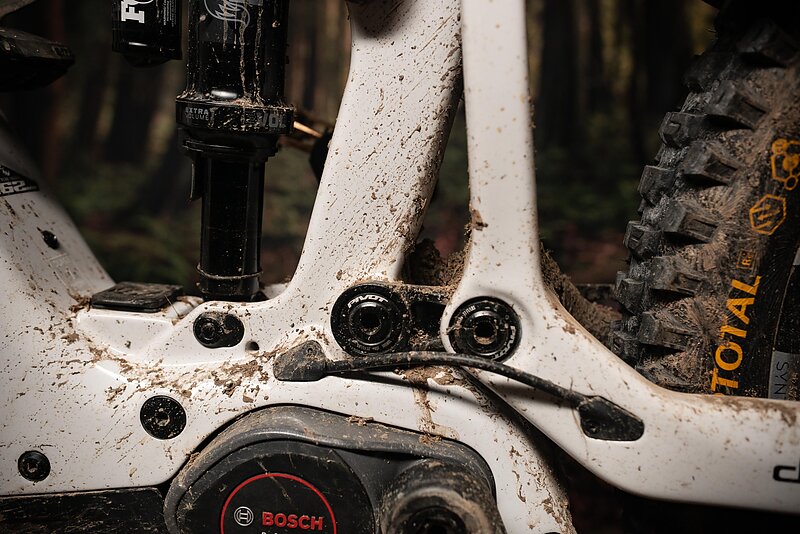
It is great to see that the Shuttle LT can fit a 240 millimeter dropper to my 33” inseam with no issues. That straight seat tube is rad, and I’m a fan of the adjustment as well. For my riding, I have no interest in the slacker setting, but I understand folks in other areas, with other body geometries really digging it.
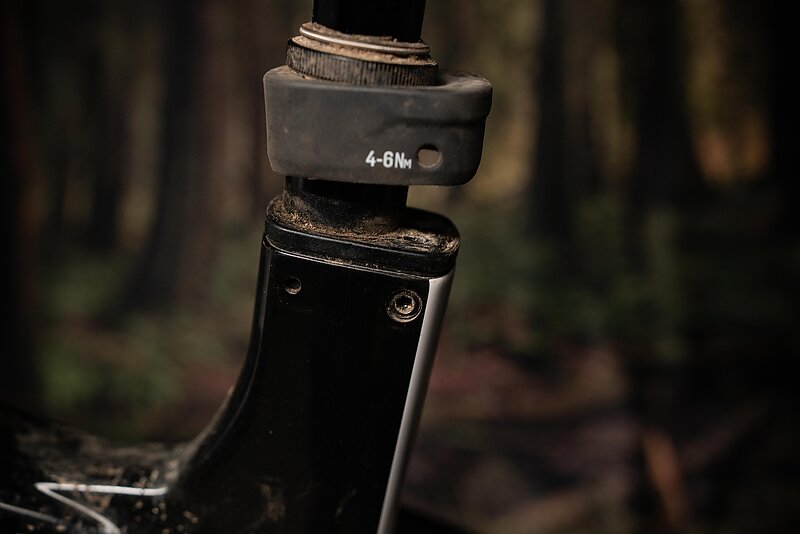
I did find myself frustrated with the Slacky McSteepTube for two reasons. First, the little rubber gasket is nice in theory and pretty useless in practice. If you, like me, tend to lift your bike by the seat tube and stem, you’ll end up grabbing this gasket and slipping it off the post every time you move the bike. It makes the bike harder to handle, and I ended up giving up on it and just letting it flop around off the dropper.
That could be why my seat tube developed a nasty creak. I pulled the whole assembly, cleaned, re-carbon-pasted, and reinstalled everything, and it went away, but that’s always a potential danger of adding complication and parts. I’d love to see gen 2 of this feature come with a redesigned gasket that’s more secure, and does a better job of keeping water out.
Otherwise, the Shuttle LT feels very “Pivot” which means thoughtful, and carefully designed. The hardware all feels excellent, the charging port is nice, and everything comes across as clean and premium, which it should at this price.
A Dispatch From the Front Lines of the Motor Wars
Since the Shuttle LT first launched, the Avinox Apocalypse has occurred. Pivot joined in with the AMP’d, and I was lucky enough to ride that bike back to back with the Shuttle LT on the same trails. The two bikes aren’t quite a fair comparison, the LT is longer travel, with more relaxed geometry and a different focus, but it was still illuminating to pedal both around.
The e-bike world is in a well-earned state of turmoil, and the Shuttle LT lies at the intersection of a few different questions. First, anecdotally, it sounds like for a lot of e-bike buyers, the things that set Pivot’s bikes apart (meticulous engineering, attention to detail, QC, aftermarket support) might matter less than pure unadulterated power. It sure seems like a lot of the potential buyers are shopping for a motor (or more specifically the claimed stats of that number) not a complete bike. Upstart Amflows with basically no history or earned reputation in the space are eating established brands’ lunch. It will be interesting to see if that changes as the market matures. Will we see a power plateau that leads folks to care more about the details and less about the stats? Or will we keep pushing the envelope of what we call “human-powered?”
Unlike a lot of other brands, Pivot is playing both sides of that game. Want the most power? Get the AMP’d, but “traditional” e-bike customers still have access to a full line of Bosch powered rigs.
I’m in a somewhat unique position in that almost all of my e-bike riding happens when trail building. And that use case is very good for clarifying the differences in the two motor systems. The first is obvious: I can burn fewer calories, and go uphill at the same speed as a Bosch e-bike. Yeah, I burn a little more battery, but it’s crazy how much easier steep climbs feel, especially with a saw on my back.
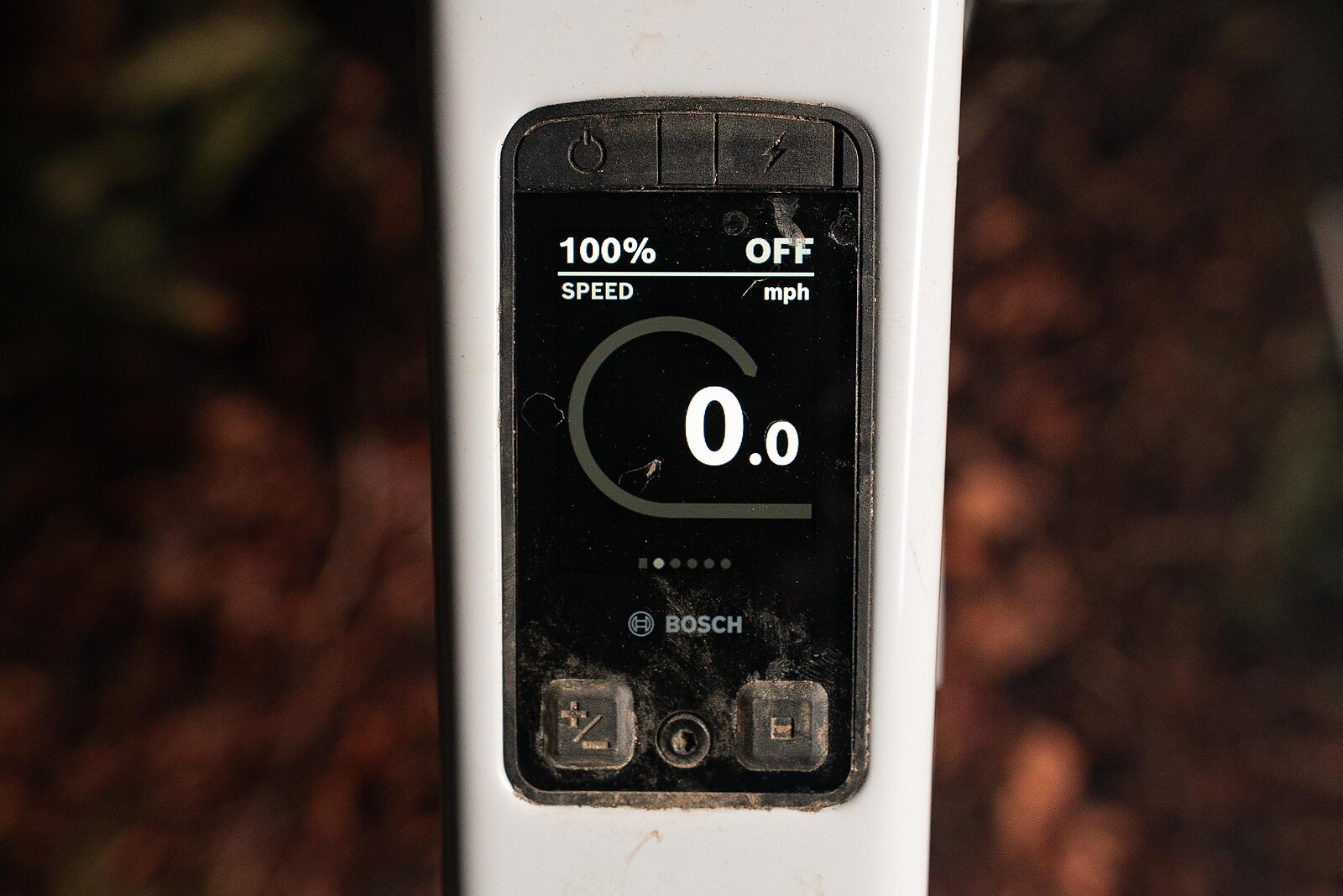
Second, that power is better controlled. I know Bosch is working on this, but, in my experience, the CX-R’s power delivery still doesn’t feel as “safe” or refined as the M2S. I loop out more, get more scary overrun experiences, and generally trust the motor less, even though it’s got less power.
Third, I might be an apostate here, but if I’m gonna haul around a bike with a motor, I want it to be able to go 28 miles per hour. I’m much more likely to hop on an Avonix bike for a ride across town, simply because I’ll be able to ride in the flow of traffic more safely than I could on a bike capped at 20 mph.
So where does that leave the Shuttle LT? If I was shopping purely as a rider, not a digger or commuter, who uses the bike more like a tractor, I’d prefer the Bosch-powered Shuttle LT to the AMP’d. It’s a more “real” feeling experience, it’s less obnoxious to ride around other users, and it’s more comfortable to ride in mixed groups. But if I’m just trying to go fast and take chances, damn the consequences, the AMP’d is a more compelling proposition.
For Now
E-bikes are in a wild place. In retrospect, I can’t help but chuckle over the fact that Pivot had us out for the Shuttle LT press camp and didn’t drop a hint about the AMP’d when it was obviously just over the horizon. If the Avinox Apocalypse hadn’t happened, this would be a super straightforward review: the Shuttle LT is a refined, versatile e-bike that will make a lot of people happy. And, as things stand, that still stands true, but it will be interesting to see what the motor market looks like in the next couple of years.
Learn More: Pivot