Maxxis Dissector More confidence, the same speed.
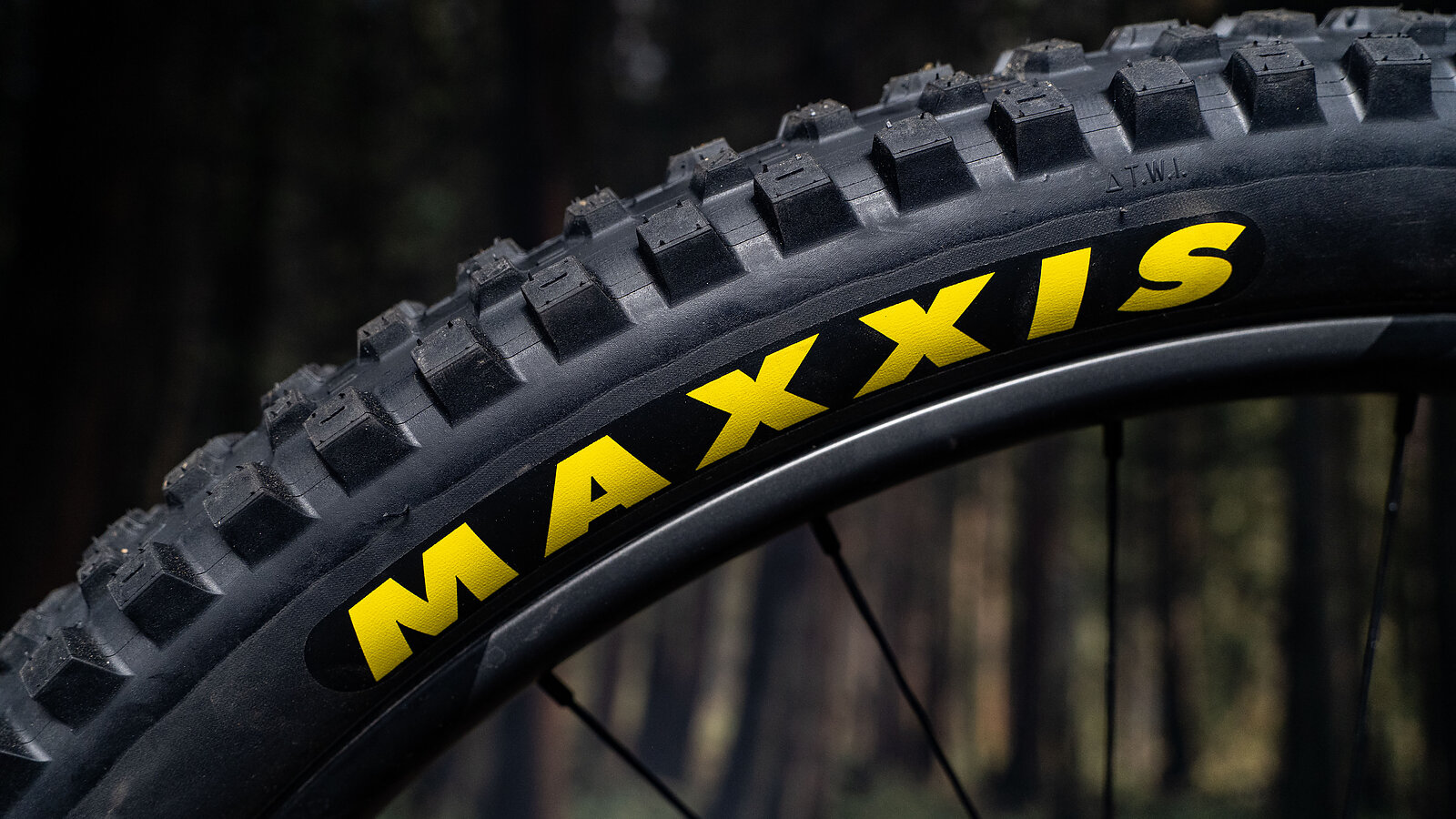
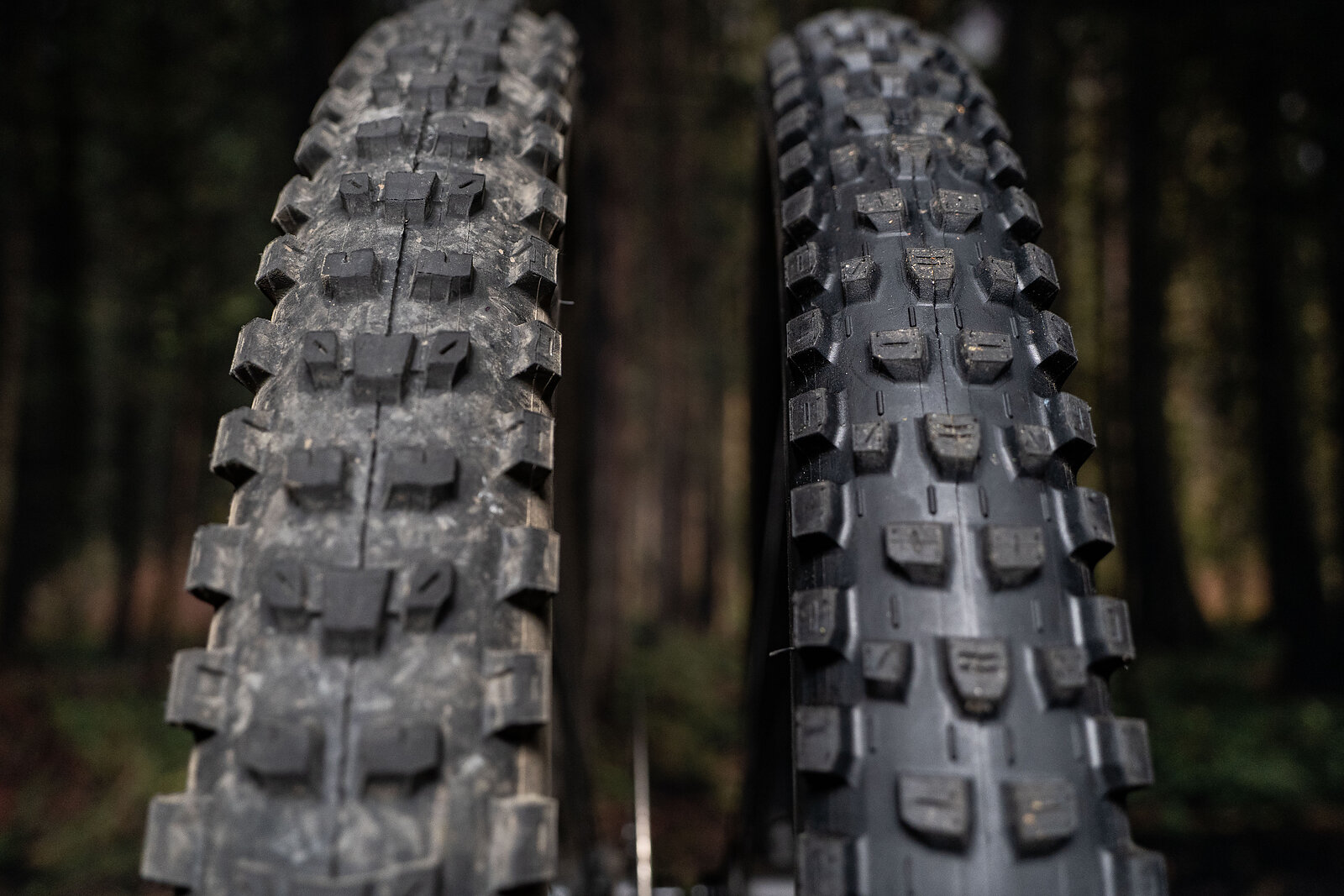
When Maxxis updated the Dissector and rolled it out during summer at Crankworx in Whistler, it didn’t get a new name, or a new numerical designation. Instead, it led with a new tread pattern that’s immediately visually different from the original. This isn’t a “tweak some knobs and add some siping” revamp. Instead, it’s a fairly comprehensive rebuild. Unsurprisingly, the shape and positioning of those new knobs look a whole lot like a slightly toned down version of the hugely popular Maxxis Assegai. The brand says the redesign was meant to provide “better control, cornering, and braking” while maintaining the original’s fast-rolling character.
That original launched in 2019, with Troy Brosnan’s signature tire, meant to be run on the back of downhill bikes and the front and back of trail bikes. Notably, this new version isn’t available in a DH casing, and instead Maxxis gives pretty specific travel recommendations, saying that it shines on both the front and rear of 130-140-millimeter bikes, and the rear of 150-millimeter bikes.
So, in short, the new Dissector is meant to be more aggressive, and more predictable than the original, while still holding up as a fast, efficient tire. I’ve been running it through the paces in a wide variety of riding conditions, so it’s time to weigh in.
Maxxis Dissector Tire Overview
- Sizes available: 29x2.4” (27.5” coming in 2026)
- Compound: MaxxGrip or MaxxTerra
- Casing: EXO, EXO+, or DoubleDown
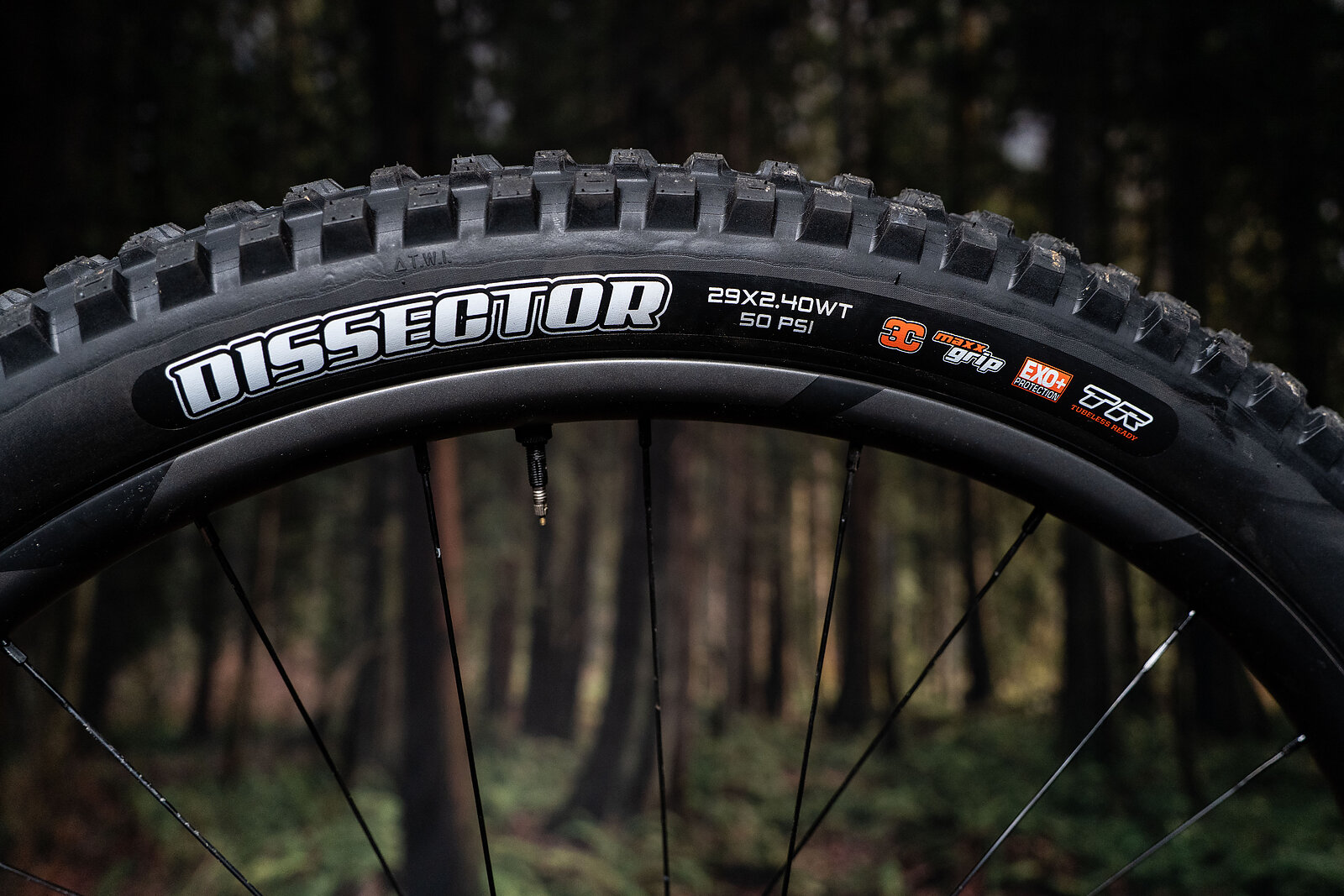
- Weight: 1048 g (EXO+, MaxxGrip)
- Price: $85-$116
What’s New? (Tread Update)
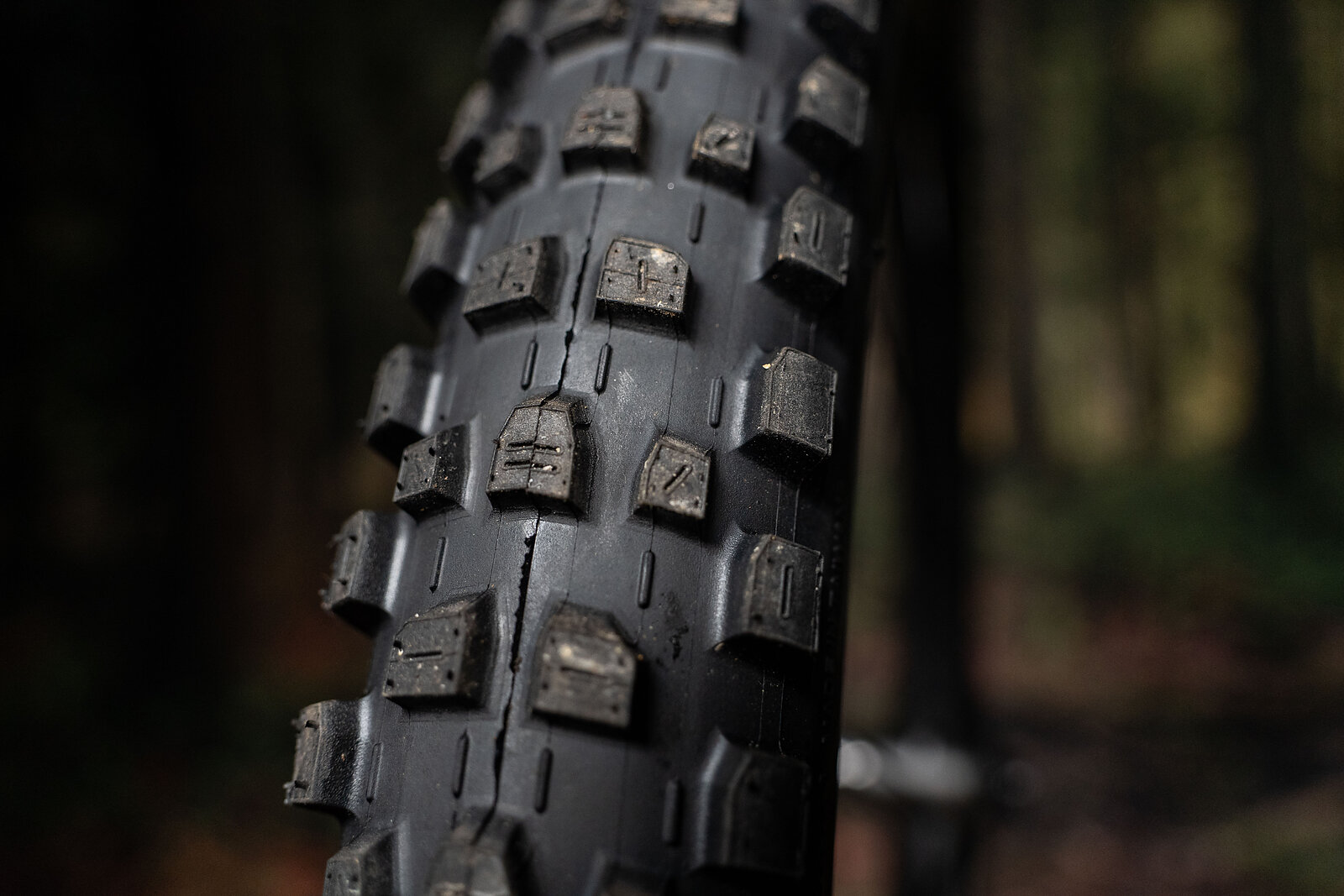
Both versions of the Dissector sport a line of cornering knobs flanking a 3-2-3 row of center knobs. But the new Dissector spreads those center knobs out a bunch, cuts out the island the “three” knobs used to float on, and squares them all off. The result? Much more consistent tread coverage, with less of an empty zone between the cornering and center knobs. More Assegai!
Maxxis Dissector Options
Maxxis launched the Dissector in the 29x2.4” size only, but apparently the 27.5” version is coming early in 2026. That will be a great addition since, as we’ll get into later, I think this new Dissector is a great rear tire option for longer travel bikes that often tend to run smaller rear wheels these days. The Dissector is available in EXO, EXO+, and DoubleDown casing options, and MaxxGrip and MaxxTerra compounds.
Because I’ve mostly spent time on the Dissector this fall and winter in the Pacific Northwest, when it’s gross and slippery, I’ve been running the MaxxGrip compound front and rear. I started out with an EXO+ tire on the front, and a DoubleDown on the rear of the Trek Top Fuel, and then switched to an EXO+ in the rear as well partway through the review period. I ran the Dissectors on a 30-millimeter internal width rim, and ran the front tire at 22 PSI and the rear at 24-26 PSI.
Maxxis Dissector Performance
I’ve spent a bunch of time on the old Dissector, but very little of that time was by choice. It came specced on the back of a huge number of the review bikes I’ve ridden in the last few years but, simultaneously, I’ve never bought myself a Dissector to throw on a personal bike. That primarily came down to the middle ground the old Dissector struck. The same performance attributes that made it so attractive to product managers speccing out bikes also made it less attractive to me. It was rarely the wrong tire but, simultaneously, it was barely ever the “most right” tire. So I was always happy to jump down to a Recon on the back of light, snappy bikes, or up to a DHRII on short travel bikes that swung above their weight class. And I never really felt an impulse to run it on the front, that channel between the cornering and center knobs was never my favorite.
The new Dissector upends that paradigm for me. It is significantly more confidence inspiring and more consistent on both ends of the bike than the old version. Across the spectrum of trails, from rock hard flow to fresh loamers, it delivers significantly more braking and cornering traction. That’s especially true at intermediate lean angles. Think situations where you’re riding a trail blind, and there’s a mix of fresh, loose dirt, and slabs or roots. In those situations, you can decide how hard you’re going to commit to a corner based on how much you trust it while you’re actually entering it, instead of having to fully commit and lay the bike over onto the cornering knobs from the get go.
Similarly, when braking in steep terrain, the old version had a tendency to deliver decent braking grip until it started to get into that empty intermediary zone, where it would then squirt to the side before the cornering knobs hooked up. The new version brakes much more like a DHRII, where you’ve got a pretty consistent level of traction, regardless of how the bike is leaned.
In braking and cornering situations the new Dissector feels very much like an "Assegai Lite", with the same “it’ll grip, regardless of how well you’re riding” sensation. And, while I understand why some folks get annoyed with the Assegai for that very reason, I think that sensation is even more valuable on the shorter travel bikes the Dissector is designed for.
As I’ve mentioned before, I love the Trek Top Fuel because it allows me to make terrible decisions on a short travel, snappy bike. I’ve run the Top Fuel with a wide range of tires, everything from Assegai/DHRII to double Aspen STs, but I’ve struggled when it comes to choosing a "permanent tire combination.” The new Dissector feels like the perfect companion for a bike like the Top Fuel.
It feels quick and efficient enough that I’m happy running it on anything more aggressive than a full-on cross-country bike, but when it comes time to descend, it does a great job of eliminating any “but I’m on little tires” excuses. I got thoroughly sandbagged on a ride earlier this fall that ended on the steepest, loosest descent I’ve ever ridden on the Top Fuel. And the Dissectors handled it with aplomb. Yes, I slid out and crashed, but so did my buddies who were both on much more aggressive (DHRII and Assegai) tires.
And, anecdotally, I don’t find the new Dissector to roll much more slowly than the old version, if at all. It still eats miles with a minimum of fuss and wasted effort.
The other two tires I’ve spent the most time on in this class are the updated Specialized Eliminator and the Ground Control. The Eliminator has bigger knobs, and I think it rolls a little less quickly while providing a similar level of braking traction, and a slightly more solid cornering platform when you’re fully on edge. The Ground Control delivers less braking and cornering traction, but does roll a little faster.
For Now
So often tire choice is a game of compromises. The new version of the Maxxis Dissector jumps from being a “fine” tire, to one that’s genuinely excellent. When the 27.5” version comes out I’m excited to put it on the back of longer travel bikes, paired with an Assegai out front, and see how it performs.