Face the Strange Moab Begins To Shred Its Hardcore Image
The three young women sat off to the side, shoulders hunched, heads lowered, working steadily through the task: cutting, gluing, folding with a kind of quiet urgency. When they were done, they placed their diorama at the far end of the table, joining a growing lineup of collages pieced together from magazine pages gathered at each checkpoint of the scavenger hunt.
The instructions for the night had been simple: Bring scissors and glue. Bike parts—old hubs, broken derailleurs, brake levers—began to accumulate around the entries as voting tokens, small metallic endorsements dropped one by one. By the time judging wrapped, theirs was the clear winner.
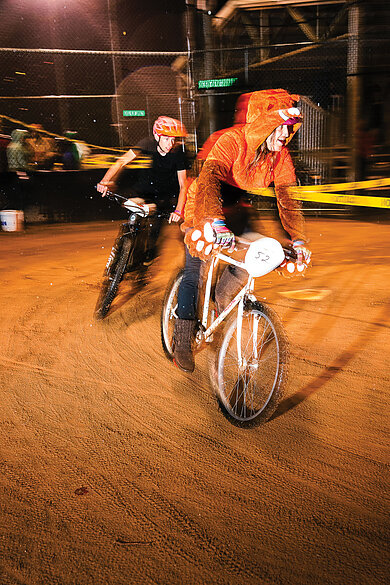
It was the Angry August Alleycat race, and it was an invitation to rage. Perhaps agitated by the sweltering summer heat or inspired by the appeal, an impressive crowd gathered at Swanny City Park in Moab, Utah, astride old townie bikes.
“What are you angry about?!” the announcer yelled as he surveyed the people circled around him.
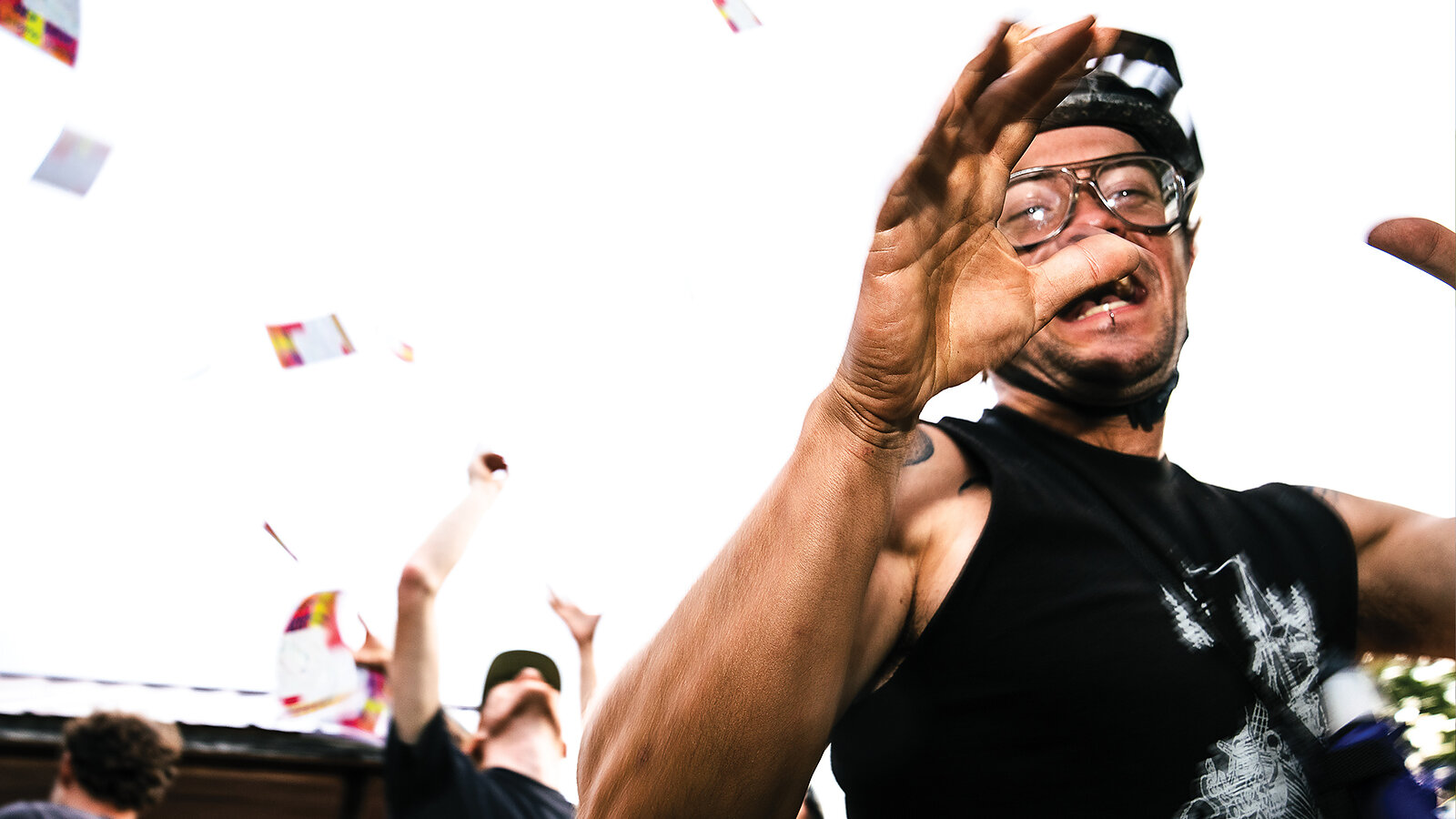
“I’m angry about authoritarian regimes!” someone yelled back, before hand-drawn maps of the route were tossed into the air, sending people scattering.
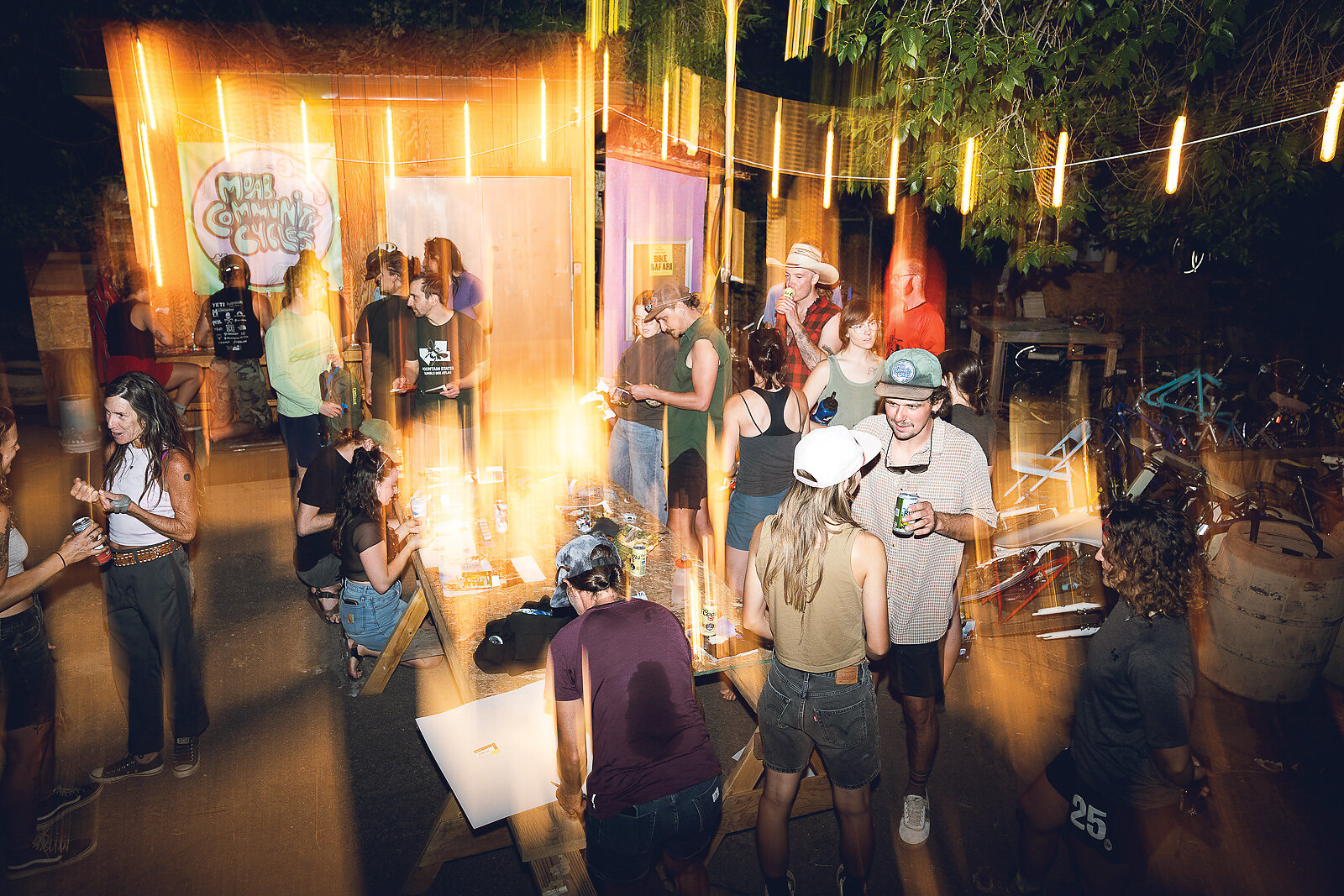
By the end of the evening, the Angry August Alleycat needed a new name. The same crowd, a loose assortment of people in cutoff jeans, some smoking hand-rolled cigarettes, others nursing warm beers, sat pressed together at the tables. Formerly fired up, they were now steadily focused. The earlier anger had dispersed into smaller, quieter acts; cutting, arranging, gluing things into place. Nothing systemic had been resolved, but several careful collages had been completed. A night dedicated to releasing pent up frustration had finished with crafting.
Moab has long been a popular place. A media darling of the ‘90s and ‘00s, it’s difficult to find an outdoor publication that hasn’t done a feature on the desert town. During peak seasons, out-of-towners dwarf the local population by a ratio that competes with the most hardened tourist enclaves.
It was known, in particular, for being “extreme.” Marketing campaigns and media hype machines have long painted the area as rugged and difficult, the riding advanced. It’s not a total deviation from the truth; the desert does exact a punishing smackdown to those unprepared. But the narrative built on itself, eventually becoming something close to self-fulfilling.
Ultimately, it created a division between those who can and those who can’t. At worst, it made the whole area feel closed off to anyone but adventure athlete behemoths. Naturally, the events scene followed that same trend: enduro races, long-distance exploits, and freeride competitions.
Moab local Zoe Huston rides her bike for long stretches of time. She will tell you it’s nothing remarkable. This seems, at minimum, up for debate. She’s completed the Grand Loop, a 360-mile epic, and will occasionally ride the 90 miles to Fruita, Colorado, for pizza, then turn around and come back. It’s a style of riding that lends itself to long, uninterrupted time spent in one’s head.
“I’d ride and I’d just come up with these weird bike ideas,” Huston says. “I started writing them down in my Notes app.”
Sam Newman, sitting crammed next to her at a small kitchen table chimes in: “Zoe has an extensive Notes app.”
The wall behind them is entirely covered with event posters, flyers, and handmade printing press artwork. It’s a mix of political statements, community gatherings, and arbitrary slogans. The space feels less like Moab and more like a nook in some cozy Seattle café, circa 1990.
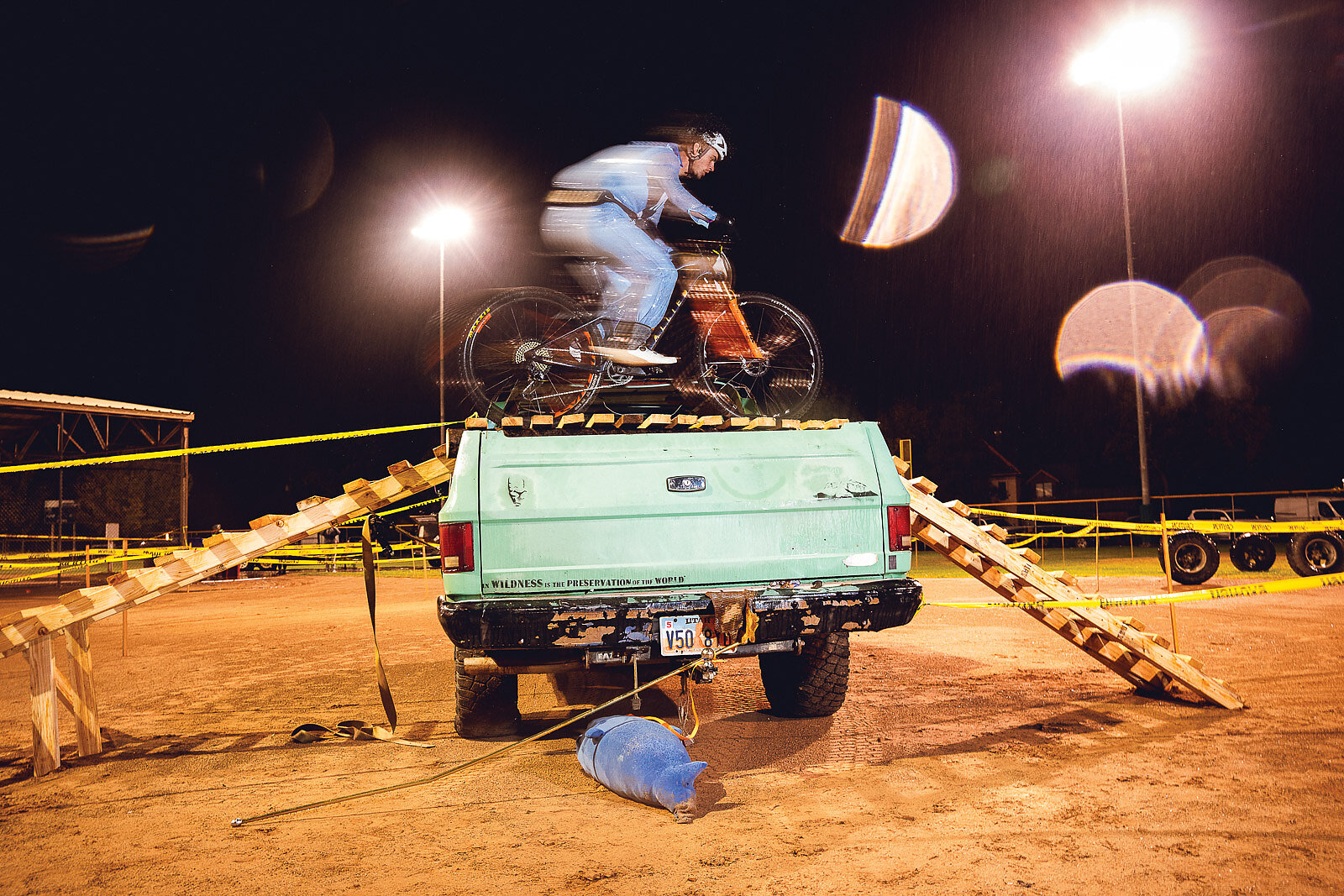
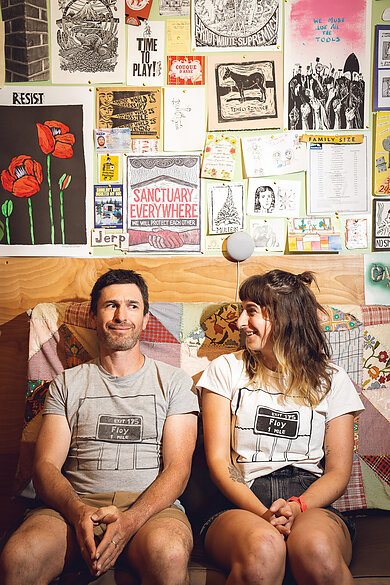
“I moved to Moab in 2016 from Portland to work for the Free Health Clinic,” Huston says. “I come from the touchy-feely nonprofit world. I wasn’t an outdoor adventure person ... I guess I just really like community healthcare.”
Newman had arrived around the same time, from Detroit, for an internship with Community Rebuilds. Like Huston, he hadn’t come for the recreation.
“I was spending time outdoors and finding myself wildly happy though,” he said. “I didn’t want to go back to the gray and the cold in Detroit.”
Both Newman and Huston had backgrounds in community activism and performance art. Neither considered themselves mountain bikers, they were more of the commuter type. Huston, and her then-partner Evan Smiley, met Newman. The three quickly became friends, in part because there wasn’t much of a scene for people like them.
“Evan and I were on a long bike ride in the La Sals and we both were like, ‘Man, the cycling culture here could use some help,’” Huston says. “Everything just felt so serious ... It didn’t feel fun or silly. We were like, ‘We need community bike rides, a community bike shop, we need silly events.’”
They started to realize that if they didn’t do it themselves, it probably wasn’t going to happen. In the summer of 2020, during Covid, the friend group hosted their first event.
Huston, Newman, and Smiley had joined together as a loose collective. Smiley was in the process of creating Community Cycles, a nonprofit community bike shop with access to donated spare parts and a tool library. They hosted mechanic nights and doled out parts to Moab locals in need. The events followed naturally.
“I’m not a social media person, but I figured I’d just scribble this little flyer and put it up and see who shows up,” Huston recalls.
People showed up. Around 30 of them.
“We did this simple ride out to a trailhead,” she says. “People did a lap, and then we just hung out in the parking lot. Some people came only for the parking lot hang. It was really sweet.”
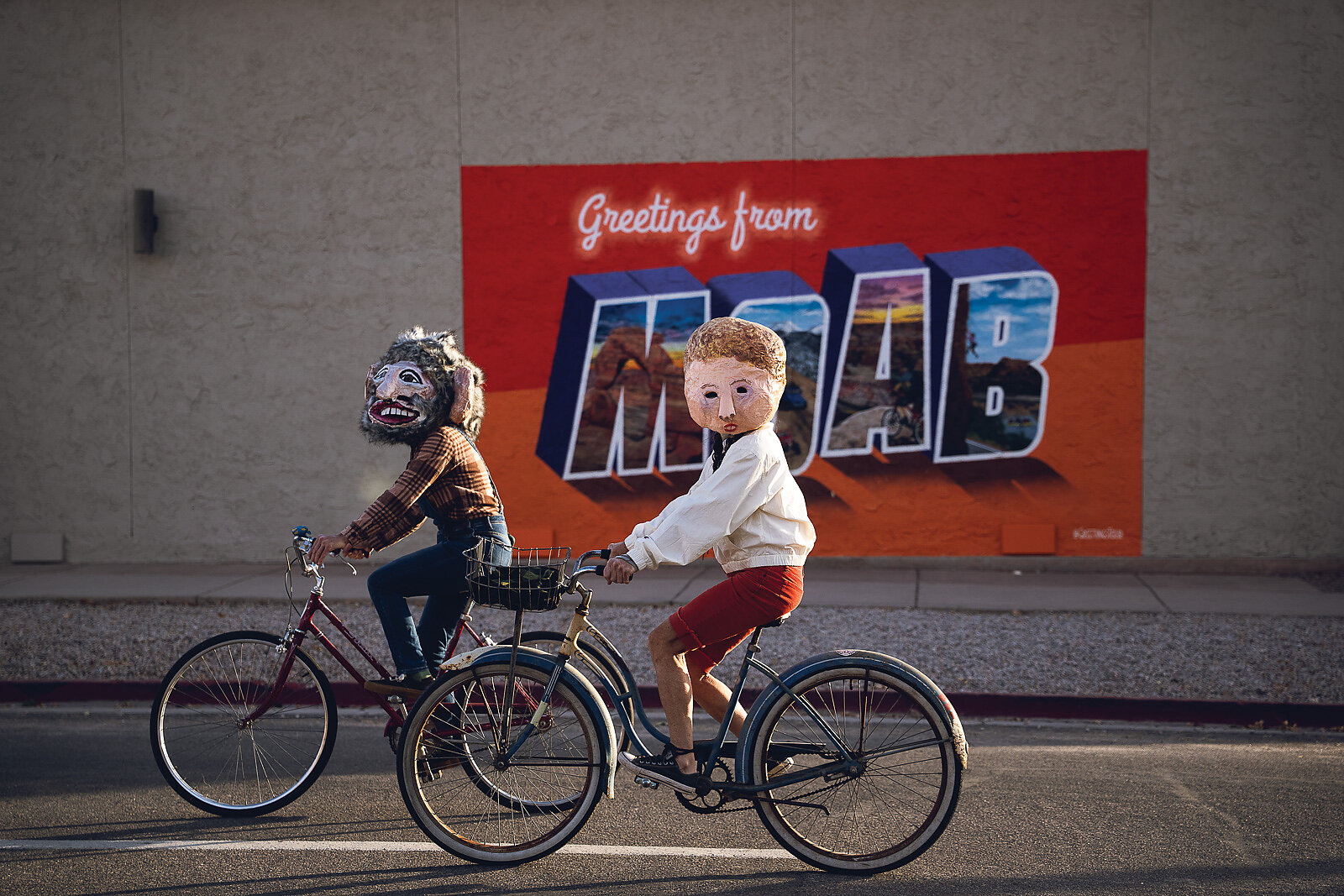
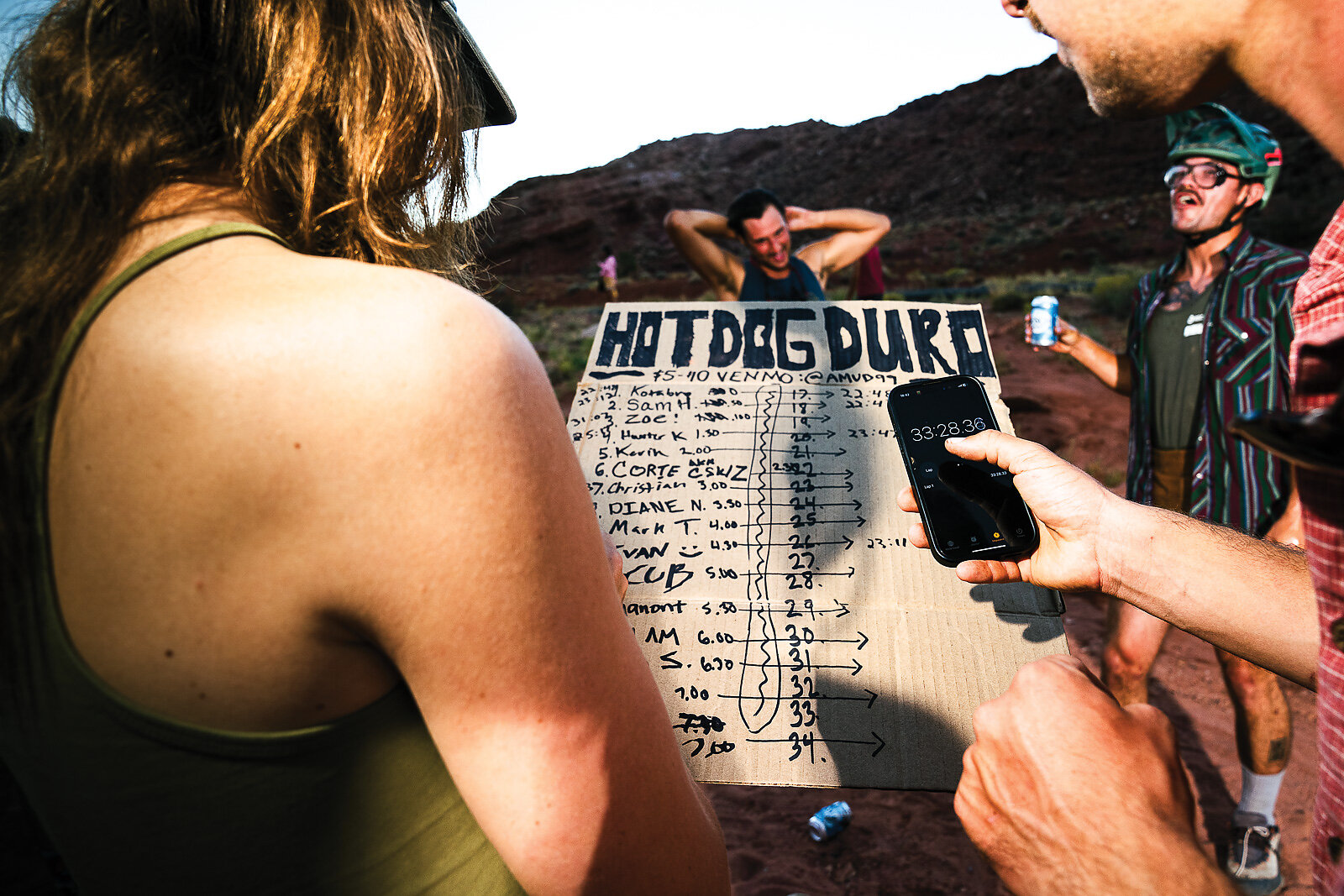
The momentum slowly built from there, beginning with monthly “Community Rides”—town rides that were accessible to just about anyone. Community Cycles continued to hold gatherings. New events were hatched, as were additions to the small group of event producers. Alex Mudler created The Hot Dog Enduro series, which involved downing some dogs and wearing costumes. Smiley started the Alleycat races; checkpoint style races incorporating unusual events, such as crafting. The group eventually created Spooky Cross, a costumed cyclocross race held over Halloween, which has since grown and been adopted by the Moab Ho Down festival.
The approach was a little different from the usual Moab lineup of enduro races and long-distance sufferfests. During the underground freeride event known as the Superbowl, the group staged their own version: a relay race on one of the easiest trail systems in town, with prizes for best costumes and best tailgate snacks. The objective was to be approachable and to give people a way in.
“I think people inherently want to let out those weird, artsy parts of themselves, you just need to give them the opportunity,” Newman says. “It was so different from the normal Moab bike culture.”
People started to gravitate towards these strange little gatherings, people who perhaps prior would stand on the sidelines and feel excluded.
At the 24-hour, 2026 Sleepless Jeepless Bike Safari scavenger hunt, hosted over Easter weekend, “Team Beth, Paige, Evan, Charlotte For A Bit and Maybe Birdie If She Feels Like It” hovered over the event manifest, examining its tiny script. The manifest had 25 carefully selected tasks, shaped like a bingo card with wild prompts.
“Match with a Jeeper on Tinder. Do we want to start with that one first?” someone on the team asks. “You get extra points if you go get gelato.”
“Do any of us even have an active Tinder account? And more importantly, one that’s looking for a dude?” someone replies.
“Are all Jeepers dudes?”
“Can’t a dude look for a lesbian?”
And thus, a very important philosophical conversation about why a straight man might seek out gay women (“To hang a cabinet,” someone suggests) derails the team’s forward progress. Not that there had been much forward progress to begin with. The team was stalling a bit, perhaps due to the committed nature of what they were embarking on. A beer is opened. The team continues to linger for another 30 minutes before heading out, deciding that the brewery was the best place to score a date.
To win the Sleepless Jeepless requires staying awake all night while riding between checkpoints. It has become the marquee ride for the group of organizers who, for this particular event, were calling themselves the Safarians. Earlier in the day, teams gathered at a local senior center to kick off to the event.
“[We’re here] because we wanted people to see a part of Moab they would not normally see,” Newman says. “Also, it still smells like lasagna.”
The turnout was impressive for an event that promised not only irreverent joy but also the sort of hungover discomfort that only a lack of sleep can bring. The Safarians, themselves costumed in a mix of “senior center” style blazers and Americana accessories, called the evening to order. Smiley, on the microphone, led a chant. A video of baby bunnies played in the background.
“All hail the Safarians! Bless us, grace us, may we serve you on two wheels!”
As the energy rose, the chant got louder. Newman, along with his brother Ethan, crawled out from the stage dressed in pink skinsuits. A spirited drawing of bingo numbers commenced, each one allowing a team to come grab their first manifest that outlined the checkpoints. Teams gathered their belongings, instructions in hand, and headed into the gathering dusk.
Along with a love for hard bike trails, Moab loves Jeeps. A lot. The annual Jeep Safari has become nearly unsustainable in the volume of people it brings to town. It’s been a polarizing event since its inception some 60 years ago. A celebration of motorized culture, “Jeep Week” tends to send locals packing, desperate to escape the crowds and pervasive noise. The Sleepless Jeepless, coinciding with the Jeep Safari, was, in effect, an antidote.
“We had some intentional conversations around how to interact with Jeep Week and the tourism element of it,” Huston says. “I think in any tourist town there’s this undercurrent of antagonism—an ‘us versus them’ ... We wanted to find a way to interact that was joyful and not at the expense of anyone. Really, we are all tourists somewhere.”
Huston got busy adding to her Notes app. The idea was hatched for a scavenger hunt centered around participation with Jeep Week. They were looking for a way that was non-exclusive, fun, and engaging.
They landed on a 24-hour event, with themes designed to create interaction between participants and Jeepers. During meetings leading up to the Sleepless Jeepless, the Safarians, a group now composed of Huston, Newman, Smiley, Mudler, Molly Gurney, and San Van Wetter, labored over the featured checkpoints.
Some were strongly aligned with Jeep Week: Host a sock wrestling tournament with a Jeep family; Choreograph a short interpretive dance based on a Jeep trail; Have a Jeep winch your bike over an obstacle; Use Strava to draw a picture of a Jeep; Drink from a Jeeper’s cupped hands; Match with a Jeeper on Tinder; Fry an egg on a hot Jeep.
Others bore no alignment, but were silly nonetheless: Build a human pyramid at City Market with a stranger on top; Get matching team mani pedis, include your bike; Enter a stranger’s hotel room or RV, ask if they are using all their beds, then take a nap; Stand on the rock next to the shitter at the Amasa Back parking lot and read a chapter of Moby-Dick aloud; Make a tiny effigy of someone, light it on fire, and roast a hot dog on it.
“It’s what happens when adults with real careers get together to put on something silly,” Newman says.
Before there was the Sleepless Jeepless, there was the Jerp.
“I was part of an art collective in Detroit before I moved here,” Newman says. “I was worried I was going to have to give up those types of creative pursuits in Moab.”
But he had an idea lingering in the back of his head: Message a group of people, build a life-sized cardboard and wooden Jeep, and then drive it around town.
“At the most, there were probably 50 different people who would come by to help cut out a piece here, or paint a part there,” he says.
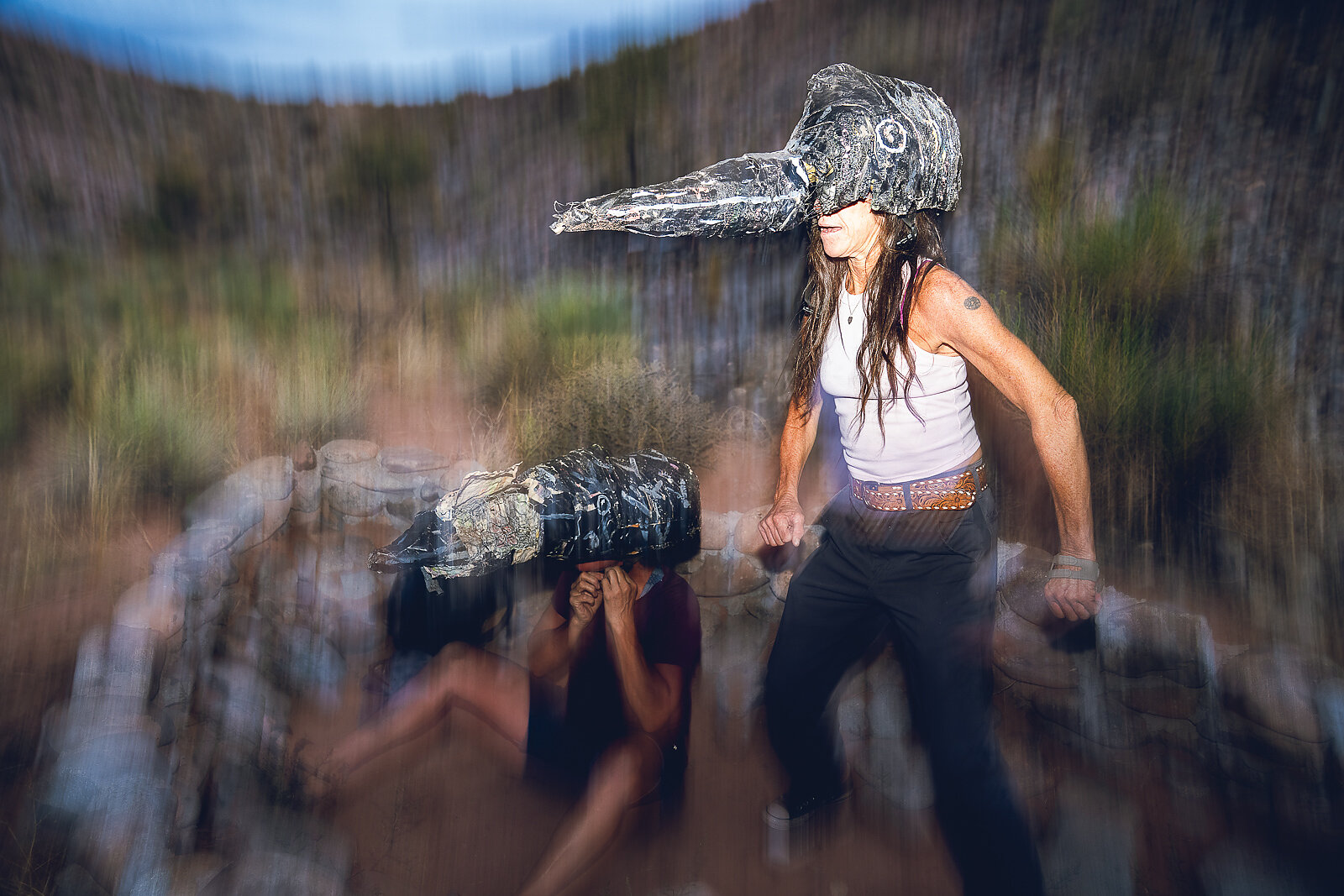
The Jerp was heavy, and required a team of people inside to maneuver it. It undulated with each step and swayed side to side. They ‘drove’ it up one of the main roads. The cops were called. A hand-drawn sign on the side read, “If this Jerp is rockin’ we are reading David Foster Wallace.” The Jerp was their first entry into Jeep Week, and it led, eventually, to the idea of a bike event.
“It was really moving,” Newman says. “We took it up Potato Salad Hill and a couple Jeep people came up to us and, in this sweet, vulnerable way, were like, ‘We really like this, but are you making fun of us?’”
There was an opening there, and with it a responsibility to engage without turning it into something mean. That spirit carried to the Sleepless Jeepless.
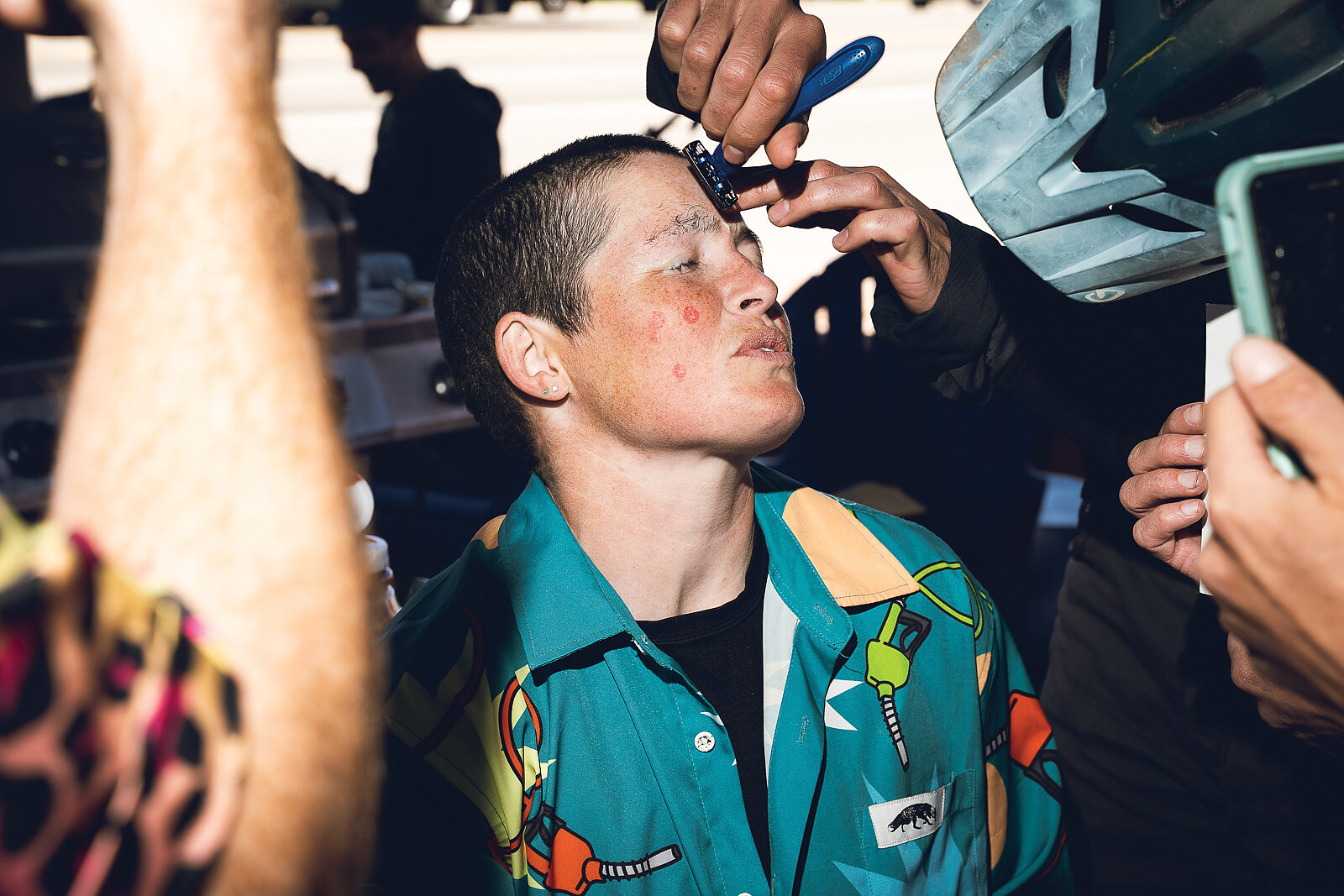
At noon, during the 2026 edition of the event, riders trickle in after a long morning and an even longer night. Hot dogs are on the grill. Cases of Mountain Dew are stacked four high. Loud music plays while additional hot dogs are strung up for a competition. The vibe is part family picnic, part Burning Man. One participant volunteers to have her eyebrow shaved off as a crowd gathers around cheering. That’s five points. Another team carefully opens plastic Easter eggs, fills them with a cracked real egg, and places them gently in potted plants outside the grocery store. One point per egg.
Every six hours, teams gather at a predetermined location. The noon meeting is, somewhat surprising given the sleep deprivation, still raucous. For most, anyway.
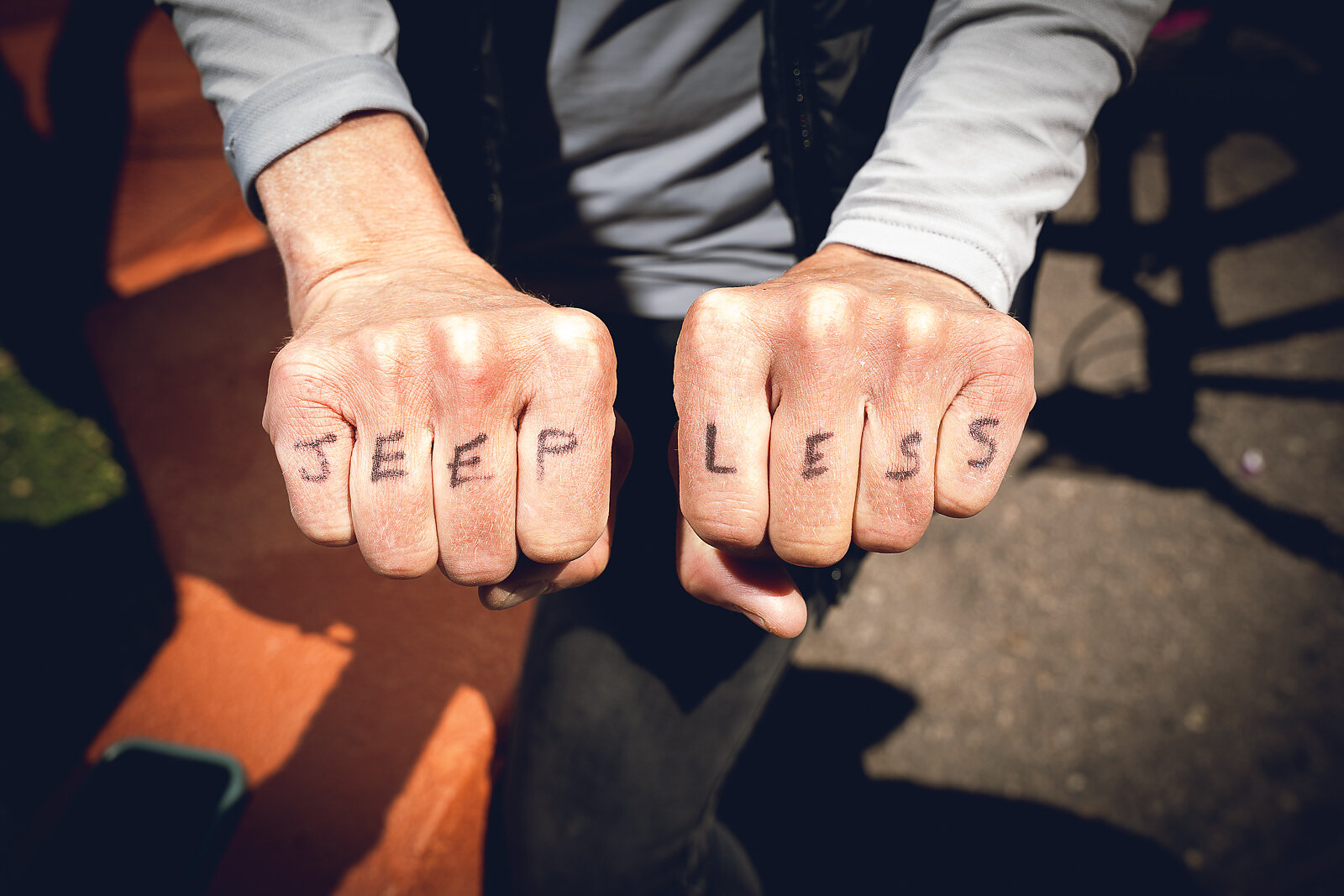
Team Beth, Paige, Evan and No Longer Charlotte Or Birdie is fading. They’ve just had a beach party in the fountain at El Tapatio and now they need to climb a tree, with all of their bikes in it. For now, they sit aimlessly in plastic chairs. Evan starts to fall asleep. Paige, with ragged letters spelling out “Jeepless” across her knuckles, buys a case of Modelo to keep the energy going. The team sits in the sun, trying to work up the motivation for the remaining six hours.
Meanwhile, Team Audrey’s Angels is doing very well. They are tied for first, having committed to staying up all night, and show no signs of slowing down. To be fair, they have also just collectively shotgunned 17 Mountain Dews, at one point per Dew.
“I’m really caffeinated right now,” one of them says.
The team opts to head toward the epicenter of Jeep activity: Potato Salad Hill. But first, a brief stop at the grocery store to form a human pyramid and find a stranger to put on top. This is worth three points. A scan of the aisles turns up some obvious no’s before they spy a young man in the snack section.
“He’s in Merrells,” says one team member. “That’s positive.”
The man is, understandably, skeptical of the group of strangers approaching him. Strangers who, at 18 hours into their odyssey, are looking more than a little disheveled and smell like Mountain Dew. But the women on the team are pretty and smiling. He caves. The six-person pyramid in the middle of the aisle is impressive.
Audrey’s Angels has a long list to complete, and Potato Salad Hill is packed with participants unaware of what’s about to be asked of them. The hill is a steep jumble of rock where Jeepers test their skill and equipment. During Jeep Week, it doubles as a tailgate party.
The team is adept at getting buy-in. They move through their list quickly. They crack an egg on a hot Jeep (it doesn’t exactly fry). They have a Jeep winch their bike over an obstacle, which works better than the egg. They convince an entire Jeep family to jump in the air with them at the same time. With their manifest covered in check marks and evening encroaching, they start making their way toward the finish. But only after laying down a fat skid, for one point.
At the Old City Park, Sleepless participants begin arriving, those not involved in the sprint finish, at least. The final manifest item for the evening is an impromptu race for the last half mile into the park. Those who still have the stamina pedal furiously, drifting sideways as they leap from still-moving bikes onto the grass.
There are extra points on the line for whoever can tackle Newman first. Newman, again in the pink skinsuit, darts through the crowd, managing to avoid being taken down for longer than seems likely. A punk band noodles on their guitars, getting ready to play. People who have been going for more than 24 hours finally rest. Some lie sprawled out in the grass. Others celebrate with cold beers. The energy holds for a little longer.
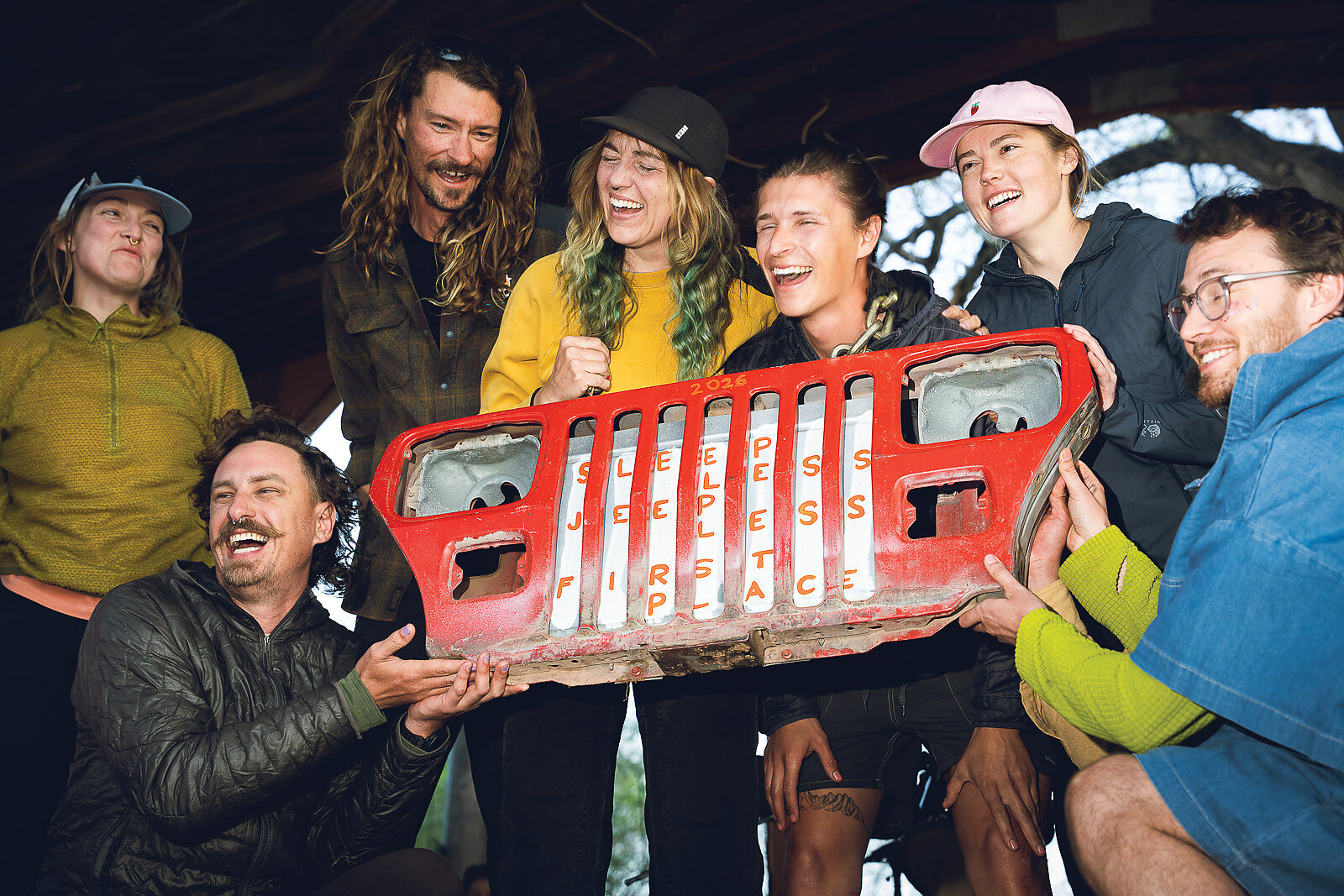
The competition is determined to be a tie, the winning teams jointly represented by Audrey’s Angels and Diego Velasquez for County Commissioner 2026. Whether or not the actual points were exactly equal didn’t matter all that much. The prizes themselves didn’t really matter all that much either. In keeping with the theme of the rest of the event, they are weird and mostly pointless. The teams accept their trophy: the entire front grill of a Jeep, hung from an oversized chain, too heavy for any one person to hold.
But maybe the prize that best captured the spirit of this event, and the culmination of all the previous events leading up was this: the award for the most unhinged manifest item. It went to Emily, the young woman who had shaved her eyebrow off. Emily came up to the stage and spun the prize wheel. It landed on “An Incredibly Supportive Crowd Surf.”
The group of 150 people moved toward the stage. Emily gently laid back. Their outstretched arms carried her across the horizon, a mass of people from different backgrounds, gender identities, ages, professions. All of them in unity, calling out encouragement and offering praise as she raised one fist in triumph.
For a moment, it felt like they were all participating in the same idea: an open invitation, loosely defined but clearly understood. You could show up as you were, maybe a little uncertain, do something a little strange, and be met with a resounding “Yes.”