Stumpjumper Shock Shootout Four shocks, two links, eight combinations, all ridden back-to-back.
This past summer, I decided to learn more about how shock choice and suspension progression affect how a bike feels. I tend to be very careful in bike reviews to focus on describing how a bike rides, without speculating too much as to why that is. There are two reasons behind that: first, there are plenty of men spewing educated (and some incredibly ignorant) statements on the internet. I do not need to join their ranks.
Second, rear suspension stuff is complicated. There’s a lot going on there, and I want to always be sure to give helpful information based on fact, not conjecture. I can say confidently that a bike’s rear end feels supportive but things get murky when it comes to pinpointing whether that support is thanks to the shock choice, its tune, or the linkage kinematic. I wanted to learn more, so this is the story of what I did to facilitate that learning, and my takeaways.
Background
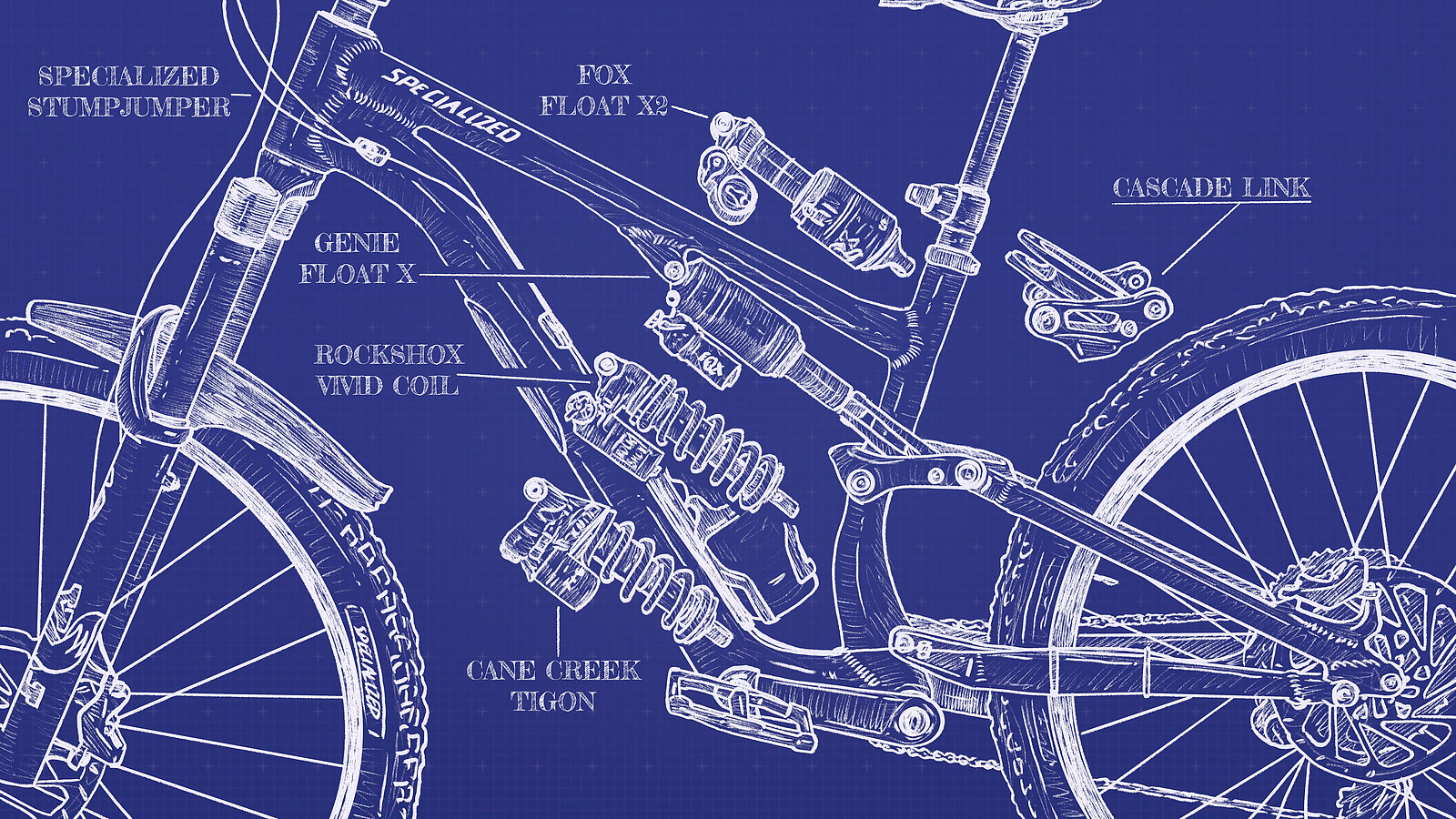
I traded a bunch of art for a Specialized Stumpjumper 15 frame in October of 2024. I wanted a bike that, first and foremost, I really enjoyed riding and, second, a chassis with a bunch of adjustments that I could play around with. So I spent the first few months experimenting with geometry adjustments and fork lengths. Then I traded a local shop for a Cane Creek Tigon hybrid air and coil shock. Later, when Cascade Components released its added progression link for the Stumpy, I bought one and tried it first with a Fox Float X2, and later with a Rockshox Vivid Coil.
Life was good—I was experimenting with no real goals other than trying new things. But at Crankworx, I met Nicco Deluca, one of the brains behind the Genie, and one of the driving forces behind the Stumpjumper. Instead of being annoyed that I was messing around with Specialized’s baby and perverting it, he was stoked that I was getting weird. He set me up with the Float X Genie and told me to experiment more.
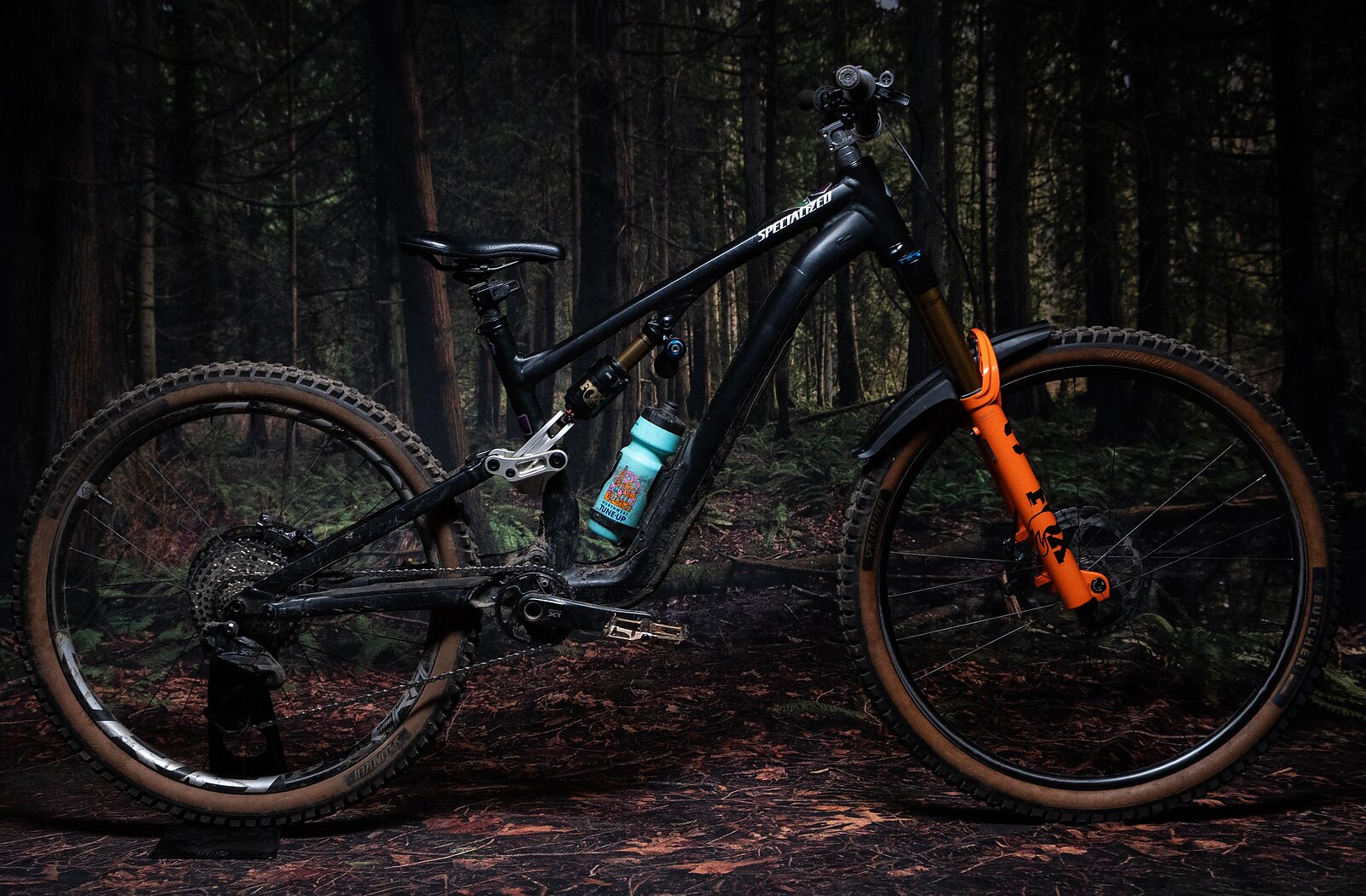
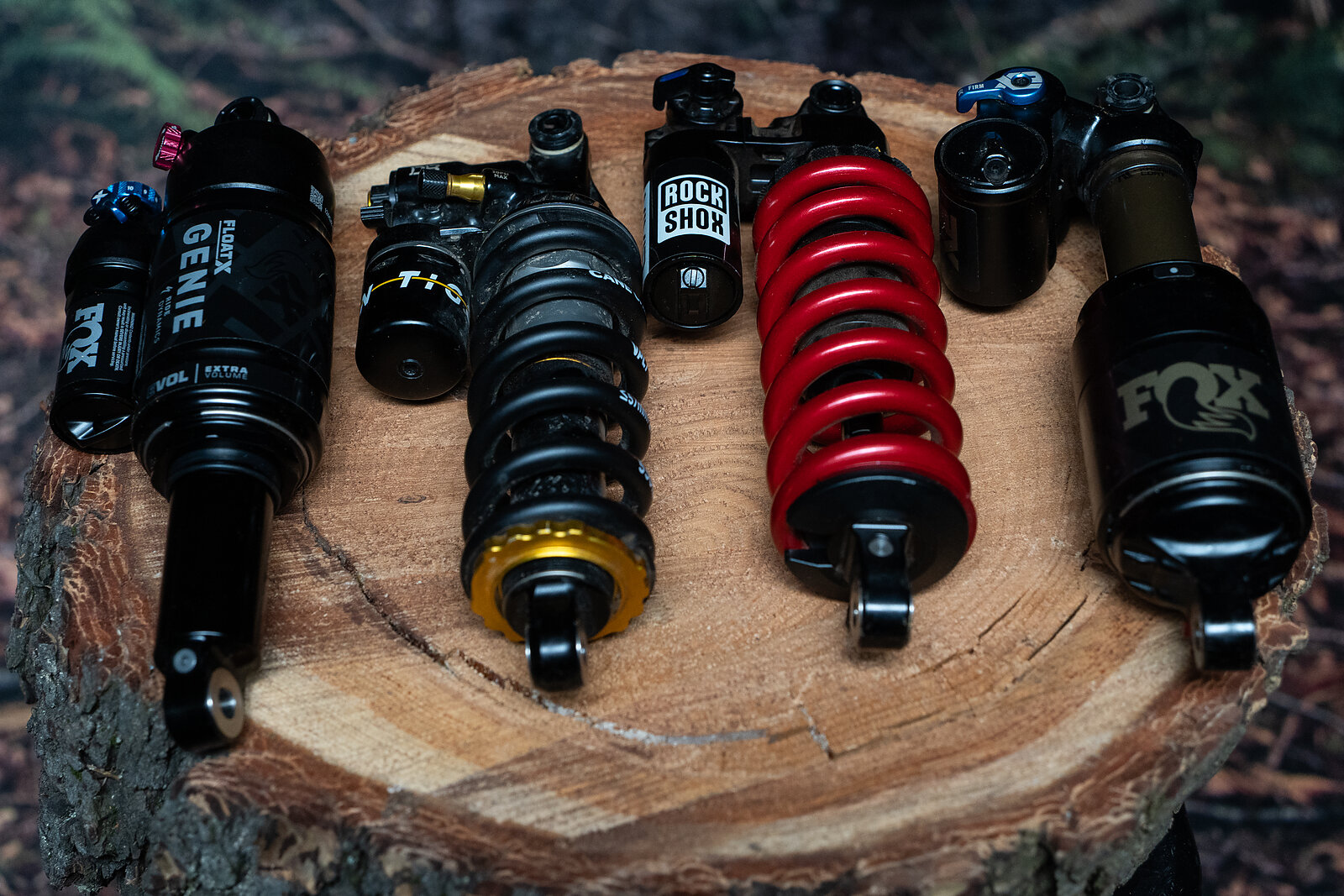
Now, I’ve ridden the Stumpjumper for several months in each of the following configurations: regular MX link and Genie Float X, regular MX link and Fox Float X2, Cascade link and Float X2, and Cascade link with RockShox Vivid Coil. Then, I put all my shocks and links in a backpack, and went out for a day of back-to-back testing where I ran every possible combination of shock and link on the same section of trail, controlling as many variables as I could.
A Tangent on Progression
Progression, at least how we’re going to be referencing it here, is the difference in the start and end leverage ratios that the frame exerts on the shock. If you’re sitting on one end of a teeter-totter, and your shock is holding down the other end, a high leverage ratio puts you further from the fulcrum, or pivot point, of the teeter-totter. As your bike goes through its suspension travel, though, that fulcrum moves closer to you so that you have less mechanical advantage and less leverage over the shock. In theory, a high starting ratio makes it easier for the suspension to get the wheel out of the way of small bumps, and a low ending ratio helps prevent you from bottoming out the shock.
That progression is expressed as the percent difference in start and end ratio. The Stumpjumper is a very interesting bike for this experiment because it’s not terribly progressive. Specialized says that it has about 14 percent progression through its stroke in the mullet layout I’ve been running. The Cascade link bumps that difference up to 26 percent. It also bumps up rear travel to around 156 millimeters from the stock 145ish millimeters.
Many modern frames include a flip chip to adjust progression, but that adjustment is usually small, in the neighborhood of 3-5 percent. It’s noticeable, if you’re looking for it, but not a huge night and day change. But with the Cascade link on the Stumpy, you get to make a big, sweeping, obvious change. According to the sort of men who spend too much time on bike websites, 14 percent progression is basically unrideable, it’s absurdly low, and is just another example of Specialized being evil (why less progression is evil, and how it benefits Specialized is never fully articulated). On the other hand, in part thanks to Cascade Components, we’re seeing some brands push for ever-higher progression numbers, which are hailed loudly by the same keyboard riders.
Historically, when I look back at the horde of trail bikes I’ve reviewed, I’ve tended to prefer trail bikes with lower overall progression numbers, and have had quite off-putting experiences with the two 40-ish-percent progressive enduro bikes I’ve ridden. I like a snappy, responsive, precise feeling trail bike, and I’ve wondered how much of that is thanks to the suspension design and how much is due to other factors. So the Stumpy gave me a perfect chance to experiment.
What’s the Deal With Genie?
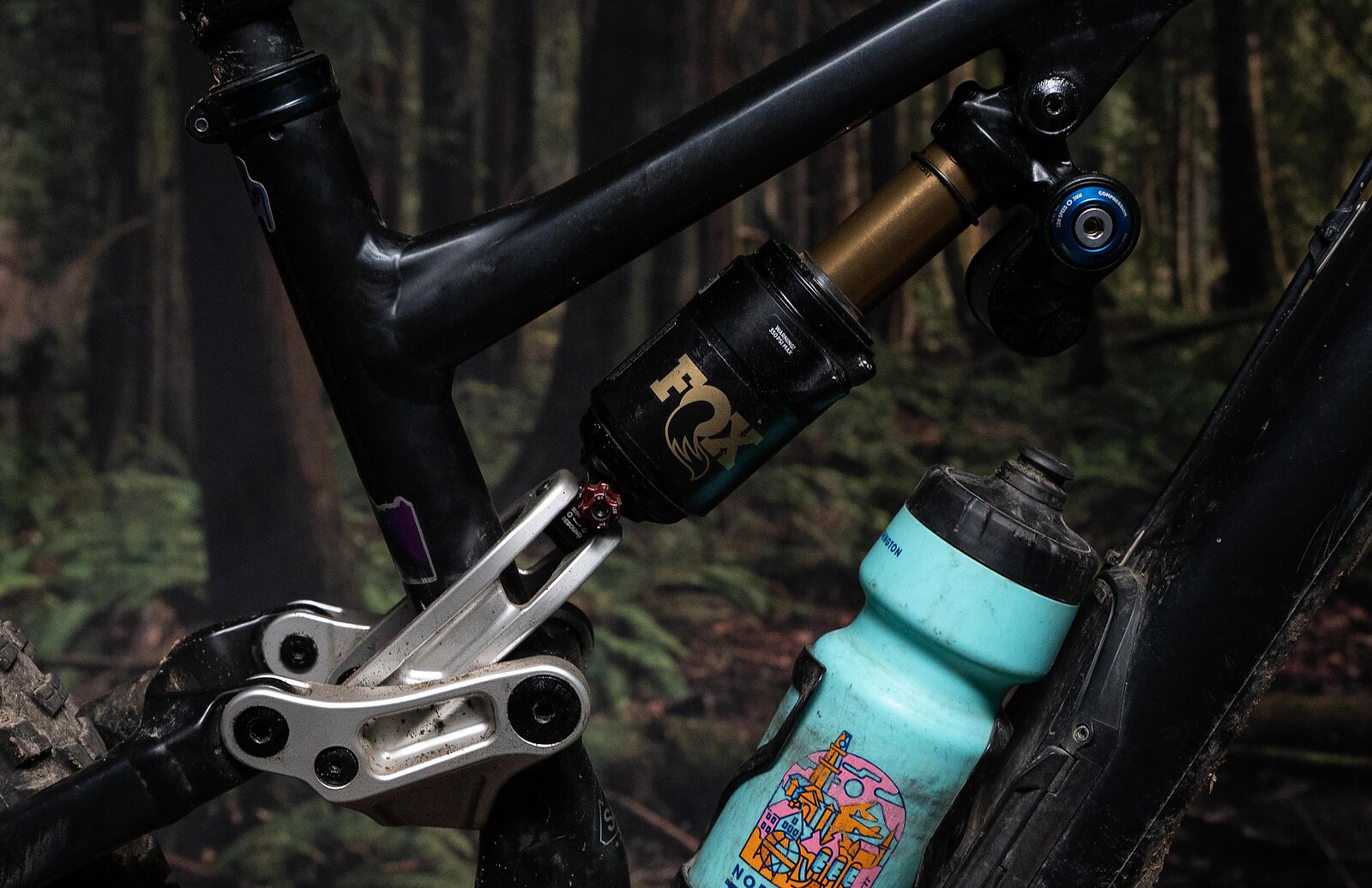
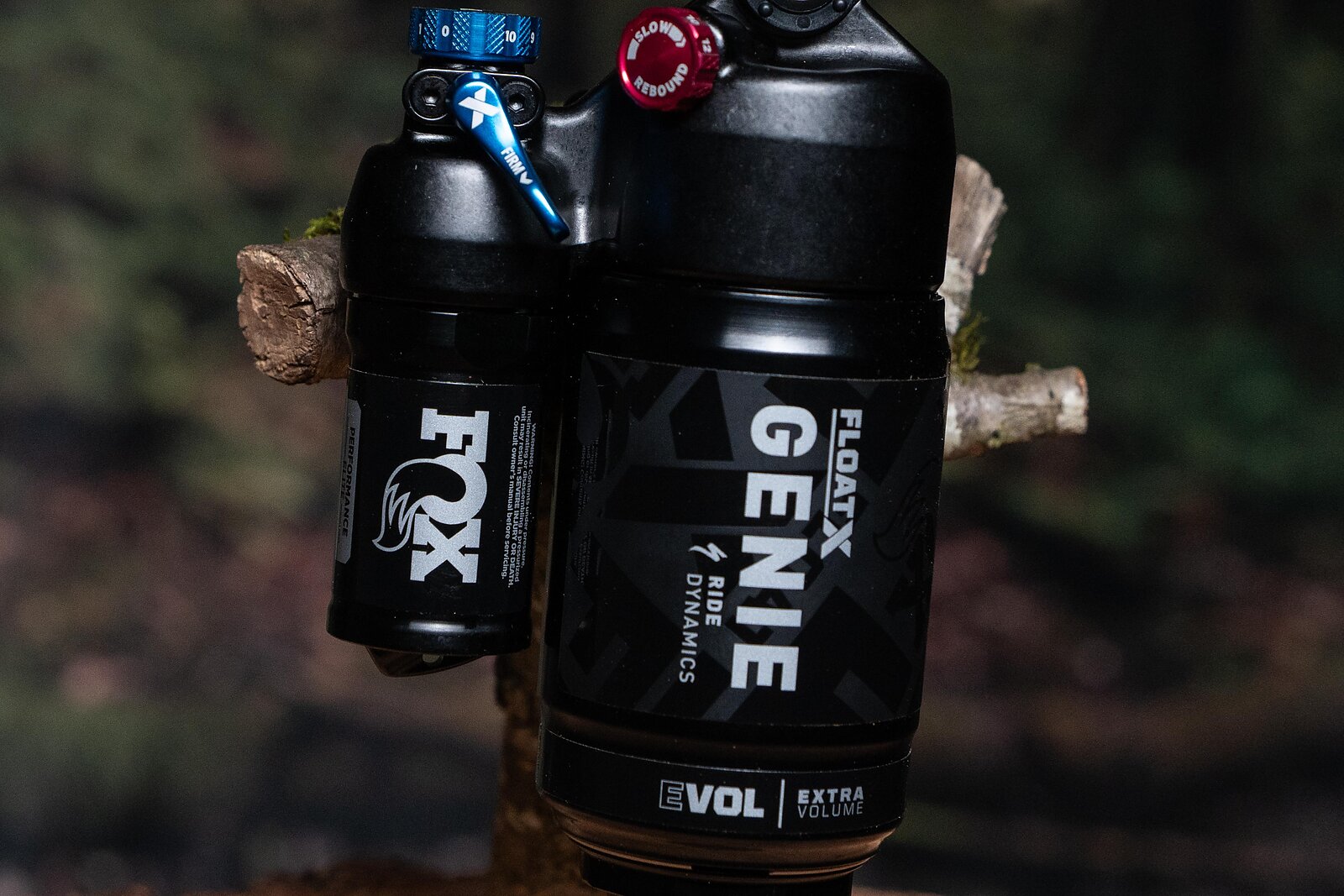
Genie is a shock technology that Specialized developed. Right now, it’s present in the Fox Float and Float X on Stumpjumpers and Levos, but it’s important to remember that it’s a Specialized tech, not a Fox one, so it could show up with other suspension brands in the future. Genie shocks have two positive air chambers. There’s a very large outer chamber and a much smaller inner chamber. Through the first 70 percent of the stroke, both chambers are being compressed, so the shock feels very supple and plush. Then, at that 70 percent mark, the port between the two chambers closes, and you’re only compressing the much smaller chamber, which gives you a much firmer ramp in the end stroke.
Basically, Genie is meant to give you that “supple and traction-heavy feeling off the top, with plenty of platform and ramp to prevent harsh bottomouts” sensing that is also the goal of progressive suspension designs. But Genie accomplishes this via the spring, which is more tuneable than the leverage rate. You can tune both outer and inner chambers separately with volume spacers, and dial in the feel.
When it launched, I was skeptical of the whole Genie system but, in practice, it rides very intuitively and I’ve slowly become a fan. But is it actually better than tried-and-true shocks and more progressive leverage ratios?
Why I Chose These Shocks
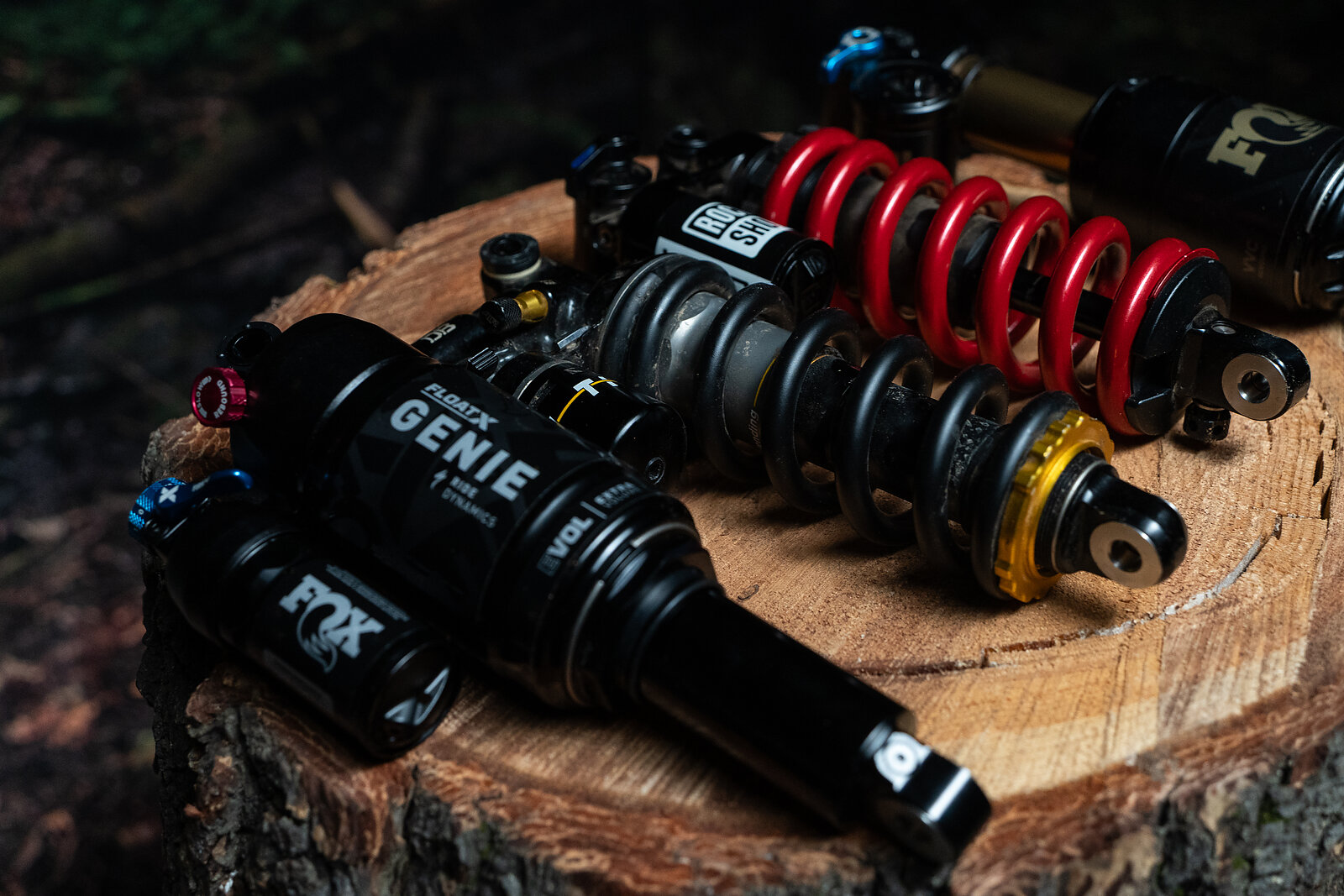
The Genie is easy: it’s a unique shock that Specialized and Fox made specifically for this bike. It’s how Specialized wants the bike to feel. The Tigon is an obvious choice given that its design is basically optimized to make up for the shortcomings of traditional air and coil shocks on bikes like the Stumpjumper. Its tunable air chamber lets you dial in the ramp over the whole stroke of the shock, unlike any other coil shock, and its larger shaft should be more durable than traditional coils. The X2, is a great example of a modern, high-volume air shock, which Specialized says should work well with the Stumpy. Similarly, the Vivid Coil is my go-to coil option, and I was interested to see specifically how it paired with the Cascade link, and if it helped transform the Stumpy into more of an enduro bike. I could have gone way deeper down the rabbit hole and experimented with progressive coil springs and more volume spacer swapping but, in the interest of practicality, this is where I landed.
Disclaimer
First off: Don’t hurt yourself because of something I did. Running a Cascade link falls outside of the parameters Specialized designed this frame around. So does running a 170-millimeter fork and drilling out the cable ports to fit Hayes brakes—both of which I did. And (after I’d bought my link) Cascade said that it doesn’t work with alloy frames like mine. It’s awfully close on my S4, the link is basically touching at full top-out, but doesn’t bind or make any noises. Use your common sense, and if something does go wrong, you’ve only got yourself to blame.
Testing Methodology
This is not real science, or even bro-science. This is Cy-ence, and, as such, is deeply flawed. But here’s my methodology. I rode all four shocks independently for a few months each and dialed in my settings for each. Then, once I’d figured out my happy place, I took them all out for a back-to-back ride. I kept everything else constant: I ran a 160-millimeter fork and didn’t change the settings between laps. I ran 23 PSI in a Butcher Grid Trail casing up front, and 26 PSI in an Eliminator Grid Trail out back. I weigh 200 pounds, and I ran 17 millimeters of sag on each shock. That’s a little more than Specialized’s recommendation, which isn’t surprising given that historically I run the rear of my bike soft for my weight.
I rode the same section of trail on each shock, with the same perceived effort (about 70 percent of my max effort). For Bellingham locals, my test track was from the top of SST to the road below the rock drop. That gave me relatively quick laps, with plenty of chatter, some light chunder, jumps, and a variety of corner styles. Here’s a breakdown of each shock/link combo, my settings, and impressions:
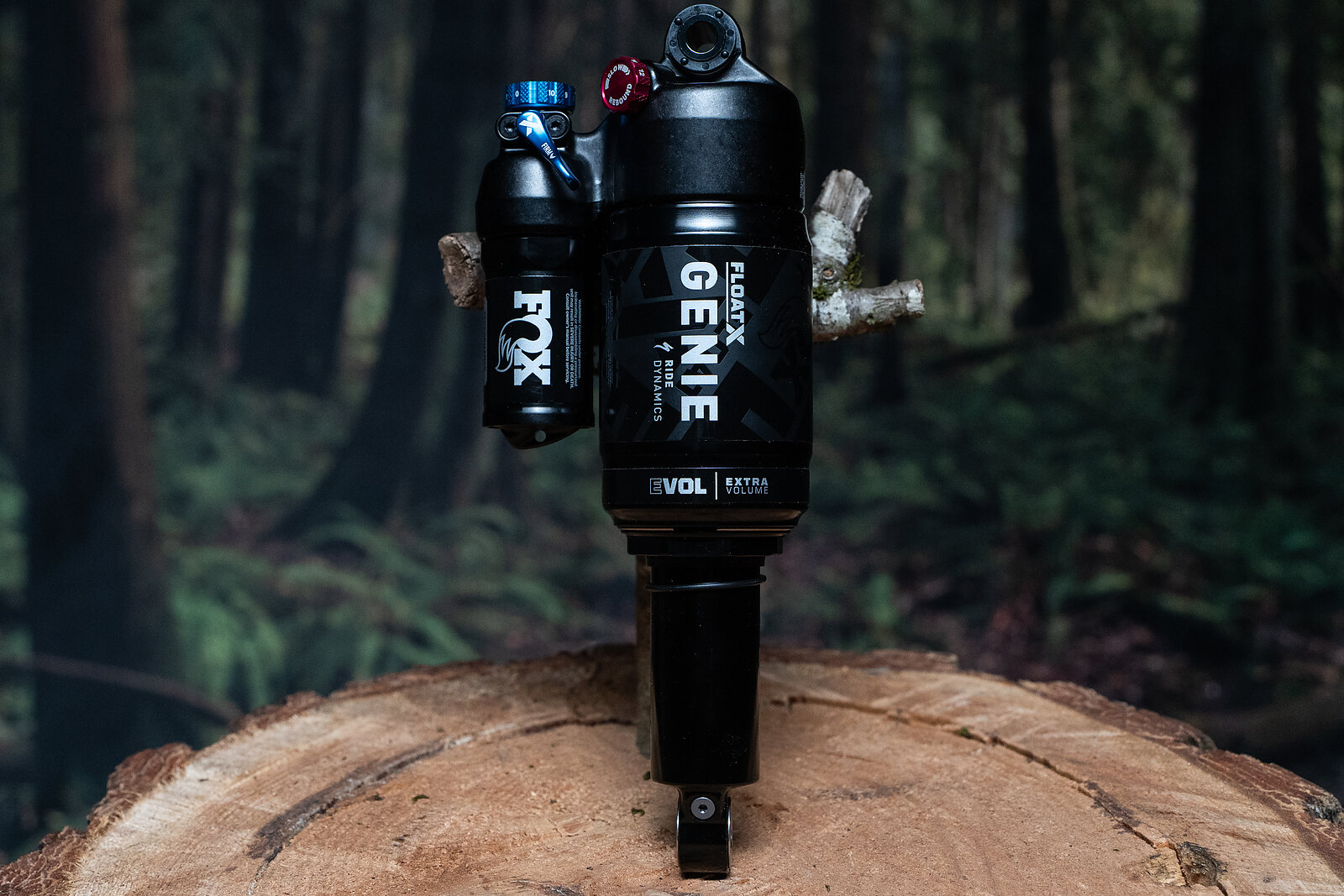
Fox Float X Genie
- 610 grams
- 238 PSI regular link
- 246 PSI Cascade link
- Stock volume spacers (.2 in³ (one pair of red spacers) in the outer can, .2 in³ (blue spacer) in the inner can)
- 9/10 clicks of compression, 8/12 clicks of rebound (or, one click from closed on compression, four clicks from closed on rebound)
With the stock link I really like how the Genie jumps and corners. It’s got a nice combo of support and activity off the top. It feels very snappy and fun and encourages me to throw the bike around. The Genie delivers excellent traction—it feels almost absurdly active—and then when you get through that, it feels a little like punching a memory foam mattress. It’s not as light and fluffy as the top of the stroke, or round and vague like some really progressive bikes feel. Instead, it's a predictable platform that helps absorb hits, but doesn’t erase them like the earlier portion of the stroke does.
When combined with the Cascade link, here is, verbatim, the first line from my notes: “Eww. I do not like this.” It fell through the top of its stroke super fast, and then just sat on that memory foam layer. Finding the part of the midstroke I like to pump and jump off of was much more challenging. Instead it felt vague and mushy, like I was standing in a weird, unpredictable part of its ramp. Bleh. Too much of a good thing can turn into a bad thing.
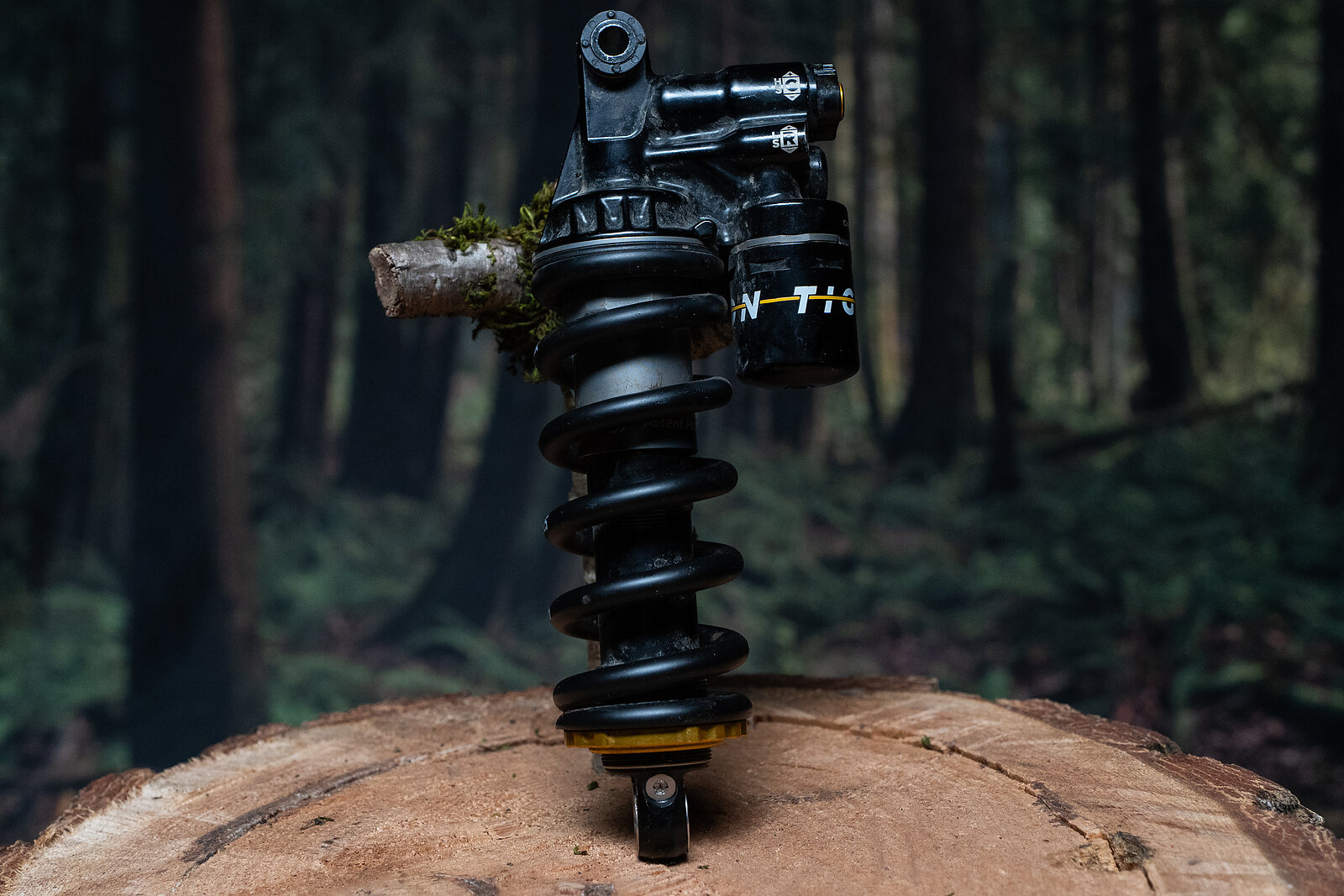
Cane Creek Tigon
- 840 grams (with spring)
- 550 lb coil spring
- 15 PSI ramp chamber with regular link
- 0 PSI ramp chamber with Cascade link
It’s a little thing but I really love Cane Creek’s climb switch feel. The way it slows down rebound damping as well as affecting compression helps make the bike feel glued to the ground. With the stock linkage the Tigon doesn’t feel quite as active off the top as the Genie, but it’s close. Overall, it feels more heavily damped, and it feels firmer higher in the stroke than the Genie does. I also ran the Tigon back to back with the non-piggyback Float Genie, and the difference there was really pronounced. The Tigon felt much more controlled and composed. The difference is smaller with the Float X Genie, and its adjustable compression damping, but it’s still there. I really like how this shock feels with the stock linkage.
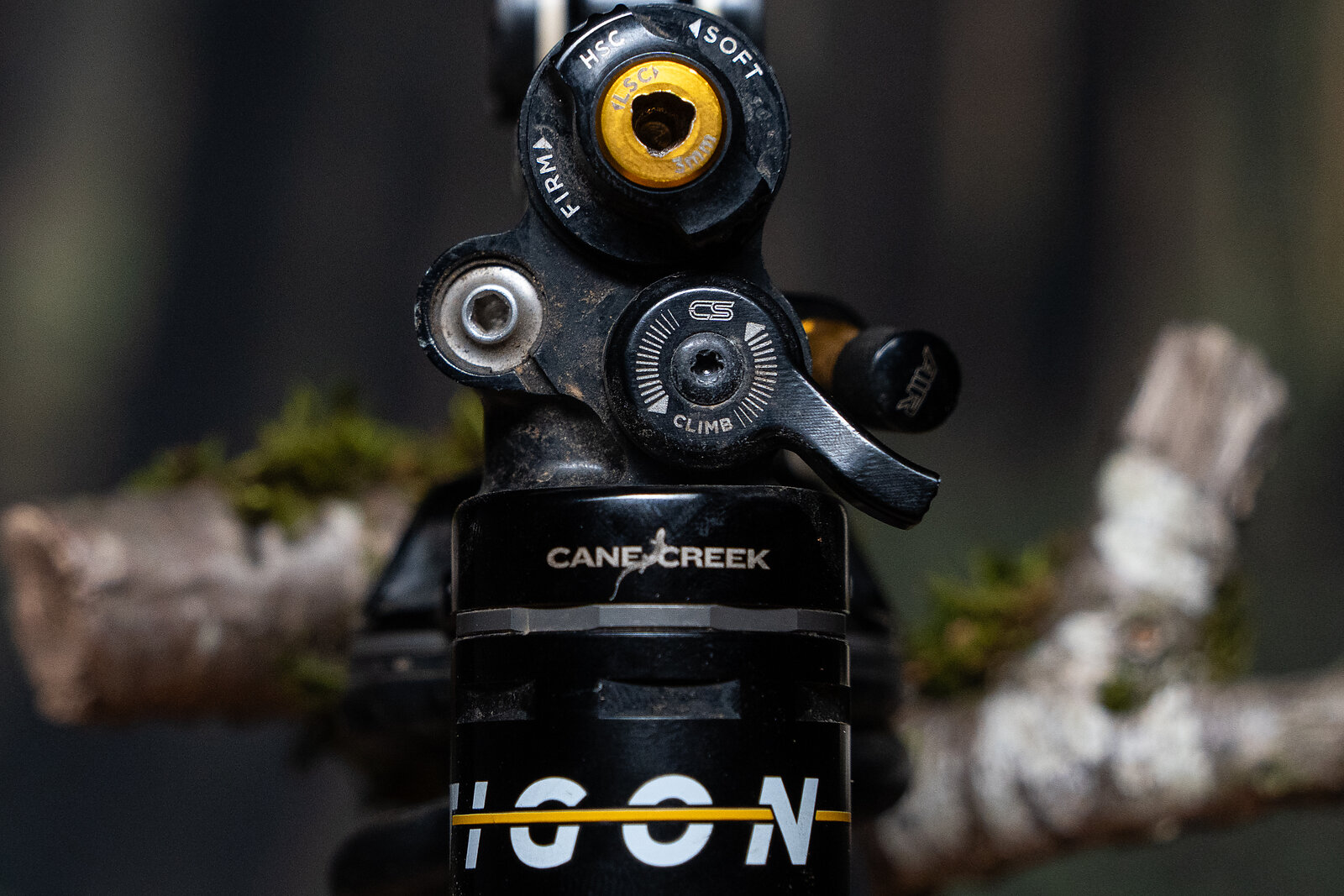
With the Cascade linkage the Tigon felt more like the X2 to me than the Vivid. It fell into its travel fast, and then was pretty rampy. That’s probably due to the spring rate being too low for the Cascade link’s higher starting ratio, and then, the air ramping up later in the stroke. Even though I ran it at 0 PSI, it still ramps up more than a traditional coil. I see zero reason to ever run this combo, simply because the Tigon is meant to do the same thing the Cascade link, or the Genie are meant to do, but it felt less viscerally gross than the Genie/Cascade pairing did.
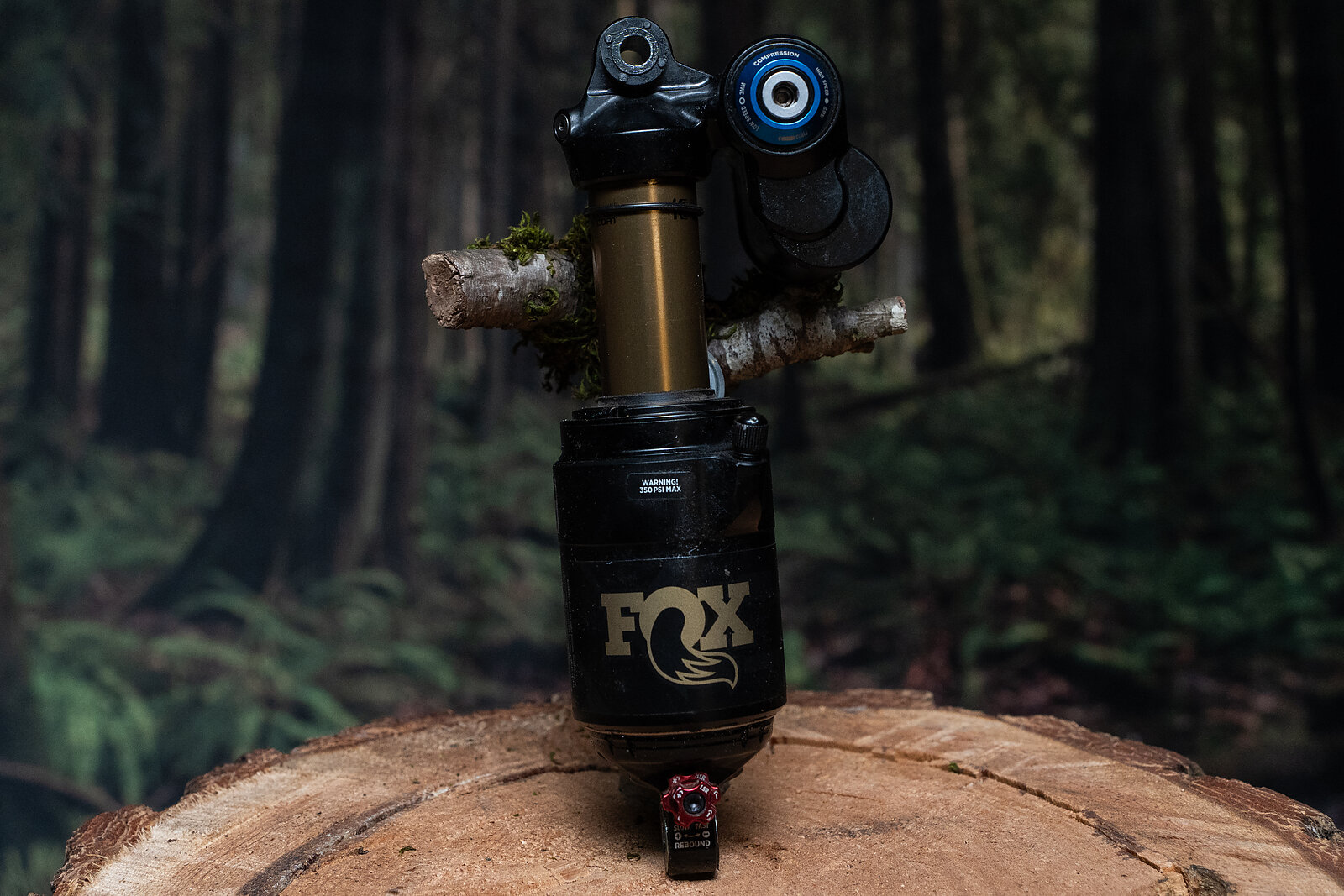
2026 Fox Float X2
- 737 grams
- 214 PSI with regular link
- 228 PSI with Cascade link
- One blue volume spacer (4 CC)
- Tune: CS50, RL50, LMM, Rezi B60, Bleed 0.9
With the stock link the X2 was the least supple and gave much more feedback than the other shocks. I really noticed braking bumps, and it felt like I was getting more trail feedback through my (creaking, messed up) ankles. It’s not “plush” and doesn’t “erase the trail.” But, it also has some of the best support and power transmission through jumps, pumping, and in berms. The harder and more aggressively I rode, the more I liked this shock. It’s not forgiving, but it’s kind of agro and really fun. I think the jounce bumper is doing a lot of work on bigger hits because it’s not a really hard bottom out, but it’s definitely happening. I had a fun time running this pairing when I was chasing faster riders on blown out jump trails in the middle of summer.
With the Cascade link I was surprised by how much less plush the X2 felt than the Vivid. It also felt significantly more vague and wishy-washy in the mid stroke. The Vivid with the Cascade jumps more easily and intuitively than with the X2 by a fair amount. But the X2 with the Cascade link is far and away more compliant, supple, and delivers better traction than with the stock link. The personality change here is big, and for the better, unless you’re chasing that super precise feeling the stock link delivers. I think a lot of folks will really dig the X2 and Cascade pairing, but, for me, the Vivid eclipsed it, at a weight penalty.
RockShox Vivid Coil
- 1077 g (with spring)
- 650 lb spring
- Tune: r25c26x4
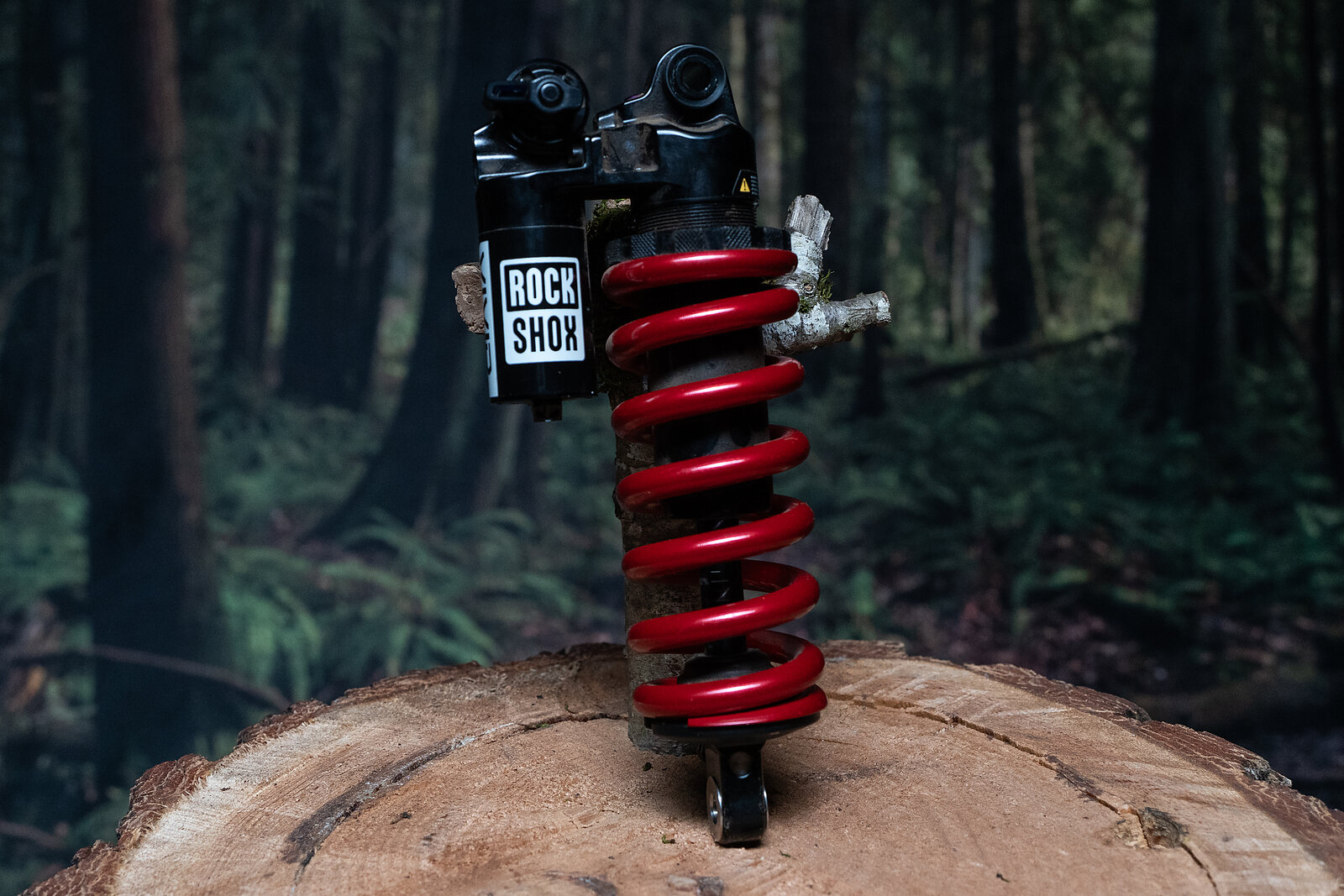
I only had the 650 lb spring for the Vivid, so I ran it oversprung with the stock link, and had closer to 25 percent sag than 30. Interestingly, though, it felt more active and supple off the top than the X2, and I also didn’t get as close to bottoming it as I did the X2, probably thanks to it being oversprung. Similarly to the X2 I had less traction and more feedback through my ankles than the Genie or Tigon. The more you work to really push into the lip and jump with good fundamentals, the better this feels on jumps, but, if you just hop without loading, it feels less poppy than the other shocks. The climb switch was the most firm by far. Maybe too firm.
This was, by a fair margin, my favorite shock when combined with the Cascade link. I ran it that way this summer, and actually ended up using it as an excuse to push the Stumpy into enduro territory (more on that later). It has a very round feeling end stroke without that vague mid stroke I ran into on the X2. It’s much easier to get into the air with bad fundamentals than without the Cascade link, and it erases smaller hits and chunder the most effectively. I found myself noticing feedback through the fork more than with any other shock and I think that’s because it was handling the rear wheel so well that any shortcoming up front was more pronounced. It’s the most “plowy” feeling combo out back, but, on lower angle trails, is also less responsive than the Genie.
Stumpy as Trail Bike or Brawler?
Over the course of the past year I’ve vacillated between wanting the Stumpjumper to be a quick, precise trail bike or a longer-travel, smashier, enduro-lite, all-mountain bike. I’ve run with a 150-millimeter Manitou Mattock, a 160-millimeter Fox 36, Manitou Mezzer, and RockShox Lyrik, a 170-millimeter RockShox Zeb, and a Fox Podium. I’ve run five different drivetrains and four different sets of brakes on this bike. And I’ve swapped between trail and gravity casing tires.
One of the coolest things about the Stumpjumper is that it can do both. But ultimately, for me at least, the limiting factor ended up being geometry, and specifically front center. At 6’2” I’m on the tall end of the S4’s size chart. When I first installed the Cascade link, it felt like it outran the 160-millimeter fork, and prompted me to install a 170-millimeter Zeb and heavier tires. But, with that longer fork, the front end got awfully short and tall, while the seat tube got slacker. I found myself feeling like a whole bunch of man meat perched above a slightly too small bike. The suspension performance was there, but, for me at least, the chassis stability didn’t match it. That ultimately drove me back to running the Stumpjumper with the stock link and the Genie or Tigon.
But, that experiment did teach me two things: first, if you’re closer to the middle or bottom of your size’s range, you might really dig the Stumpy as a beefcake rig. Second, tire casing choice and fork travel made a similar impact to the Cascade link and coil. If you want to make a bike feel meaner, start at the tires, and work out from there.
What About Weight?
The stock linkage weighs 322 grams, whereas the Cascade link weighs 423 grams. The stock Genie weighs 610 grams and the Vivid weighs 1077 grams. So the heaviest combo weighs 568 grams, or a pound and a quarter, more than the lightest. That’s not negligible at all, and ties into my final takeaways.
Outcome
I went on a long journey only to end up right back where I started which is a little disappointing. For a pure trail bike, my personal favorite use for the Stumpy, my top choice is the standard linkage with the Genie Float X. My second choice is the stock linkage with the Tigon. It’s a touch more controlled and damped, but I personally don’t find the weight penalty to quite be worth it. It turns out that Specialized really nailed the stock link and shock combo.
But, if you want to eke the absolute most descending performance out of the back end of this bike, the Cascade link and Vivid combo is really impressive. I think the Vivid best matches the Cascade link and gives it a nice combination of support and gush. I’m not sure that in blind testing I’d even be able to tell that it's the same bike as the stock setup. This combo is very fun to push hard on techy trails, but might motivate you to bump up your fork to match the rear end’s performance.
Finally, I was reminded that mountain bikers are really nice. Quite a few folks noticed me posted up on the access road, with my bike upside down as I swapped shocks and offered to help or lend me tools. Thanks for looking out for the weirdo with a backpack full of suspension!