Bikepocalypse Now Recovering From Big Money and Bad Bets
On April 17, 2024, a ritual that had played out for 34 years was in full swing. The world’s biggest and brightest cycling brands were all setting up booths at the Sea Otter Classic bike festival near Monterey, California. As one of the busiest bike events on the globe, it’s also the most important industry mixer on the North American side of the Atlantic.
So, it was especially puzzling when the folks from Kona Bicycles began tearing their tents down just as quickly as they had put them up, only days after releasing a new bike, and fled the Laguna Seca Raceway in a head-down haze.
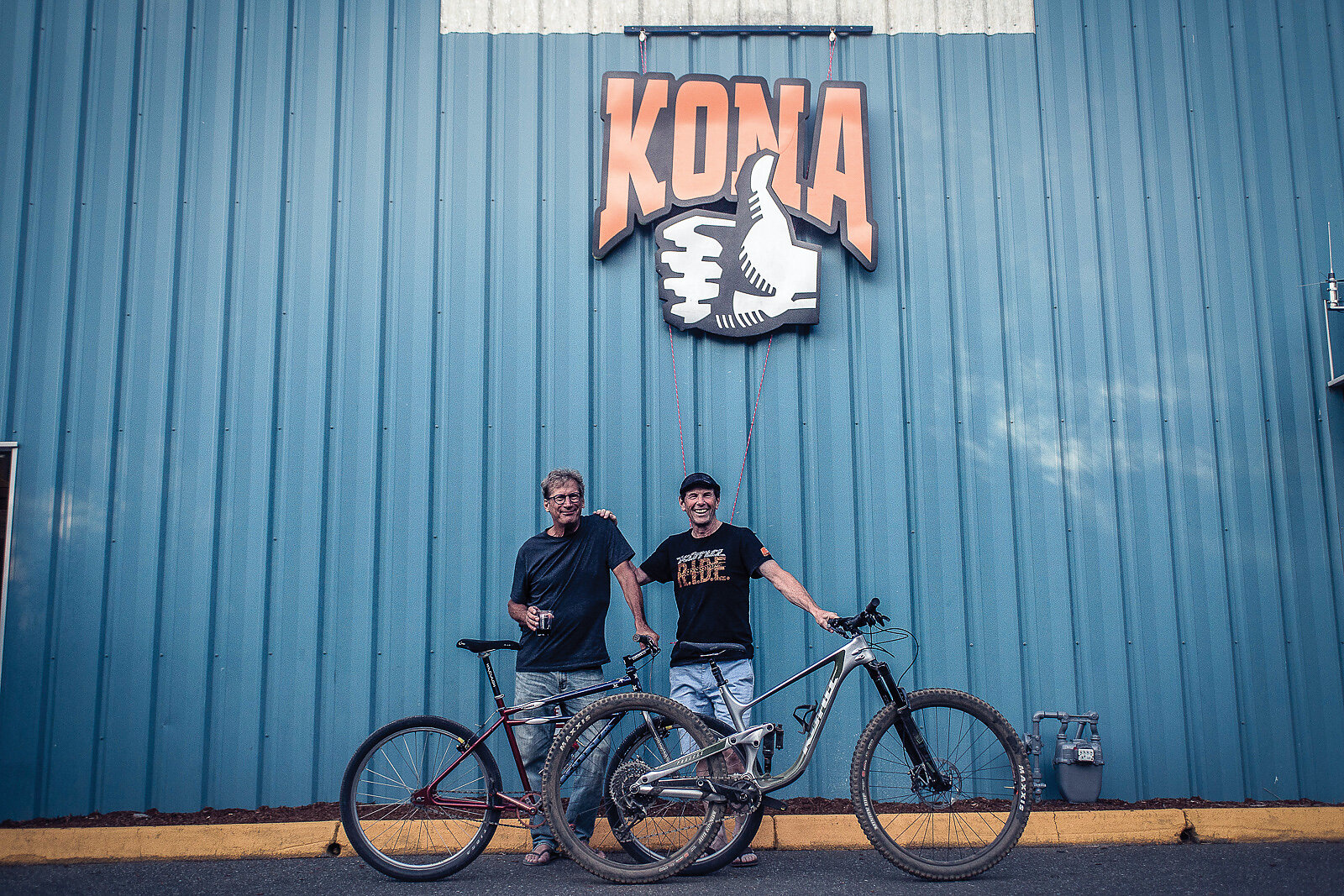
“I know a lot of other companies have gone through very similar pain. Maybe not quite as publicly embarrassing as what happened a couple of years ago in Monterey,” Jake Heilbron shyly says about the incident. He and his partner, Dan Gerhard, founded Kona in 1988 and eventually sold it to a then private equity-backed sports conglomerate in 2022.
Almost immediately after, the industry slumped, the conglomerate lost its backing, and it chose precisely the most high-profile moment possible to ditch Kona. Dozens of adored brands were caught up in the same wave. One that began forming sometime in 2019, when the spike proteins of an animal coronavirus mutated and took the exact right shape to bond with the receptors of human respiratory-tract cells.
We all know what happened next. Science became apocryphal, more than 1.2 million Americans died, 185,000 businesses shuttered, everybody watched “Tiger King,” and then we all bought bikes. Caught up in the windfall of cycling shops being declared essential services for transportation, mountain biking found a holeshot through the pandemic lockdowns. Then it got complicated.
Demand skyrocketed just as factories overseas were forced to close and supply became constricted. Bike prices, in turn, soared. For consumers, finding a new ride was harder than getting into a late ’90s Pearl Jam concert. For the industry, the great bike rush of 2020 was the biggest pay dirt it had ever seen—by some accounts revenues had doubled or more by 2022.
The boom was short-lived. More than two dozen beloved bike companies closed or declared bankruptcy in the ensuing years. The list includes innovative startups like Guerrilla Gravity and Revel Bikes, but also legacy brands like Kona, GT Bicycles, and Rocky Mountain. These companies were like the wallpaper we grew up with: permanent fixtures in the manifest space of our sport—a part of its very architecture.
So how did the bottom fall out so badly? For those who’ve made it to the other side, hindsight offers awful clarity. The pandemic boom-bust wasn’t just bad luck or bad timing. It was the predictable result of fake demand and bad bets by big businesses. The brands that have since limped back have done so because of the resilience of people who continue to believe in them. Heilbron is one of them.
“I mean, [the pandemic] was almost a nuclear event for the bicycle industry,” Heilbron says from his Santa Barbara office, laying out the sharp rise in revenues and the impossible task of producing enough stock. “So, 2020 was pretty good, 2021 was even better, and then the first year of [the new] ownership of the company [in 2022] was the most financially successful year that Kona had ever had.”
That surge was consistent across the whole bike business, and it lured the finance industry at a time when money wasn’t easy to make. Traditional businesses like entertainment were in the toilet, and interest rates were historically low. Safe investments were hard to find, so private equity and venture capital companies had to make riskier bets. It looked like pandemic restrictions might last a decade or longer, and our society would be permanently changed. So, when investors saw a line going up in cycling, they jumped on it.
“We’d had a few people [over the years] kind of sniff around and say, ‘Hey, would you like to sell your company?’” Heilbron says. “And we said, ‘No, we like what we’re doing, no thank you.’ I don’t think until Covid happened that there was a sudden rush from investors to kind of get into the bike business and maybe revolutionize it and cash in on it in some way.”
Heilbron and Gerhard were approaching retirement and exit strategies hadn’t otherwise been obvious. The offer that came in via private equity seemed prescient, even though Heilbron says he wasn’t ready to leave quite yet. Nonetheless, they sold, and Heilbron kept working for Kona, hoping to help navigate what was coming. And it sure came.
Warehouses emptied, fuel costs spiked, raw materials were scarce, and component suppliers wouldn’t even give lead-time projections. Brands feverishly placed orders based on outrageous demand signals with the assumption they could cancel later. They couldn’t.
“It flipped really fast,” Heilbron remembers. “It was right around late ‘22 when all of a sudden it just went from not enough bikes to way too many bikes. Once you have product in the pipeline—you know, all the frames, the raw materials, the finished goods—there’s a certain commitment the brands have made to all those suppliers for everything. And to turn it off really quickly is hard.”
That lead time had stretched to around 18 months. The new owner, meanwhile, fixated on juicing development and hype. Some of that idea was coming from e-bikes, a shiny new category that is still the fastest-growing in the market. The trick is carbon molds are expensive to make for either electric or analog bikes, and innovating around new motors isn’t any quicker than innovating around any other new component.
Heilbron says mountain bikes (roughly one-seventh of the entire cycling industry) are complicated to develop, complicated to build, and the business runs on personal relationships all the way down the chain—a key nuance big money didn’t get. The new ownership appeared to only be interested in the kind of rapid growth that, outside of the pandemic, the cycling industry could never produce.
“Private-equity firms will make certain investments, and basically they’re bets,” Heilbron says. “And they’re betting that some of them will pay off big time and others are going to cost them. But, you know, when you’re dealing with other people’s money, you’re willing to take those kinds of risks.”
Predictably, innovation slowed, supply caught up, the world opened again, and everyone had stocked up on bikes that were now going to be relevant well into the future. The sales boom had mostly stolen demand from the years ahead. Participation numbers dove as pandemic-bred mountain bikers went back to their old lives. Then the inflation from a government-subsidized economy rose to a 40-year high, and snapped wallets closed.
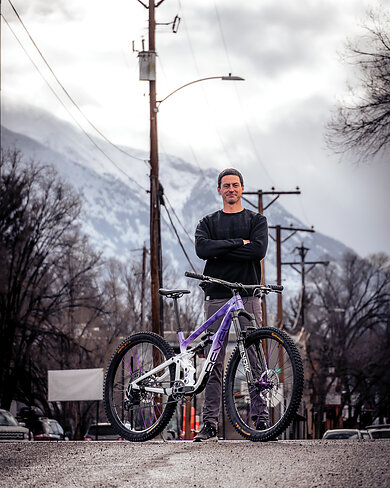
Used bikes flooded the market at the same time as a historic oversupply from frantic Covid ordering came online—the ill-timed uncorking of a year-and-a-half backlog. Retailers spent the next two years clearing out brand-new bikes at cost while lenders called in loans and private-equity firms ditched company after company overnight. Canyon Bicycles, Nukeproof Bikes, YT Industries, Troy Lee Designs, Vitus Bikes, Deviate Cycles, Knolly Bikes, KHS Bicycles, plus the Accell Group and the 7Anna Group (both consortiums of multiple bike brands) all either shut down, went bankrupt, or changed ownership.
Up for auction were the husks of once-great brands at a time when nobody should want in on the bike business. Unless of course you cared an awful lot about it. Heilbron and Gerhard did. They came out of retirement to buy Kona back mostly because they couldn’t stomach watching staff, suppliers, and loyal dealers get so hurt. It was a stroke of both benevolence and passion no traditional financier would have sanctioned. But they were able to buy the company back for a song, so they did it.
Adam Miller’s story is similar. He founded Revel Bikes in 2019, and it almost immediately blew up: The bikes got great reviews and quickly found a passionate customer base excited about the Colorado brand’s niche suspension platform.
“So, Covid hit and at the time it was super terrifying,” says Miller, an affable entrepreneur who started the company in his living room. “And then it was just like craziness. The demand skyrocketed through April, May, June ... it just kept growing. I mean, it was just insane. We told bike shops every day, ‘No, we can’t sell you bikes.’ And they would call and be like, ‘Hey, I’ll send you a check right now for $50,000 so I can reserve 10 bikes.’ And we still had to say no.”
Revel grew in two years to what Miller had thought would take 10 or 20. But he was perpetually cash-strapped because the bike industry’s cash flow is brutal: Pay for everything up front before it ships, then wait for dealers to pay you on the back end. In turn, Revel was operating mostly on Miller’s personal credit. To boot, he had trouble getting his bikes in the queue at the factory because much bigger brands were putting in way bigger purchase orders, and commandeering what production capacity there was. (Almost all brands use third-party factories overseas, of which there are only a handful).
By late 2021, at the height of the pandemic boom, Miller got an offer from a private-equity firm that promised to give his original investors a return and finally inject enough capital to run the business properly. He took it but also stayed on as an employee. At first, it worked. The capital funded a stable supply chain in Taiwan and also let him finally take care of his staff.
“I closed the deal and I sat everybody down one at a time. I gave everybody a surprise bonus in the office and half the employees cried. It was the best day of my life,” Miller says. “We got a lot of money in the door and I was like here’s enough money to, for some people, buy a new car. Like, it was life changing for so many people. We gave everybody cost-of-living raises, we got a 401K with a matching program, and I got way better health care. And all of a sudden the business had capital to do all these things where it wasn’t me spending half my time scraping together money.”
But the relationship soured fast. The new owner once again wanted to scale aggressively and hired a former Trek Bikes executive as CEO, not someone who understood a small brand. They scrapped Revel’s build-to-order model, which had kept inventory lean and customers happy, in favor of boxed bikes that looked better on spreadsheets. Miller disagreed fundamentally with the direction, gave 18 months’ notice, and left. Without him, the business deteriorated quickly. The private equity doubled down, took on more debt, over-leveraged, and eventually their lender foreclosed.
When Miller heard his old company was for sale, he saw an opportunity to right a wrong. He beat out roughly 150 other bidders and then immediately flew to Taiwan to personally cover the debts owed to suppliers and frame manufacturers that weren’t on the official filings, meeting with them face-to-face to rebuild those crucial relationships.
“I don’t have a lot of good things to say about private equity,” he admits. “But they did do some very good things that set Revel up much better now than we would have been. Unfortunately, those are investments that take like four years to come to fruition. Which turns out private equity is not into when things aren’t going well ... I mean, I believe in business, I believe in capitalism very strongly, but there are a lot of evil people in that world.”
Of course, private equity is only part of the picture. Businesses in every industry got caught up in the economic stimulus that warped the pandemic economy. Dr. Bill Craighead is director of the UCCS Economic Forum at the University of Colorado Colorado Springs and published a paper on the phenomenon. He calls it the pandemic preference shock—essentially the shift from spending on services to spending on goods.
“The government policy interventions at the time really did do a good job of maintaining people’s incomes,” he explains. “People had incomes, they couldn’t go out to eat, they couldn’t go to the movies. So, there’s this huge, off-the-charts shift to wanting goods. The cycling industry may be an even more extreme example of something that was happening more broadly. But it was temporary. Forecasting is hard. If you just extrapolate a recent trend, you can be way off, especially in a period like around the pandemic when there are all these really unusual things happening. If there’s ever a time to not do that, it was during the pandemic.”
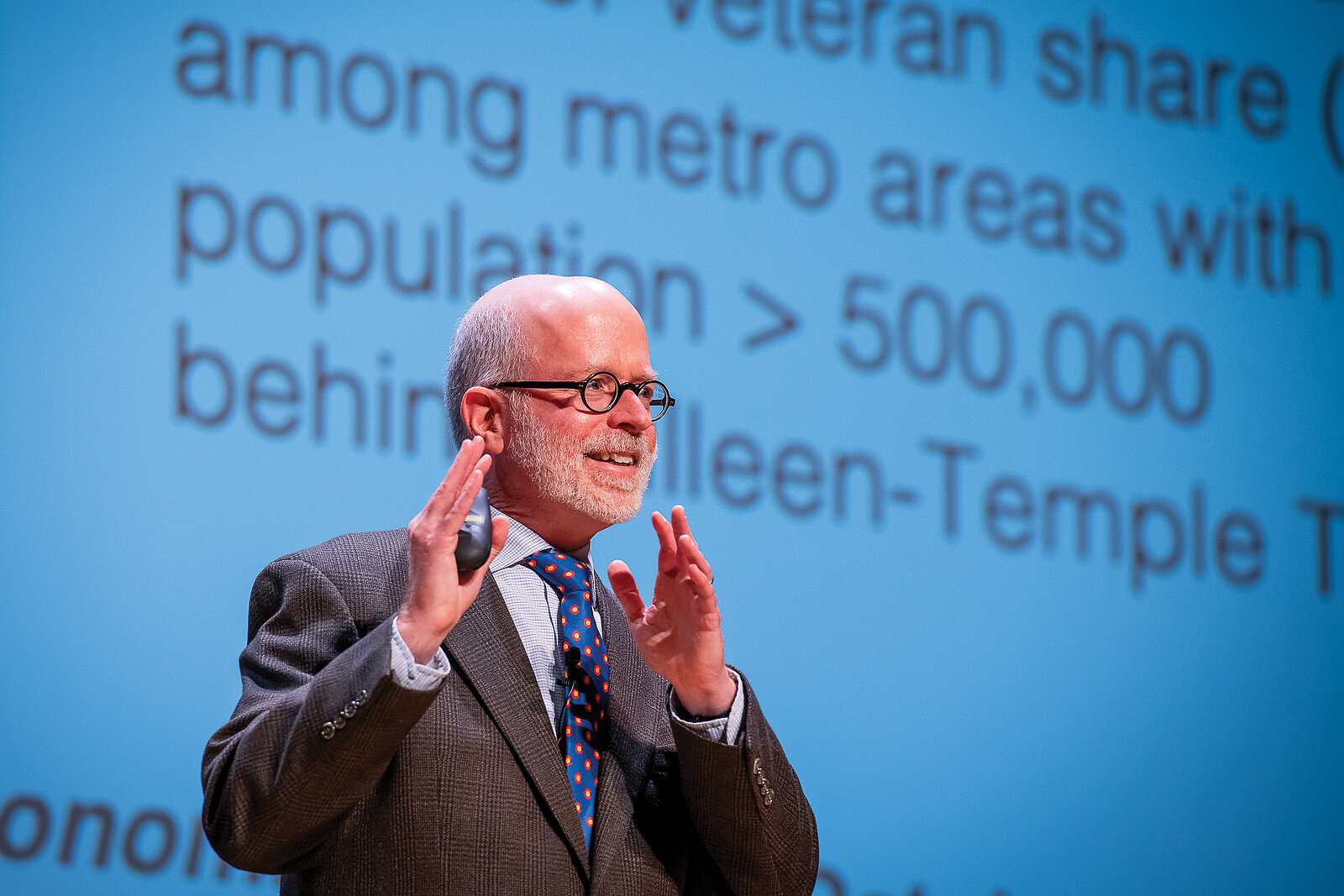
On that note, a lot of the forecasting data for cycling was coming from the retail point, which Alex Cogger explains essentially became a compounding false indicator. Cogger is the former chief product officer at Rocky Mountain and says there was a big surge in buying, but also a big surge in shopping that skewed everyone’s metrics.
“As the message gets telegraphed all the way up the chain, the consumer starts calling around for whatever it is, a Trek Top Fuel. And so they’ll call three different shops for that one Trek Top Fuel. That’s not three bikes in demand. That’s one bike. So there are fuzzy signals from that front.”
It was one of the last lessons he would learn at Rocky Mountain, a company he spent 18 years at before it filed for creditor protection in December 2024, with the spectacular revelation the parent company had accrued about CA$70 million in debt. (Rocky Mountain itself owed closer to CA$13 million).
According to Cogger, the owner had loaded the company with debt from a series of failed side ventures: a LimeBike-style share cycling brand called The Wagon that collapsed and pushed roughly $17 million of debt onto Rocky’s books, and further back, a fitness equipment company that went the same way.
“Guess who got the bill?” Cogger asks, incisively.
Seemingly emboldened by the pandemic forecasting and the cheap costs of capital, Rocky also burned enormous resources developing its own proprietary e-bike motor rather than going with an established supplier like Bosch. It was a move Cogger says did produce a better end product, but at a cost that drained the company at the worst possible time.
“Rocky Mountain was making money, but it got saddled with all these other poor decisions,” he says, pointedly.
The ownership family also kept financial information opaque even from senior leadership, which meant the people best positioned to course-correct were always operating with incomplete information. When the wall finally arrived, it came fast. Cogger handed in a recovery plan and was handed his walking papers the same day.
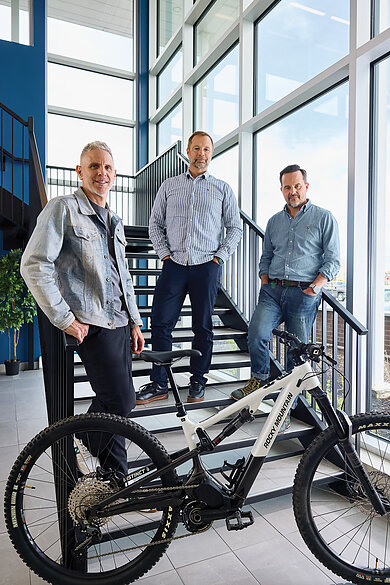
After 18 years with a brand he loved, being suddenly jobless was disorienting, but he’s since landed with Fox Factory as their director of applied technology and strategy.
“At the end of the day, I recognize the situation I went through is not that common within the business,” he says. “It is full of fun, interesting people, it’s a community I love, and it’s work I really enjoy. So I was not concerned about jumping back in.”
As for Rocky Mountain, like so many other companies, it was put up for sale by its creditors, and a group with enough passion to revive it stepped in. Cogger wishes them all the best.
“The brand, you know, will survive no matter what,” Cogger says. “It’s earned its place in the sun as one of the OG, legit mountain bike brands. So I think there’s tremendous value there.”
Patrick St-Denis and his partners, a group of Quebec-based outdoor-industry veterans agreed, and purchased the brand. Despite being sold in 40 countries, Rocky has always been a far smaller company than it projects in the mountain bike community. Still, especially in Canada—and especially in North Vancouver—it’s an institution with many loyal followers.
“I was surprised,” St-Denis says. “A couple of weeks after we bought, we went to the Eurobike show and were walking down the hall with our Rocky Mountain T-shirts. And people would stop us saying, ‘Hey, you work for Rocky?’ And at that point, you don’t know what to answer. Like, ‘Oh, yeah, maybe.’ And then it was always positive and great stories about the brand. Like, ‘I love the brand, I’m in Germany, I’m one of the retailers, I’ve sold Rocky for 20 years.’”
Moreover, St-Denis had worked as a distributor for outdoor industry giant The North Face for years and witnessed the company bounce back from near bankruptcy, so he has a historic lens on what’s possible. But he also has a strategy. He’s not chasing Trek or Specialized Bikes, not pivoting to price-point hardtails to chase volume. The plan is to stay in full-suspension, high-performance territory, refresh the brand’s visual identity and marketing to go after a broader set of consumers, and potentially introduce alloy versions of carbon models for more accessible pricing.
Crucially, he and his partners also understand the brand’s heritage and DNA and have kept it based in North Vancouver. St-Denis expects 2026 to be hard, but he thinks Rocky has already hit its floor. That hopefully means there’s not much more to lose, but also that, if the brand can maintain credibility, numbers should start climbing. And he might be right. Sales figures from Circana, a market research and retail tracking firm with special insight into cycling seem to show a return to normal, so to speak. Or at least a syncing up of the trajectory we would be on if the line were averaged over the pandemic lumpiness.
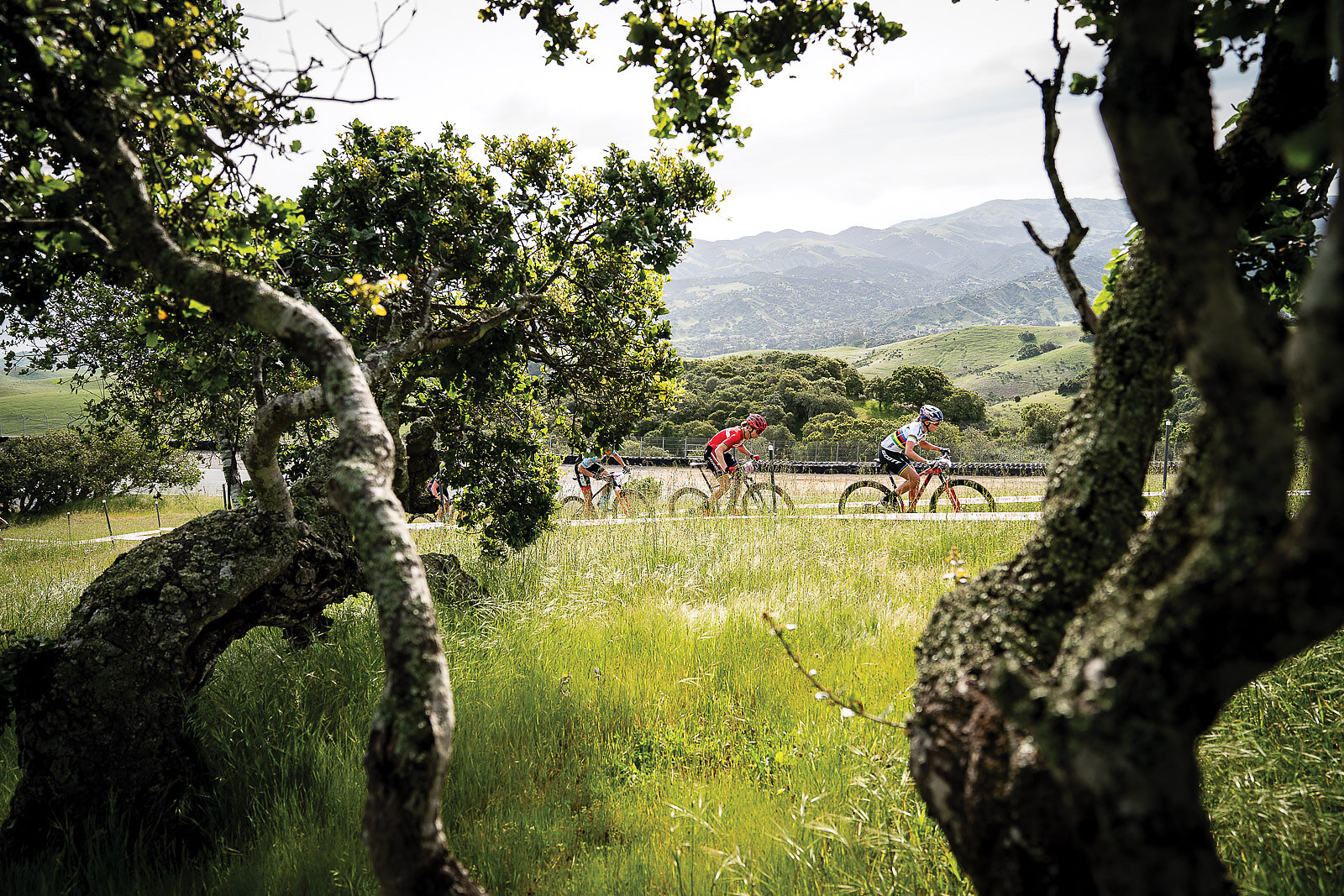
While traditional mountain bike revenue has fallen steadily, from $1.1 billion in 2023 to $886 million in 2024 to $756 million in 2025—a cumulative drop of roughly 31 percent over three years—the rate of decline is slowing each year. The first quarter of 2026 showed the most encouraging signs yet: full-suspension mountain bike revenue up 6.5 percent over the same period last year. E-bikes tell a more optimistic story, where revenue rebounded to $816 million in 2025, surpassing the prior peak, driven by an 11 percent increase in units sold.
The most interesting data point, though, is accessories like helmets, lights, trailers, and bike footwear are all growing in both dollars and units. Read as a participation proxy, it could mean people are still riding and buying consumables even if they’re not yet back to buying bikes at full clip.
There of course is one more wrinkle in the outlook these days, and that’s the current U.S. administration. Between tariffs and wars, inflation has begun to grate American consumers all over again. As disposable income becomes precarious anew, and uncertainty plagues the U.S. business climate, buying a new mountain bike is still a big question mark.
Ask Miller, though, and he’s still committed. He recently moved Revel to Golden, Colorado, for a new start that so far feels positive. Sales are slowly but steadily growing, despite tariffs, and the bike community is reinvesting trust in Revel, which just hired a new design director.
“He was working at GT,” Miller says with a sinister grin. “GT was shut down by private equity. So he has kind of a similar feeling to me, where the theme of this year is ‘revenge by 2026.’ We’re gonna make some cool shit to show that we can.”