Long Term Update: Specialized Levo 4 Alloy Four months on the metal monster
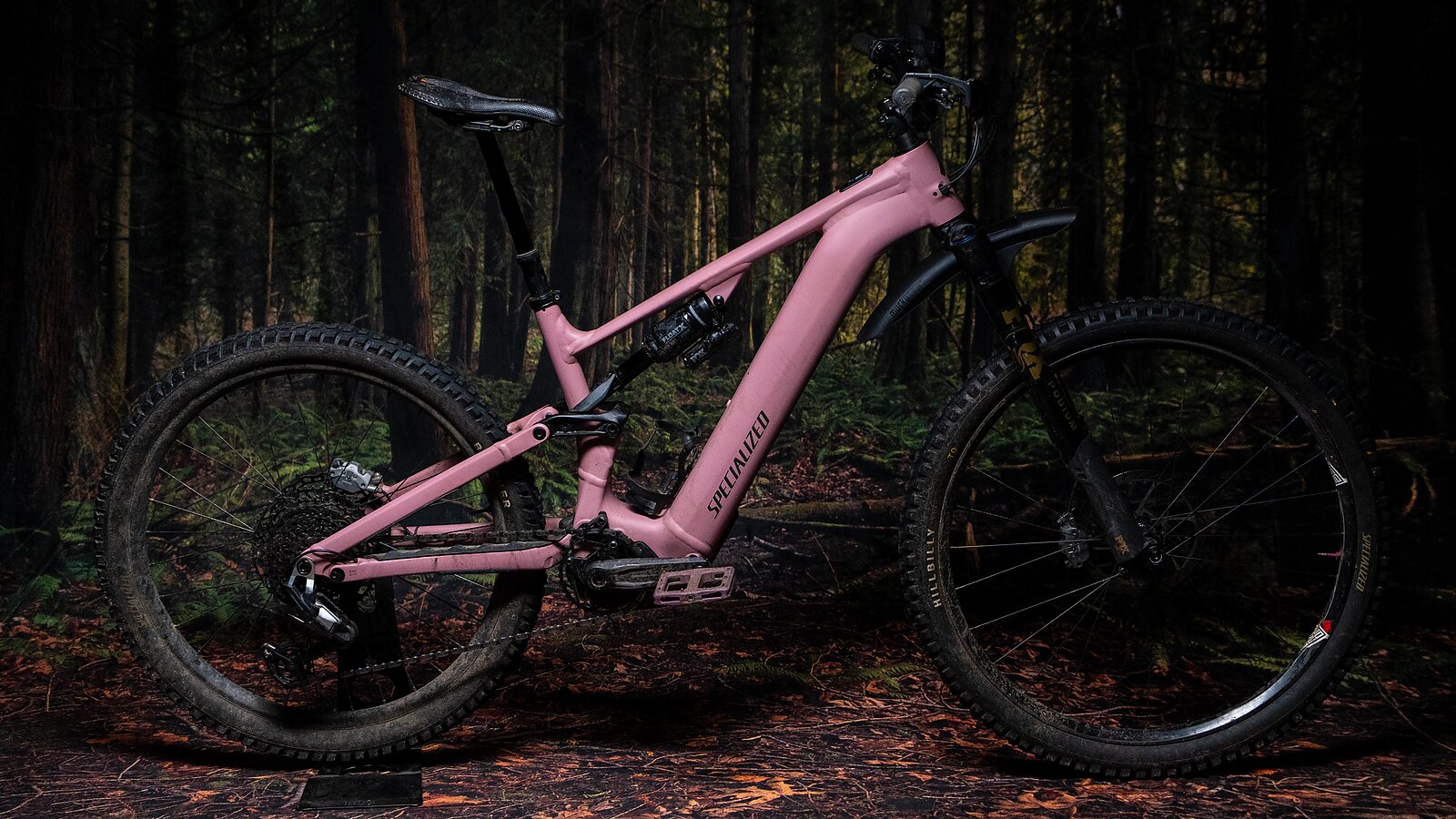
Way back in May of 2026 I reviewed the more affordable, alloy version of Specialized’s latest Levo. That piece was half review, half “here are some cool adaptable options that I’m stoked to try out on this frame.” In the last seven months, I’ve tried most of those options, ridden the Levo 4 Alloy a bunch, and crucially, Specialized just launched an over-the-air firmware update that kicks the Levo’s power and torque up substantially. So this piece comes in three parts: First, an explanation of the update, and a review of its performance. Second, a breakdown of all the experimenting I did, and what I learned. And third, a long term durability update.
So, if you’re looking for all the basic info about the bike, check out my initial review, and come back when you’re ready to get into the long term nitty gritty.
Levo 4 Motor Update
Thanks to the magic of the internet, this latest over-the-air update is very easy to perform. Make sure your Specialized app is updated, make sure you have good WiFi, and that your bike has plenty of battery charge. Then, just follow the instructions in the app to update your firmware. I’m not a huge fan of needing to use my phone to make my bike do things, but this was a painless process, and much easier than having to plug a laptop into the bike or take it to a dealer.
With the new firmware come several key changes, depending on what model you have. If you have the S-Works Levo 4, Specialized says the new firmware gets you “18% more peak power (up to 850W at the motor) with the same 111Nm of torque the previous version had. That’s up from the 720 watts it launched with. For the regular, non-S-Works bike I’ve been riding, you get 810W of peak power, up from 666 watts, along with a jump in torque from 101 to 105 Nm. For the stats crowd, that’s “22% more peak power.”
And yes, both bikes sport more than the Class 1-legal 750 watts of power, which, honestly, is moot, given that both also launched with the ability to change settings to make them Class 3. The horse is well out of the barn, hopped up from eating too many batteries.
Basically, the non-S-Works Levo now has nearly the same stats that the S-Works launched with, and the S-Works version is even more aggressive. It’s interesting to see Specialized roll out an over-the-air upgrade like this well after the bike launched, but makes sense from the perspective of making sure that motors and hardware were holding up to consumer use before pumping more power through them.
Those power stats are flashy, but Specialized also made four other changes that I’ll list in order of how much I noticed them.
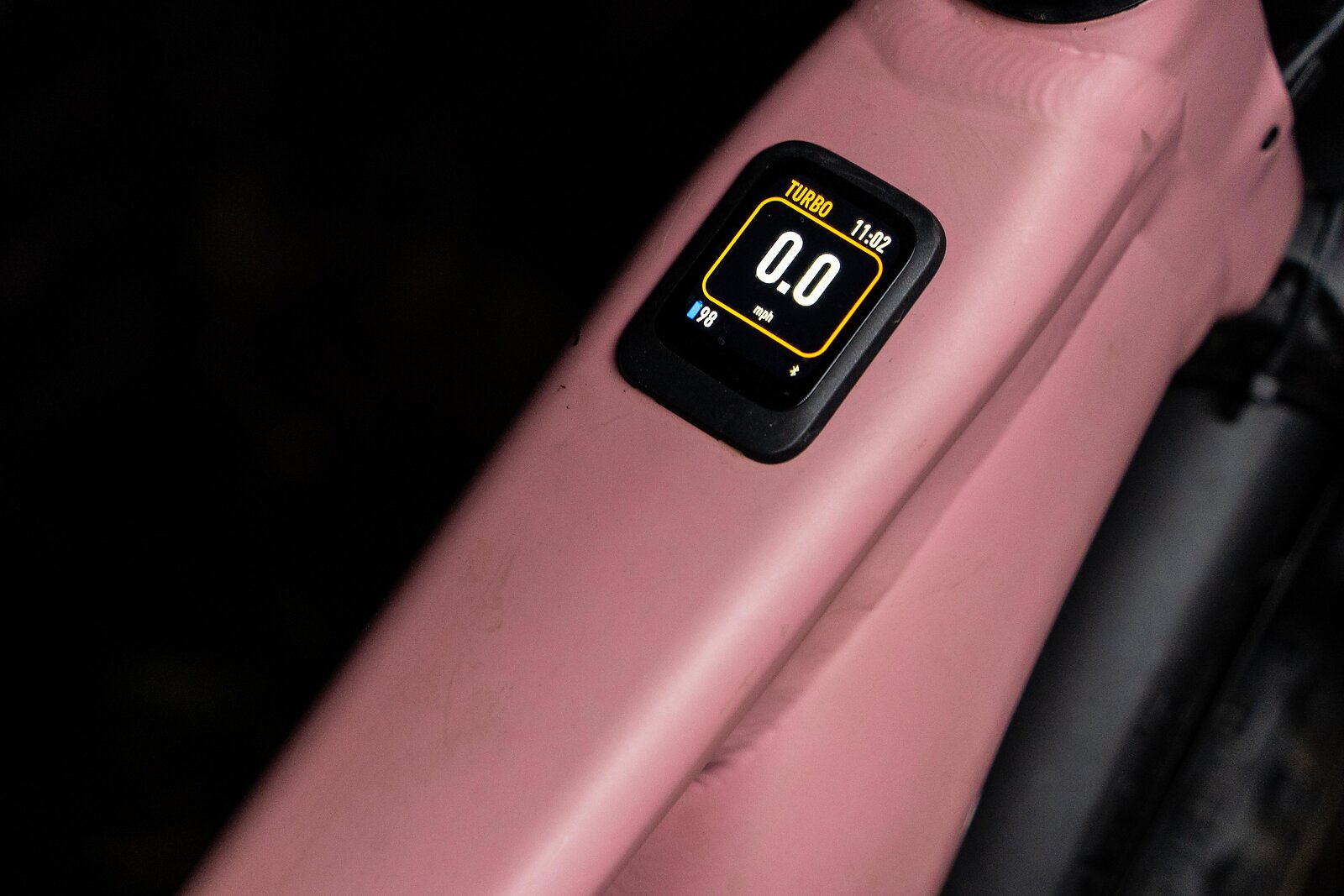
First, and most noticeable, the ramp profile as you approach the 20 or 28 MPH speed limit is much smoother. Initially, the jerk as you hit this arbitrary assistance barrier was pretty aggressive. I’ve been using the Levo 4 for a road commute to dig regularly, and it was quite impressive how much nicer it became to ride close to that assistance limit. Before the update it jerked on and off, and was pretty frustrating, whereas now it’s easy to nudge up to the limit and stay just beneath it.
Second, the Levo now has three walk mode speeds to choose from. I’m a big fan of that. I tended to take the Levo on rides that included a fair bit of hike-a-bike, and being able to dial in my walk speed was handy.
Third, the Levo’s overrun got “sharper” according to Specialized. I noticed this, most in a positive way, but also a little in a negative fashion. In my original review, I noted that I found myself grabbing for a non-existent clutch lever at times, in an effort to better control my climbing power. The sharper overrun exaggerated that feeling for me. I only really noticed it in tight, techy, low traction situations, but there were a few times when it kicked the wheel out and lost traction at times when I didn’t expect it to. To be very clear, I think this was mostly a rider issue. I’ve been surprised by how hard it’s been to unlearn moto climbing habits, given how little of a moto background I actually have, but I keep finding myself trying to give the bike throttle and pop the clutch when I should just be making sure to keep the cranks moving.
Finally, Specialized added a “Dynamic Microtune with 1X You” that’s meant to exactly match your power output. In all honesty, I barely used this mode. I like going uphill in Turbo mode, and downhill in Trail.
The smoother ramp and walk mode made the Levo 4 significantly more pleasant to ride, and I noticed the additional power and torque in some situations. However, I think for most of my riding, I’m not actually asking the bike for those max numbers very often, or if I am, I don’t actually notice the additional assistance as much as I should, and instead just notice the battery draining a little quicker. The added power is cool, and probably making a difference, but the walk mode and ramp are significant upgrades.
All the Experimenting
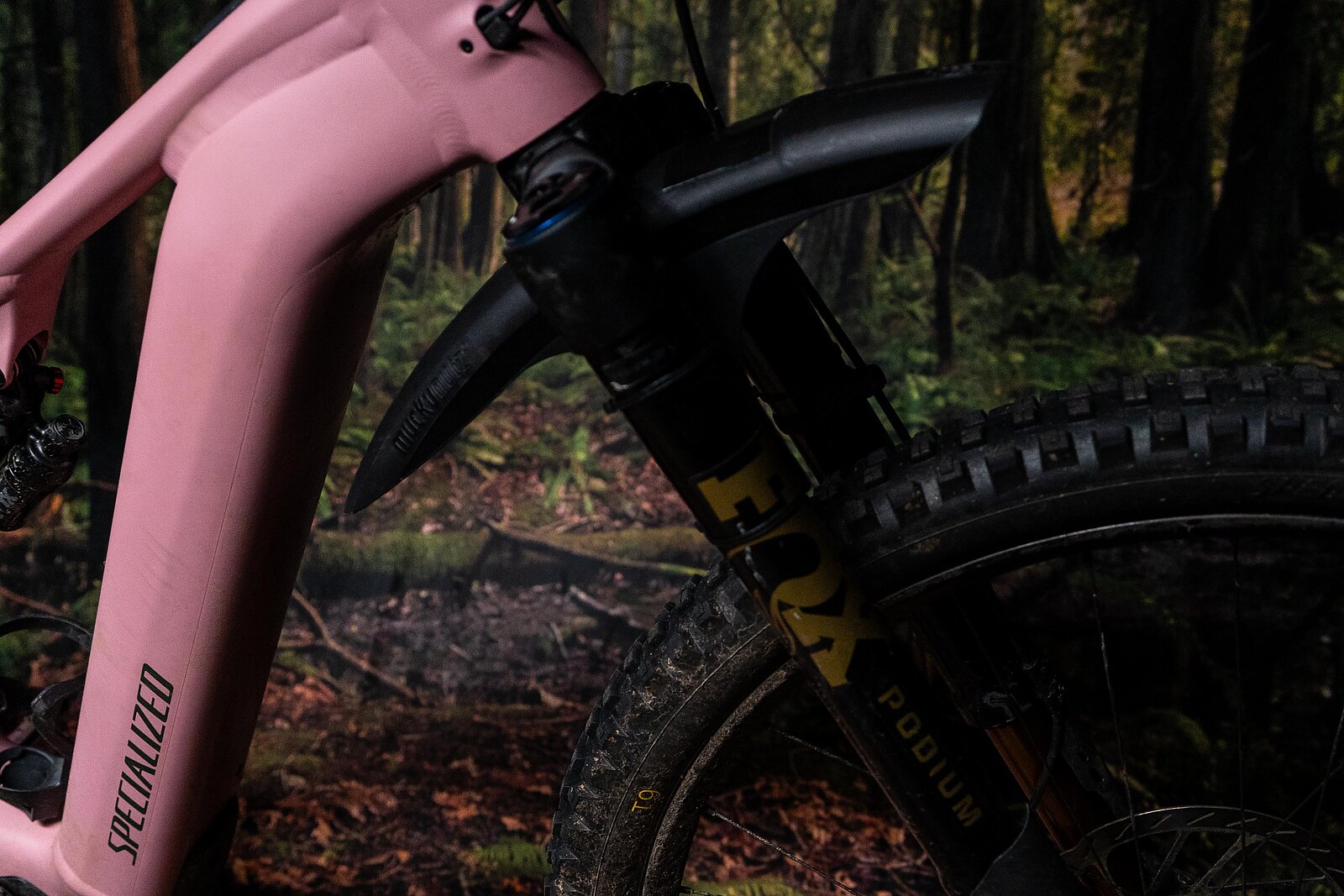
As I mentioned in my initial piece, the Levo has a lot of room for experimentation, and experiment I did, with different forks, shocks, and geometry settings. I eventually settled on the stock, head tube angle setting, but with a 170 millimeter Podium instead of the stock 160 millimeter Fox 36. I followed a similar trajectory with my Stumpjumper 15, slacking it out, overforking it, and then reigning it back in, and ending up at 10 millimeters more travel then stock, in the neutral head tube position. I found the Podium’s incredible suppleness to be a great match for the Genie out back.
On that note, I swapped in a Cane Creek Tigon for a while on the Levo, and didn’t find it to make quite as much of a difference as it did on my Stumpjumper, perhaps because the Levo’s piggyback Genie has more compression damping adjustment available than the original one I had on my Stumpy.
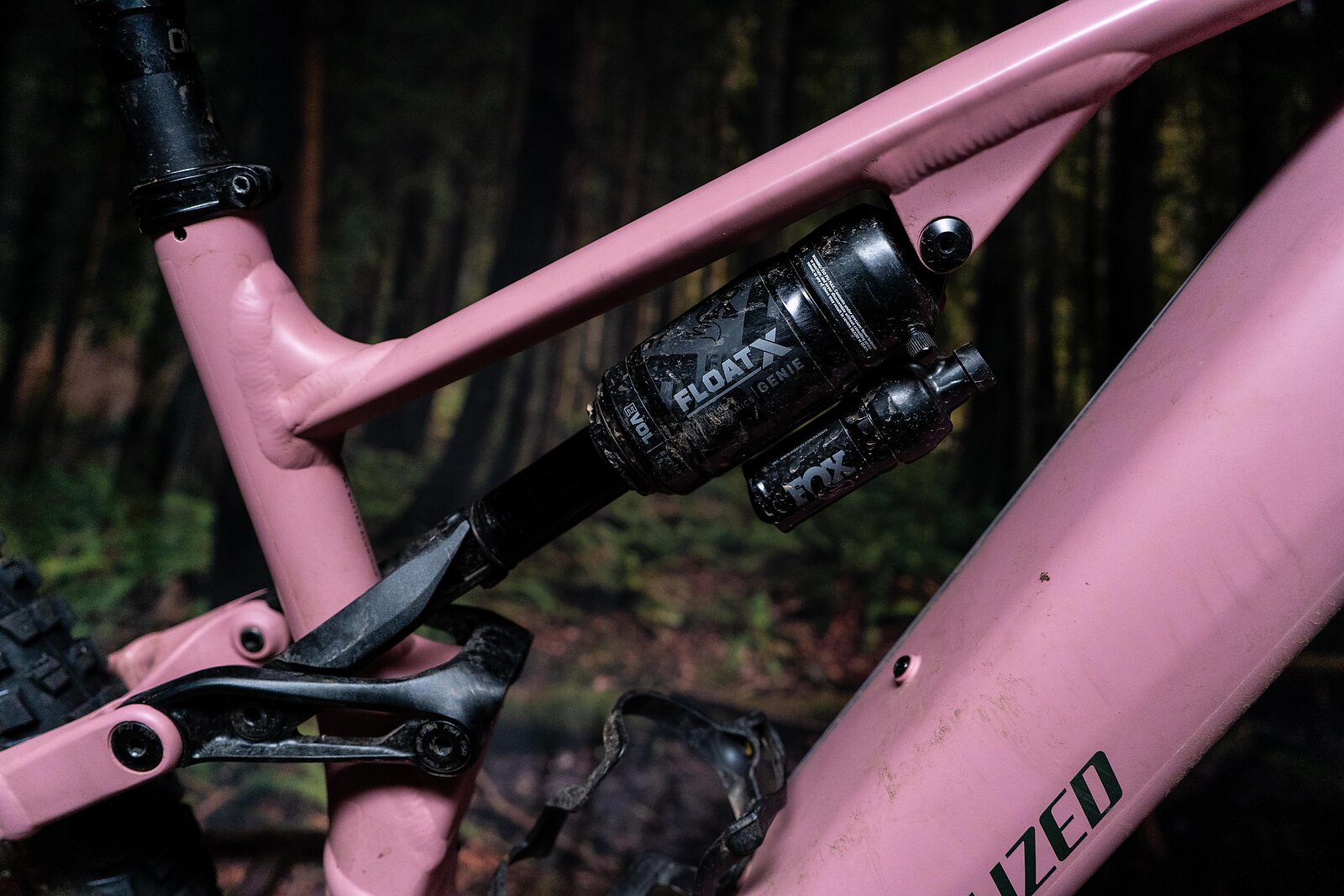
After a little experimentation I settled on the “long and slack” chainstay setting, and the high shock mount. That combination provided the best balance and climbing traction for my riding style.
My biggest takeaway from all my experimenting was that the Levo has a pretty distinct chassis feel, regardless of geometry setting. I think it’s related to the weight distribution, and the high overall weight of the alloy version I rode, but the Levo felt both a little less stable, and less intuitive to maneuver than some other full power e-bikes I’ve ridden. I felt like it had high initial inertia, it was a little harder to nose down into a depression, or tip into a turn, but once it started moving, it picked up momentum quicker than I would have liked. I’d jump from “am I going to be able to turn?” to “I’m turning too much!” rather often. Some of that might also be related to the suspension, this is a very supple feeling bike, and it feels like the center of gravity is rather high.
Regardless, I was able to mostly adapt to this sensation, but did find myself having to quickly recalibrate when switching back to the Levo from other bikes. It’s less of a scalpel, and more of a hammer, and the more you lean into that, the happier you’ll be.
Long Term Update
Dear Specialized Employee who has to clean and unbox the Levo I sent back: I am truly sorry. I rode this bike a lot, in some terrible weather. I promise I did my best to clean it up. But it’s been impressively reliable over the last seven months. No motor noises or issues. No error codes, no weird battery or speed sensor stuff. The electronics on this bike have been flawless, after a bunch of really gross, wet rides. Impressive.
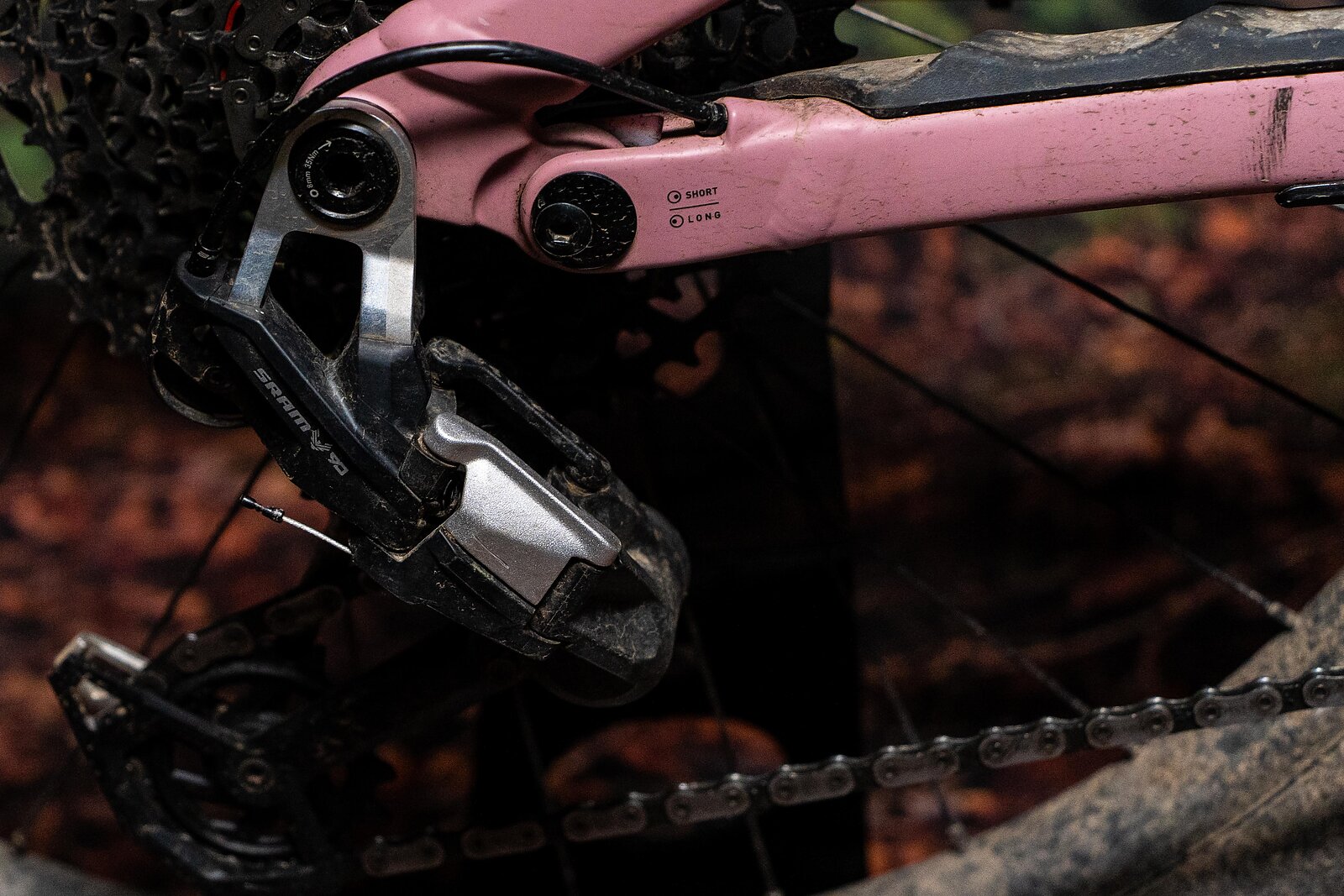
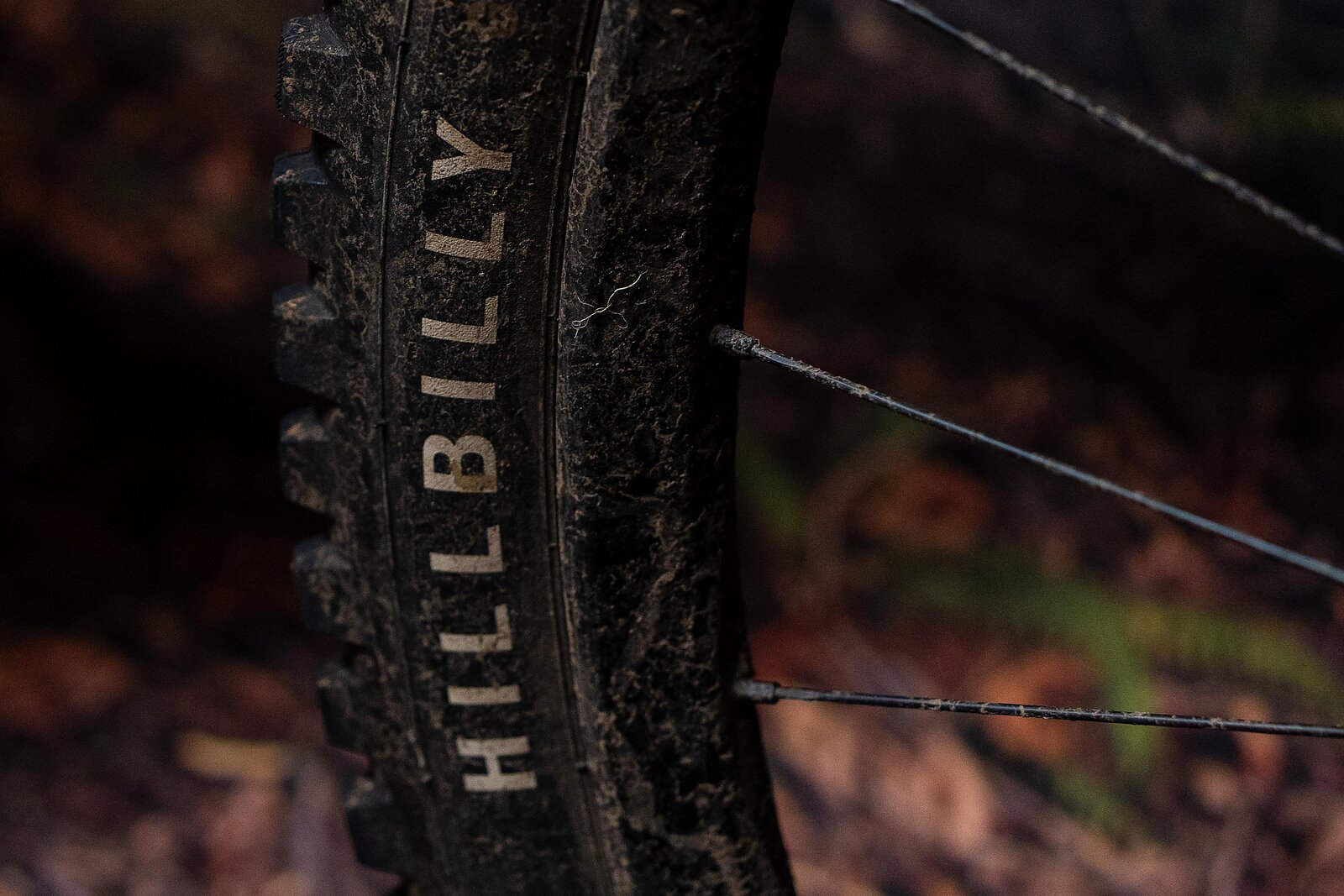
Component wise, I swapped out the stock Centerline rotors for thicker options immediately, and since then the Maven Bronze brakes have been well-suited to the job of slowing this hunk of metal and meat down. I also swapped to a Hillbilly front tire when things got wet. I love the double Butcher combo in dry and damp conditions, but when it gets truly loose, I don’t think the new Butcher brakes quite as well as I expected it to. The Sram Eagle 90 Transmission drivetrain is still shifting smoothly, even after I sucked a bunch of grass and bushes into it a few times.
I made a lot of mistakes that the rear wheel paid for, but the freehub is still spinning smooth, and the one rim dent I did make self-sealed as I pumped it back up. I swapped on a 240 mm OneUp V3 dropper post, which fit exactly, and otherwise, the components have been excellent. I especially appreciate the 50 mm rise stock bars. I swap out the stock bars on a lot of bikes, and was stoked to not have to on this one. The stock Fox Performance 36 was also a strong standout. Yes, the Podium is incredible feeling, but for the money, I could ride this stock fork on any bike for a year and be just fine.
In terms of frame details, I did have an issue with the rear brake line flexing into the spokes on compressions a few times and making a light “dinging” sound, so I zip tied it to the chainstay and had no other issues. I appreciated the SWAT bag behind the head tube, and used it to carry a tow strap just in case I ran into friends who wanted a lift.
So where does that leave us? First, the new software is a noticeable upgrade. It’s still wild to me that you can make an e-bike feel this much better by holding your phone close to it. What a time to be alive!
Second, I enjoyed the Levo 4 as a trail bike, ridden for pleasure. It’s powerful, reliable, and easy-enough to get along with. But honestly, what I loved it more for was its workhorse character. It’s not the lightest and snappiest, however, when I wanted to go uphill fast, dig all day, and ride fun trails back down, the Levo had my back, and kept me very happy.
The new Levo 4 is a very adaptable chassis that makes it easy to project your personal preferences onto an e-bike. And this latest software update makes it noticeably better for the best price possible: zero dollars.
Learn more: Specialized