1UP USA Heavy Duty Bike Rack Durable with dialed details.
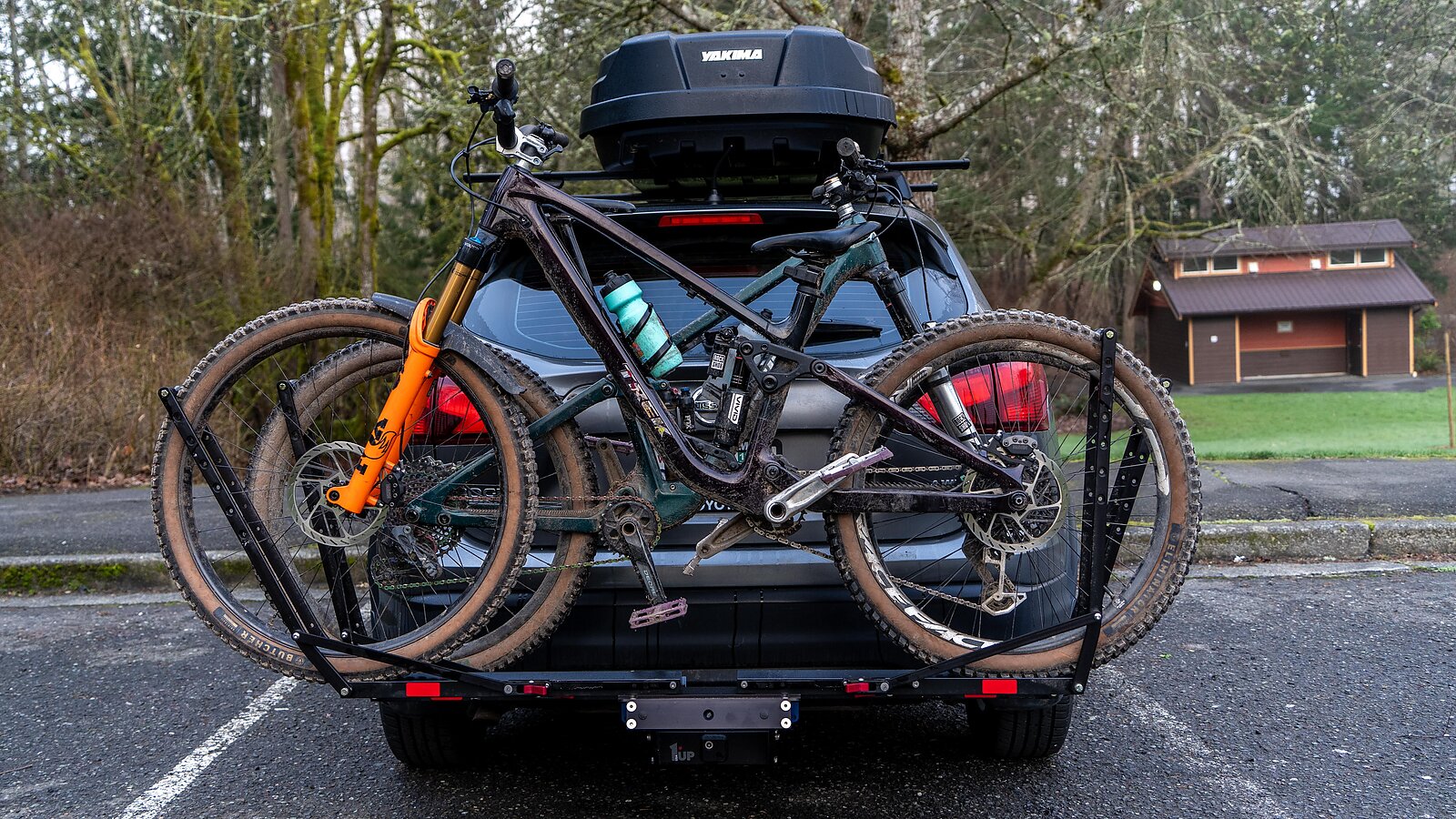
1UP is best known for its super durable, made-in-the-USA, no-nonsense tray racks. Sure, the brand sells the Recon vertical rack I reviewed last year, but trays are its bread and butter. I’ve been using the 1UP Heavy Duty two-bike rack this winter, and it checks all the boxes that you’d expect from 1UP, with the addition of a new, easier-to-operate, one-handed ratcheting cam system. So we’ll talk about how it performs, how it’s held up, and how it compares to the previous version.
1Up Heavy Duty Bike Rack Overview
- Configurations available: 1, 2, 3, or 4 bike options
- Hitch size: 2” or 2.5”
- Capacity: 65 lbs per basket
- Stated weight: 47 lbs
- Price: $455+

1Up Heavy Duty Rack Features and Installation
All of 1UP’s tray racks are burly, all-metal affairs, and the Heavy Duty sits near the middle of the line. It’s burlier than the Equip’d rack, and lacks that option’s easier-to-operate tilt handle, but is less burly than the Super Duty and Xtreme Duty racks. That means that it’s an easy default choice for anyone who is looking to carry heavier bikes (up to 65 pounds each) with a 2 or 2.5-inch receiver.
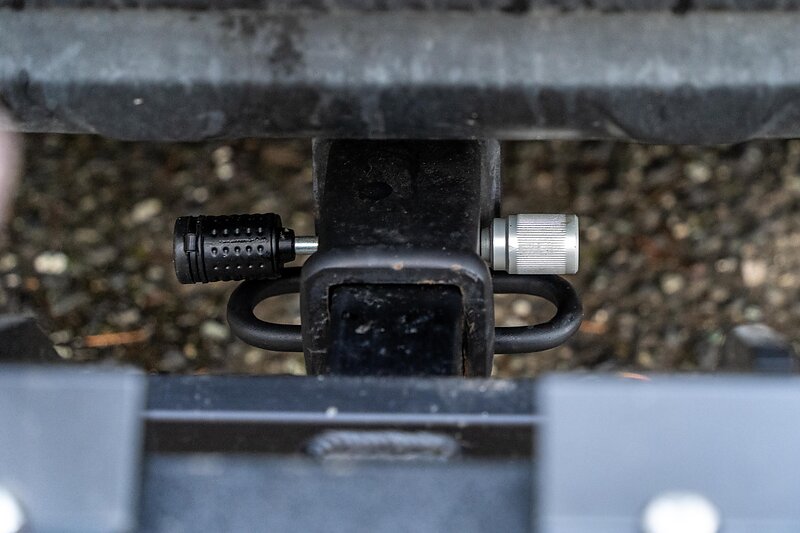
1UP’s installation procedure for the Heavy Duty is super simple. The rack comes fully assembled in a single, surprisingly compact box, and then you simply flip the blue anodized tabs and unfold the wheel trays from their storage positions. The Heavy Duty locks into your receiver with an included security hex wrench. For added security, you can also use a locking hitch pin. You can use 1UP racks without a hitch pin, but you need to regularly check the tension of the lock bolt. I much prefer the hitch pin for peace of mind, and I appreciate that the Heavy Duty actually has a three inch long slot for the pin, instead of just a hole. That means that you can slide the rack in or out of your receiver to get it as close to your vehicle as possible, without your handlebars interfering with your rear hatch. It’s a little thing, but much appreciated.
The Heavy Duty has a hinged base with three registered positions (vertical, horizontal, and a split-the-difference setting) as well as an unregistered “open” swing, which allows you to drop the rack, with bikes attached, out of the way of the back door of your car. Like other 1UP racks, the lever to swivel the rack isn’t the most accessible or easiest to access. Instead, it’s really solid and durable, locking the rack into position with minimal sway. You can buy the $100 EZ Pull handle, but anecdotally, I’ve had better luck with just using some cord run through the included holes to the lever, or a fancier home-brewed solution like this.
When you buy the Heavy Duty rack, you can choose either one or two trays, and then you can add on up to two more (for a total of four) trays for $290-$385 each depending on options.
You can adjust the rack to fit anything from 16” kids bikes to 29” wheels, and it locks your bike in without contacting anything beyond the tires. 1Up also makes a huge range of accessories, with everything from wheel locks, to license plate frames, to e-bike ramps available.


One-Handed Ratcheting Cam System
The big news here is 1UP’s one-handed ratcheting cam system. It costs $65 per tray to upgrade from the previous cam, and it makes loading and unloading the bike simpler. With the previous-style cam, you had to use two hands to open trays, one to hold the ratchet lever open, and the other to pull the wheel gripping arm. That could be frustrating if you were in the midst of loading a bike and realized you needed to open the rack wider to fit. You could close the rack with one hand, pushing that wheel arm, but it did lead to extra wear on the ratchet rails of the rack, so I ended up using two hands for that as well, one to hold the lever open, the other to move it.
The new lever system solves this problem with a minimum of fuss. All you need to do is push in the lever unlock button, and then rotate the whole mechanism up a few degrees. That fully disconnects it from the ratchet rail, and allows it to slide open or close without any resistance. That makes loading and unloading the rack smoother and easier, and also makes closing the arms down after you’ve unloaded the rack better, since you’re not putting extra wear on the ratchets.
You do need to remember to rotate the latch back down before you cinch the arms tight. If you don't, your bike won’t be locked into the rack, and you could lose it on the road. So rotate that latch back down, before you cinch the arms tight into your tires.


Living With the 1UP Heavy Duty Rack
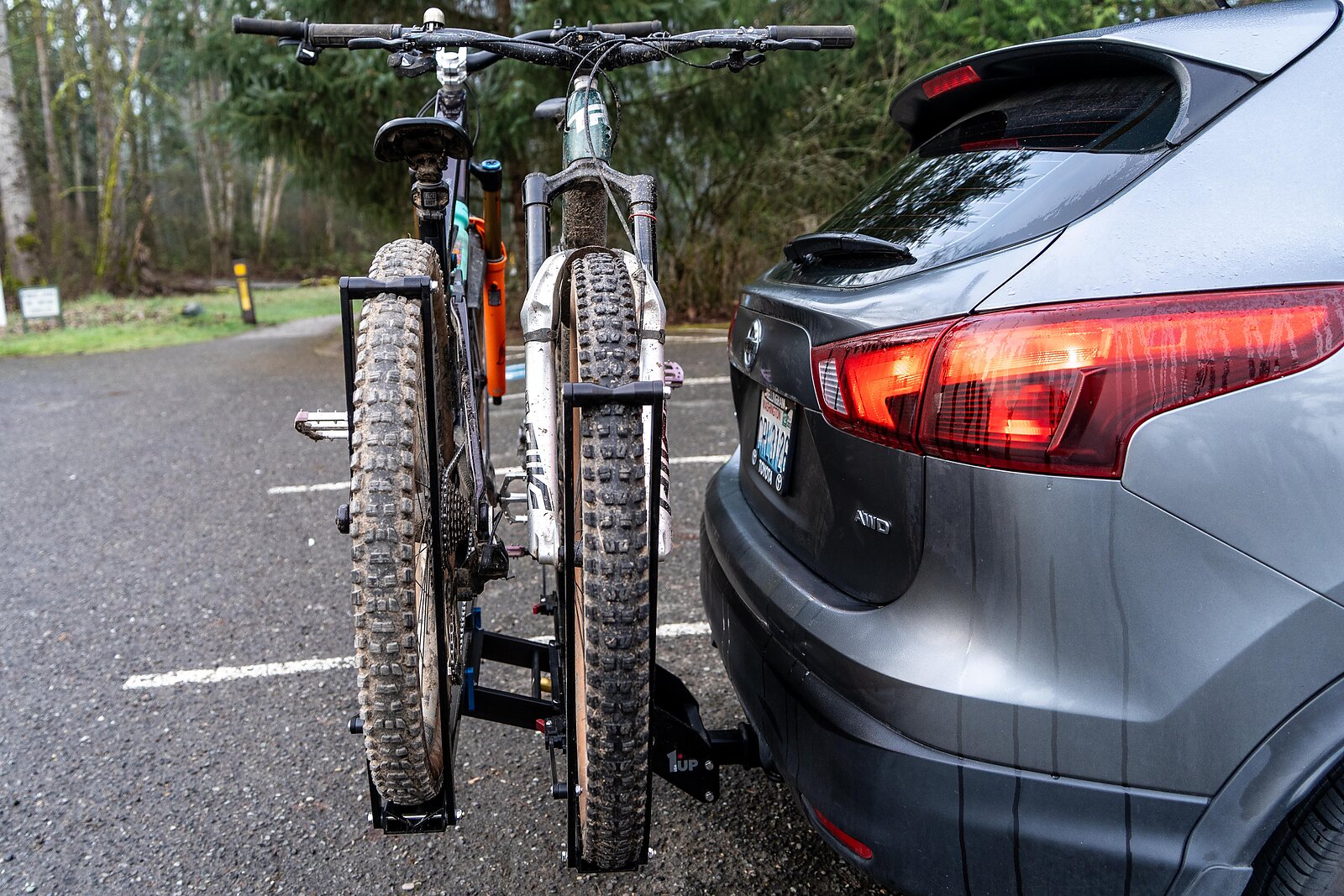
1UP has done a great job of setting the bar high with its previous racks. They’re simple, bomber, and easy to live with, and the Heavy Duty with its new latches is no exception. It’s quick and easy to install, and hasn’t developed any rattle or play. I ran a previous 1UP hard for years and never had any degradation of performance, and I wouldn’t expect anything different with this Heavy Duty.
No, the Heavy Duty isn’t the “easiest” to use, or the most refined feeling. There are other tray racks on the market that make loading and unloading your bike feel less blue collar. But that’s not really what I care about with my bike racks. Instead 1UP’s racks feel really solid and workmanlike. There’s nothing chintzy, nothing that I’m worried about breaking. If somebody rear-ends me with this rack installed, I’m much more concerned about the front of their car than I am about the rack. I really appreciate the no-nonsense ethos of 1UP’s tray racks. They just do the dang thing, and if you do happen to need accessories or replacement parts, the brand has plenty available.
For Now
One could argue that 1UP’s tray racks were fine already. But the new, one-handed ratchet system does make living with the Heavy Duty rack easier, without compromising any of the features or performance that made it great. Sometimes it’s the small things that make the biggest difference.
Learn more: 1UP