SRAM Maven B1 Brakes Lighter off the top.
SRAM is coming into the spring hot with four new launches, all aimed at gravity riders. There's an all-new Boxxer, new Vivid Coil shock, and new wireless, XX DH AXS Transmission drivetrain that we'll hopefully have reviews on once there's availability down the road. But for now, I've been spending a bunch of time on maybe the most important part of this launch, SRAM's updated Maven B1 brakes.
It’s rare that you can sum up the full review of a new product with a single sentence, so we might as well take advantage of the opportunity here: SRAM’s updated Maven Brakes have a lighter lever feel, combined with the same class-leading power and consistency I’ve come to expect. Done. Go ride your bike!
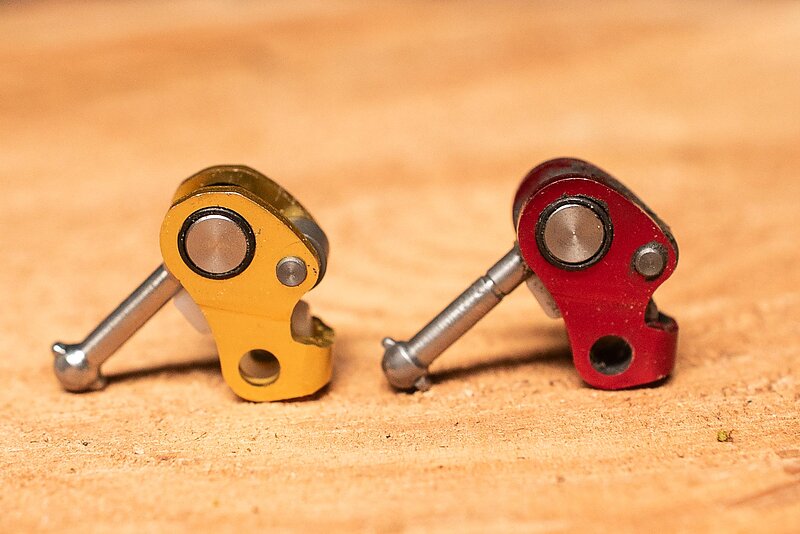
Of course, that’s not the end of the story, so let’s get into all the details of how and why SRAM changed the leverage curve of the Maven’s caliper with a new gold SwingLink cam, and also tweaked the caliper piston diameter to better match that new curve.
SRAM Maven B1 Overview
- Pistons: 4x18 mm diameter
- Stated Weight (Silver, front brake, no rotors): 379 g
- Models Available: Ultimate, Silver, Bronze
- Fluid: Maxima Mineral Oil
- MSRP: $530 for the Silver level reviewed here, $89 for a set of levers and cams
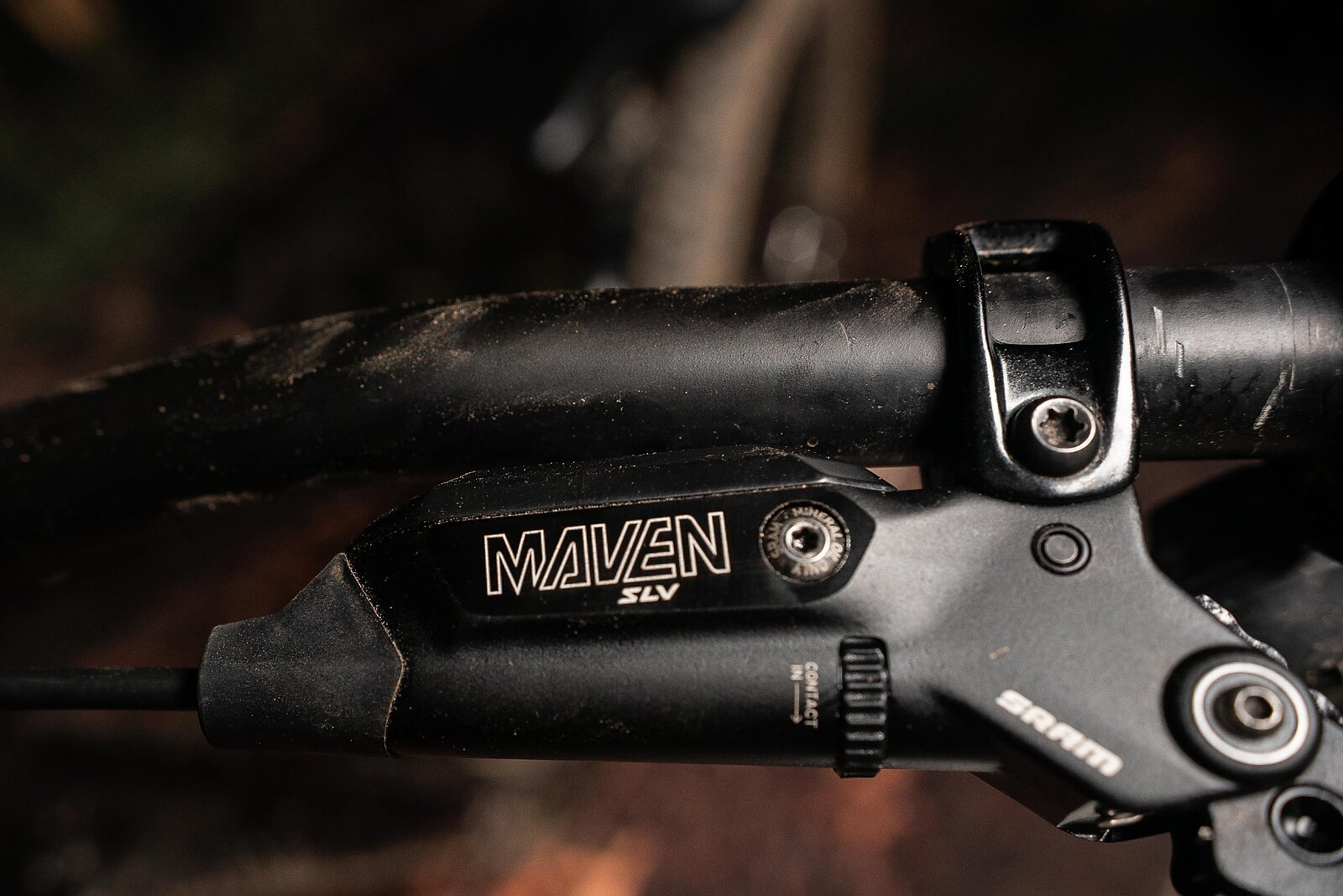
Why update the Maven?
For the purposes of this review, it might be helpful to think of hydraulic brakes as two systems, both designed to increase the mechanical advantage of your finger’s inputs to the lever. The hydraulic system multiplies that power thanks to Pascal’s Principal, and the difference in size between the master piston and the caliper piston(s). Want to make a brake more powerful? Make the difference between those two sets of pistons bigger. But, before any fluid moves, the force from your finger on the brake lever needs to be translated to the hydraulic system. That’s where the mechanical advantage of the lever, expressed as a curve, comes into play. And the shape of that leverage curve has a huge impact.
When SRAM launched the Maven two years ago, it used a red anodized A1 SwingLink cam to transmit the movement of the lever into the hydraulic system. That cam gave the system a progressive curve - the lever had less mechanical advantage at the start of its pull, and then ramped up as it got deeper into its arc.
In real terms, that meant that the first-gen Maven had a relatively stiff lever feel, while also having really quick and snappy engagement. You didn’t have to move that lever much to get a lot of power to the rotor, but it did take more work to move the lever. Some folks really didn’t like that stiff feel. Especially if you ran a lot of free stroke, or were used to lighter brakes like the Hayes Dominion, it could be a little frustrating. I’ll go on record here as having never had an issue with the A1 Maven’s lever feel. I run my brakes with as little free stroke as possible, and I never felt extra hand or finger fatigue with the Maven. If anything, I felt less, because I had to do less braking to get the same effect with the more powerful Maven than the Code it replaced. But again, some folks took issue, and a few did so loudly.
Last year SRAM quietly released a new Maven Base alongside the new Motive. This used the same DirectLink lever as the Motive to deliver a very linear leverage curve to a slightly revised caliper that used four 18 millimeter pistons, as opposed to the original Maven’s pair of 18 and pair of 19.5 millimeter pistons. The Maven Base quickly became a sleeper hit, with plenty of folks praising it as delivering nearly Maven power with a much lighter lever feel.
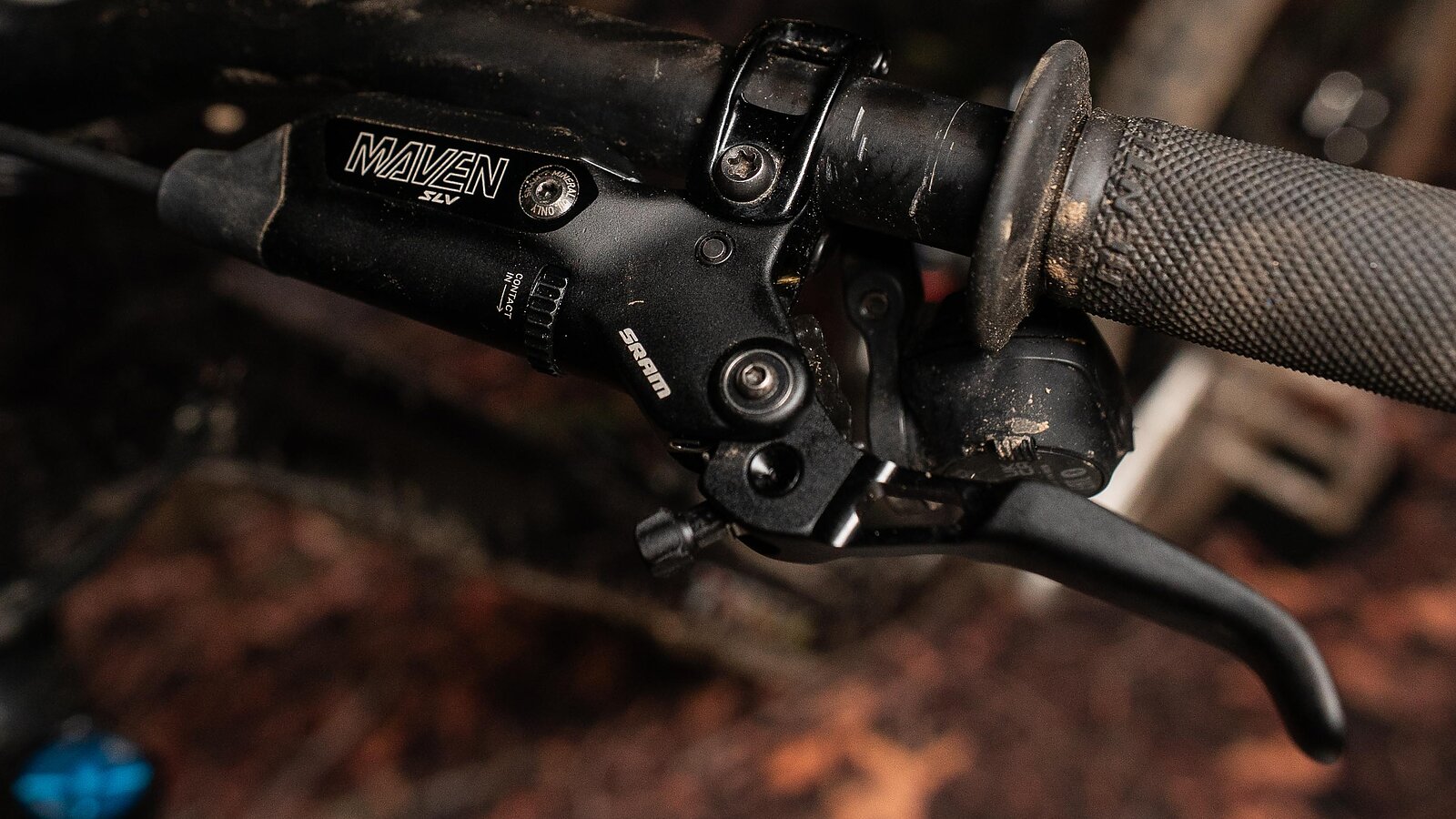
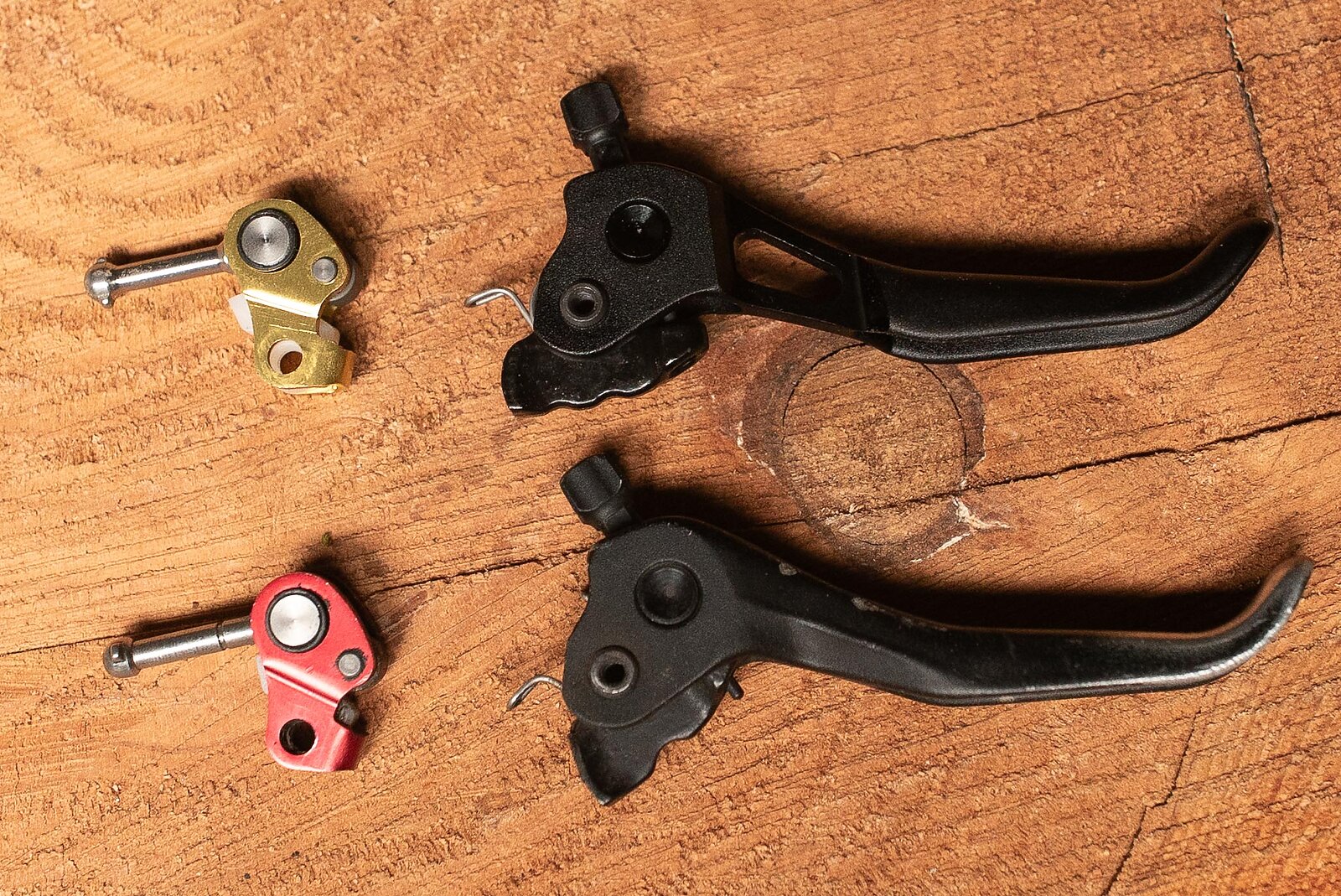
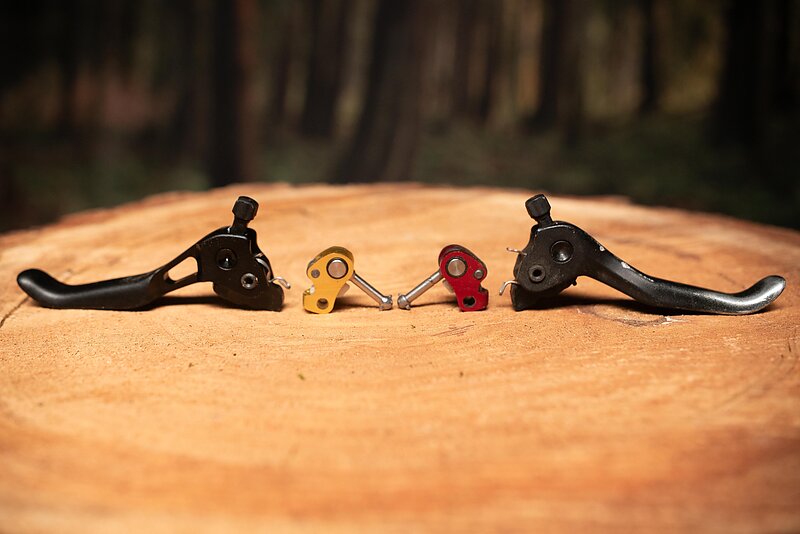
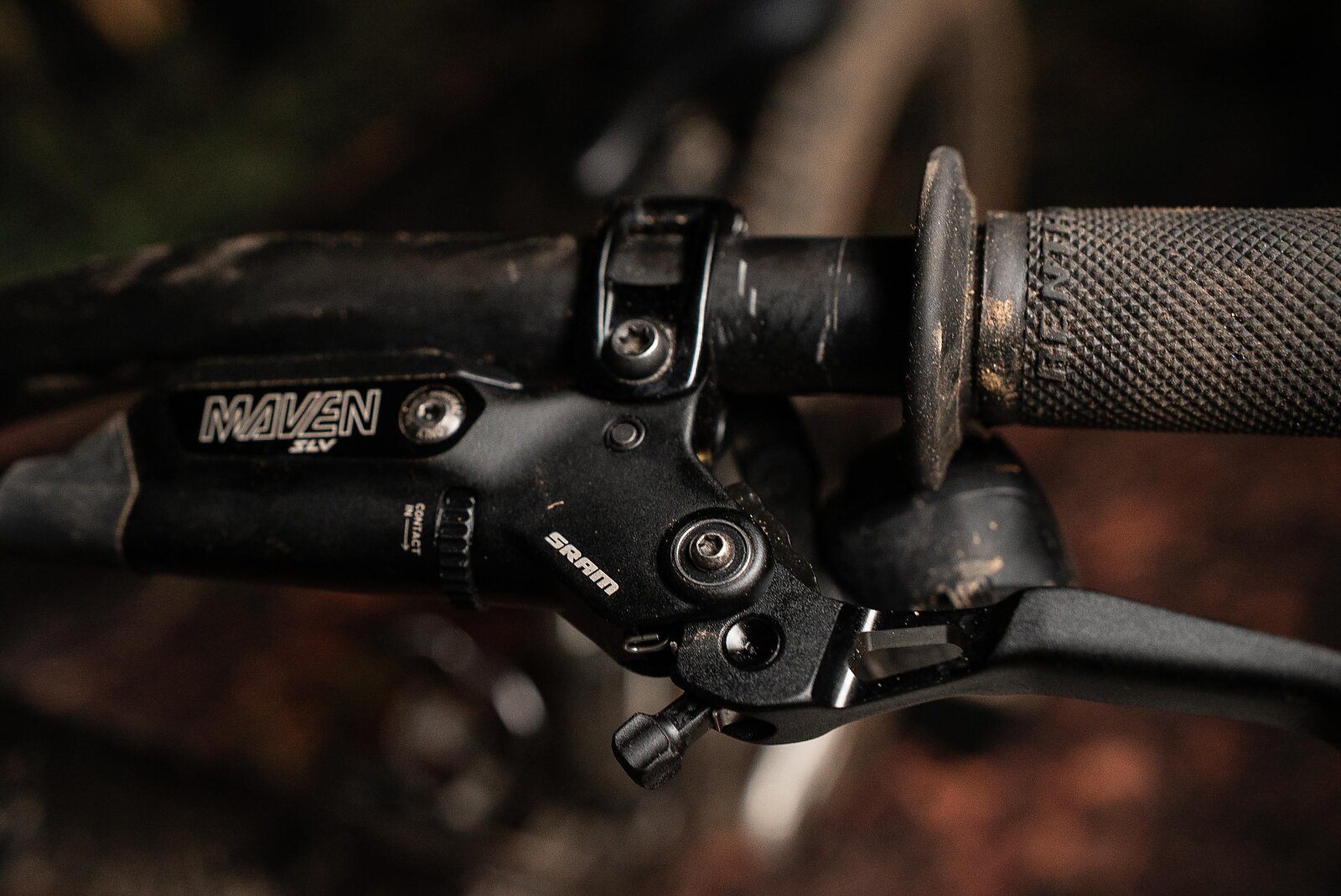
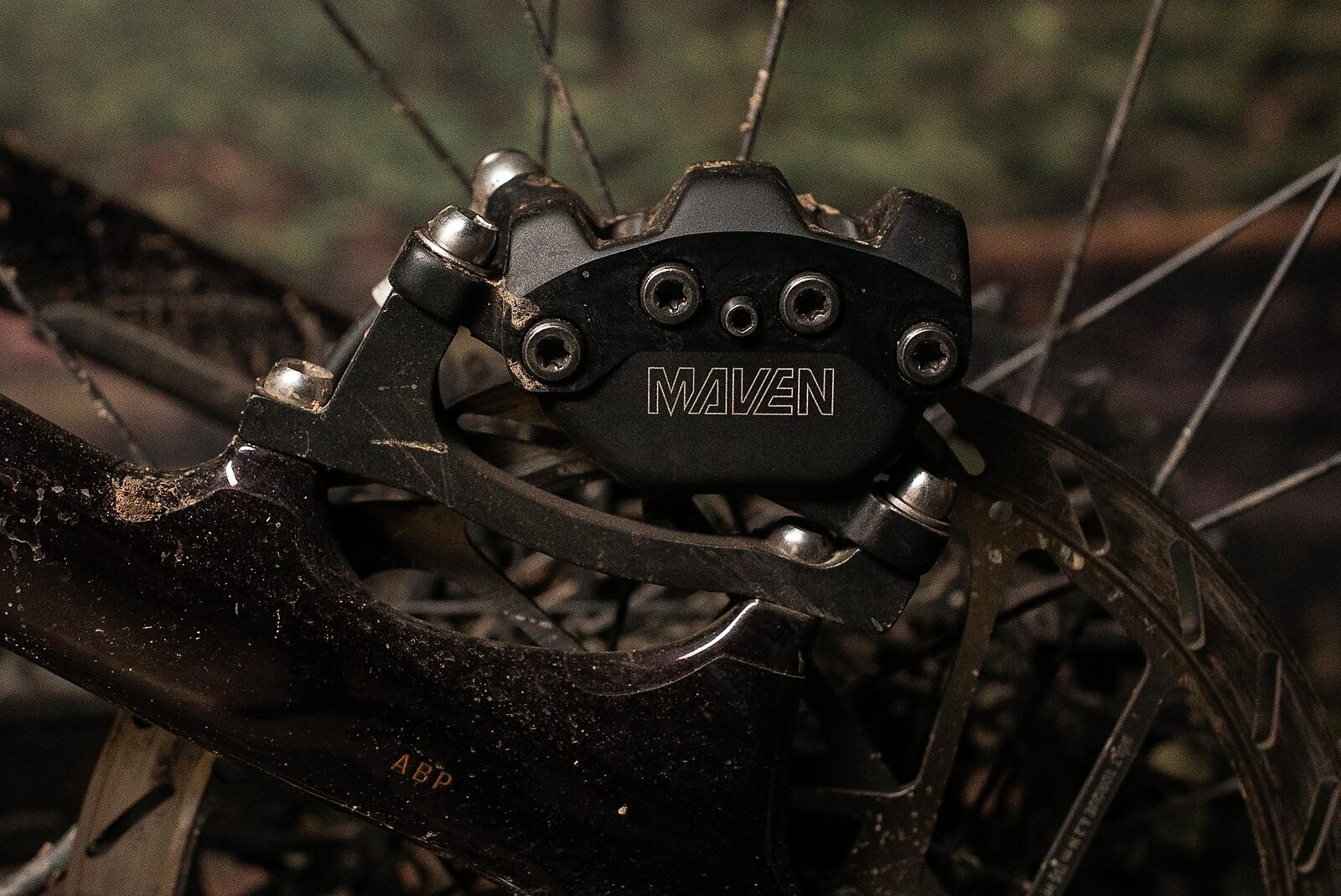
So it should come as no surprise that this spring, the whole Maven line gets a revamp to deliver a similar lever feel. There are three ingredients to this update: The whole line gets new lever blade designs (mostly aesthetic, although the Ultimate now gets a carbon lever), every brake gets the new gold SwingLink B1 cam instead of the red SwingLink A1 cam, and every brake gets four 18 millimeter pistons. SRAM says that this nearly halves the power required to move the lever. The rest of the lever and caliper assemblies, pads, rotors, hoses, and fluids stay the same. And, most importantly, SRAM is selling just SwingLink and lever assemblies so you can swap them into your existing Mavens without buying all new brakes.
Maven Options
The Maven still comes in three trim levels, plus the unchanged Base. The highest end is the Ultimate, which comes with titanium hardware, new carbon lever blades, rotating on bearings, with reach and contact adjustment dials. And yes, the Ultimate still has a silver finish on the levers and calipers, this year without any cool limited-edition color. The Ultimate costs $299 per brake.
The Silver trim that I’ve been reviewing uses aluminum hardware, and a forged and machined lever, mounted to bearings, that gains 16 grams per brake over the Ultimate. It’s got the same adjustments, and yes, it’s black, not silver. The Silver costs $265 per brake
The Bronze level, that will probably come specced on a bunch of my favorite complete bikes this year, has a more simple forged lever, mounted on bushings, no contact dial, and weighs two grams more than the Silver. And yeah, it’s also black, not bronze. Sorry. This year the Bronze will be OE spec only, and won’t be available on its own.
The Maven Base continues, with its more simple, more linear DirectLink lever.
Backwards Compatibility
This is where things get really simple, and a little complicated. First the simple stuff: SRAM is selling lever and SwingLink kits for each trim level of Maven brakes. It’s a very quick (less than ten minute) job that only requires an (included) T10 wrench. No bleeding, no fluid, no stress. Pull off your old lever, tap out the pin holding the SwingLink, swap everything out, ride on.
These kits cost $109 for the Ultimate, carbon lever version, $89 for the Silver, and $69 for the Bronze. Those prices include all the parts and tools to do a full set of brakes (two levers/two cams). The Silver and Ultimate kits are interchangeable, so you can put carbon levers on your Silver brakes if you so desire, but the Bronze kits only work with the Bronze brakes since they use bushings instead of the more expensive bearings.
Now for the more complicated part. The new Mavens also have slightly different calipers, with two smaller pistons than the originals (four 18 millimeter instead of two 18, and two 19.5 millimeter pistons). SRAM says that’s part of an effort to eliminate as much deadband as possible. When you combine the older callipers with the new cams you’ll have to move the levers a little further to get the pistons engaged.
I swapped the new B1 cams into a set of original Mavens and immediately noticed that increased deadband, along with a much lighter lever feel. It’s not the end of the world at all, but it’s there. Similarly, putting the old A1 cams in the new Mavens makes them engage faster, but also requires more force to pull the lever.
Lever Feel
I think there are two sorts of Maven users: those of us who either didn’t notice, or quickly acclimated to the slightly stiffer lever feel of the original, and those who found it quite offputting. As I mentioned above, I fall into the earlier camp. The power, and power delivery of the original Maven was eye-opening for me. At a press camp earlier this year, I told another editor that I think the Maven Bronze might be my favorite product in recent memory, because it’s the default brake that most review bikes come with, and it’s so much better than Codes, Guides, or most other mainstream brakes. So with this launch, I was mostly worried that SRAM might mess up a good thing. Honestly, I would have been fine running the original Maven on every bike I rode for the next decade.
But, the magic of mountain biking is that we don’t all have to ride what one random guy in Washington thinks is the best. And the new Maven gives riders who didn’t get along with the original Maven and compelling alternative. The new Maven B1 is much lighter off the top than the original. SRAM says it requires nearly half as much force, and I believe it. It’s not quite as effortless as the Hayes Dominion, which could probably be engaged by a strong gust of wind, but it’s plenty close. I think folks will be hard-pressed to find anything to complain about with this lever feel.
That said, on the flip side, I can’t get quite that snappy, instant engagement, as soon as I touch the lever that I can with a truly excellent bleed in the previous version. It’s close, but there’s just a little more deadband. It’s not offensive, and I’m totally fine with it, but it’s there if I go looking for it. I always run the contact dials all the way out, which amplifies this. If you run your contact dials closer to the middle of their range, you’ll probably be able to dial in a very similar feel with the new Maven.
According to SRAM, the Maven Base still has a (barely) lighter lever feel than the B1, but also has the most deadband before it engages. The old A1 Maven has the least deadband, the most breakaway force, and the least modulation. The B1 Maven should, hypothetically, combine the best parts of those two, with less deadband than the Base, but almost as light of a lever feel, combined with plenty of modulation, and a nice powerful ramp in power at the end of the stroke.
Performance
Lever feel aside, these ride like Mavens. They’re still the most powerful and fade-resistant brakes I’ve used. As I’ve mentioned a few times, I’m a big dude (220 lbs with my winter weight), who asks a lot from his brakes on steep trails. There are a few descents around Bellingham where I can make just about any brake feel a little sad, but both generations of Mavens stay feeling good longer than anything else I’ve ridden, and even once they start to make protesting noises, they still perform well.
That said, it’s still worth following SRAM’s instructions for bleeding and massaging the pistons on the Maven. The SRAM bleed kit and fittings are excellent, and the piston massage is quick and easy, and makes an appreciable difference in brake performance and consistency. Just do it.
Should you upgrade?
If you’ve been getting along fine with your current Mavens, there’s no real reason to upgrade. If it ain't broke, don’t fix it. But, if you’ve been frustrated with the lever feel, there’s no good reason not to grab a B1 cam and lever kit. And, if you’ve been Maven-curious, but have stayed away because of that stiffer lever feel, this is your invitation into the fold.
Tuning for heat management
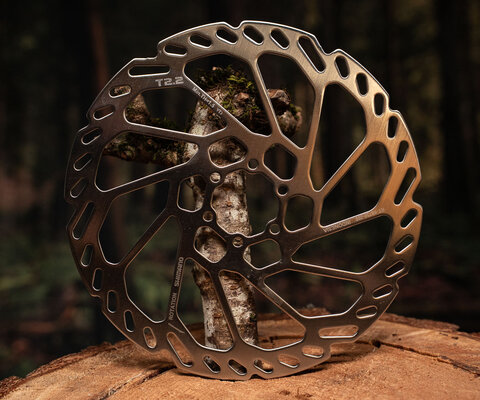
In recent years SRAM has made a concerted messaging effort around tuning your brakes beyond just choosing rotor size. The brand offers two thicknesses (thinner CenterLine and thicker HS2) rotors, and two pad compounds, metallic and organic.
I’ve done a fair bit of rotor thickness and size, and pad compound experimenting, and have settled on the same set up with both generations of Mavens: metallic pads combined with 200 mm HS2 rotors on trail bikes, and metallic pads and 220 mm rotors on freeride/DH bikes.
I’m fairly heavy, so I get brakes up to temp fast, and I prefer the feel and power of the thicker HS2 rotors. I get along fine with organic pads, but prefer the little extra bite, and big longevity upgrade of metallic.
The goal when tuning is to find the combination that best works for your weight, riding style, and trails, to get warm quickly, but not overheat. You’re looking for a nice medium-rare bronze discoloration on the spokes of the rotor. No color, and you’re probably running too big, and/or too thick of rotors. Purple or oil-slick discoloration, and you’re probably overheating your rotors and could bump up in size.
For Now
SRAM’s new Maven addresses the one real issue folks had with the original, lever feel. It’s significantly lighter off the top, without sacrificing the power that made the original such a winner. The Maven B1 opens up that consistent, powerful feel to folks who might have been put off by the A1’s stiffer lever feel, and the best part is that it’s a relatively easy and affordable swap to upgrade just the levers and cams if you want to experiment.
Learn More: SRAM