Full Circle The Reemergence of the Mountain State
Five years ago, if you had told Wheelbilly Bikes mechanic Hannah Ellison that she’d be working at a bike shop in Hurricane, West Virginia, she likely would have said, “Where’s Hurricane?”
Situated in the far southwestern corner of West Virginia, nearly equidistant between the capital of Charleston and the city of Huntington, Hurricane (pronounced “hurr-i-kinn”) has a long history of being a place you pass through but never linger long.
That’s not to say that Hurricane was a desolate place. Throughout the state’s history of European settlement, Hurricane always mattered. In the early 1800s, when farming fueled Putnam County, it mattered that the settlement—then called Hurricane Bridge— was located in a fertile valley on a creek. Later, it mattered that a railroad connecting the Chesapeake and Ohio rivers passed right through Hurricane Bridge, which changed its name to Hurricane Station and, finally, just to Hurricane. In the 1960s, it mattered that the newly-built Interstate 64 trucked through Hurricane and helped the town become a city. Still, lest you needed gas or a hotel room, there wasn’t much reason to visit Hurricane.
“I didn’t even know Hurricane existed,” says Ellison, who was born and raised just 30 miles up the road in Sissonville. “There was nothing to do [there].”
In the fall of 2018, the city of Hurricane decided to do something about its obscurity. City leaders wanted to build something that would positively impact not just the health and wellness of their community but also their economy. To achieve that, they had to get creative. Hurricane is less than four square miles in size. It doesn’t have a lot of room to grow. It does, however, have a modest city park that backs up to a 500-acre swath of privately-owned land. Today, that land is home to a 32-mile system of volunteer-built, hand-cut mountain biking trails. And today, Hurricane matters to its community because it’s the gateway to the Meeks Mountain trail system.
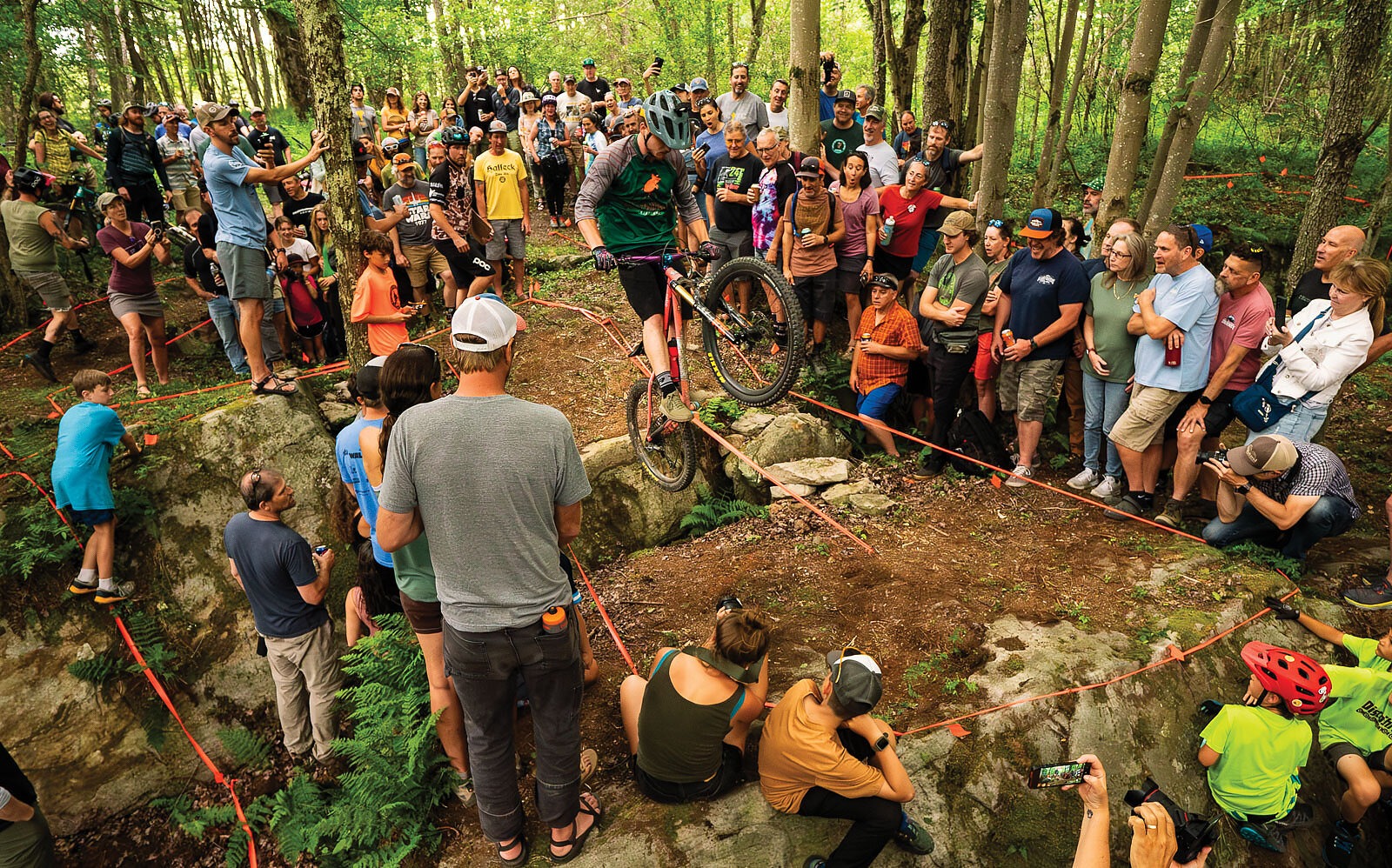
“It’s really changed the town of Hurricane,” says Ellison. “We’ll have 300 [trail] users a day on some days.” Hurricane’s story is a natural continuation of what local West Virginia mountain bikers have been doing for decades: Scratching rake-and-ride trails into their backyards since the advent of the sport. Old-school volunteer-built—and sometimes rogue—trails are the foundation of nearly every classic ride area in the state, from Mountwood Park near Parkersburg to Big Bear Lake Trail Center in Bruceton Mills and Kanawha (pronounced “kuh-naw”) State Forest just down the road from Hurricane. But what is different about Meeks Mountain, and the dozens of builds happening across the state today, is the frenzied rate at which communities are planning, funding, constructing, and opening mountain bike trails.
“Every six months there’s a new trail or trail system that comes online and it’s going to be that way for the next 10 years,” says Corey Lilly at West Virginia University (WVU).
Lilly is the Outdoor Community Development Manager for WVU’s Brad and Alys Smith Outdoor Economic Development Collaborative (OEDC). In the past five years, tens of millions of dollars of grant funding have been secured for bike infrastructure projects throughout the state, from urban bike parks to 30-mile trail systems on public lands. There’s been so much investment, Lilly says, that it’s hard to keep track of the total: “It’s wild.”
Lilly is a 10th-generation West Virginian whose family is known for one of two things: owning the Lillybrook Coal Company or setting the Guinness World Record for largest family reunion. Born and raised in Raleigh County near the New River Gorge, Lilly has seen the energy behind trails ebb and flow over his lifetime.
“[West Virginia has] this historic, deep-rooted mountain bike community, and it’s almost like we faded a little bit when other places emerged and developed these new-school [trailbuilding] techniques,” says Lilly. “Now, we’re reemerging.”
To understand how West Virginia’s mountain biking got to this place of literally rolling in dough, you have to look back a few decades. When Lilly was a kid, West Virginia’s mountain biking needed no introduction. During the ‘80s and ‘90s, West Virginia rose in popularity as one of the few states on the East Coast that had an open-door policy for mountain bikers. Anyone with a bike and a knack for rowdiness was welcome in the Mountain State.
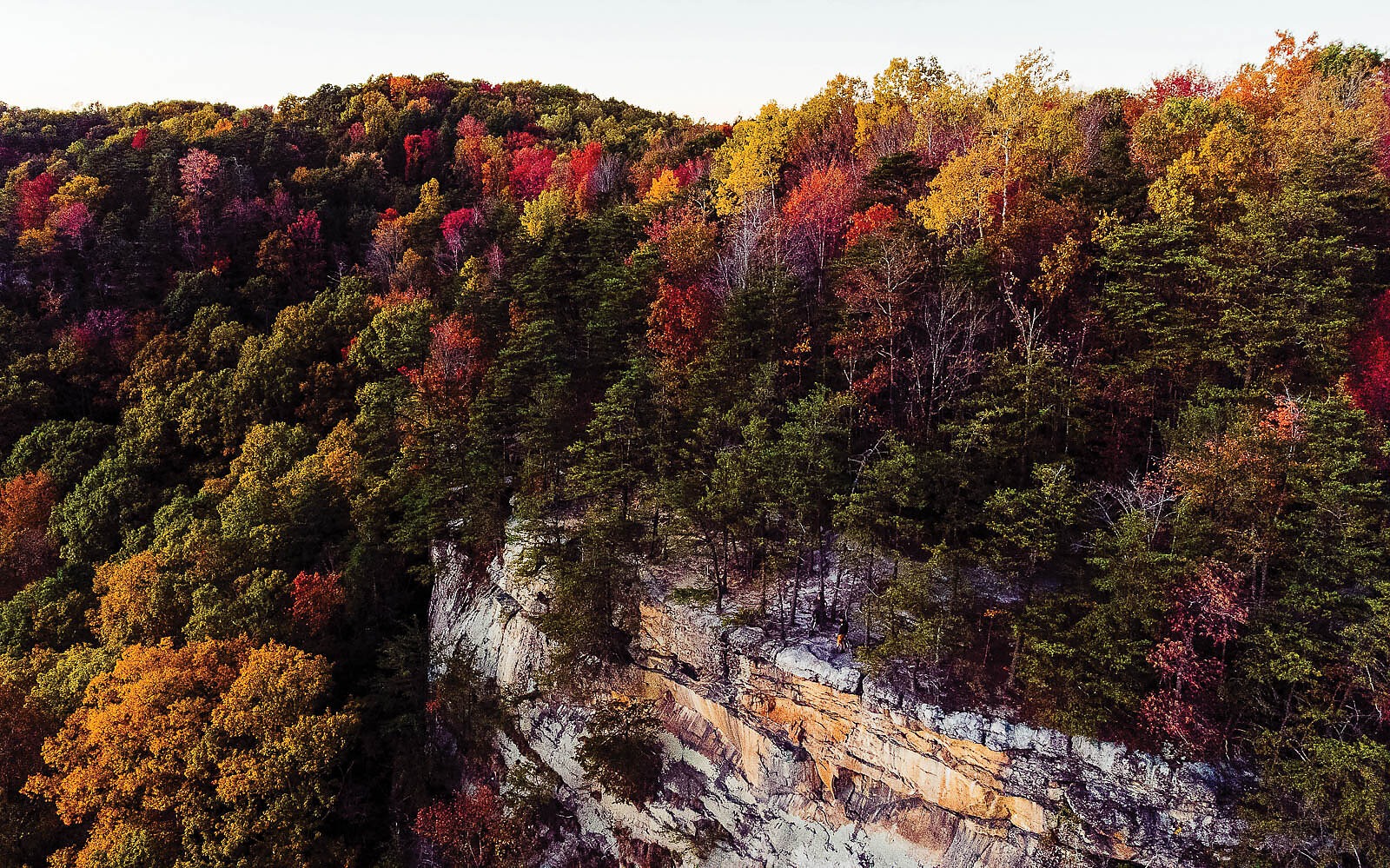

Early trails were, more or less, old logging roads or remnant dirt tracks from motorcycle events such as the Blackwater 100. There was nothing sophisticated about the riding. Sure, it was beautiful. In some parts of the state, you could ride through tunnels of pink-flowering rhododendron and dank corridors lined with red spruce and ferns and moss so green you’d wonder if you’d ripped into a fairy tale. But there were also hub-deep bogs, baby-head-choked fall-line descents that rattled brains, and peanut butter mud—so much mud—that would seize your rear wheel so bad you’d have nightmares about it for weeks. It was the kind of riding that wrecked your body and broke your bike but, if you stuck it out, could stir your soul.
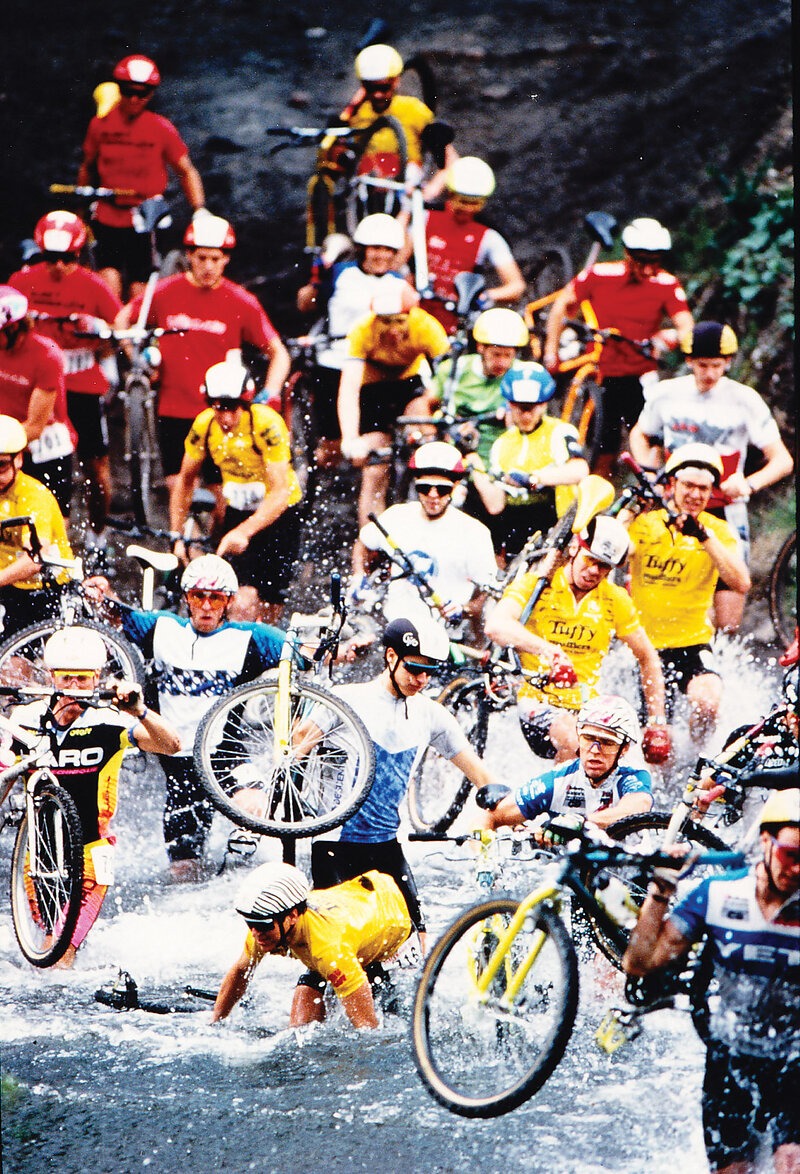
The events and community of that era were born out of that full-send style of riding. In 1983, Laird Knight hosted the very first Canaan Mountain 40K, a cross-country race located in the northeastern part of the state in Davis. The course was so brutal, none of the 12 competitors finished. Everyone loved it. Year after year, Knight added new races to the calendar: the Canaan Mountain Series (‘84), the first Mid-Atlantic National Off-Road Bicycling Association (NORBA) Nationals (‘88), the Tour of Canaan (‘90), and 24 Hours of Canaan (‘92).
Two counties away in Pocahontas County, Elk River Inn owners Gil and Mary Willis had also started bringing mountain bikers to their remote pocket of the state. In 1985, the inn bought a rental fleet of mountain bikes and began offering tours and instructional clinics. Located in Slatyfork, an unincorporated community swaddled by more than 300,000 acres of the Monongahela National Forest, the inn could have easily been overshadowed by their resort neighbors at Snowshoe Mountain. But for nearly two decades, Elk River Inn held its own as a mountain bike destination. That’s due, in part, to the inn’s two signature events, the West Virginia Fat Tire Festival and the Wild 100, one of the earliest endurance mountain bike races in the country.
While these races regularly attracted professional riders the likes of Sue Haywood and Tinker Juarez, West Virginia’s race scene usually felt like more of a college party than a high-level sporting event. At the 1996 24 Hours of Canaan, a Virginia-based relay team called Team Hugh Jass raced on singlespeed fixies and shared one pair of bike shorts, which they swapped like a baton after each lap. Another team from New York called Team Botulism spent their time between laps handing out test tubes full of tequila and lime Gatorade.
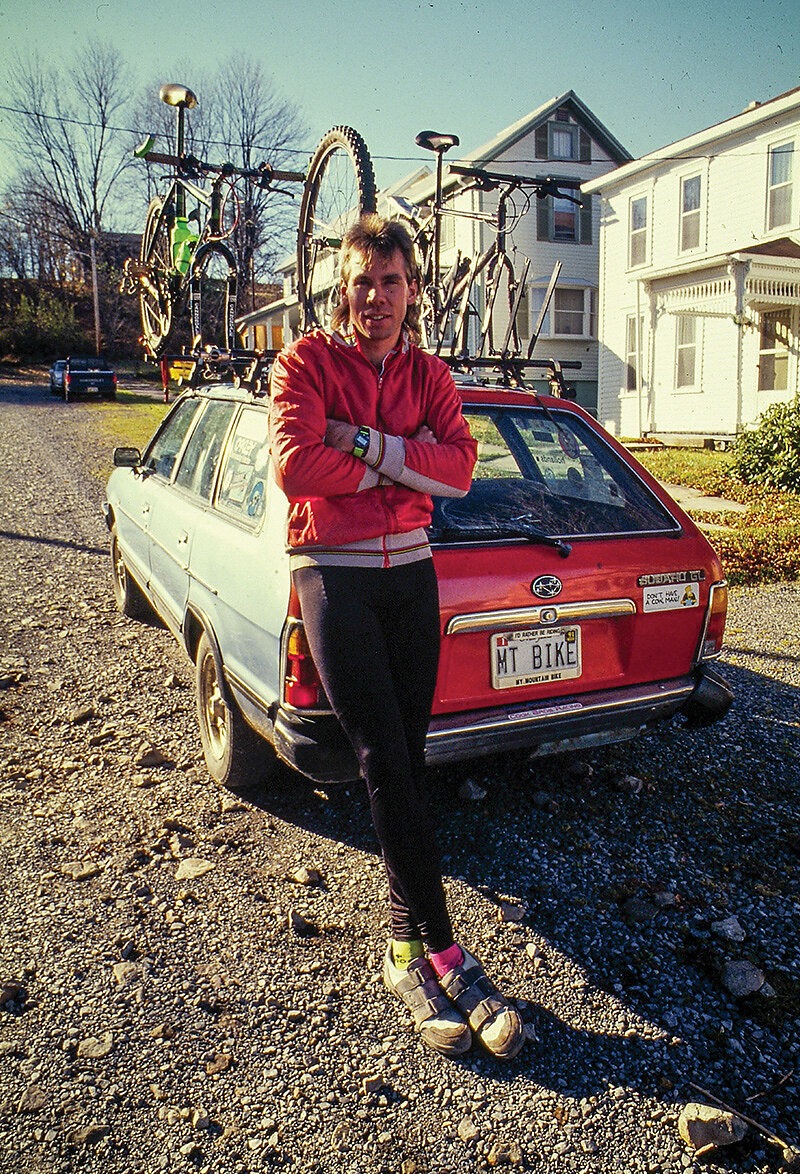
By all accounts, West Virginia’s mountain biking seemed to be having a moment. More races cropped up throughout the state under the newly formed nonprofit West Virginia Mountain Bike Association (WVMBA), which was launched in 1989. Articles about the state’s riding ran on the pages of Sports Illustrated and The Washington Post. Races touted big-name title sponsors ranging from Newsweek to Diamondback. During race season, it was not uncommon to see hundreds of riders from all over the eastern seaboard dirtbagging out of their cars in what would otherwise be a quiet part of rural West Virginia. Everyone, it seemed, wanted in on the state’s wild and wonderful mountain bike action.
But as the 2000s wore on, that energy started to fizzle. Some of that was a natural reflection of the bike industry. Sponsorship dollars became harder to come by, both for athletes and for race directors. Land access issues finally crept into the state that had long enjoyed a laissez-faire approach to management. In 1994, the Canaan Valley National Wildlife Refuge was established, which was great for the threatened Cheat Mountain salamander but devastating for mountain bikers, who lost access to roughly 100 miles of singletrack. Knight was forced to move the state’s 24-hour race multiple times from Davis to Timberline Resort, Snowshoe Mountain, and finally Big Bear Lake Trail Center, where he finally retired the race in 2009.
West Virginia still had races during those years, but the limelight had shifted elsewhere. Whatever unquenchable thirst for untamed backcountry beatdowns had once existed was losing favor, year by year, to a more curated front-country ride experience. With every purpose-built trail system that popped up on the East Coast, West Virginia retreated further and further into the sport’s shadows until all that was left was a core community of old-school riders who soldiered on through the mountains, chainsaws in tow, keeping their beloved rake-and-rides clear of deadfall.
Had it not been for the decline of West Virginia’s coal and timber industries, the state’s mountain bikers might have carried on like that indefinitely. But their communities were suffering from identity crises of existential proportions. Take the town of Marlinton in Pocahontas County, for example. In 1985 and 1996, the once-thriving timber town experienced two historic floods that claimed dozens of lives and destroyed countless homes and businesses. The few residents who could afford to rebuild did, but many couldn’t, at least not the second time. So they left in search of higher ground. Then the 2008 recession hit, which all but put a nail in the metaphorical coffin of Marlinton’s economy.
“The town really suffered following those floods,” said Marlinton Mayor Sam Felton during a 2023 interview with Freehub magazine. “It just took so much energy and spirit out of the people that some did not see how we would ever get out of this. It felt like nothing was going to change. We were waiting for the cavalry to arrive. We finally figured out, we’re it. We gotta make something happen if it’s going to happen.”
Some people say that if you flattened West Virginia, you’d get a state as big as Texas. Whether or not that’s true, the sentiment certainly resonates. What the Mountain State lacks in flat, commercially developable land, it makes up for with steep terrain that has historically been good for about two things: coal and trails. Mountain bikers knew that good trails had the power to not only bring tourism dollars to rural towns but to also restore a community’s sense of pride in place. So they did what West Virginians do best: they took care of their own, together.
Though it might not have felt like it at the time, the year 2017 marked the beginning of a new era not just for mountain bikers but for the state as a whole. It was the year Morgantown rider Cassie Smith launched the West Virginia Interscholastic Cycling League, which now has more than 400 middle and high school kids riding mountain bikes. That year was also the first time Snowshoe Mountain Resort hosted USA Cycling’s Mountain Bike National Championships and the first time Mayor Felton sat down with other stakeholders and towns in the Monongahela National Forest to collaborate on a regional trail-based economy.
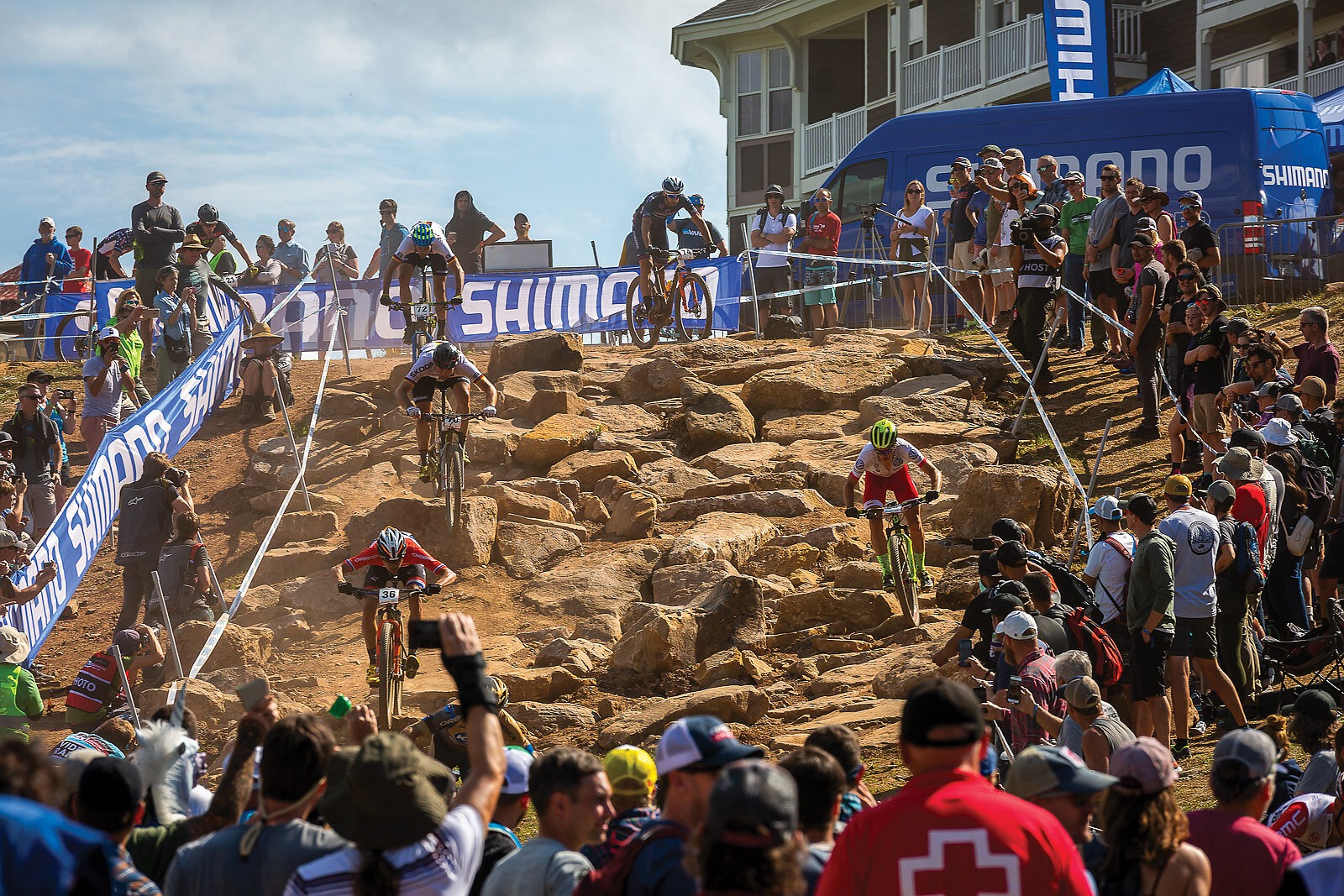
Two years later in 2019, Snowshoe graduated to hosting the UCI Mountain Bike World Cup Finals, which thrust Pocahontas County’s riding into the international spotlight. That same year, the International Mountain Bicycling Association (IMBA) officially designated the Snowshoe Highlands Ride Center as a bronze level area, then promptly bumped it up to silver one year later.
Since then, West Virginians have entered something of a mountain biking mind meld. The state’s riding scene is having a moment, again. They say success begets success, and the state is certainly experiencing a windfall. In the past three years alone, tens of millions of grant dollars have been awarded or congressionally earmarked specifically for trail projects. In some cases, these builds have done what no other trail project in the country has been able to do by securing previously untapped pots of federal money from agencies like the Economic Development Agency (EDA), the Environmental Protection Agency (EPA) Brownfields Program, and the Department of Housing and Urban Development (HUD), which don’t typically fund trail planning or construction.
“This [funding] is a step well beyond your average Recreational Trails Program funding because it’s got two extra zeros after it,” says OEDC Outdoor Recreation Infrastructure Coordinator Rich Edwards. “It’s not $200k, it’s $2 million.”
In this way, communities are harnessing trails to affect real change in their state, and fast. White Sulphur Springs is using its HUD funds to build a bike park that connects to a housing project for victims of the devastating 2016 flood. Morgantown will use its EPA grant to clean up the brownfield site at White Park and design a purpose-built trail system there. Cacapon Resort State Park will use its EDA grant to build all 35 miles of its remaining 50-plus mile master plan in an effort to sooner realize the revitalization of downtown Berkeley Springs.
And then there’s Marlinton. Thanks to Appalachian Regional Commission funding, the city was able to finish and open the 27-mile Monday Lick trail system at the end of 2024. That project is predicted to elevate the Snowshoe Highlands IMBA Ride Center to gold level, making it the first of its kind east of the Mississippi.
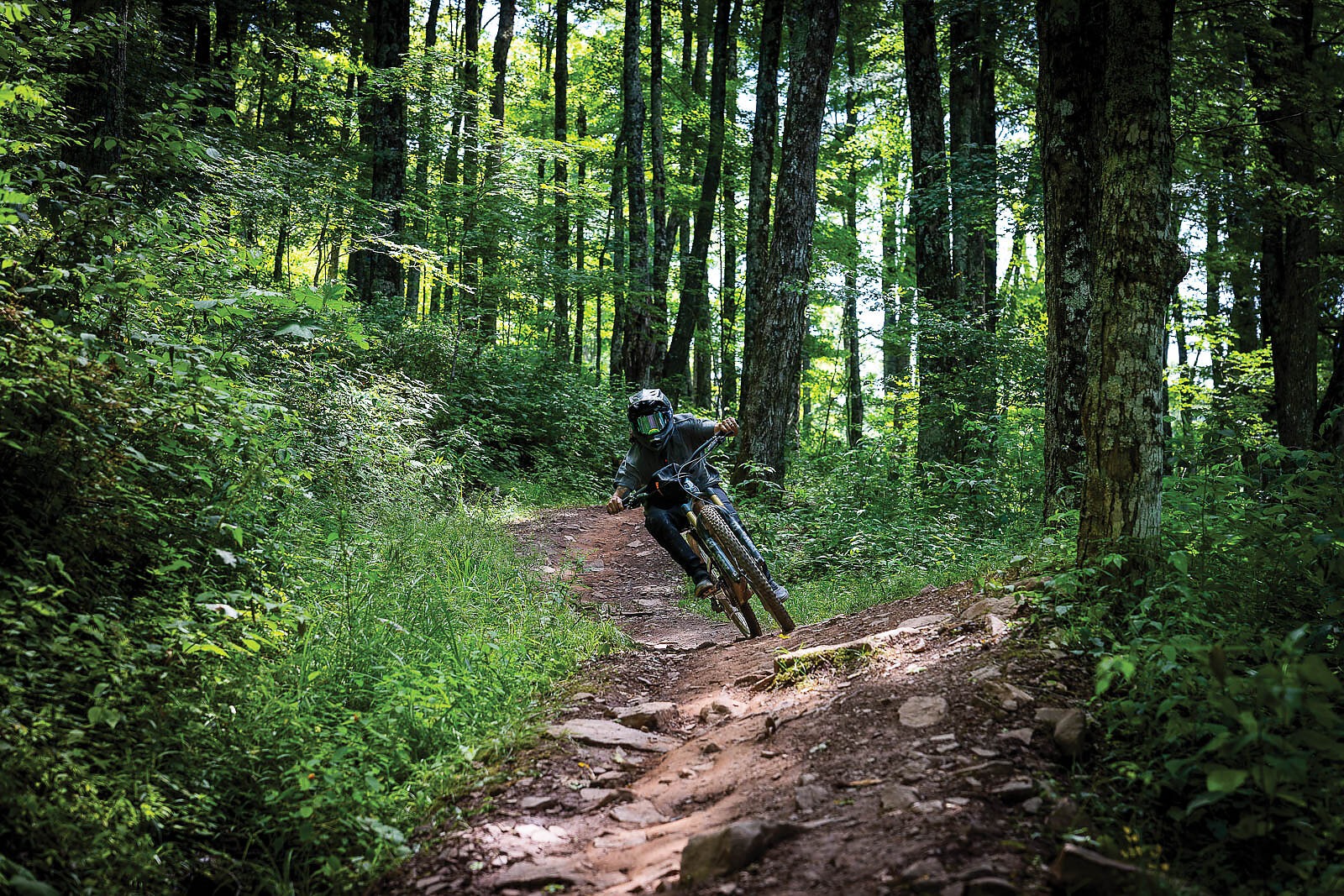
The early focus of many of these trail projects has been to flush out the state’s diversity of singletrack so that there are more accessible riding opportunities for kids and beginner mountain bikers. Not everyone is thrilled about spending big money on green and blue trails, but there seems to be a mutual understanding that on its quest to build a complete biking ecosystem, West Virginia cannot lose itself, cannot abandon its past, in pursuit of something it can never be.
“What I’ve always loved about West Virginia is just how grassroots and community-driven everything is,” says WVU Extension Specialist Doug Arborgast. “Beginner green trails, yeah, that will probably never be our forte. But we have to evolve. I think the challenge now is holding onto our roots while progressing in a thoughtful direction.”
“West Virginia in general is always just 10 years behind everyone else,” says West Virginia Enduro Series founder and former Morgantown Area Mountain Bike Alliance president John Herod. Herod is a self-proclaimed “old crow,” who, at 52 years old, still prefers to ride rake-and-rides and huck questionable drops. Although he’d like to see more gravity-optimized black and double black trails, the new advanced trails that have been built at Cacapon and Monday Lick give him hope for the future. “I wished it would have happened sooner but I think we’re heading in the right direction.”
For Edwards, the momentum behind trials also gives him hope for the future, but for different reasons. He believes that the quality of life benefits of having access to good trails may help reverse population loss, a problem that has plagued West Virginia for many years. According to a 2024 study by The Pews Charitable Trust, West Virginia has been the slowest growing state in the U.S. for the past 15 years, with population numbers annually declining by 0.26%.
“West Virginia has been dealt a variety of really bad cards. We are not on the right side of growth,” says Edwards. “There’s an urgency to this. We need to make a difference in this state.”
In her 18 years of life, Hannah Ellison has never once dreamed of leaving West Virginia. She also never dreamed of wanting to move to a town called Hurricane, but such is life. West Virginia is in her blood. It’s the only home she’s ever known, the place where she and her six siblings and parents learned to ride mountain bikes together. Meeks Mountain is where Ellison found her happy place: “Right after it rains when everything is drippy and really quiet and there’s that smell of fresh new dirt.”
It’s also where she found herself. Without the ride community in West Virginia, Ellison would have never dreamed her first job out of high school would be as a bike mechanic, would have never volunteered as a coach or a trailbuilder, would have never trained to become a bike patroller at Snowshoe Mountain.
“Mountain biking has completely and entirely changed my trajectory,” says Ellison. “I never saw myself leaving the state before [bikes], and I don’t see myself leaving now either. I love that the whole state feels like a small town. It’s just us, which is one of my favorite things about West Virginia, the feeling that we’re all one big family.”