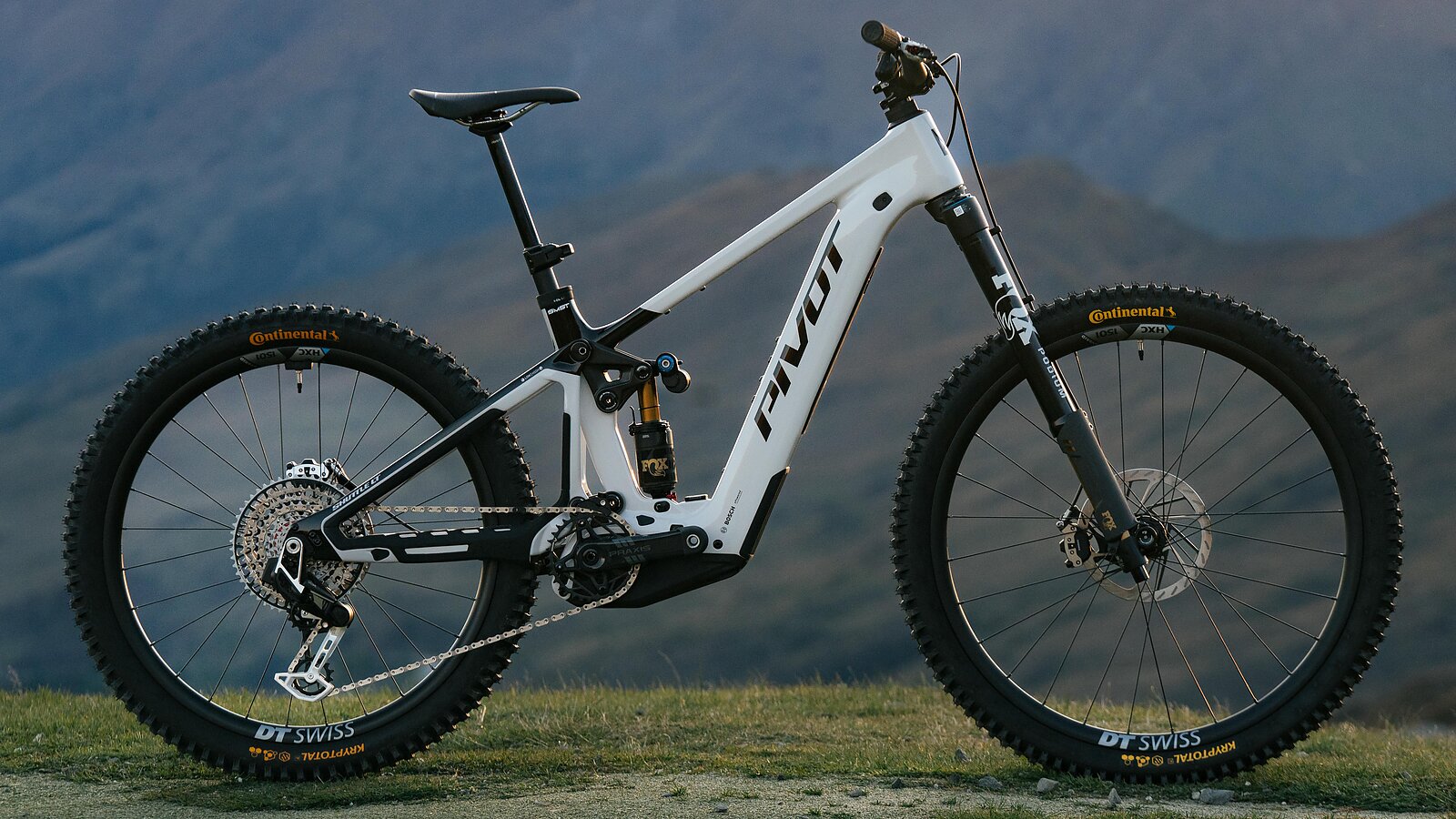
2026 Pivot Shuttle LT Precise, but ready to smash.
Today Pivot launched the latest version of its biggest, burliest e-bike, the Shuttle LT. This new bike is an interesting combination of tried and true Pivot philosophy, along with a few genuinely new and interesting features. I got to put about 50 miles on the new Shuttle LT down in Phoenix before its launch, and those few rides left me just about as excited as I’ve ever been for a new e-bike.
Pivot Shuttle LT Team XX Details
- Travel: 162 or 165 mm (rear) 170 mm (front)
- Wheel Size: MX with full 29” capabilities
- Size Tested: Large
- Build Tested: Team XX
- Head Tube Angle: 64°
- Motor: Bosch Performance Line CX-R
- Battery: 800 Wh (removable)
- Stated Weight: 52 lbs
- MSRP: $14,999
What’s New?
While the new Shuttle LT has an unmistakable-Pivot silhouette, and sports the same Bosch CX-R motor and SuperBoost rear spacing as the outgoing model, it comes with a bunch of updates and new features. I’ll rattle them off here and dive further into the important ones lower down. The Shuttle LT’s frame now has the same Swinger dropouts as the latest Firebird which allow for eight millimeters of chainstay length adjustment. It also features all-new adjustable “Slacky McSteepTube” technology, which allows riders to adjust between 76.5° and 78° seat tube angles. Its battery capacity goes up from 750Wh to 800Wh. While the previous version had a geometry-adjusting flip chip, the new Shuttle LT’s chip fully compensates for the difference between 29”and 27.5” wheels, so you can swap between the two. There’s also a new progression-adjust flip chip that lets riders choose between 36 and 32.7 percent progression modes. And, of course, the frame sports a ZS56/ZS56 headtube that’s compatible with reach or angle adjusting headsets.
Pivot calls the end result its most modular frame yet, with 96 different potential combinations of settings. I (mostly) rode the Shuttle LT in the default settings, but once I get one in for a long-term test, I’ll go down the rabbit hole and start playing with all the combinations.
Pivot Shuttle LT Motor and Battery
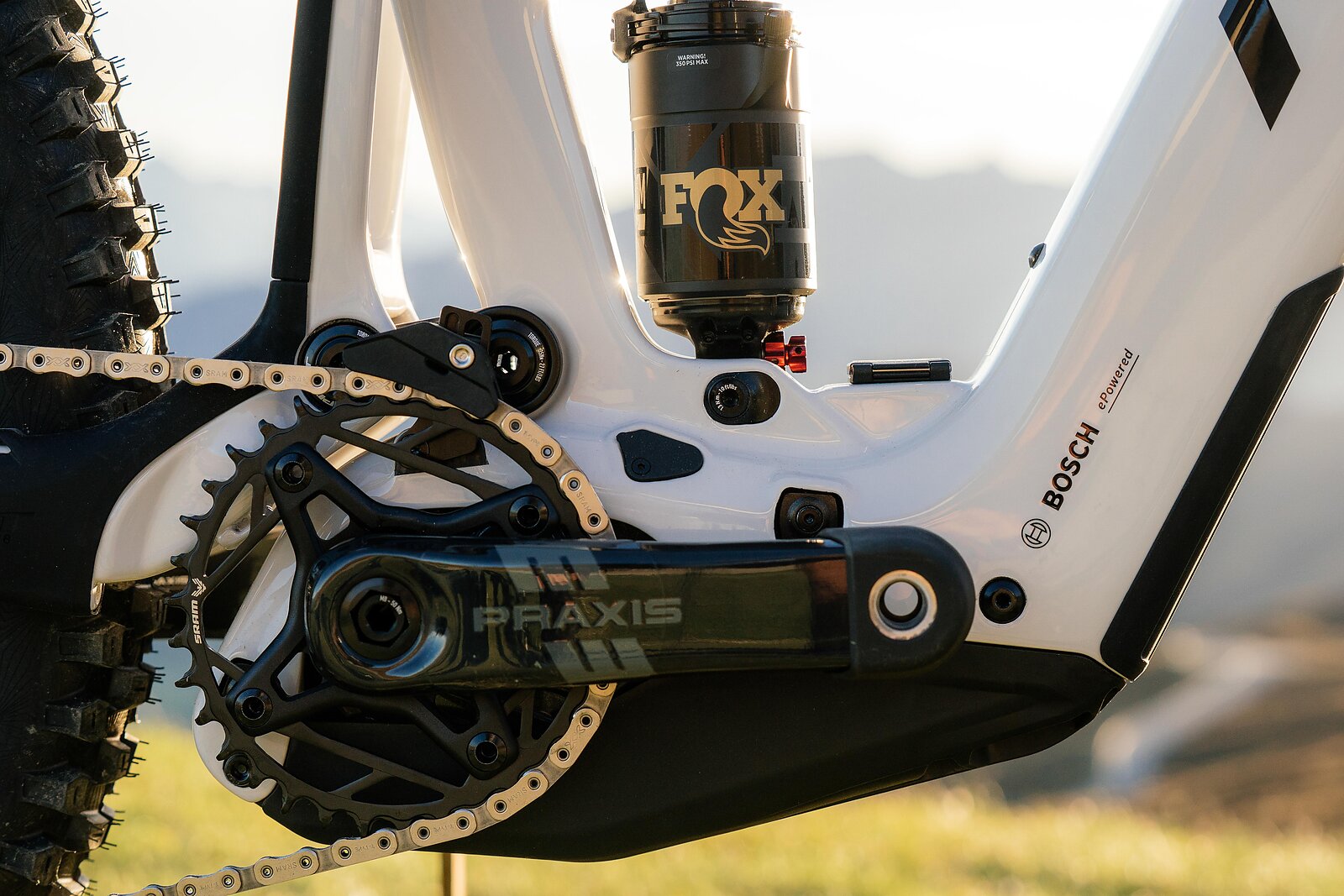
The new Shuttle LT is built around Bosch’s Performance Line CX-R motor and an 800 Wh battery. That motor puts out up to 100Nm of torque and 750 watts of peak power, and the Shuttle LT uses the new Kiox 400C top-tube display.
The top two tiers of Shuttle LT (Team and Pro) both come with the “R” or Race version of the Bosch CX system. This motor uses a titanium spindle and ceramic bearings to save 100 grams versus the regular version featured on the Eagle 90/70 build. It also comes loaded with “Race” mode which delivers more power, quicker acceleration, and longer overrun when you are off the pedals.
The Shuttle LT will ship with an 800Wh battery, and is compatible with Bosch’s lighter 600Wh option, as well as the 250Wh PowerMore battery extender which is available for $599 from Pivot when you purchase the bike. Pivot says the battery is easy to swap in the field, and just takes a couple of seconds with a multi-tool. If you are swapping batteries around, don’t forget to swap Pivot’s floating battery mounts with them.
I wrote at more length about this motor and battery system in my Shuttle AM review, but the short version is that it’s one of my favorite systems on the market right now. In my experience it’s consistent, reliable, and predictable. Race Mode takes some getting used to, but is quite useful on ledgy trails like those found near Pivot HQ on South Mountain. My only quibble with the system is that the Bosch wireless remote is quite sensitive, and it’s easy to bump on the fly, so there were a few times where I shifted down to a lower power mode than I meant to.
Pivot Shuttle LT Frame Details
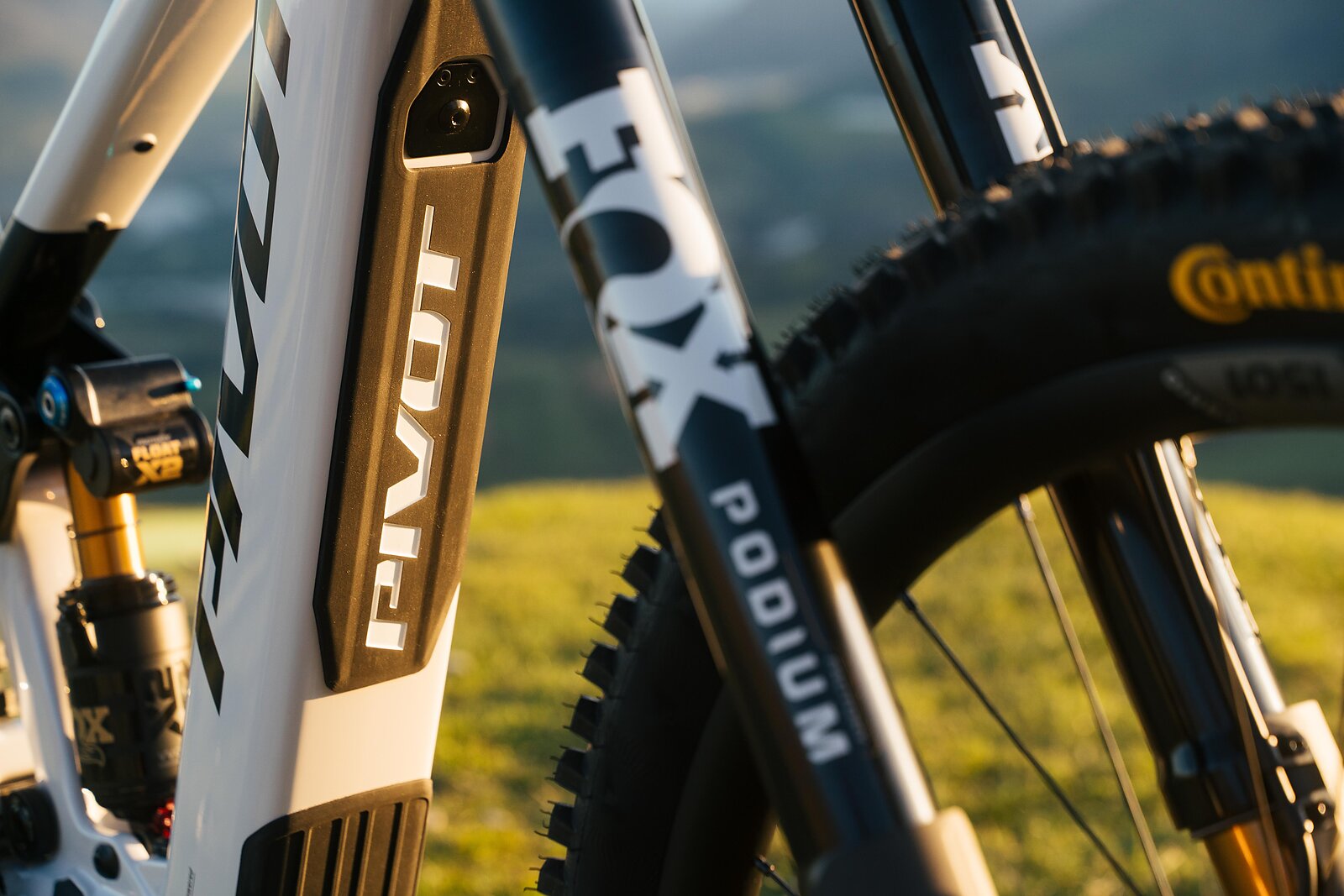
I’ve mentioned this before in other Pivot reviews, but I appreciate the level of detail the brand puts into the little things. Pivot bikes aren’t cheap but they also never feel cheap, which is a very good thing. One of my biggest takeaways about this bike and the brand, more generally, is that every single detail is considered and carefully designed. So, while it might not be perfect for you and your terrain, it has been optimized for someone, and that someone’s trails (probably Chris Cocalis, and South Mountain).
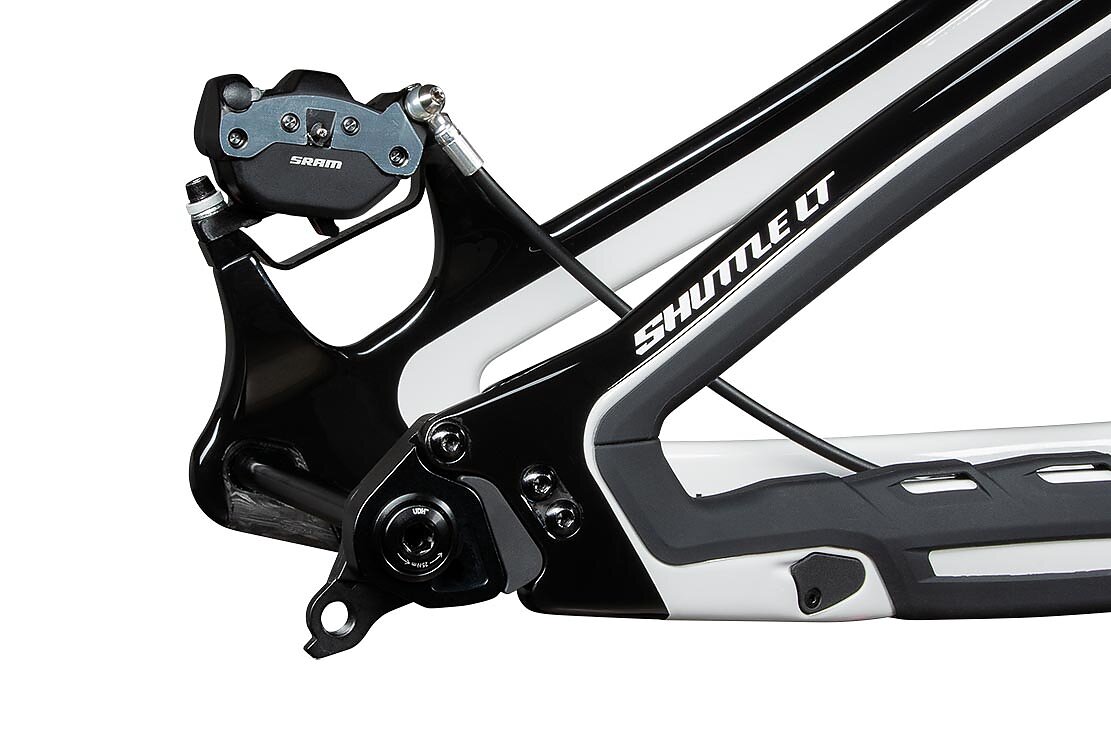
I talked about the Swinger link in my Firebird review—it’s a clever way to integrate ethical non-monogamy into your relationship with chainstay length without compromising your relationship with your primary partner, the UDH. Chuck your keys in a bowl, add or subtract a couple of links from your chain, and don’t forget to flip your brake mount.
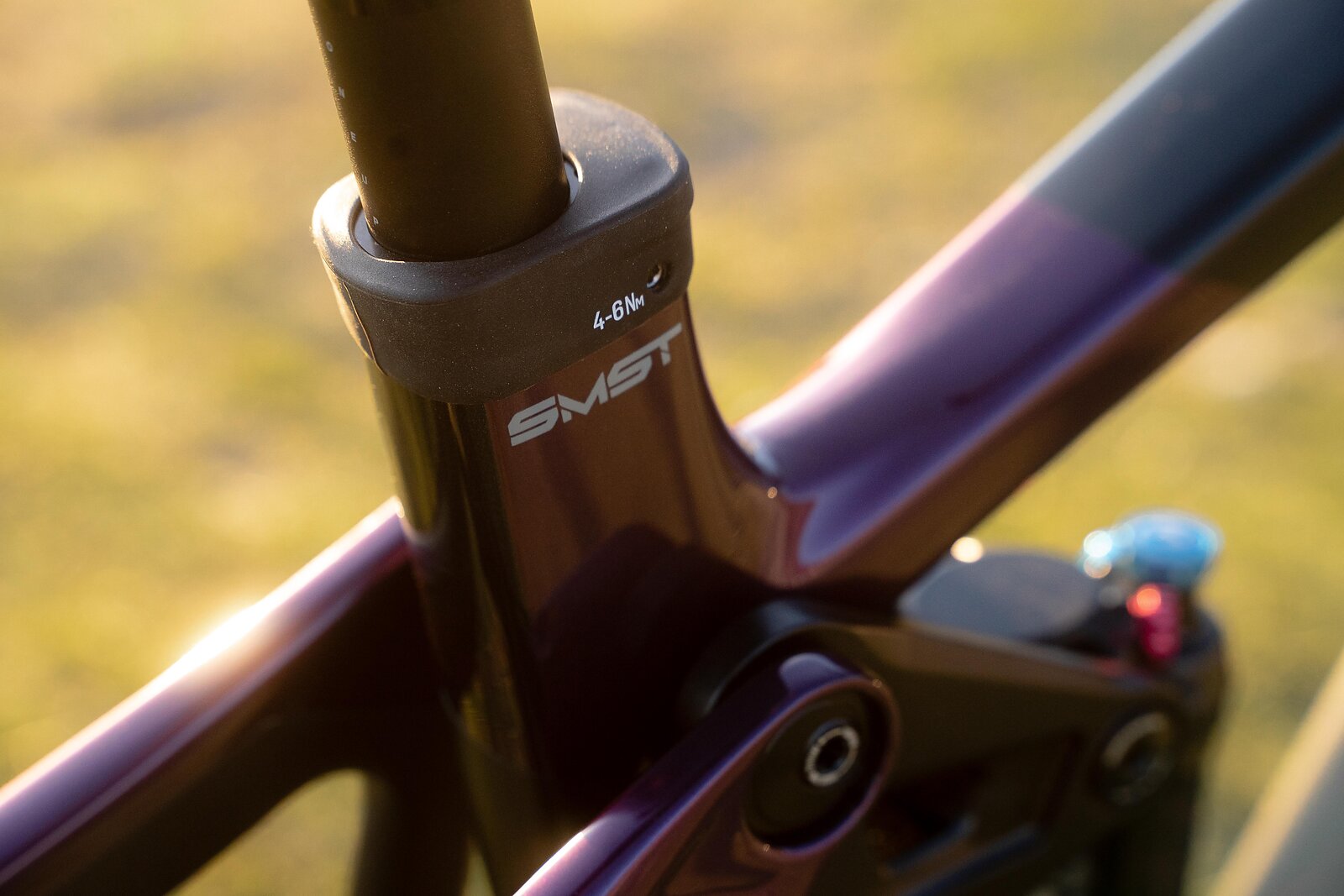
By far my favorite feature of the new Shuttle LT is the all-new, patent-pending Slacky McSteepTube. This is a two-piece shim system in an oval-ish seat tube that allows the rider to adjust the effective seat tube angle between 76.5° and 78°. After riding in Phoenix, I understand why Pivot tends to spec slightly slacker seat tube angles than some other brands. I did more high-post descending in three days than I did all summer in Bellingham. And there’s so many rolling, taint-grinding trails that I appreciated the slacker 76.5° position. But, for rides like those found around Bellingham, I’m a huge fan of steeper seat tube angles. And the Shuttle LT lets you have both without messing up any other geometry figures.
Simply remove the four-millimeter clamp bolt, all the way, and then thread it into the two holes on top of the collar to separate the collar from the shim. Slide both the collar and shim out, flip ‘em around, and stick them back in to slacken or steepen your seat tube angle by a degree and a half. It’s a pain to swap with a traditional multi-tool, but if you’ve got a regular set of wrenches, it takes just a quick moment to do and it works with any 31.6-millimeter seat tube.
Honestly, I’m a little surprised that no one figured out a similar system earlier, but Pivot’s is very nice and well-executed.
Otherwise, the details on the Shuttle LT felt dialed. It uses custom headset spacers not to route the cables, but to match the aesthetics of the Podium fork and beefier headset. I didn’t experience any cable rattle, and the folks at Pivot say they’ve gone to great lengths to make sure that servicing or swapping the essential “meat bike” components of the bike isn’t made any more difficult by the integration of the motor and battery.
Finally, the bashguard over the battery and bottom bracket area on this bike is super burly. I had a couple of impacts that I was sure had shattered the guard, and maybe broken the frame, but didn’t leave any appreciable damage.
Pivot Shuttle LT Build
I rode the incredibly Gucci Team XX build of the Shuttle LT and, unsurprisingly, didn’t have any major quibbles. SRAM Maven Ultimate brakes with 200-millimeter rotors are a great choice, as is the XX Transmission drivetrain. I’m a particular fan of the new wireless Reverb dropper on e-bikes because the slight give or suspension it has at anything less than full extension makes technical climbs more comfortable.
The Fox Podium fork was another standout. I’m still not convinced that stomaching the weight penalty on meat bikes is worth it, but on the Shuttle LT it delivers incredible front-end traction in loose corners. Finally, Pivot specs the Shuttle LT with Continental Kryptotal tires front and rear, in Enduro casing, with the Super Soft compound up front, and Soft out back. That tire combination is excellent.

Riding the Pivot Shuttle LT
Riding the Shuttle LT in Phoenix was an illuminating experience, not just for this bike, but about the other three Pivot’s I’ve reviewed in the last year as well. The first couple of miles on South Mountain justified a whole host of design and geometry decisions that historically have left me feeling a little confused. This is a bike that excels at going fast through awkward, chunky terrain, both up and downhill.
Going up, the CX-R system does a great job of delivering power smoothly and predictably. Riding here in Bellingham, I very rarely used the Race mode. Our climbs are mostly either fairly straightforward to clean, or the sort of hike-a-bikes where you’re better off shouldering the bike. Sure, there are exceptions, but there’s much less of the “charging at big, janky, ledgy moves” that South Mountain features. So, where it felt like Race mode was more of a liability than an asset here in the PNW, in Phoenix, I spent most of my time riding in it. That little extra boost of overrun is essential when you’re trying to muscle the bike up some gross ledge.
And, when you’re headed downhill, well, at this point, the Shuttle LT might be my favorite e-bike I’ve descended on. Pivot has a line in the description of the Shuttle LT that calls it “more surgical than savage.” I’m not usually a fan of marketing talk, but this description is insightful. So far, the Shuttle LT is at its best when you use its travel as a tool, not a safety net. It wants you to ride it, not sit back as a passenger. And it rewards that active riding style with a responsiveness and maneuverability that puts bikes like the Specialized Levo 4 to shame. It’s taut and snappy feeling, never vague or unwieldy. I didn’t get too many opportunities to just plow in Phoenix but, when I did, the suspension delivered a great balance of traction and support, with an emphasis on the support. You’re never mushing into the travel. Instead, it feels like you always have the option to change course, or loft the bike over an obstacle, instead of just taking the hit like some e-bikes encourage.
That ride feel was wonderful in the desert, but I can’t wait to get this bike home to Bellingham, where there’s more traction to push into.

For Now
Pivot’s new Shuttle LT is a worthy contender in the pantheon of full-power, long-travel e-bikes. It combines a proven motor and snappy ride feel with a host of clever and innovative features and adjustments. At this point, I’ve only ridden the “default” configuration of the bike, which Pivot thinks will appeal to the most riders. But I’m excited to start experimenting and report back with my findings and a long-term durability update.
Learn more: Pivot Cycles