Small but Mighty The Unique Model of Big Bear
It’s late October and the morning sun is just starting to rise over the hills of the Cheat River Valley, a tributary in eastern West Virginia.
The sky glows pastel and fog stalls on the water of Cheat Lake. Route 68 is void of cars as I roll past the exit for Cooper’s Rock, a reminder that almost all trails in West Virginia are close to a lot of places, but somehow never really near any of them.
It’s been years since I last made this drive, and little seems out of place. The roadside Americana that is making me nostalgic for a time I barely knew is enhanced by the alt-country tunes of Son Volt coming through my speakers.
Resting twenty minutes east of the small town of Bruceton Mills, West Virginia, Big Bear Lake Camplands is home to some of the state’s finest mountain biking. Rugged, raw, and uninfluenced by the current trends in trailbuilding, Big Bear offers riders backcountry flavors with easy access to the trailhead. Waiting for me in the trailhead parking lot is John Herod.
He’s a stalwart member of the West Virginia riding scene and is always game for an early morning role call to snag a few photos. As we unload our bikes, a late fall frost seeps into our windbreakers.
We pedal around the gate, up the gravel road, and pass through the airstrip. The long grass field that once hoped to fly in big-money vacationers has since played host to multiple mountain bike festivals and events going back to the late ‘70s. Its emptiness rattles an eeriness in my brain.
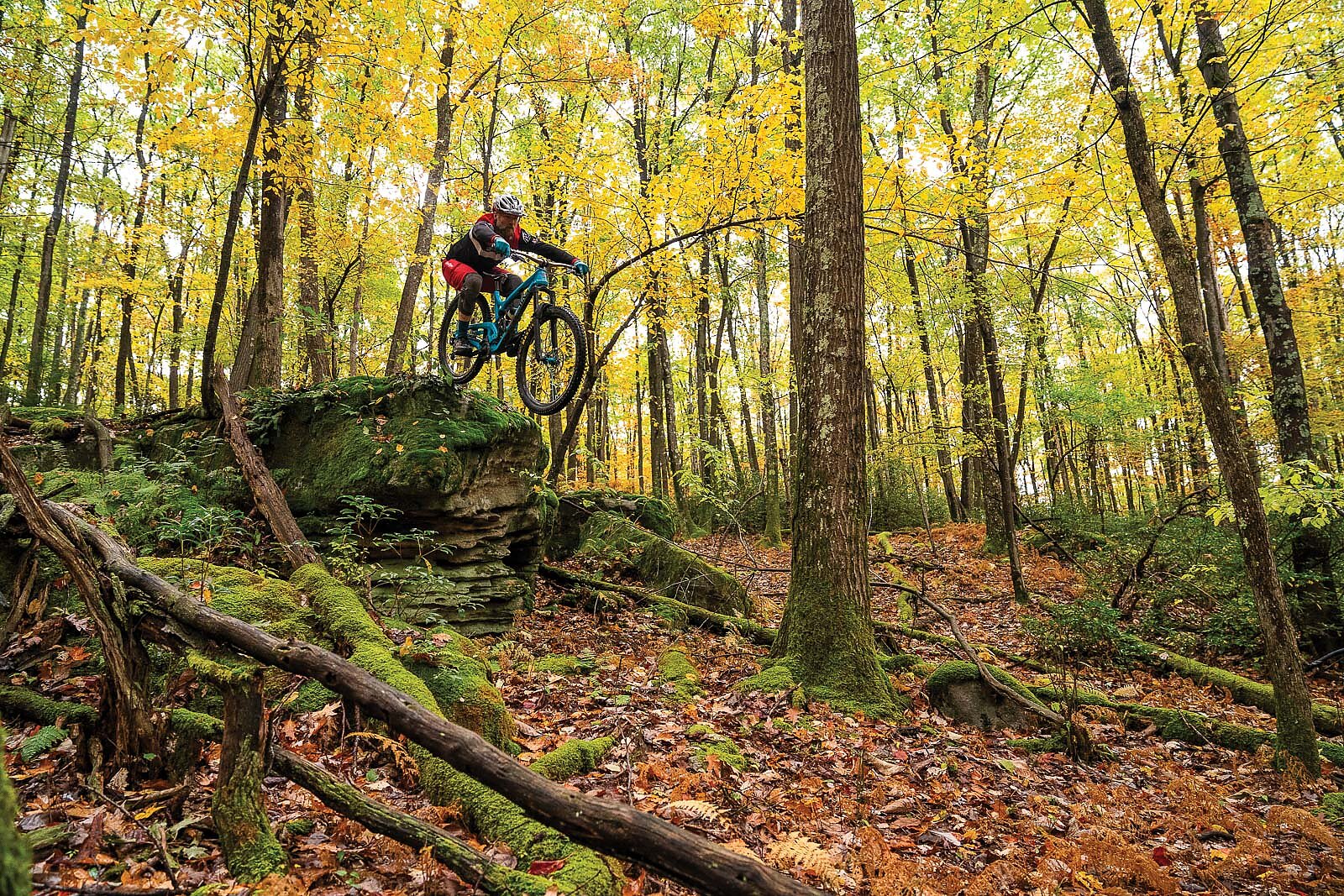
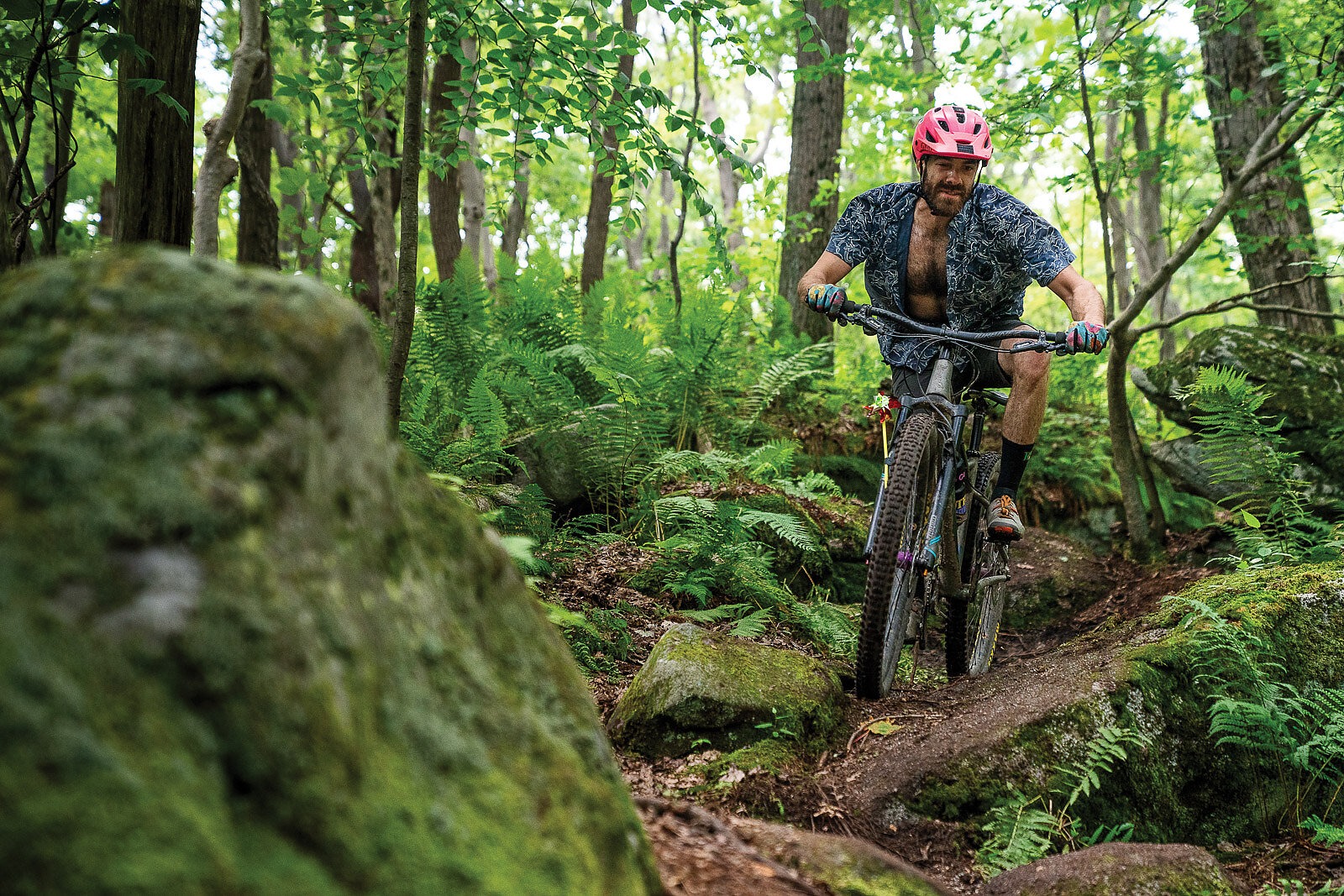
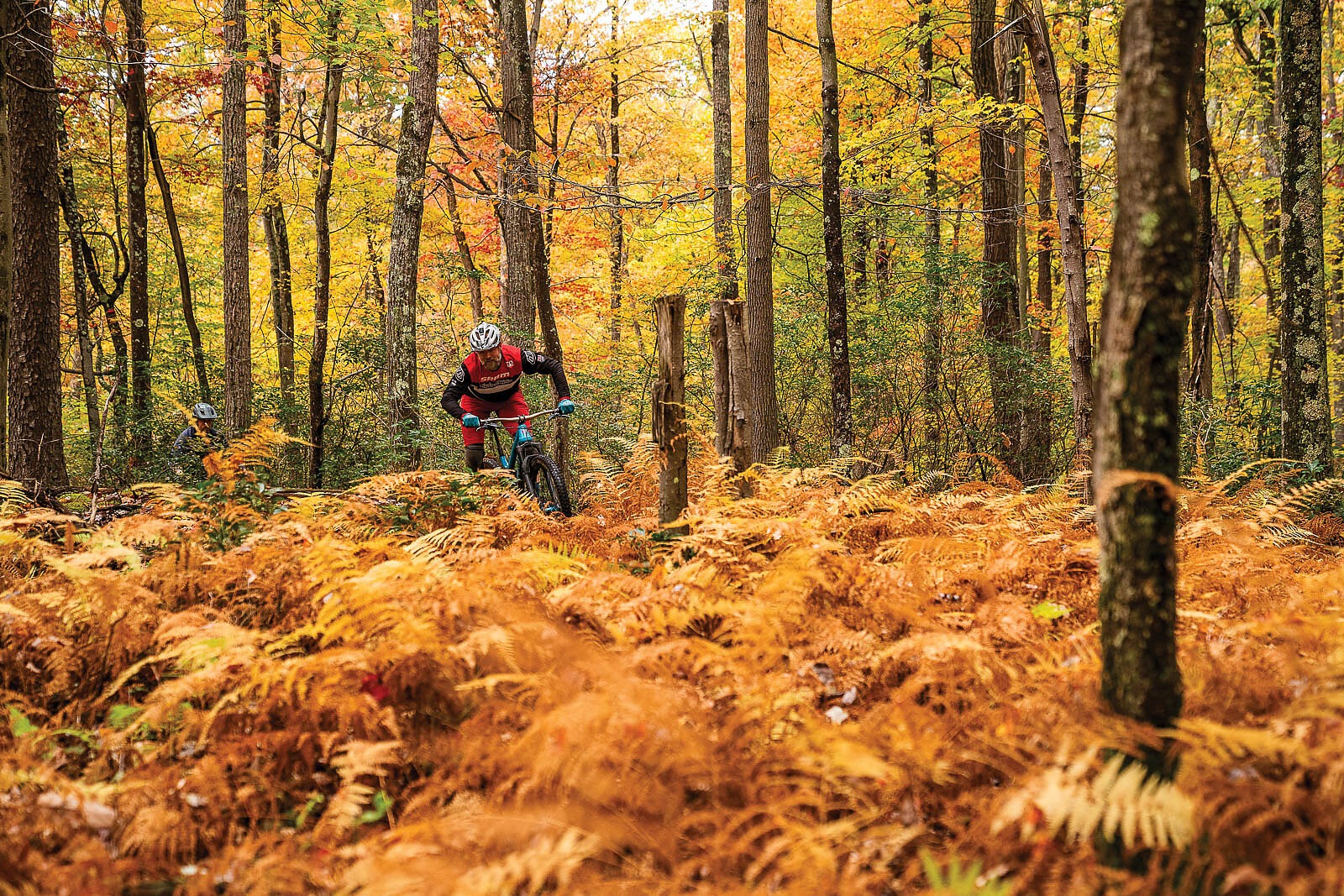
During summer, sections of Big Bear’s trails are lined with Jurassic-sized greens ferns—often waist and shoulder high—that create an enchanting, if not extra challenging, element to singletrack littered with mossy rocks. By late fall the ferns have begun to collapse into a carpet of golds and brown, framing the detritus ribbons flowing through the forest. Herod and I meander our way up the Race Loop trail, pausing to see if a selection of the many rock features is looking picturesque in the morning light.
After noodling around on the trails for an hour or so, we head back to the lot to meet up with a group of riders who have gathered to squeeze one more ride in before the end of the season. We point ourselves down Gene’s Trail, a track dedicated to local rider Gene Arden Vance Jr., a U.S. Army Staff Sgt. who was killed during the war in Afghanistan in 2002. Gene’s Trail is a highlight of the Big Bear trail network, a rough and tumble trail with a plethora of rock moves and options to keep the senses at full attention. It links up well with another four-star trail, Chunder Mountain, a perfect complement to the first course of rocks served on Gene’s Trail.
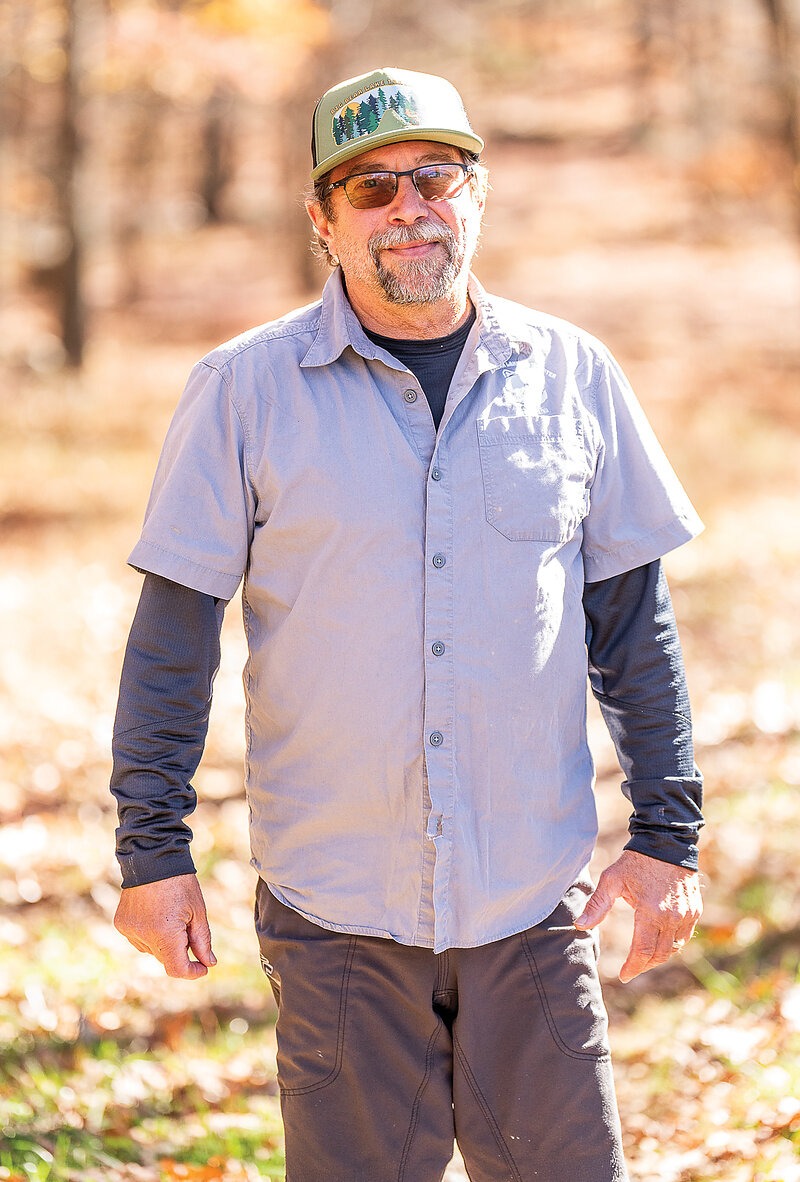
In the parking lot we are greeted by a group of riders cuing up for a day out on the trails. Amongst them is Mark Schooley. Schooley, along with his wife Julie, took over the campground operations in 1993, several years after the passing of Julie’s grandfather and original owner Paul E. Garbart. Mark had worked as a mining engineer for the coal industry prior to taking on his role as general manager at Big Bear.
“My official title is GM and part owner, but on any given day I can be anything from the electrician to a plumber,” Schooley says with a chuckle.
Before mountain biking, Big Bear hosted several motorcycle events, including the Big Bear 100. For the better part of the 1980s, dirt bikes carved out some of the original riding trails on what was deemed one of the more challenging moto enduro courses in the country. The remaining trails were scratched out over the years by the Big Bear faithful, including Schooley. After witnessing several of the first mountain bike events Big Bear would come to host, Schooley decided it was time to try riding the trails himself. Soon, he was out with a group of local riders raking and weed-whacking old deer trails to form the beginnings of Big Bear as a mountain biking destination.
“My official title is GM and part owner, but on any given day I can be anything from theelectrician to a plumber.”
—Mark Schooley
Jeff and Annie Simcoe have been riding and visiting Big Bear since the early 2000s. In 2014, after years of volunteering on maintenance days, Jeff took on the official role of recreations land manager. Today, Jeff and Annie lead the group out of the parking lot, with Jeff at the front and Annie at the back to make sure none of the stragglers get lost.
On most days, the Simcoes are busy planning events that take place throughout the year. The Big Bear Bike Bash has since picked up where Dirt Fest left off, hosting an array of vendors and campers to enjoy a weekend full of riding. RAGNAR, a 24-hour running relay accounts for the biggest gathering on the property, with thousands of runners taking part. Between events, Jeff and Annie clear the trails of debris, plan reroutes and additions to the network, as well as a host of other daily tasks.
“Regardless of our position here now, Mark has been the real fuel for all things mountain biking at Big Bear,” Jeff says. “Mark is in his mid-sixties now, so anytime we can get him out on the trail for an event or gathering, we feel like we are doing our job.”
In recent months, Annie has taken on more of an official role by sharing the recreational land manager position, while Jeff splits his time between Big Bear and a similar role in neighboring Maryland.
On the group ride, the morning’s chill has given way to a perfect, mild fall day. The group snakes its way up Jump Trail to Damn Connector, a technical climb with plenty of pinch points and rock moves to muscles over. Ratcheting and straining our way to the top, I find myself back where I had begun my morning. Together, we cruise the last stretches of the Race Loop to an area known as The Pines. Here, an almost symmetrical grove of tall pines adds order to the mostly chaotic deciduous forest.
While it’s a relatively small and humble network, Big Bear is notable in that it’s one of the first privately run trail networks to be owned by a mountain biker in the country. Long before bike parks such as Windrock, Kanuga, and Jarrod’s Place began popping up on the East Coast, Big Bear proved it was possible to have privately owned mountain bike trails outside of a resort setting. While the campgrounds and cabins are a separate entity from the trail network, the two are intertwined. During summer months, primitive camping is available with quick access to the trails. A membership or day pass is required for riding the trails, but the fee is minimal and proceeds go toward upkeep of the grounds.
While the Simcoes and Schooley have the luxury of building whatever trails they see fit, they also recognize the uniqueness of a place like Big Bear, choosing to make only minor additions and modifications that complement the natural terrain that already exists here.
“When the NICA [youth school league] race takes place here in the spring you can tell which kids spend time on rocks,” Mark says, boasting with pride about the kids who cut their teeth riding the technical terrain at Big Bear. While a large portion of the country’s growing trail networks opt for flow, Big Bear remains a refreshing tribute to old-school trail riding.
The fall group ride comes to an end and a grill is promptly fired up. Cold beverages are dug out of a cooler. The conversation begins to focus on next year and what’s on the horizon for the trails at Big Bear. For a short time, mountain bikers will yield to hunters, but in a few months the Simcoes will be back on the trails, prepping for another year of riding amongst ferns and moss.