Santa Cruz Nomad Ready for the Hell Ride
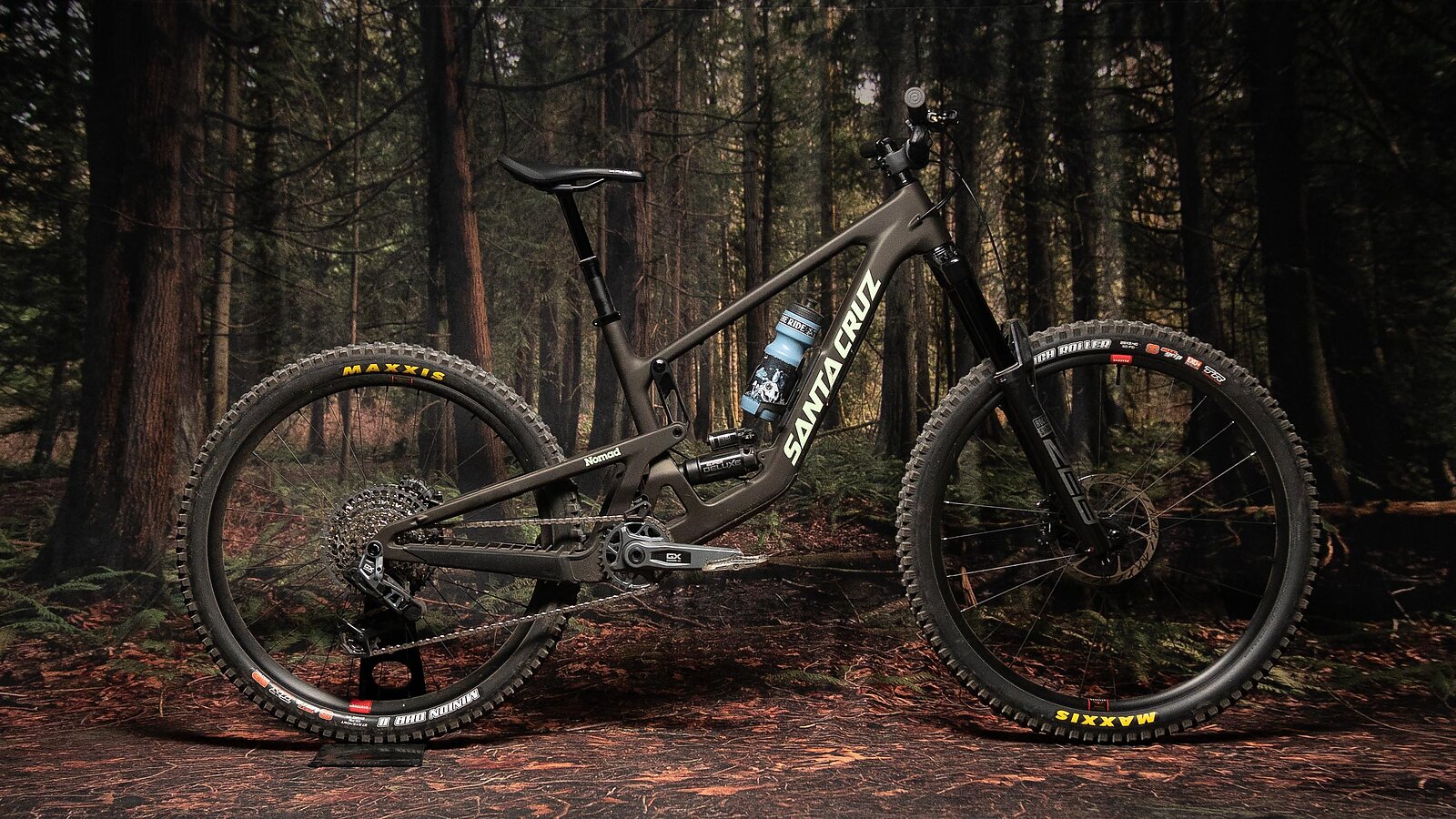
A few weeks ago Santa Cruz dropped the latest—its seventh—edition of the long-running Nomad series. I started getting time on that bike on launch day, so it’s time to weigh in with my initial review.
This review will be a two-parter, with the first installment covering the bike in its (mostly) stock form. Then I’ll stray further from god, and run a second piece discussing how the bike rides with more fiddling and component swaps down the road.
Santa Cruz Nomad Details
- Travel: 170 mm (rear) 170 mm (front)
- Wheel Size: Mixed
- Size Tested: Large
- Build Tested: GX AXS
- Head Tube Angle: 63.3-63.6
- Measured weight: 34.81 lbs, 15.79 kg
- MSRP: $7,300
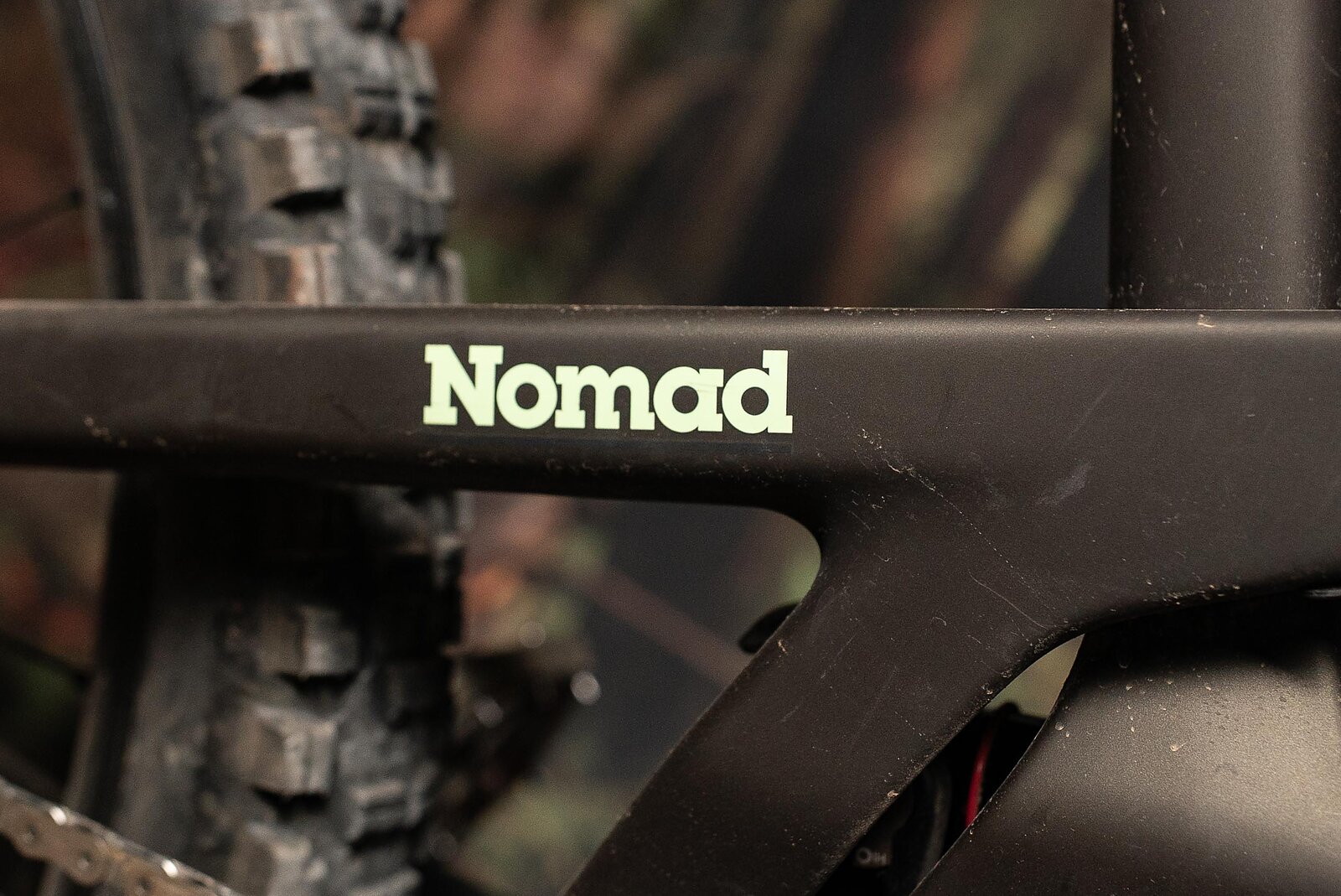
The New Nomad
The Nomad is a mature platform, so it shouldn’t be a surprise that this iteration saw mostly small tweaks instead of a ground-up overhaul. Aesthetically, the Nomad v7 gets the same split-shock tunnel as the latest generation Bronson. However, unlike the Bronson, every Nomad frame comes with provisions to route a cable to your rear derailleur. Rejoice!
Underneath the surface there are more substantial changes. The new Nomad is only available in Santa Cruz’s higher end CC carbon, and it’s got a redesigned tube profile that’s sleeker and, according to Santa Cruz, more compliant and comfortable.
That new layup means that the new Nomad frame is 85 grams lighter than the old CC version, which isn’t groundbreaking, but counts for something given how many frame weights have crept up of late.
Less visibly, but maybe more importantly, the new Nomad has 30 percent less antisquat than the previous version at sag. The Bronson and Hightower saw a very similar change two years ago. This goes a long way toward making the bike feel less “platformed” and locked out while pedaling and instead helps deliver a more supple, traction-forward ride.
Santa Cruz also made some small changes to the Nomad’s in-frame storage and geometry that we’ll get into in their respective sections.
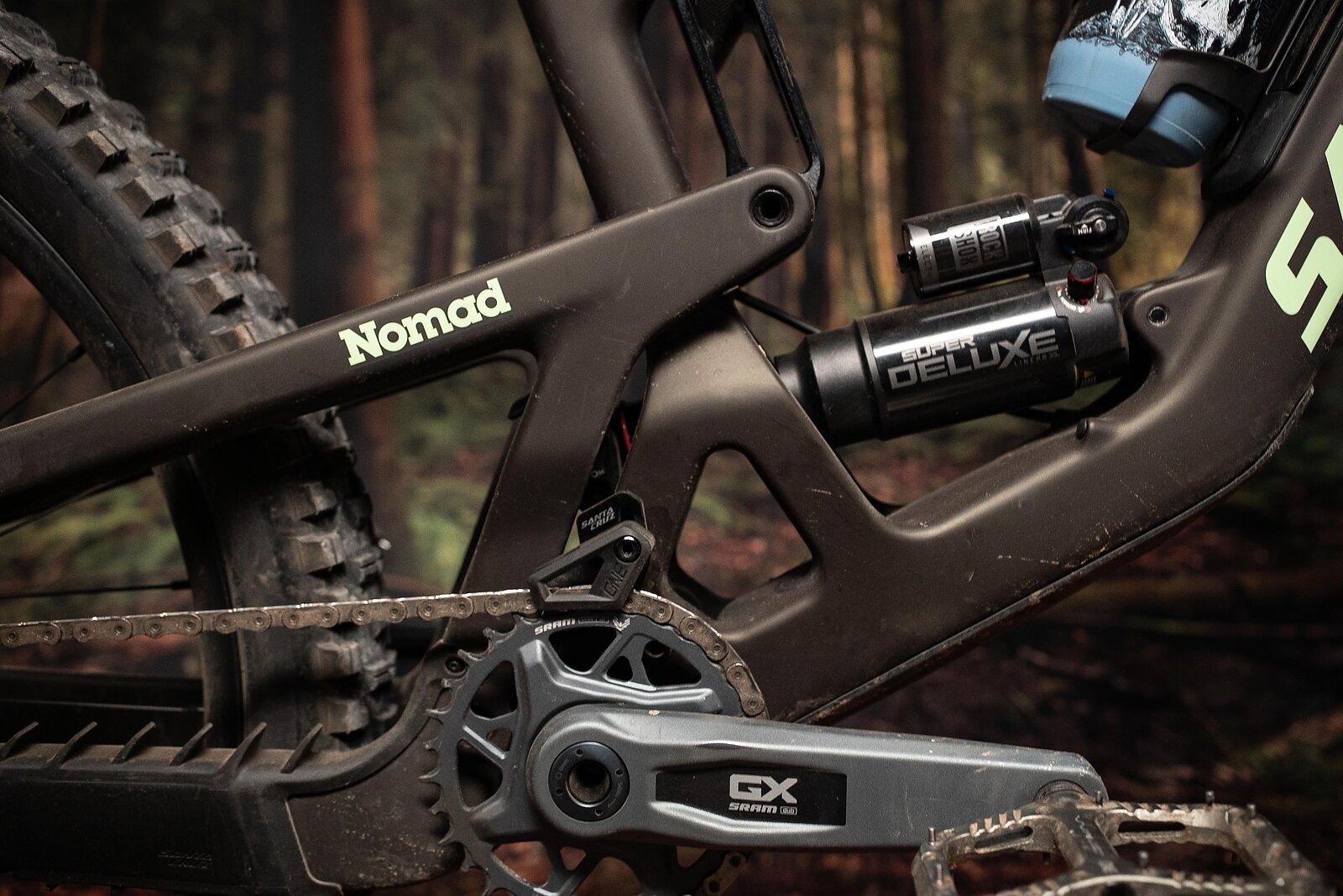
Santa Cruz Nomad Frame Details
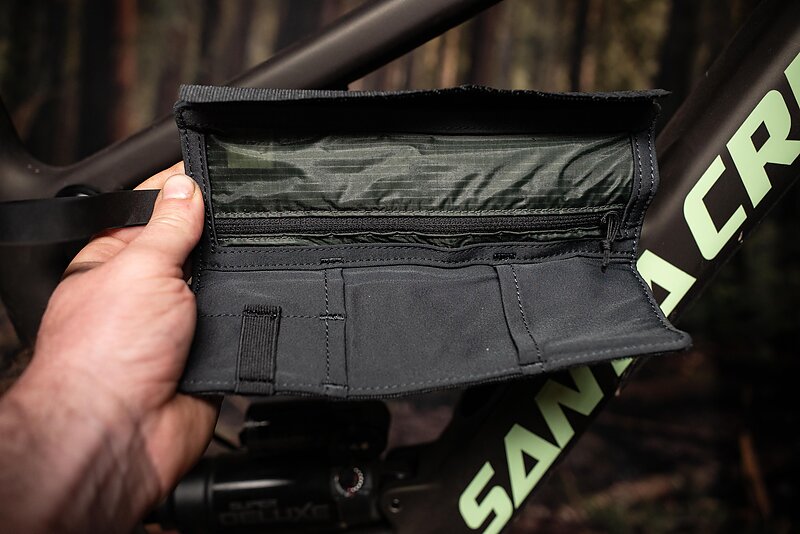
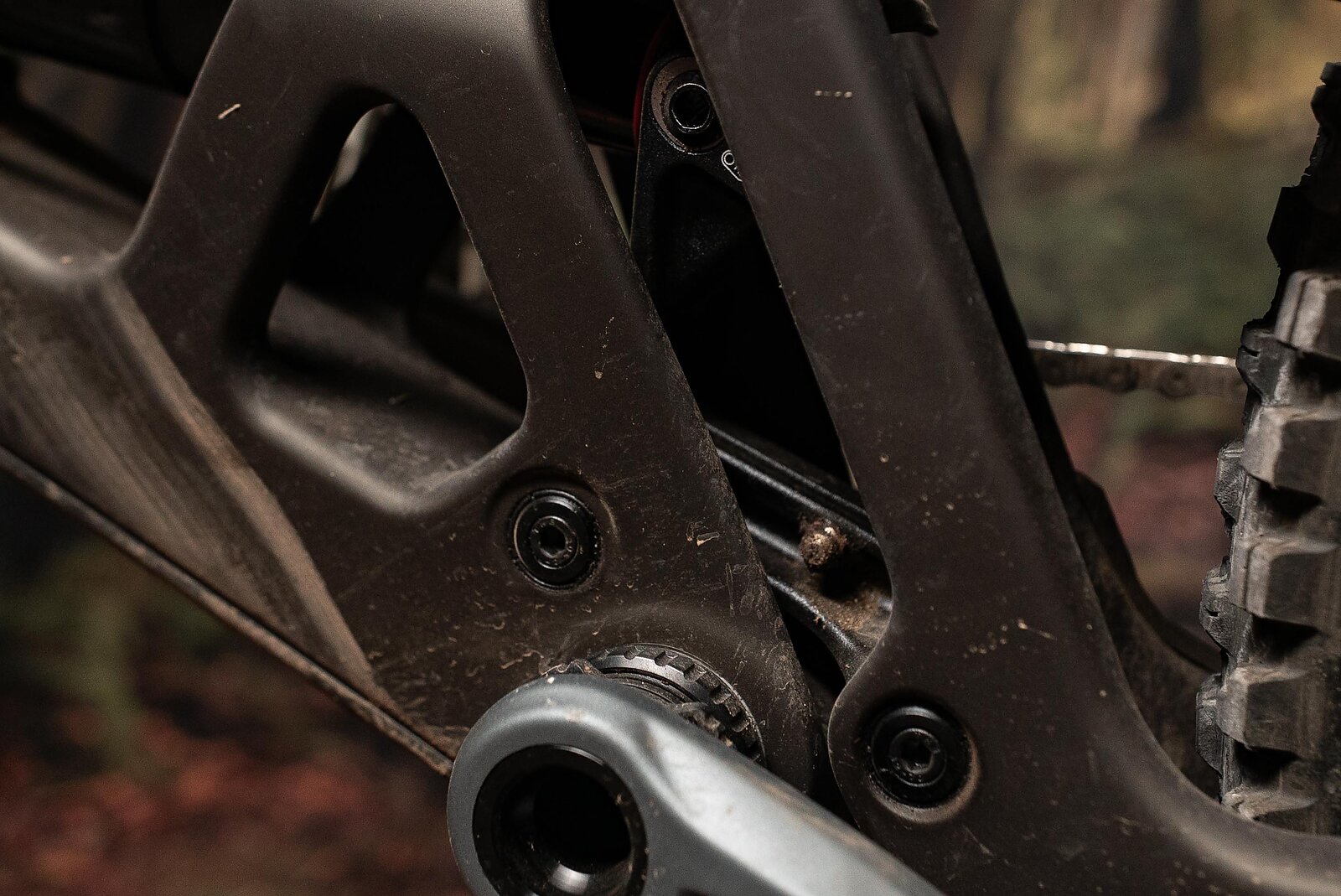
Santa Cruz’s frames follow a familiar and dialed pattern. The cable routing is all internal and well-guided. There’s a small fender to protect the rear shock and linkage, and a small flip chip that allows you to make a .3° change to head and seat tube angles. The chain slap protection is abundant and soft—it does a great job of keeping the drivetrain noise down.
The Nomad comes with its own upper chain guide and has tabs for a bashguard. Or you can run SRAM’s integrated guards.
While it feels like some brands are trying to make their bikes as much of a blank canvas as possible by integrating tons of options to mess with geometry, progressivity, and wheel size, the Nomad is much more single-minded. You get what Santa Cruz wants you to get, with the ability to make small changes within that envelope.
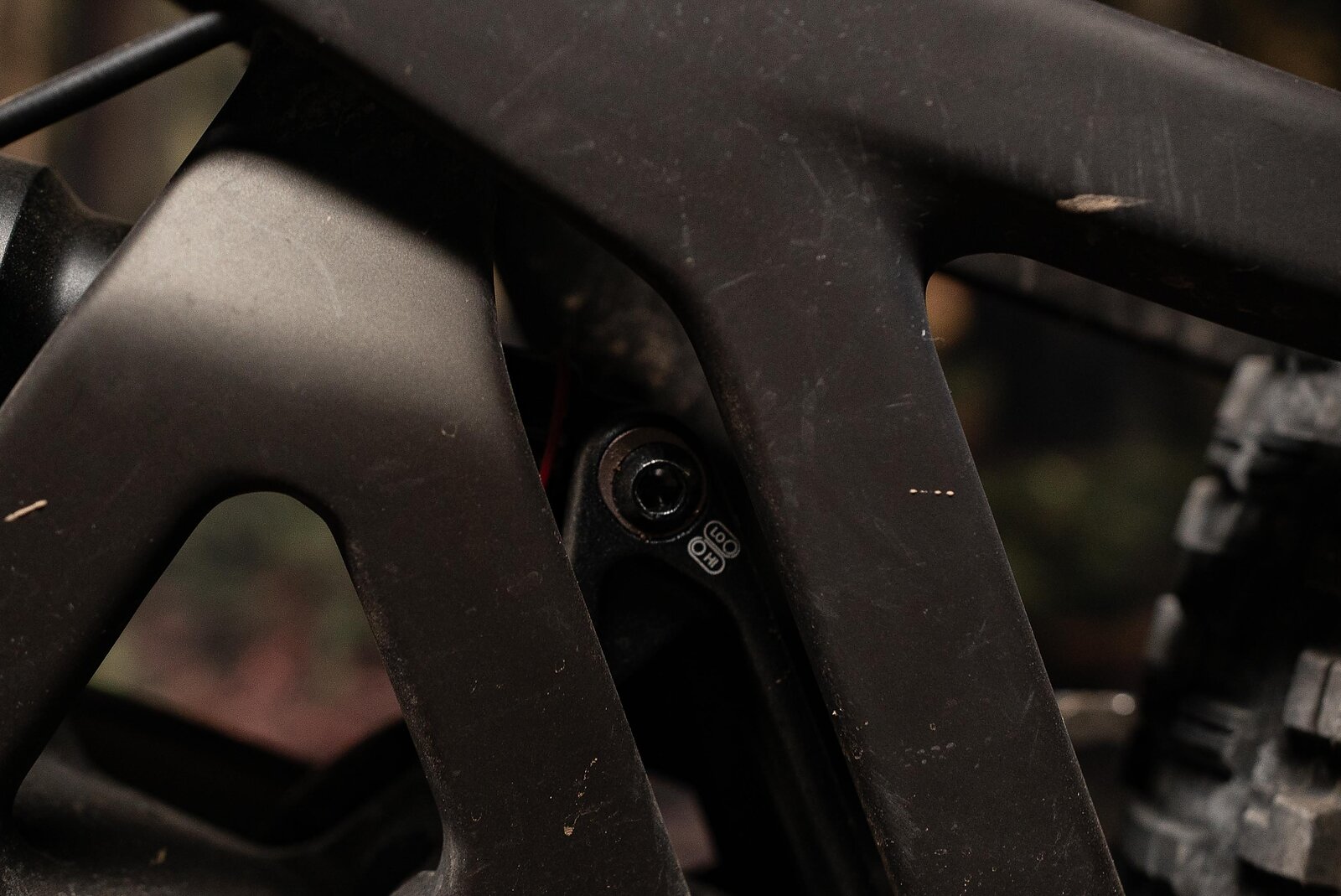
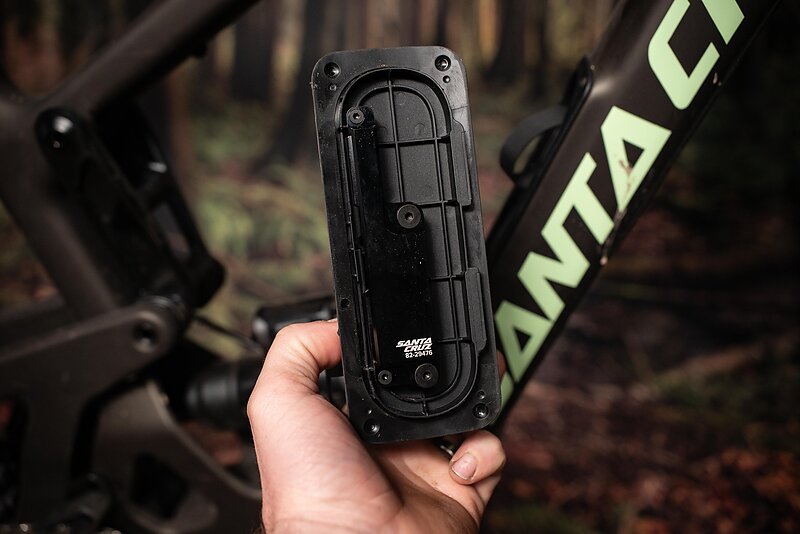
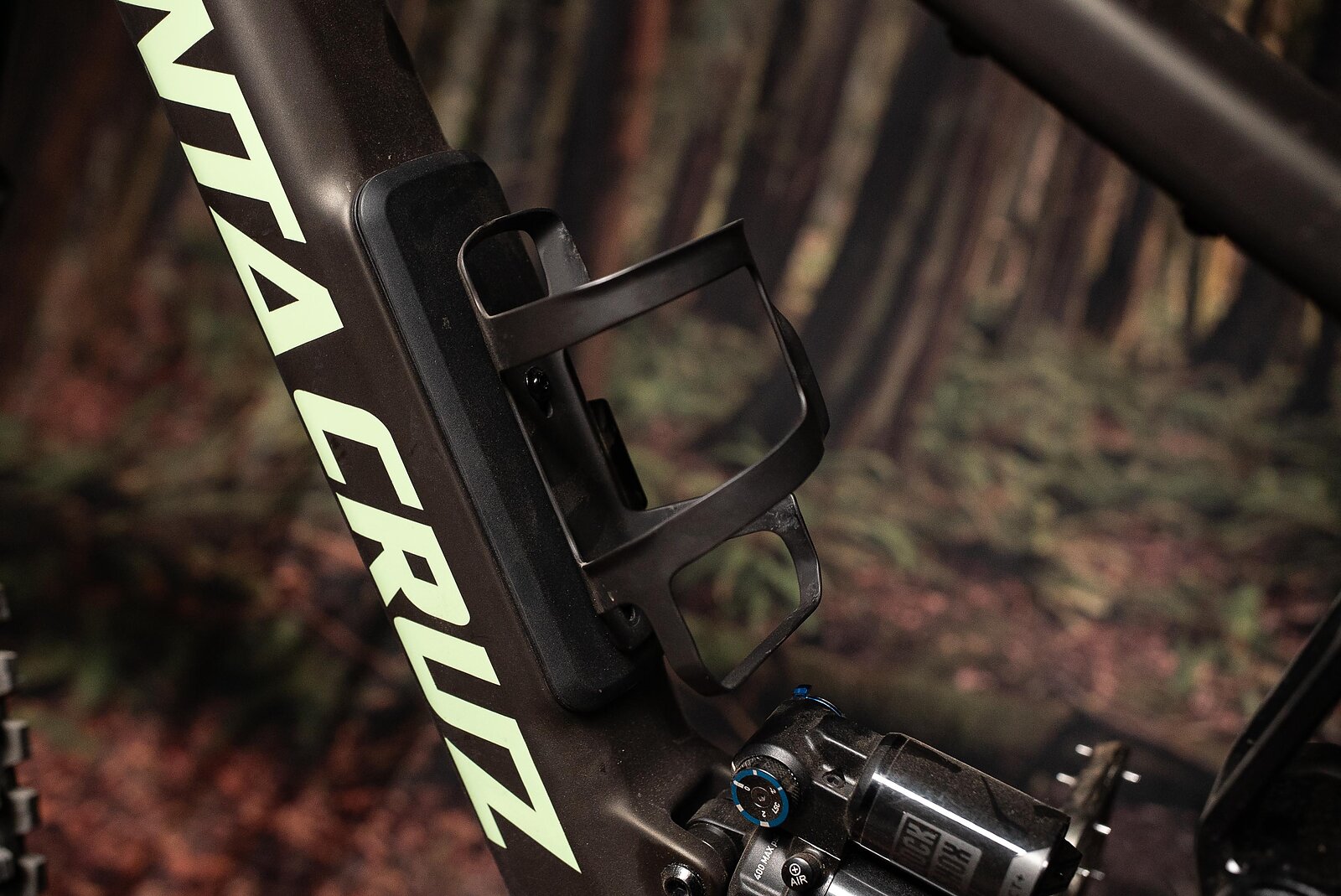
The Nomad has an updated Glovebox compartment, with a wider latch mechanism and raised rim that should make it more secure and rattle free. I think it’s one of the better-executed storage options I’ve used. The doorway is large and easy to use, but also locks on nicely, and the included bags feel intentional, like mountain bikers actually thought through what they’d want to carry and then designed around that.
I encountered two small frustrations with the Nomad. First, the flip chip is not easy to flip. The drive-side chip in particular lives pretty deep in the linkage, and I found myself using a ski strap to keep the rear triangle in the right position while I finagled the chip back into place with a dental pick and a popsicle stick. It’s probably worth just pulling the rear triangle off the lower link to make access easier. This isn’t a huge deal, since I think most owners will only flip that chip once or twice in their time on the bike.
The second issue I ran into is that the Nomad doesn’t have great seatpost insertion depth. The 210-millimeter OneUp dropper that it came specced with is adequate, but I’ve grown accustomed to running 225 or even 250-millimeter droppers in most long-travel bikes. With my 33-inch inseam I was unable to fit a 225-millimeter Reverb. That’s the price you pay for the lower shock location.
Finally, it’s not a frame detail, but I’m a huge fan of Santa Cruz’s lifetime bearing replacement program.
Santa Cruz Nomad Geometry
The Nomad’s geometry barely changed between this generation and the last, which is a good thing. Comparing the size large Nomad 7 to the previous Nomad 6, both set in “Low” mode, the new Nomad has .2° slacker head and seat tube angles, 1 millimeter shorter reach, 5 millimeter taller stack, and .8 millimeter shorter rear center.
The end result is a modern, fairly neutral enduro bike. Nothing is crazy steep or cutting edge slack, instead it’s a package that just works. And, if you want to go just a tiny bit steeper (.3°) and more linear, well, you’ve got a flip chip to do just that.
Santa Cruz Nomad Build
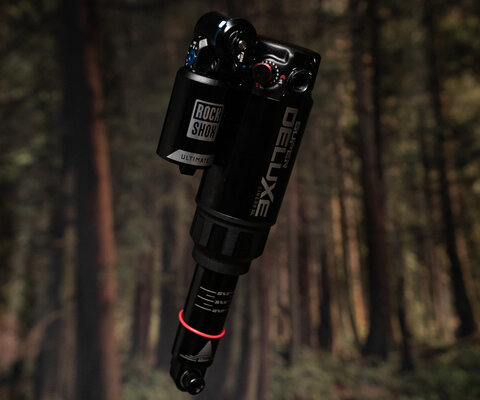
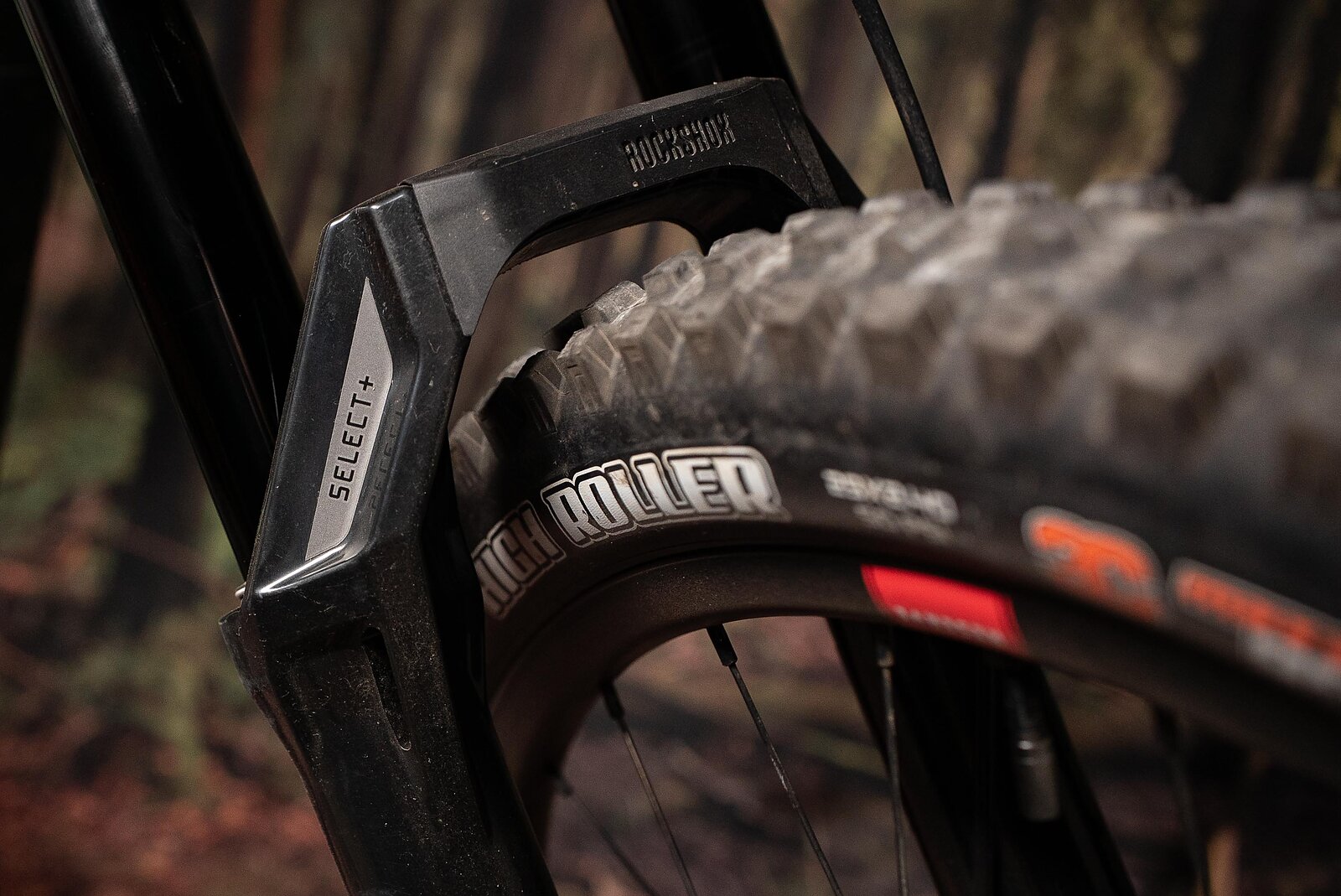
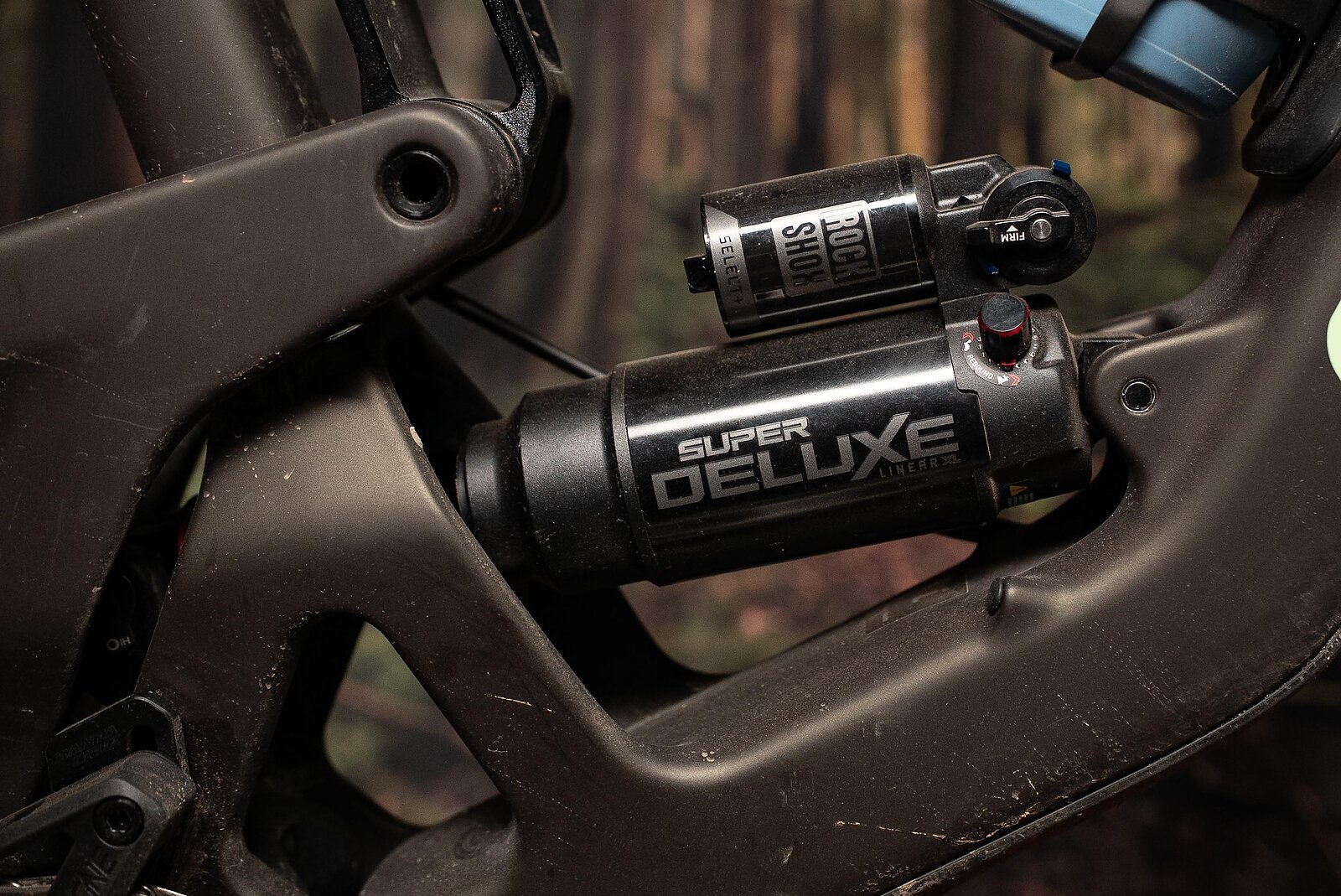
I’ve been riding the GX AXS Nomad, which sits below the more expensive, coil-equipped XT Di2 and AXS RSV models in Santa Cruz’s price structure. The build here is dang close to what I’d choose for a budget-friendly personal bike. It comes equipped with the latest-generation RockShox Zeb and Super Deluxe, both in the Select+ trim. I’ll have a full review of the new Zeb down the road but, so far, I’m a fan.
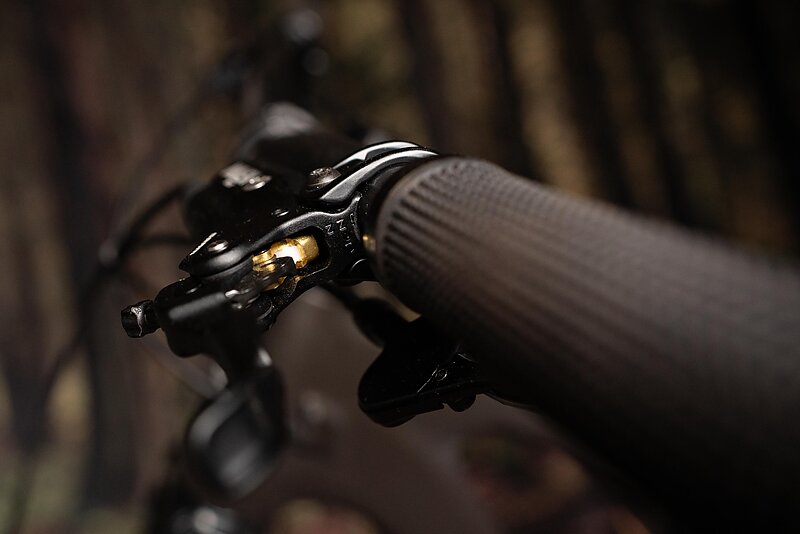
The GX AXS drivetrain is still solid, and it comes specced with the new B1 version of SRAM’s Maven Bronze brakes. I still somewhat prefer the shorter free stroke and more immediate power delivery of the old version, but I think most folks will dig the new lighter lever feel.
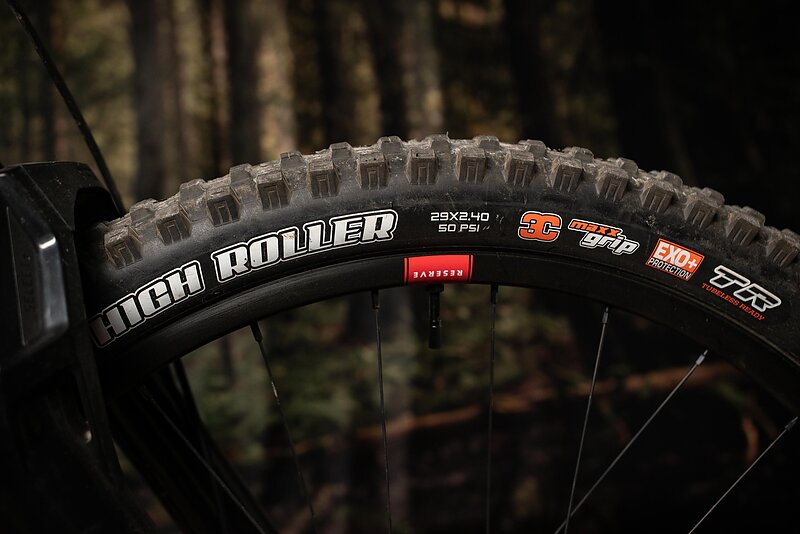
Reserve’s alloy wheels keep things rolling with a good ride feel and an excellent warranty and they’re shod with one of my favorite combinations of tires, a MaxxGrip EXO+ High Roller up front and a DoubleDown, MaxxTerra DHRII out back.
OneUp and Santa Cruz handle the rest of the small bits and bobs to round out the build. Overall, the only actual gripes I had were with the grips and saddle, both of which are really personal issues that plenty of other riders won’t blink at. That’s cool to see. So many bikes come with puzzling or frustrating specs, and the Nomad avoids those pitfalls nicely.
Riding the Santa Cruz Nomad
I always get excited about riding new bikes. If I didn’t this would be a stupid career to pursue. But I was particularly stoked to get on the new Nomad. I’m generally a fan of long-travel bikes that talk softly but carry a big stick, and by the numbers the Nomad fits that bill. It's fairly light—especially given its build and intentions—and it pedals efficiently. Heading uphill on the Nomad is delightful. It doesn’t have the steepest or most upright pedaling position, but the suspension platform does a good job of quieting down my stabby cadence without compromising rear wheel traction. I’ll get into this in the next section, but if you told me I had to take a 170-millimeter bike for a big, up-and-down, 10,000-foot singletrack ride, the Nomad would be very high on my list. It eats singletrack climbs quite nicely.
My first few descents on the Nomad took a little bit of adjustment. I was riding mellower trails and the Nomad handled them differently than most other bikes in this class I’ve ridden recently. Typically, 170-millimeter bikes feel a little too couchy, too supple, too traction-forward on the sanctioned trails close to home. But the Nomad didn’t. I was surprised by how little it felt like the rear end was doing and initially I felt slow because I was getting more trail feedback through my ankles than I expected. And then I realized that I was blowing berms and overshooting jumps that I’ve hit hundreds of times because I was riding faster than usual. The Nomad feels very quick, very engaged, and very efficient on trails that I’d also be happy running a Bronson or Tallboy on. That’s sick, but I was worried a little about how that would translate to steeper trails with less traction and support on tap.
Luckily, my fears proved unfounded. When I pointed the Nomad down proper trails, bigger moves, and more committing descents, my reservations evaporated. This bike does a really good job of combining its engaged, active personality with enough safety blanket comfort to let myself push into scarier moves. No, it doesn’t want to just plow through obstacles like the Trek Slash, instead it gives you space to be more precise with line choice and employ a more active riding style. I found myself popping into steep chutes and slapping corners that usually I’d just point down and rumble through. The Nomad is one of those bikes that rewards you the more you put into it. I think folks with less active riding styles might find it a little dead, but if you’re trying to make the most of steep, challenging trails, this is an awesome rig to do it on.
It doesn’t hurt that the Nomad jumps nicely and predictably. There’s a good platform to push into and it absorbs mistakes relatively well. Out of the box, the bike it most reminds me of is the Pivot Firebird. I described that bike as a great way to take a gun to a knife fight. It’s similar to the Nomad in that it covers big miles efficiently and prefers a more active riding style. Ultimately, I think the Nomad delivers a little more traction and feels a little more capable in its stock form. To continue that metaphor, the Nomad is a slightly bigger gun that's still happy pedaling a long way to find a fight.
And I’ve already started experimenting with expanding on that stock form, first with an Ochain, and later with a Fox Neo LiveValve coil shock, and hopefully a 180-millimeter travel fork. I’m especially interested to play around with suspension options because I think there’s a good chance that the Nomad with a Super Deluxe and a 170-millimeter Lyrik will be a pretty different ride from a Nomad with a coil and a 180-millimeter Zeb. So I’ll have a followup piece detailing that rabbit hole in a few weeks.
A Hell Ride Aside
Some reviews just flow out of me easily: I ride the bike and I immediately know what I want to say. The Nomad has been a more thoughtful experience. So often bikes in this class are somewhat one-dimensional, with a high priority on descending prowess, comfort, and traction. But the Nomad isn’t. It’s lighter, and more efficient going uphill and riding rolling trails, and it’s not quite as gooey and “safe” feeling headed back down. It feels like much more of a big trail bike than a little downhill bike. And that, of course, brought me back to the Santa Cruz Hell Ride.
When I was in middle school, I picked up an issue of Bike magazine with Kristin Butcher’s firsthand account of the Hell Ride. Santa Cruz used to put on an annual event hosted by Mark Weir, where contestants got to ride a brand new Nomad on some of Downieville’s most challenging trails. Think 70ish miles with 13,000 ish feet of climbing in one go. The winners got to keep the bike. It was meant to be a test of both bike and body, with huge, terrible climbs and gnarly technical descents.
Butcher’s entry video is worth a watch, but unfortunately I can’t find her article anywhere on the web. So you’ll just have to take my word that for a budding, bike-obsessed youth, it was instrumental in motivating me to pursue writing about riding bikes. I didn’t have access to the internet back then, but I remember using Encyclopedia Britannica to look up words she used that I didn’t understand.
I was a sheltered kid, and I ate up the way she described (sort of accidentally) becoming pregnant before the ride, dealing with morning sickness through the event, and the crowning indignity, having to perform karaoke fully sober at its conclusion. If I had to name one piece of writing that shaped my career’s trajectory, that one gets the nod.
So it’s no surprise that I have feelings, maybe more than I should, about the Santa Cruz Nomad. It’s the bike of the Hell Ride, after all. And this new version feels like a spiritual successor to that old, do-it-all, and do-it-gnarly Nomad. Put together your most disgusting route in the Sea-to-Sky corridor, sprinkle in a bunch of moves that dance with my risk tolerance, and make it all a kinda-sorta race, and this new Nomad is the bike I would choose for that mission.
For Now
Santa Cruz’s new Nomad hones an already dialed formula. It’s lighter, snappier, and quicker feeling than much of the competition, while still being ready to handle hard trails and big moves. It won’t be for everyone, but for more active riders, it’s going to be hard to beat. I’m excited to spend more time on it and check back after more experimenting.
Learn more: Santa Cruz Bikes