RockShox Flight Attendant Do we trust the robots?
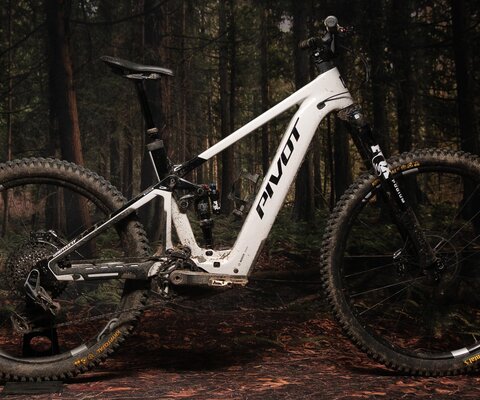
Fall is in the air and electronic suspension is on my mind. Last week I wrote about Fox’s Live Valve system, so today it’s time to talk about RockShox Flight Attendant. Flight Attendant has been available since 2021, but I haven’t actually spent any time on the system until this summer. Luckily I’ve managed to get a bunch of riding in on a Flight Attendant Lyrik and Super Deluxe Ultimate mounted to my personal Trek Fuel MX, so it’s time to weigh in and figure out if you should consider adding a few extra batteries to your bike.
But first, the short version: I came in pretty skeptical of any product that requires adding a bunch of electronics to my bike. I really like the current, non-Flight-Attendant Lyrik and Super Deluxe. I’m not trying to win any cross-country races, and I’m not terribly efficiency focused. So I worried Flight Attendant might just add cost, weight, and hassle to my life. Luckily, that worry proved unfounded. I’ve been fairly blown away both by how Flight Attendant works out of the box and by how customizable it is. So let’s get into it.
RockShox Flight Attendant Overview
- Fork: Lyrik Ultimate, 160 mm
- Shock: Super Deluxe, 205x65 mm
- Weight:
- Shock: 647 g
- Fork (uncut steer tube): 2,450 g
- Cranks (with 32T chainring and bashguard): 545 g
- Battery: 24 g
- MSRP:
- Fork: $1,699
- Shock: $1,049
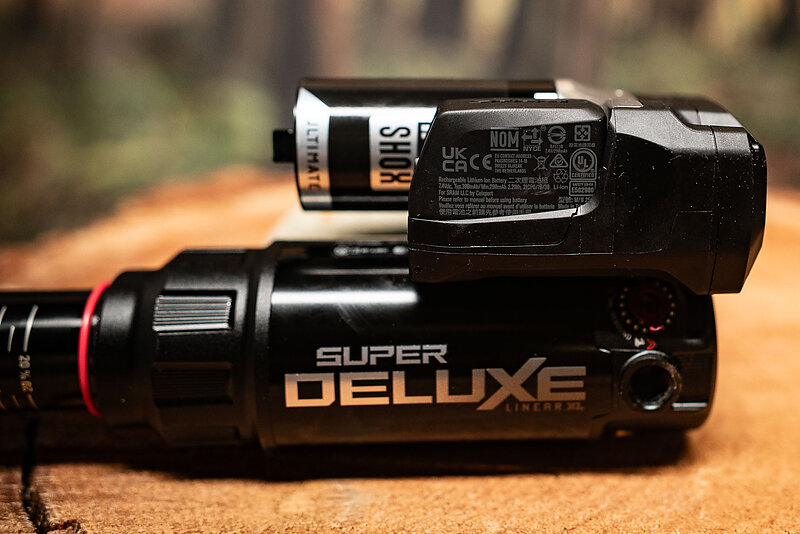
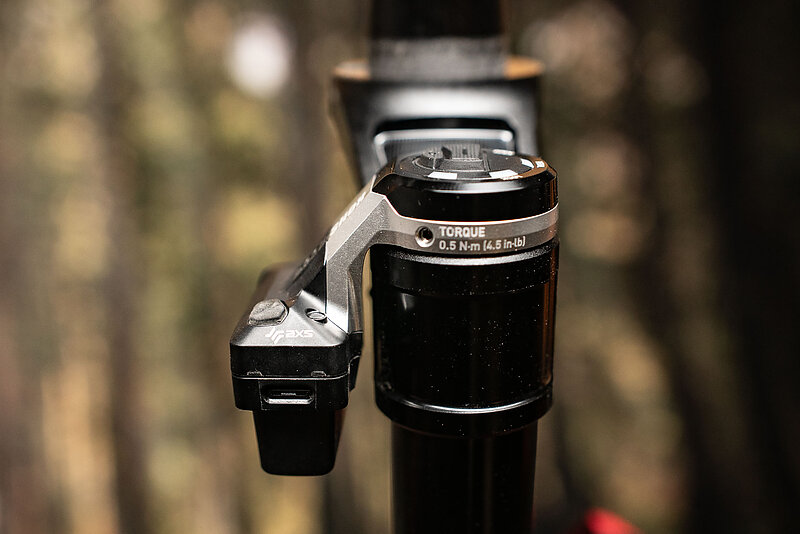
What's The Deal With Flight Attendant
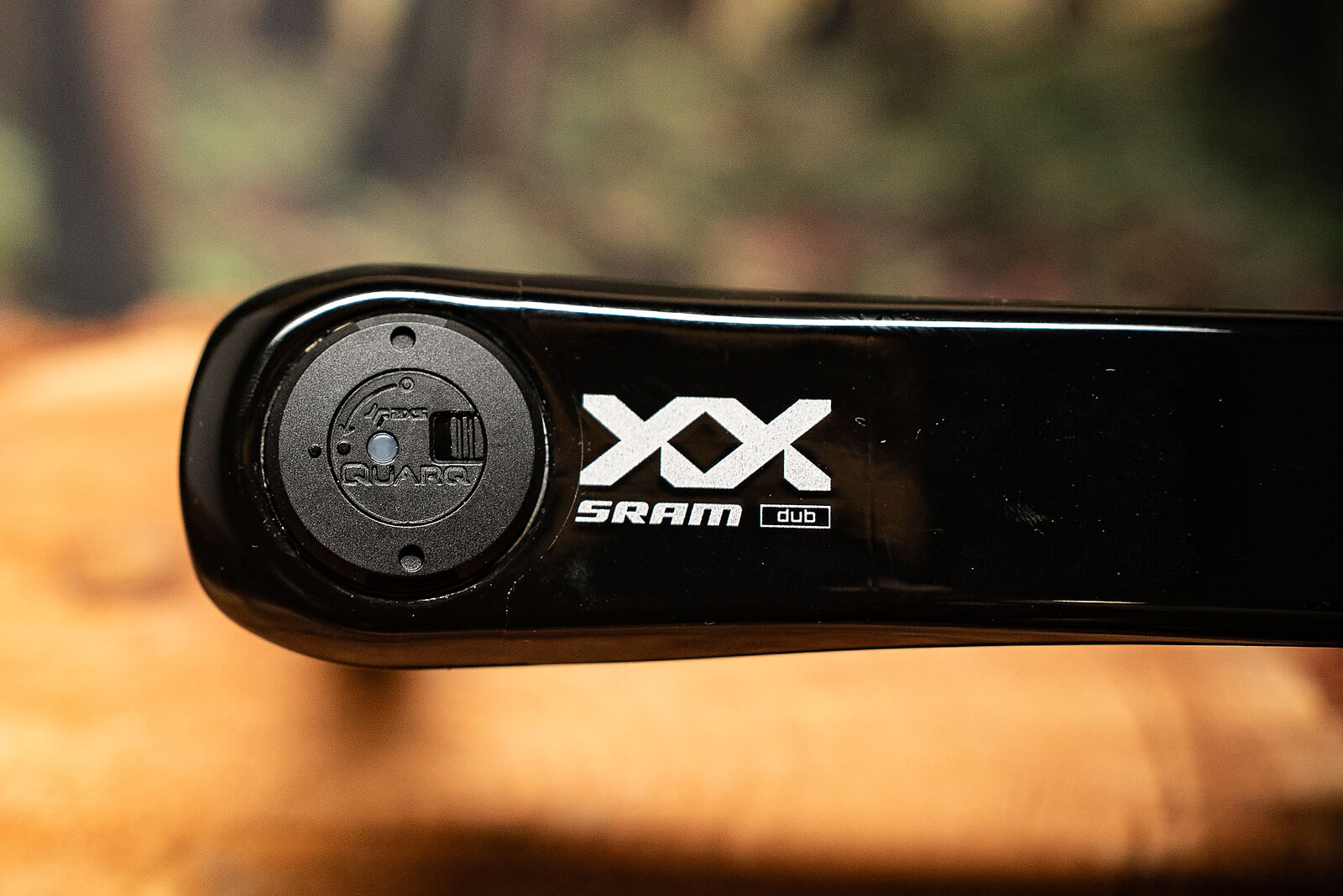
Flight Attendant is a three-position, default-open suspension control system that talks to all of the wireless SRAM components on your bike to determine which of those three positions it should be in. That means it’s taking inputs from the power meter in your cranks and your electronic derailleur to help it make decisions about whether you’re better off in Open, Pedal, or Lock mode. Flight Attendant can integrate your electronic AXS Reverb into its system but, as of now, it isn’t using inputs from the dropper.
Those two phrases: “three-position” and “default-open” do a lot to separate it from Fox Live Valve. I’ll put together a full comparison of the two systems soon but Fox is two-position (and only controls the shock, while Flight Attendant controls both the fork and the shock) and default-closed. So basically Fox is waiting for a bump or other input to tell it to open the system, while Flight Attendant is checking to see if you’re laying down power or climbing to put the system in either pedal or full lock mode. How those differences play out on the trail turned out to be quite important.
RockShox Flight Attendant Setup
The initial suspension setup was easy since I’ve literally been running the same fork and shock without Flight Attendant all summer. I just transferred my pressure and rebound settings straight across and partied on.
The electronic portion of the setup was a bit more involved. You need to use the AXS app to get all of the components paired and set up. The app will prompt you to calibrate the bike so that the system gets an idea of where all the sensors are, and then you also set your low speed compression in the app. Additionally, you’ve got a bunch of options to adjust bias, change defaults, and even create a manual override mode.
I’d describe the app as an optional odyssey. You can run through a quick setup and then just go ride your bike and have an awesome experience with Flight Attendant. Or, you can get weird and track your stats with a Hammerhead computer and tweak every fine setting to your heart’s content. I ended up doing both: I rode Flight Attendant in its default mode for a few weeks and then made some tweaks to optimize it to my riding preferences.
When you ride Flight Attendant its algorithm is collecting data all the time and then using it to create “personalized Effort Zones” and optimize its response for your fitness and riding style. So, hypothetically, Flight Attendant will keep learning and getting better the longer you use it.
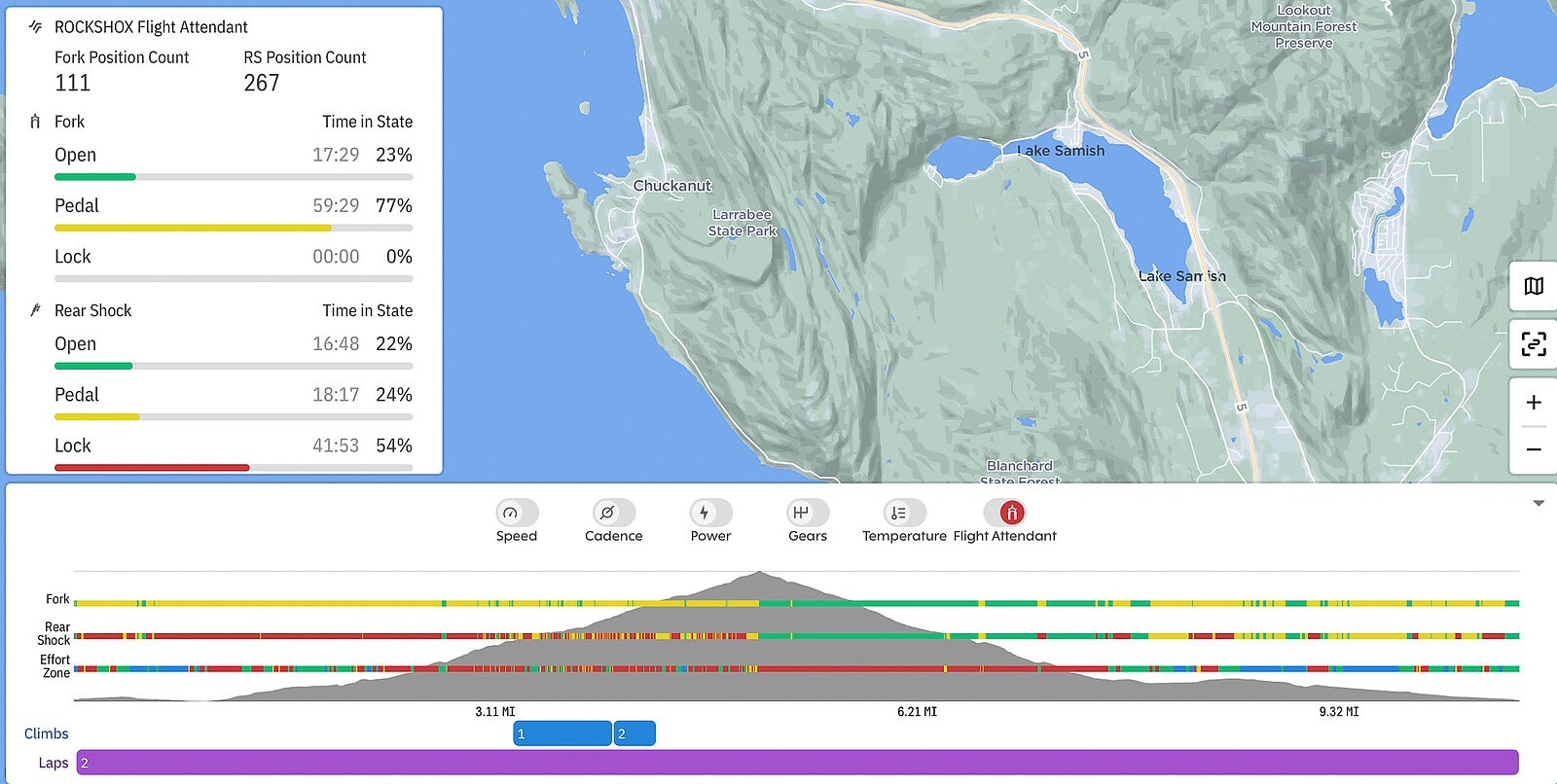
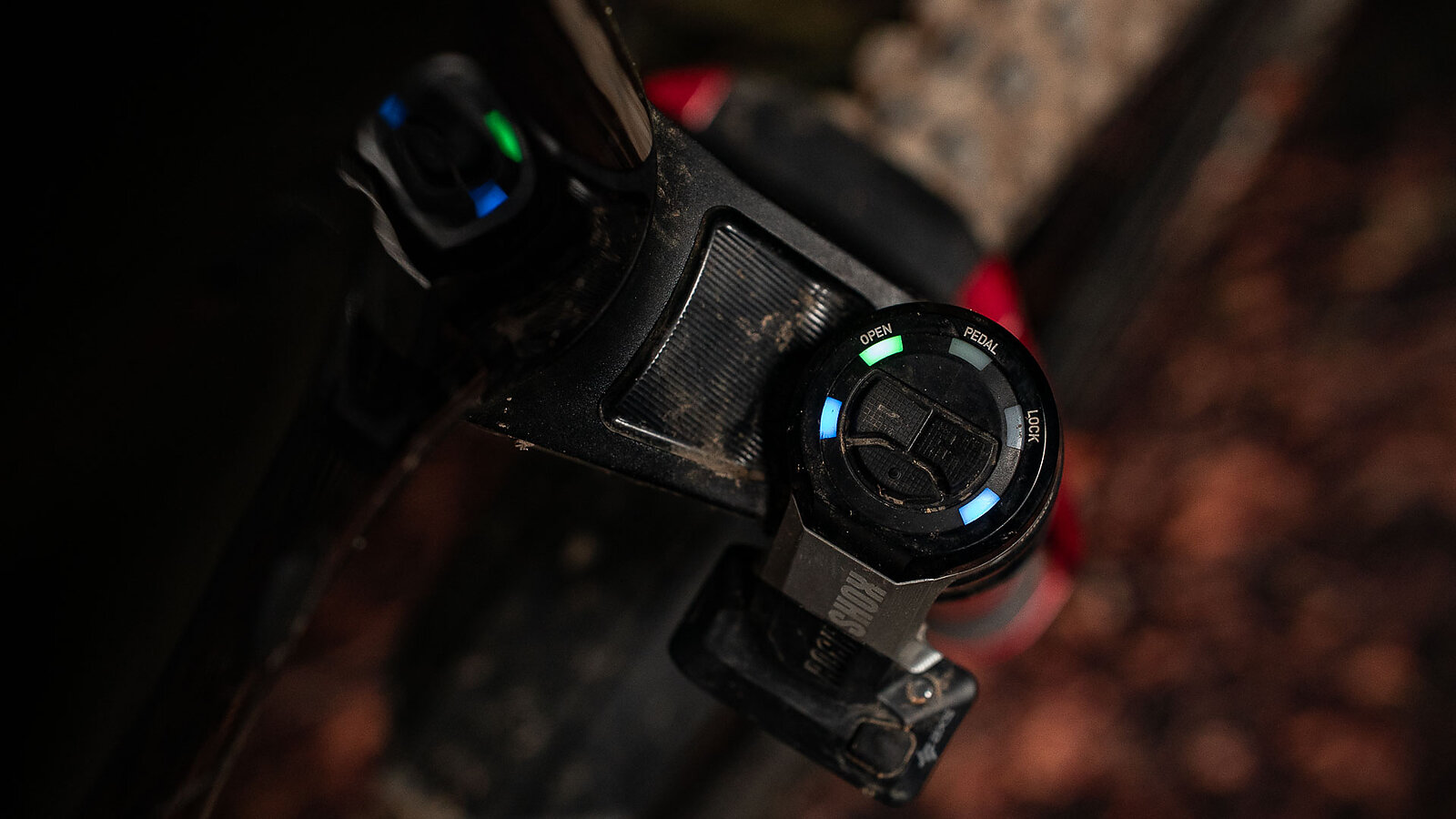
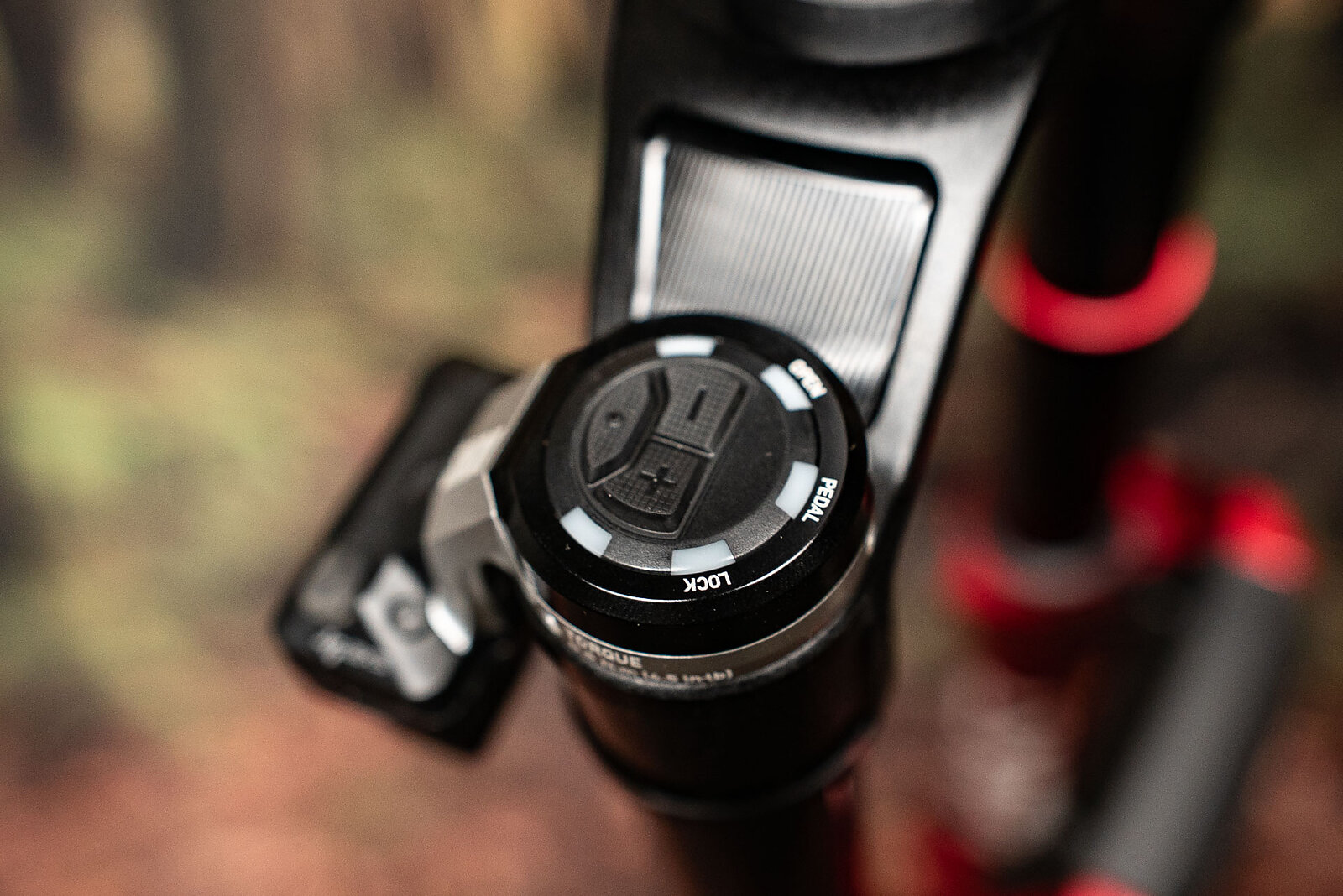
Flight Attendant has three modes: Auto, where the suspension’s algorithm does its thing and chooses what position to be in; Manual, where you use the buttons on the fork to set a mode, similar to a traditional climb switch; Override, where you use a button on an AXS Pod to switch in and out of a predetermined setting.
The first changes I made were to the system’s “Bias.” Bias is basically a measure for how efficient versus how open the algorithm tends to be as it runs the system. In typical RockShox fashion, 0 is the middle, and you can go +/- 1 or 2 virtual clicks from there. I started out at 0 and then once I understood and trusted the system I went up to +2 for a firmer ride since I didn’t have any issues with the bike staying locked out when I wanted it open.
I also set my Override mode to put both fork and shock in Pedal mode when I hit the remote, and then I set my fork to never go into full Lock mode because I’m not doing much out-of-the-saddle sprinting and I like it to sag into its travel a bit on climbs.
Riding RockShox Flight Attendant
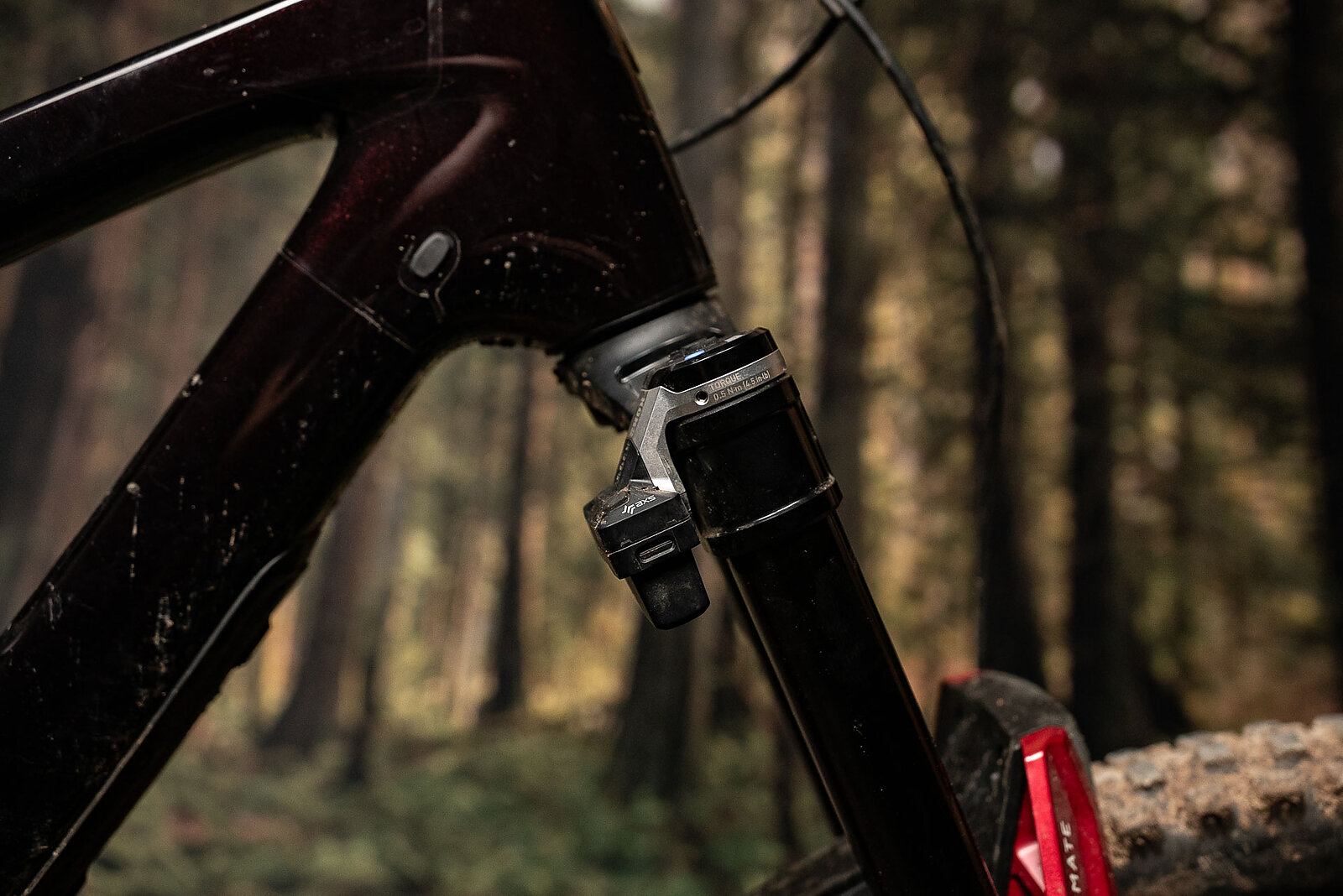
Flight Attendant or not, the new Lyrik and Super Deluxe are very good. I’m a huge fan of how they compliment mid-travel bikes like the Trek Fuel MX and, honestly, I wasn’t sure if adding batteries would help that performance. On my first few rides I was stoked on how my suspension was performing, but I was also paying attention to the "zip-zip" of the electronic mode-shifter and the changing colored lights on my fork to make sure that I trusted the decisions the setup was making.
My biggest takeaway was that I do trust those decisions. I’ve done a wide variety of rides, on a wide variety of trail types, and so far I have yet to run into any situation where the Flight Attendant algorithm left me locked out or in pedal mode when I wanted the fork or shock open. If anything, I became accustomed to the efficient snappy-ness of Pedal mode, which is why I ended up bumping up the Bias adjustment in order to spend more time there and set it as my Override default.
I’ve found that I notice Flight Attendant the least when it’s doing the most, and that those are also the situations where it shines. Sure, it’s cool on simple rides where I climb a gravel road in “Lock” mode and then descend a rad trail in “Open.” But I could achieve the same thing with a climb switch or with Fox’s Live Valve. Instead, where Flight Attendant shines brightest is situations where I’m riding techy, rolling trails, trying to keep momentum and constantly transition from climbing to descending and back.
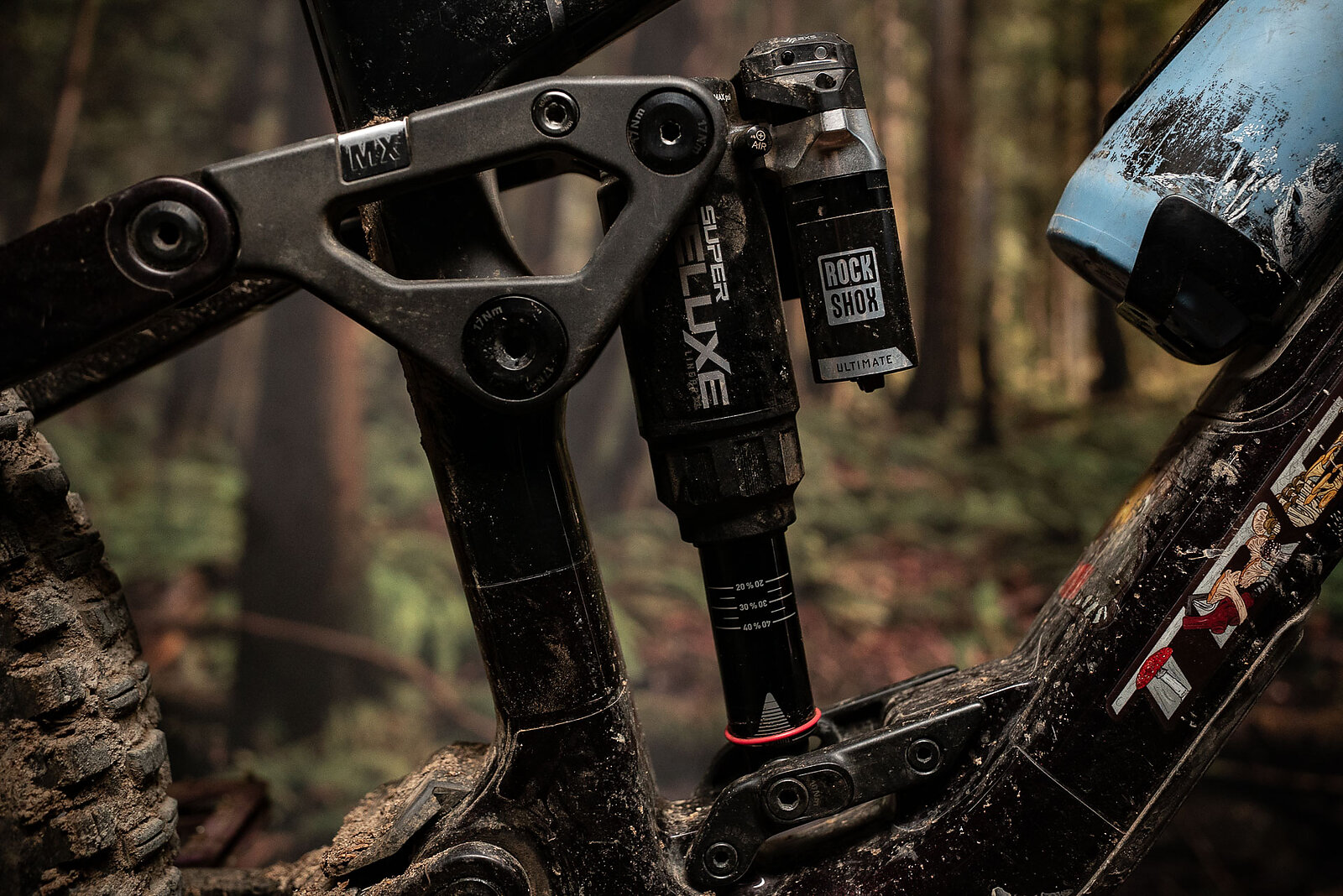
That was especially evident during several rides in Whistler’s No-Flow zone. Those trails are relentlessly techy both up and down. The uphill moves are low-clearance and require some explosive inputs. In these situations I appreciated how Flight Attendant kept me high in the travel and gave me more clearance and efficiency. But, on the flipside, I’d never dream of manually locking my shock on those trails because they’re full of challenging, committing descents where I want all of the traction I can get. When I was going full-bore up and down, just trying not to dab, I didn’t notice Flight Attendant zipping away, changing modes, but I did notice how natural and dialed my bike felt.
Similarly, on pedal trails here in Bellingham, I’ve noticed that Flight Attendant does a really good job of firming the bike up during the descent when I’m trying to lay down power. For example, on SST here on Galbraith mountain, there are a few sections where it’s smooth and flat and it’s worth taking a few cranks to pick up speed for the next jumps. In those situations Flight Attendant does a seamless job of firming up when I’m pedaling, but being fully open by the time I set up for the jump. It’s a rad sensation that makes me feel more fit than I actually am.
That sensation is what prompted me to set up my top left AXS Pod button to override both the fork and the shock to “Pedal” mode. It’s very rare that I use this override—Flight Attendant is nearly always in the “right” mode, but there are some specific instances where it pays off. The best example is ʔiʔajusθot (having a good time) trail in Powell River, British Columbia. After a long, techy descent, you’re met with one of the most fun green flow trails I’ve ever ridden for the last pitch to the parking lot. It’s got a bunch of widely spaced rollers that work as doubles if you push and pop. But it’s fairly flat and hard to carry speed. So I flipped Flight Attendant into “Pedal” mode which made the bike pump significantly better, which makes low angle flow a whole lot faster and more fun. Is that sort of thing essential? Absolutely not, but it is a rad sensation.
It's been cool to see Flight Attendant get "better" for me as it learns my riding preferences and Effort Zones. The Effort Zones (indicated by colored lights on the fork) are how RockShox categorizes my power output between low, medium, and high efforts. After the first few rides the RockShox algorithm looked at my average power outputs and automatically generated a scale based on them. Then, as I ride it's continually reevaluating them so that if I get stronger or weaker, my zones will stay relevant relative to my fitness level. It then takes those Effort Zones and uses them to sauce its internal bias to open, pedal, or lock the suspension relative to my power output. The more I'm hammering, the more firm my suspension will tend to be. If that sounds complicated, well, it is, but luckily it's all happening in the background, and you just have to go out and ride your bike. Because this data isn't coming from a heart rate monitor, it doesn't actually correlate to my heart rate zones, but there is some coincidental overlap, and it's interesting to look at the colored LED versus a heart rate monitor to get a rough idea of what zone I'm in when I'm putting out, for instance a "medium" effort as analyzed by the power meter.
Finally, what happens if you don’t charge your batteries? If you run out of juice on a ride, Flight Attendant defaults to open so you’ll just have normal, open suspension on your descent. RockShox says that you should get 20-30 hours of ride time out of a single battery in your fork, and I found that to be pretty accurate. Be sure to pull the batteries for extended car trips, since the bike will cycle modes as you drive and burn power for no reason.
Where Flight Attendant Makes Sense
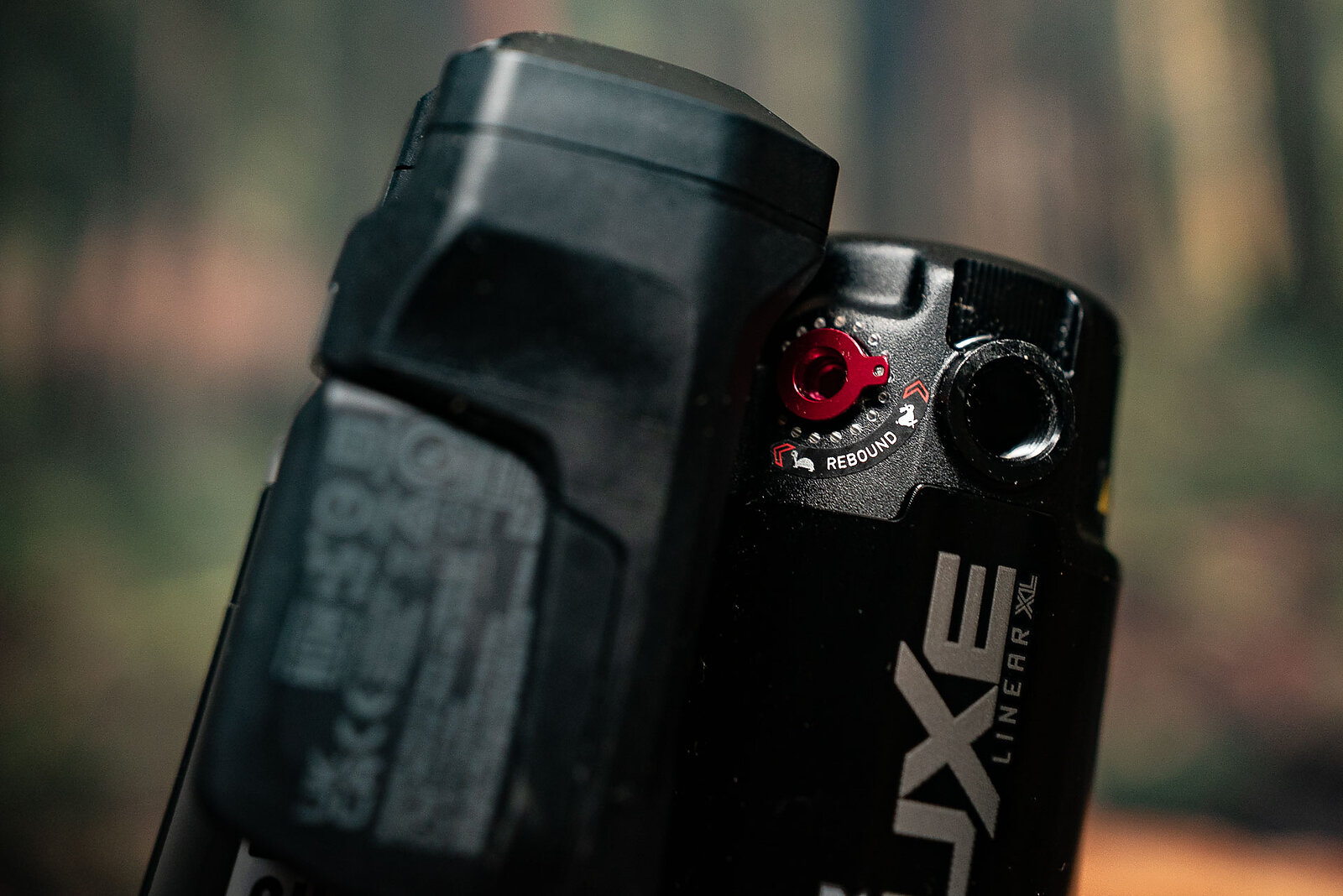
Much of the RockShox marketing around Flight Attendant happens at the shorter travel end of the spectrum. There are plenty of compelling stories about how Flight Attendant’s myriad of small adjustments and innovations like Adaptive Ride Dynamics can help shave precious seconds off of the tight margins at the top end of cross-country racing. And, yeah, if money was no object and I raced, I could justify the small weight penalty easily. But it is, and I don’t, so here we are.
On the opposite end of the spectrum, when Flight Attendant was first introduced, there was some discourse about running it on 170-millimeter bikes in an effort to make them efficient enough to serve as long travel trail bikes and enduro smashers, instead of having to compromise.
But, honestly, after riding Flight Attendant, I’m most interested in it at the mid-travel, Lyrik-forked level. Modern short travel trail and cross-country bikes are so dang efficient that for me, as a non-racer, the potential gains from Flight Attendant versus just running them open all the time are super minimal.
And, on the longer-travel ZEB end of the spectrum, the bikes I prefer are so heavy that no amount of suspension firming is going to make them snappy trail whips. But, on a bike like the Trek Fuel, Flight Attendant pushes its uphill and rolling terrain performance closer to Top Fuel efficiency without compromising any downhill performance. The best thing about bikes like the Fuel or the Specialized Stumpjumper, Transition Sentinel, or Santa Cruz Bronson is that they can handle just about any trail in the world without being too slow to be fun uphill or too weak to handle gnarly descents. And, when you pair a bike like that with Flight Attendant, it accentuates all the best things about that experience. It makes a well-rounded bike feel even better-rounded, which is a beautiful thing.
For Now
While I was reviewing Flight Attendant I also read this excellent article in The Atlantic about John Mark Comer, a zeitgeisty pastor who broadly preaches that turning off your phone brings you closer to god. In his own words: “The volume of the modern world is deadening our souls. We need to de-noise our lives and follow Jesus into the quiet.” I am skeptical of Comer’s teachings, but that article has stuck with me as a reminder to examine the layers of technology that separate us from reality.
It’s easy to dismiss Flight Attendant with the classic “every day we stray further from god’s light” meme; It’s another layer of technology that requires setup and charging, another distraction from just riding your damn bike. In practice, I found that Flight Attendant had the opposite effect on my riding. I spent less time thinking about what setting my suspension should be in and trying to remember to flip my compression switch before dropping into a descent. Instead, after the initial normalization period, I found that it enhanced the things I like most about riding my bike. It made my bike feel “better” and “more efficient” on most rides, while requiring zero input or thought, which honestly is more than I would have thought to ask from it.
Learn more: RockShox