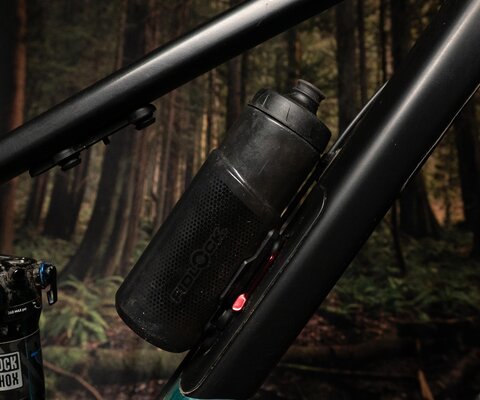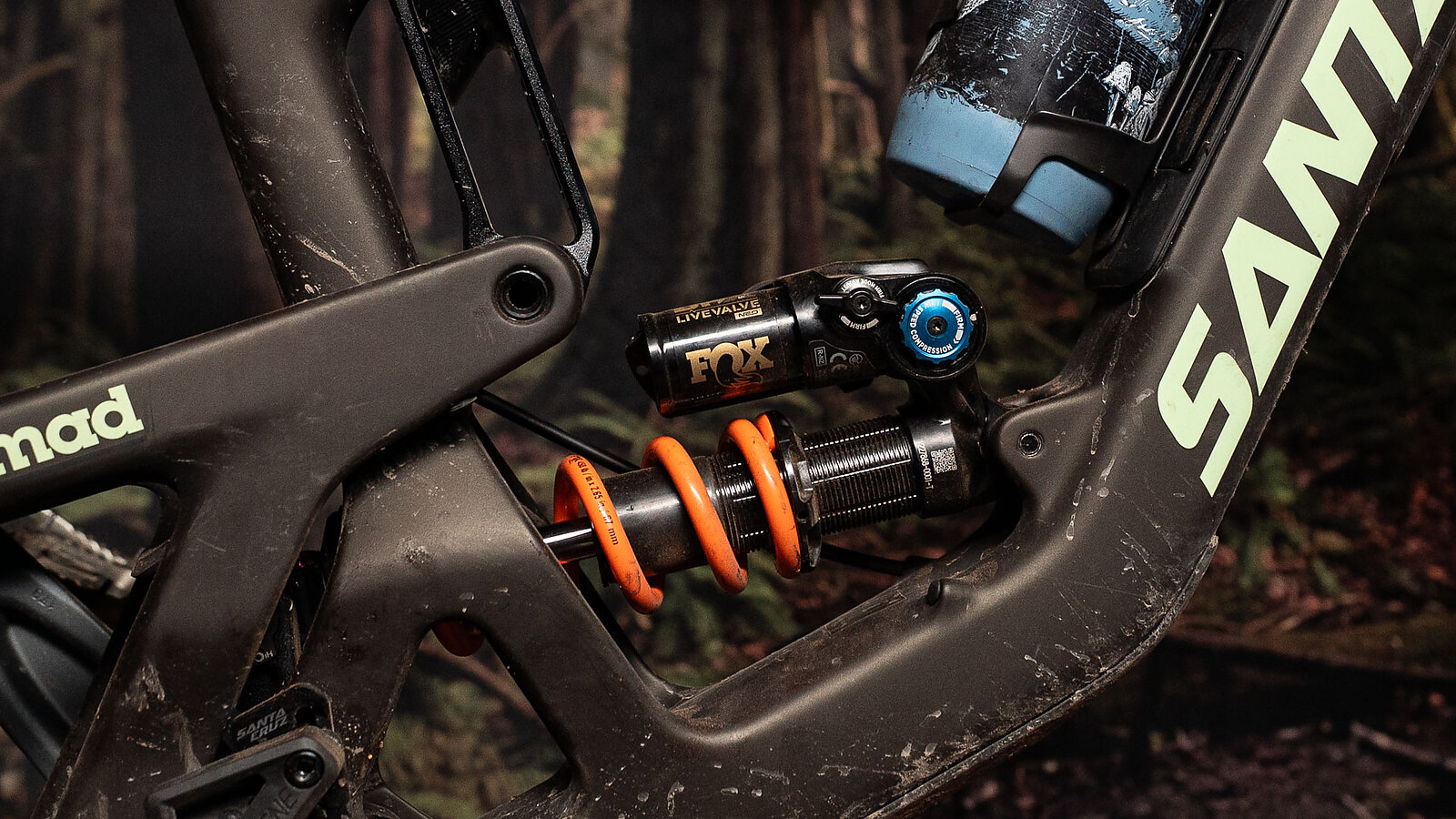
Fox DHX Live Valve Neo Shock Under-the-radar electronics
Electronic suspension that automatically adjusts to optimize the bike for what you’re doing on it is an easy dream to sell. It makes a ton of sense on paper, so this summer I’ve been on a battery-powered odyssey, digging into different systems, and doing my best to figure out where each one makes the most sense.
To that end, I’ve done a bunch of fiddling with Fox’s DHX Live Valve Neo shock, and have come away impressed by how easy it is to get along with, and how effectively it disappears into the bike, enhancing the ride without being terribly distracting.
Fox DHX Live Valve Neo Overview
- Weight (230x65 mm, no hardware or spring) : 602 g Battery: 24 g, Sensors: 27 g each.
- MSRP: $1,039 (shock), $439 (required sensor kit)
Live Valve in a Nutshell
There are a few important details that set Live Valve apart from other electric suspension systems such as RockShox Flight Attendant. First, Live Valve Neo is a shock-only system. Your fork stays open, just like it always would. Second, Neo is a default-closed system. That means that the sensors are telling the shock to open when you tip the bike downhill, or hit a bump. In contrast, RockShox’s system is default-open. Finally, Live Valve is a two-state solenoid system. It’s either open or closed, and that position is determined by a super-fast, super-silent solenoid. There's no buzzing, no wait for the valve to close—Fox says it’s as close to instant as anyone can get with current wireless tech.
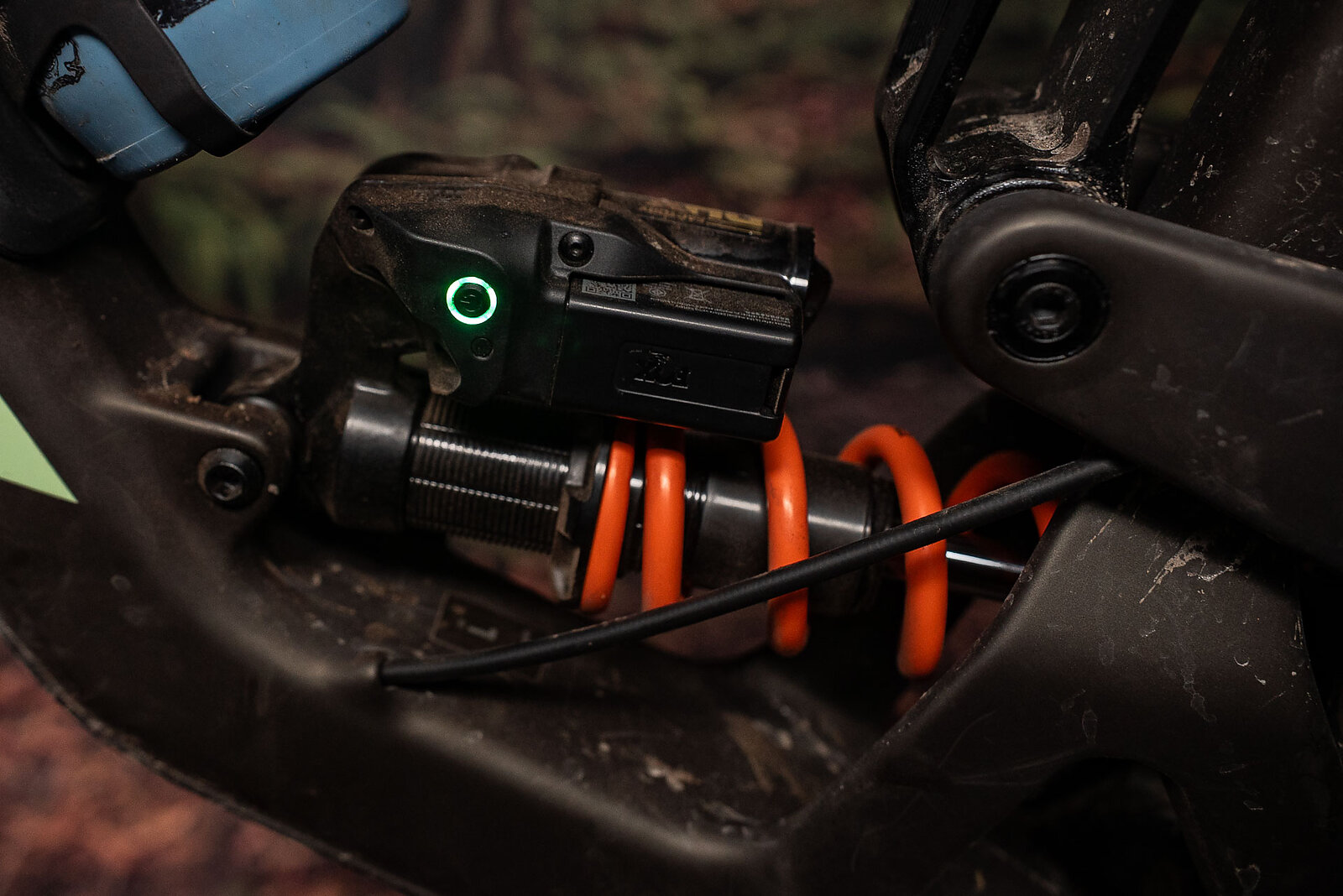
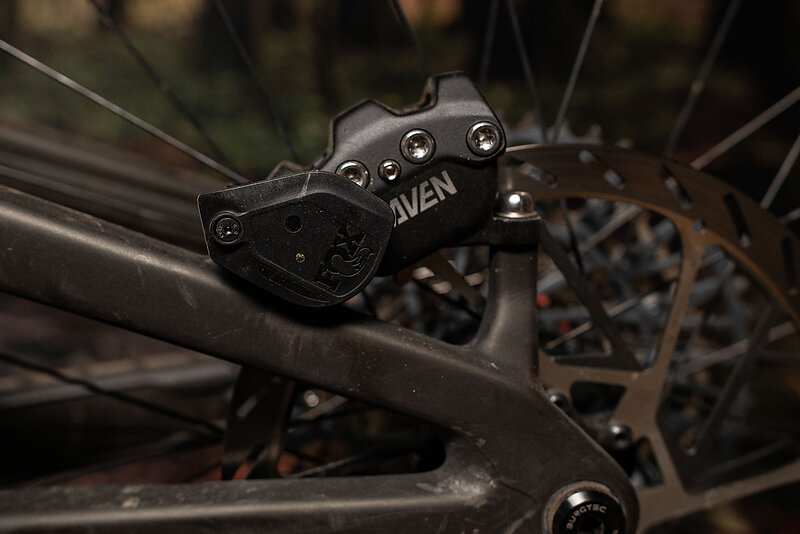
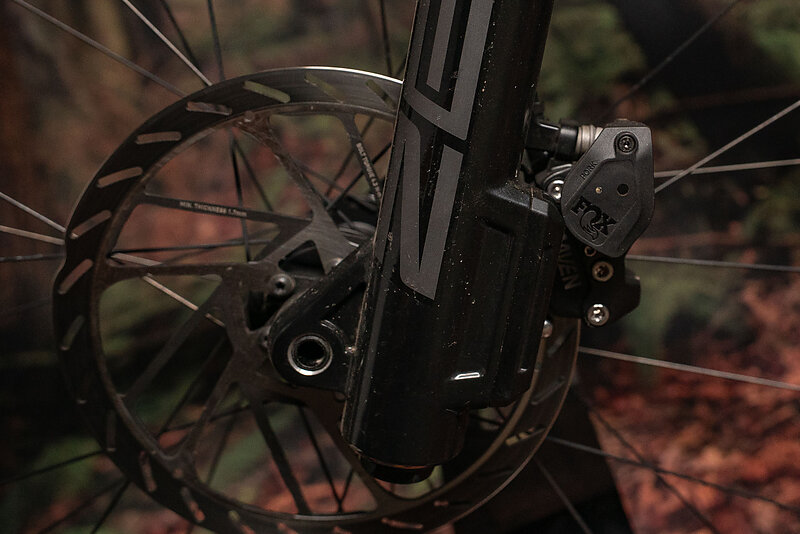
To that end, you’ll need to mount the Live Valve sensors to each end of your bike via the brake mounts, and then calibrate their positions using the Fox app. That app works very well and is your portal to a whole world of tuning options that we’ll dive into next.
Fox DHX Live Valve Neo Setup
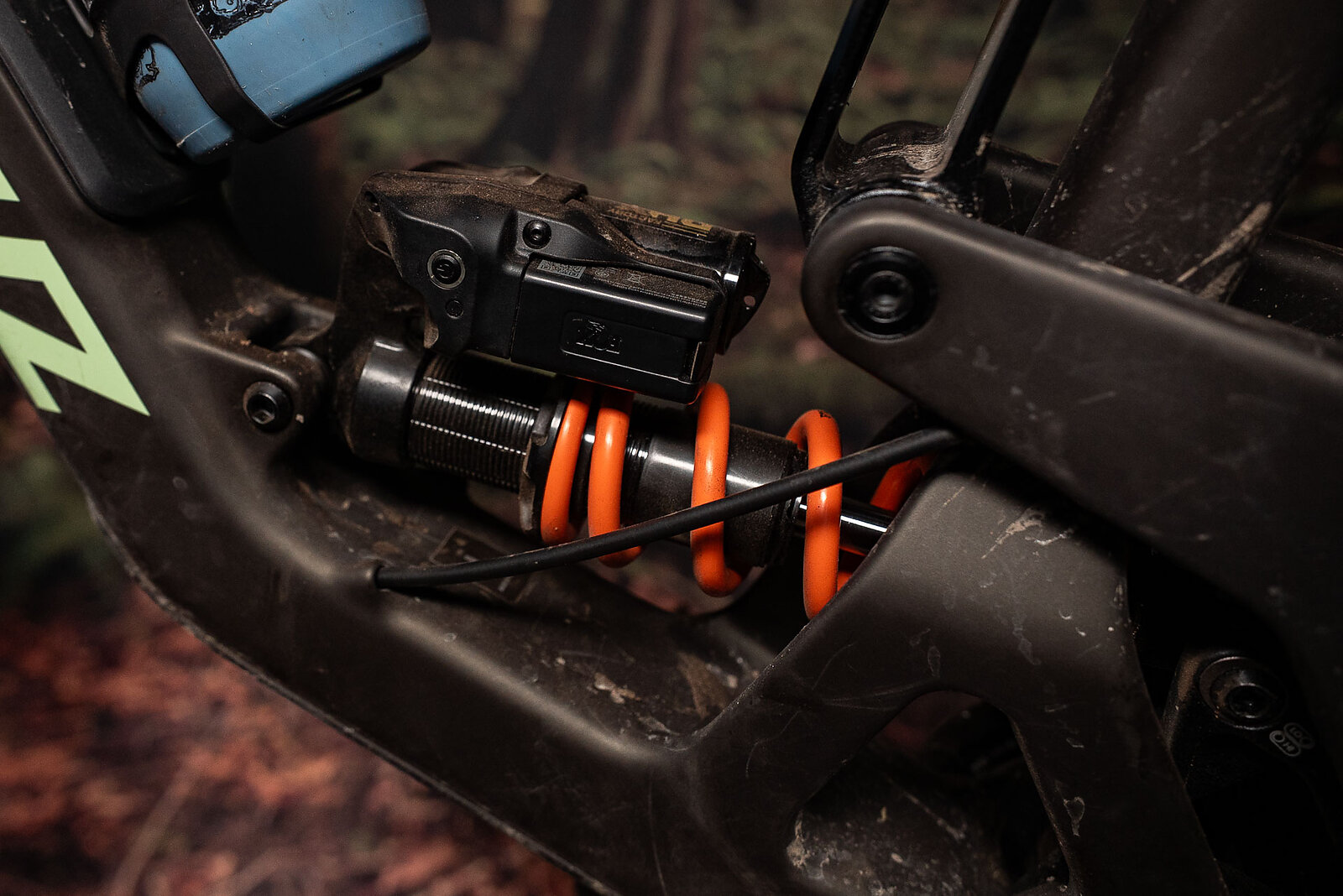
Fox makes Live Valve Neo versions of the Float X2, DHX, and Float X. I used the DHX on a Santa Cruz Nomad. Setup is an interesting mix of very normal, and very not. A 450-pound spring got me right into my sag sweet spot, and I used the low speed compression and rebound knobs to find a setup that felt great. That LSC knob is changing how the shock works in its “open” position, and then when the solenoid switches it over, there’s a separate circuit for the “closed” position. That gets an extra knob, labeled “Firm Mode Adjust”. This knob adjusts the “climb” or “Firm Mode” compression circuit. Fully closed the bike feels basically locked out, or you can open it up a surprising amount. For me and how I ride, that knob ended up being the key adjuster that helped me dial in the DHX Live Valve Neo.
You’ll also need to mount the sensors to your front and rear brake calipers. If you’re running a Fox fork, this is very easy. If you’re running a new RockShox fork like the Zeb on the Nomad, you’ll need to get weird with spacers and washers to space the front sensor out from the Linear XL lump.
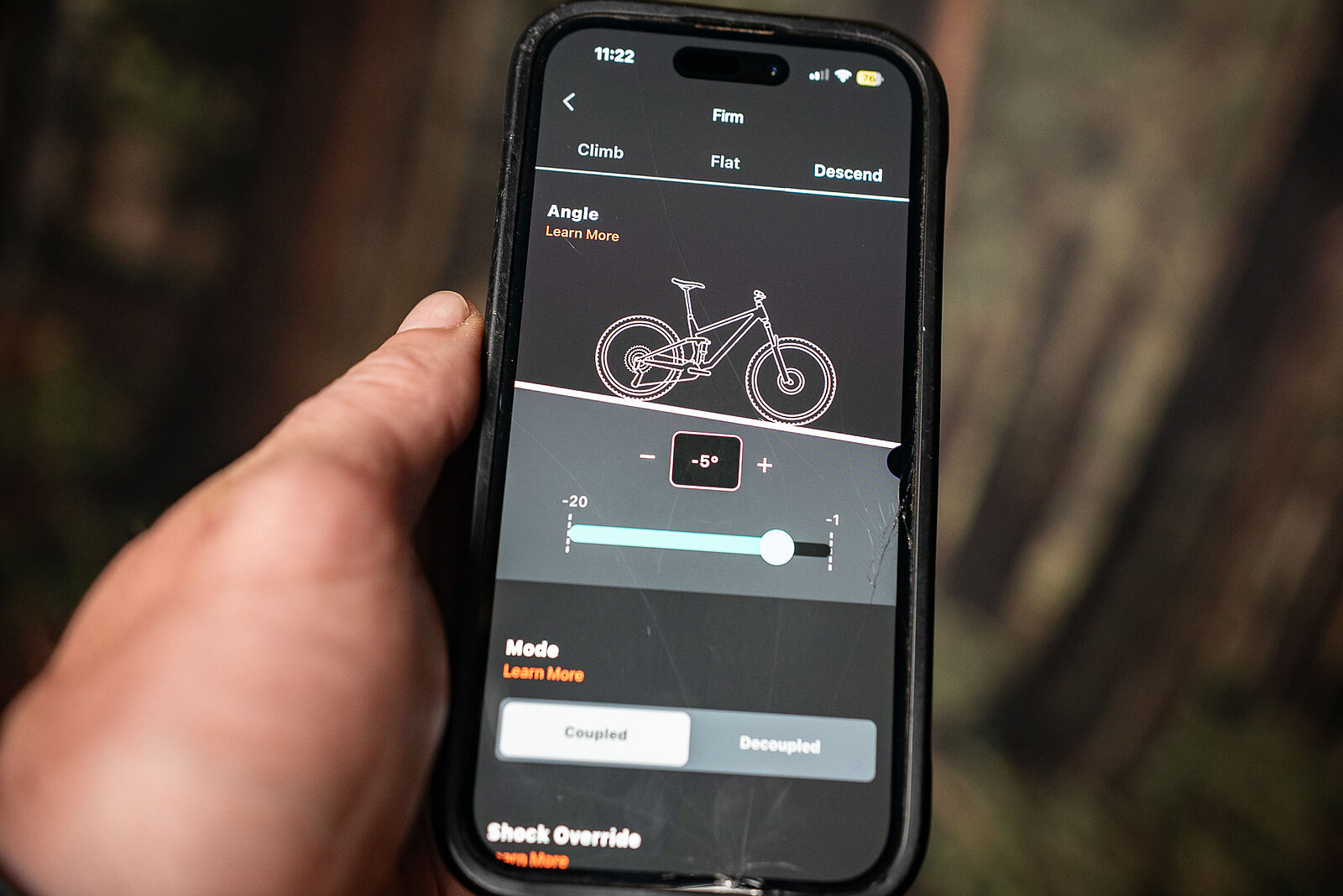
Once you’ve got all the hardware sorted, it’s time to dive into the app. It runs you through a few setup exercises, and then you’re good to go. Or, if you’re a nerd, you can go ham in this app.
On the software side, Fox identifies three states: Climb, Flat, and Descend. You can tweak your parameters and settings for each of those states and dial in how much of a bump, or how much of a grade change triggers the shock to open, and how long it stays open after a trigger event.
Honestly, going in and individually tuning each parameter can get pretty overwhelming, and I don’t recommend deviating from the default tune until after you’ve spent a bunch of time on the shock.
To make things easier, Fox offers a bunch of electronic “tunes” that you can download from the app to your shock. These are sets of custom parameters that Fox and other users have created to satisfy their biases. Don’t get these confused with the custom shock tunes that Fox does for OE customers, instead they’re effectively presets of all those customizable sliders. So, instead of messing with all of those parameters, you can download a tune that’s more suited to your riding style and party on.
I ended up being a big fan of the tune option, as we’ll get into later. Fox says you should be able to get 15-20 hours of riding out of a charge, and I think they’re being conservative. I found myself only charging the battery very irregularly, mostly because I’d forget the shock even had a battery and I never had an issue with it dying on me.
Riding the Fox DHX Live Valve Neo
We’ll split this section into two parts: first, how the DHX does as a shock, Live Valve Neo excluded, and then how the electronics play into all of that.
The DHX is a rad coil shock. It offered an obvious upgrade to the Nomad’s default Super Deluxe in terms of initial sensitivity and plushness, and it handles big hits and compressions quite nicely. I’ve said this in a bunch of reviews recently, but Fox’s hardware and tunes have been consistently quite dialed, and this shock carries on that trend.
But what about the electronics? Just messing around in the driveway is impressive. I started off with that Firm Mode all the way closed, just so that there would be more contrast, and I’d get a better idea of what Live Valve Neo was actually doing. It’s trippy the first few times you bump a curb with your front wheel and then immediately feel the shock sink into its travel without any audible buzz. It genuinely feels like magic, which is the whole point of this sort of system.
On the trail, running the default tune, and the Firm Mode closed, the bike felt super efficient on smooth uphills. It was basically always locked out, and I appreciated how that sat me up in the rear travel, and kept my climbing geometry efficient. However, when things got technical on the climb, I found that it would stay locked until my front wheel hit a ledgy root or rock and then, as I lifted the front onto the obstacle, the shock would open and the suspension would fall into its travel unexpectedly, at the worst possible moment. The bike would go from a firm, tall rear end, to slipping down and back right as I wanted that support.
There are three ways to change this, and I experimented with all three. Along the way I learned a lot about how the system works.
The easiest is to turn down the support that Firm Mode Adjust knob. This flattens the delta between how the shock feels when it’s open versus when it's closed, so that swap is less aggressive feeling. It also allows the shock to claw up techy climbs a little better in closed mode. If you open it up too much, I think it dulls the Neo experience. The bike feels less efficient when it’s closed, so there’s less of a contrast.
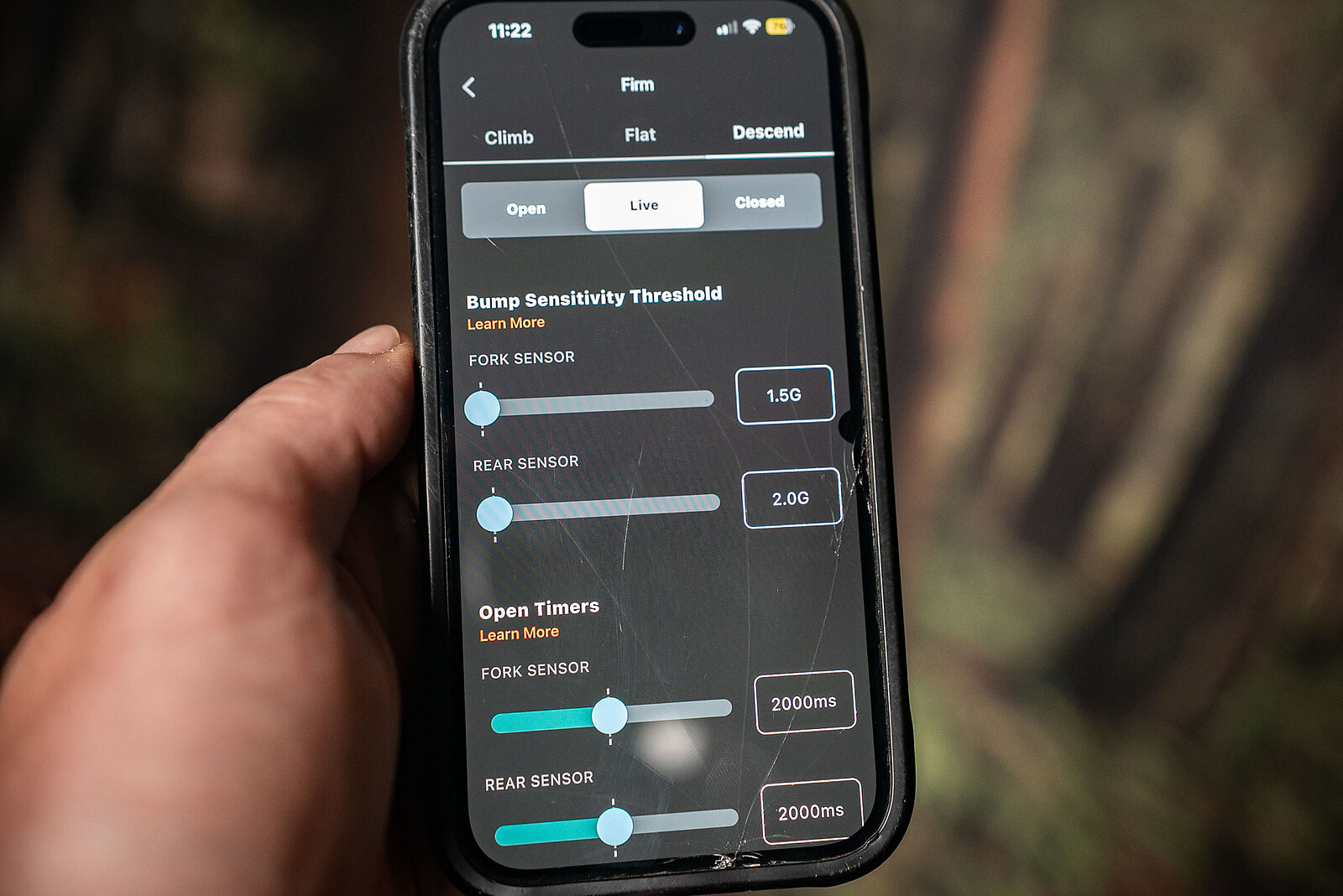
The second option is to download a custom tune that either A) defaults the shock to open more often when climbing, or B) defaults to keeping it closed. Which option works best depends on your riding style. Do you prefer to sit and spin up techy sections, or are you out of the saddle, trying to punch and muscle up ledges? I found that, on the Nomad, I’d rather have it closed than open in pretty much every climbing scenario, so I defaulted that direction. But, that led me down the road of the third option, which is to create your own custom tune.
This takes a while and involves a fair bit of fiddling, and I don’t think is worth doing until you have a clear idea of how you want the bike to feel. But, once you’ve learned how Live Valve Neo affects the bike’s handling, you can mess with it to best suit your riding style.
In my case, that meant creating a firmer, more locked-out experience overall. More G-force required to open the shock, ignore the front sensor on climbs, and open the shock for less time after each impact. The end result was a bike that was open when I wanted it to be (bumpy descents) but closed most of the rest of the time. That meant it would stay firm while pedaling between jumps, and feel tight and efficient most of the time.
Out of the box, Live Valve Neo was good, but I found myself wondering if it was really that much better than a manual lockout. But, once I knew what I wanted from the system, I was able to get more out of it, and really dial in the bike. To that end, I think Live Valve Neo makes the most sense, for me, on enduro bikes that already default to the lighter and efficient end of things. The Nomad is a great example, as well as the Orbea Rallon or Pivot Firebird. Those bikes want you to try hard and put in the work, and reward it with a snappy feel. Bigger, bulkier bikes like the Taken Encounter or Trek Slash get less out of Live Valve because, even locked out, they’re not as worth pushing through the pedals. Sure, it still helps, but there’s less payoff.
Bigger picture, for me, that same line delineates the divide between bikes I would race enduro on, and bikes that I just want to get to the top of the hill so that I can smash stuff all the way down. The more racing and efficiency-focused I am, the more interested I am in Live Valve Neo. It makes a noticeable difference if your goal is to make your bike feel tauter, tighter, and more efficient.
And, from a liveability perspective, it’s been excellent. Once I dialed in that tune, I basically forgot I had it on the bike. It turns on when you pull the bike off the wall, adjusts your shock all day, and is silent the whole time. Charge it every once in a while, and if you forget to, it’s not the end of the world, because without the battery it defaults to the open position and still feels great.
Is it “worth” the money? That’s a personal question that you’ll have to figure out for yourself. It’s not cheap, but it does work quite well, and it makes a ton of sense for professional racers.
For Now
Fox’s Live Valve Neo DHX is a very good shock, with an effective electronic control system. It can be set up to run as a subtle compliment to your bike, or tweaked to make a fairly large difference. Regardless, if you’re trying to control your suspension with batteries it’s worth taking your time with the system and dialing it in for your riding in order to get the most out of it.
Learn more: Fox