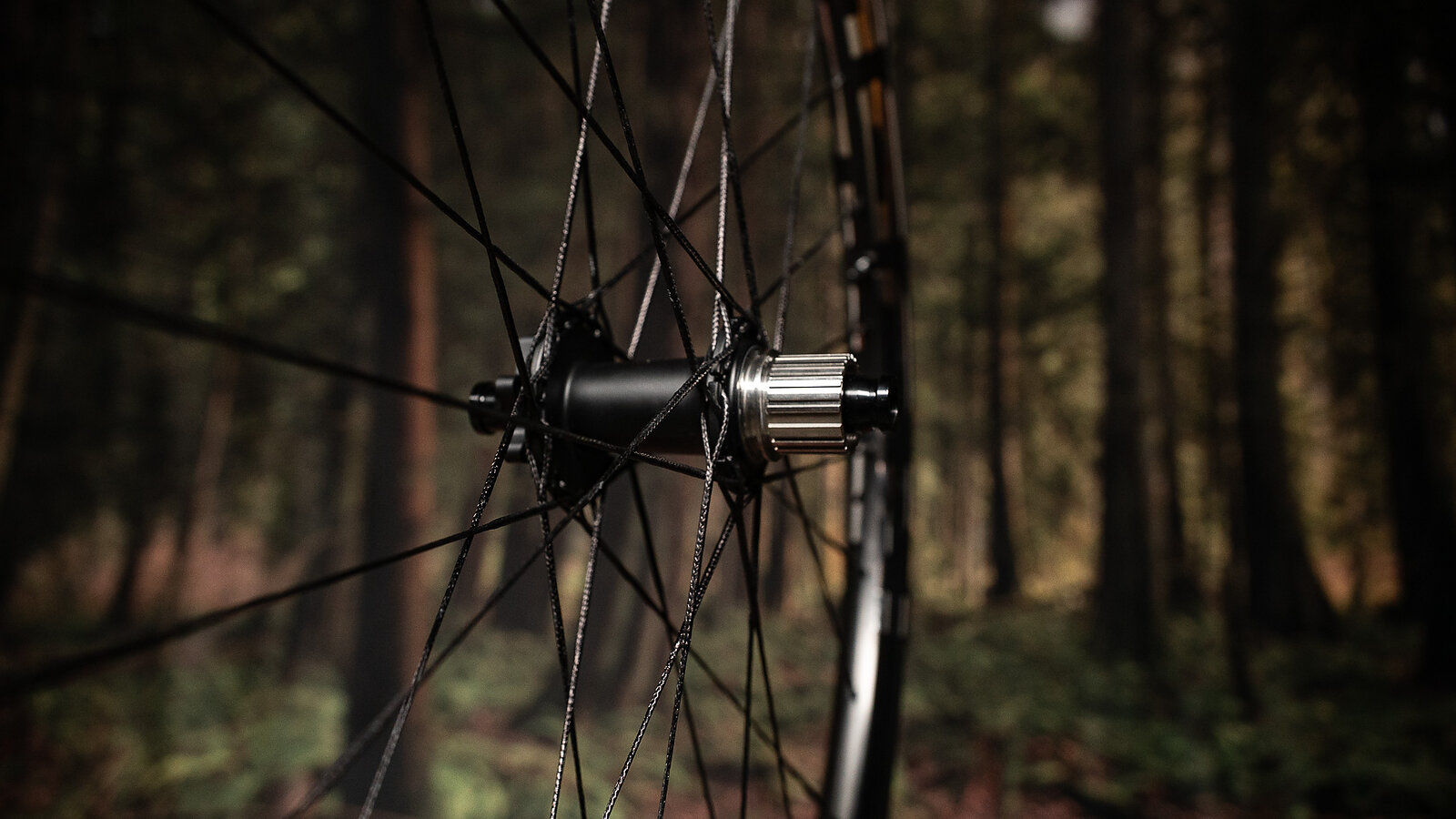
NOBL Ethos Trail Wheels Light and snappy.
At the beginning of March, NOBL launched an all-new line of wheels with its Ethos collection. These wheels span the gamut, from the (claimed) lightest 30-millimeter wide, 28-spoke, cross-country wheels on the market, all the way up to the HD, which NOBL says is the strongest wheel the brand has ever made or tested. And, all of those wheels, with the exception of the HD, use Berd’s PolyLight Dyneema spokes instead of traditional steel options.
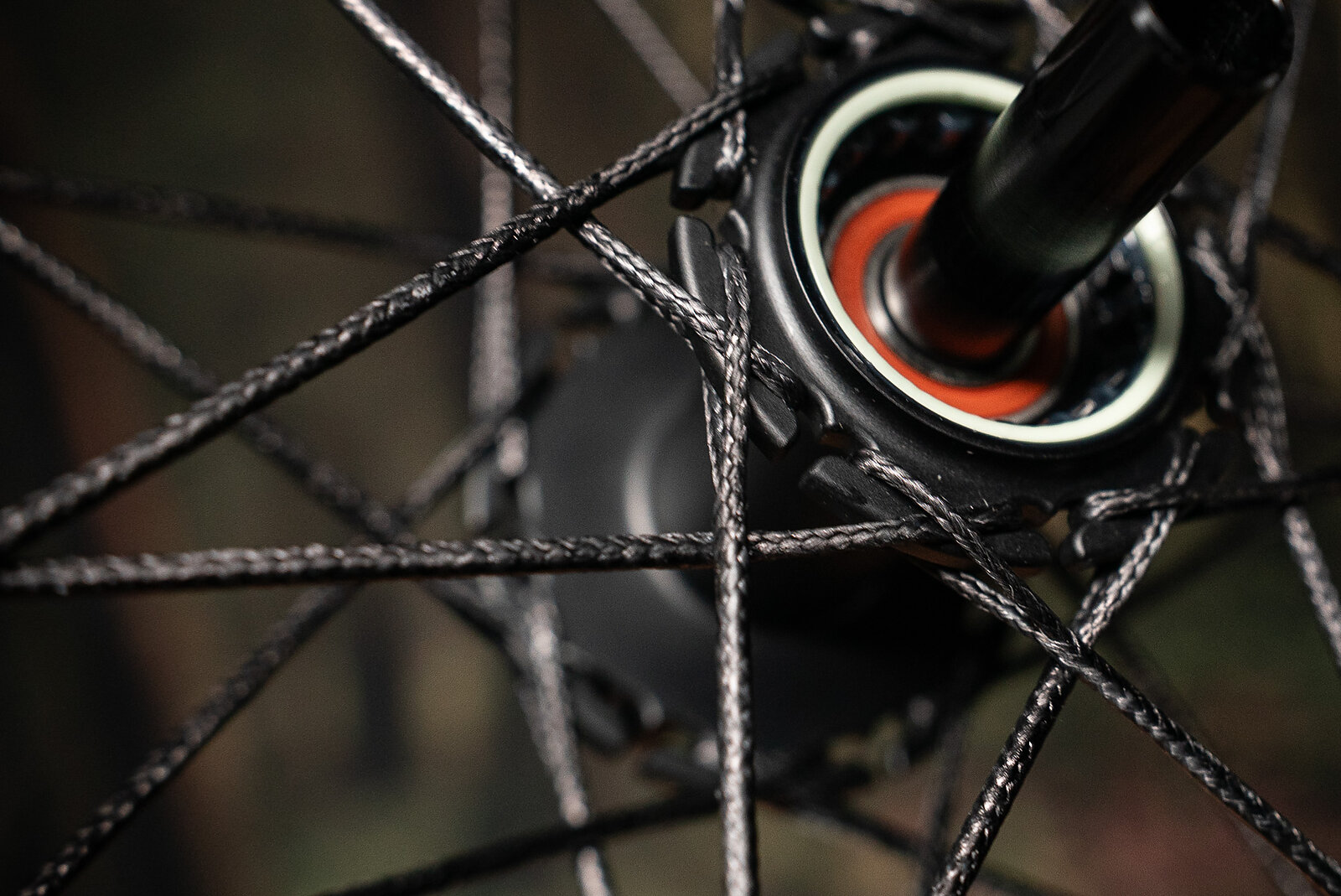
These stringy-looking spokes are about half as heavy and 12 times stronger by weight than traditional steel spokes. The folks at NOBL said that they have been receiving a high volume of custom orders for wheelsets with Berd spokes, and that a bunch of riders at the brand prefer them on their personal wheels, so it made sense to offer a complete line of Berd wheels, built with rim profiles designed specifically for the unique ride characteristics those spokes deliver.
The Trail wheels I’ve been riding fall close to the middle of the Ethos lineup. They’re only available in the 29-inch diameter, and are meant to perfectly pair with modern cross-country or light trail bikes. They’re not quite as light as true race wheels, but they’re much lighter, while still claiming similar durability to many enduro wheels. I’ve been running the Ethos Trail on a Trek Top Fuel, which has been trending rowdier and more capable all winter, which means it’s a perfect match for these wheels.
NOBL Ethos Trail Details
- Internal Width: 30 mm
- Spokes: 28 PolyLight Black
- Hubs: Ethos Ti70 developed with Erase Components
- XD, HG, MS freehub compatibility
- Weight: Front 630 g, Rear 812 g, Pair 1,442 g (with tape and valves, MS driver)
- Price: $2,199
Rim Technology
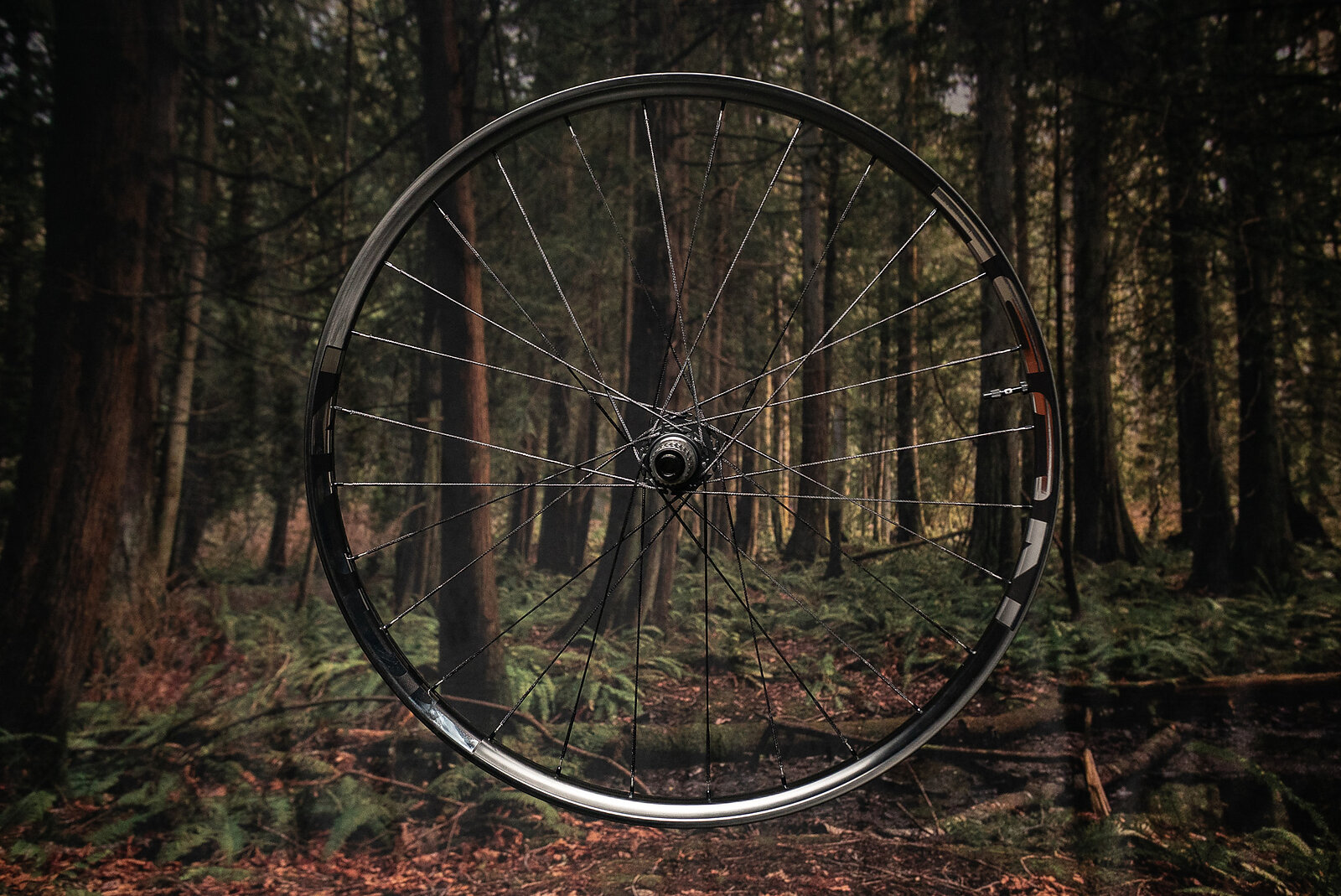
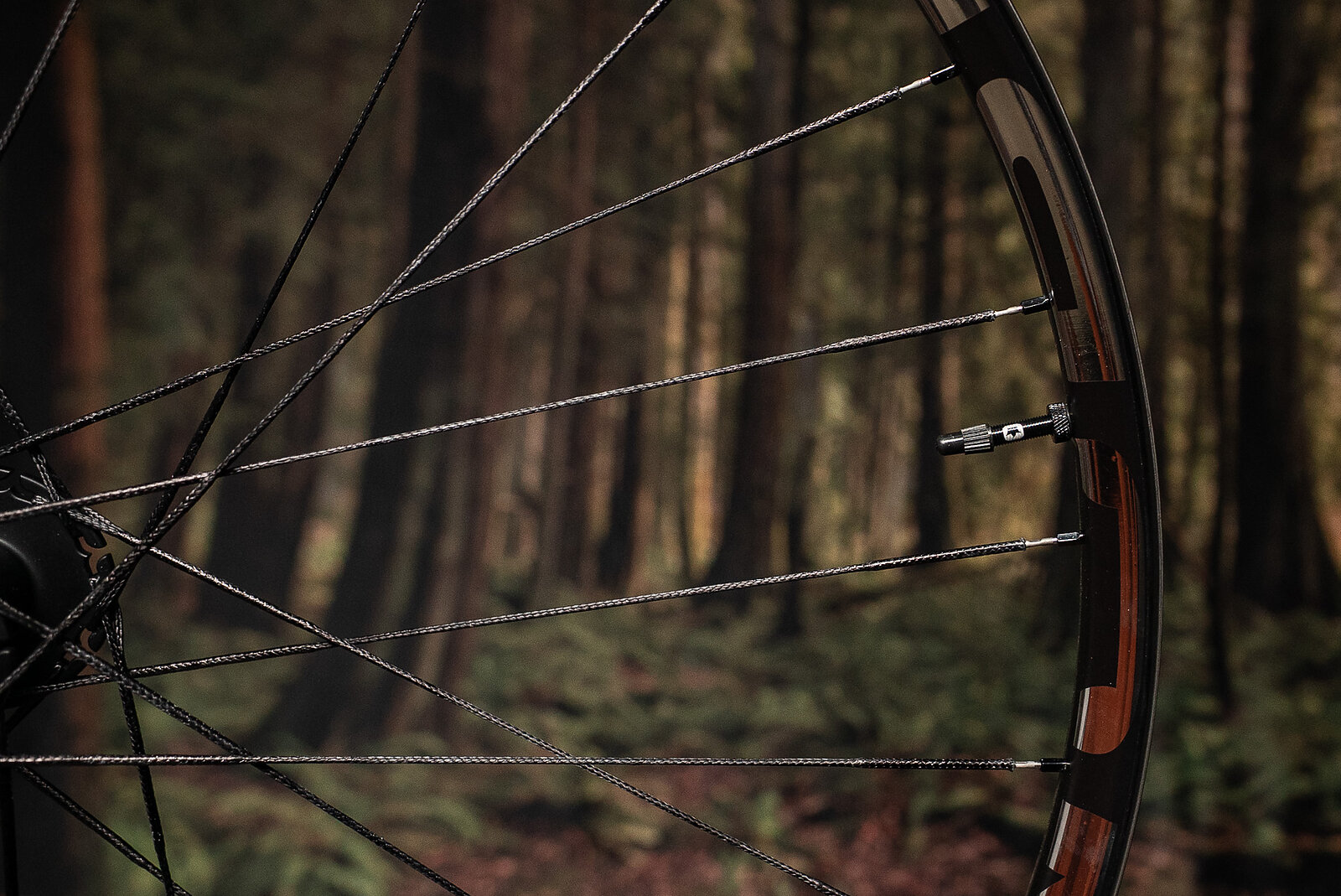
NOBL says the Ethos rims are specifically designed for the ride quality that Berd spokes deliver. The Ethos Trail rims have front and rear-specific profiles, with the front rim measuring in at 18.5 millimeters deep, and the rear at 19. They also have front and rear-specific bead profiles, with the front getting beads that taper from 3.1 to 2.6 millimeters, while the rears are thicker with a 3.5 to 3.0-millimeter taper. Those thicker lips should help support the tire, and help reduce the chance of pinch flats.
According to NOBL, Berd wheels tend to be softer torsionally than traditionally-spoked wheels, so each catagory of Ethos wheels are designed to carefully combine the flex profile of Berd spokes with a rim profile that will deliver an appropriate ride quality for that style of riding, without making any durabillity concessions. NOBL’s goal was to design a rim and spoke system that works together to deliver plenty of support in bermed corners, while conforming to the terrain well and helping generate traction in off-camber areas.
Hubs
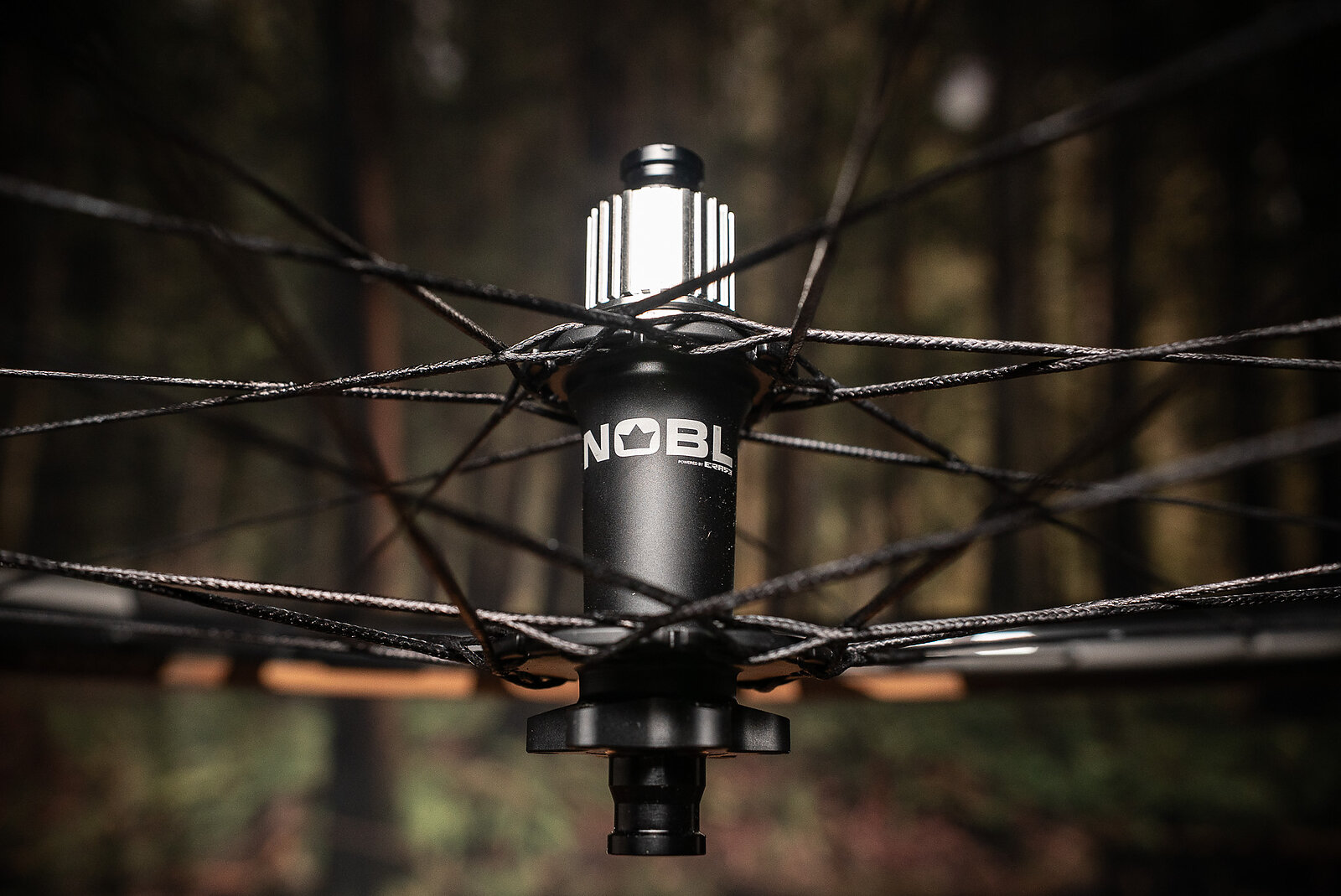
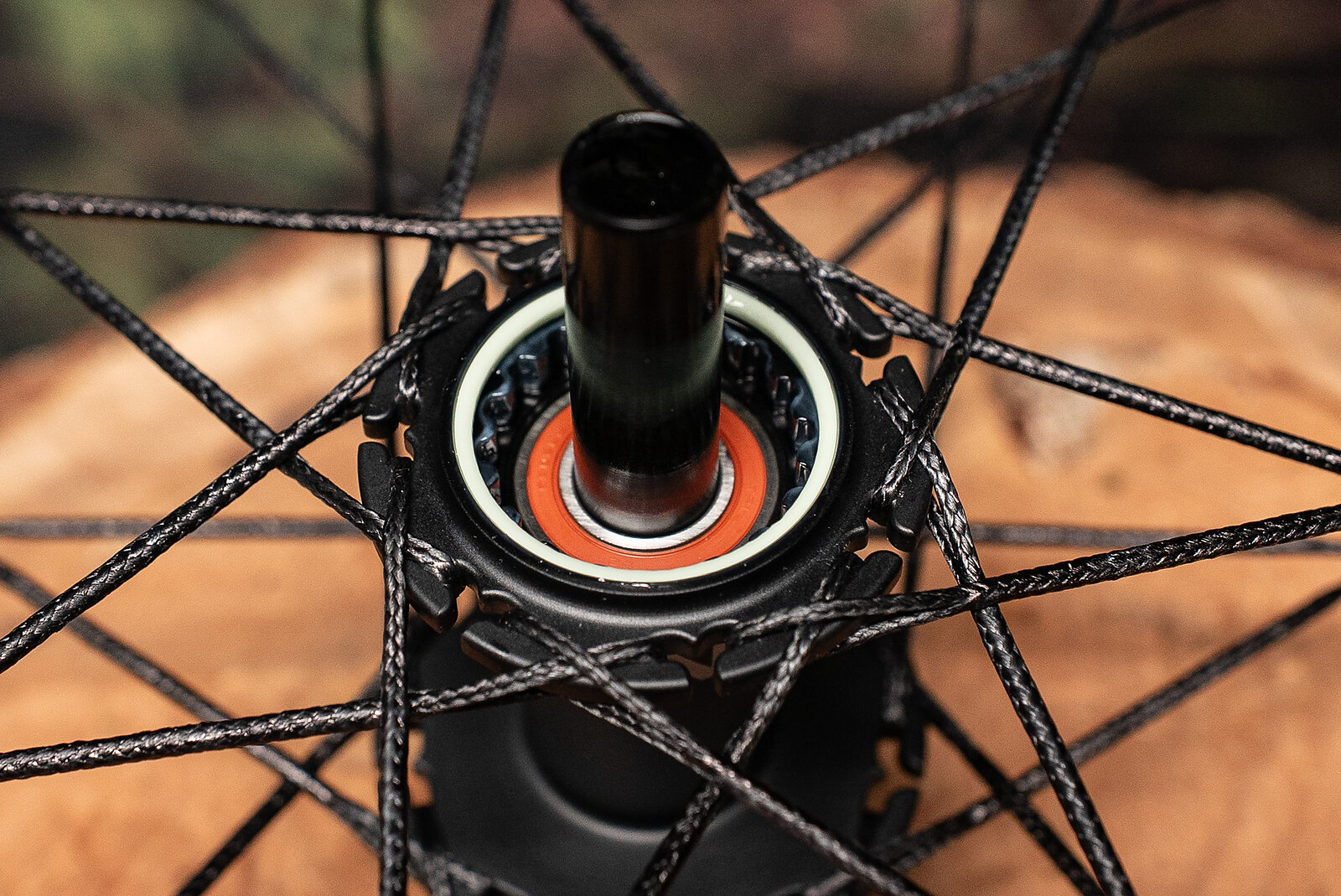
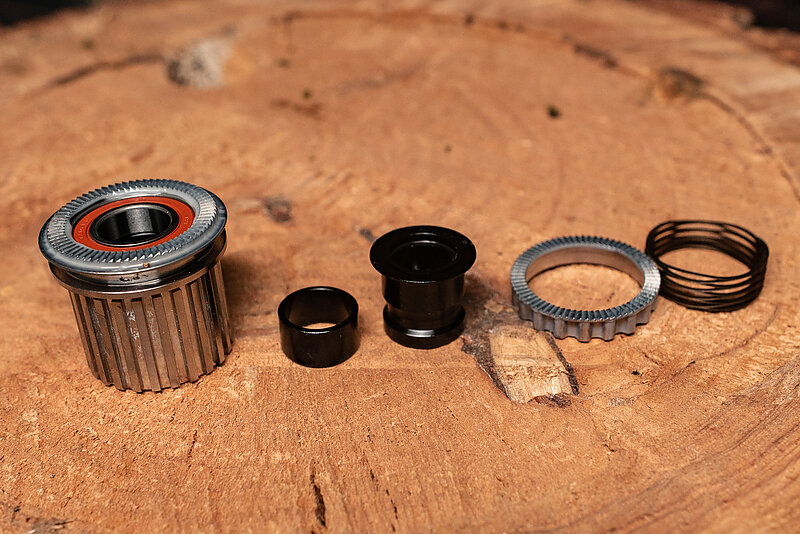
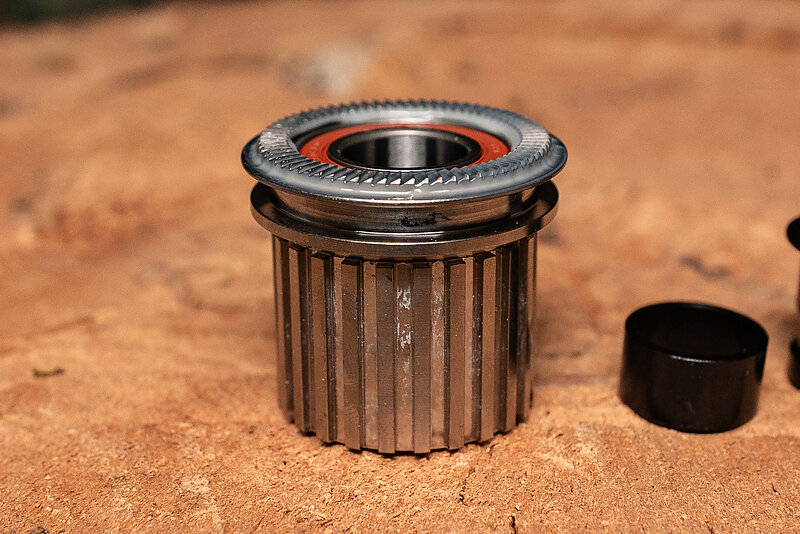
NOBL matches those wheels to a NOBL-branded hub made to the brand's specs by Erase Components. It's different from the typical Erase hubs in that it has more points of engagement (a 70-tooth ratchet instead of the stock 60-tooth), and uses Berd's Equal Spoke Length hooked flanges.
I’m a big fan of the Erase hub system. It uses a very simple star ratchet system, reminiscent of DT Swiss, with one ratchet integrated into the one-piece titanium driver body. These hubs deliver plenty of engagement (5.14°) and are dead simple to work on. The driver body is relatively affordable aftermarket, they use standard bearings, and come apart tool-free. I’ve had a set of Erase hubs in my garage for several years now, and they’ve been smooth and trouble-free. It’s great to see these hubs in NOBL’s wheel line.
Berd Dyneema Spokes
And now we get to the exotic part: Dyneema spokes! Berd’s woven spokes have been on the market for a few years now, with aficionados praising their ride feel. The PolyLight spokes are significantly lighter and stronger than traditional steel spokes, and are easy to custom color with alcohol ink. But they also require a more in-depth build process. Specifically, they usually require a much longer and in-depth stressing and re-tensioning process than traditional builds. However, NOBL’s Bellingham, Washington facility has a couple of specially-built machines that shrink that timeline from days to minutes, allowing for much more efficient wheel builds.
NOBL has an in-depth page that breaks down weight and strength comparisons for Berd spokes, as well as explaining the process for fixing a broken spoke. It’s a little more in-depth than replacing a traditional spoke, and requires some specific tools, so it’s worth being prepared.
NOBL Warranty
One of the biggest differentiators between carbon and alloy wheels these days is warranty. The Ethos gets NOBL’s lifetime rim warranty. If you break a rim while riding the wheels as intended, you get a replacement free of charge, but you’re on the hook for rebuilding the wheel. If you break a wheel outside its intended use, NOBL will set you up with a new rim for 50 percent off. That 50 percent off replacement cost also applies to second owners, which is a nice perk.
NOBL Ethos Trail Performance
I bolted the Ethos Trail to my Trek Top Fuel, and shod them with Maxxis Dissectors front and rear. The tires went on smoothly with no levers, but I did have to use a compressor to seat them. I think this might be due to the tires, not the wheels though; I’ve found this particular set to have a slightly looser fit on several different rims.
I quite like the feel of the Erase hubs on the way up and their sound on the way down. I’m not an engagement snob, and their 5° is more than enough for me. The Ethos Trail replaced a set of carbon Shimano XTR wheels, and I cut about 400 grams of rotating weight when I put on the Ethos. That weight was immediately evident on the way up. I’m a big fan of the Top Fuel’s snappy pedaling feel, and the Ethos helped accentuate that.
I haven’t ridden Berd wheels before, and I wasn’t quite sure what to expect on the way down. However, given that NOBL designed the Ethos rims to specifically tune the ride quality of the Berd spokes, I wasn’t terribly surprised by how “normal” they felt. I’m not sure that in a blind test I could differentiate these from a very good set of traditional wheels, and I mean that as a compliment.
I’m a big dude, at 220 pounds right now, and I don’t exactly have a subtle touch when it comes to line choice. But I’m also pretty sensitive to too-stiff wheels. And, to my taste at least, the Ethos strikes a really nice balance. They feel plenty precise and stiff in terms of muscling through supported corners and holding my line, but do a really good job of absorbing trail chatter and smoothing off-camber sections. I’ve done a whole bunch of component swapping on the Top Fuel, and I’ve mostly chosen parts that I’d describe as feeling precise but gushy. That is to say, it’s not the absolute stiffest, snappiest, most racy build possible. If that’s what I was looking for, I’d be riding an Epic Evo with Ethos SL180 wheels and Aspen ST tires.
But I’m not. I want my “XC” bike to be capable of handling most of the gnarlier trails around Bellingham when it strikes my fancy. And the Berd Ethos matches that really well. They still feel precise and supportive, but there’s less feedback making it through them than something like the Hunt Proven Trail, which makes for more comfort and confidence on rougher trails.
I only have a couple of weeks on the Ethos, and most of my testing has taken place in fairly damp conditions, so I’m excited to keep riding them and report back. I’ll have a full update in a few months with durability notes, and more ride impressions. But so far they’ve held up well, and haven’t made any weird noises.
For Now
It’s cool to see NOBL create a line of wheels explicitly tailored to Berd’s Dyneema spokes. Each wheelset in the line hits competitive weight numbers, and the Ethos Trail delivers an excellent ride quality that matches the current crop of short travel trail bikes.
Learn more: NOBL Wheels