Crankbrothers Stamp Evo Pedals Do pedals need bashguards?
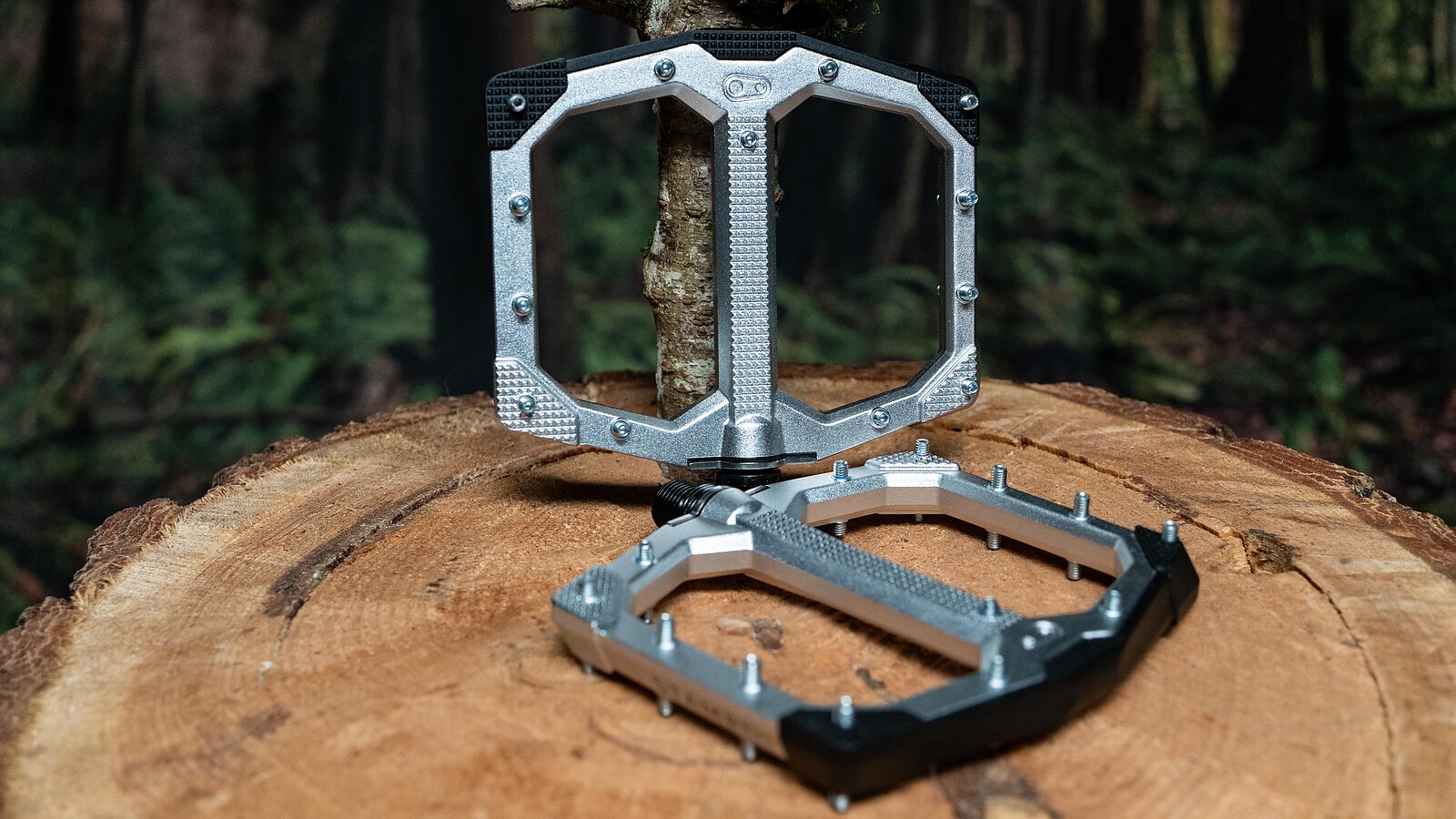
Crankbrothers just dropped the next evolution of its flat pedal lineup, the aptly named Stamp Evo. This new pedal is available in two sizes (large and small), two colors (silver and black), with four colors of replaceable bashguards (black, grey, blue, and purple). And it’s a notable departure from the previous Stamp lineup, both in terms of size and grip.
Full disclosure: I have feelings about the old Stamp 7 pedal. I’d credit it as one of the biggest catalysts in my journey to realizing that not all flat pedals are created equal, and that I deserve to be picky about what I put on my bike. I really disliked that previous Stamp 7. It didn’t have very good traction, the bearing bulge was quite noticeable underfoot, it was prone to pedal strikes, and the top-loading pins were hard or impossible to replace.
So I was a little tentative when I received the Stamp Evo. Once burned, twice shy. But, spoiler alert, the new Stamp Evo has stood out as a radical improvement over the original Stamp line. So let’s get into it.
Crankbrothers Stamp Evo Pedal Details (Size Large)
- Thickness: Axle 15.5mm / Edges 11mm
- Size: 135 mm long x 125 mm wide
- Bushings/bearings: 2x igus LL-Glide bearings
- Weight (one pedal): 236 g
- Price: $199
Bashguards on a Pedal
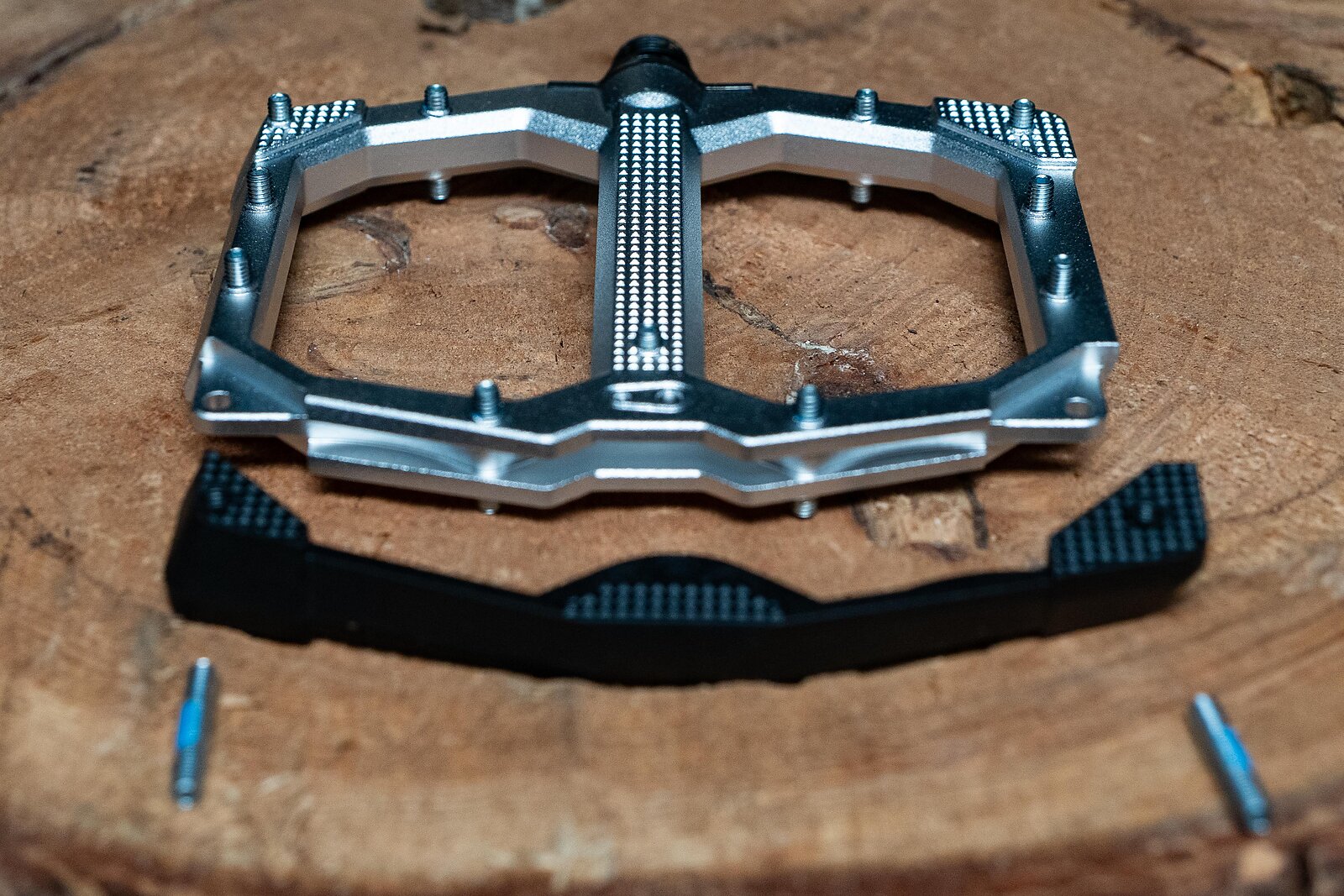
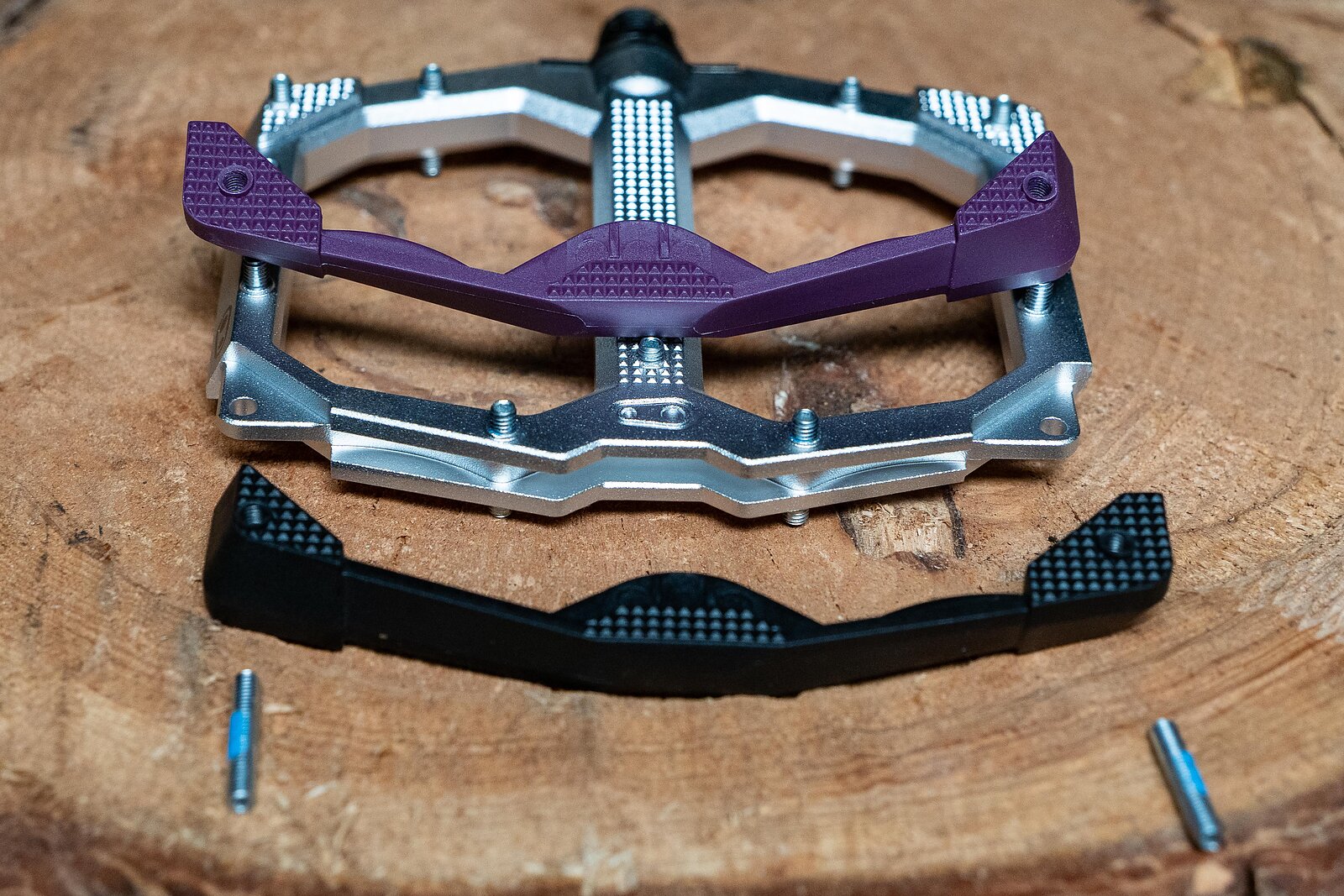
The number one most obvious and interesting design feature of the Stamp Evo is its replaceable plastic bashguards. These cover the outside edges and corners of the forged aluminum body and are swappable and replaceable. So it’s easy to change up the color to match your bike and, more importantly, the part of the pedal that’s most likely to contact rocks and other obstacles is made of plastic, not alloy. I’ve been singing the praises of composite or plastic pedals for a while now. Anecdotally, I think they’re more likely to glance or slide off of rocks and roots rather than grinding, hooking, and catching like alloy pedals do.
I understand why folks don’t like slapping cheap-looking plastic pedals on a high-end bike though, so the Stamp Evo’s replaceable bashguards could deliver the best of both worlds. And, if you have a truly catastrophic hit and manage to break the guard, it’s easy to swap out. I received the pedals with the stock black guards, and it was a quick and easy job to swap over to purple. This sort of pedal modularity is cool, and I’d love to see Crankbrothers continue to pursue it. Maybe develop a UHMW insert that allows the pedal to skate over rocks?
Size and Profile
The Stamp Evo comes in two sizes, Small and Large. Crankbrothers includes a handy size chart with recommendations based on your shoe size. My size 43 feet fell right in the middle of Crankbrothers’ chart, but it was an easy call to go with the larger pedals. I’m a fan of more platform rather than less, for two reasons: first, they’re easier to find with my feet and deliver more traction, and second, I’ve found that with smaller pedals on long descents my feet have a tendency to cramp up. Crankbrothers says the Large is 20 percent longer than the old Stamp 7, which should lead to better support and stability, and less fatigue. I’d be inclined to agree. I used to end rides on the Stamp 7 with sore ankles because my stabilizing muscles were working so hard to keep my feet planted on the pedal. That hasn’t been an issue with the Stamp Evo.
The Stamp Evo definitely has a large platform. They look almost comical when placed next to “normal” pedals. With any exceptionally large flat pedal, it’s worth a comparison to the Pedaling Innovations Catalyst pedal. The Catalyst was designed to bridge the arch and create a more comfortable and confident platform. I’ve actually ridden the Catalyst a fair bit and found them to be incredibly comfortable and grippy. The regular Catalyst measures 128x95 millimeters, while the Large Stamp Evo is seven millimeters longer and 30 millimeters wider. So yeah, this is a big pedal.
The Stamp Evo has a fairly typical concave profile, sloping from 15.5 millimeters thick at the edges, to 11 millimeters at the spindle, for 2.25 millimeters of concavity. However, it’s worth noting that this concavity happens over a longer curve than on smaller pedals. The edges are literally further away from the spindle after all. These pedals do have a slight bearing bump on the inside edge of the pedal. I’m typically very aware (in a negative way) of this sort of bulge, because I like to run my feet as close to the crank as possible. But with the Stamp Evo, I haven’t really noticed this bump, which is a very good thing. On some pedals it creates uncomfortable pressure on my foot, or hurts traction, but on the Stamp Evo, I don’t notice it at all.
Traction
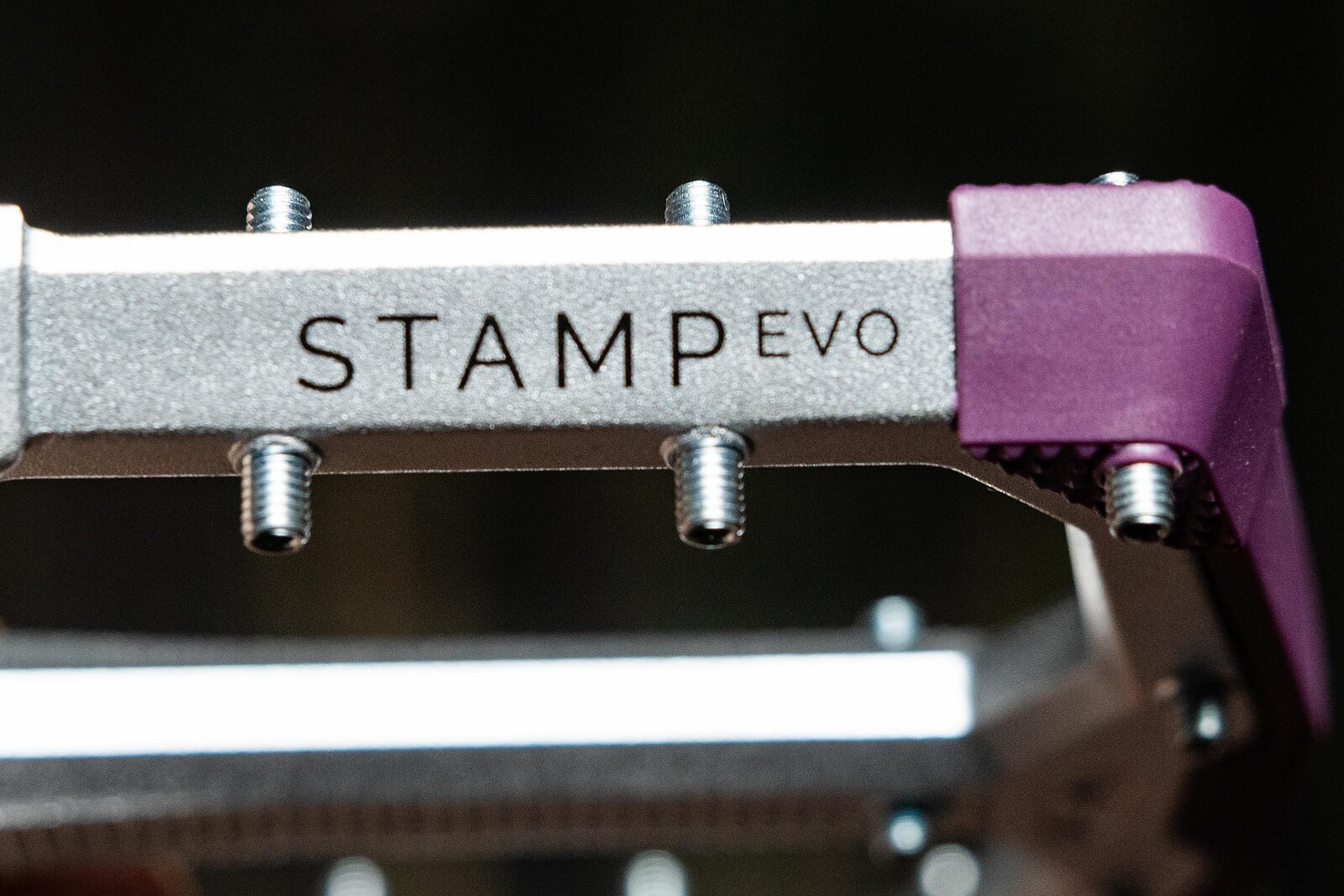
I am, embarrassingly, a pedal pin nerd. I have a favorite pin (Tenet’s Occult/Omen pins), and a favorite pin style (threaded into the bottom). I also have a least favorite pin: set screws, threaded in from the top. I find that set screws don’t penetrate the rubber of my shoes as well as solid, smaller diameter pins, and threading them in from the top means that if I break or bend a pin it’s going to be a chore to get it out and replace it. So, on paper, I shouldn’t be a fan of the Stamp Evo.
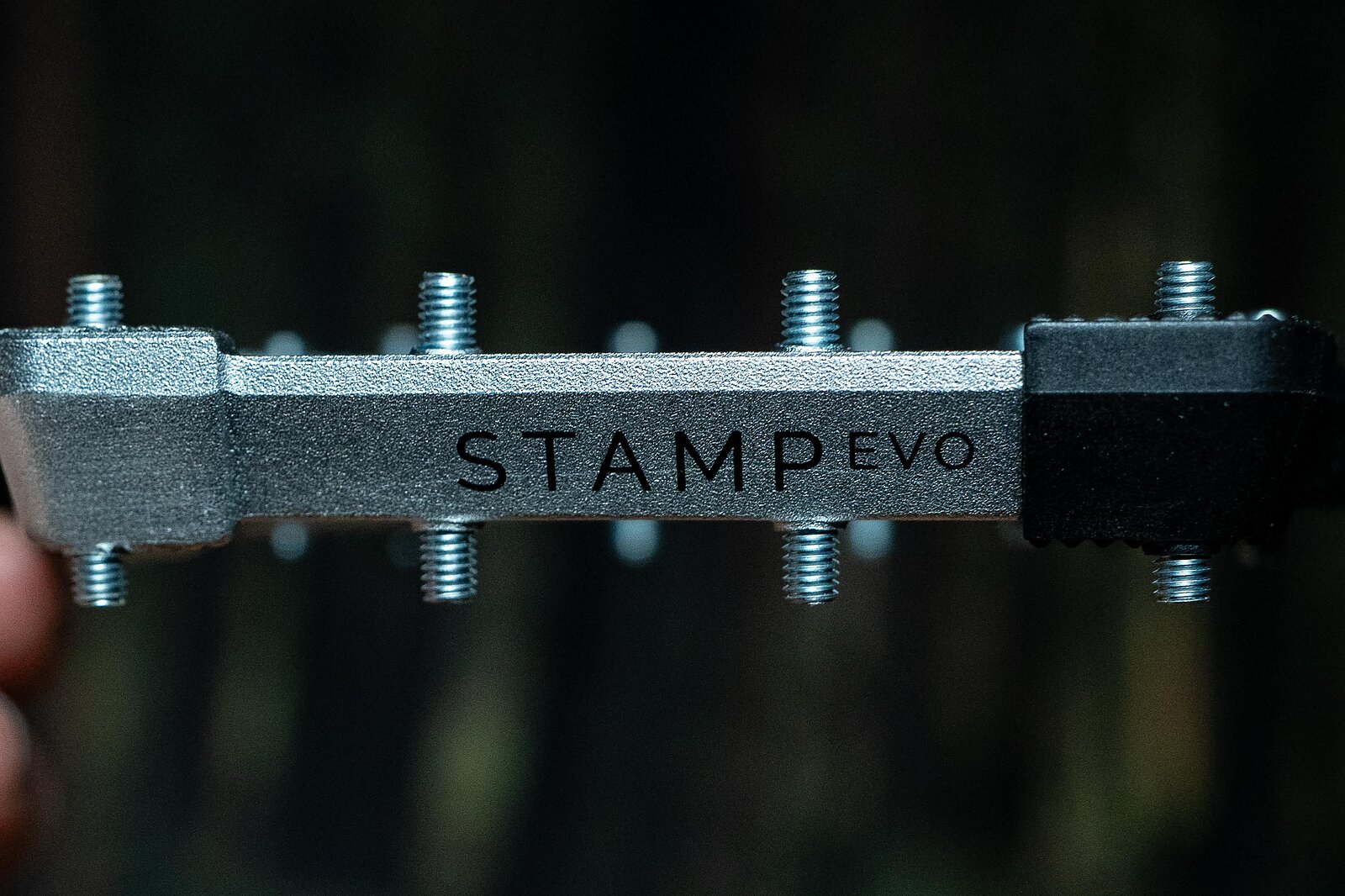
But, in practice, these grip really well. I think some of that is due to the size of the pedal and number of pins. The corners are further apart, so there’s better triangulation to grip my shoe without it twisting and squirming. And most of the Stamp Evo’s pins thread all the way through, so that each pin protrudes out of both sides of the pedal. So if you mess up one side, you should be able to remove it from the other side.
All that to say, these feel similar in terms of traction to the Tenet Omen, one of the most grippy flat pedals I’ve ever used. And while I wish the pins threaded in from the back, it makes sense to make them thread all the way through in order to hold the bashguard on.
Performance
As I mentioned above, I came into this review tentatively. It’s been many years since I’ve ridden Stamps. It turns out that caution was unwarranted. The new Stamp Evo bumps Crankbrothers’ flat pedals from one of my least favorite options, to a top choice. The platform is so comfortable and so secure. I haven’t had any foot pain or cramping issues on longer descents. I’ve also noticed that the larger platform gives me a bigger margin of error when getting my foot back onto the pedal in rough terrain. I’m used to catching a corner of the pedal and hanging on tenuous while I try not to get bucked. With the Stamp Evo, it’s much easier to get a bunch of platform underfoot and ride normally.
That larger platform also plays out going uphill, where it feels like my foot is being used more effectively to transmit power to the bike. I’m getting less shoe flex and less foot discomfort than I do with smaller pedals.
I haven’t noticed a massive increase in pedal strikes, even though my bashguards do make it clear that I’ve found a few rocks. If I still lived somewhere where pedal strikes were a bigger concern (like the East Coast, Rockies, or Southwest) I’d be a little more cautious, and might opt for something smaller like OneUp’s Wave. But, for gravity-oriented riding, I haven’t had any impacts yet that turn me off of these bigger platforms.
While it’s only been a few months, the Stamp Evo is still spinning smoothly, and I’ll update if and when I need to service its internals.
For Now
On the surface the new Crankbrothers Stamp Evo looks outlandish, and perhaps a little gimmicky. But underfoot, it does everything I want a flat pedal to do quite well. I’m interested to see if this is an outlier, or the vanguard of a new wave of bigger, more modular flat pedals.
Learn more: Crankbrothers