Finders Keepers The Origin Story of 'Bike Short'
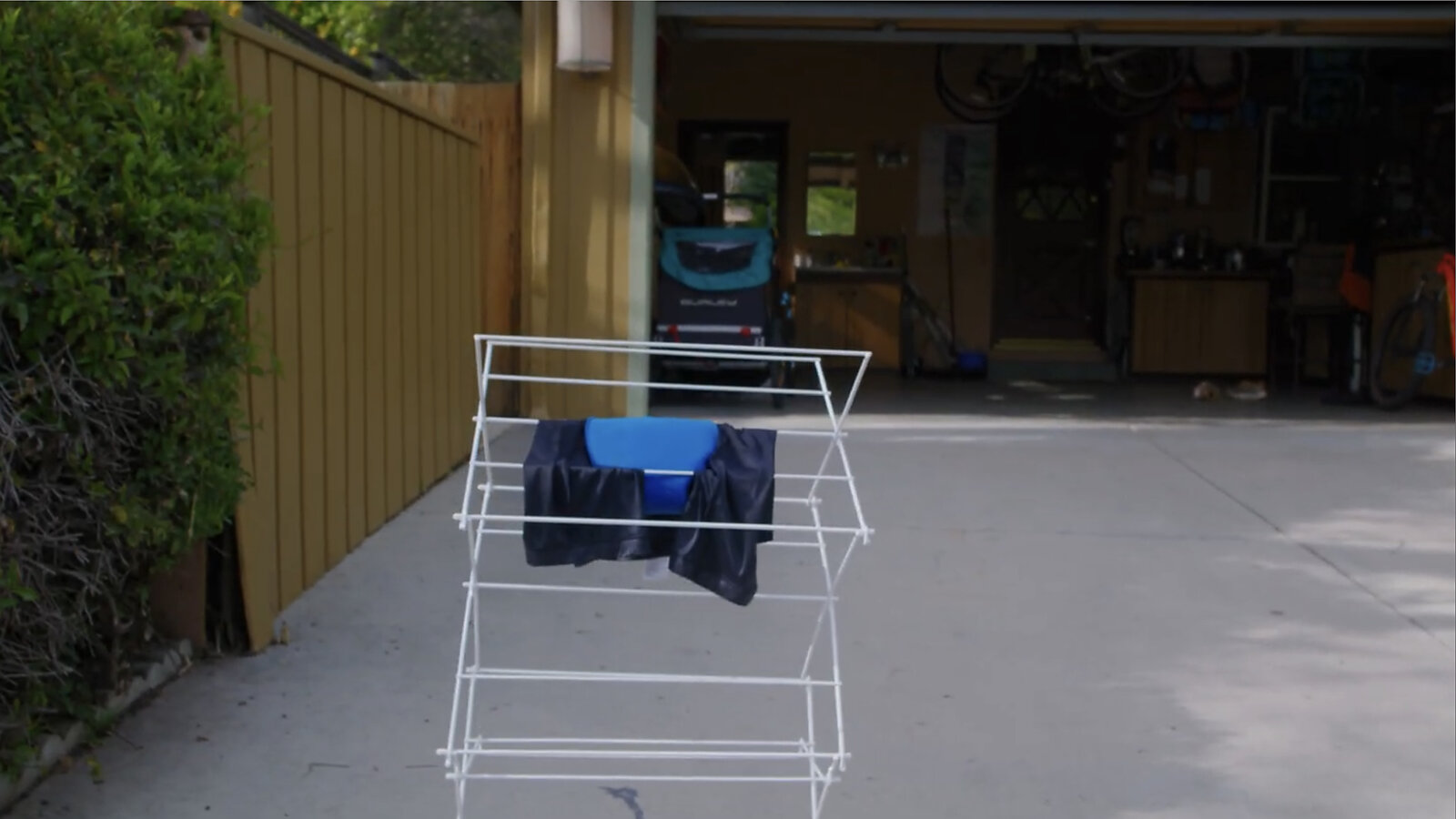
When Kevin McDevitt returned from a ride and put his chamois out to dry in the driveway, he didn’t realize he was setting the scene for one of Ojai, California’s greatest mysteries. Why would anyone steal a pair of wet, post-ride biking shorts, and more curiously, who would commit such a heist, drying rack and all?
An experienced writer and director, McDevitt channeled the bizarre theft into creative expression in his first feature film, “Bike Short.” Included in this year's edition of Freehub PRESENTS, “Bike Short" will show at more than 40 screenings nationwide, spreading awareness of the missing shorts in the form of an action-comedy film, loosely based around the events that played out in McDevitt's driveway. We recently chatted with McDevitt about the thievery that inspired his film, along with the behind-the-scenes logistics involved with bringing the film to life.
Find a screening of Freehub PRESENTS near you and watch “Bike Short” for yourself here.
How much of "Bike Short” is based on real events?
Kevin McDevitt: I'd say pretty much what's in the opening title card; that part's true. It's Hollywood-style “based on a true story” in the sense that the central event did happen. I'm still trying to figure out who actually took the shorts in real life. I thought if I could get some attention around this film, maybe I'd start getting some tips.
I’d guess they're probably close to home unless the thief was on a long bike packing trip. But in the small town of Ojai, I've definitely gotten the word out. I’ve done a number of screenings, been in the newspaper a few times, but no tips have come in. I have no idea who took them, but at this point, I don't need them back. It was good to take that inspiration and put it into what I love to do, which is making movies.
Do you think this was a way of living out the chase scene you wish you had an opportunity to have in real life?
Oh, yeah. It was the end of the day, and I had put them out on the driveway in that spot because the sun was going down, and it was like the only spot that I thought the sun would hit, and the shorts might dry before the end of the night. Then I went out after dinner, and the shorts and the drying rack were gone. They had vanished without a trace. So I don't know who it could have been. So yeah, I guess it's kind of my revenge fantasy.
How did you determine the filming location?
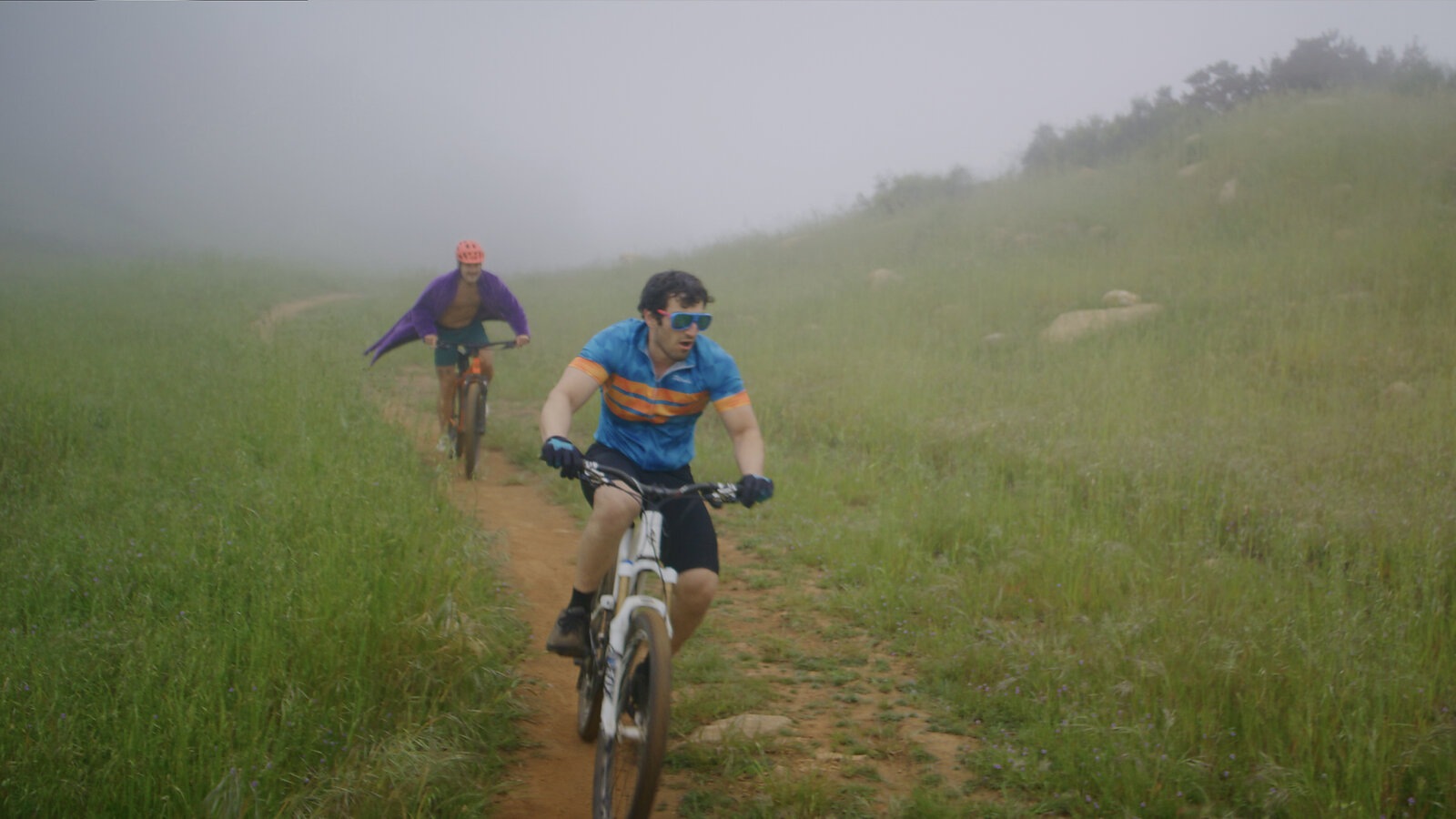
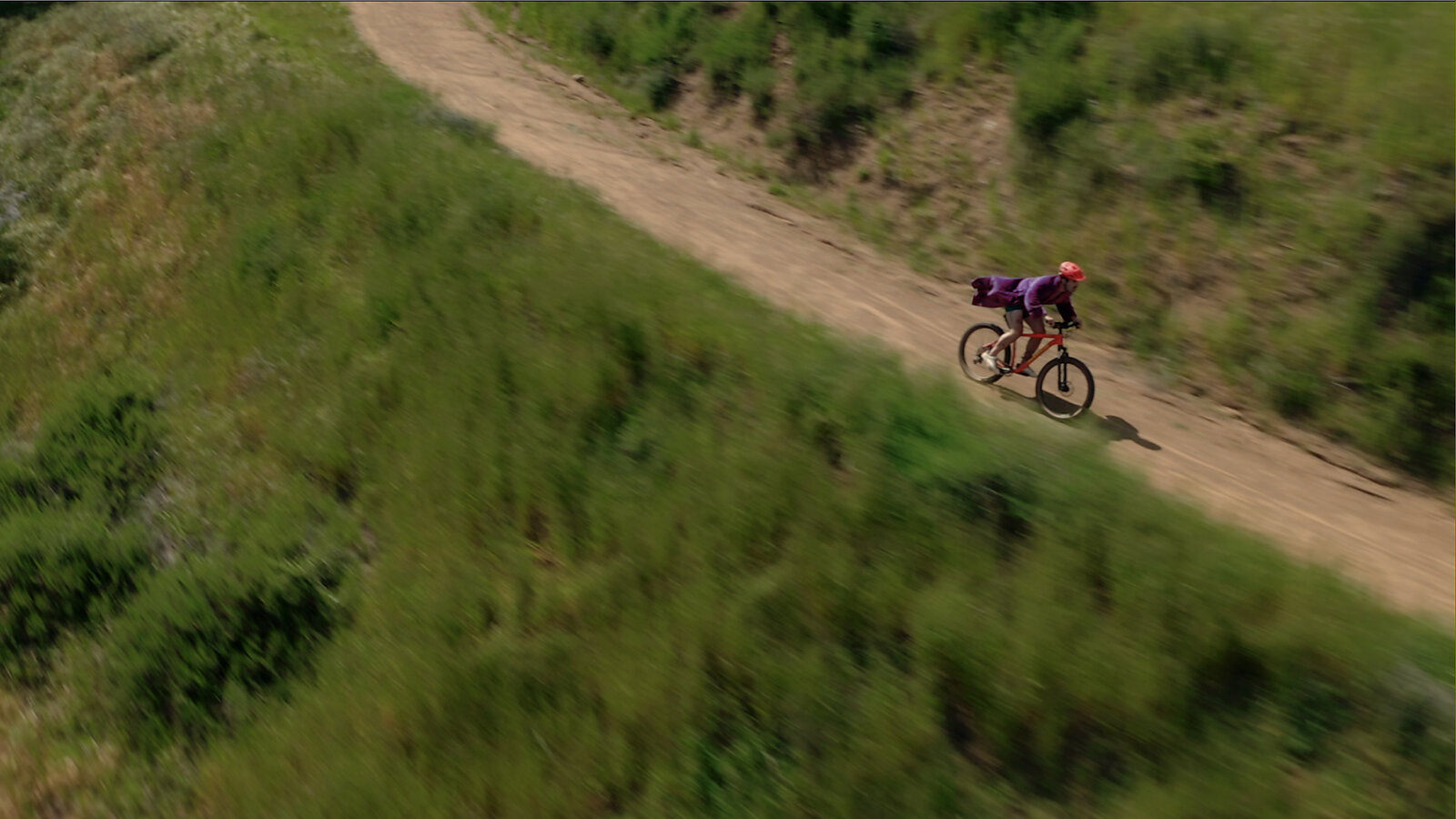
It's a trail that I ride all the time. So, the big descent that you see with the drone following our rider in the bathrobe coming down the mountain, that was just a spot that I would ride, then get to the end of it, turn around, and look back at it. It is just so epic. It's fun when you're riding it, but to see it from the perspective that you get after riding it where you could kind of see that whole mountain and the road sort of snaking down, it's just so picturesque that I just always wanted to shoot something there.
When did you decide to turn this bizarre situation into a film?
I was joking with my friends about how crazy it was that someone would steal used shorts. They were like, "Oh, you should write this." So somebody had to twist my arm, but then I realized, my whole story right there. So it kind of wrote itself. I actually really held off on writing a properly formatted script with dialogue and everything because I wanted it to be super action and visually-oriented. I sort of had a dream of it being a silent film, no dialogue, just music.
Then, once I met the actors and kind of felt unsatisfied with how it sort of resolved itself in the silent version, I realized they needed some dialogue. Their performances would make the film better if they had a little bit more to do. So I wrote that (final) scene like the night before they came to rehearse. I just kind of introduced them to the new dialogue cold, and it went really well.
How do you go about casting a film like this?
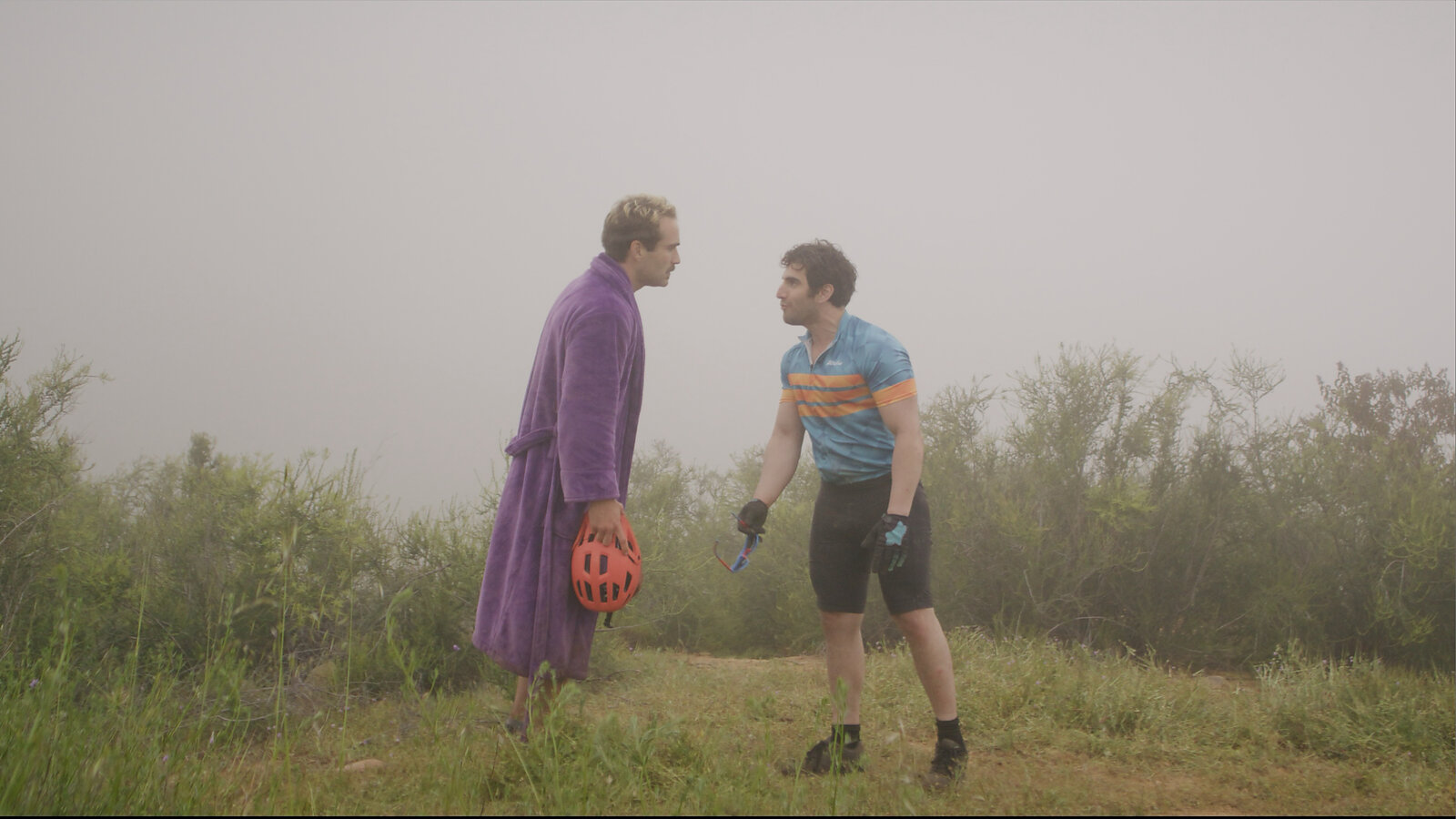
Being an independent film, there wasn't a ton of money to spend on it, so it's tricky. You can't have everything in the world; you can't have a huge crew, you can't hire movie stars. I thought maybe I could find some pro riders who can act, but I had a hard time finding anyone who was sort of interested in both. Then I was also thinking about stunt people, but that would have taken my budget up and it would have just made it even more action-oriented, but kind of beyond the scope of what I was trying to do, which was a small movie.
I found two actors that I really liked who were willing to do the biking. One of them grew up mountain biking and the other was a little more novice at it. I just needed them to be skilled with comedy, be great actors, and be able to take direction on a bike. Which can be a little harder, especially for someone, you know, the 99.9% of the acting they've done has been on foot. So, to just hit your marks, things like that on a bike, it was my first time directing something on two wheels as well, so it was a whole learning process for all of us.
How do you balance plot and comedy in a film?
These guys were both really skilled physical actors, so they knew how to make really specific choices with their bodies that they believed in as the characters. But it's funny and a little absurd or silly to watch. So it's a fine line. You can't be too “wink wink” funny. You have to really commit to the reality, but hopefully the situation and the setup, maybe something about an actor's reaction or the way they say the line, really sells the comedy. It's more subtle than people might think.
Who are your primary comedic influences?
I grew up with a lot of the Bill Murray movies, “Caddyshack,” John Belushi, “Animal House,” like that kind of stuff were my favorites. This (Bike Short) obviously draws from some sports comedies. Then “Rad,” which isn't intentionally a comedy perhaps, but is just an amazing bike movie, so those were influences.
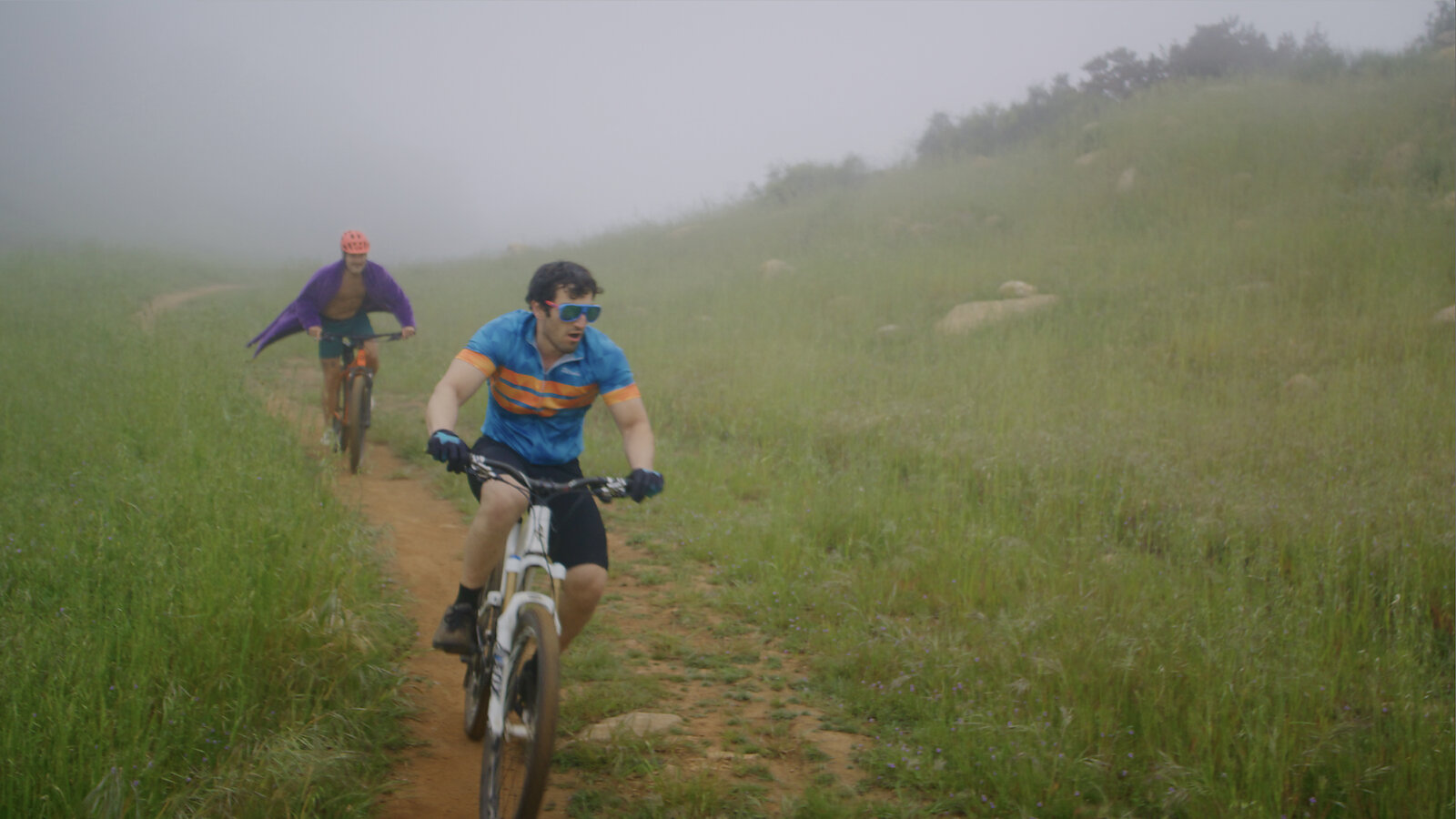
When I'm writing, I always like to have something to say and to have themes. In this film, I wasn't really trying to say much of anything other than to have a good time. And I really wanted to translate the feeling of going downhill on a mountain bike to the screen.
Were there any memorable or standout moments from production?
There’s one shot we used on the poster, it's a really long, wide shot of Z in the bathrobe descending. That's from the drone shot you see in the chase scene. The one take we actually used out of the six we shot was the one where we crashed the drone into a tree while it was leading him down. All of a sudden (the camera) is just pointing up at the sky. Z, our actor, just biked over and climbed up the hillside where it had hit the tree, dropped the bathrobe, and suddenly we see from the monitor Z, in his underwear, reach up right to the lens and grab it out of the tree, and he recovers it.
What aspect of filmmaking would you say is most fulfilling?
This is my first time having a film I wrote and directed play at film festivals. I've done a lot of commercials or other types of work that gets seen digitally. This was my first experience with my name on the movie and it's playing in a theater with a couple hundred people. I realized how grateful I am to have made a comedy because I immediately knew after one or two screenings, “Oh, they're laughing, this is working.” My favorite part is watching it with an audience. It's been cool, and it helps you remember why you do it.