Ride 886 TopHat More tuning options.
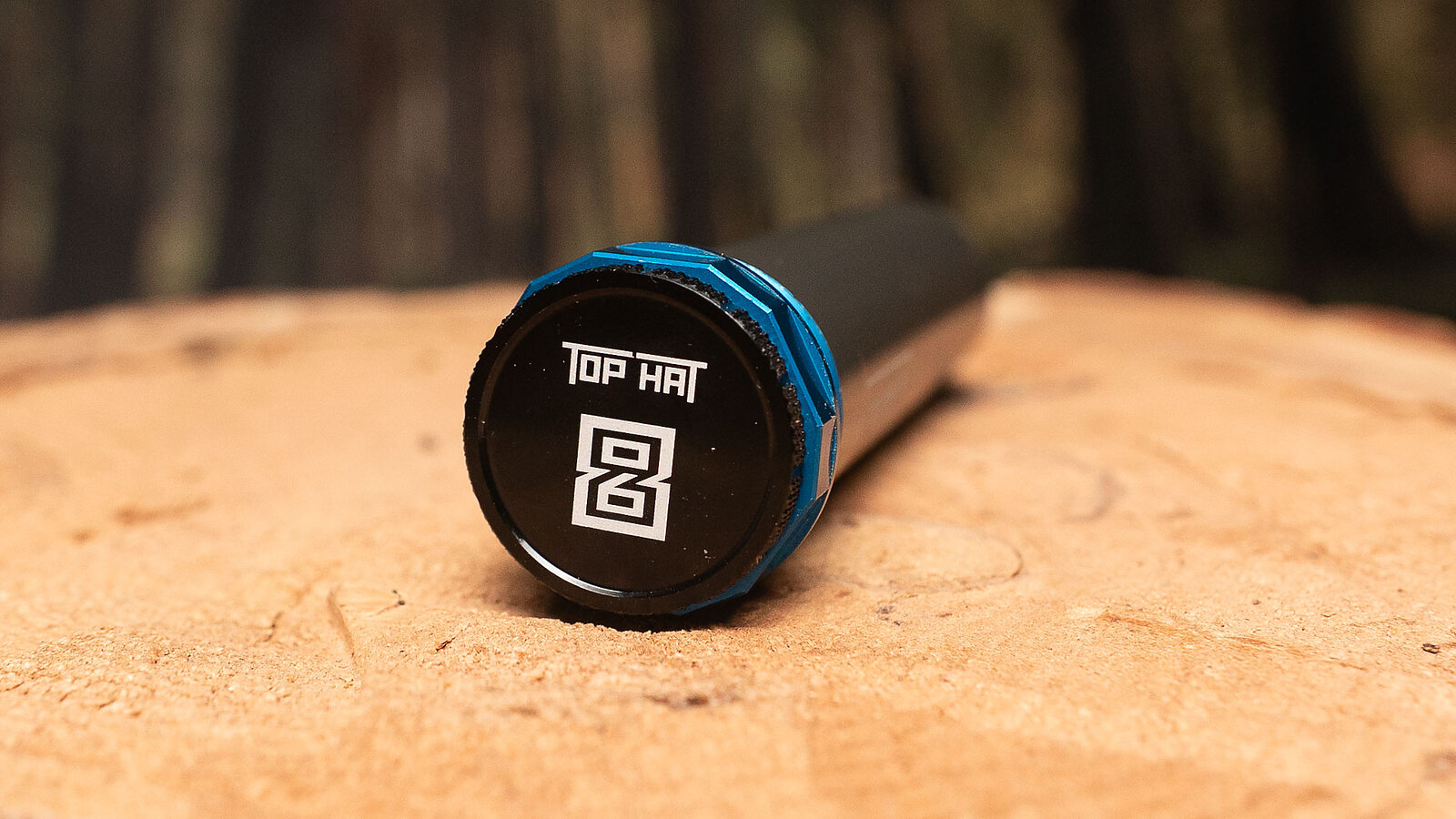
If you haven’t heard of 886 before, that’s ok. It’s a very new brand, which launched this spring with its first product, the TopHat, a dual positive chamber air spring conversion kit for your existing forks. 886 is the brainchild of Lee Trumpore, and he’s working directly with his manufacturer in Taiwan to make options for Fox 36, 38, and 40 forks, with options for RockShox forks coming soon.
Dual positive chambers are nothing new. Manitou has been using a similar layout for almost 15 years, and the Diaz Runt, RampAir, and Chickadeehill's AWK all take similar aftermarket routes to the same goal of a more linear, more tunable fork. But, the TopHat is a very sleek product, at a reasonable price, with a couple of extra adjustments up its sleeve. I’ve been running it in an already-excellent Fox 36 for the last few months, and I’ve spent a bunch of time running Manitou forks with a similar design, so it’s time to weigh in on what’s different, and who might benefit from the TopHat
Ride 886 TopHat Overview
- Weight (Fox 36 version) : 91 grams
- Air Volume: Aproximately one volume spacer
- MSRP: $239
What’s the Point of the TopHat?
At first glance, the dual positive chamber crowd can appear to be adjacent to the suspension cultists that frustrate me so much. “You’ve gotta try it bro, it’ll change your life bro, just add another chamber and another valve!” But, in my experience, they’re less dogmatic, and more based in fact than many of their contemporaries. It also doesn’t hurt that I’ve had quite positive experiences with dual chamber forks in the past. So, what’s going on here, and why?
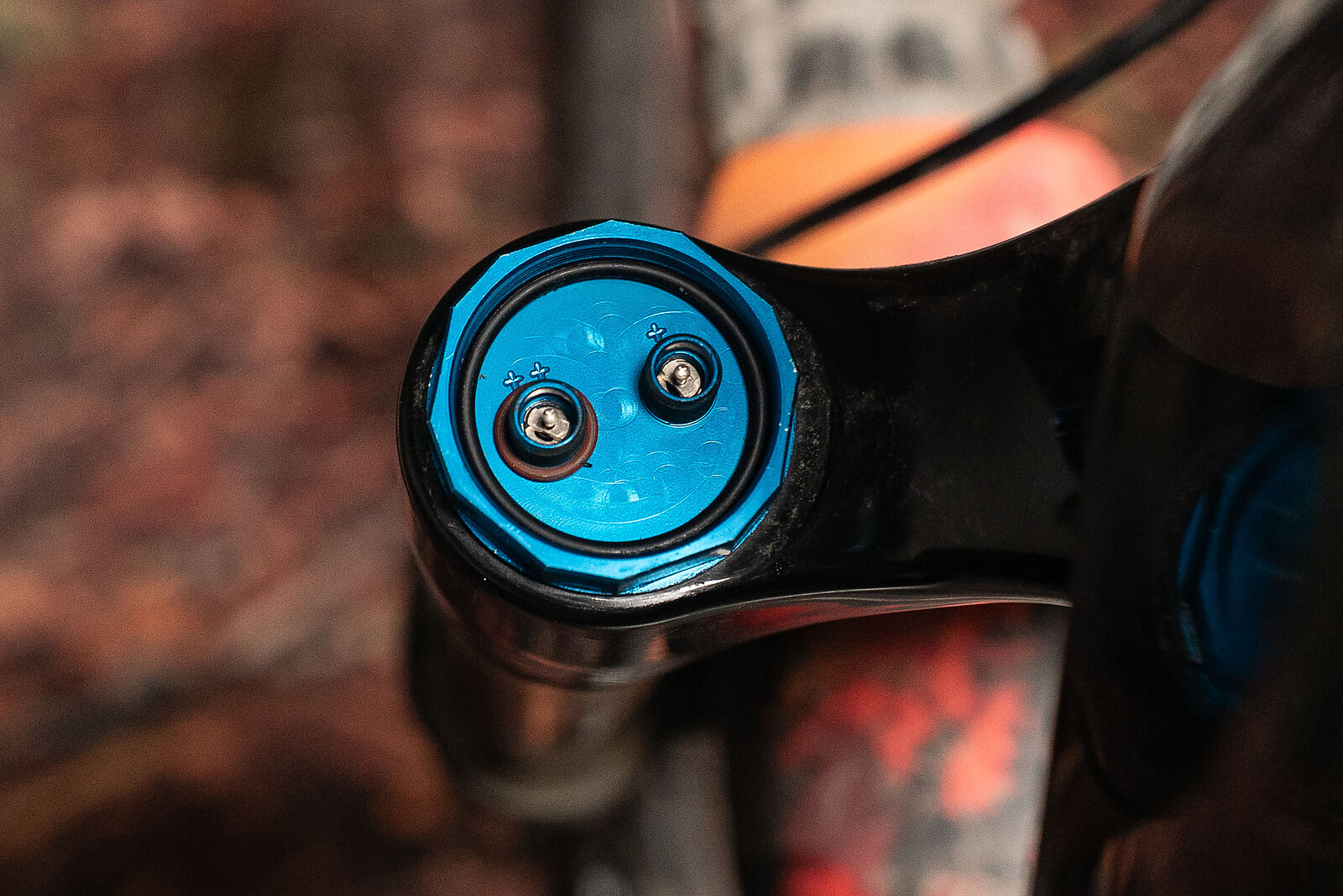
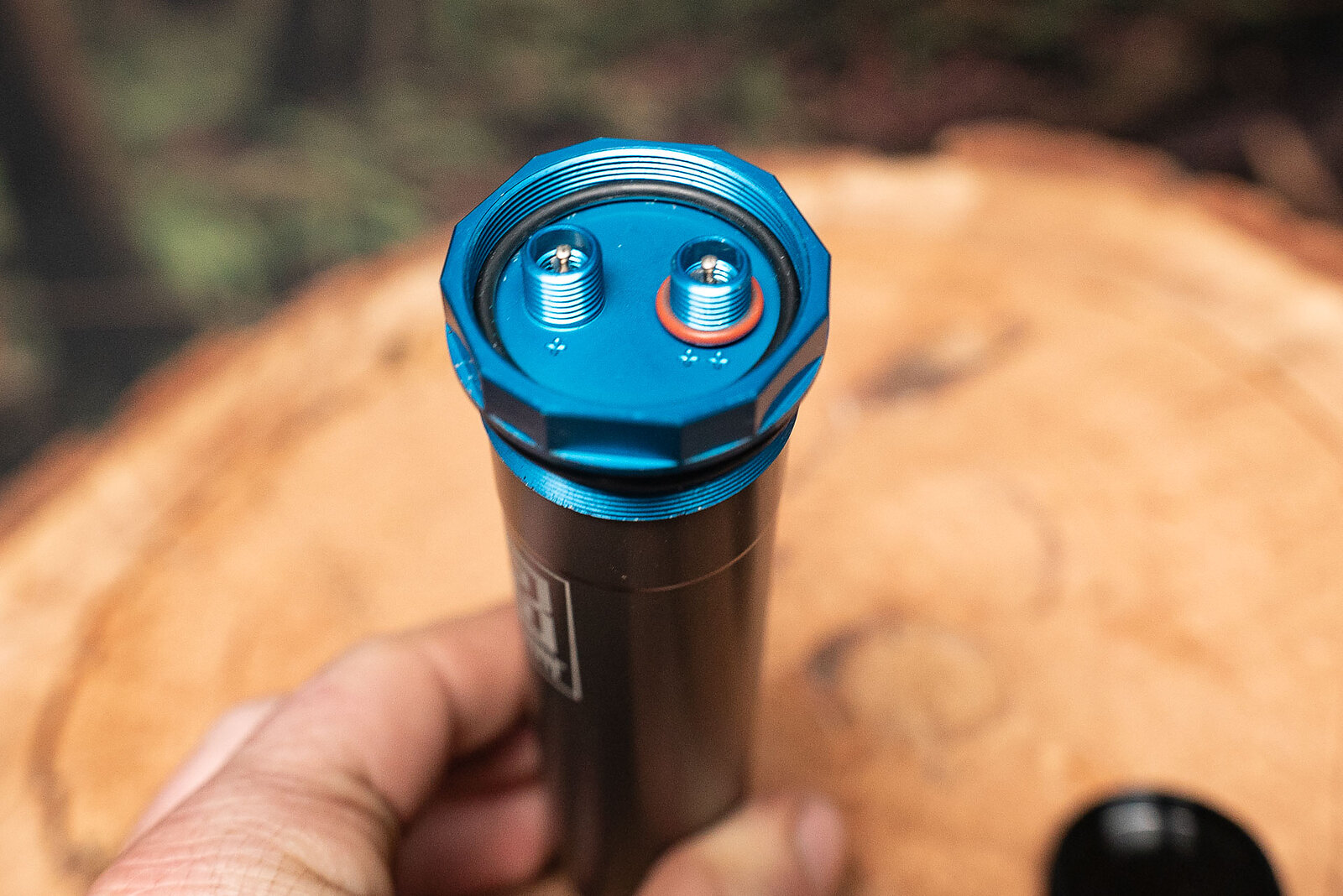
In a normal Fox fork, there’s a single air chamber, inflated with a valve at the top of the left leg. A piston slides inside the stanchion, compressing the air in that chamber in a progressive manner. You can adjust how much air pressure is in that chamber, and you can adjust its volume with spacers. With a dual chamber fork you’ve got a main chamber (886 labels with a “+”) that runs a lower pressure and compresses through the start of the fork’s stroke, until the pressure inside it matches the higher pressure of the second (++) chamber which then takes over and handles the rest of the stroke.
This accomplishes a couple of things. First, it allows you to tune the fork to feel more linear through its stroke, instead of the progression that traditional air springs bring. And you can set it up to be supple off the top, but still ramp up and be supportive, and, importantly, that ramp can happen earlier in the stroke, and less abruptly than if you were running volume spacers. So instead of a harsh, aggressive ramp in the bottom of your travel, you can have a firmer platform, higher in your travel.
Second, it opens up new options for tuning. You can adjust the ratio of air in the two chambers, as well as the volume of the chambers, and the piston height, which effectively changes the volume of the initial chamber, and helps set dynamic ride height. So, in the simplest terms, if you’re a nerd, you can go really deep in your air spring tuning journey, relatively easily.
Ride 886 TopHat Installation and Setup
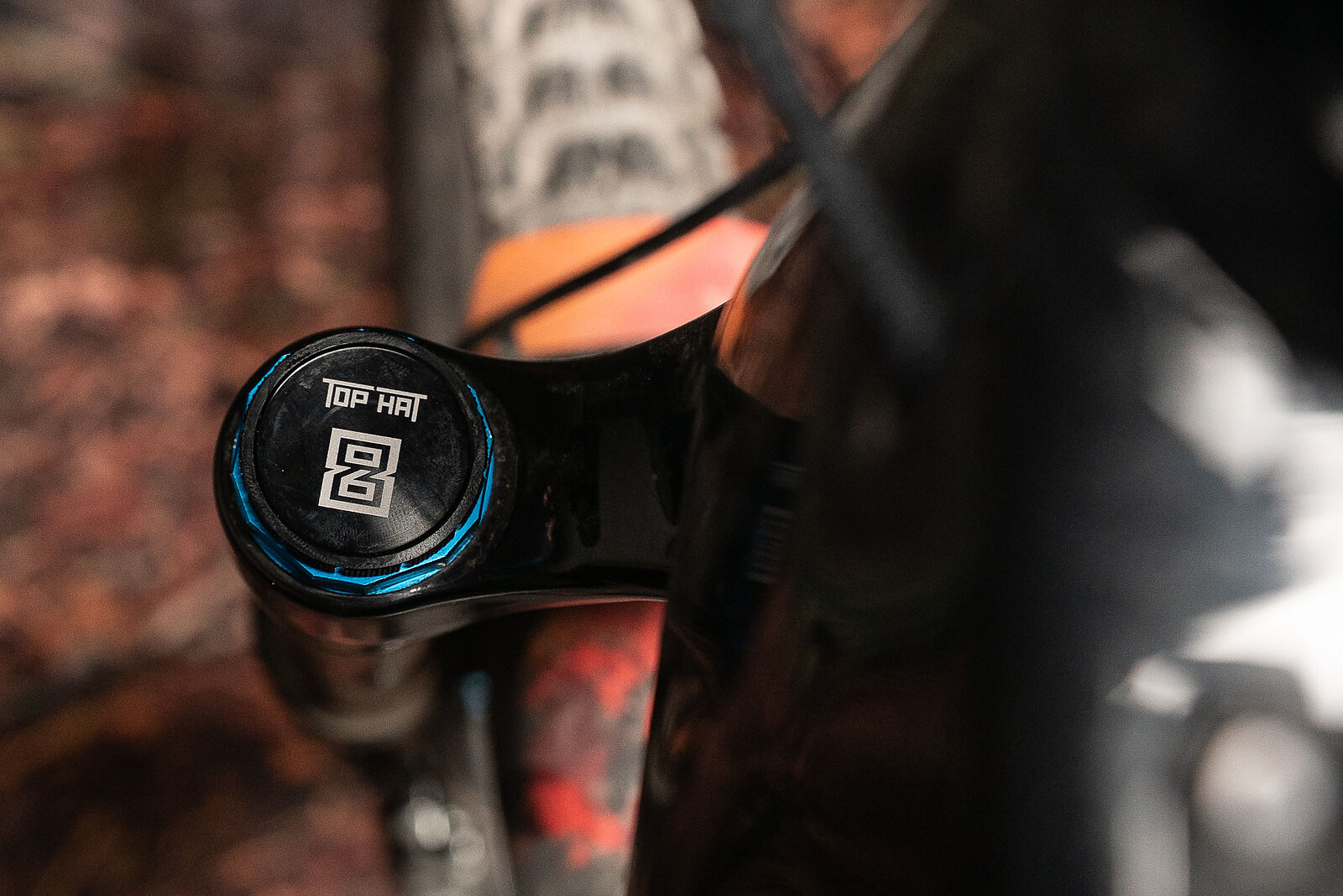
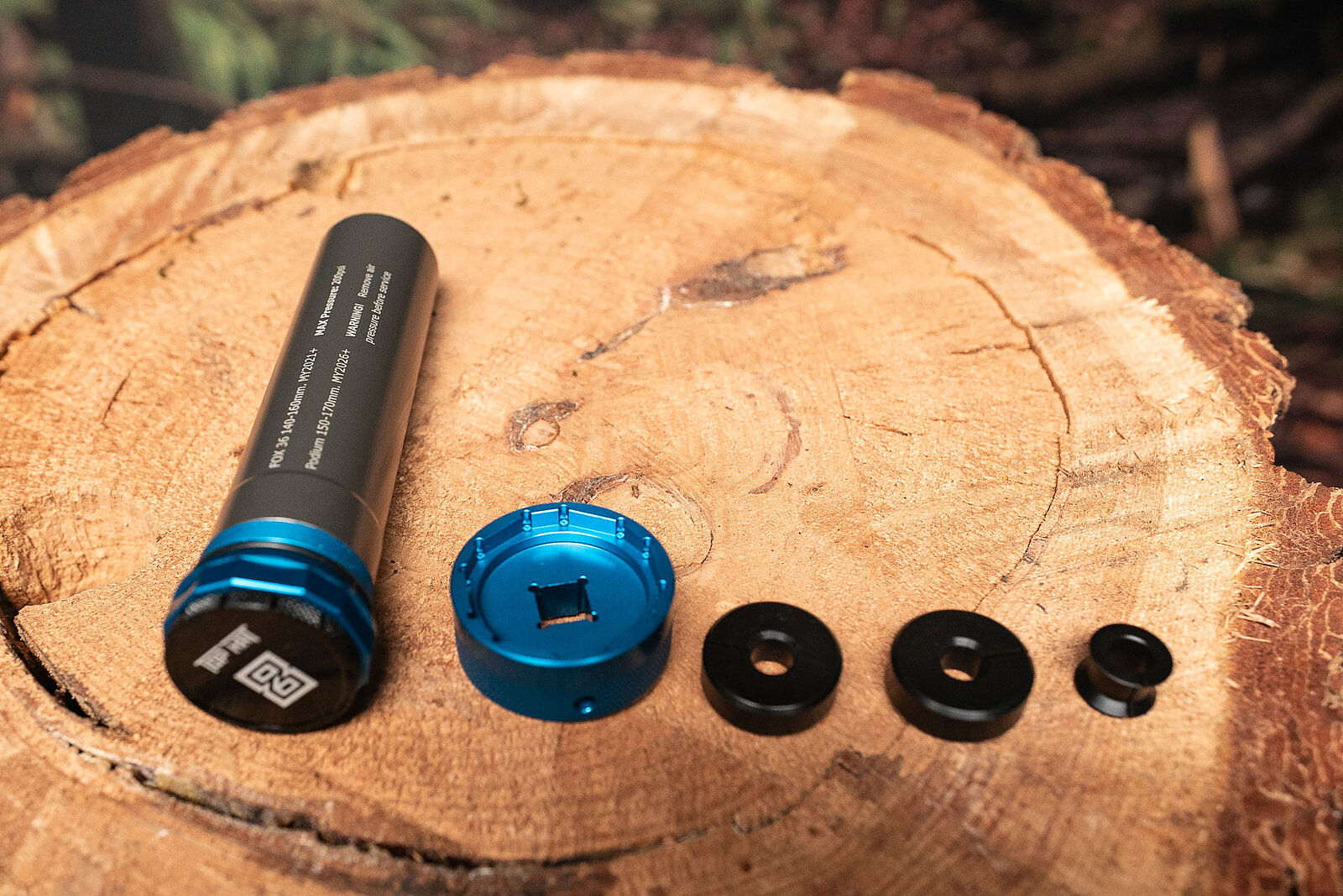
But what if you’re not a nerd? So often aftermarket suspension products feel focused on a subset of mountain bikers who tend to be terminally-online forum users, with big feelings about suspension. Ride 886 does an admirable job of being more approachable for the rest of us, by providing a super simple installation and quick start guide. Installation is very easy. Just remove all the air from your fork, use the (included) chamferless socket (or a cassette tool, depending on your fork) to pull the old top cap like you would to install a volume spacer, and then slip the TopHat in and chinch it down.
It’s easy to set up the TopHat using 886’s excellent quick start guide. Just plug in the air pressure you used to be running, and the widget spits out your new pressures. Just remember to always inflate the ++ chamber first. I was running 98 PSI in the 36 before this, so I started with 83 PSI in the + chamber, and 125 in the ++. Consider slowing down your rebound by a click, and maybe open your compression a click Done, go ride your bike! It’s that simple. Or, it can be.
If you want to truly dork out, 886 provides a much more in-depth tuning guide. The key to understanding dual positive chamber forks is to remember that the ratio between the pressures of the two chambers is as, or more important than what those two pressures actually are. There’s a relatively small range of ratios (886 says between 1.4 and 1.8 of ++/+ chamber pressures) that will provide a “good” feeling ride, and tiny changes within that range make a big difference. We’re talking a PSI in each chamber for a notable change in ride feel. It should be obvious, but a digital shock pump is a must here.
To adjust the total spring rate, you must adjust both chambers in tandem, or, if you’re trying to adjust just the top, or just the middle and end of the stroke, you can adjust the ratio between them.
Most other dual chamber forks stop there. But 886 also allows you to add volume spacers to the ++ chamber. This allows you to adjust how the fork ramps up at the end of the stroke, without changing anything that happens before the sag inflection point between chambers. Additionally, you can also adjust the piston height, which effectively changes the volume of the + chamber, and changes how it ramps up to that inflection point. Ride 886’s guide does a great job of explaining when, and why you might want to do this, and how it ties in to cockpit position and ride height, but acknowledges that this is a pretty advanced adjustment that many riders may never even consider.
Finally, if you need to rebuild the unit, or want to adapt it to fit into another fork, you can dissasemble it with one 4 mm bolt, and 886 will have the parts available to adapt it to different forks.
Riding the TopHat
I dropped the TopHat in the already-excellent 2026 Fox 36 set at 160 mm of travel. I was already running one volume spacer, and the TopHat takes up about one spacer’s worth of volume. I started out with the 886’s quick-guide settings, and started riding. The fork felt excellent, but, honestly, it felt excellent before I made the swap as well. That’s also been my experience with dual-chamber Manitou forks. If you follow the instructions they feel good, but not super unique.
But, my time on the Mattock and Mezzer taught me that I quite prefer more platform, higher in my fork than most single-positive air chamber forks provide. I appreciate a supple initial stroke, but more importantly, I don’t want to blow through the rest of the travel. Our trails are steep, and a diving fork is lethal here. So, I left my + chamber as recommended, and added 3 PSI to the ++ chamber. That small difference was immediately noticeable, and provided more support from that sag point down.
I really like how that change feels on the trail, especially when compared to stuffing volume spacers in a single positive chamber. I don’t enjoy the super progressive feel that more volume spacers give - I’m not trying to eliminate bottom-outs (which volume spacers do a great job of doing), instead I’m trying to get more support, higher in the stroke, which volume spacers typically remove. That support makes it easier to be active on the bike, push into it, and pump through terrain.
How much that matters to you is a very personal question. In my experience, I’m happy riding a good single positive chamber fork in most situations, but there are a few scenarios where I really appreciate the extra tuneability. Usually that happens on e-bikes and hardtails. I love dual-chamber forks on hardtails because I’m desperate for any suppleness and comfort I can get, but I also need a bunch of support out of the fork to keep the bike from doing the “stapler” smash every time the going gets steep. The TopHat allows you to keep that sensitive top end, while also increasing the ++ chamber pressure, and potentially adding volume spacers to create a shelf in the travel that keeps you out of dive city.
Second, on e-bikes, I’ve found that on steep trails they can have a bit of a trebuchet effect, where they’re really stable, until they’re not. When you reach a certain vertical tipping point, they have a habit of blowing through the rest of the fork travel, and then winding up all that weight around the BB to endo and throw you over the bars. Volume spacers don’t do much for me here, because that ramp happens too late in the travel, but with the TopHat, you can bring that support higher in the stroke, and have a safe shelf to rest against.
For Now
The 886 TopHat isn’t some “NEW INNOVATIVE BUZZWORD!” product designed to render existing technology useless. Instead it’s a well-executed little gadget that’s easy to install and use. If you’re looking for more tuneability than your current air spring allows for, it’s a great option.
Learn more: Ride 886