Fox Transfer Neo A worthy wireless option.
For years, if you wanted a wireless dropper post, you were limited to the RockShox Reverb, or a few options from smaller brands. But, in 2024, Fox released the “Neo” wireless version of its Transfer dropper post, in lengths from 100 to 200 millimeters. And then, this spring (2026), the brand added a 225-millimeter version to the lineup. As a diehard, long-dropper fan, I was stoked to see the Transfer Neo step into big boy territory, and I’ve been riding this longer Transfer all spring.
Now it’s time to talk about how it performs, and how it stacks up to the competition.
Fox Transfer Neo Overview
- Travel Range: 100-225 mm in 25 mm increments (not user-shimmable)
- Measured Weight (225 mm drop, 34.9 mm diameter): 859 g (with battery), Remote: 48 g
- MSRP: $859

What Makes it Neo?
I’ve been a bit of a sleeper fan of the non-Neo Transfer for years now, for somewhat weird reasons. Yes, it’s a nice dropper, and I enjoy using it on any review bikes it comes specced on. But, also, it seems like there are often lightly-used second hand, or take-off posts available on the internet, for ridiculously low prices. That, combined with pretty excellent longevity, means that I’ve picked up a few used 240-millimeter droppers to swap onto review bikes that continue to impress.
The Neo takes that winning combination and electrifies it. No cables, no routing, and (hopefully) no profanity when you’re setting it up. Fox says the Neo’s communication protocols are the fastest on the market and its stack height is lower—about 15 millimeters less—than posts such as the Reverb.
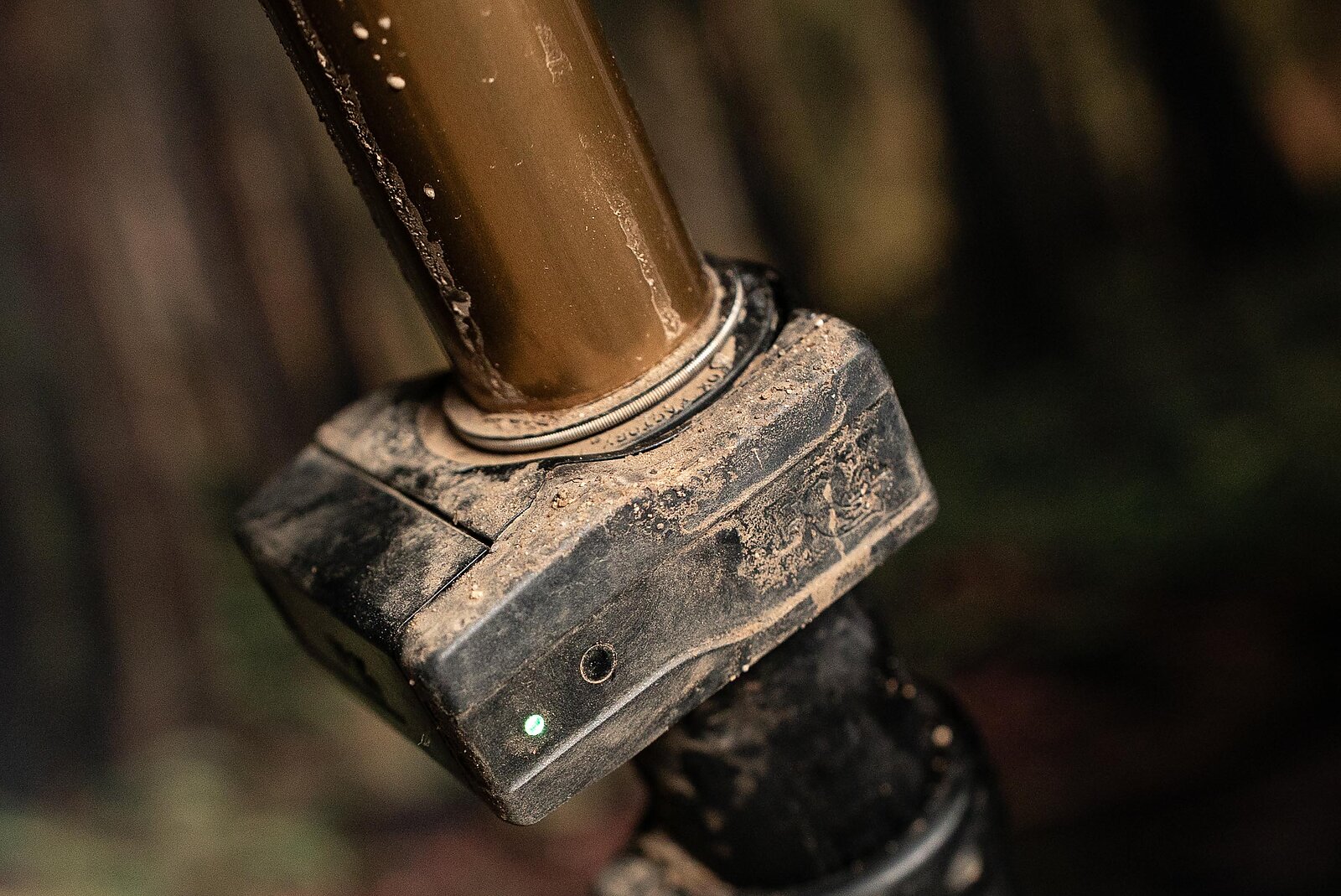
The Neo is powered by a Fox battery that should last for 30-40 hours of riding and, just like the regular Transfer, it has a user-fillable air valve to adjust pressure and return speed.
Are wireless dropper posts essential? No, absolutely not. But they’re pretty dang slick, and it’s great to see a big player like Fox bring a longer post to market.

Fox Transfer Neo Options
The Transfer Neo is available in all three common diameters (30.9, 31.6, and 34.9 millimeters) and lengths from 100-225 millimeters, with breaks every 25 millimeters. The one exception is that you can’t get a 34.9-millimeter diameter post in the shortest 100-millimeter length. The larger diameter post gets a different upper shaft, that’s stiffer and requires less bushing overlap, making for a lower insertion depth.
I’m a big fan of the 34.9-millimeter seatpost standard, especially for longer travel dropper posts, and I was stoked to see Fox take advantage of that extra space with its girthier posts. I’ve been running the 225x34.9-millimeter post in a Trek Top Fuel where it replaced a 240-millimeter mechanical Transfer.
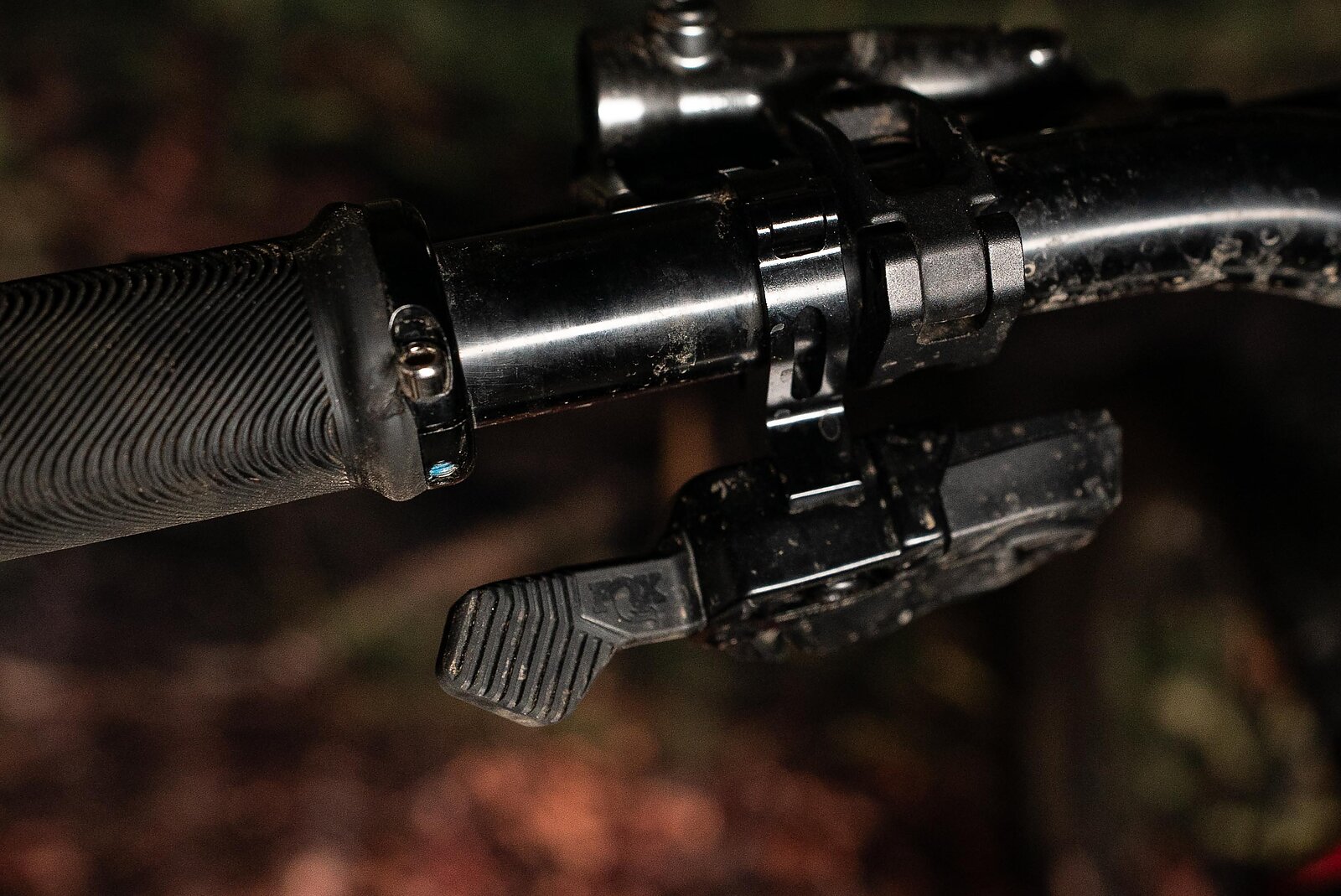
The Neo’s remote comes with adapters to mount to SRAM or Shimano brakes, as well as a discrete clamp. I went with the discrete clamp because I move my brakes around fairly often, and don’t want to fiddle with the remote at the same time.
The Neo’s remote is much more like a traditional dropper lever than SRAM’s Pod system. I prefer the Neo’s ergonomics, it’s easy to actuate and has a definitive, but very light feel.
Fox Transfer Neo Features
There are two ways to approach the Neo. The simplest is to treat it like a mechanical dropper post. Once you’ve got the post and remote paired, you can install them on a bike, and charge the battery occasionally. The post automatically wakes up when you move the bike, and goes to sleep after five static minutes. That’s an easy way to live, and the one I prefer, but to take full advantage of the Neo’s features, it’s worth using the Fox app.
The Fox app has three primary features. First, you can set the Neo to travel mode, which allows you to transport the bike without the dropper turning off and on at every bump and eating its battery. Second, you can set up bike park mode, which keeps the post locked down, even if you hit the remote as you grab for the bars after a sick no-hander on A-Line. This feature is cool but, honestly, the magic of wireless droppers is that you can also just pull the remote off and leave it in your hotel room if you so desire.
Finally, the Neo’s app keeps track of dropper actuations, so you can have a precise handle on battery life and service intervals. That helps take the guesswork out of long-term ownership.

Frame Fitment
I’m biased toward wireless dropper posts because they’re so much easier to install, and this job means that I move posts around more than most people. The Transfer Neo was no exception. It took me just a few minutes to slide into the bike.
Wireless droppers invariably don’t hit the same stack height and insertion depth numbers of regular posts. The Transfer Neo has a 15-millimeter lower stack height than the RockShox Reverb, but it's also a lot (22 millimeters) taller than the OneUp V3 34.9 posts. And when it comes to insertion depth, the Transfer actually is significantly longer (about 35 millimeters) than the Reverb.
All that to say, fitting droppers is always a bit of a math game. Personally, with my 34” inseam and proclivity to ride slightly smaller (for my height) frames, I rarely have an issue with stack height but am very cognizant of insertion depth. Generally, I can’t fit a longer-travel dropper because it won’t fit all the way down into the seat tube, not because the seat tube itself is too tall. So, for bikes in which I’m worried about getting the most drop possible, the Transfer Neo isn’t the best fit for me. That said, it has plenty of space in the Trek Top Fuel and Fuel MX.
On the Trail
This dropper disappears on the trail, which is exactly what I want. The lever is light, smooth, and has great ergonomics, and it actuates the post absurdly fast. No, I can’t discern a speed difference between this and the Reverb—both are plenty fast—but I do prefer the Transfer’s ergonomics.
The Transfer also feels very solid and locked in. I’ve found that the mechanical Transfers have less play out of the box, and stay tight longer than most posts, and that holds true with the Neo as well. It’s marginally less wiggly than my year-old Reverb.
The Transfer doesn’t have the soft “suspended” mode at anything less than full travel like the Reverb does. I’ve talked to folks who absolutely hate that squishy Reverb mode, but I’m actually a big fan on e-bikes, where it adds a fair bit of comfort when doing techy climbs where you don’t want the saddle fully extended. Is this a make-or-break feature? No, but I prefer the Reverb by a small margin.
Otherwise, the Transfer Neo has been absolutely excellent. It’s fast, easy-to-actuate, and reliable, which is really all I’m looking for from a wireless dropper.
Compared to the RockShox Reverb
It’s worth putting these two wireless options up against each other. I prefer the Neo’s lever feel, and how locked in it feels versus the Reverb. However, the Reverb gets points for its suspension mode, and for how ubiquitous AXS batteries are. If I have a mishap on the trail, I’m much more likely to be able to bum an AXS battery than a Fox one.
I don’t have a 34.9x225-millimeter Reverb to directly compare weights, but my 31.6-millimeter version weighs 126 grams less than the beefier Transfer Neo. And, as I mentioned above, the Neo has a significantly shorter stack height but a much longer insertion depth, so you’ll have to make your own call there based on your needs. The Reverb is also available in the longer 250-millimeter length, which might be overkill for most folks, but I’m a huge fan of.
Finally, in terms of price, a Reverb with remote will run you about $709, whereas the Transfer Neo costs $859.
Generally, I think the Neo feels like a slightly more refined product with better ergonomics, but the choice really comes down to what size dropper you can mate to your body and frame.
For Now
Wireless dropper posts are one of those absolutely unnecessary, but still pretty cool products. And, it’s good for the class as a whole when a big player like Fox jumps in with a legitimately good post like the Transfer Neo. If you’re trying to add another battery to your bike, this is one of the best ways to do it.
Learn More: Fox