The Bike I’d Actually Buy A break from the big money.
My job is funny. I hold two contrasting worlds of mountain biking in each hand, and have to reconcile them in my head.
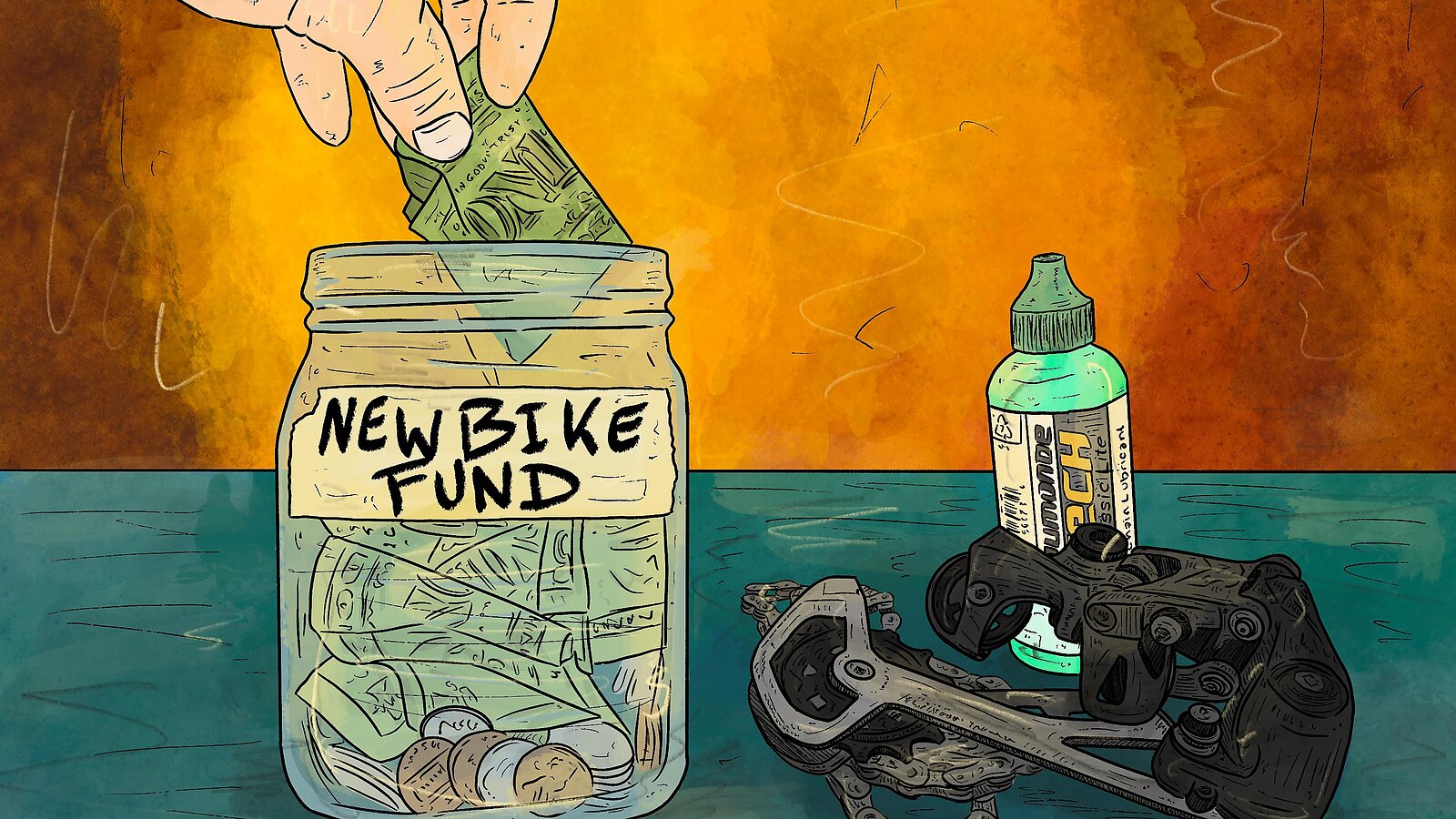
Professionally, I exist in an enclave of electronic shifting, top-end suspension products, and bikes that retail for way more than I—or any other normal, working stiff—could ever reasonably afford. The fact is, most of the gear I review would be out of reach if it wasn’t my job. So, I compare $10,000+ superbikes, and suss out tiny differences in performance between them to hopefully help you, dear reader, spend your hard-earned bucks.
Because of this reality, it's helpful for me to run thought experiments. If I didn’t have this job (the bike industry is fickle after all) what would I ride? And, maybe more importantly, would blasting back down to reality affect my riding experience in a noticeable way? What would I lose if I “had” to ride within my financial means? What happens when I apply the privilege of trying a bunch of different bikes to getting the most bang possible for my buck?
Hopefully this provides some useful context for my higher-end reviews, as well as some food for thought as you navigate your purchases.
The Ground Rules
An important part of any thought experiment is laying the ground rules. Otherwise, we could go as broad as my imagination flutters, which, problematically, is fairly expansive. So here’s the framework we’ll exist within:
- I’m shopping for a single bike that's appropriate for Bellingham, Washington, and can handle my usual riding trips (Sea-to-Sky Corridor, Rocky Mountains, Interior BC, North Carolina).
- No used bikes. The used market is too location-specific, and too inconsistent to make for useful comparisons. But, yes, there are always sick deals to be had, and buying used is often the way to go in real life.
- No pro deals or hookups. No “nice guy discount” at the shop. No emailing industry bros begging for a deal. I have to pay real prices.
- No upgrading parts “for free.” No slapping on a bunch of review parts.
- No e-bikes. Simplicity is a penny pincher's friend.
Those rules start to paint a picture of what sort of a bike I’ll be looking for. I love everything from almost-XC race bikes to full-on downhill bikes, but for the riding I do the most, I’d be looking for a bike with 150-170 millimeters of rear travel. I ride enough steep, committing trails, and spend enough time in the bike park that I’d rather haul a big bike around on mellow rides than be scared on a little bike all of the time.
It will almost certainly be aluminum, because one of my biggest takeaways from my years reviewing bikes is that weight matters less than you think it does, and if you’re paying full price, aluminum still rules the roost.
It’ll have to be a complete build. If you have a bunch of parts in your garage, or if you have a good relationship with a local shop, building a bike from a frame up is often the best way to get the most bang for your buck. But we’ll nip that in the bud with these rules.
The e-bike one is easy. I’d rather ride a cheap meat bike than the nicest e-bike around. I ride e-bikes for work, not for pleasure. I enjoy using them as tractors for trailbuilding, but I have zero desire to own one.
Finally, I have a few non-negotiables: It needs to fit a water bottle in the front triangle. It needs to be from a brand with decent aftermarket support in the U.S. It needs to have “normal” standards (no SuperBoost, good dropper insertion, etc.)
So, from the sea of available bikes, we’ve already whittled it down quite a bit. Let’s get to the top choices.
Prime Contenders
There are a few bikes I’ve ridden recently that immediately jump to mind: The new Devinci Spartan is awesome, and you can buy a frame only for $2,399, or a Deore build for $3,899. But that Deore build has some pretty major shortcomings (fork and brakes), and I think I can go cheaper.
Marin’s Alpine Trail is another bike that I rode and immediately imagined owning. A frame will run you $2,149, or the Alpine Trail 1 costs $3,499 for another almost-adequate Deore build.
Another bike along those lines is the Privateer 161 Gen 2. That bike is sold out, but for a moment you could buy a complete build for around $3,500 with one of the most impressive, compromise-free build kits I’ve ever seen. But, again, I can’t find one for sale anywhere, so no dice.
If we bend the rules a little bit, the Trek Slash Gen 6 is still the best descending bike I’ve ever ridden, and a little sleuthing reveals brand new carbon frames for sale for $1,300. This is an absurd value. There’s a reason my partner just ordered one. But there’s a catch, the frames are missing a bunch of hardware and small parts, and ordering all of those costs a few extra hundred dollars. And it’s such a deep discount, with such limited inventory, that it doesn’t quite feel fair for this challenge.
I’ve never ridden one, but Ibis’ Ripmo AF has long been a high-value contender. $3,749 gets you a pretty sweet build, and the geo on the Extra Medium size looks solid for me, although I’d prefer something a little heavier-hitting for a one-bike Bellingham steed.
Commencal has a Meta for $3,250 that’s a compelling proposition, but again, I think I can go cheaper, with a more robust support network to boot.
Canyon is an obvious choice, but the aluminum Spectral I reviewed last year is too short-legged for my needs, and the Torque, although it makes an impressive value proposition with current sale prices, doesn’t have the seatpost insertion or dealer support I’m looking for. The same goes for Propain.
So what are we missing? The Specialized Status 170 of course. MSRP is $2,500, but it’s been on sale for $2,000 all over the place for months, which makes it incredibly hard to beat. So let’s dive into why I’d spend my imaginary dollars on this very real bike.
A Status Symbol
I have been beating the Status drum since the first generation launched, and I’m only beating it louder now that there are rumors that the second generation might be going away. When I first rode the Status 2 170 I immediately realized that it was all the bike I needed. I rode the same trails back to back with my personal Trek Slash, built out with all the nicest review parts available, and the Status 2 170 was within spitting distance of the Slash in every scenario. No, it doesn’t plow quite as hard, or smooth out chunder quite as nicely, but it’s way closer than any bike that costs less complete than the Slash frame alone retails for should.
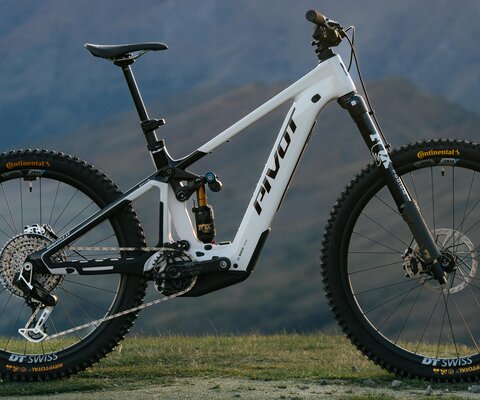
The Status 170 pedals well enough for any big day I have in mind. It’s not the lightest bike on the market, but it’s light enough, its rear suspension isn’t problematically active under power, and it’s got a lockout for when you want to sit and spin. Does it go uphill $7,000 worse than the Pivot Firebird? Absolutely not. The difference is discernable, but not dire. Maybe a minute or two on the biggest climbs I do? Maybe. It makes less of a difference than my gut’s reaction to whatever I ate the night before does. It’s well within the margins that I usually would find between one $10,000+ bike and another. And that holds true on the way back down too. Parts aside, if I didn’t know how much this bike cost, it would still be competitive in performance to the highest end bikes I’ve ridden.
It’s not an insanely stable, plow-it-all bike like the Slash, or a higher-strung, taut feeling rig like the new Nomad. The Status’ short rear end lends the bike to a more active riding style. It made me want to jam the back wheel into corners, instead of carving through them, and find lips and transitions to jump through tech sections, instead of dropping my heels and letting the bike do the work. But the suspension is plenty active with a nice level of support that lets you give the bike space to deal with the smaller stuff, and still have it react when you want to get weird.
No, it’s not the most “refined” feeling bike on the descents, and the long chainstay gang is probably throwing up in their mouths just thinking about it, but I’d wager that against the clock I’d put down times within a few seconds of the most tuned, premium, race-ready bike I’ve reviewed. To stack a hypothetical on a hypothetical, if you gave me the options to spend $1,000 dollars to magically make the Status ride as well as the best bike I’ve ever ridden, or keep the Status as is, and spend that grand taking my friends on a riding trip, well, I’m texting my riding buddies without a second guess. It’s absolutely close enough that I can’t tell, or don’t care most of the time.
The difference in experience between riding the Status 170 and a top-of-the-line bike is less than the difference in experience between riding my favorite trails in hero dirt, versus in their current, just a little too dry state. Better yet, all the frame standards are, well, standard, and, even better, you can route the rear brake externally.
The geometry is mostly modern, without being too weird. I’d probably size down to an S3 as a do-it-all bike. Could the chainstays be longer? Yeah. Sure. But I could also just suck it up and ride like a baggy-pants hooligan and have just as much fun.
And the build on the Status is pretty dang solid. For less than the price of a Fox Podium fork alone, you get a Fox 38 Rhythm fork that I’d be happy riding on any bike. That damper is sweet, and so underrated. The Shimano Deore drivetrain works fine. I’ll probably break the derailleur eventually, but when I do, a new one costs $30. The wheels are adequate, and the tires (Specialized’s own Butchers) are excellent. Yeah, I wish the dropper post was longer (and I’d probably end up buying a longer one or double-dropping for big descents) and the TRP Evo Trail brakes are far from my favorite, but the thing about buying a $2,000 bike is that you might have some money leftover to upgrade it. Grab a set of Maven Bronze or Hayes Dominion brakes and party on.
The aftermarket support is there. I could pull out my credit card, walk to my local shop, and ride home on a brand new Status right now. And the Status 2 170 has a decent amount of leeway for experimentation. You’ve got a flip chip at the chainstay to play with chainstay length, bottom bracket height, and headtube angle, and the Status is rated for dual crown forks, so you could throw a 180-millimeter 29” fork up there, or, even better, grab a cheap 200-millimter 27.5” downhill fork and run it full freeride. And the rear shock is spaced down to 62.5 millimeters of its stroke, so you might as well pull out that spacer and find out if anything fouls at bottom out when you run it overstroked.
All of that adds up to a bike that gives me zero excuses not to ride just about anything. It might not be the newest and greatest, but it’s totally adequate for all the riding I love to do. The Status 2 170 is a $2,000 bike that lets me have the same amount of fun, on the same trails I routinely ride on rigs that cost six times as much.
If we extend this thought experiment one step further, and pretend that I have an extra $2,000 in my pocket to upgrade the Status 170, I wouldn’t. Instead I’d turn around and spend that two grand on a Status 140 and have a sweet trail bike that does everything I need it to, and is more fun on lighter-duty trails than its bigger brother. It’s kind of absurd that I could literally buy two Statuses for close to the price of many of the other “affordable” bikes on this list.
For Now
I had a big, emotional “mountain biking is about riding your bike, not spending the most money on the nicest gear” spiel all lined up. But you already know that. And if you can afford the nice stuff, sweet, that’s rad. It’s really good, and readers like you allow me to have this dream job.
But if you can’t, if you’re on a budget, trying to balance the cost of a new bike with the cost of your life, or trying to decide if you should spring for a “nicer” bike, or take one that you can afford on an epic riding trip, the choice is clear. Even though I’ve become accustomed to riding bikes that I can’t dream of affording, I’d still take a loose plan, a cooler full of bevies, and some unknown mountains with good friends and a cheap bike over something top-of-the-line strapped to my SUV as I cuss out other middle-aged men in the overcrowded trailhead parking lot. I hope you would too. The Status is a reminder that the cheap-bike, big-fun dream is still alive and kicking in a sea of over-powered, over-priced e-bikes and other ultra-high-end gear.