Outbound Lighting Detour and Blade Bikes are more than toys.
If I had to name one product that’s changed my relationship with riding the most in the past four years, Outbound Lighting’s Portal and Trail Evo light set is definitely in contention. Before acquiring a set of Outbound lights, I had experimented a little with night riding, but it never quite clicked. Now I look forward to the time change and the start of the true night ride season.
Along the way, I got my hands on a spare bar mount, and started using the Trail Evo on the handlebars of my commuter bike (a hardtail mountain bike with a rack and bags). Using the Trail Evo on Bellingham’s bike paths feels a little like driving a huge lifted truck with super bright LED headlights—it’s a great experience for me because I can see absolutely everything, but the poor dog walkers I pass look like Major Gobler from "Raiders of the Lost Ark" when he opens the Ark of the Covenant and gets fried. It’s somewhat anti-social to run the Evo in a pedestrian setting.
Luckily, Outbound makes the Detour which is designed for road, gravel, and commuter riding. So I’ve been using the Detour and Outbound’s tail light, the Blade, for my commuting needs this fall with a few, ahem, detours onto singletrack.
Outbound Lighting Detour Details
- Lumens: Approximately 1,200
- Battery Capacity: 3.6V 5,000mah (18.0Wh)
- Measured Weight: 152 g
- Price: $185
Outbound Lighting Blade Details
- Lumens: Up to 300
- Battery Capacity: 3.6 V 3,500 mAh 18650 (12.6 Wh)
- Measured Weight: 169 g
- Price: $125
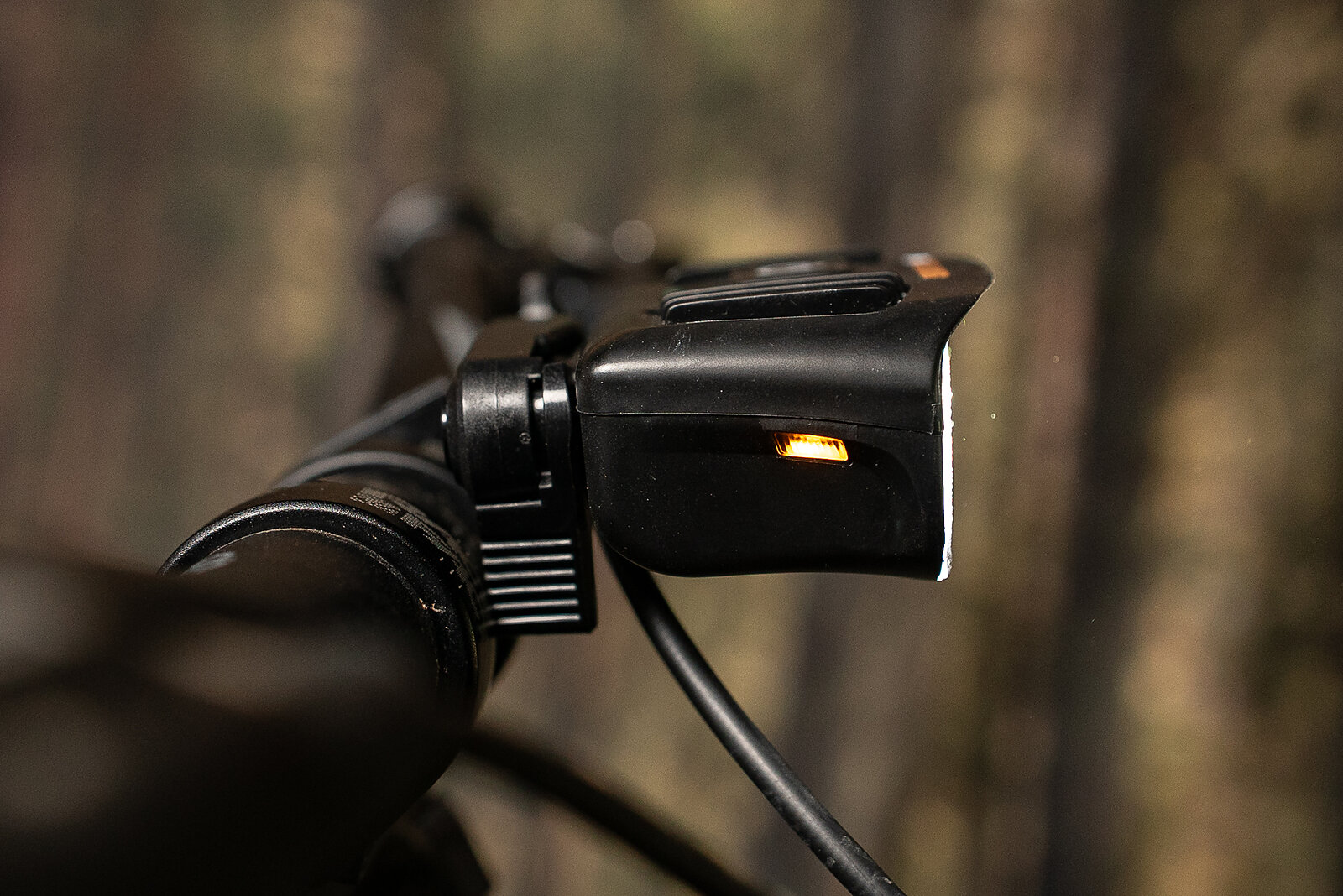
Outbound Detour and Blade Features
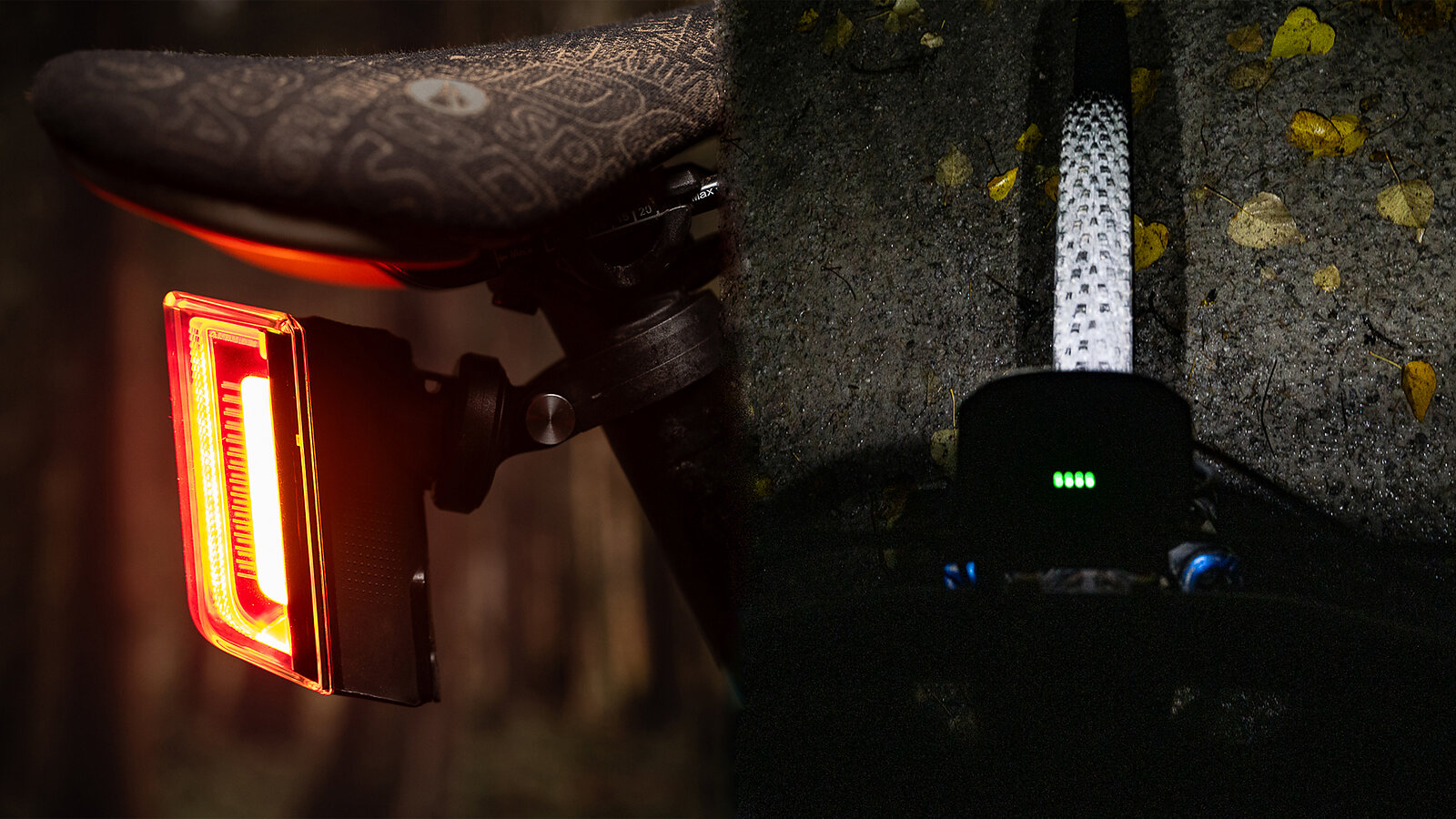
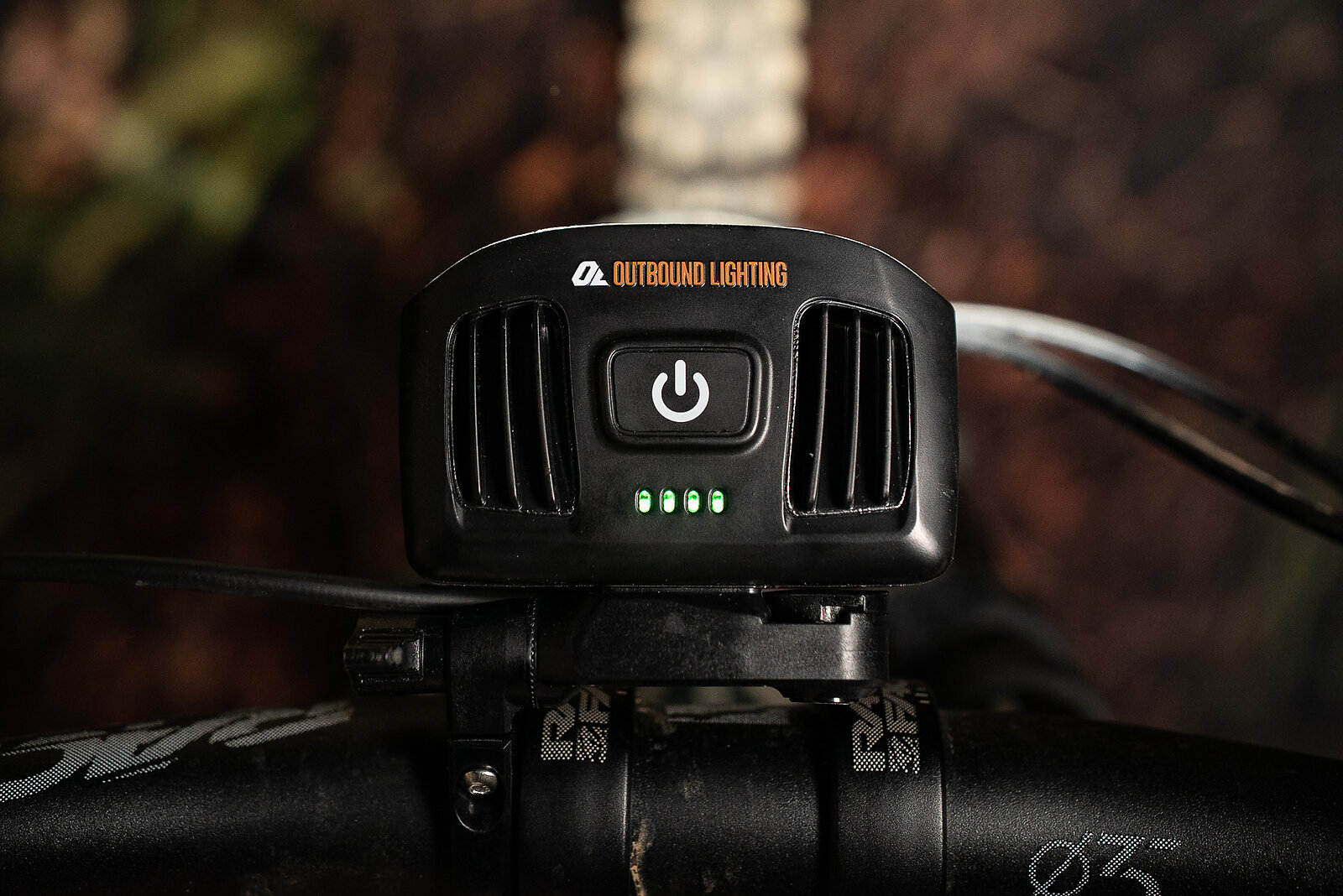
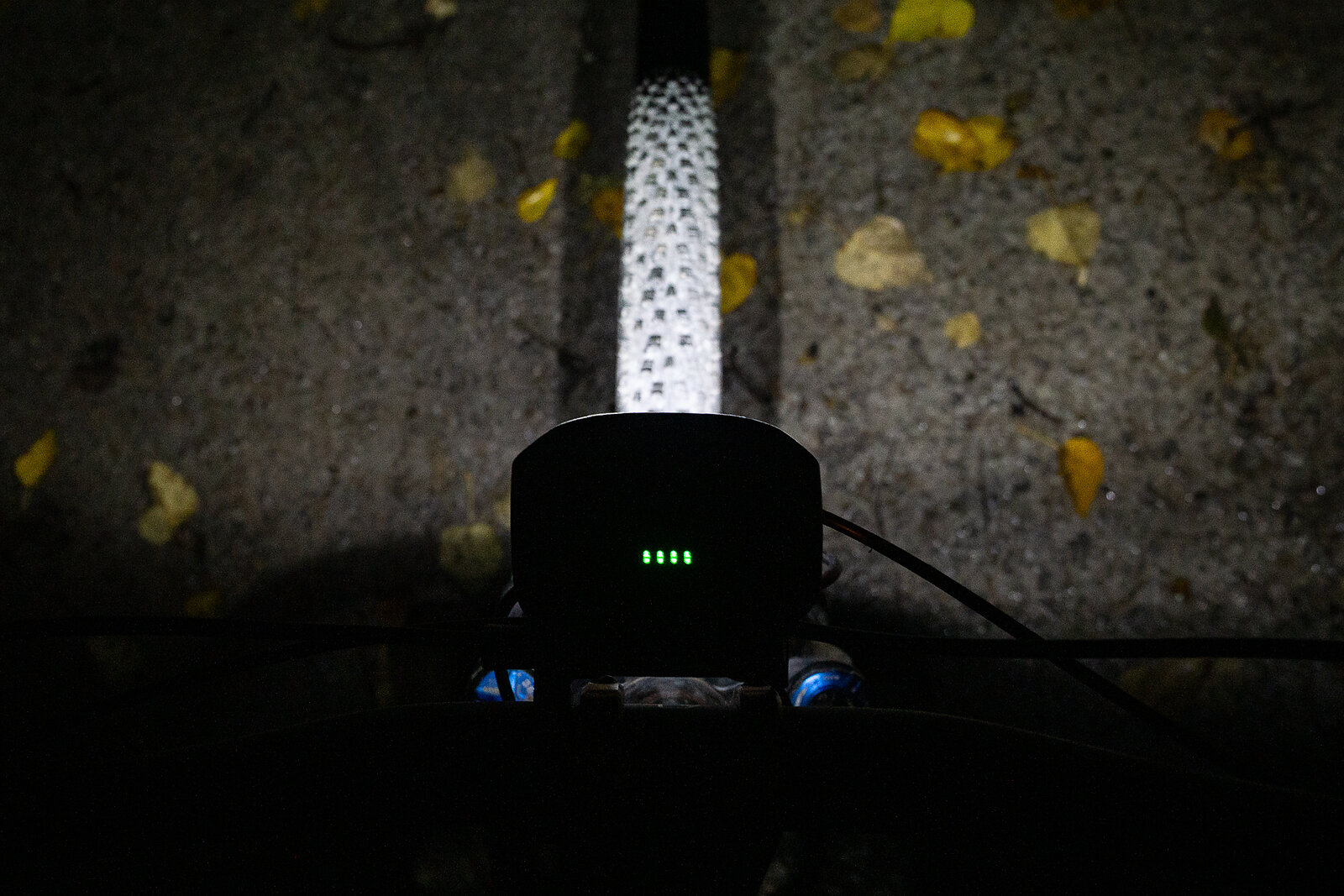
Compared to the Trail Evo, the Detour is significantly smaller and lighter. Its packaging feels more like a Portal helmet-mounted light on your bars. That isn’t surprising since it has the same sized battery as the Portal and puts out just a little less total light. We’ll get into the Detour’s beam pattern in-depth later in its own section, since it’s the big reason this light makes sense for many commuters.
But, just like Outbound’s other lights, the Detour has a simple one-button interface. Hold it down for a moment to turn the light on and off, and give it a quick press to cycle through modes. Just like Outbound’s mountain bike lights, when you turn on the Detour it goes into its default “Adaptive” Mode. Adaptive Mode gives you five minutes of full blast power before it gradually dims down to 70% power over the next twenty minutes. The idea is to give your eyes time to acclimate to riding in the dark, and then, as they adjust, tone down the power to conserve battery. I spend almost all my time in Adaptive Mode and the best thing that I can say about it is that I’ve never noticed the dimming. That means the light is doing its job and saving battery without hurting my vision.
Outbound says the Detour puts out 1200 lumens on high, 880 lumens on medium, 200 lumens on low, and that it should run for 2.6 hours in Adaptive, 1.7 hours in High, 4.2 in Medium, and 8.5 in Low. Additionally, it has pass-through USB-C charging so you can plug in a battery bank and extend your ride time. It uses the same bar mount as the Evo, with shims for all the common bar sizes, and Outbound makes adapters for under-the-bar mounting on drop-bar bikes. I like Outbound’s bar mount a lot. It’s simple and secure, while still being easy enough to slip your light off the bike and into your pocket if you’re leaving it locked up downtown.
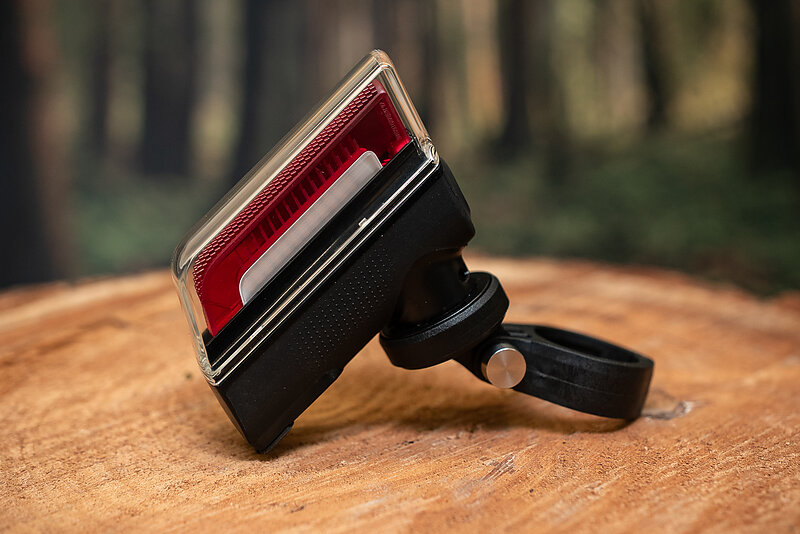
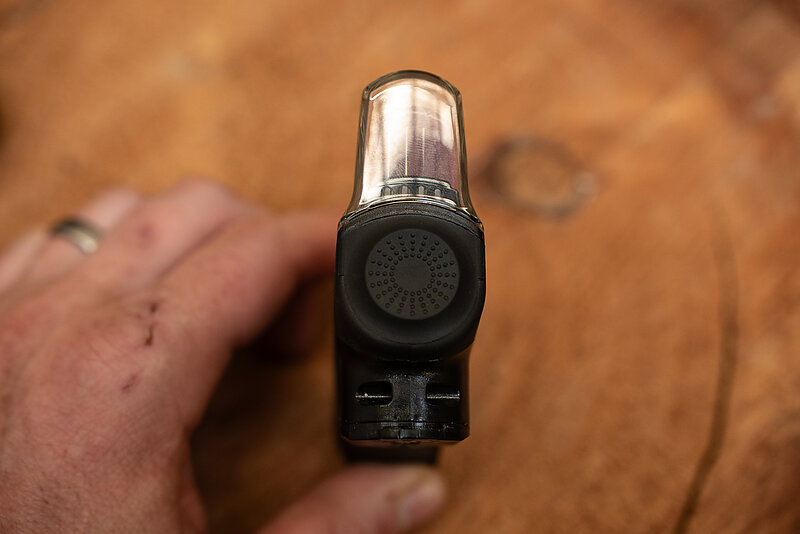
The Blade is, if anything, even more of an “Outbound-feeling” product than the Detour if only for the fact that it comes with a user-replaceable 18650 battery, so that if you ever kill the cell you can swap it out at home down the road. It too features one button that swaps between modes, but here your options are High, Low, Daytime Flash, Nighttime Pulse, and Eco Flash, with runtimes of 8+ hours, 16+ hours, 32+ hours, 16+ hours, and 120ish hours respectively.
Honestly, I pretty much always run the Blade in Daytime Flash, even at night. In my experience it’s the most “aggressive” looking mode, and I really don’t want to get rear-ended. And it doesn’t hurt that it’s got a pretty absurd runtime of 32+ hours.
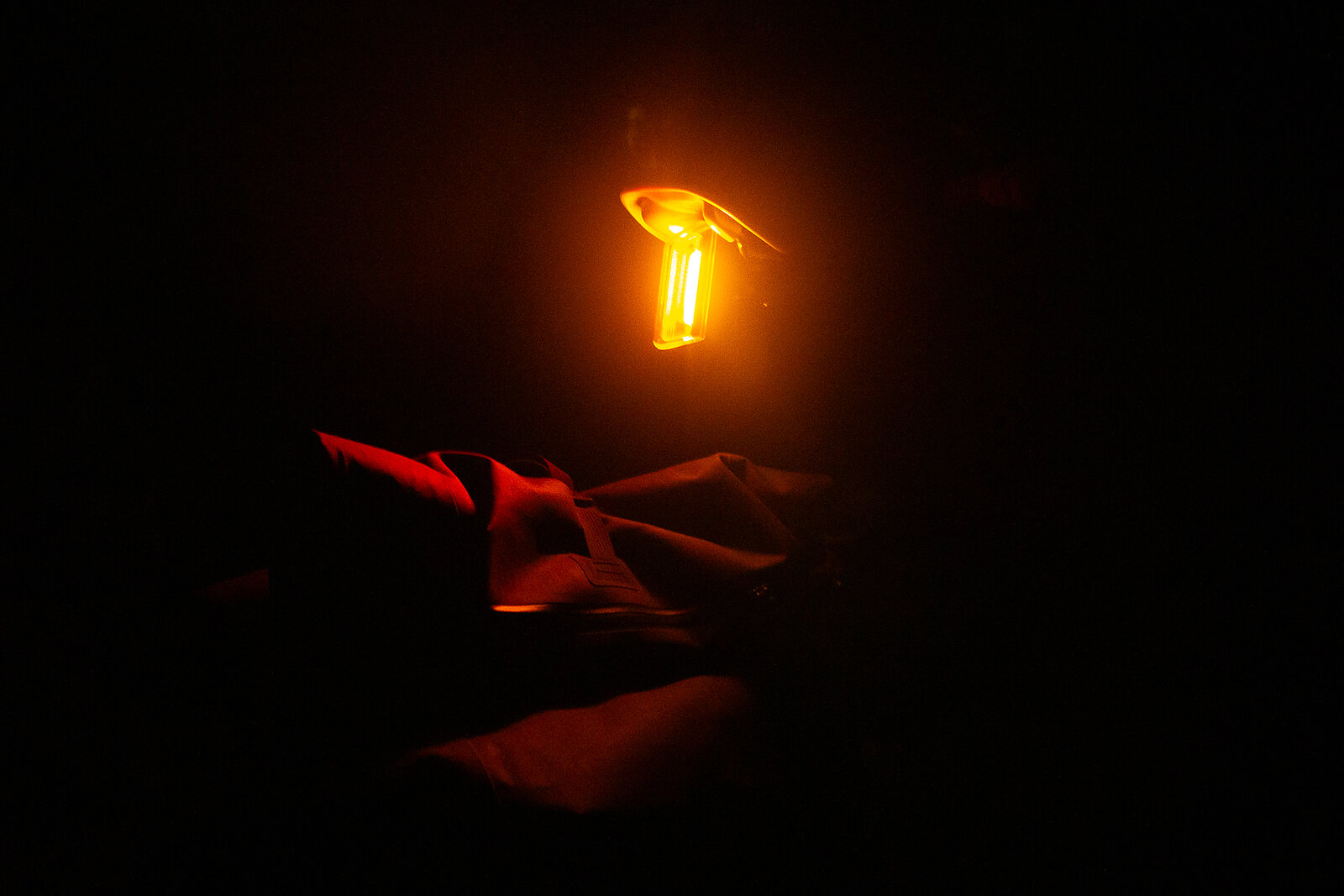
The Blade uses a Garmin quarter-turn mount, and comes with a clamp and set of shims that should fit pretty much any round seatpost. And, because it uses that common interface, you should be able to track down a solution to mounting it on aero seatposts, racks, or wherever else you might desire. Outbound also has a tool on its website to help you find the right 3D-printed mount for a wide variety of posts. It has amber side light panels, and it's designed to project a pool of red light down and around your legs and rear tire. The final effect is reminiscent of Rudolf the Red-Nosed Reindeer, but it’s more like “Cy the Red-Butt Bike Commuter.” It’s especially bright if you’re wearing any sort of reflective clothing, and I’m a fan of how visible it makes me feel.
Cutoff and Directional Lighting
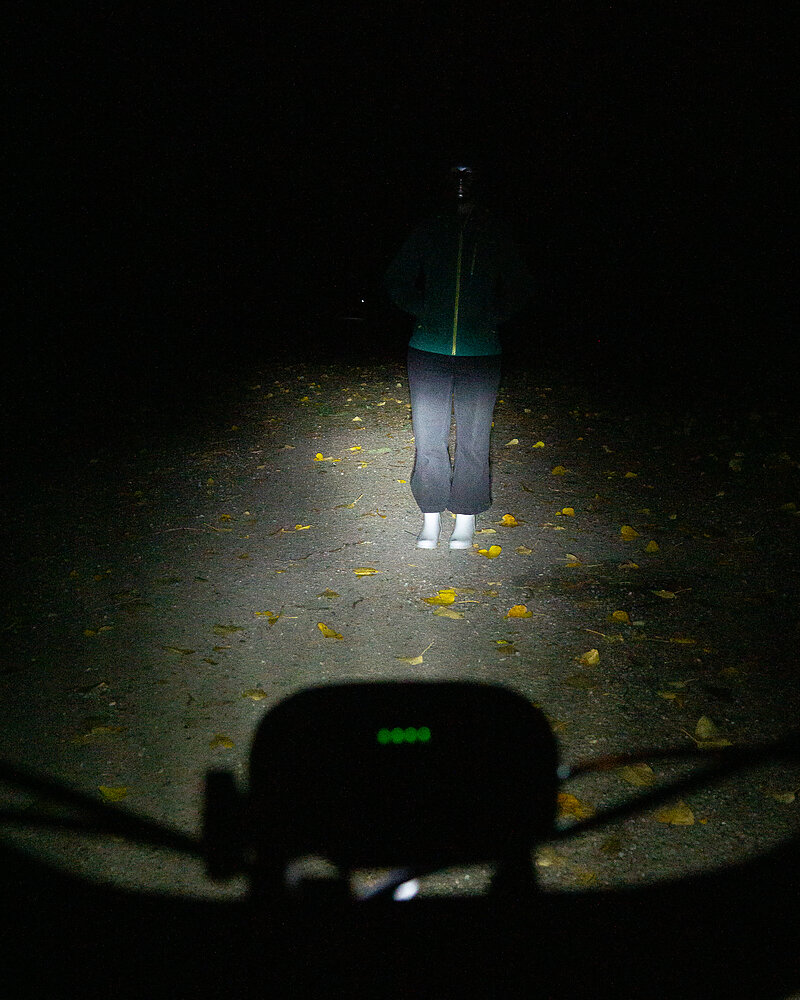
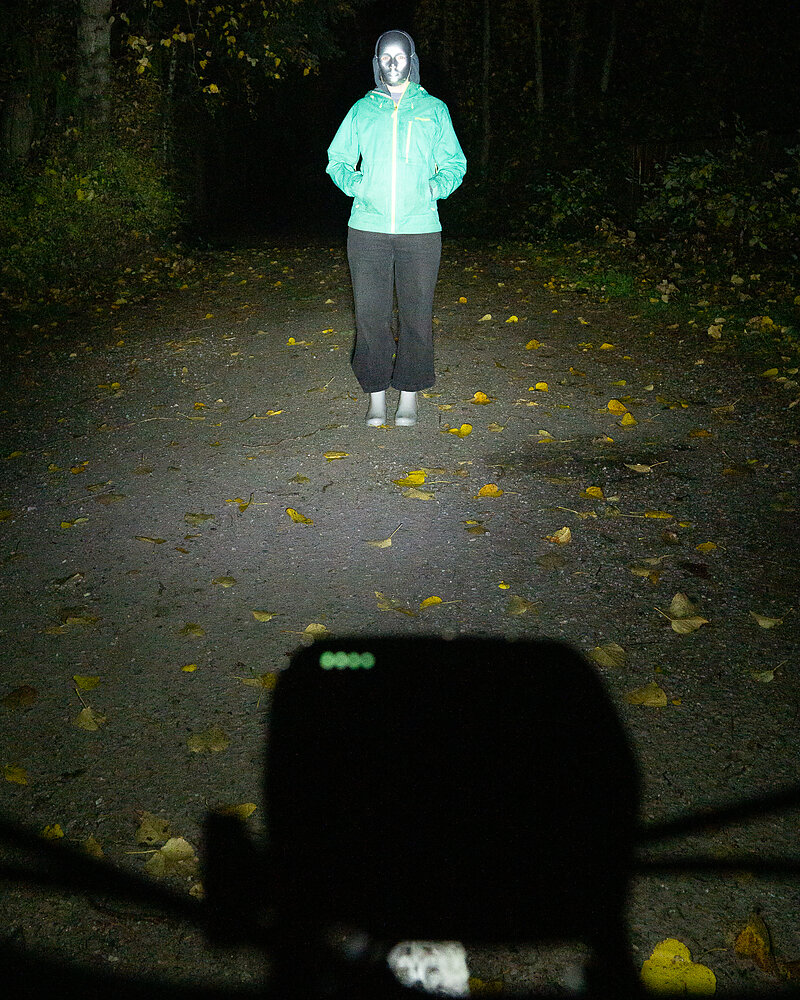
One of Outbound’s core principals is an obsession with light quality over quantity. It’s easy to tout a big “one gazillion lumens!” number, but Outbound is obsessed with the optics of how that light is distributed. That’s evident with both the Detour and the Blade. The feature that sets the Detour apart from most of its competition is its cutoff. Instead of just casting a big round cone of light in all directions out the front of the light, there’s a hard cutoff, similar to the low-beams on your car.
That means that more of the light is going down, onto the path or road, instead of up, into the eyes of oncoming riders and dog walkers. I walk on the bike path behind my house almost daily, and it’s wild how blinding the lights of other riders can be. It’s obnoxious, and leaves me staggering into the ditch like a vampire who accidentally opened the blinds and let the sun in. This cutoff is very evident on the Detour. If you point it roughly “straight” forward, or horizontal, you get plenty of usable light on the road, but the beam cuts off between the waist and knees of anyone coming up the path at you. You can see where you’re going, and they can see where they’re going. We all win. The same goes for drivers; you won’t flash your light through your windshield and blind them, although I care a lot less about that than I do blinding the nice old lady walking her very fat blue heeler behind my house.
Historically, when I ride on the path with the Evo I put it on the lowest mode, and the cup my hand over it when passing pedestrians. This kind of works, but I did run into the stone railing of the bridge in Whatcom Falls Park once because I covered it too effectively and couldn’t see where I was going. The Detour eliminates this frustration completely.
Detour and Blade Performance and Value
I’ve used a bunch of combinations of lights on my commuter, ranging from cheap Knogs (dear god, never again!) to nicer, more expensive options. In my experience you can find something that mostly does the job for around $100 for a headlight, and $80ish each for a tail light. Much cheaper than that and you’re gonna compromise on light, battery life, features, and durability. So what do the Detour and Blade offer for one step higher up the price ladder?
As it turns out, a lot. The Detour’s cutoff is one of those things that I didn’t think I’d really care about, and now am completely uninterested in doing without. Because so much of my commuter riding takes place on pedestrian paths that I also walk on, I’m super conscious of the effects of riders on other path users. The Detour makes it so much easier to be a polite, kind rider. Outbound makes a sticker that says simply “Don’t be a dick” and the Detour makes not being a dick easier. Additionally its mount system is better (and interchangeable with my mountain bike lights) than any other I’ve used, and its battery life is excellent. It’s not cheap, but if it’s anything like the other Outbound lights I’ve owned, it’ll last plenty long to pay for itself.
The Blade is an interesting proposition because at around the same price you can get a Garmin light that interfaces with a bike computer to give you radar alerts about cars behind you. If your gravel or commuter riding lives within that ecosystem, then it makes sense to buy a light with those features. Personally though, I’m not interested in using a bike computer on my commuter bike. Instead I want my tail light to be bright, and last forever because I have a bad habit of not charging the battery as much as I should. The Blade fits both of those criteria quite well. It’s impressive how much more it lights up my rear end than other tail lights I’ve used and the battery lasts ages. That’s a pretty killer combo, and means I won’t be strapping anything else to my seatpost for the foreseeable future.
It is worth noting that neither the Detour or the Blade is a true mountain bike light. The cutoff that makes the Detour so excellent on paths and roads also means that you can’t see very far down the trail, and it makes reading the terrain much harder. Similarly, the Blade’s mount system isn’t optimized for dropper posts, so it’s better off on a gravel, road, or commuter bike. Outbound makes lights for trails, these are not them.
For Now
My relationship with Outbound's products could be described as begrudging: When I first used the Portal and Evo combo I came into the experience wondering how much better than my home-brew light setup it could actually be, and I came away uninterested in using any other lights ever again. Similarly, I felt like I’d figured out a “good-enough” commuter light setup before using the Detour and Blade, and left with a “well, crap, better just give away my old lights” attitude. The combination of clever features and attention to detail that Outbound puts into its lights pays off on the trail, and on the bike path.
Learn more: Outbound Lighting