Kali Kru Incredible performance, divisive looks.
The Kali Kru is the best argument that mountain bikers prioritize fashion over function that I’ve ever seen. Or, maybe it’s the best argument that mountain bike taste is driven by moto stylings. Either way, it’s a really different looking and performing take on the lightweight full face helmet genre, and might be the most interesting product I reviewed this year.
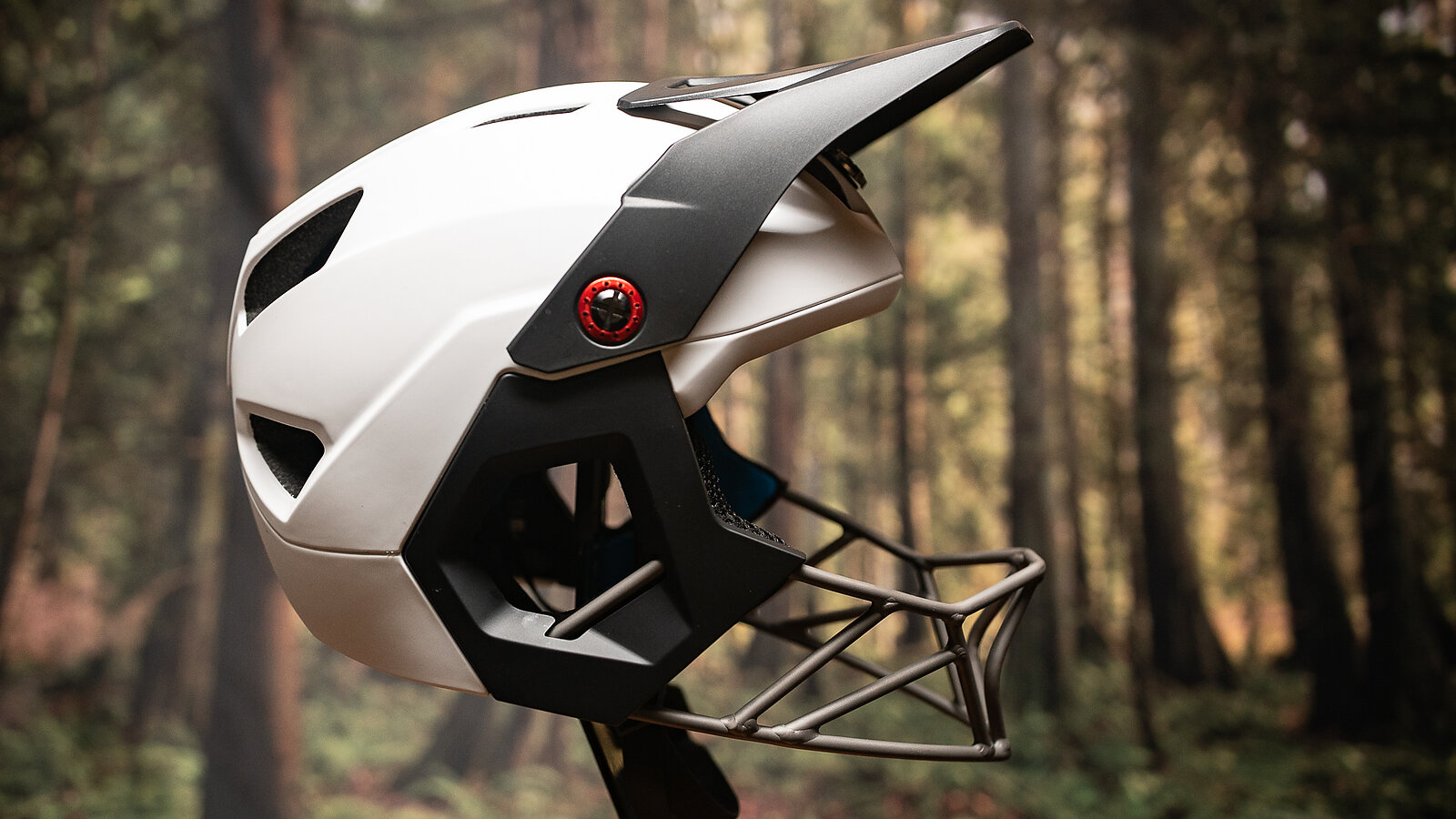
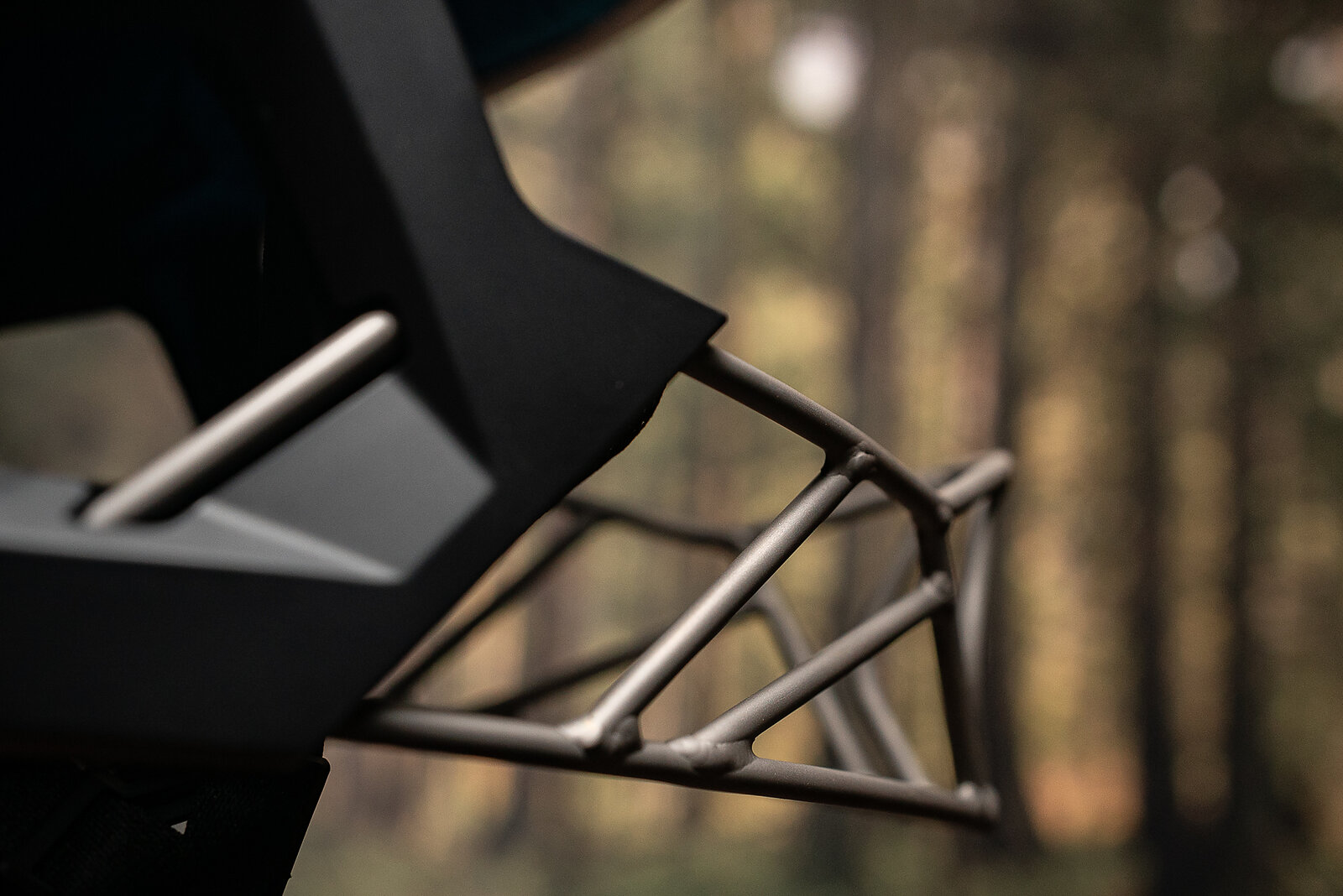
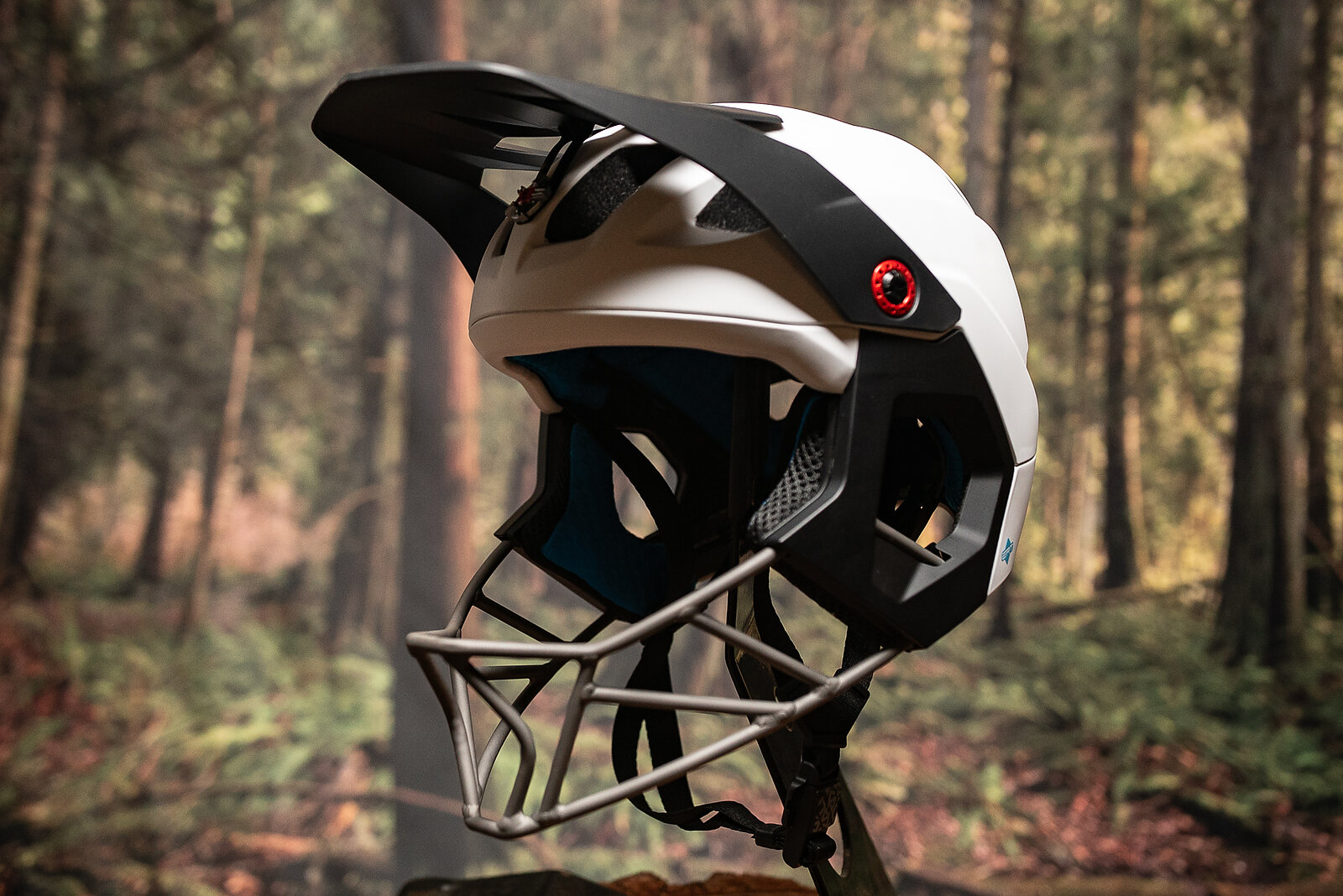
The premise is simple: instead of styling a full face after dirt bike offerings with a solid chinbar festooned with a couple of vents, what if we took inspiration from hockey helmets and used a latticed metal chinbar that’s more vent than bar?
The result is a helmet that looks more like a lacrosse lid than a downhill one, but it meets the same rigorous ASTM F1952 safety standard as your typical full face. And it’s good. It’s really, really good. It offers way more breathability, at a better weight, with a better field of view than any other full face I’ve used. Unfortunately, there are riders who won't buy it simply on looks alone. So let’s dive in.
Kali Kru Overview
- Sizes Available: XS-M, L-XL: 55-63 cm head circumference
- Features: Adjustable visor, Fidlock buckle, three sets of pads included
- Weight: 650 g (size XS-M)
- Price: $450
Kali Kru Fit
Kali only offers the Kru in two sizes, a “XS-M, and L-XL.” Notably, the small end of the scale starts at a 55-centimer head circumference, which is closer to most brands’ medium. And while Kali does include three sets of pads to dial in the fit, it’s still not as precise as brands that offer more shell sizes.
I wear a size medium in almost all helmets with a 59ish-centimeter head. That puts me right in the middle of the “XS-M” helmet’s sizing, and I ended up using it with the thinnest pads. My head is more oval than round, and this combo fits me well with room to adjust in either direction. The cheek pads are a little tight as I pull the helmet on, but once it’s settled it’s quite comfortable.

Kali Kru Features
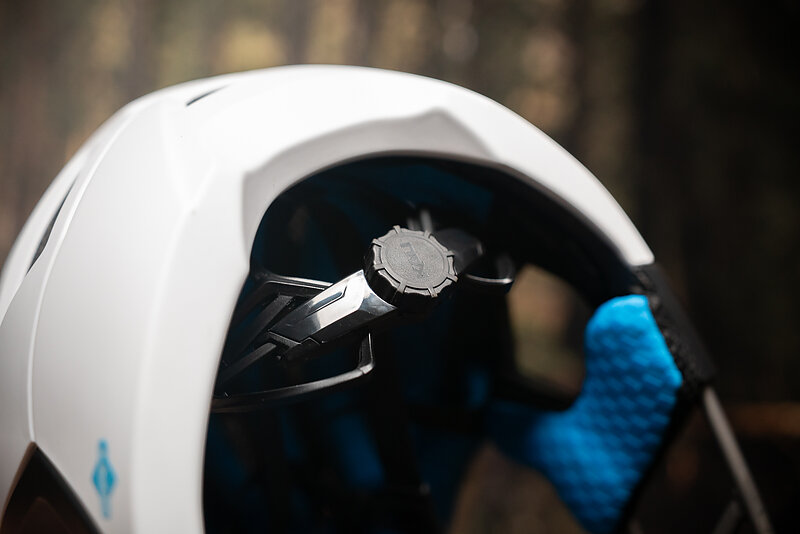
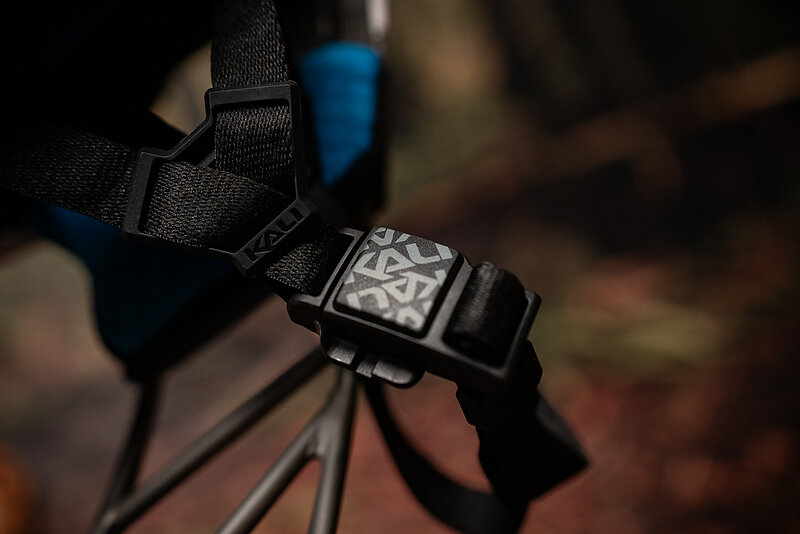
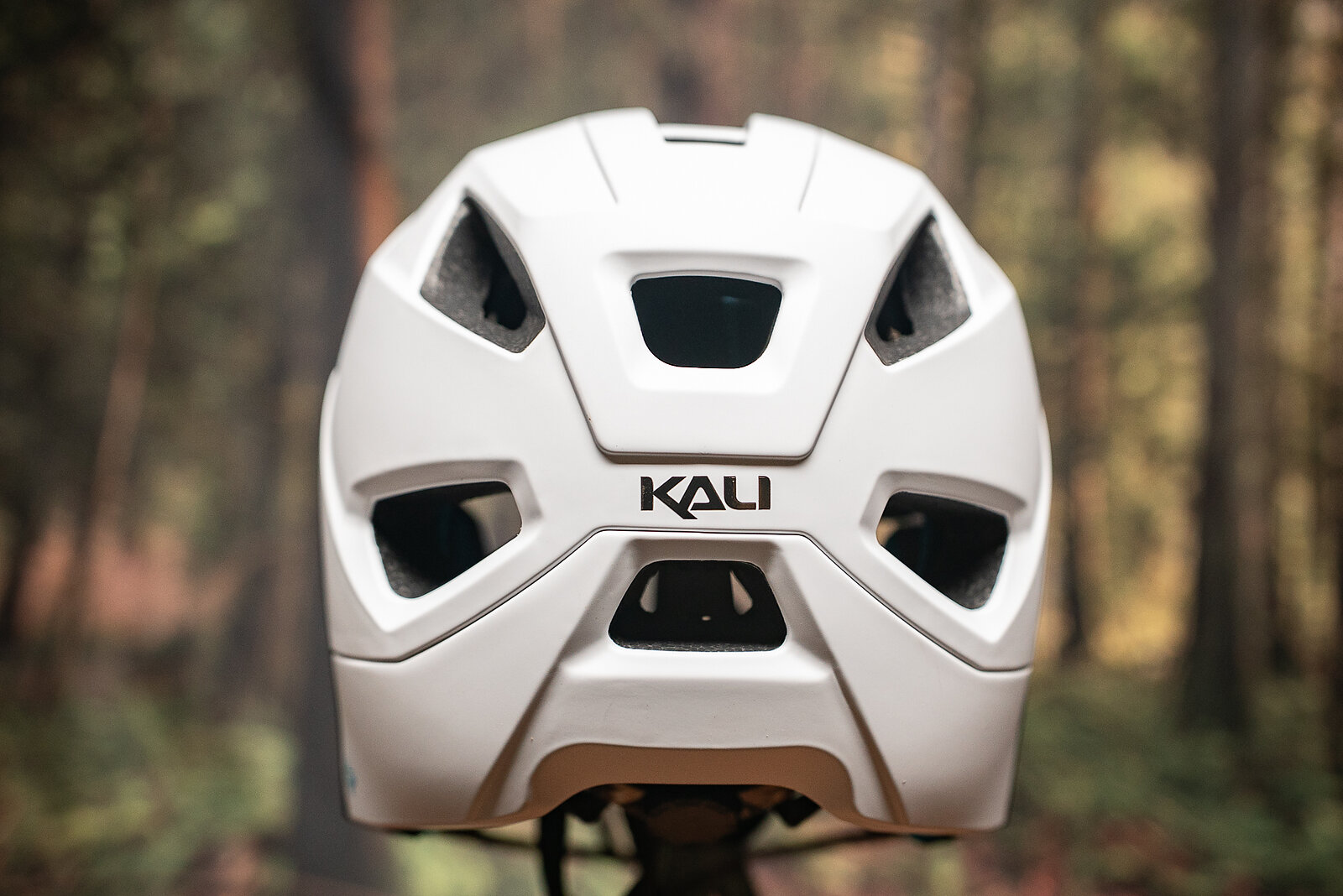
The most obvious feature of the Kru is its welded titanium 360° chinbar. As the name suggests, this bar circles your head, inside the shell of the helmet, and creates a solid frame for the foam and plastic. Inside, you’ve got Kali’s ERT low-density layer that acts similar to Mips in that it helps with slower speed and rotational impacts. The helmet is secured with a fidlock buckle system, the visor is easy to adjust, and there are 16 large vents to keep air moving around.
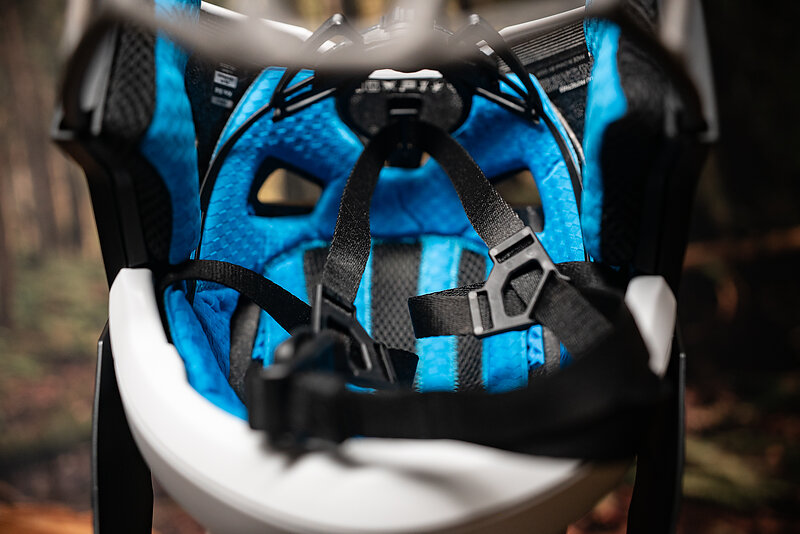
In short, it’s a fully-featured full face helmet. There is one design choice that I have beef with. It’s not fatal, but it is frustrating. Kali runs the chin straps from very high up inside the helmet. That means that there’s a lot of strap inside the helmet’s shell, with the potential to twist or create a hotspot, and it cradles your head in a unique way. It’s fine, but it’s not as simple and comfortable as a more traditional system where the straps run from closer to the bottom brim of the helmet. If the Kru had more normal straps, I’d literally have no performance-related frustrations, and no excuses not to ride in this helmet more often.
Kali Kru Performance
The Kru has passed the same CPSC, EN 1078, and ASTM F1952 safety ratings as typical downhill full faces such as the Smith Hardline but its low weight and breathability mean it’s better compared to something like the Leatt Gravity 5.0. Regardless, it’s important to remember that by our current testing metrics, this helmet is just as safe as options with a more normal chinbar. In fact, Kali says that the chinbar goes far above and beyond the safety requirements for chinbar deflection.
When the Kru launched, there was some speculation in the comment sections of other sites that the Kru would somehow be more dangerous or less protective than a typical helmet because sticks or trailside debris might catch in the chin guard. I am quite skeptical of this argument. If you’re riding that close to obstacles, there’s a decent chance they’re going to catch on any helmet, including a normal half-shell. Maybe don’t stick your face so close to sticks? There’s some argument to be made that in a face-to-dirt crash you’ll get more debris coming in through the chinguard, but again, I’m not sure this is the primary concern. Every big crash I’ve had in a traditional full face has left me with a face full of dirt, even though their chinguards were much less vented than the Kru’s. If you stick your face in the dirt, you’re gonna get dirty. Steve Vanderhoek’s recent nose-break in a traditional full face at Hardline in North Vancouver is a great reminder that mountain bike helmets only protect so much.
All that to say, I trust the Kru to protect me from undue dental work just as much or more as I trust any other full face helmet. And, more importantly, the Kru is so light and breathable that I’m more likely to wear it on rides where I’d usually be in a half shell. I’d rather have the Kru’s protection on my head than a traditional helmet sitting at home because I didn’t feel like dealing with a heavy, stuffy full face.
The Kru is remarkably comfortable for three reasons. First, the most obvious: there’s a ton of airflow. It feels similar in this regard to a good ¾ shell, and in fact, the Kru is noticeably more breathable than the ¾ shell Giro Tyrant. This is, by far, the full face I want to wear while climbing on hot days.
Second is the weight. The Kru weighs only about 30 grams more than the Tyrant while having a full chinguard. It’s 100-plus grams lighter than any other full face I’ve ever worn, and that pays off on the trail in terms of neck fatigue and comfort.
Finally, the field of view the Kru’s lattice chinguard creates is absurd. It doesn’t feel like you’re wearing a full face, in the best way possible.
So what’s the catch? Aesthetics baby. This is a weird looking helmet. It’s hard to not feel a little dorky in it. But you know what else feels dorky? Getting all my teeth replaced because I was too cool to wear a full face.
The Compromise
The Kru creates a challenging choice for riders. If you’re only grading on performance it is, by far, the best lightweight full face helmet I’ve used. Yeah, I wish there were more sizes, and I wish the strap routing was different, but it feels so much better on my head going both up and down than any other full face helmet I’ve used. It is the only full face I’ve ever worn that actually was comfortable and breathable enough that I’d consider wearing it for most of my pedally rides, and all of my e-bike rides. Faces and brains are expensive, and this is a compelling option to keep mine safe.
But it’s ugly. Or, more precisely, it doesn’t fit the fashion paradigm we mountain bikers have created, modelled mostly after motocross helmets. I feel like a dweeb when I’m wearing it, and I feel obligated to explain to friends that it’s “just for a review.”
It’s not like I’m actually a cool looking person. I am, at my core, a dweeb, which is perhaps why I’m so sensitive to the Kru’s aesthetics. It makes me look like the person I already fear I am. So I’m faced with a personal challenge, and a resolve. I’m going to get over myself and wear the Kali Kru more. I’m not going to wear it on every ride. But anytime there’s a hint of extra exposure, I’m going to get over myself, and wear the Kru. Because on the trail, its performance holds up, and if I can’t handle some gentle razzing from my friends, why am I riding with them in the first place?
For Now
It’s very cool to see a brand step up and make something that diverges from the current norm. The Kali Kru is a great example of that. Unfortunately, I think too many mountain bikers are too imaged-obsessed to get over themselves, but I dream of a world where the Kru’s aesthetic is more normalized and it’s available with a different strap system and more sizes so that more folks can experience its comfort.
Learn more: Kali