COROS Dura 2 Solar A premium evolution.
Two years ago COROS dropped its first bike computer, the Dura Solar. I’ve been using COROS watches for all my GPS needs for a long time, and I reviewed that first foray into on-bike computation for another publication when it came out. It was a bit of a unique product that suited a niche audience, and I happened to fall into that niche of people who don’t care about the snaziest modes and features but just want a computer with a battery that lasts forever. So I really dug the Dura 1, while also understanding why people who are really into bike computers (roadies, triathletes, nerds—said affectionately) were underwhelmed by it.
But now COROS has an all-new DURA 2 Solar that sets out to hit all the marks the first version didn’t. This is an unabashedly premium, full-featured, high-end bike computer with the design language to match. So I had a couple of questions coming into this review: First, does the new Dura 2 retain the user interface and battery life that I love about other COROS products and, second, is this new one any better for mountain bikers than the previous version?
COROS Dura 2 Solar Details
- Interface: 2 side buttons, 2 haptic solar buttons, touchscreen
- Internal memory: 32 gb
- Weight: 99 g
- Battery Life: 120+ hours without solar charge
- Price: $499
Design Package
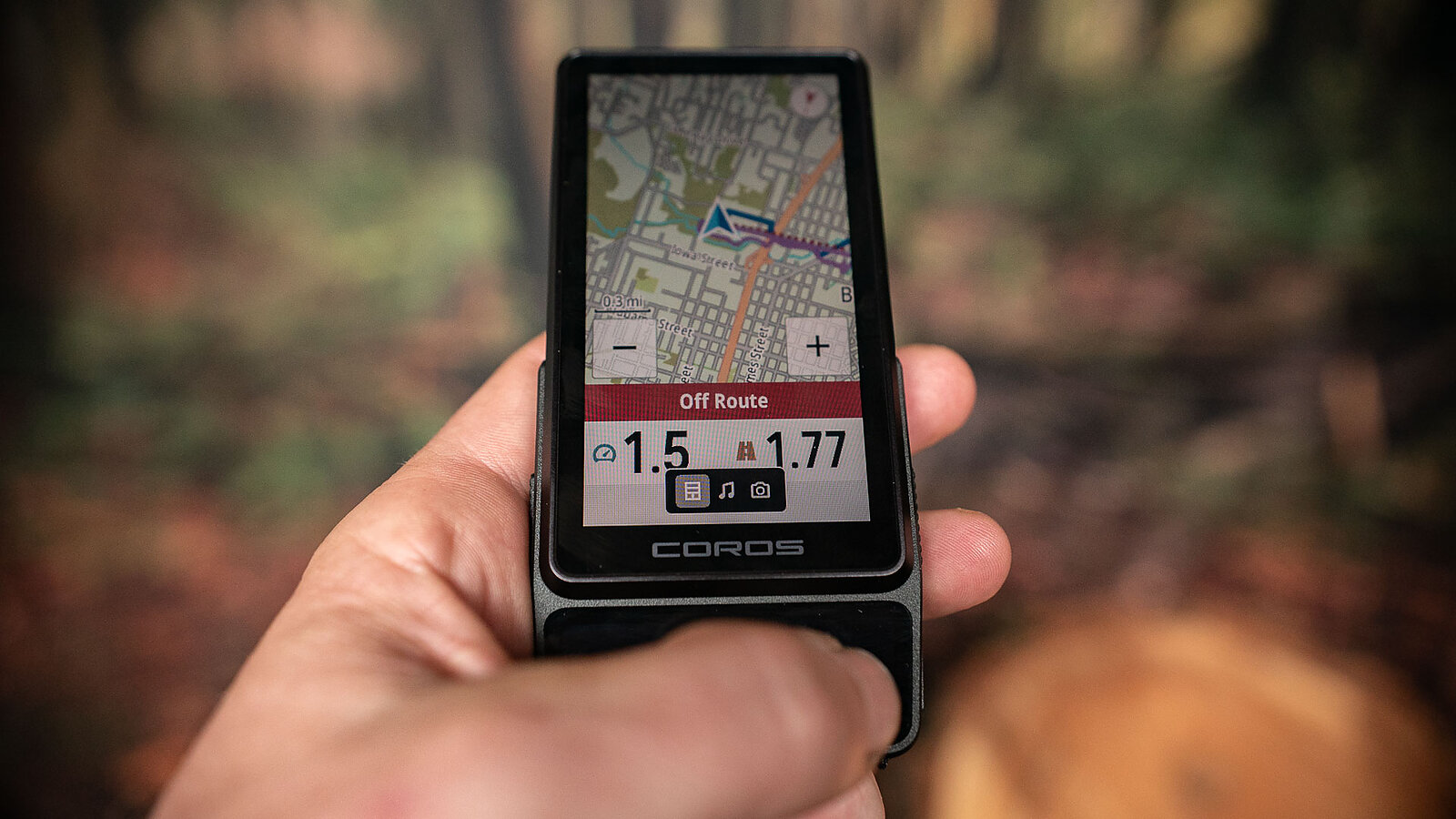
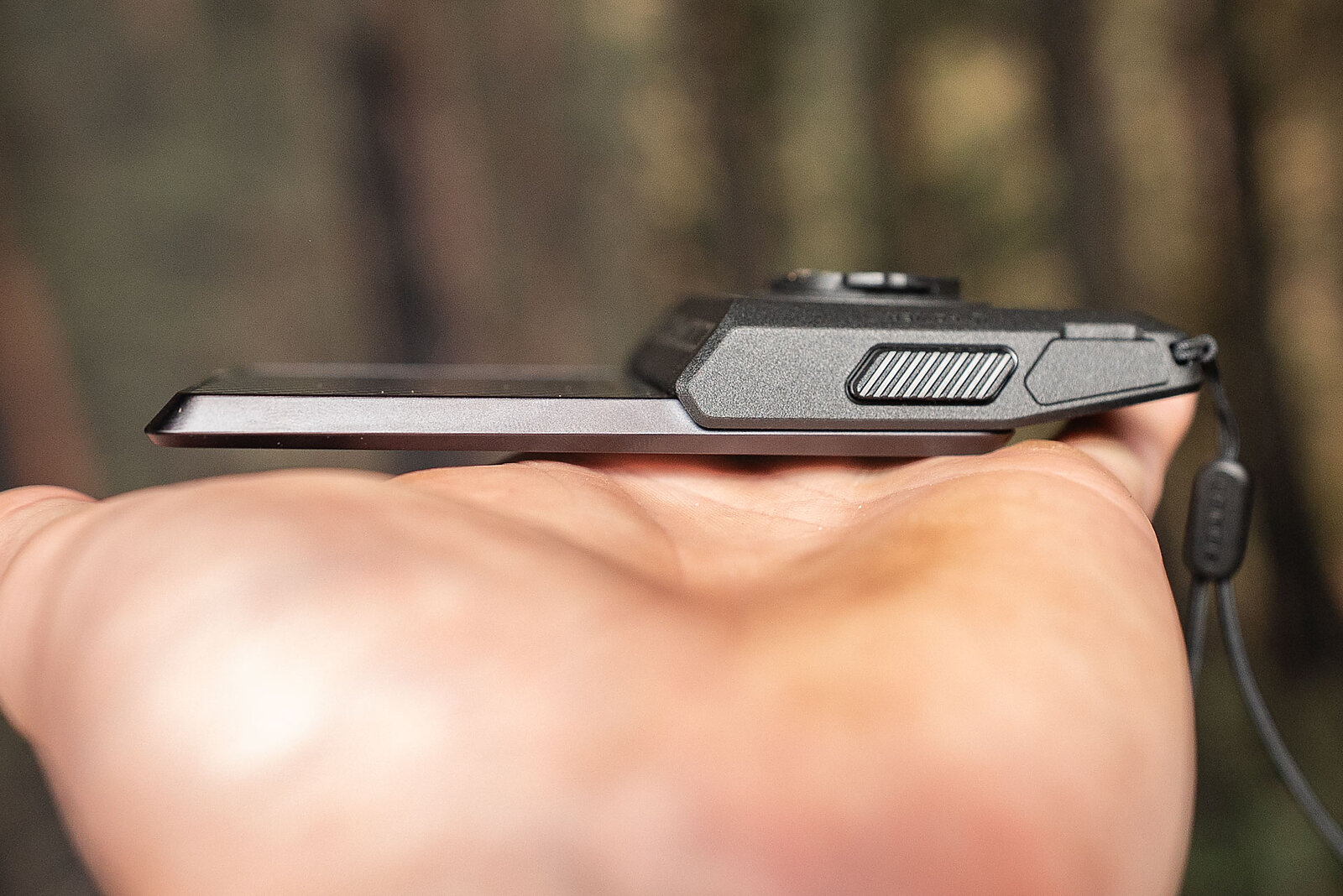
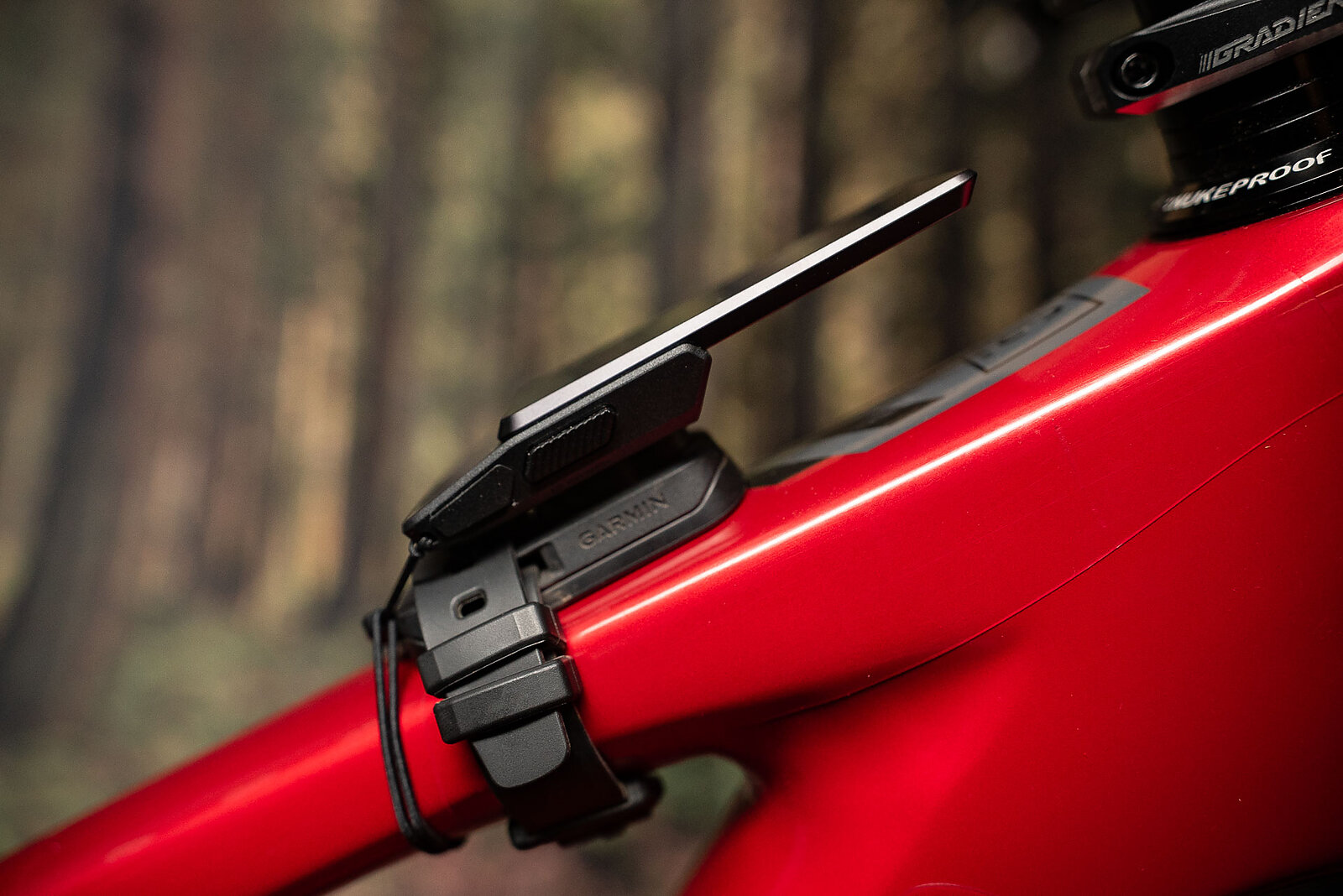
The most obvious change to the Dura, and the one that COROS seems to be most proud of is its packaging. Most bike computers look like, well, bike computers. The Dura 2 feels much more futuristic. The super thin screen is cantilevered out from the chunkier solar section with lines and materials (aluminum and carbon fiber) that just plain look fast. This thing would be right at home on the craziest looking triathlon or time trial rig.
There is some functionality to that design as well. The old Dura had a big blank area up top that housed its solar panels. It was functional but not beautiful. The new Dura 2 uses that lower solar panel zone to house two haptic buttons that allow you to scroll and navigate within the device. They’re not absolutely necessary—the Dura 2’s touch screen is excellent and its voice controls work well too, but they do keep the solar zone from just being dead space.
COROS says the Dura 2’s screen also got a bunch of attention. The 3.5-inch touchscreen works fairly well in all conditions, even light rain, and it’s got a fastest-in-MIP-display-class refresh rate of 38 hz. The Dura 2 also has a bunch of sensors including a barometric altimeter, accelerometer, gyroscope, electronic compass, microphone, and temperature sensor. So yeah. This is a serious computer, and it’s always worth marveling at the fact that we put men on the moon with a lot less.
Updated Features
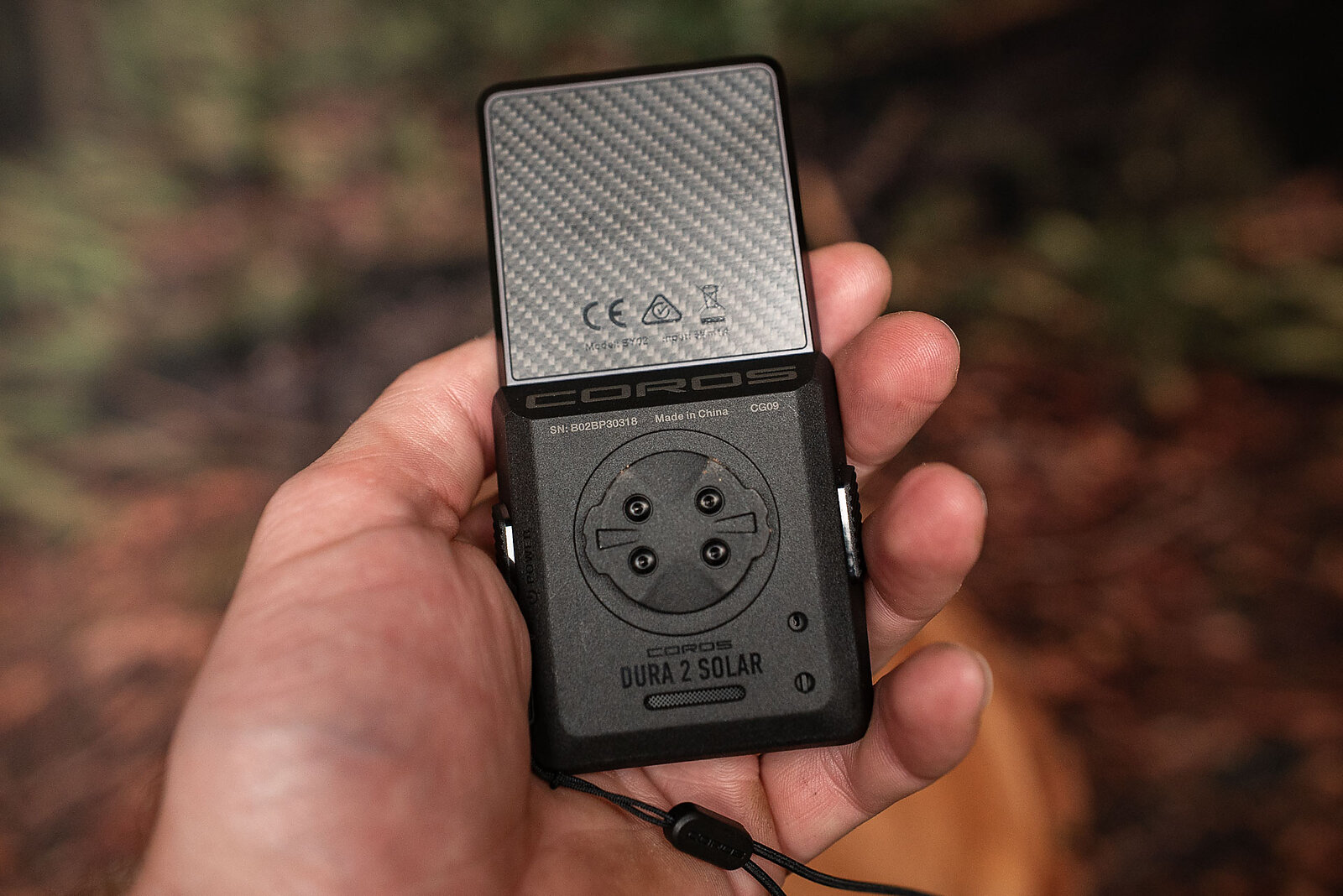
It’s quite evident that the Dura 2 is meant to fix a lot of the original’s shortcomings, while also elevating itself into a totally different, more premium class. So it’s still got very high resolution GPS tracking, but it’s also got a host of small improvements, like the ability to reroute you without cell service, the ability to start workouts during a ride, and voice controls for the entire computer.
This is an aggressively feature-rich computer, but almost all of those features are aimed at road and gravel riders. It’s clear that market is the Dura 2’s focus, and while it has mountain bike modes, very few, if any, of the computer’s updates are relevant off-road. That’s fine, but it does help set the tone for what COROS was going for here, and is right in line with the Dura 2’s updated aesthetic.
However, the Dura 2 does have two features, one old and one new that I really dig for mountain biking. The old feature, that the original Dura had as well, is an integrated bike alarm. Set a PIN, swipe to set the alarm, and then leave your bike while you run into the shop to grab a donut. If someone moves your bike, a really obnoxious alarm sounds on the bike, and on your phone until you enter the correct PIN. It’s no substitution for storing your bike safely, but it is an awesome extra layer of protection of quick absences.
The second, new to the Dura 2 feature is so simple and so delightful. If you double tap the screen while riding, a charming bike bell chimes to alert other users of your presence. It’s a pleasing sound, and easy to use. I’m a huge fan and wish every bike computer had this.
Performance
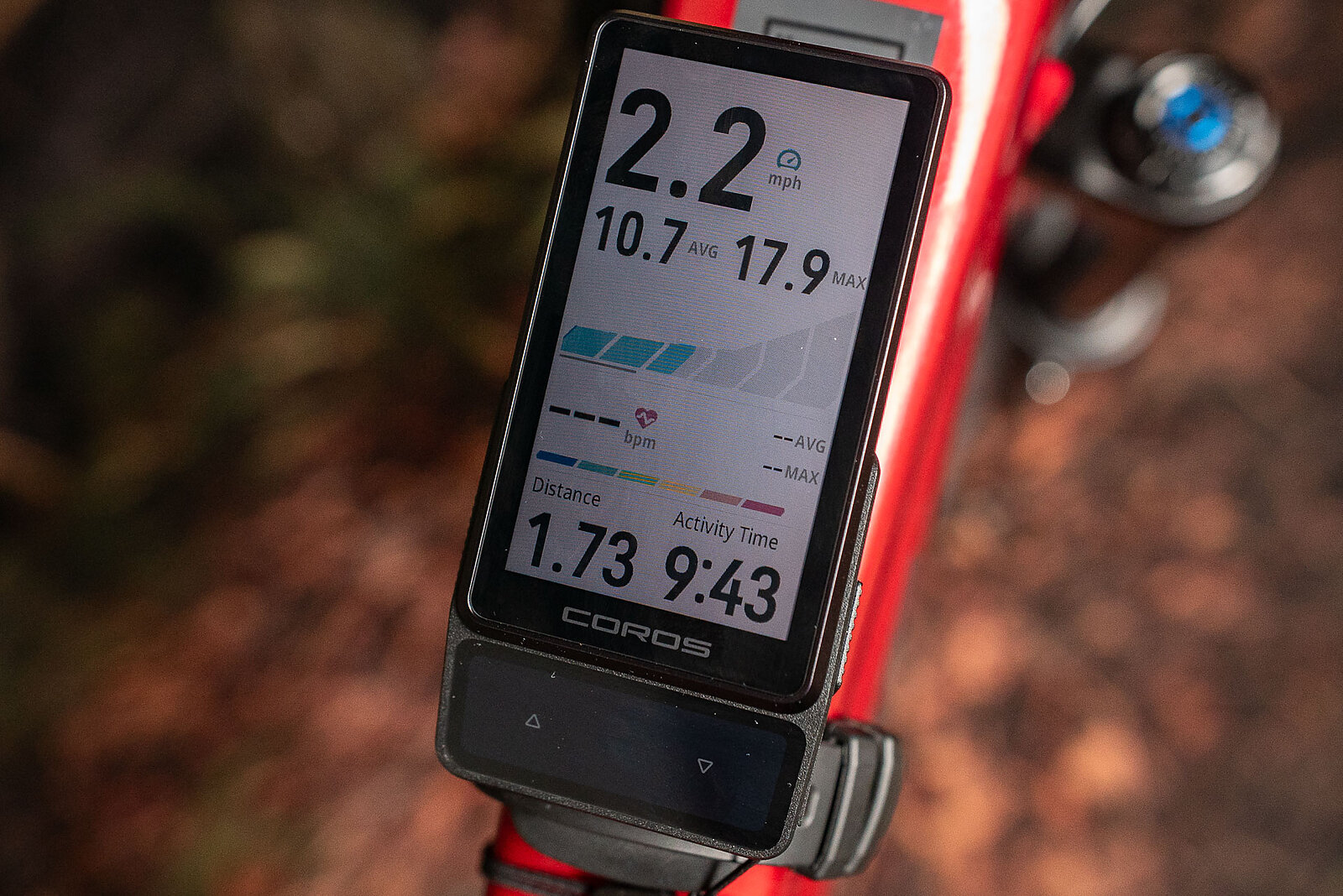
I only got a few rides on the Dura 2, but they were enough to help me understand its strengths. If you use your bike computer to help you navigate a pre-selected route off the internet, especially a gravel or road route, it’s excellent. The screen is great, the interface is easy to use, and the computing is quick, helping you make every turn. If you’re a road or gravel rider, you’ll probably dig it. But for mountain biking I still think there’s a niche that’s not quite being hit. That sort of turn-by-turn navigation is pretty useless on the trail, and unless you’ve got Trailforks navigation (and only Garmin does) using a bike computer to navigate a complicated singletrack network gets old fast.
If you’re just using your computer to track your rides, not navigate, the Dura 2 does great, but also you can just use a COROS watch, like I’ve been doing for years. I still really like the COROS app, and its ability to spit out GPX files, and I still am firmly married to the COROS ecosystem, but I do think this new Dura 2 is much more aimed at roadies than mountain bikers.
My favorite feature of the original Dura is still excellent here though. The Dura 2 is very battery efficient and charges via solar power at a 2:1 ratio. What this means in practice is that my battery only ever goes down when I’m not riding. When I’m actually using the computer it does a great job of topping itself off. That feature alone bumps it to the top of my list. I’m a set-and-forget guy, and the Dura 2 hits that mark very well.
Car-Brained Computers
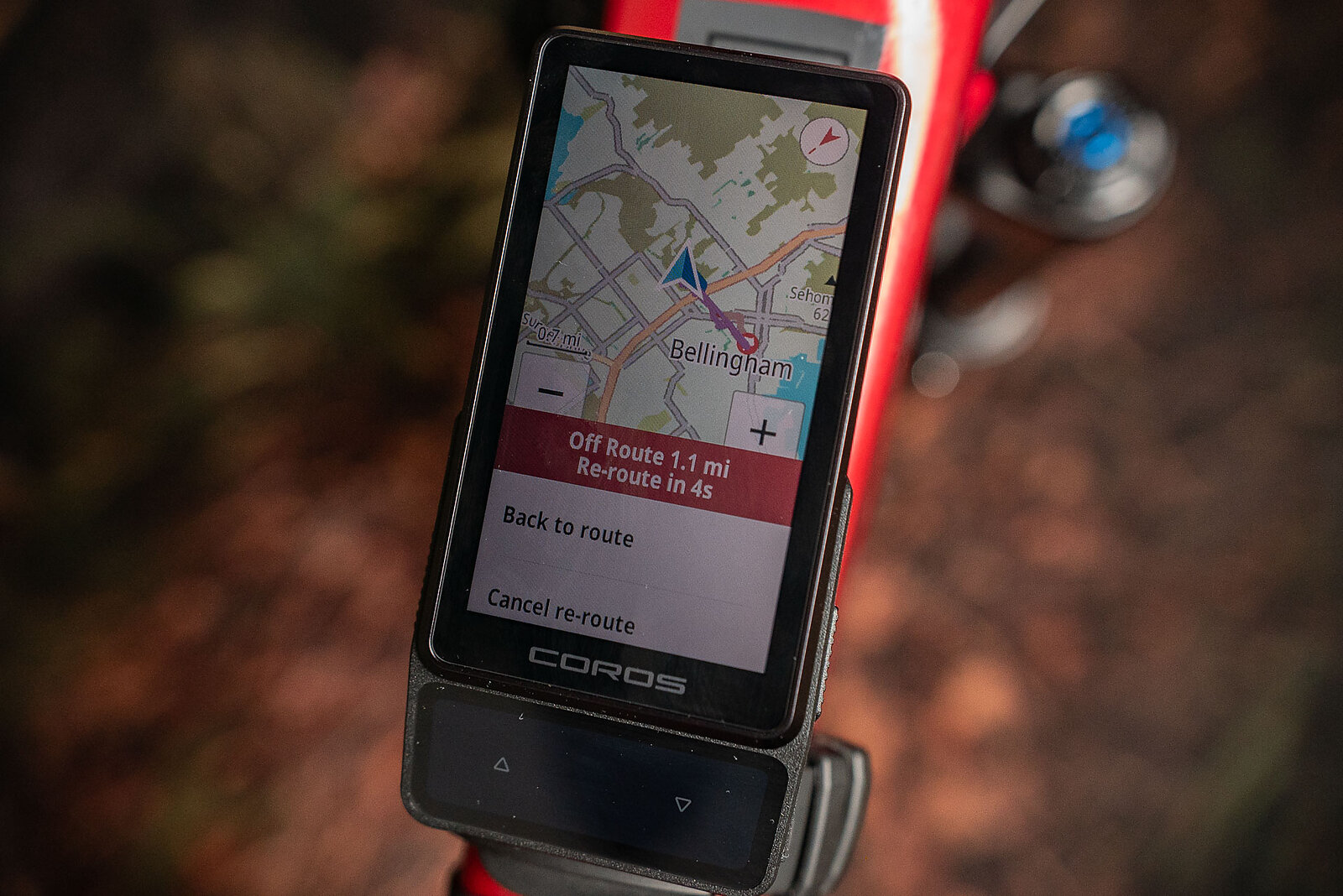
The Dura 2 (and just about every bike computer I’ve used) has one quirk that drives me crazy: It’s super car-brained. If I use the COROS app to navigate somewhere in town, it always spits out the most direct route for a car. For example, when I asked it to take me from the Freehub office to a restaurant downtown, it routed me onto busy streets the entire way even though there’s a great bike path and streets with protected bike lanes all the way there. When I started riding on the bike path, instead of the route it suggested, it did a great job of using its ability to reroute me while offline, but it used that power for evil, suggesting that I leave the bike path ASAP and hop on a busy thoroughfare. Even once I got off the path, onto the streets, it kept trying to re-route me onto the busiest streets, even though the quieter, more protected ones I chose were exactly as efficient.
I really, really wish the minds behind the navigational algorithms that bike computers use would put some effort into making sure the routes they spit out are actually bike-friendly. I’m lucky to live in a place with great cycling infrastructure. I wish the computer would help me use it. It’s stupid that choosing “cycling” on Google Maps gets me a safer route than this gadget whose entire purpose is centered around cycling.
For Now
The new COROS Dura 2 Solar is a legitimately cool piece of kit. It feels and looks super premium, and performs very well. But that performance is quite obviously aimed at road and gravel riders. If that’s the majority of your riding, and you want a computer that can also handle some singletrack, the Dura 2 Solar might just make you very happy.
Learn more: COROS