Unapologetically Old School The Rich Legacy of Mountain Biking in Davis
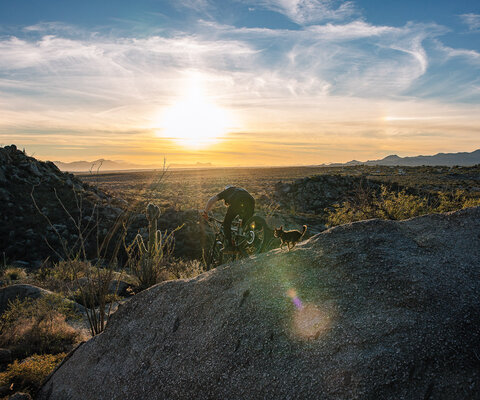
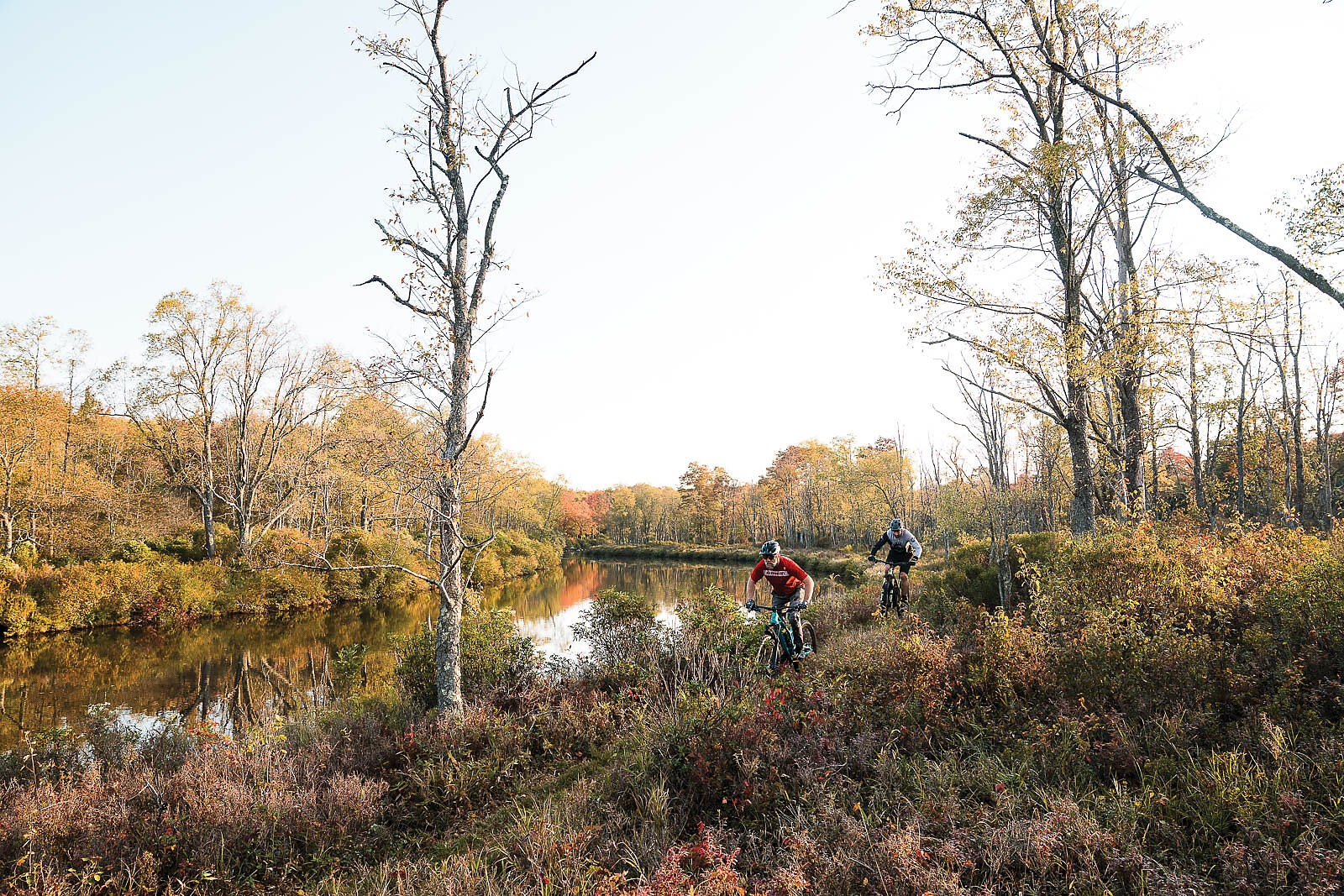
The sun crests the horizon line formed by the hulking mass of Cabin Mountain and the Allegheny Front, illuminating Sue Haywood and her pup, DD, in golden light as they suit up for an early morning ride from her home atop Canaan Mountain in Tucker County.
Almost a thousand feet below in the wide bottom of Canaan Valley, a sea of mist laps at trees still huddled in the shadows. By the time the sun’s potent rays evaporate the low-lying fog from the valley floor, Haywood and DD will be miles out in the Canaan Mountain Backcountry.
“No matter where you live around here, whether you’re in Davis or in Canaan Valley or up on the mountain, access is pretty much instantaneous due to the sheer amount of public land we have,” says Haywood.
Despite Montana’s claim to the name, Canaan Valley really does feel like big sky country. At 13 miles long, five miles wide, and boasting an average valley floor elevation of 3,200 feet, Canaan is the highest large valley east of the Mississippi. Canaan Mountain, a broad-shouldered ridge reaching 4,145 feet in elevation, forms the western rim of the valley.
“I just really love the sky here,” Haywood says. “A lot of places in West Virginia, you’re just in the woods, but the sky and the lighting in Canaan Valley is really special. We get a lot of epic sunrises and sunsets.”
Beyond the world-class views, a major draw of Tucker County is the patchwork quilt of public lands that offer something for every form of outdoor recreation: Federal tracts include the Monongahela National Forest and Canaan Valley National Wildlife Refuge (CVNWR); state lands include Canaan Valley State Park (CVRSP), Blackwater Falls State Park (BWFSP), and the Little Canaan Wildlife Management Area; and nonprofit organizations such as the West Virginia Land Trust offer public access to the Yellow Creek Natural Area.
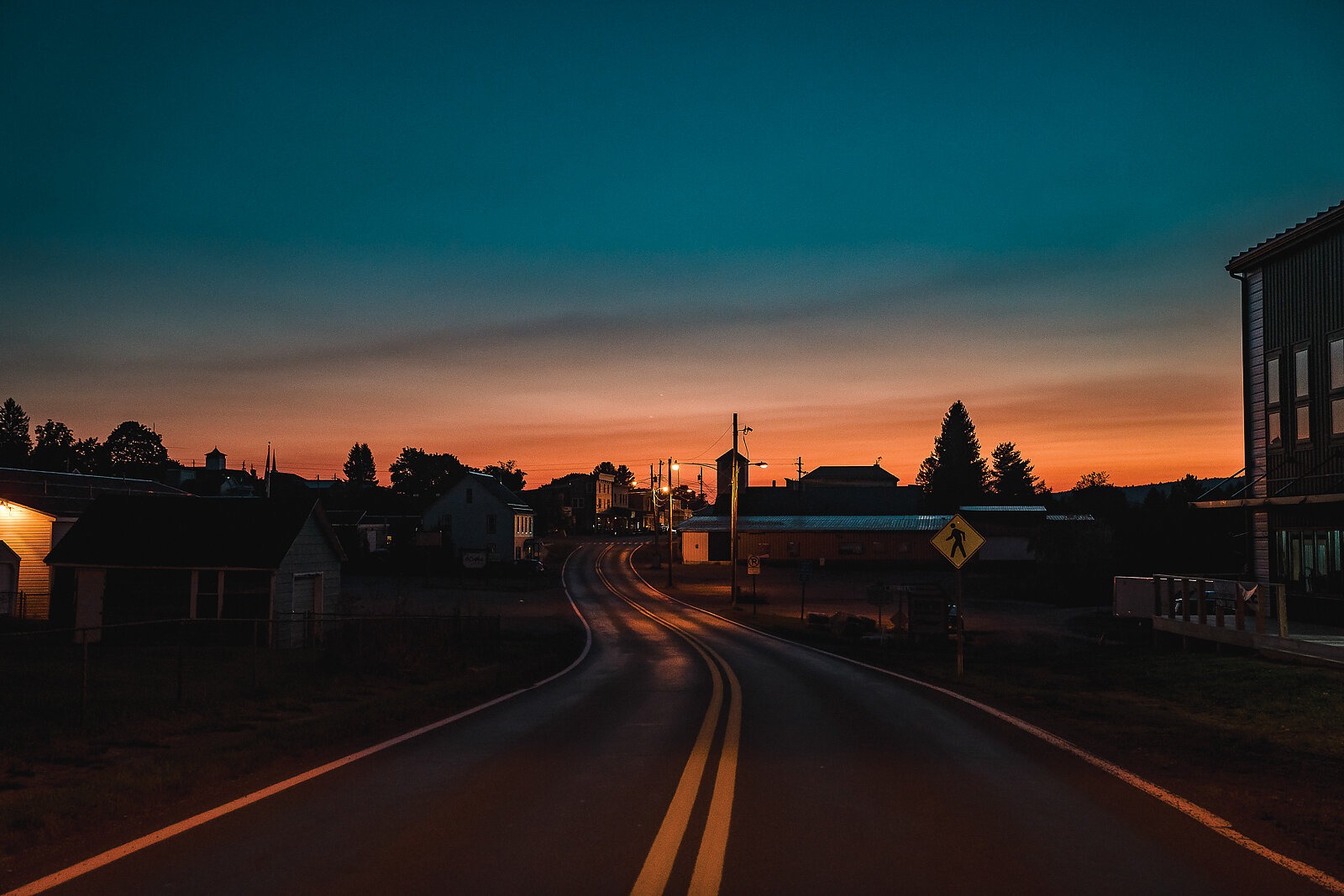
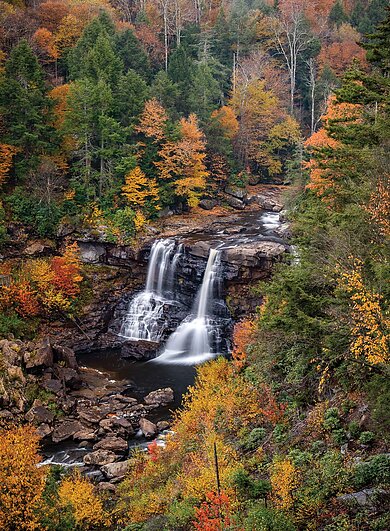
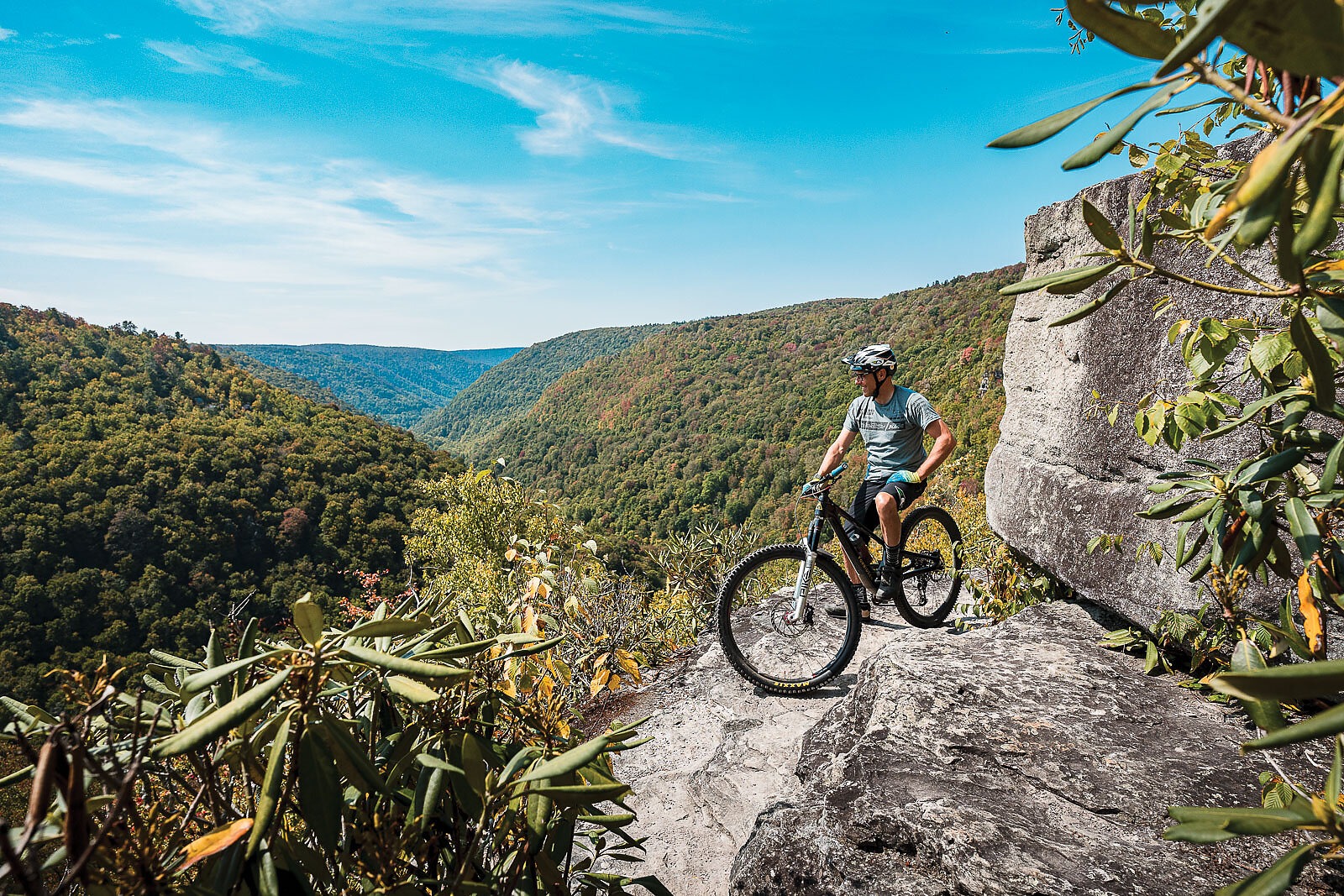
These public lands are home to some of West Virginia’s highest and most beloved country, including Dolly Sods Wilderness atop the ancient spine of the Allegheny Front, the legendary Moon Rocks formation in the Yellow Creek Natural Area, and the spectacular Blackwater River Canyon, which has its headwaters in the upland bogs of Canaan Valley. Local text threads are abuzz daily with sunrise and sunset photos from folks lucky enough to live among these geologic gems.
While these enchanting landscapes may seem ancient, many were unrecognizable just a century ago. Canaan Mountain, and pretty much every other square mile of West Virginia’s Allegheny Highlands, was once covered in a dense old-growth forest of towering red spruce trees.
After the clear-cutting spree of the early 1900s demolished every standing tree and the wildfires that followed burned the duff to bedrock, Canaan Mountain became a barren wasteland dotted only by the exposed sandstone of the 320-million-year-old Pottsville Formation.
With no forests to stabilize steep slopes, frequent floods ravaged communities along the Cheat and Monongahela rivers all the way to Pittsburgh, Pennsylvania. In 1920, President Woodrow Wilson signed a proclamation that established 47,000 acres in Tucker County as the first tract of the Monongahela National Forest with the goal of stabilizing the slopes. Dedicated members of the Civilian Conservation Corps (CCC) were called upon in 1925 to begin the eight-year effort of reforesting the western slope of Canaan Mountain with over 1.5 million spruce and pine seedlings. This herculean effort represented the first major reforestation project in the Monongahela National Forest.
When the planting was completed in 1933, the CCC hand-cut a grid of fire breaks and jeep trails across Canaan Mountain, including Forest Trail 101, the central path spanning the length of the mountain. Known nowadays as Plantation Trail, this eight-mile cut is one of the birthplaces of West Virginia mountain biking.
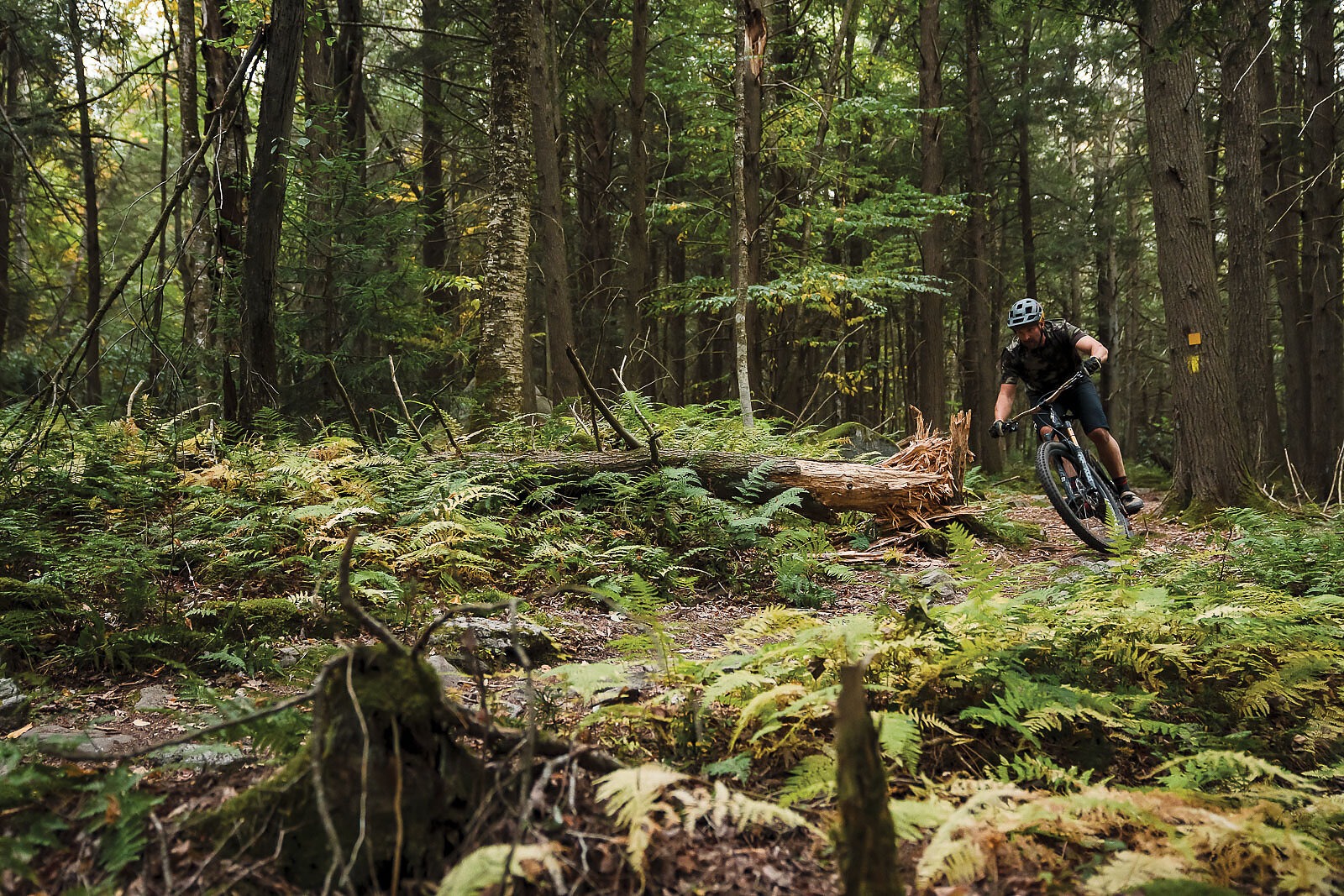
“The word ‘plantation’ is just so deeply meaningful to me because it’s where it all began,” says Laird Knight, who experienced his first-ever mountain bike ride atop Canaan Mountain in 1983 on a Ross Force-1. Choked with mossy boulders, constricted by impenetrable rhododendron thickets, webbed with slick roots, and swamped with peat bogs, Plantation offers a quintessential snapshot of West Virginia backcountry adventure riding.
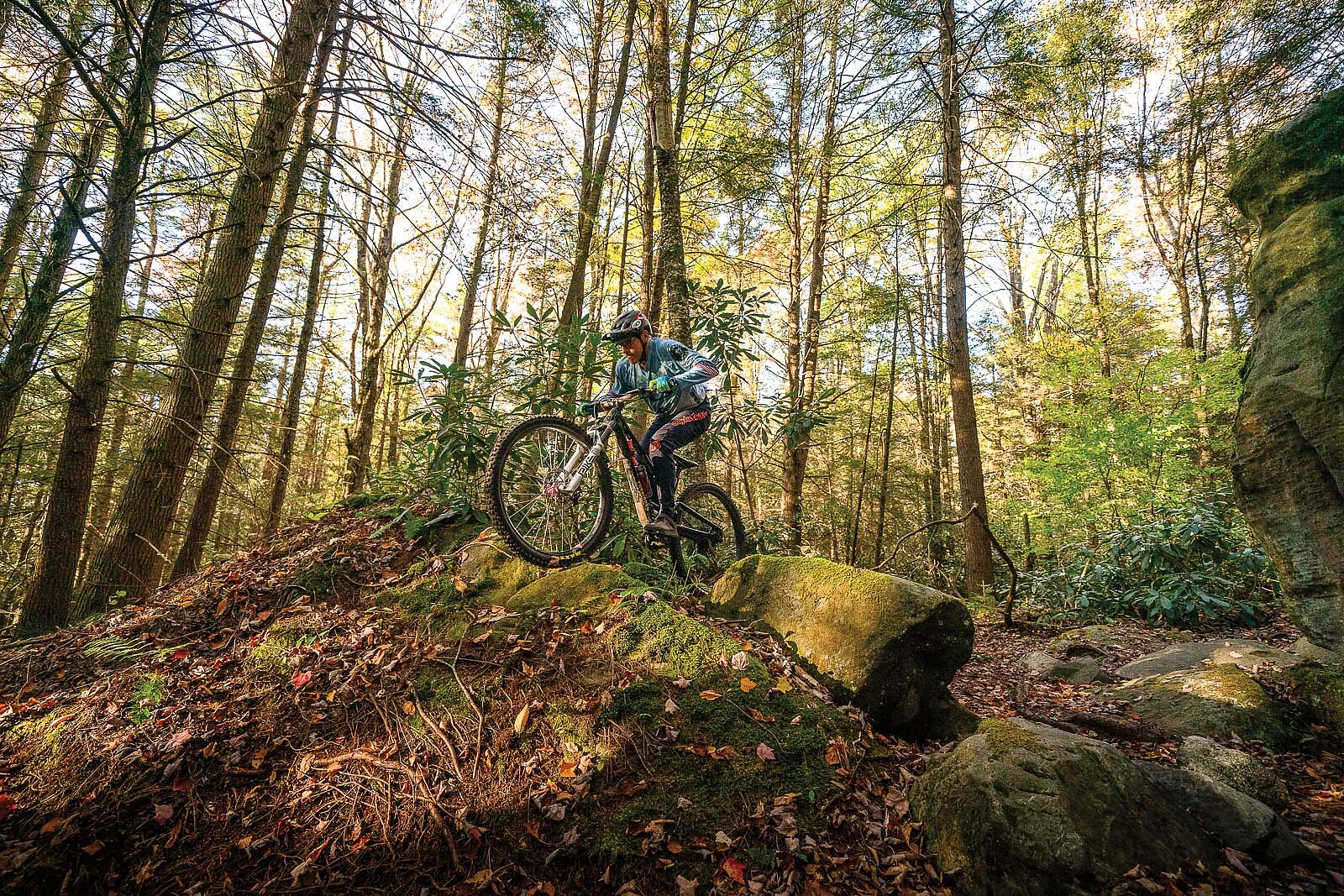
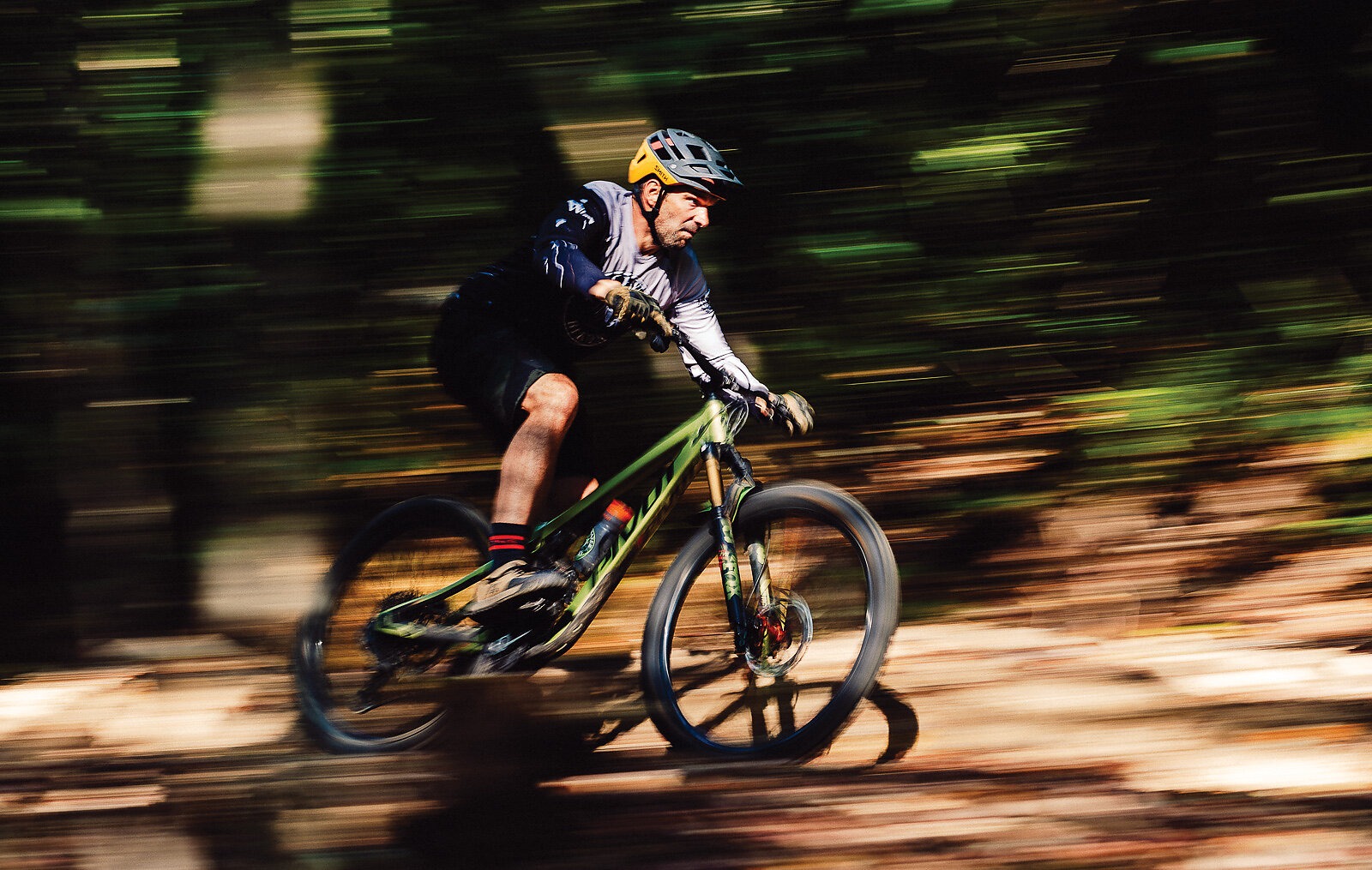
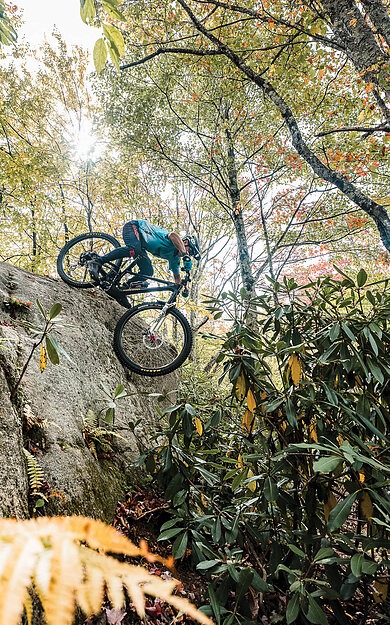
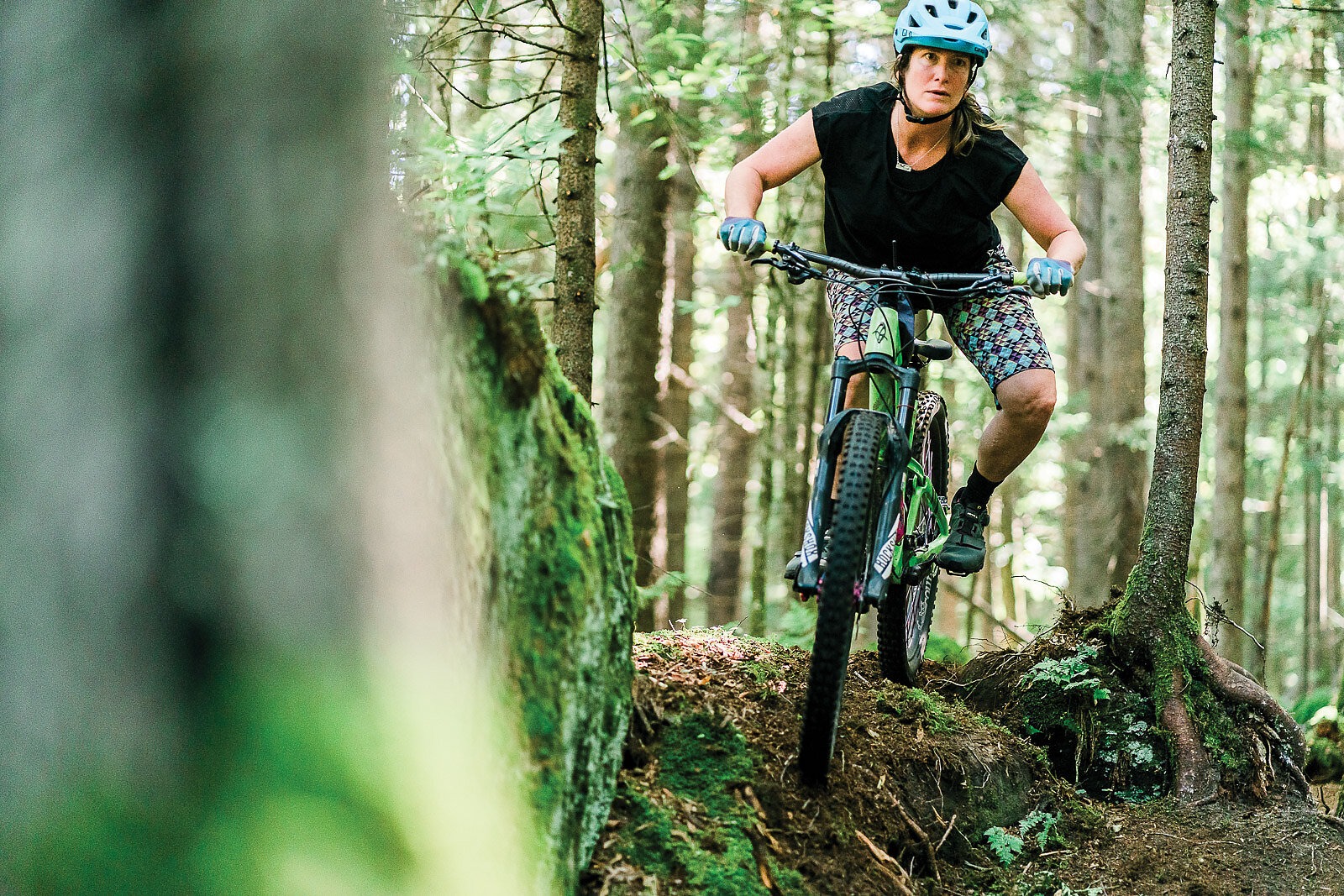
While purpose-built flow trails with perfectly formed berms and exceptionally engineered wooden features are popping up in newfangled trail towns across the country, the riding accessible in any direction from Davis is unapologetically old-school. Erase that progressive jump line from your mind and picture instead hand-cut, rake-and-ride featuring slick webs of off-camber roots, relentlessly technical rock gardens (some of which seem to be placed intentionally to throw off any semblance of flow), soft duff singletrack, axle-deep bogs, pedally climbs, and equally pedally downhills. This natural terrain is tantalizingly tough, charmingly janky, and is definitively not manicured to meet the level of the rider. Here, riders must rise to meet the level of the terrain.
“If you can ride well in Canaan, you can ride well anywhere,” Knight says.
Knight moved from Colorado to Tucker County in 1982 to run the cross-country ski concession at BWFSP, named for the rumbling roil of root-beer colored water that tumbles off a 53-foot-tall cliff of Pottsville sandstone just a few miles downstream from Davis. Located at 3,520 feet elevation along the calm upper reaches of the Blackwater, Davis is the highest incorporated town in West Virginia. A skiing town in the winter and a mountain biking town in the summer, Davis is the promised land for multisport adventure athletes.
“I’ll never forget the first time I drove down Route 32 off the top of Canaan Mountain and got that view over Davis, it felt like there should have been angels singing,” says Knight. “It’s a recreational paradise. I like to say that I wasn’t born in West Virginia, but I got here as fast as I could.”
After Knight’s memorable ride on Plantation, he was hooked. In the spring of 1983, Knight signed up for Mountain Bikes in the Mountain State—West Virginia’s first-ever mountain bike race. The hardcore character and camaraderie of the competitors was an “aha” moment for Knight, setting him on the course of becoming one the sport’s legendary race promoters.
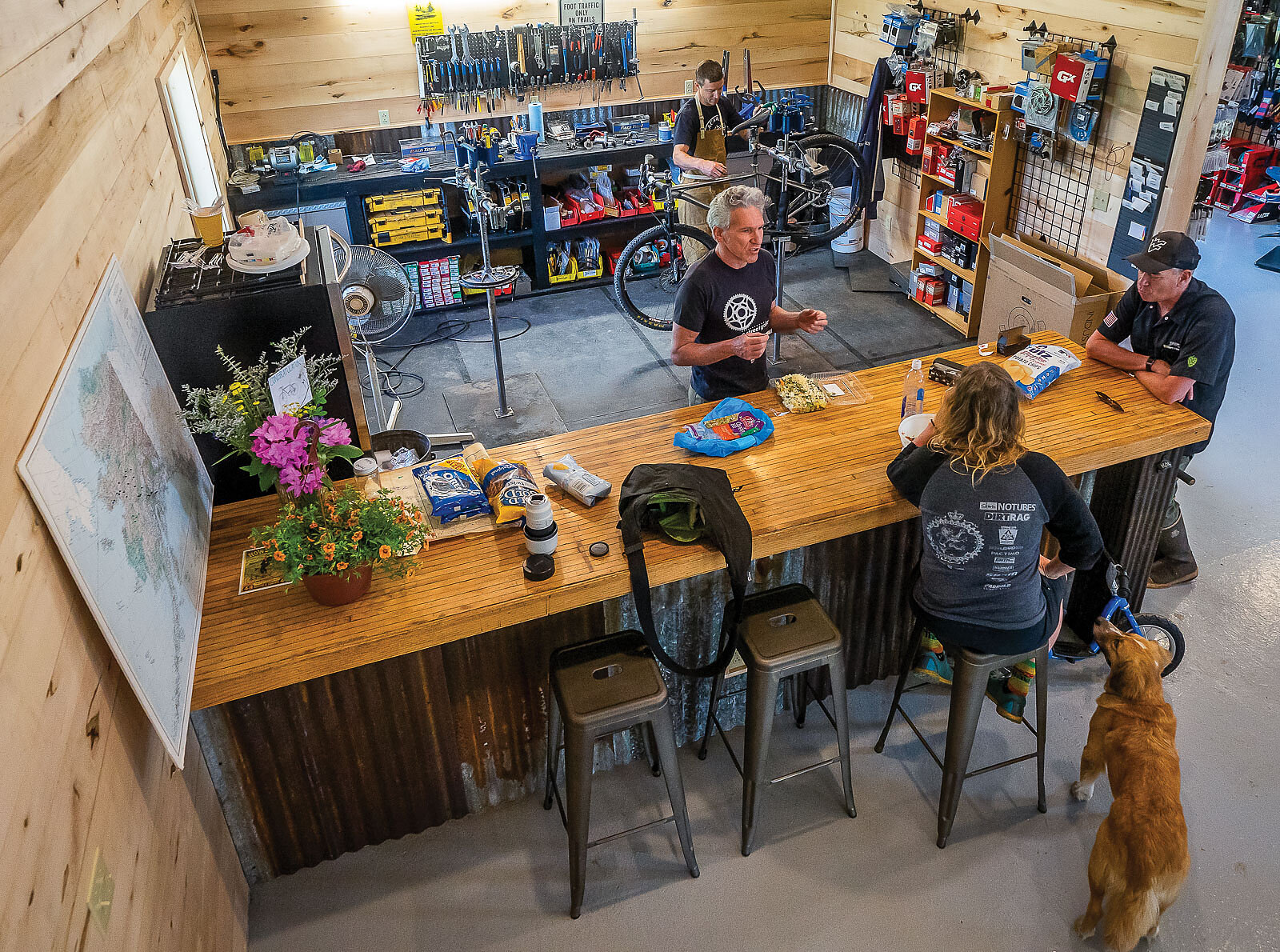
That same year, Knight and his roommate Flynn Griffith started Blackwater Bikes in the storage closet of a historic building in Davis that is now home to local craft brewery Stumptown Ales. The shop initially carried Univega bikes and then offered the first Cannondale models, which Knight says people started calling “Canaan-dales.” In the fall of 1983, Knight hosted his first race: the Canaan Mountain 40k.
“It was more like 60k,” he says.
Twelve riders started, none finished. In 1984, Knight expanded his offerings with the Canaan Mountain Series, a points-series of three events that helped put Davis on the map as a mountain biking destination. Knight took it to the next level when he hosted the National Offroad Bicycle Association (NORBA) Nationals in 1988, which he says was the largest race in the country that year.
“It was kind of like the Wild West,” says Matt Marcus of those early days.
A longtime local who had his first Canaan Mountain Series race in 1984, Marcus continued racing and moved to Davis in 1988 after he was hired by Knight to run Blackwater Bikes. Blackwater Bikes has a storied history as the longest continually running retail business in the town of Davis. Likewise, the storied succession of owners, which includes Marcus, is as colorful as the branded jerseys sold in the bike shop.
“Everyone who’s owned the shop has kept it from going under,” says Marcus, noting that Blackwater Bikes is thriving and in good hands with current owner Eric Cvechko. “We’ve been an anchor business for Davis,” says Marcus, who is back at the helm as shop manager. “The bike shop has been super critical in creating Davis as an outdoor Mecca for our region. The Canaan Mountain Series continued well into the mid-1990s, and the Canaan Mountain 40k lives on today as the Revenge of the Rattlesnake, cementing its legacy as one of the longest continually running mountain bike races in the world. The race is now hosted by the Blackwater Bicycle Association (BBA), the local IMBA chapter. The brutal 25-mile course starts and ends right in town, pushing riders to the limit on legendary old-school trails like Moon Rocks / Hoodoo Rocks, Splash Dam, Yellow Birch, and, of course, Plantation on Canaan Mountain.
But perhaps Knight’s greatest creation was his legendary 24-hour race format which ramped up in 1992 with the inaugural 24 Hours of Canaan. Based on his shared love of night skiing by headlamp and the 24 Hours of Le Mans, an endurance race car event held in France, the format involved teams of four or five riders running as many laps as they could from noon on Saturday to noon on Sunday. The masochistic race was an immediate hit and the growth was exponential, jumping from 36 teams to 86, then to 218 in the third running. When the event was held on the slopes and downhill trails of Timberline Mountain, 340 teams showed up. Knight took the series on the road, hosting 24-hour races in West Virginia at Snowshoe Mountain Resort and the Big Bear Lake Trail Center, along with Western locales such as Moab, Utah and Lake Tahoe in California.
“Those races were a really big part of my evolution as a rider,” says Haywood, who went on to become a legendary pro racer with a decorated career—a household name even, at least for households with a quiver of bikes in the garage.
Haywood got her first exposure to mountain biking as a student at West Virginia University in the ‘90s. She got into racing when she moved to Davis to immerse herself in the snowboarding scene and started hanging out at Blackwater Bikes in the summer. She immediately excelled, climbing the ranks of the West Virginia Mountain Biking Association (WVMBA) series before going pro as a member of the Trek World Team. She points to the challenging conditions of the local trails surrounding Davis as the reason for her rapid ascendancy.
“It’s rough, muddy, techy, and gritty,” Haywood says. “It’s not that I was that skilled in the beginning, but being exposed to that level of grit just makes you instantly better at certain aspects of racing.”
As her career progressed, Haywood found the lack of altitude and distance from the coaching scene to be limitations to her training. But every time she returned from her rigorous racing schedule, she felt that she was home.
“I’m sentimental for our rugged, technical trails and the nature surrounding them,” she says. “You’re not just grinding up a big gravel climb to reach a downhill all the time. I mean, we grind here, sometimes even on the downhill, but we’re always out in special places. We really live in nature here. That’s probably what kept me here all those years.”
Nowadays, Haywood works at Blackwater Bikes, coaches bike clinics for kids and women, and serves as BBA president. Part of BBA’s major efforts include stewardship of The Thumb, a 200-acre tract of land just to east of town and considered the gateway to the Camp 70 Trails system. Owned by First Energy, The Thumb is a prime example of a public-private partnership that’s led to the construction of new trails, improvements and maintenance of existing trails, installation of kiosks and signage at intersections, and a kids’ skills park, also fun for adults.
Perhaps Haywood’s proudest contribution to Davis is the Canaan MTB Festival, an annual bike party hosted by BBA. Inspired by her experiences at the Shenandoah Mountain Bike Festival, Haywood organized the first Canaan MTB Festival back in 2009. Since then, the event has grown into a four-day extravaganza with group rides, skills clinics, trailwork, a scavenger hunt, and the raucous Run What Ya Brung Trials showdown. It’s also BBA’s largest annual fundraiser, which further adds to its grassroots flair.
“A lot of people say it’s the most fun weekend of the year for them,” Haywood says. “It stokes us up knowing people are coming to ride and share our trails, it inspires us to do trailwork and make it a great event.”
Davis is unquestionably a major cultural hub for the West Virginia mountain bike scene. While annual events like the Revenge of the Rattlesnake and the Canaan MTB Festival bring people in from far and wide, the local scene spins on a weekly basis nearly all year long (many have fat bikes to take out for a rip when there’s not enough snow for cross-country skiing).
During the Ride at Five, a group ride held every Thursday at (just after) five o’clock, the vibes are in the stratosphere, making Davis the state’s highest town in more ways than one. Riders of all ages show up to try and hang with the pack of peddleheads. Here, it’s normal to be outridden by someone twice your age. It’s also not rare to see party lights, silly outfits, a Lefty fork, or even a bottle of tequila slide out of a backpack at an overlook. In 2024, the Ride at Five happened to fall on Halloween, and participants rocked costumes that made the legendary tech trails even more formidable and paraded through town alongside trick-or-treaters at dusk. The bottom line of the Ride at Five is to have fun, so leave your game face at home, keep your VO2 max to yourself, and, for god’s sake, turn off your Strava. Odds are you’ll be riding alongside a national champion and not even know it.
“Everyone here is just so humble,” says Jason Cyr, a Davis resident and professional cycling coach who rarely misses a Ride at Five. “The terrain here lends itself to producing good athletes. We always ride in the rain here, and those adverse conditions teach riders how to be better.”
Both Cyr and Haywood hold multiple USA Cycling National Championship titles for various disciplines including enduro, short track, and super D. Cyr makes regular use of the Splash Dam trail, a technical masterpiece of relentless rock gardens, to keep his skills sharp.
“Because of how slow and technical it is, plotting the movement requires power and balance while standing and pedaling through the wheel lifts,” Cyr says. “It’s a fullbody workout and is pretty much the complete opposite of machine built.”
Despite its rich history as a mountain biking hub, the lack of machine-built trails and modern bike infrastructure have some questioning how Davis can stay relevant in the mountain bike scene.
“Right now, in the tourism industry, you want to be labeled as a mountain bike community,” says Brian Sarfino, an avid mountain biker and marketing manager for the Tucker County Convention and Visitors Bureau. Sarfino notes the one thing that sets Davis apart from other mountain bike destinations is the unique town-to-trails vibe. Over 100 miles of rugged trail offer adventurous opportunities, the vast majority of which are accessible from town.
“These new trail towns have invested millions of dollars in trail systems and hope to see a return on investment over time. But our marketing has played off that old-school, natural character,” says Sarfino. “It’s a unique product and it’s worked for us so far. But we’ve got to put in some more manicured trails and offer more for the novice and intermediate riders.”
While change continues at a relatively slow pace, recent trail additions have beefed up the machine-built blue and green offerings in the region, such as Promised Land, a 5.9-mile flow trail that traverses the thick forests and balsam swamps of CVRSP. Local trailbuilder Zach Adams, who owns and operates Appalachian Dirt, recently built the Chris Clower Trail, a point-to-point trail in the CVNWR that offers some coveted blue flow and connectivity to the Hellbender trails. Adams also built the stacked loops of the Thomas City Park Trails, offering intermediate flow just a few miles away in the neighboring arts-centric town of Thomas. Despite some desire for modern trail systems, Sarfino believes staying true to the region’s old-school roots is a safe investment that will continue to pay dividends in the long run.
“I think it’s about striking a balance,” he says. “A lot of people are having kids now, so there’s this push for easier flow trails and jump lines, but as those kids age, I believe there will be some pushback in the opposite direction, and they’ll want to get back to those hardcore, naturally featured trails.”
Given the focus here on conservation and recreation, it’s not hard to envision mountain bikers of the future pedaling through these majestic forests that will be protected for years to come. A century has passed since the young men of the CCC seeded the slope of Canaan Mountain. The legacies of the plantation and its namesake trail stand strong. Those spruce seedlings now tower above native hardwoods such as beech, birch, cherry, and maple; five-foot-fall cinnamon ferns sprout from the deep duff soils and mossy boulders. Explosions of mountain laurel and rhododendron flowers paint the verdant landscape with floral hues in summer; psychedelic kaleidoscopes of burnt tones flitter through the air in autumn. West Virginia’s high-elevation spruce-hardwood forests are like nowhere else, and their importance both as hubs for ecological biodiversity and human recreation continue to be revered by nature-lovers, mountain bikers, and, in the case of the two-wheeled denizens of Davis, nature-loving mountain bikers.
“The people here are connected over their shared love for riding and the land,” Sarfino says. “There’s so much diversity in our woods. The ride is just as magnificent as the land you’re on.”