Shifting Focus The Making of ‘Sweet San Francisco’
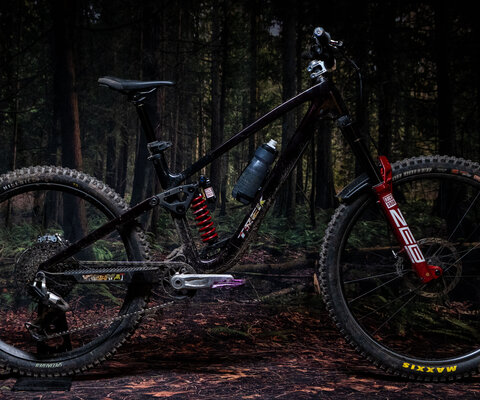
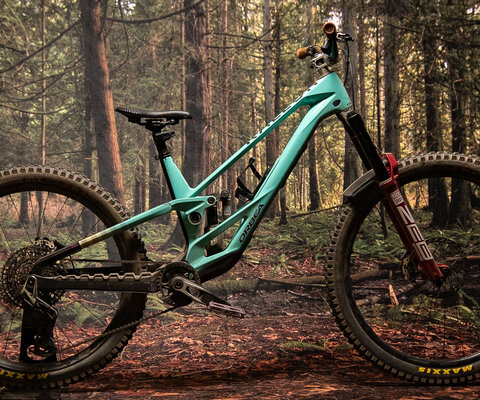
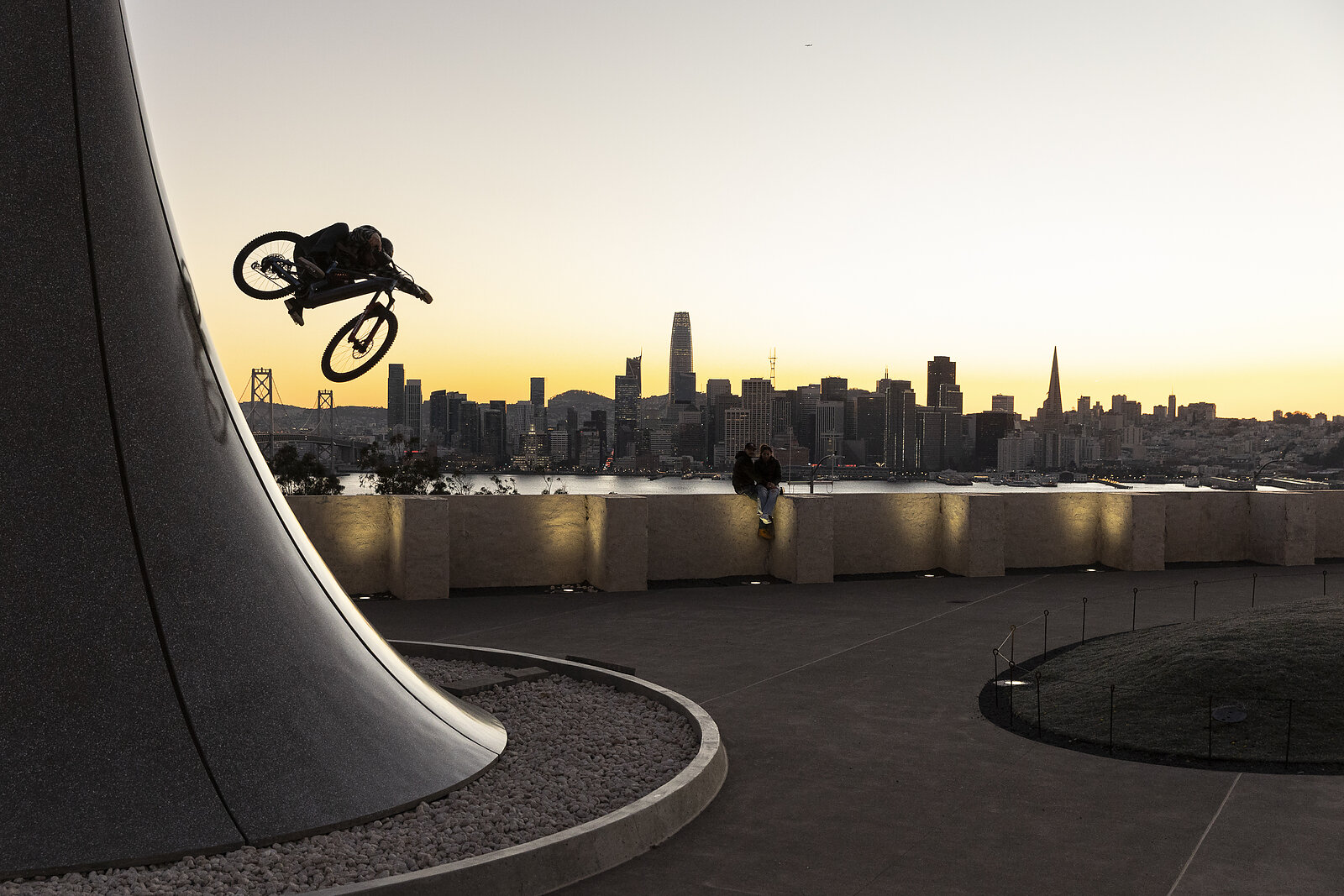
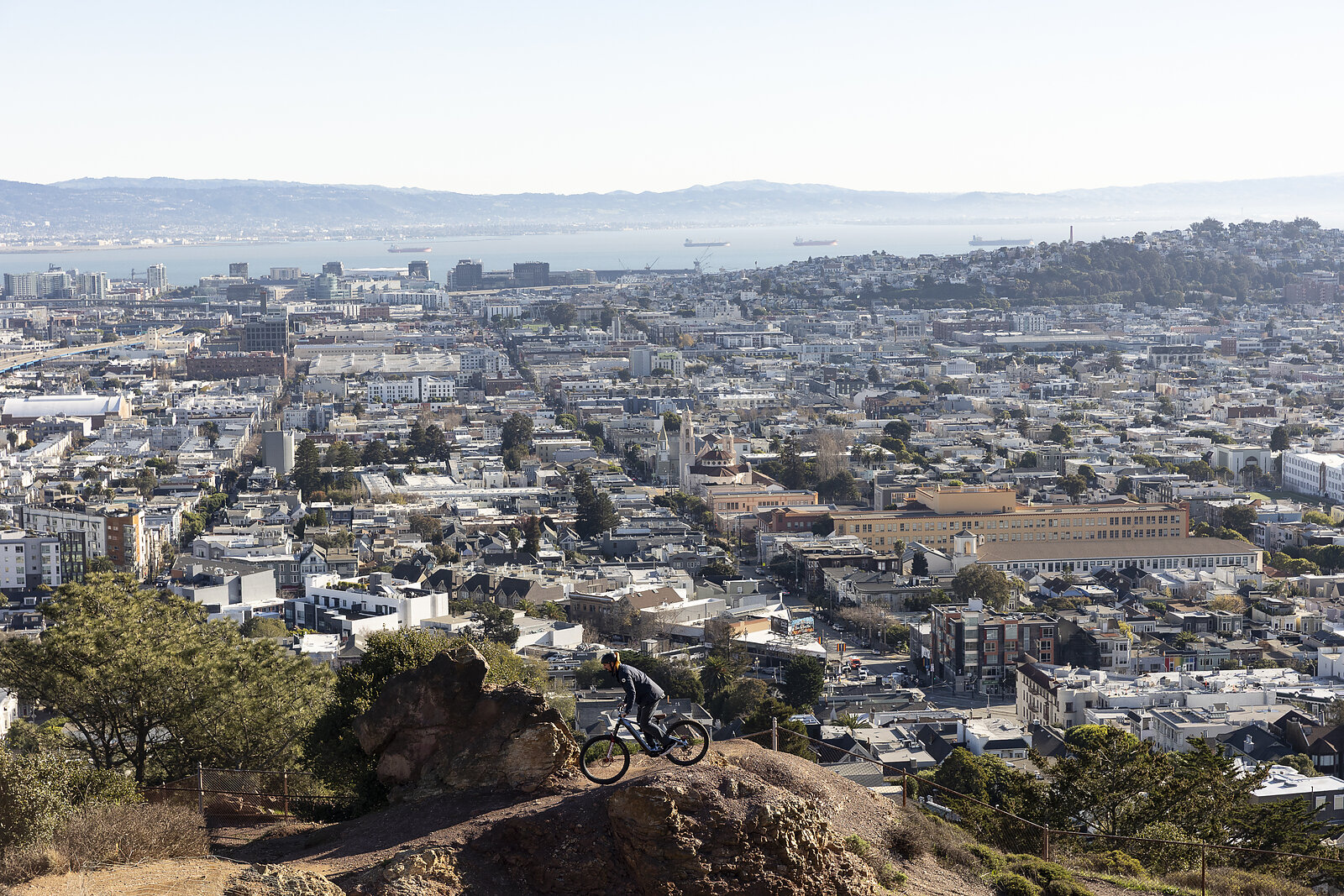
While the crossover between BMX and mountain biking has become increasingly more prevalent in recent years, few BMX riders have gone on to establish themselves in the mountain biking scene as notably as Christian Rigal. Building off a decorated career as a rider and filmmaker, Rigal’s recent projects have seen him swapping 20-inch wheels for knobby tires. His recent video, “Sweet San Francisco" combines aspects of both disciplines as he takes to the streets of SF, blending his unique eye for urban spots with the added range and capability of a 170/150mm travel e-bike.
Rigal enlisted the help of acclaimed filmmaker and San Francisco native, Clay Porter, to bring this project to life. Having dedicated his whole career to documenting mountain biking—and with a renowned ability to pull focus—Porter captures Rigal's riding and the city as a whole in a way that brings sights, sounds, and unmistakable Bay Area feel directly to the big screen. We recently caught up with these two filmmakers to hear about everything that went into this project, from the illusion that can be created by wearing a hi-vis vest, to navigating unpredictable bystanders on busy city streets.
Christian, how long have you had the idea for a film set in San Francisco?
Christian: I've dreamt of doing a project in San Francisco forever. Ever since I've been a BMX rider, I always just wanted to stay out there and do something. But if you've ever been in the city, it's so hilly, and it's so hard to get around. BMX-wise, it's always kind of a nightmare to try and do a project out there because we're all on brakeless, single-speed BMX bikes.
I spent six days scouting around the city with an e-bike, looking for spots that worked well for this project. It was pretty sick to be able to cover some ground and actually find some sick stuff and not wonder, “Oh, what's at the top of that hill?” I just pedaled all around the city and actually came up with the idea for the project probably a month or two before Clay, and I shot it. I literally woke up in the middle of the night just thinking about this project, and I hit up Clay because he's from the city and I know he could shoot it really sick, and it all kind of came together pretty quick after that.
Clay, how does a video like this slot in between commercial and passion projects?
Clay: I would say more toward the passion project side of things. This project was enticing for me because it's with Christian. We've worked together before, he's really dialed with spots and kind of having just a hit list of where we're going to go. I love projects like these because it's single camera and just me and Christian. Whereas some of the commercial stuff I do is like there'll be 50 people on set, so this is kind of taking it back to my roots. And then it was also really cool and took me back to my roots, as I was born and raised in San Francisco, but had never actually filmed in San Francisco.
I'm 41 now and I haven't lived in San Francisco since I was 18. So, it's been a while since I had explored the city like this. I was just stoked that it was another project Christian wanted to do and it was kind of like it's really his project and I'm just the cinematographer. I don't have to think about it as much as some of the other stuff that I do. It's kind of like going on a filming vacation working with Christian. In a good way. That's a compliment.
Christian, an e-bike may not be everyone's first bike of choice for a street edit with the heavier weight, but does having the added e-assist help with a project like this?
Christian: Man, it's literally my number one choice. I start with the e-bike and then pivot from there if I need to, but it opens up so many spots. Riding street on a full-suspension mountain bike is hard as it is. Even if you have run up and it's flat, you still have to start a basketball court away to get to something pretty chill.
The e-bike just makes everything easier. Even just to get around the city, Clay rode my other e-bike, and we were just pedaling around from spot to spot. We didn't want to jump in the car and drive every time we went to another spot. So, we just kind of, run-and-gun loaded up in the e-bikes, and just pedaled around, and it made shooting this so much easier than driving or being on an acoustic bike.
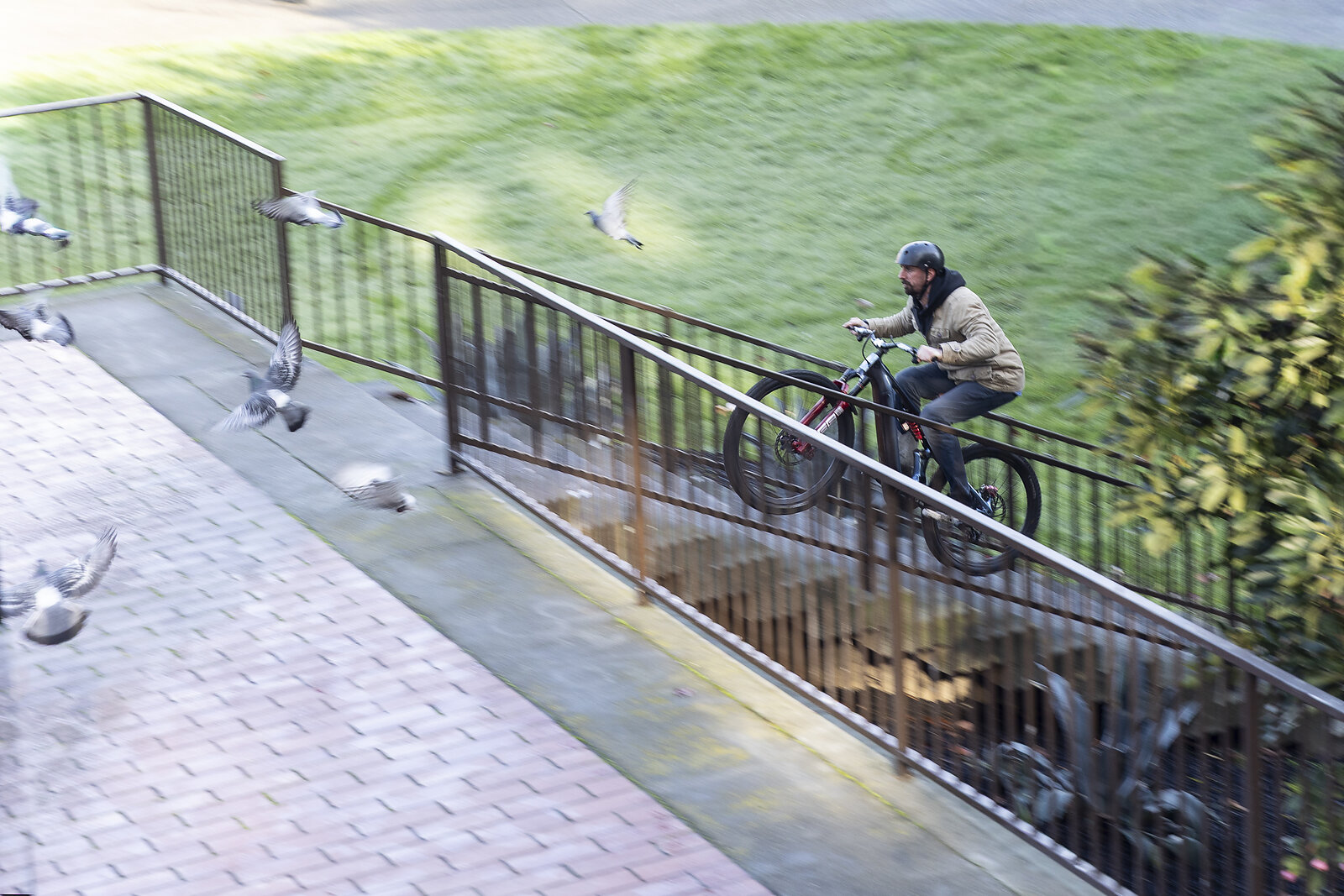
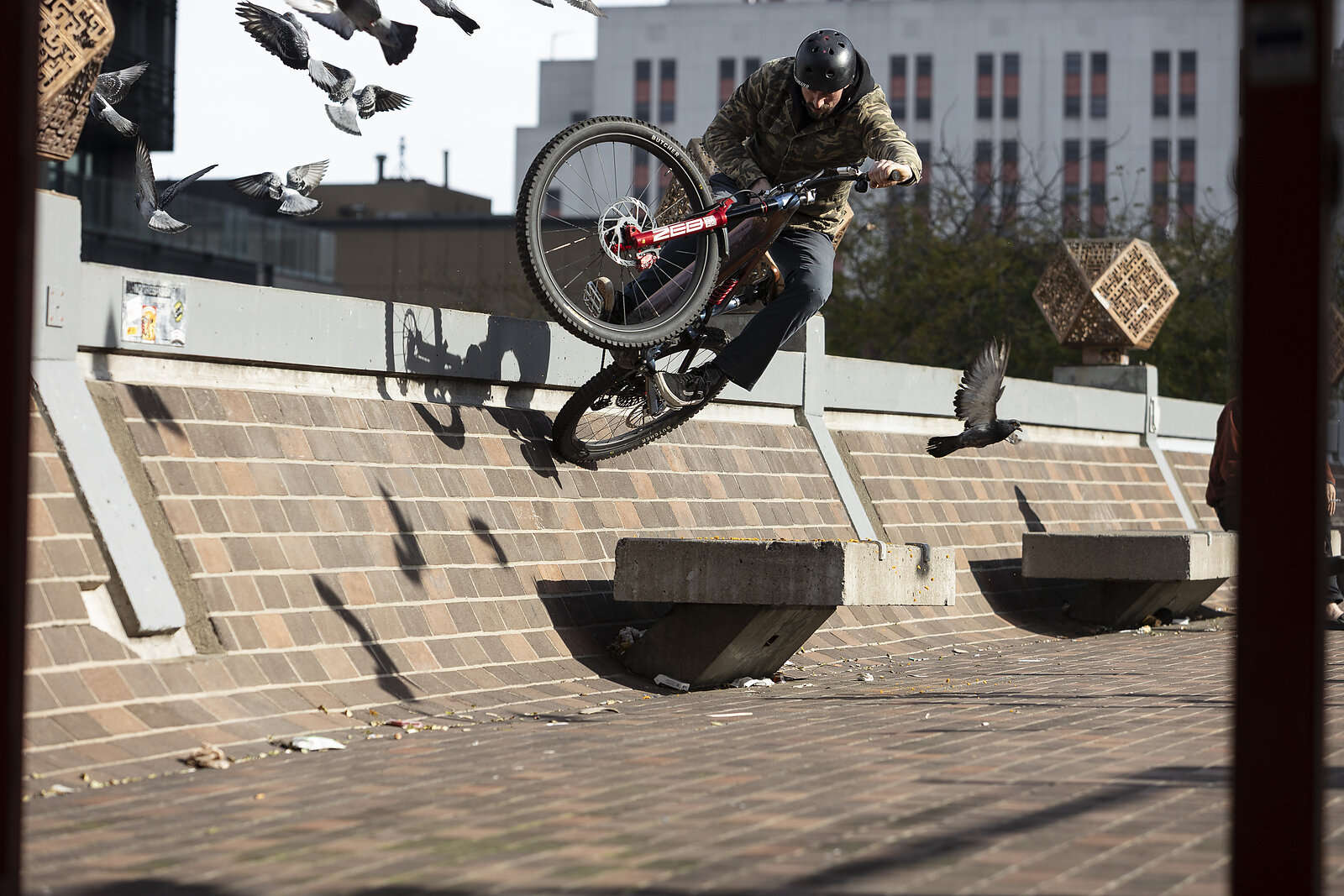
You had some pretty iconic skate spots in the film; were those on your spot list, or did you just hit some of those as you came across them? China Banks, for example - did you know that spot is slated to be demolished and wanted to get it before?
Christian: Yeah, it's funny, I didn't know that they were going to tear that down, but I posted some photos out in the city, and a few of my buddies were like, "Oh, did you know they're going to tear down China Banks?" And I'm like, "Shit." I told Clay, "We got to go get a clip at China Banks. They're going to tear it down. I want to get something there."
And it's an iconic spot, but China Banks wasn't on my radar at first; all the other legendary skate and BMX spots, to me, that's SF when I think of it, as those are spots I've seen in countless videos. So I definitely wanted to have some of those staple skate and BMX spots and then whatever else I could find in between.
What type of obstacles do you have to navigate while filming in an uncontrolled setting like downtown San Francisco?
Clay: I've shot a little bit of skating and street BMX over the years, but it's usually just like one spot, one trick, and then we're done for the day type thing, where this we're hitting like 10 spots a day, but the thing that tripped me out was that I wasn't used to random bystanders. They were so interested in seeing a RED camera or something like that. I would be trying to get this clip of Christian and I had this old woman come up to me one time, and she was just talking my ear off about all this RED camera stuff, and I just could not care less, and I'm trying to keep my eye out for Christian when he's ready.
Christian: Especially in this video, the audio was very important to us and you just got to hyperfocus on the rider. Especially in the streets, there's cars going by; it's dangerous. So Clay had to pay attention to traffic and security or whatever's going on and then I have to do my thing. But if he's over there chatting to some lady asking him about his camera, then things can go rogue pretty quick.
Whether it's random people, cops, security, or just a genuinely interested person walking by, or someone getting pissed and yelling at you, or trying to put their hand in front of the camera or block it, there's always something going on. But that's an aspect of street riding, it keeps it exciting, and you never know what you're going to get into or what you're going to experience. So, it makes the clips mean more when there's a million variables that go into getting them and being able to get them how I want it as a rider and how Clay wants it as a filmer.
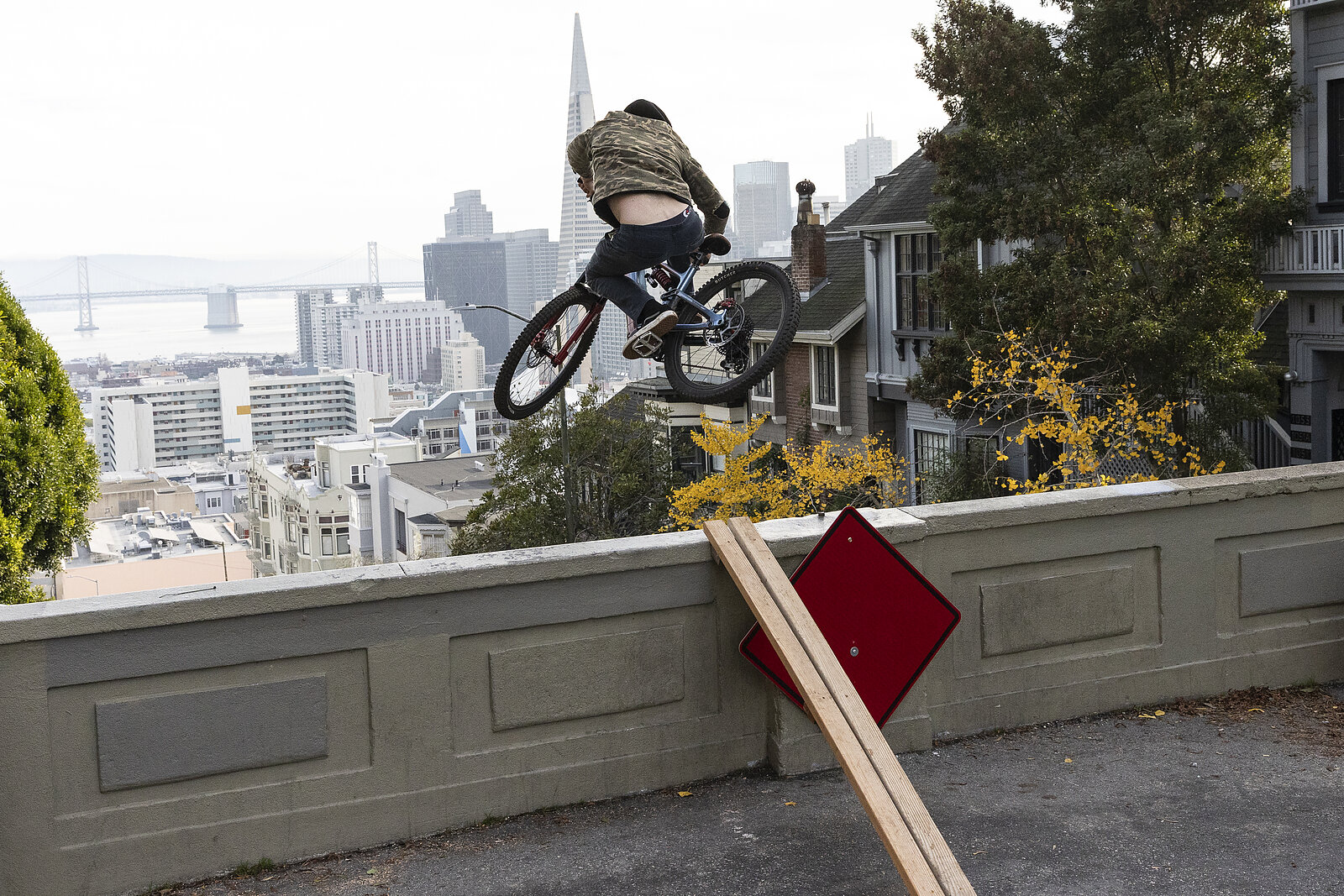
In one clip, you had a high-viz safety vest on while you were building a lip; is that something that kind of goes a long way toward staying at a spot?
Christian: Yeah, I've learned that over the years. I mean, if you're driving around and you see some dudes cutting trees on the side of the road in a vest, I don't think your first thought is, “Oh, I wonder if those are mountain bikers like making a spot or something.” So, anytime I've got to do some spot mods or clean up a run-up, I just chuck the vest on and no one seems to question you. Cops will drive by and they think that we're city workers or whatever. So yeah, that's a good way to get stuff done. We're not lying to anybody and saying that we're someone that we're not; we're just making a bit of an illusion.
Clay, you've previously said that you're a specialist at filming things that go fast and capturing their speed. How do you capture the speed of a whole city?
Clay: The action's almost automatic for Christian and I at this point, but where I can really add value is just keeping my eyes open to random people that are around. I was literally just watching the whole time when we were there for stuff that would create noise. So it's like, “Here's a bunch of birds. Boom. Get a shot of that. We can add some bird sounds to that.” Not to discredit the action, just especially with Christian, he's very particular about angles and stuff like that, which is great. It's one of the reasons why I love working with him. But I think where I can really add stuff is keeping an eye out for the moments in between.
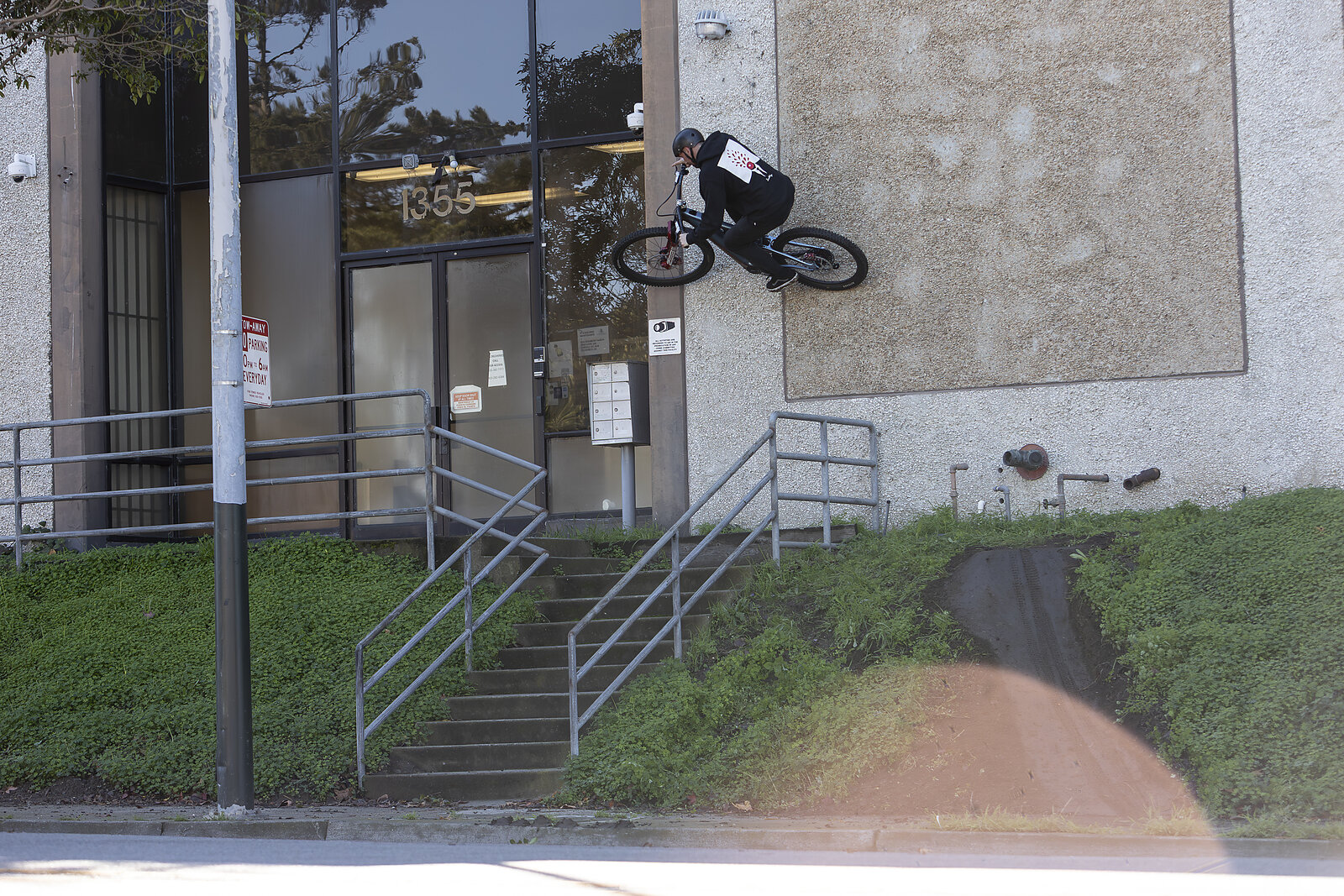
Were there any tricks you really had to work for on this project?
Christian: Yeah, the opening clip of me riding down a log and eating shit at the bottom. It had rained, and I found this log ride in the middle of a busy park and really wanted it for the video. It's in the streets, but it's a pretty mountain bike setup. The log was wet, the run in dirt was wet, plus there's a million people out there and park rangers and everything, all while I'm out there with a torch just burning this 50-foot log trying to dry it out. I almost did it first try, but lost my balance, and then on the next try my wheel went over the other side and I fucking died. That one battled me for sure.
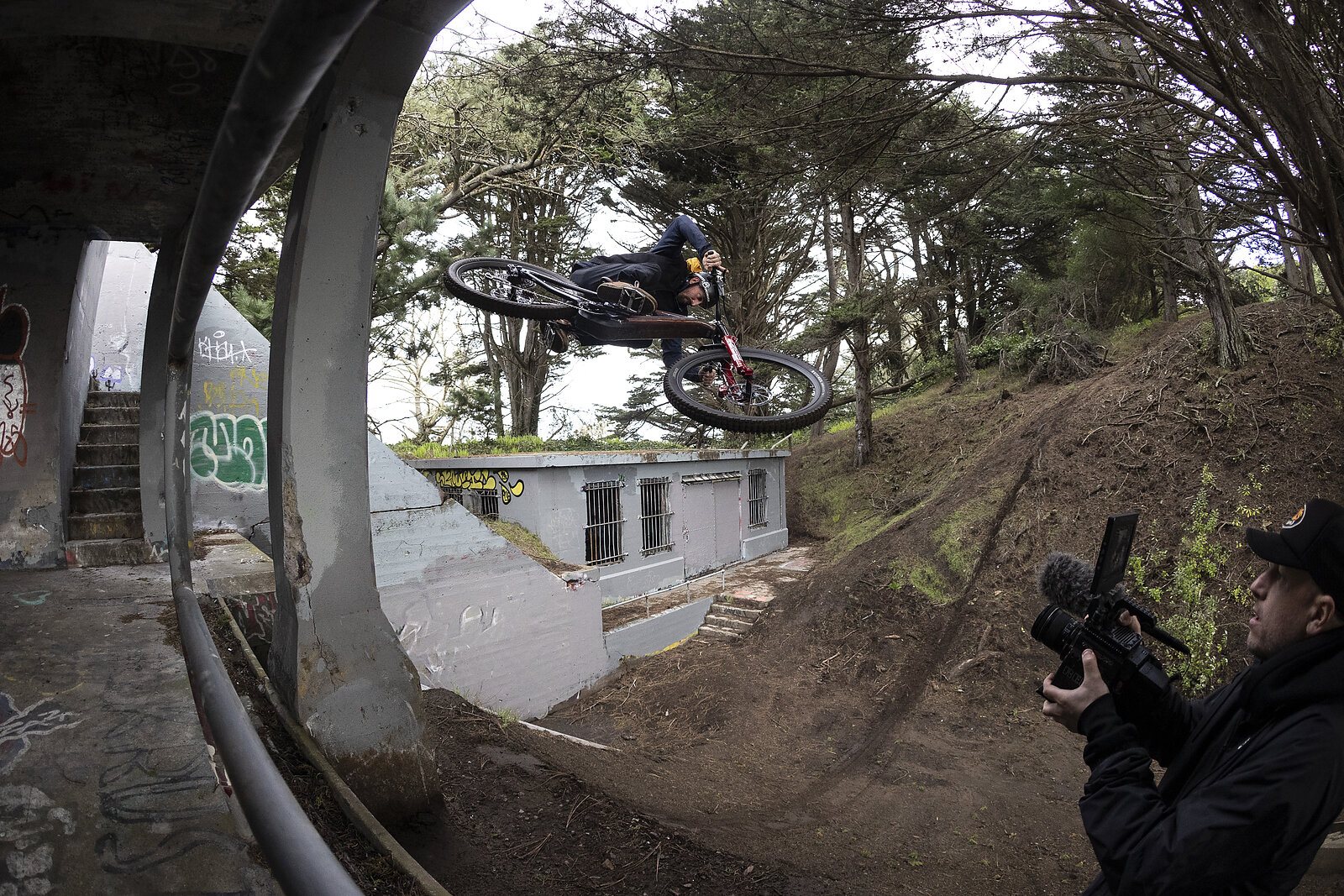
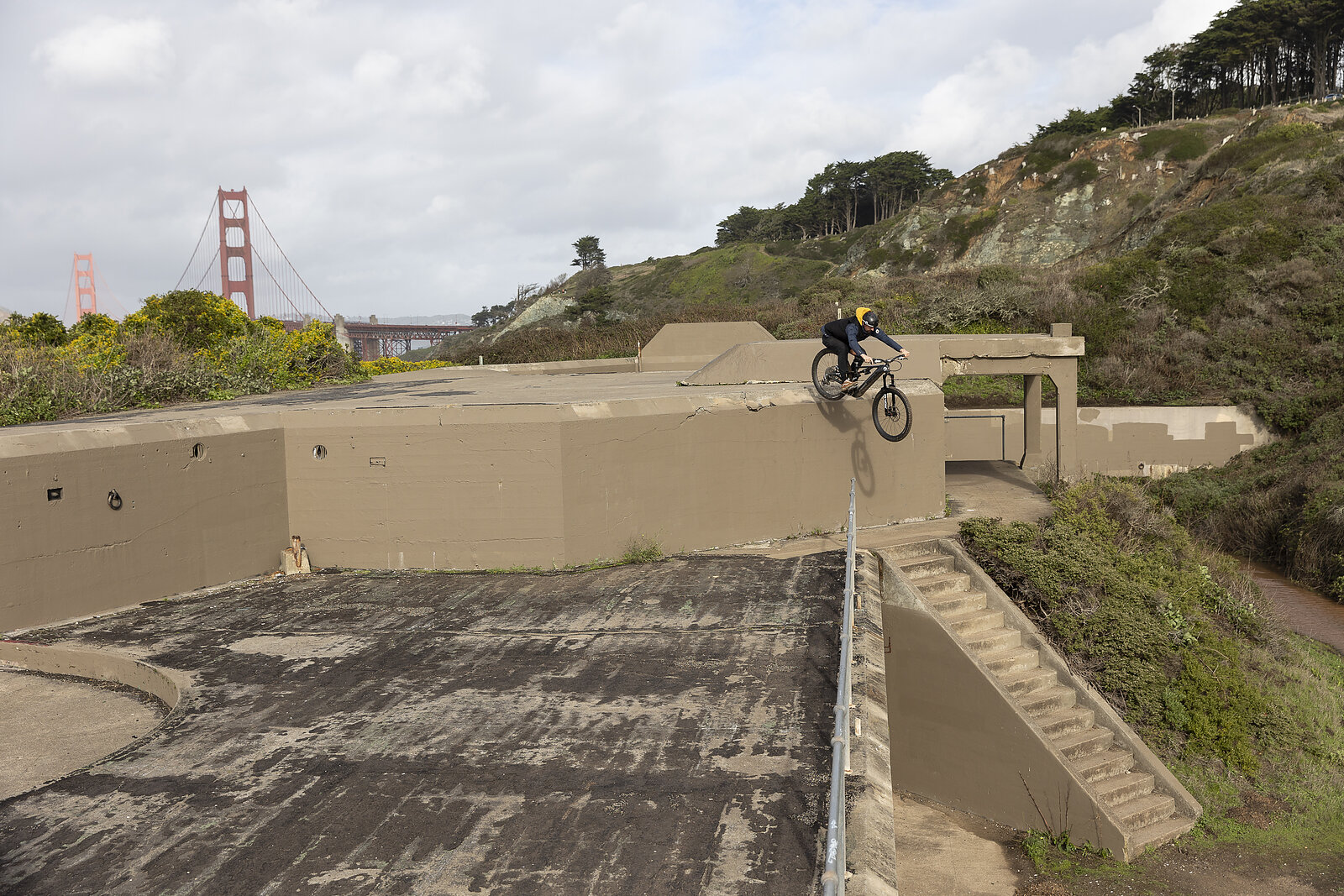
Then the Golden Gate clip where I jump off the bunker into the stairs. It was the most wind we ever felt during the whole shoot, on the most exposed and dangerous spot. We were there, photographer, filmer, gear all set up. I was in the mode to do it, and I just didn't want to deal with coming back.
Clay: Yeah, that was sketchy. I remember I didn't want you to hit that, which usually I'm like, “If the athlete wants to do it, I'm just here to film it.” It was so windy I had to brace the tripod.
Christian: I had to go full rampage mode and put two little rocks right on the takeoff. It was so windy that the rocks that I put there were blowing away. It was heinous, but I'm glad it worked. That would not have been a fun one to fall on.
Do you think mountain biking's been more legitimized in the eyes of the BMX scene and stuff than earlier on in your career?
Christian: A thousand percent. I mean, I won't deny the fact that when I grew up, I made fun of mountain biking and hated on it purely because that's what the older dudes did and I just did whatever they did. We had a local dirt jump spot, and mountain bikers would come there and mellow out the lips, so from being a kid, I had a gripe against mountain bikers, but I never actually knew a mountain biker or went mountain biking, so it wasn't justified.
When I moved to San Diego, I met JD Swanguen, got to ride his DJ for the first time, and started to learn about mountain biking. After that, I pretty much credit everything to Brandon (Semenuk). Once I met Brandon, watched his videos, and he loaned us his insane bikes and took us mountain biking, that's when I got to experience that mountain biking is the sickest thing ever. These dudes are just trying to do the same thing that we're trying to do on a bike or a skateboard. They have just as much passion and desire for it as we do.
I think skaters finally think that BMX is cool. BMXers think that mountain biking is cool, and mountain bikers have always been thinking that everything else is cool. I think everyone's finally cohesively realizing that we're all just passionate people doing what we love, and there shouldn't be any shade towards any other demographic of action sports.
Clay: Yeah, mountain bikers got cool all of a sudden. I'm kind of kidding. But the interesting thing is right around the time when Christian probably first got a mountain bike is when I first met him.
Then when he moved to Aptos, I hung out with him, and I couldn't believe how good he was at trail building. Not trying to talk shit or throw shade or anything at any other BMXer who now mountain bikes, but Christian has become a pinnacle trailbuilder, which is really cool for me to see him not only get into mountain biking, but he's just as into, if not more into, the riding than these trails that he's building are really unique to him. They're kind of like works of art on their own, you know?
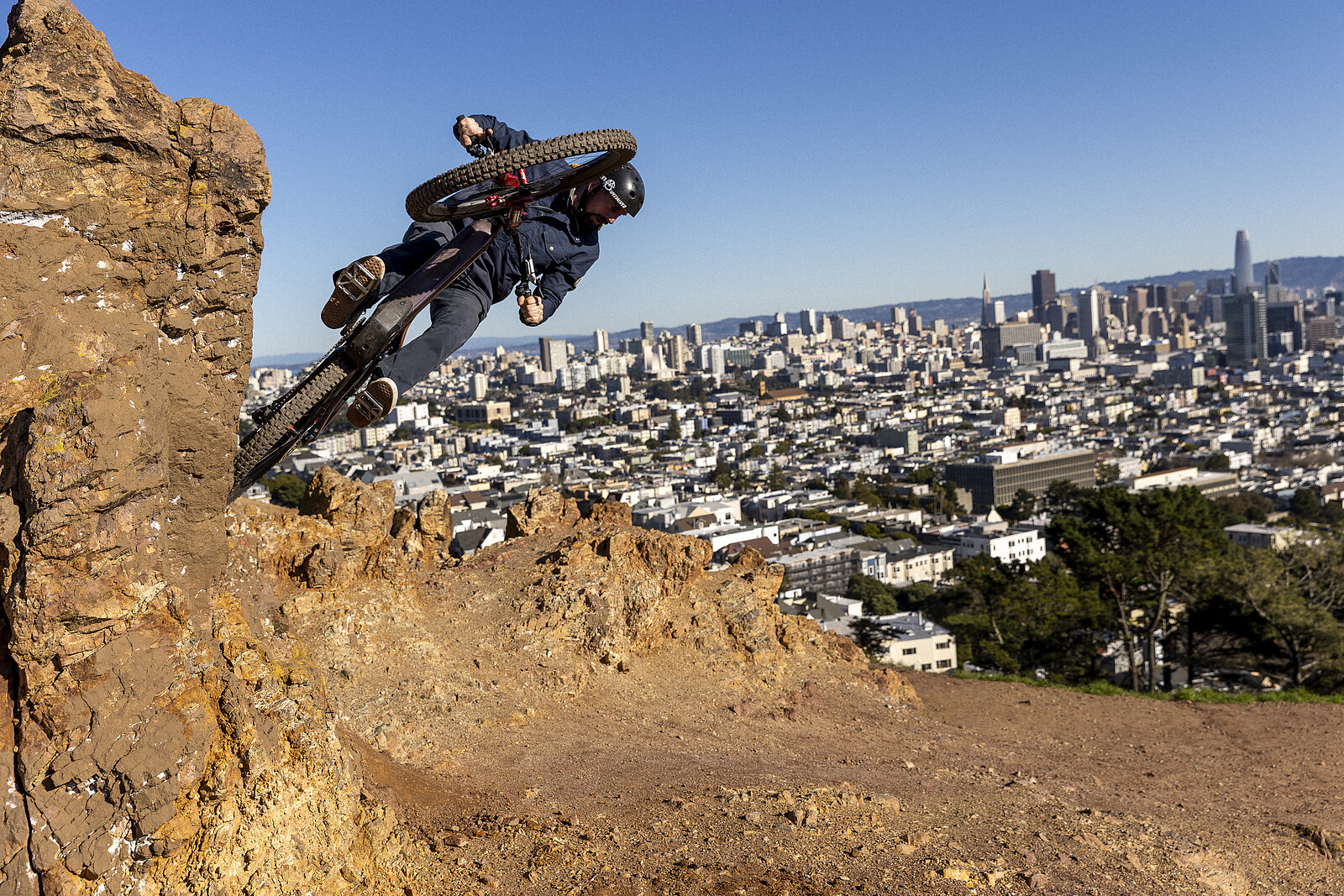
Christian: I just love that whole side of mountain biking. All my street riding as a BMX rider, the stuff I liked the most was the spots I had to modify or the spots that weren't rideable until I cut a fence down and cut this rail out and bondoed the floor and everything. All the stuff that I did in BMX probably would have made more sense on a mountain bike because I like the work that it takes to make riding happen. There's plenty of trails out there you can just go ride, but it's so much more fulfilling to put in the work and build a trail that speaks to your riding. It is already fun to ride an insane trail, but if you built every inch of that trail and then you get to ride it, you're literally curating your dream riding experience because you're making everything exactly how you want it.
It's cool to have that much control of it. That's what pulled me away from doing team sports. Everything is very structured. You've got a coach. You've got to do things like this. You can't really deviate from the path because you're on a team and you're doing things with everybody else. Riding bikes, BMX, mountain, whatever, you work with the people you want to work with to make it look the way you want it to look. The builders, the filmers, everything. What other things in life do you get to do like that where you can make a living doing things your way, however you want to do it? It's the coolest thing ever, so I don't take any of these opportunities for granted. That's why I put everything I've got into all these projects and try to make something that me and Clay, and anyone else who is involved in the project can be proud of, because we're grateful and lucky to be able to do this kind of shit, so might as well make it as good as we can.