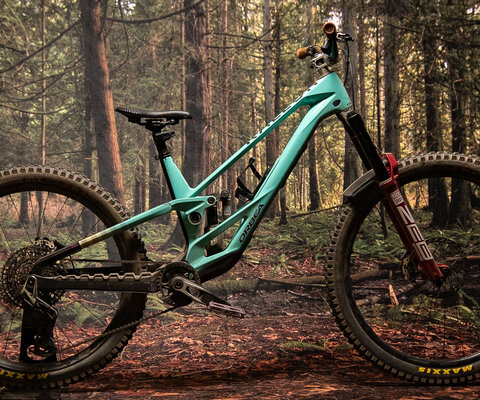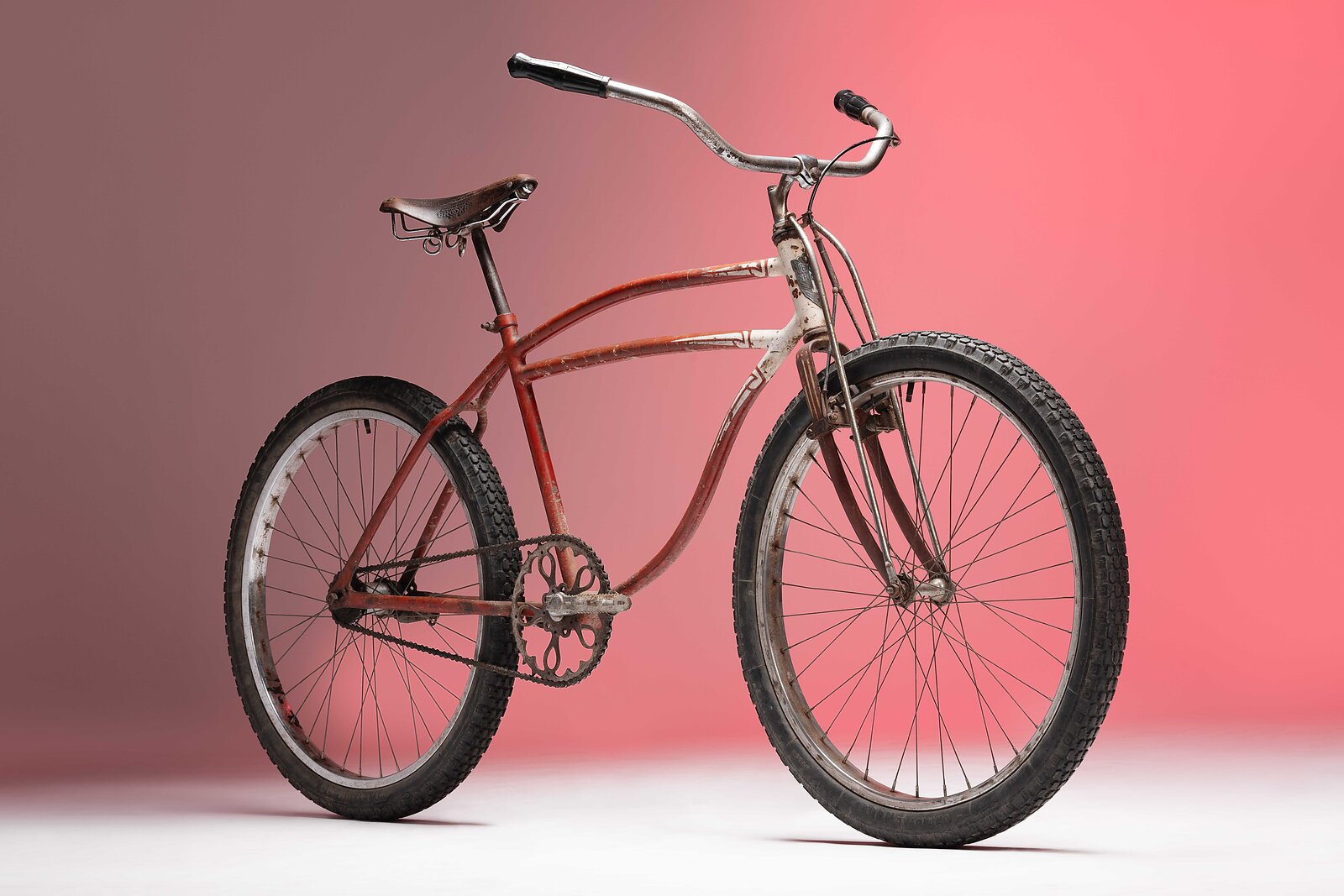
1941 Schwinn DX "Texas Special" Evolution of Freeride
The iconic Schwinn DX was one of the primary models Schwinn Bicycle Company produced throughout the 1940s and 1950s. A purpose-built cruiser, Schwinn had no idea they were producing what would become one of the most sought-after “klunker” frames some 30 years later.
These Schwinn DX frames were mass-produced and distributed, making them common across neighborhoods in the decades following the great depression. Lacking many of the components and features we've come to expect from modern bicycles, the Schwinn DX is an example of a bike distilled to its simplest form. Its upright seating position and wide tires delivered a comfortable urban ride, and its popularity amongst the American youth earned it the early nickname, “paperboy bike.”
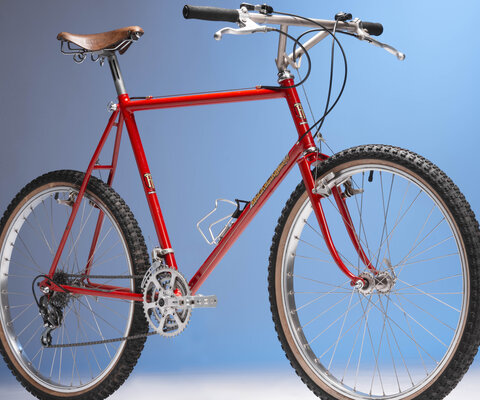
Jump forward to the 1970s, and many of mountain biking’s pioneers opted for frames such as this one for their fireroad descending antics. Revered for its stout frame construction, the Schwinn DX was the most capable option for the earliest adopters of the sport; not purpose-built for the task, but thrown into it full-force regardless. The ample bottom bracket clearance and larger volume “balloon” tires also made them a favorable option for off-road riding. The ride quality of these bikes, while better than anything else at the time, was a rough and wild ride compared to the purpose-built mountain bikes developed in the following decades.
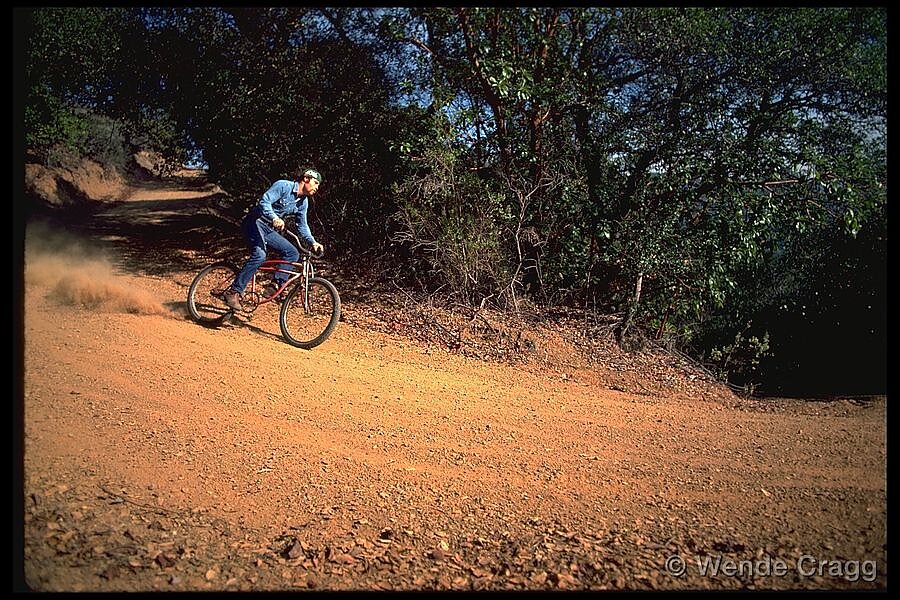
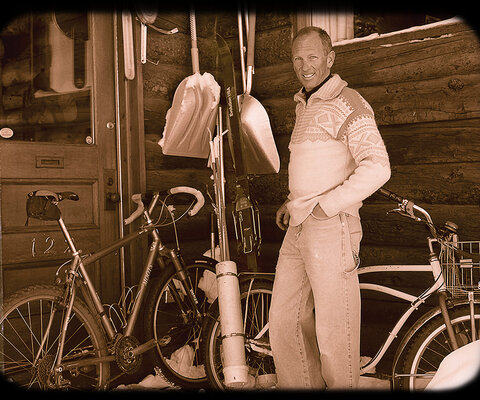
Unknown to them at the time, two groups of riders, 1,100 miles apart, were modifying cruisers for off-road riding, driven by a common desire for gravity-fueled speed. In both Marin County, California, and Crested Butte, Colorado, Schwinn Cruisers were being rounded up and converted to withstand the endless washboard and softball-sized rocks prevalent on backcountry mountain roads. Far from a smooth ride and accompanied by a cacophony of noise, the term “klunker” was born.
The riders in Marin County were a collection of aspiring road racers looking to expand their two-wheeled recreation and explore the expansive wildness and rolling hills of Mount Tamalpais and Marin Headlands. This group included influential figures such as Joe Breeze, Gary Fisher, Otis Guy, Wende Cragg, and others. Perhaps the most important photographer in mountain biking history, Wende Cragg unknowingly documented the birth of a sport. She was instrumental in capturing the earliest days of mountain biking. Originally packing her camera to document nature and wildlife, she found her lens naturally gravitating toward the other riders around her.
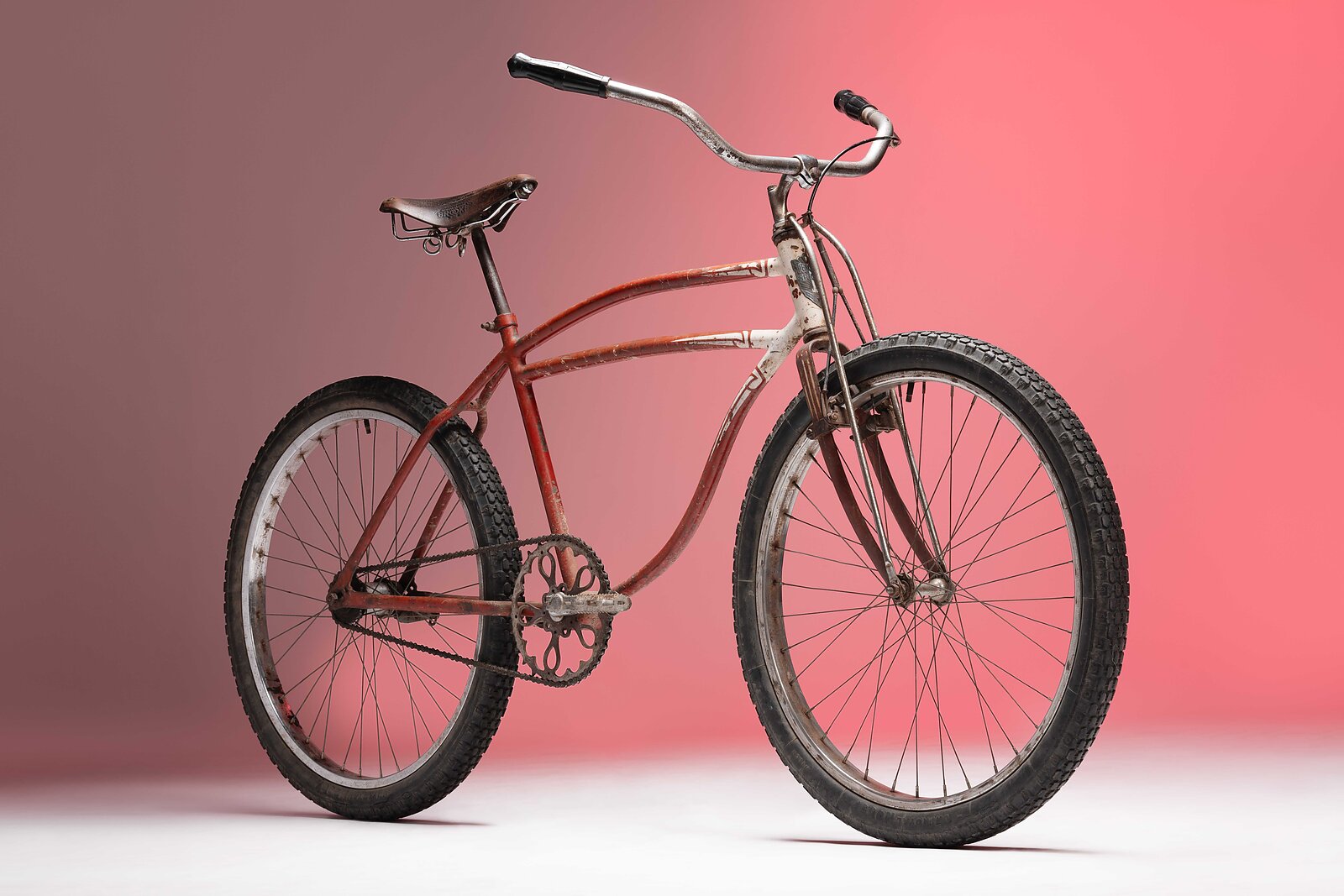
When not on their road bikes, the Marin County crew was exploring every piece of singletrack and dirt road that twisted across the Headlands. What began as backcountry exploration quickly devolved into the first timed and documented downhill mountain bike race: the Repack. Where the Marin, California, riders were fueled by an underlying racing attitude, putting their cruisers up against the clock, the Crested Butte crew adopted a more relaxed, beer-drinking training regimen and were responsible for establishing the Pearl Pass tour. The Marin and Crested Butte riders were different in approach but identical in intention; taking bikes somewhere they had never been before. These two groups were responsible for defining an era characterised by a rogue attitude, a heavy dose of denim, and not a single helmet in sight.
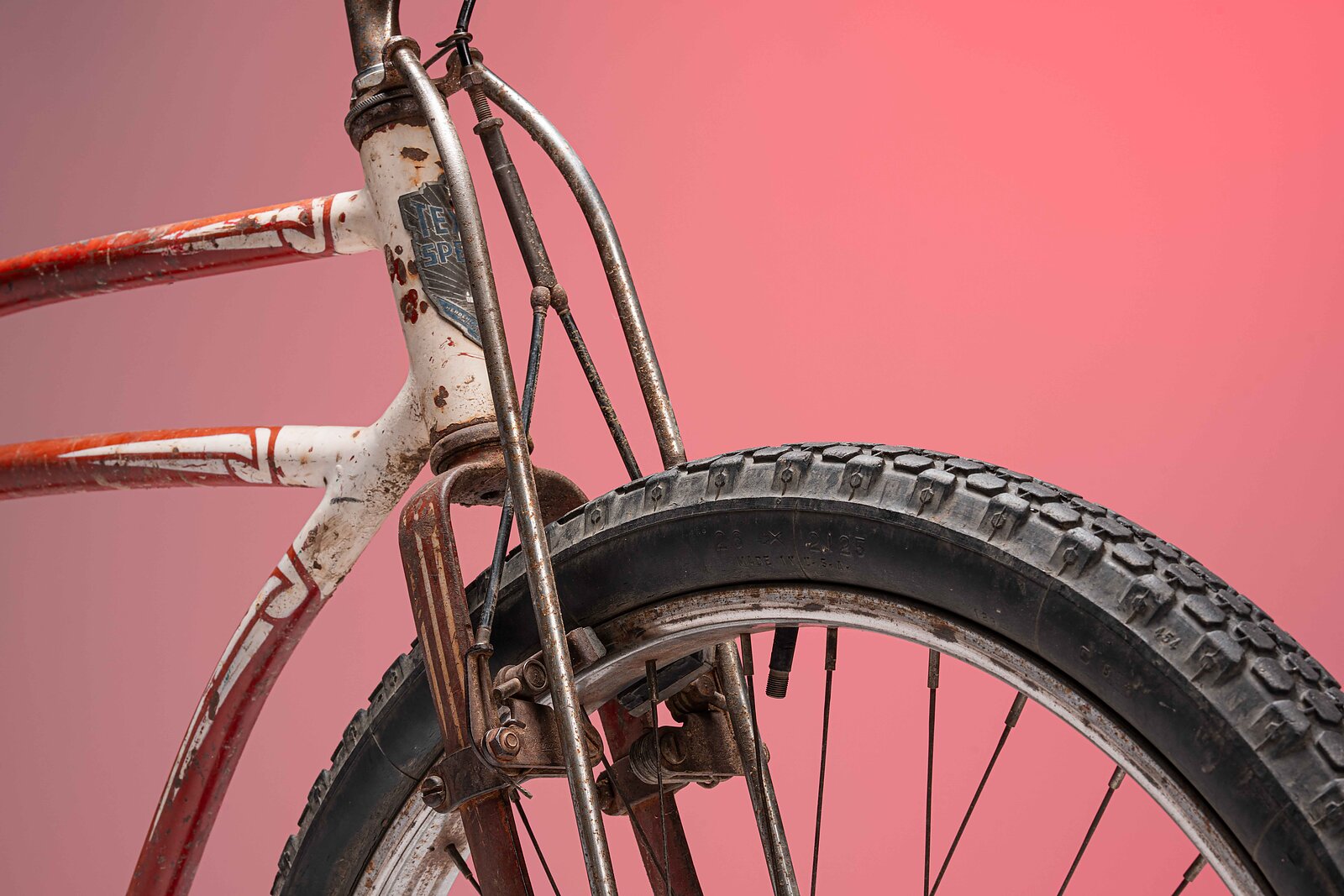
This specific Schwinn DX is a “pre-war” model, assembled in Chicago in 1941. Pre-war Schwinn’s are easily identifiable by their rear-facing dropouts along without having a built-in kickstand. At the time, Schwinn bikes were manufactured in Chicago, Illinois, but were often distributed with region-or state-specific head tube badges. In the case of this Schwinn DX, the “Texas Special” head badge designates that it was distributed in the state of Texas by Herbert L. Flake Distribution Company.
Otis Guy recovered this exact bike from a chicken coup in Chico, CA, in 1975. He built it with parts from the era, and himself and Joe Breeze both put it up against the clock in the infamous Repack race.
“I won five Repack races aboard that red 'Texas Special,’ and clocked my fastest time on it; four minutes and 24 seconds,” said Joe Breeze.
The paint is in fantastic shape, given its age, prominently featuring Schwinn’s classic “ram's head” motif. The patina found throughout is an indicator of the full life this bike lived. Produced in 1941, raced on Repack in 1976, and now on display in the Mountain Bike Hall of Fame in 2026.
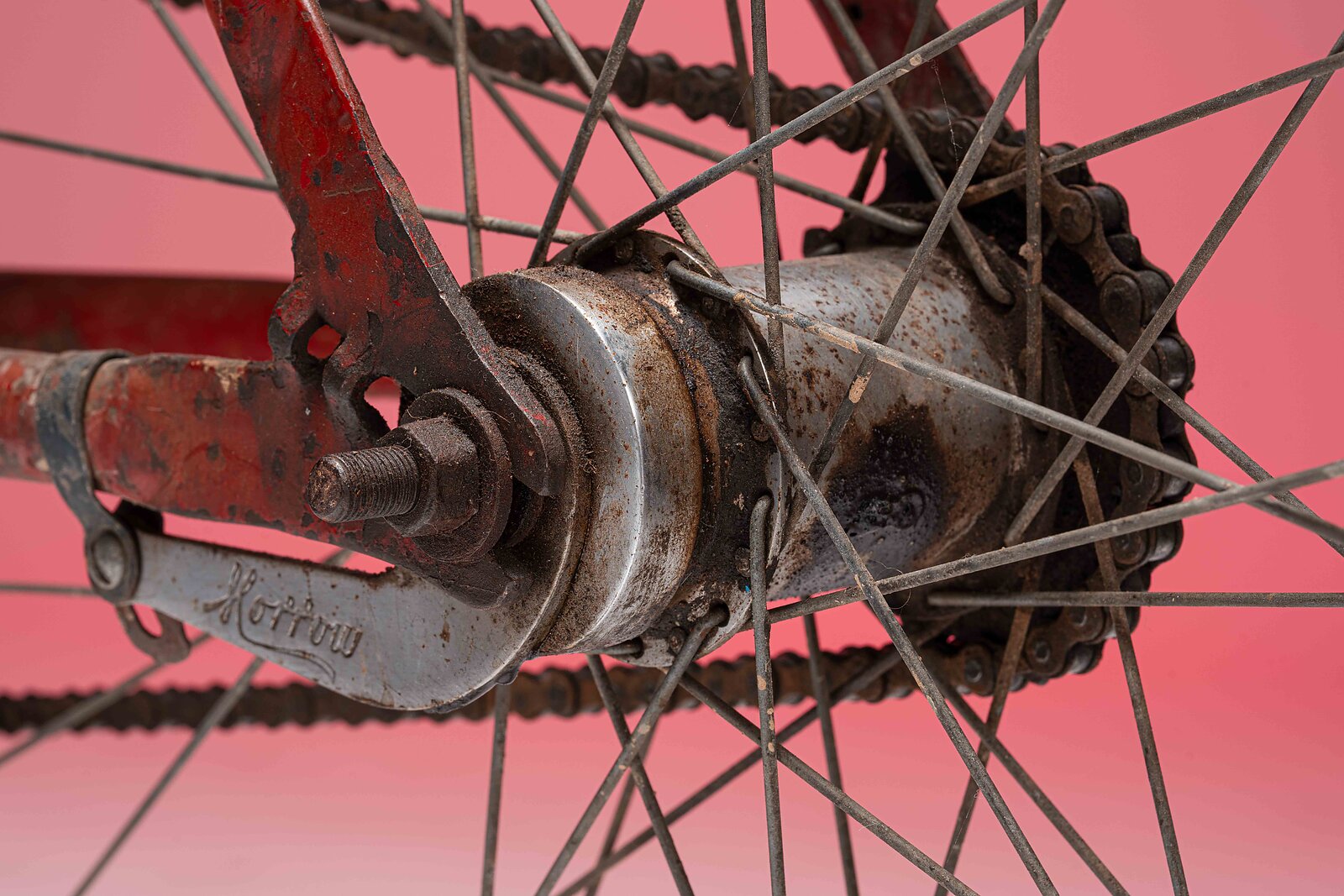
The Morrow rear hub coaster brake found on this bike was favored amongst early klunker builds. The legendary Repack race in Marin County was named for the strain of its relentless descent, subjected to coaster brakes such as this one. The 2.1-mile fireroad located on Mount Tamalpais descended 1,300ft and was extremely taxing on coaster brakes. So much so, it would cause the hub grease to burn black, requiring riders to repack their hubs with grease, hence the name “Repack”.
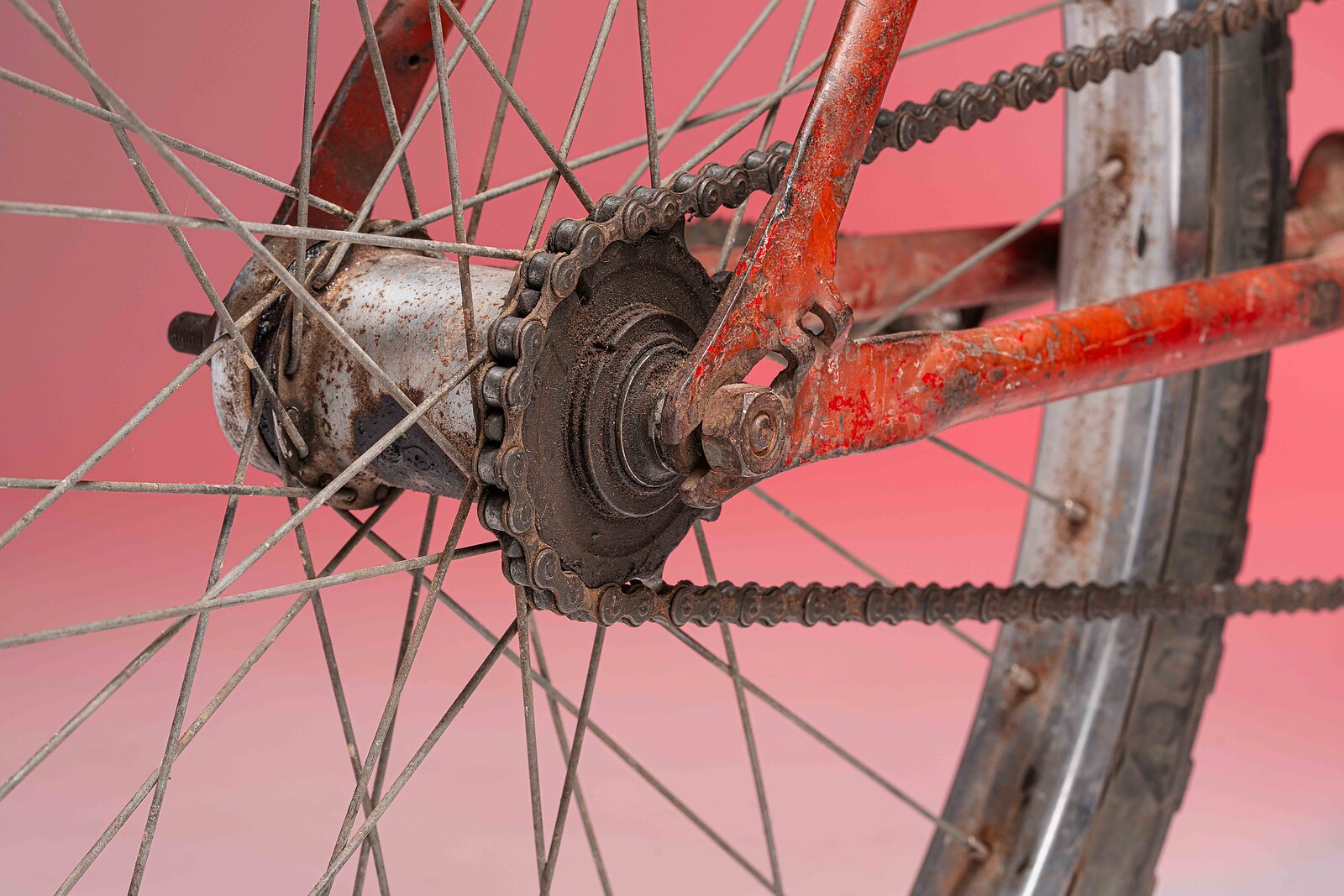
The sprocket of the Morrow coaster featured a slot that enabled riders to swap out broken spokes more efficiently. A seemingly insignificant design aspect, this was a welcome feature with riders regularly abusing their wheels on unmaintained fire roads.
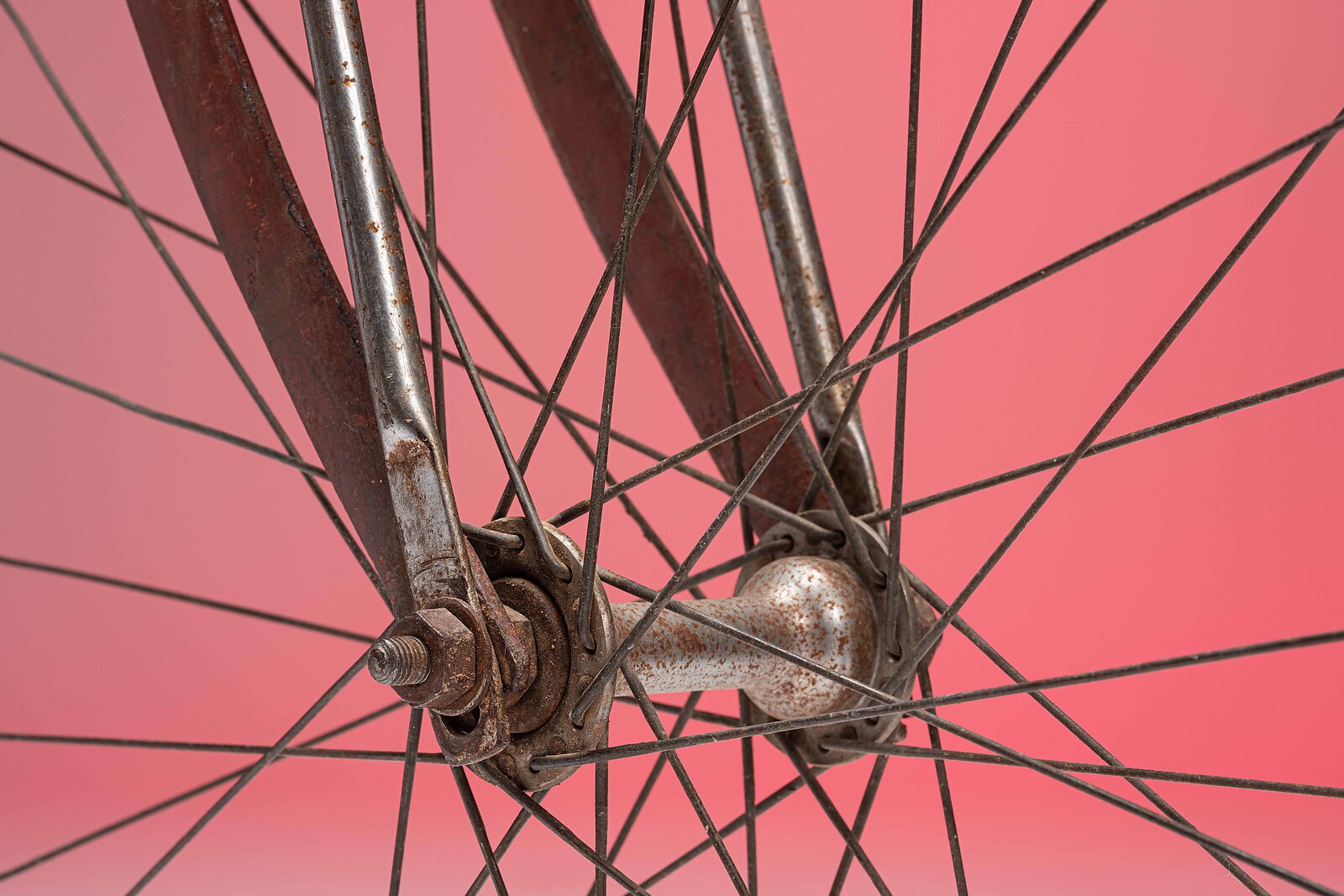
This exact model features a chrome truss rod fork brace. Sliding over the steer tube and fixed by front axle bolts, the fork brace distributes load between the two legs, providing a blend of strength and compliance. These truss rods added structural integrity to the otherwise simplistic fork. For the sport's earliest adopters, any additional support was a welcome modification in hopes of increasing reliability.
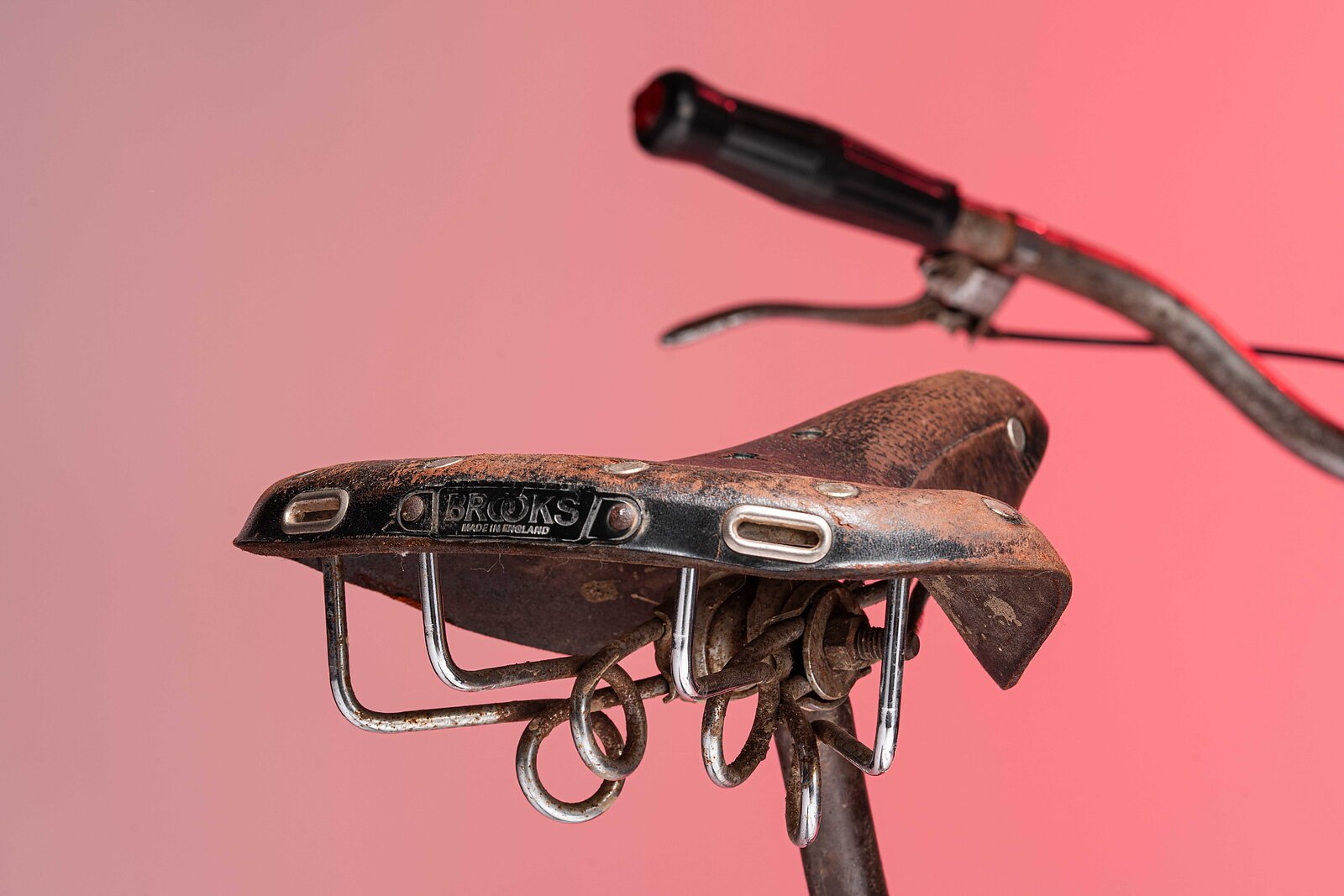
This Schwinn features a traditional Brooks saddle with sprung rails. Founded in 1866, Brooks was an established manufacturer in the cycling industry. Even in the modern era, their saddles maintain a similar silhouette to early models found on these pre-war cruisers.
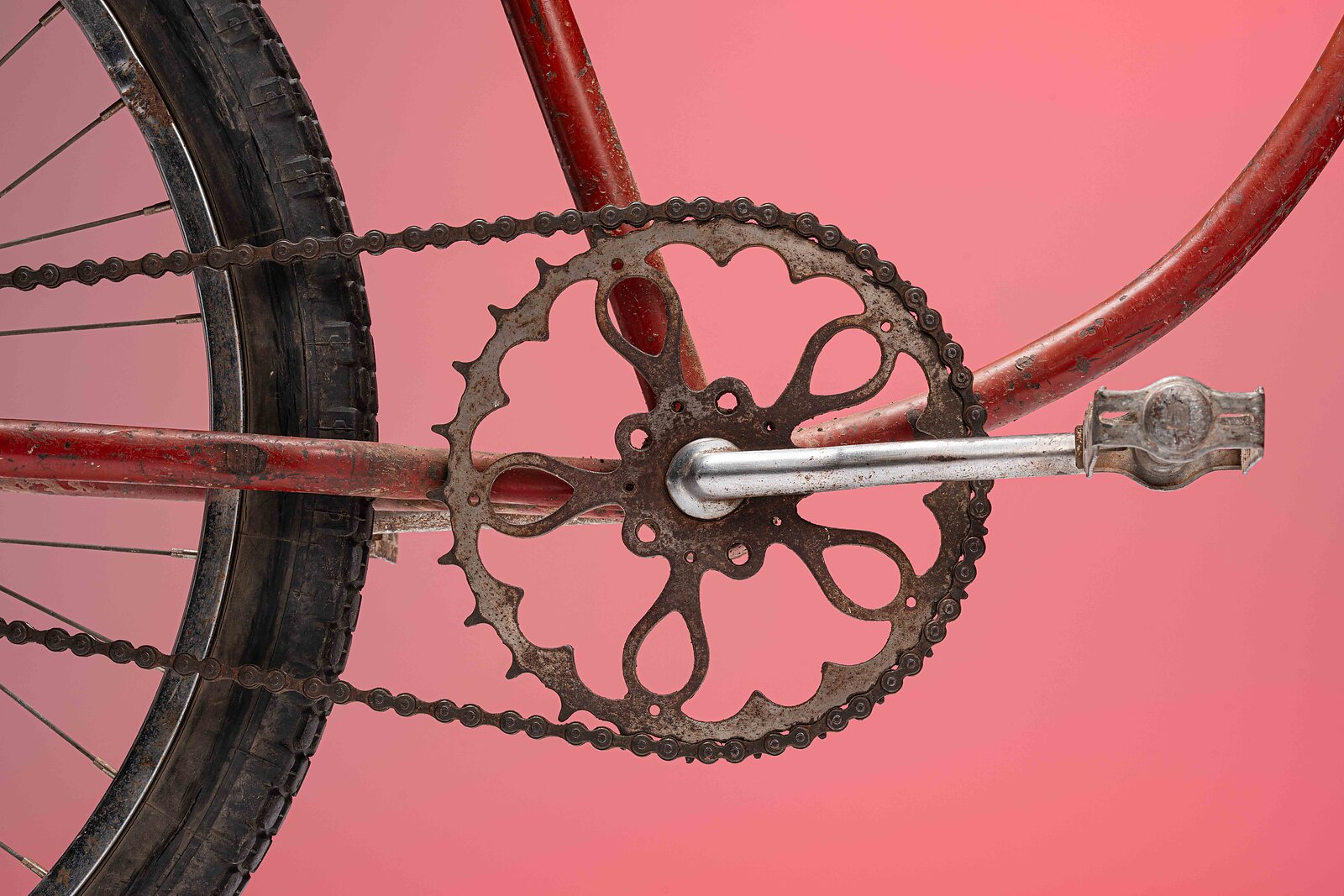
Most early Klunkers relied upon a single-speed drivetrain such as this one. These early drivetrains had inch-pitch chains and chainrings, meaning that the chainring teeth spacing was a full inch, not the .5 inch that is prevalently seen today.
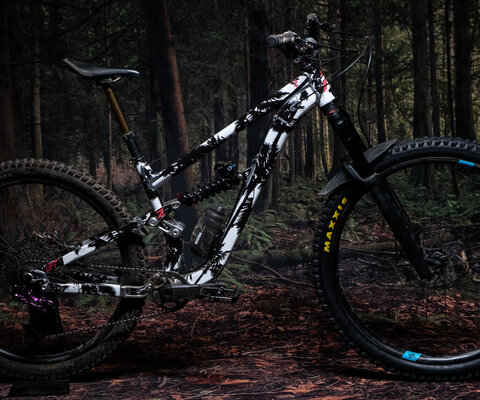
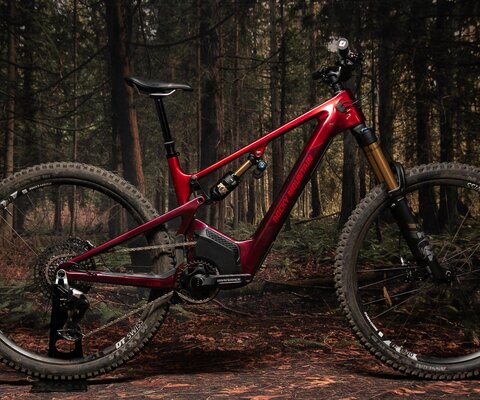
While the Schwinn DX is sparse for the high-tech components or quality of life features that we expect from modern mountain bikes, frames such as this one played an integral role in setting the scene for mountain biking. From the Repack race on Mount Tamalpais to Crested Butte's Grubstake Gang and their Pearl Pass tour, Schwinn Cruisers were a common thread woven throughout the foundational fabric of our sport. So next time you are struggling up a climb, remember that someone on a klunker has probably done something more difficult, all while dressed in denim and fueled by light beer.