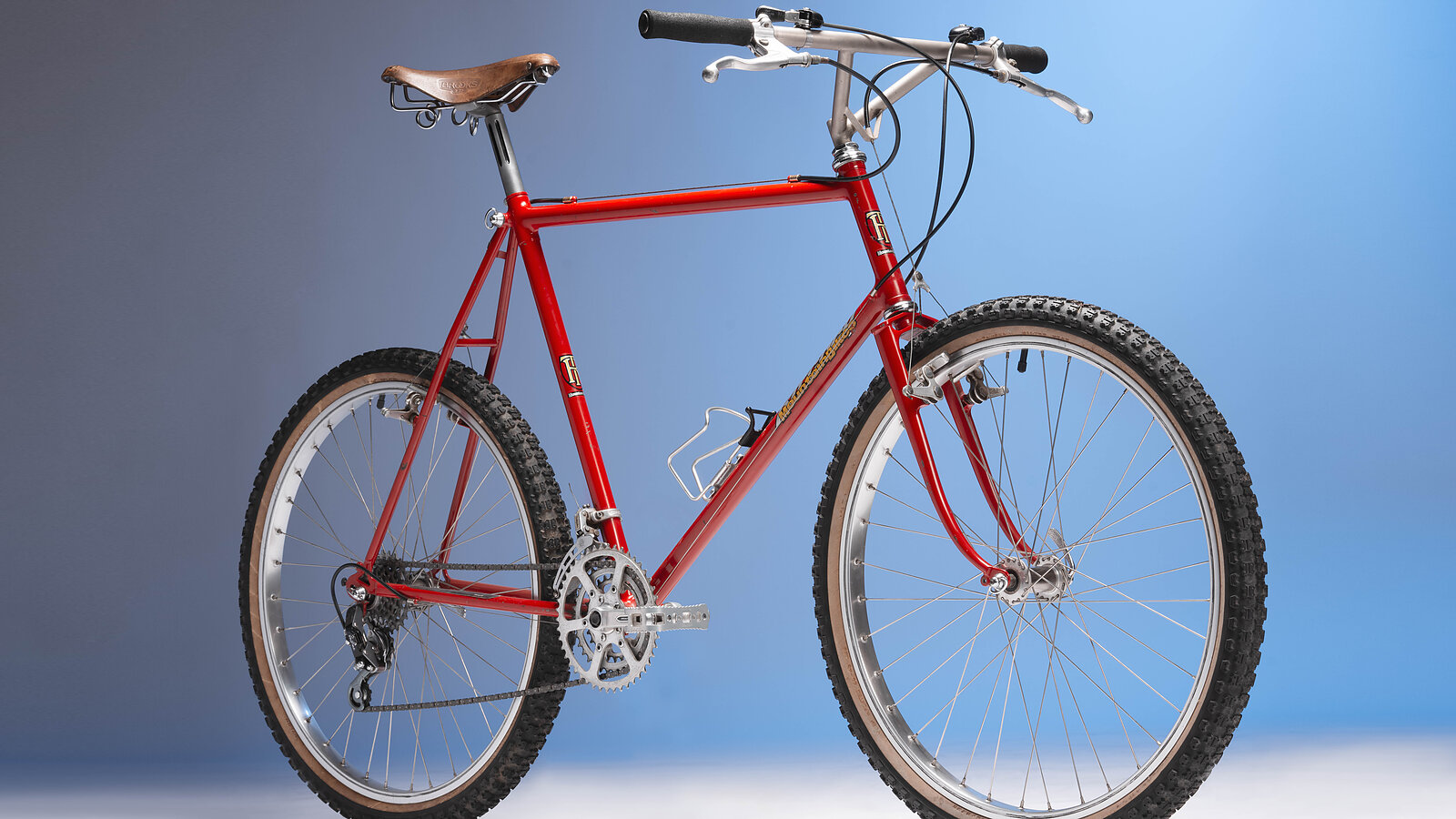
1981 Ritchey MountainBikes Evolution of Freeride
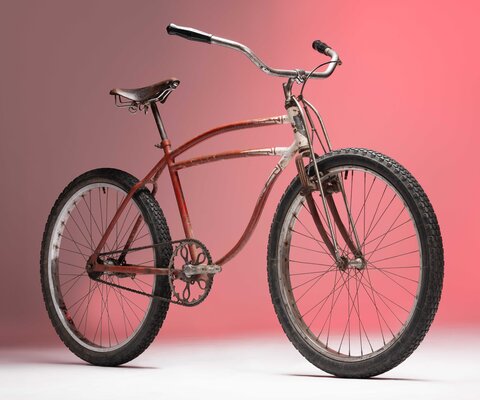
By the turn of the 1980s, it was evident that repurposed cruisers were not reliable enough for the rapidly increasing demands of off-road riding. “Mountain biking” still hadn’t become a recognized term, but frame builders were beginning to craft frames and components purpose-built for the task.
At just 23 years old, Tom Ritchey had already established himself as a renowned racer and respected frame builder when he produced a limited, three-unit batch of his first 650b frames for himself and Gary Fisher. That initial run of frames set the foundation for Ritchey MountainBikes, the first production mountain bike manufacturer, created in collaboration by Gary Fisher, Charlie Kelly, and Tom Ritchey. Ritchey MountainBikes continued on to produce more than 400 frames in 1981, and another 700-plus frames in 1982 before dissolving. Tom Ritchey would later found Ritchey Designs, which is still operational to this day.
“MountainBikes came into being because we needed the best possible bikes for our own off-road use,” reads a line in a 1981 catalogue from Ritchey. “We were already using the finest components available because we were interested in performance rather than price, but eventually we realized that none of the frames on the market lived up to our standards and expectations.”
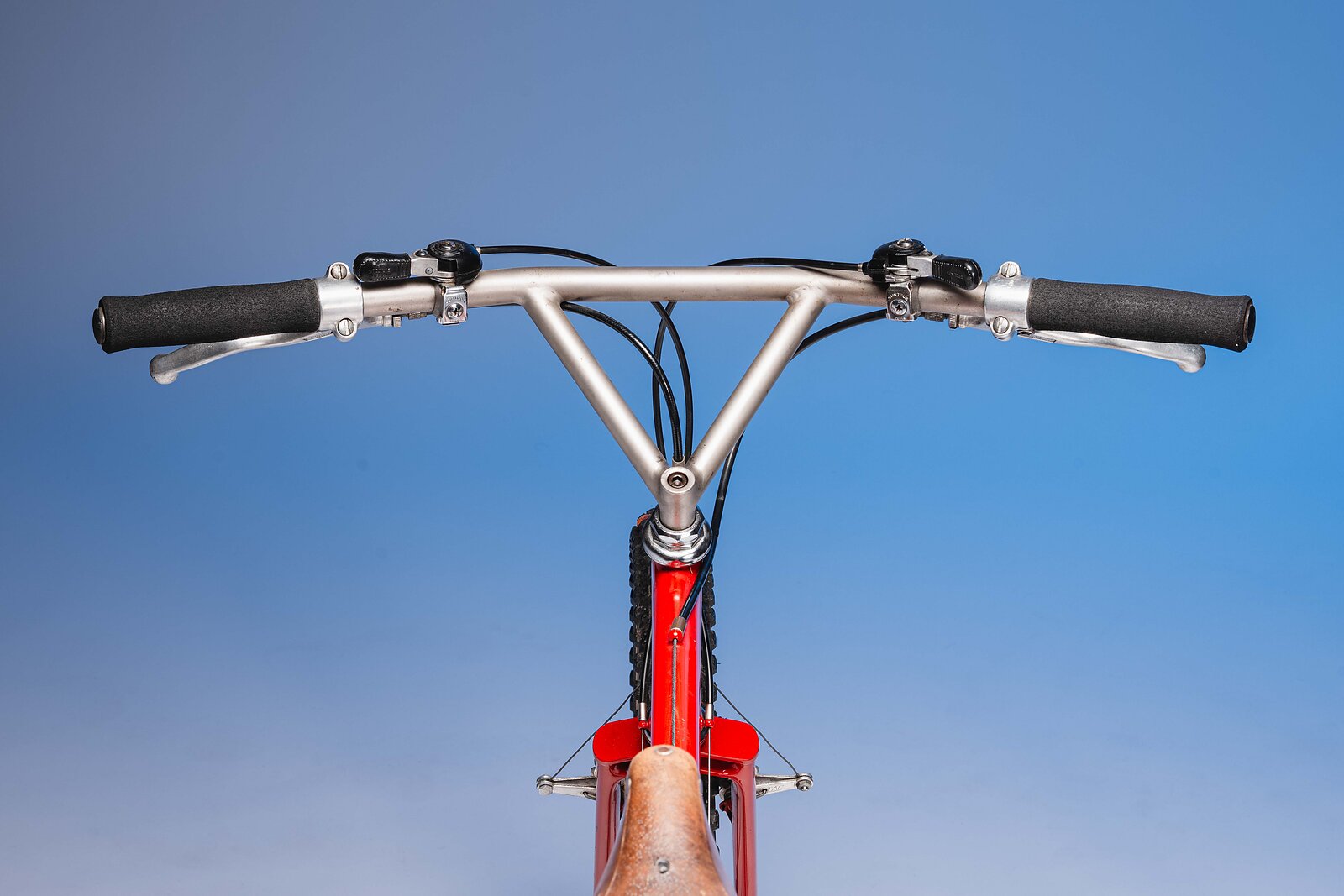
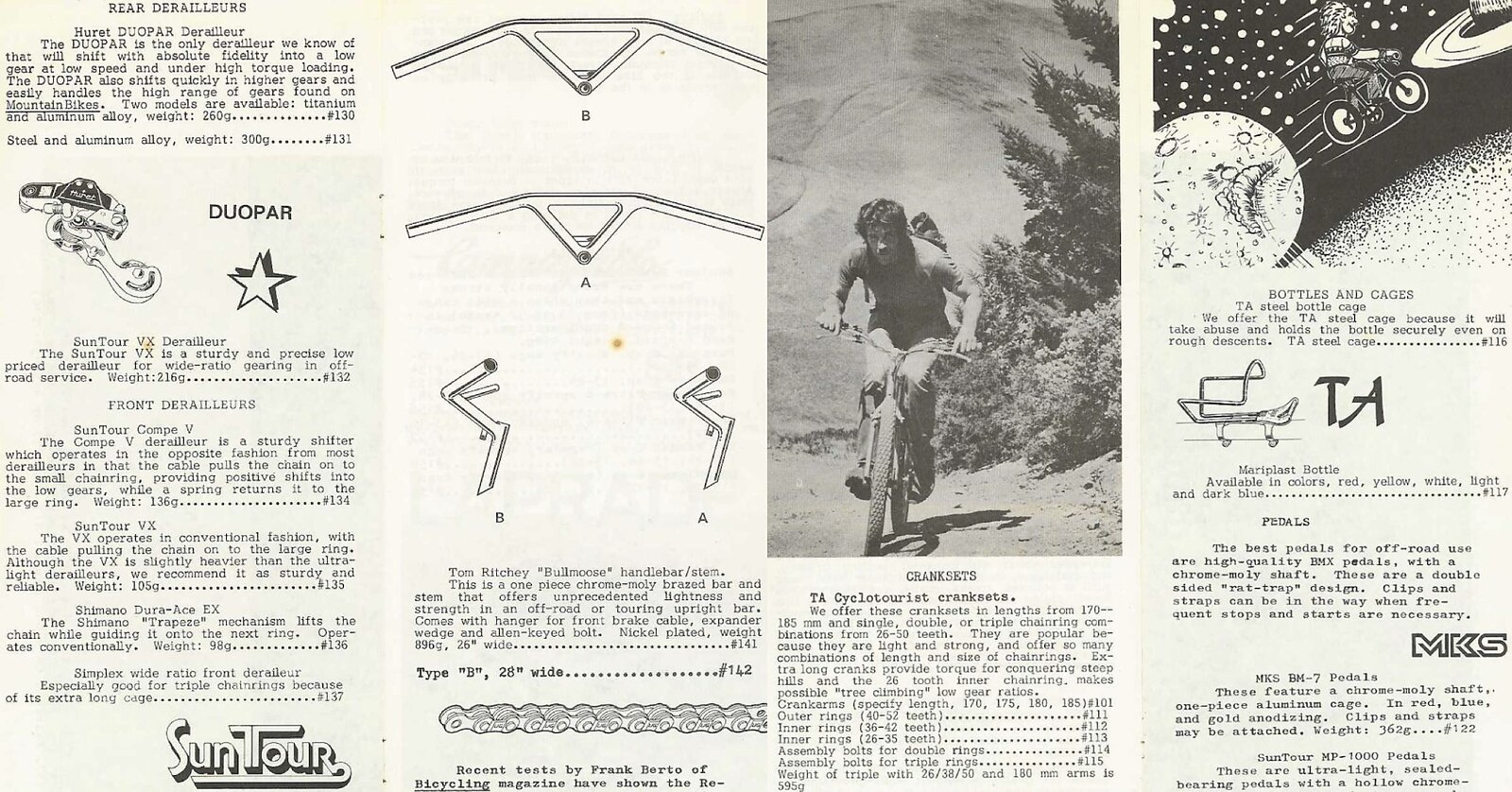
The 1981 Ritchey MountainBikes were flush with innovative components, but few were as visually striking as the Bullmoose integrated handlebar and stem. An example of a purpose-built component born out of necessity, the unique silhouette of the Bullmoose bars would become synonymous with Ritchey bikes of the era.
“I found myself having to solve problems with the MountainBike that had never been solved because the bike was such a new bike. The Bullmoose handlebar came as a result of handlebars and stems slipping as you are going downhill and hitting bumps,” said Ritchey in the “Tom Ritchey’s 40 Year Ride” film.
The one-piece, chromoly-brazed bar and stem combo offered riders a significant increase in stiffness in a lightweight package, without the risk of bars rolling under impact. The “V” shaped supports of the Bullmoose bar provided additional lateral support, limiting unwanted bar flex. Nickel-plated and featuring integrated brake cable routing, the bar was available in two variations: model “A” was 26 inches (660.4 millimeters) wide, and model “B” was 28 inches (711.2 millimeters).
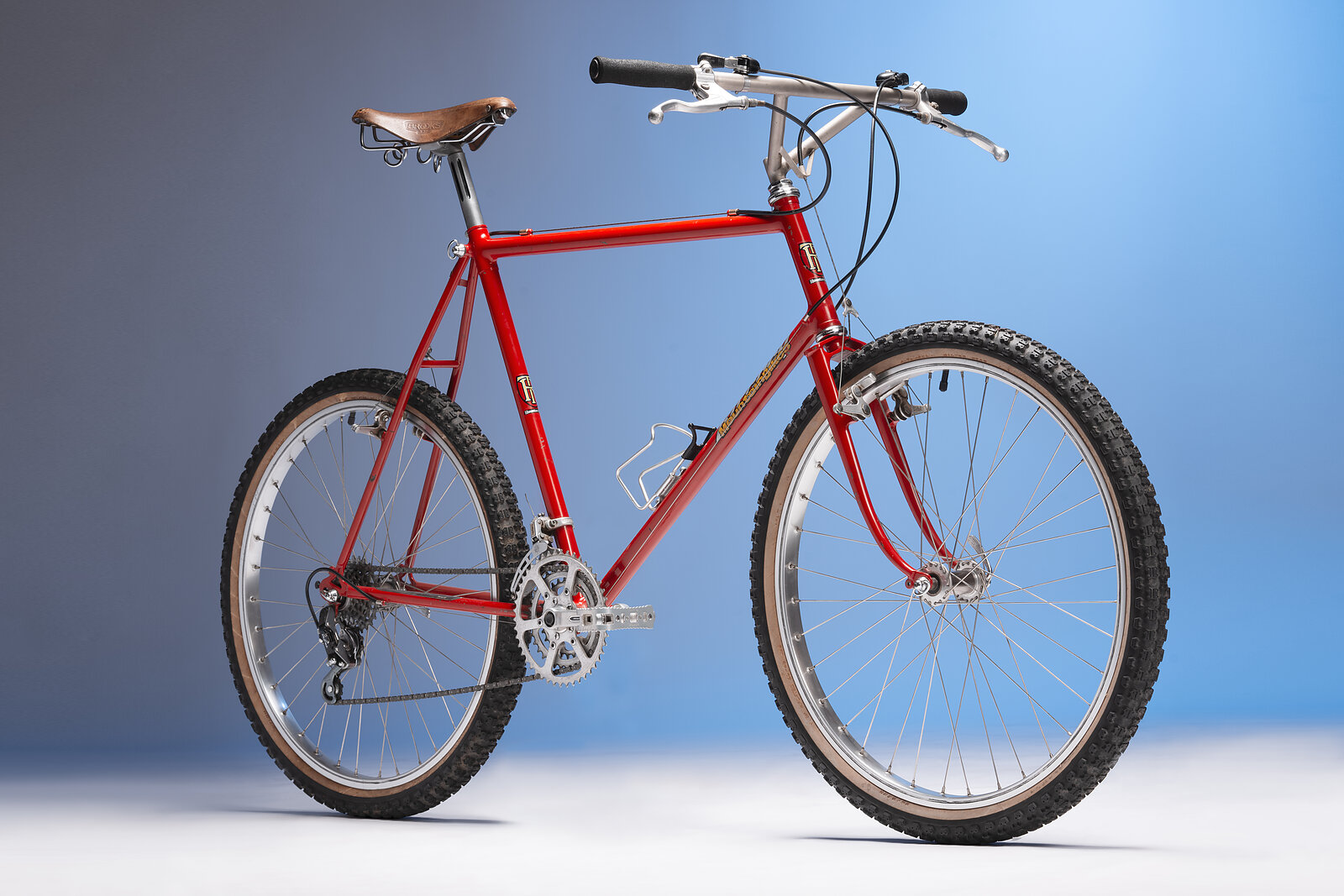
Alongside increased reliability and added tire clearance, this generation of bikes saw the widespread introduction of geared drivetrains for off-road riding. While the earliest days of the sport revolved around single-speed drivetrains geared solely for descending, riders began favoring bikes that could be pedaled both uphill and down.
While the SunTour shifters found on this bike may look unwieldy and awkward compared to today's offerings, they were considered cutting-edge when this 1981 Ritchey was released. Only available in a right-hand model, the front shifter had to be mounted backward, resulting in an asymmetrical shifter setup. In comparison to the frame-mounted or bar-end shifters commonly used at the time, these allowed riders to change gears without having to move their hands too far from the grips.
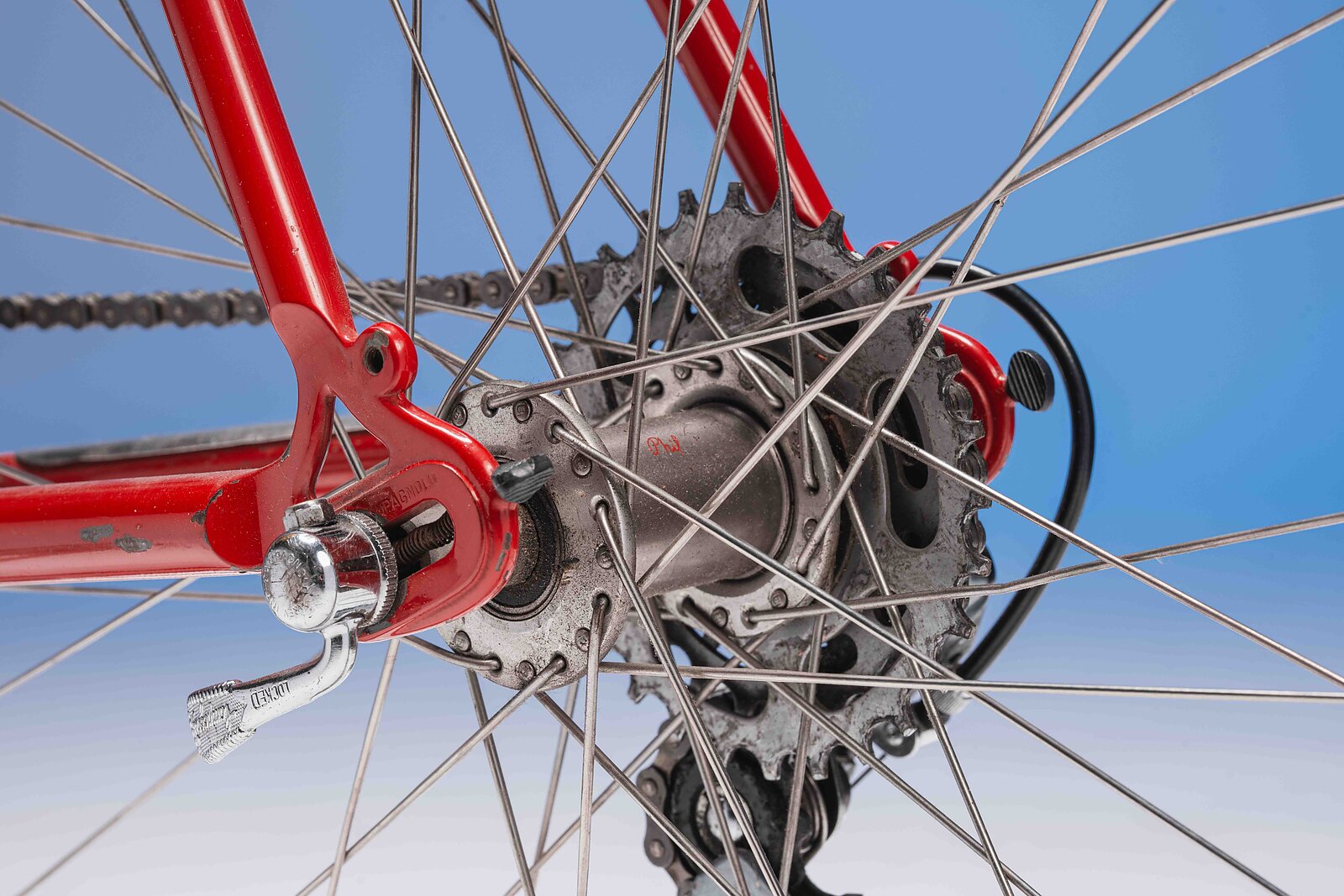
In 1981, Phil Wood & Co. was celebrating its tenth anniversary. This specific MountainBike model rolled on Phil sealed bearing hubs in their iconic chrome finish, complete with its signature red font “Phil” logo. Hubs were available with either allen or Campagnolo quick-release axles; this bike features the Campagnolo offering.
Many early frame builders, including Ritchey, looked to motorcycles for design and manufacturing inspiration. It wasn’t unheard of for motorcycle components to find their way onto early mountain bikes wherever applicable. The 1981 Ritchey MountainBikes featured motorcycle brake cables and housing, along with Magura motorcycle brake levers. Buyers had the choice of either long- or short-lever variations.
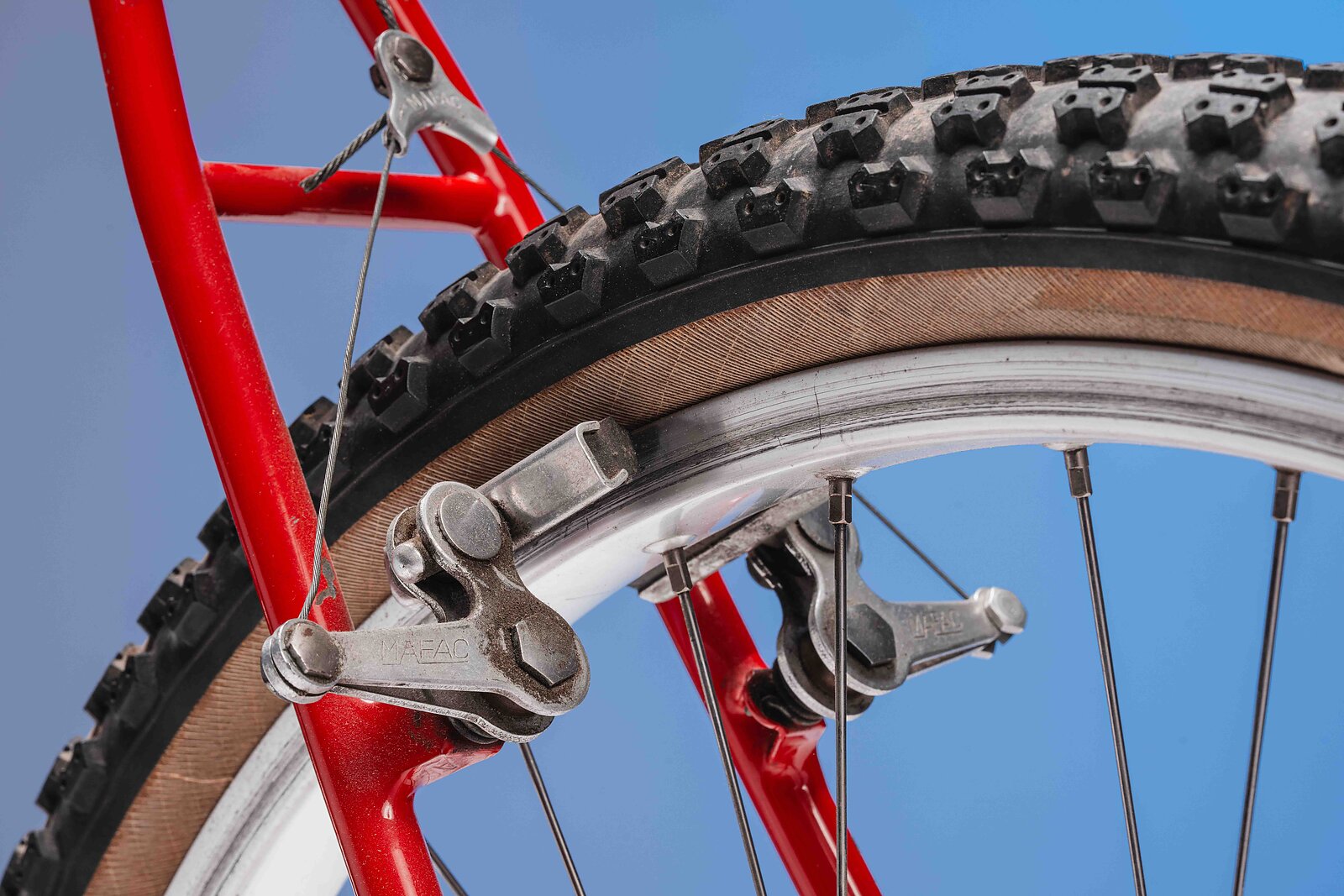
Riders were beginning to understand the importance of the saying, “speed is nothing without control,” prompting them to prioritize stronger, more reliable brakes. The Ritchey MountainBikes utilized Mafac Tandem cantilever brakes, marketing them as “The King Kong of rim brakes.” Proven by widespread usage in cyclocross, these brakes were favored for their ability to clear large tires. The Ritchey MountainBike frame was specifically built around this cantilever brake style, with integrated frame bosses for mounting, an industry first.
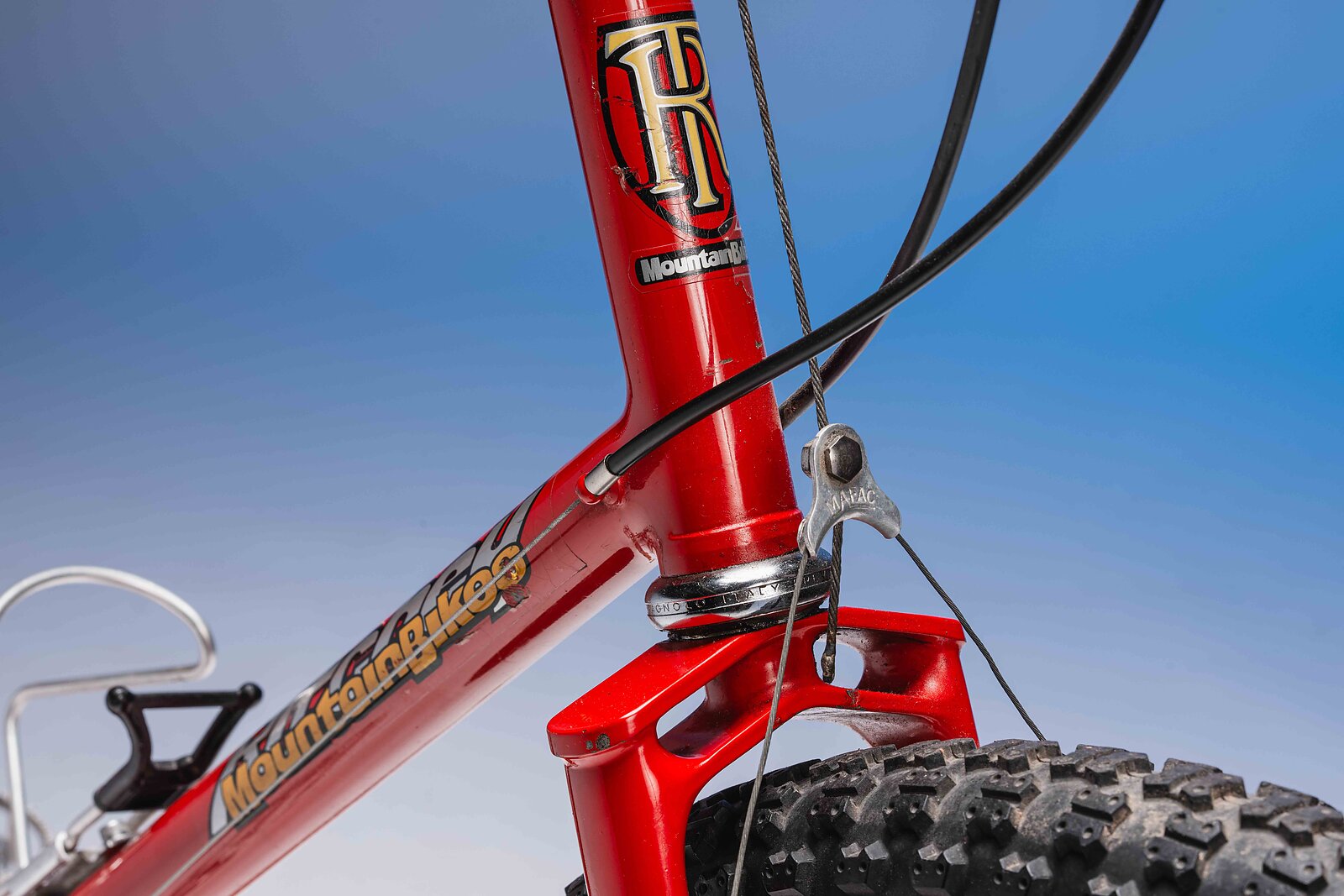
Without cast forks capable of accommodating larger tires, Ritchey used its own brazed, Bi-Plane fork design, constructed from individual pieces. This unique design allowed suitable clearance for 26” x 2.125” “balloon” tires. This tire profile was considered oversized for the era. Riders had an option between a Shimano, Chris King, or Campagnolo headset in the 1981 product catalog; this build features the latter of the three options. The “TR” headtube badge forever immortalized Ritchey’s impact on the earliest days of the sport, cementing his name in the pursuit of off-road perfection that still grasps the industry today.
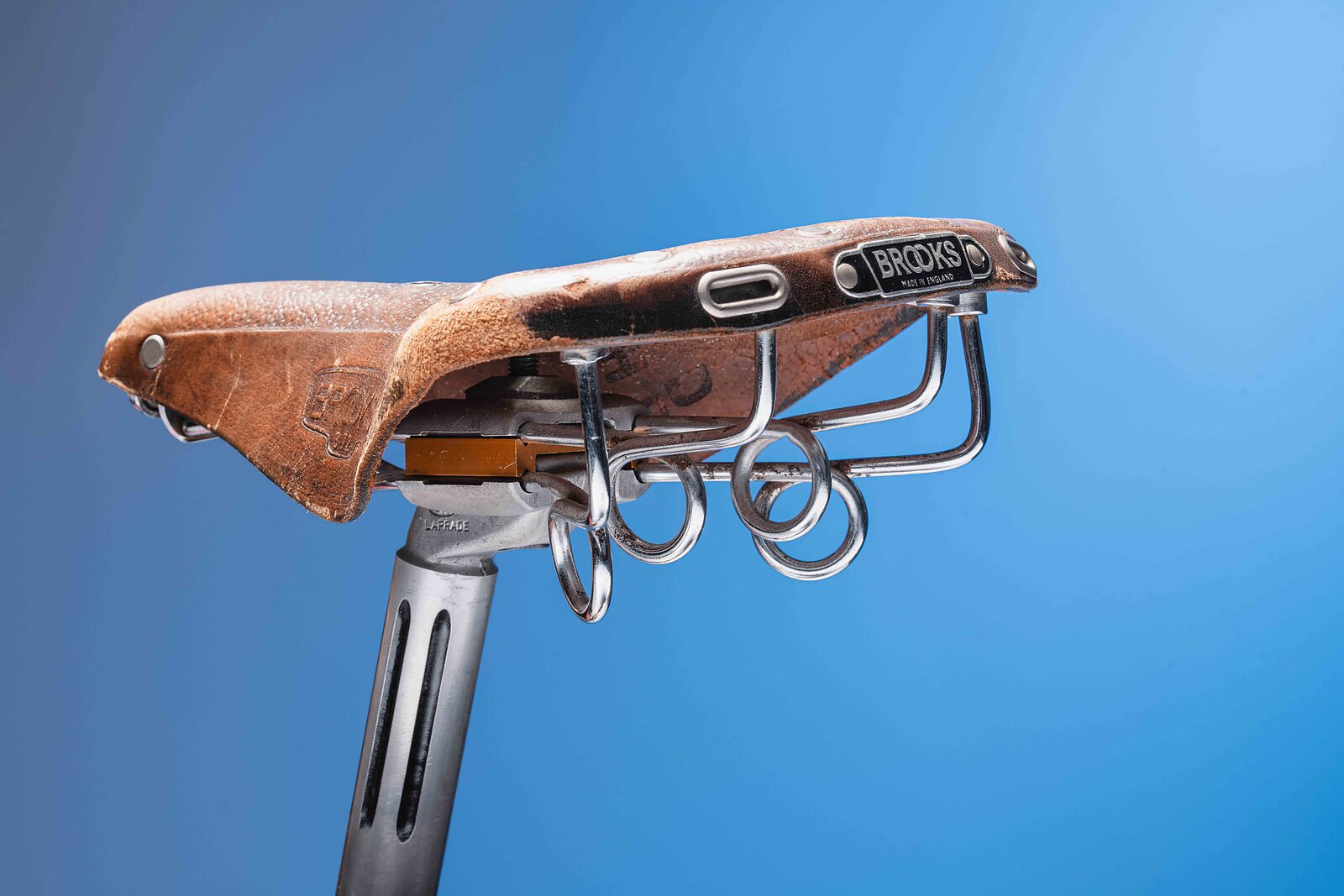
While Ritchey MountainBikes ushered in a host of technological advancements, the Brooks saddle found on this bike isn’t too dissimilar from that of the one seen on the 1941 Schwinn DX. The Brooks B-72 saddle features a genuine leather outsole and four-wire style rails for a smoother ride. The SR French Laprade seatpost is only 240 millimeters long, and required a Joe Breeze seatpost adaptor to accommodate this specific saddle. Brooks still produces the B-72 model, with its design remaining largely unchanged more than 80 years later.
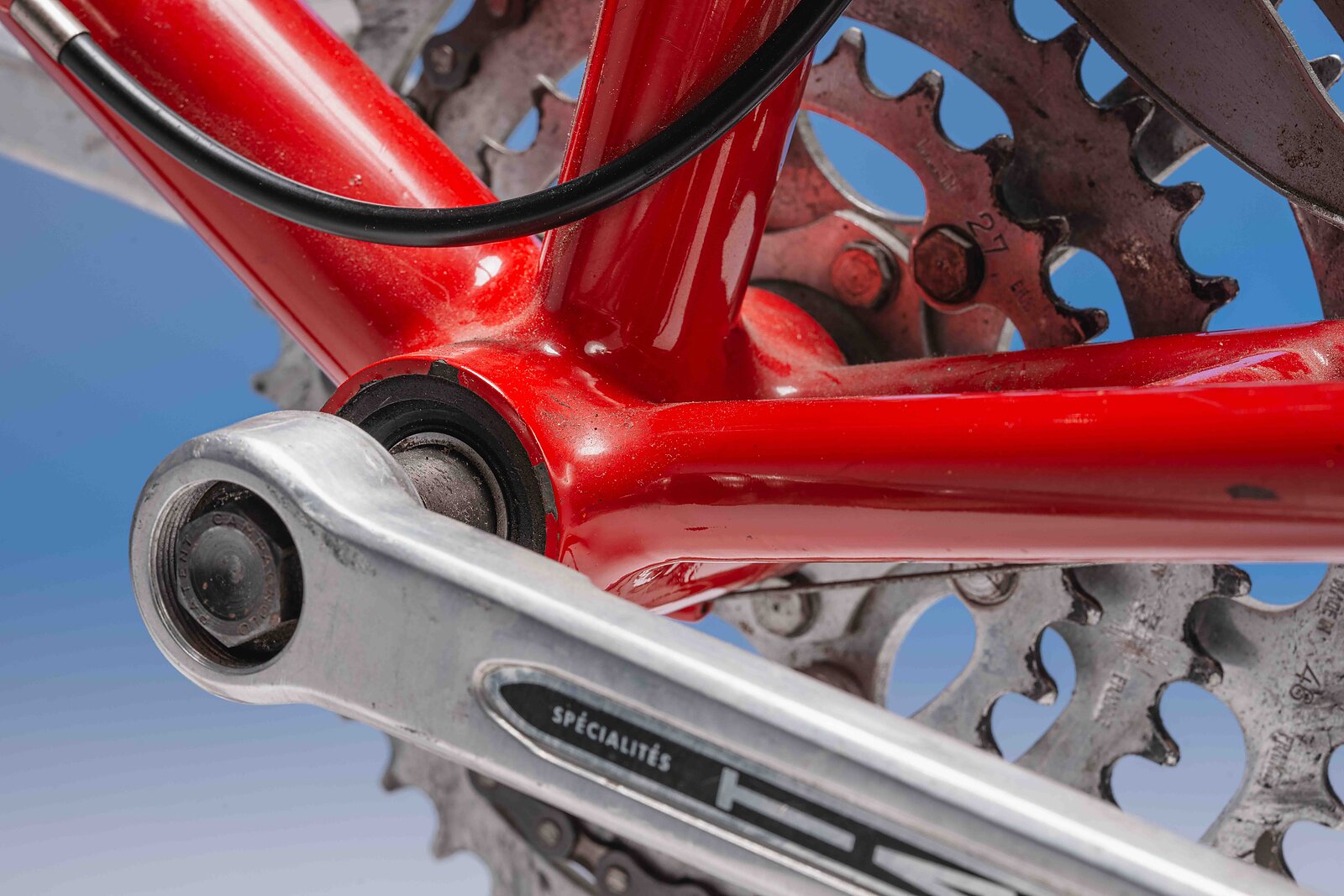
This 1981 frame used a custom Ritchey sealed-bearing bottom bracket machined into the frame, promising numerous benefits over other options available at the time. The integrated design allowed for larger diameter bearings than those found in the popular Phil Wood bottom bracket of the era. The drivetrain consisted of a TA Cyclotourist crankset paired with a six-speed freewheel and Huret DUOPAR rear derailleur, boasting “tree climbing” gear ratios that provided riders with access to more terrain than ever before.
In an age of mass production and rapidly increasing electronic dependency, the Ritchey MountainBikes still stands apart, representing an era of independent ingenuity. This bike depicts a time when a guy in his early 20s from Palo Alto, California, could turn a handful of steel tubing into an industry standard. Ritchey’s innovative approach and passion for the sport single-handedly propelled mountain biking forward and set a precedent that larger manufacturers rushed to replicate.