Full Circle Swapping Skillsets for a Mindset Shift
Recently, I had a full-circle moment in the most unlikely place. Pacing nervously, I waited for my teammates to arrive on a canoe at Bellingham, Washington’s annual community race extravaganza, Ski to Sea. In truth, I’d pulled up to this function a little out of sorts.
“What am I doing here?” I kept asking myself. As a professional freerider, I felt way outside my comfort zone participating in the cyclocross leg of a relay race. I was surrounded by people from every walk of life, all with number plates adorning their bikes. Nearby, an auctioneer shouted off team numbers from incoming canoes so fast that I started to feel like I was in a fever dream. After months of introspection, standing on the banks of the Nooksack River in spandex wasn’t exactly providing much clarity.
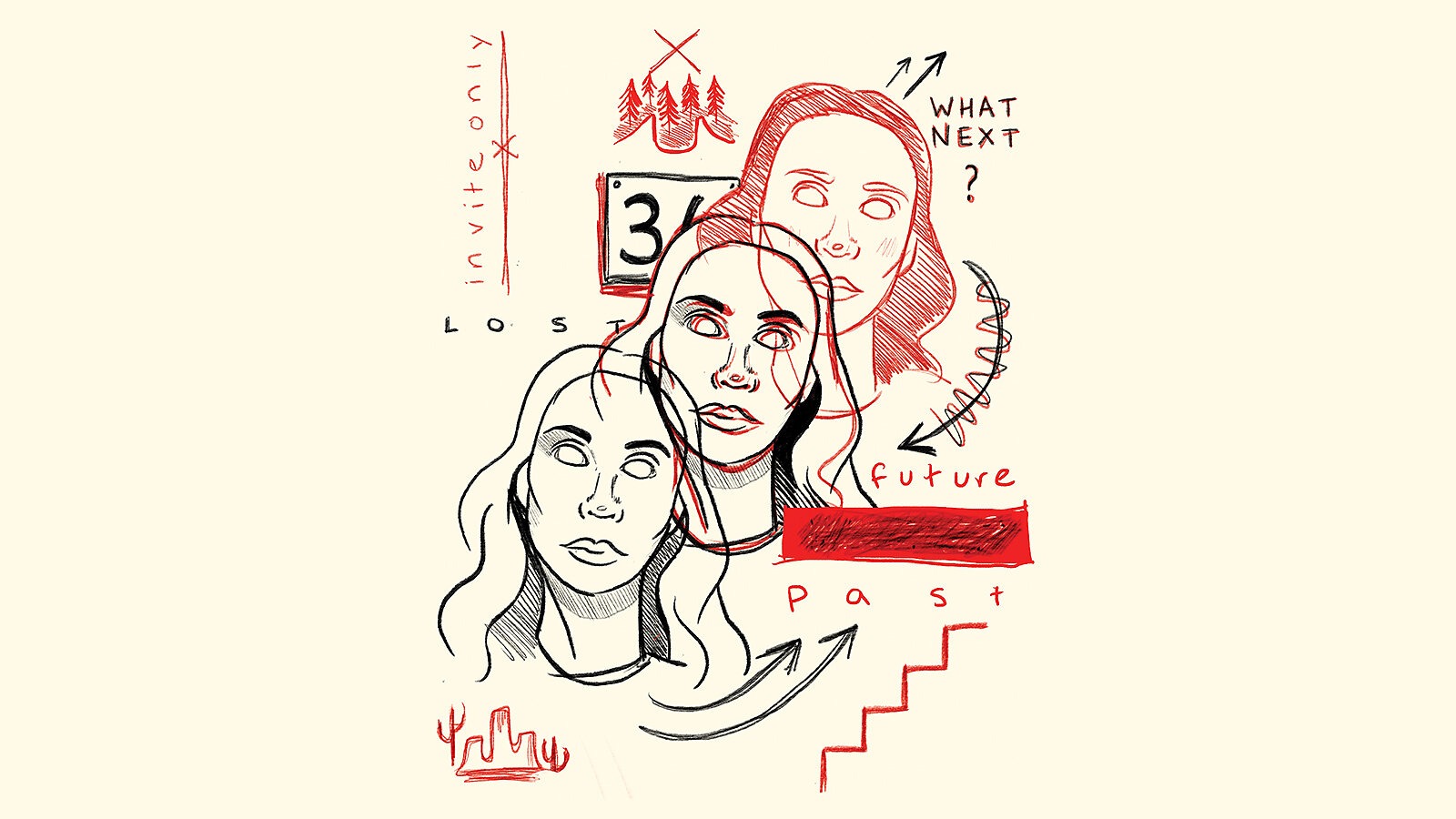
I do think it’s normal to feel lost from time to time. As life moves, so does our experience in it, thus necessitating moments of reconnection to our hopes or desires and adjusting course if necessary.
Those aren’t really my own words but, rather, a slight rewording of online advice I’ve come across about how to deal with hopelessness which, for better or worse, is something I’ve been Googling recently. Sometimes it feels easier to analyze a written description of an emotion than to tackle it head-on and embrace it as a part of my own lived experience.
My angst has tracked in parallel with a slowing of opportunities coming my way within the women’s freeride movement. This turbulence has left me needing to reconnect with myself in order to get my head out of the clouds.
Four years ago, after getting canned from a nine-to-five gig for not respecting a stale corporate culture of strict one-hour lunch breaks, I got a message from Red Bull Formation founder Katie Holden asking if I’d be interested in digging at the event. Of course, I obliged.

Formation, an event that gathered womentogether in the Utah desert to build and ride big lines in a noncompetitive and supportive environment, was the access point into mainstream freeride for me. Up until that point I hadn’t spent much time around women who were riding jumps or freeriding and filming so meeting other people with similar aspirations was life-altering. I learned an infinite amount on that first trip—everything from building and riding bigger features to gaining and managing sponsors. My newfound mentors made a world of difference, and I came out of the event inspired and with an entirely new perspective on what was possible. Most of all it felt good, like I wasn’t alone.
That supportive attitude still exists today, but it’s not as freely available when we’re all spread out across the world. Believe it or not, freeride is a team sport and relationships matter. You can’t just roll up to the biggest drop you’ve ever seen without a network of people you trust close by to sus out every possible risk, every possible line, and every possible strategy for stomping it. This is why so much individual rider progression happens at events.
It’s been two years since Formation was last held and women’s freeride feels like it’s in a state of transition. On a local and regional level, I’m encouraged by women’s jump jams popping up all over the place. I think these are doing an amazing job at bringing more women into the sport and building community. But how does one move from local events to getting an invitation to a world stage? I was excited to read Red Bull’s announcement in early June that a women’s category would be added to their annual Rampage event. We are breaking barriers at the top level, but getting there still presents a huge hurdle.
In other disciplines, progress is undeniable. Women are riding the wild steeps of Hardline, hitting Crankworx Diamond Level slopestyle courses with gusto, soaring across the biggest jumps in the world at Darkfest, and landing movie parts galore. Representation is definitely growing. It’s such a cool thing to witness but it hasn’t stopped me from feeling so lost in it all lately. I see the curtains of the biggest invitation-based events being opened for a select number of women, all of whom I’m proud to call friends—I have no bones to pick with them. Meanwhile, my calendar remains relatively blank.
This has been the struggle I sit in. Adding to my unease is a deep-seated fear about whether the onslaught of exclusion and aggression aimed at the trans community that has become mainstream in American politics is creeping into the mountain biking community at large. I’m constantly navigating red tape. Are people too scared to work with me or invite me to events because of all these new exclusionary policies or because I’m not in with them? Am I not in with them because I’m not a good enough rider or because it’s controversial to be rolling with a trans person? A straightforward answer, however harsh, would be easier to swallow than living with constant cognitive dissonance.
In the middle of all these swirling thoughts came my invitation to join a team for Ski to Sea. I reluctantly agreed to do it. I’m a mountain biker after all, I told myself. The seven- part relay starts with a cross-country ski leg at Mount Baker and works its way west, toward Bellingham, in a mix of downhill ski, run, road bike, canoe, cyclocross, and kayak legs. This is the type of race that brings out some characters—imagine all the ladies from your dentist office taking up arms for their one physical feat per year and that’s what we’re looking at here. And these ladies are not messing around either, they’ve painted their faces and they plan to leave it all out on the course. Debbie has been training for the last 10 days straight in preparation for her leg.
So, as the day neared, I pulled myself together, made some last-minute tweaks to a new Specialized Diverge I had just built up, and prepared to go to battle under the banner of team “Lick My Glit.”
After an apprehensive wait on the riverbank for my leg to begin, I took off in a blur of angst, nerves, and apprehension. A couple miles into my leg, riding through four inches of mud in the pouring rain, I realized I was enjoying it. Most of the people around me were making their way through the mud on foot, but I found traction at the edge of the course in some grass that was as tall as me. Perhaps my mountain biking background had given me a leg up there.
As the grass whipped my face and I passed one rider, then another, and another, and another until I lost count, I suddenly felt like I was on drugs. The dopamine hit me so hard that I never let off the gas for the rest of my leg which lasted 56 minutes—the perfect length of time for a freerider lacking endurance. I finished my leg four minutes under my hour goal and felt a surge of accomplishment. I don’t think I’ve ridden that fast in a long, long time.
The whole experience reminded me how much fun bikes can be when you’re doing it for the soul and community of it, as opposed to the invitation. Drop bars or dual crowns, it doesn’t matter. As I sat caked in mud after my race, I exhaled and looked around. Maybe, if I stay connected to doing it for me, everything will be OK in the end.