Thule ReVert 4 The best vertical rack around?
I’ll keep this intro simple: Thule’s ReVert series of bike racks are the best vertical “shuttle” style racks I’ve ever used. It’s not even close. This is the rack I recommend to my friends, and the one I want my bike strapped to when the going gets rough. Thule absolutely nailed it with this rack and I’m a huge fan.
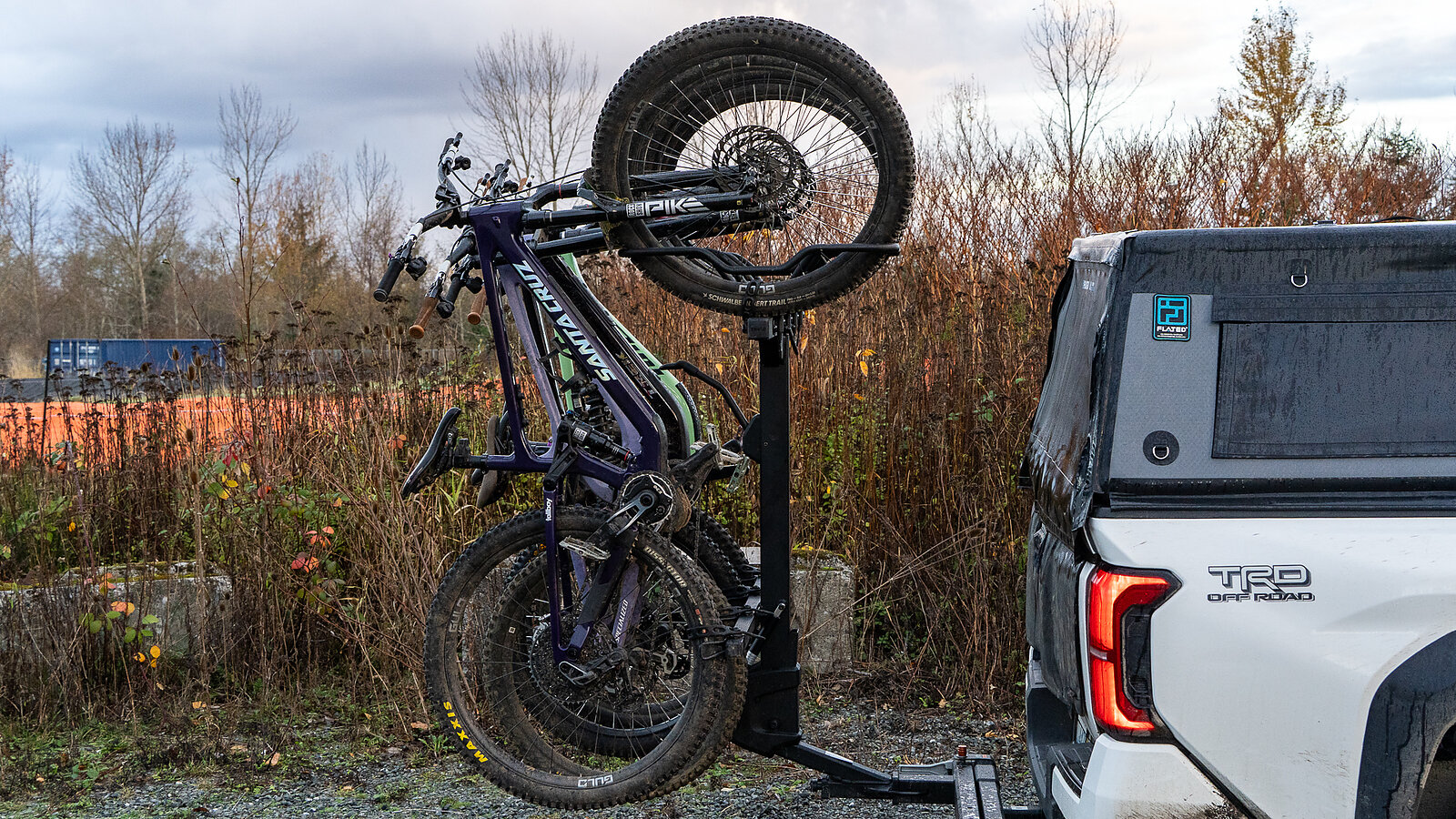
It is vanishingly rare that I get the opportunity to review a product that I endorse as wholeheartedly as the Thule ReVert 4. My bikes have spent a whole bunch of hours over the last few years in three different ReVert 4s, including the one pictured here and, through it all, the rack has been excellent. With that out of the way, let’s get into the features and performance that make this rack so good.
Thule ReVert 4 Overview
- Configurations available: 4 or 6 bike options
- Hitch size: 2” only
- Capacity: 55 lbs per basket
- Stated weight: 72.3 lbs
- Price: $1,099
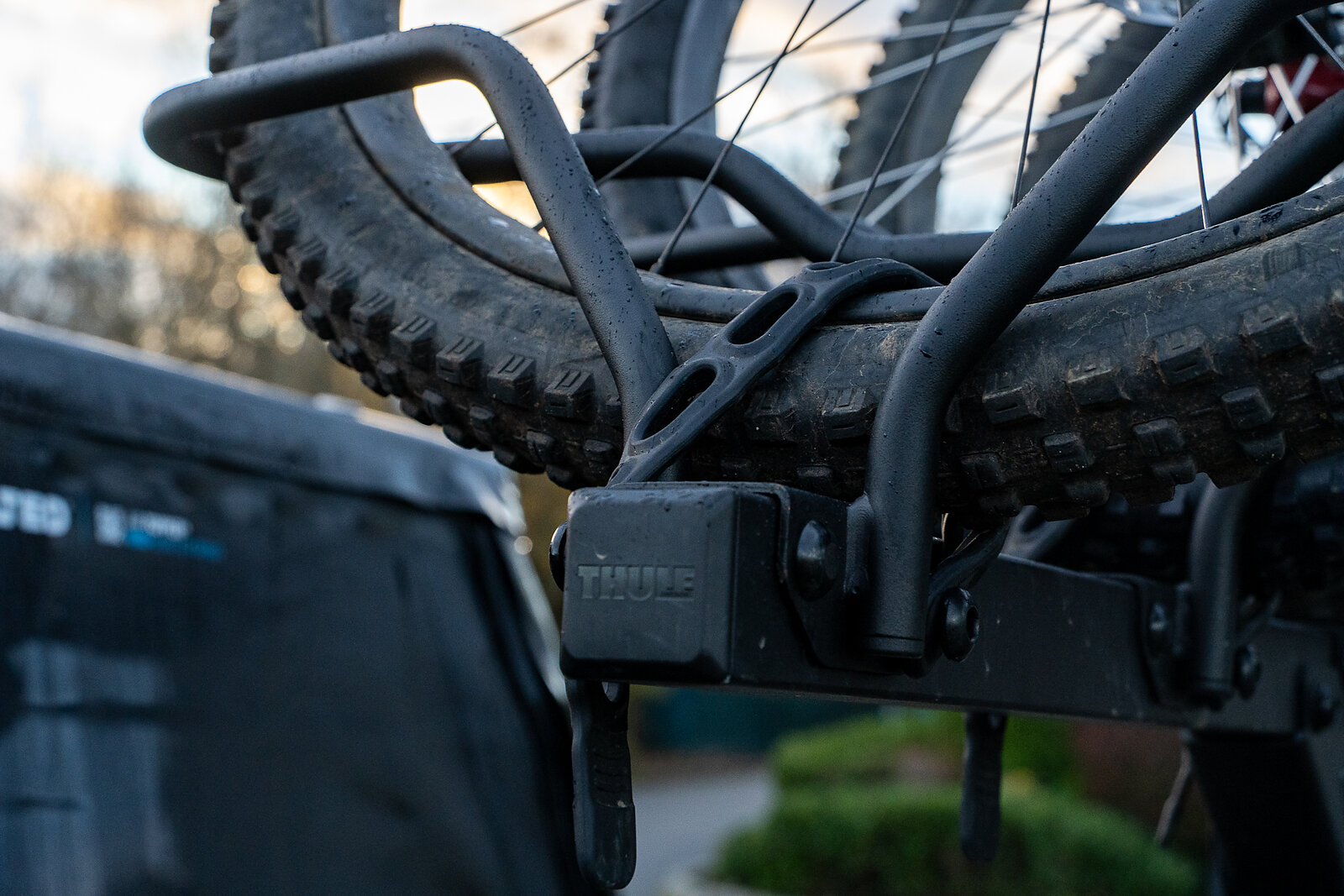
Thule ReVert 4 Features and Installation
Thule has the shipping and installation process dialed. Everything comes in one huge box and shipping is free if you sign up for Thule’s email list. The instructions are clear and concise, and Thule includes all the tools you’ll need to assemble and install the rack. It took me about 20 minutes to bolt together the ReVert 4, and the only part that requires a little bit of attention to detail is when you’re installing the baskets, along with the hardware that holds the front wheel straps. Double check the instruction diagram to make sure you’re aligning everything correctly and you’ll be just fine.
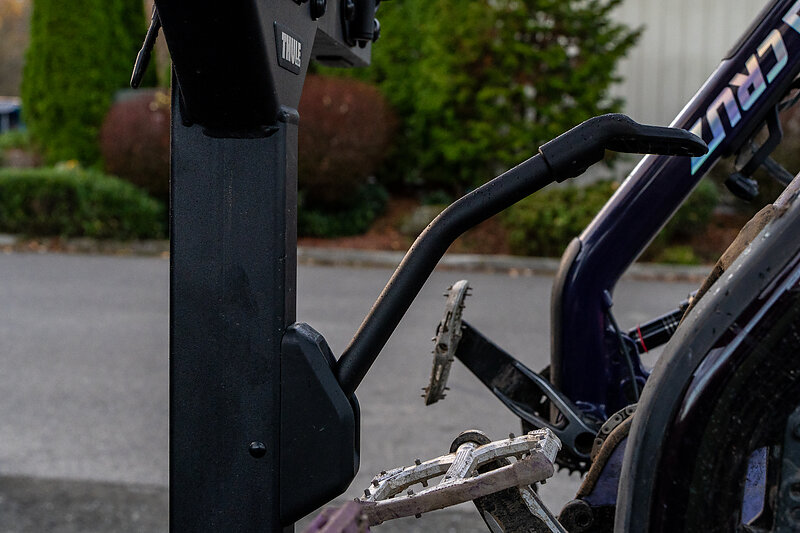
One of the first steps in the installation process is sliding the rack into your receiver and cranking down the anti-rattle mechanism. In my experience, vertical racks really need a solid anti-rattle solution, they get put through a lot of stress and a little bit of play at the hitch translates to big, scary wiggles and clunks higher on the rack. Luckily Thule’s is really good. It uses a hinged, stowable, ratcheting handle built into the rack to cinch down an internal wedge. This means that you don’t need any special tools to adjust it on the fly or swap it between cars. Just pop out the handle, spin the wedge out, swap the rack over, and cinch it back down. This is by far the easiest and most secure rack-swap system I’ve used, and it makes it super easy to figure out complicated “shuttle math.”
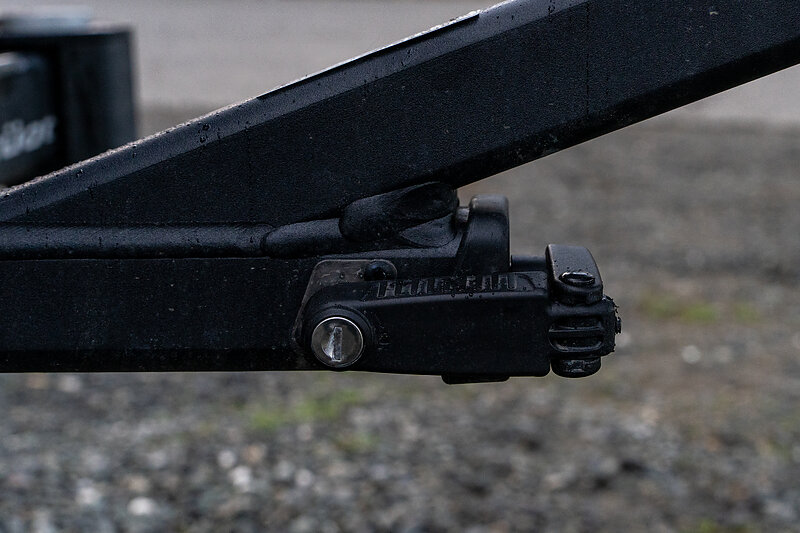
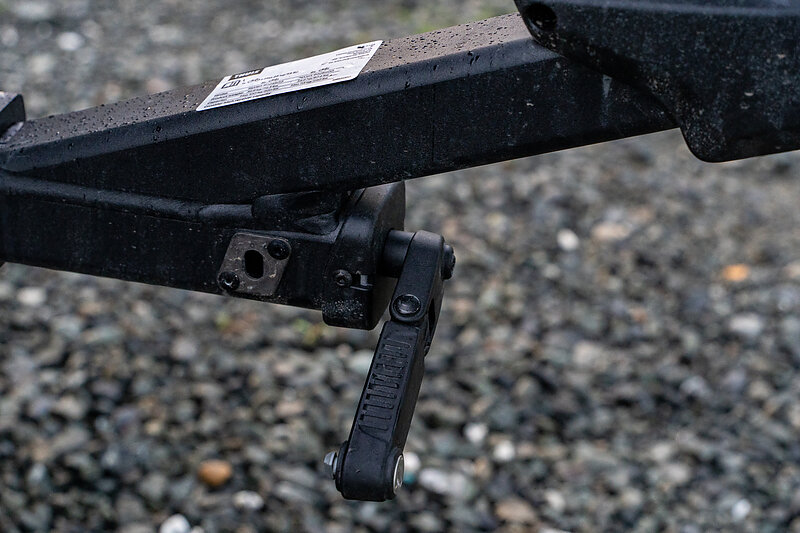
Moving up, there’s a beefy hinge area, with a pneumatic strut that assists you as the rack folds up or down. There’s a big safety pin, as well as the latching mechanism, to make sure the rack stays vertical. This system again, is super solid and easy to actuate. Because I’m reasonably tall I don’t need to fold the rack down to load and unload it, but I’ve ridden with shorter people who love this system because it allows them to fold the rack down at every transition and wheel their bikes in without even lifting the rear wheel.
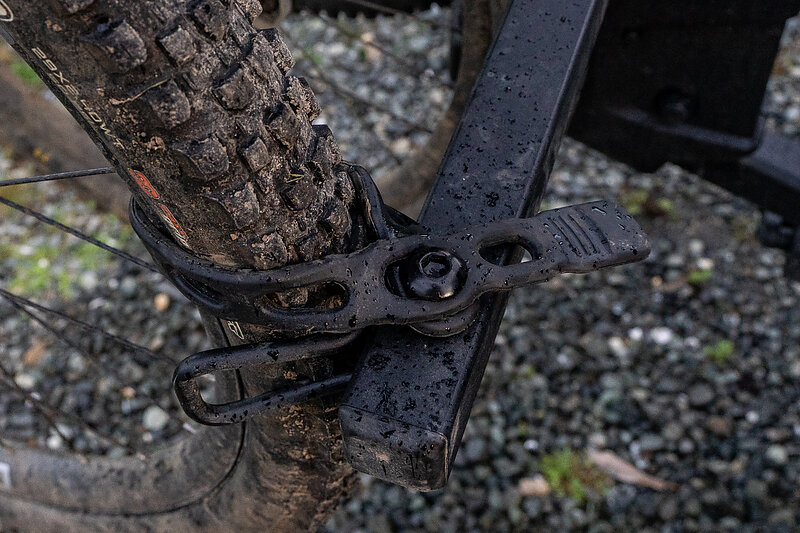
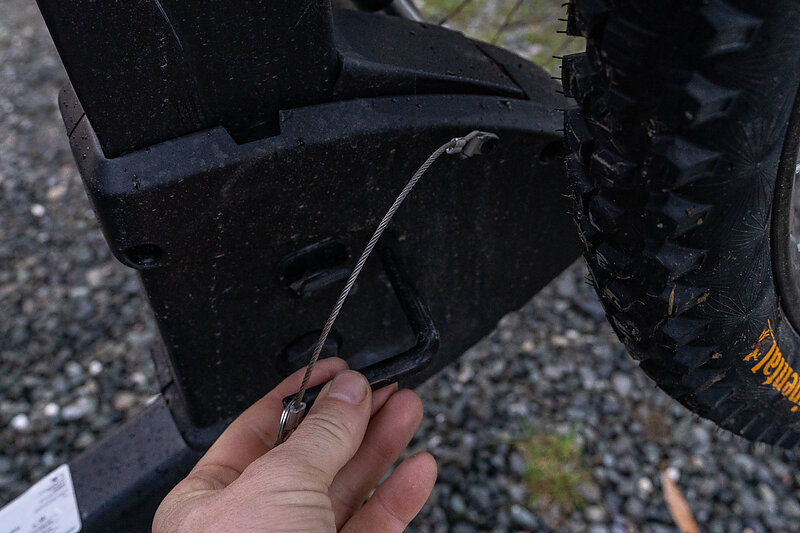
The rear wheel brackets and straps are bomber and simple. Folks do sometimes take the time to thread the strap through the little butterfly bracket which is silly and unnecessary, but even so, the system is easy to use. The front wheel baskets hold anything from a 26-29” wheel (and 24” with an adaptor) and use the same solid, simple strap and peg system. In previous versions of this rack, the outside two baskets doubled up the straps for security, but with the current version the straps for all the baskets have been beefed up, which eliminates the need to double strap. The upper baskets play nicely with a wide range of fenders from Fox, RockShox, and third party sellers.
All-in, this rack has a fairly simple, but easy-to-use, and super durable feature set. Everything you need, nothing that you don’t.
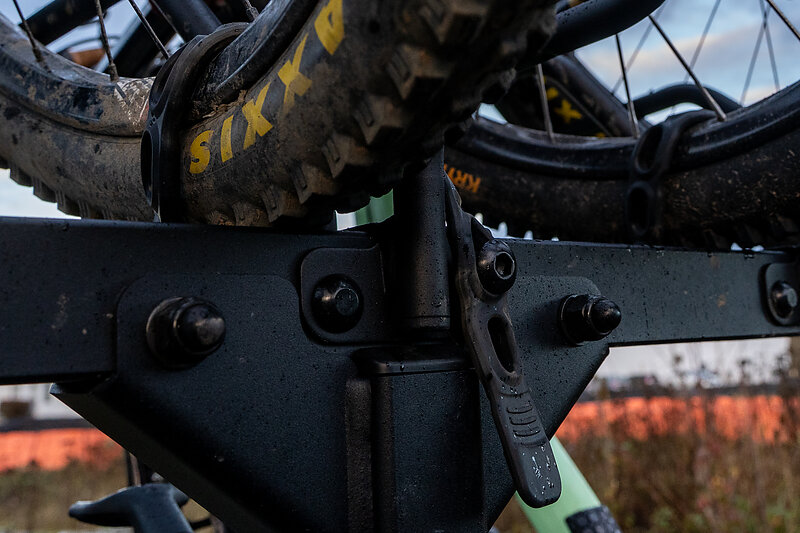
Loading and Unloading the Thule ReVert 4
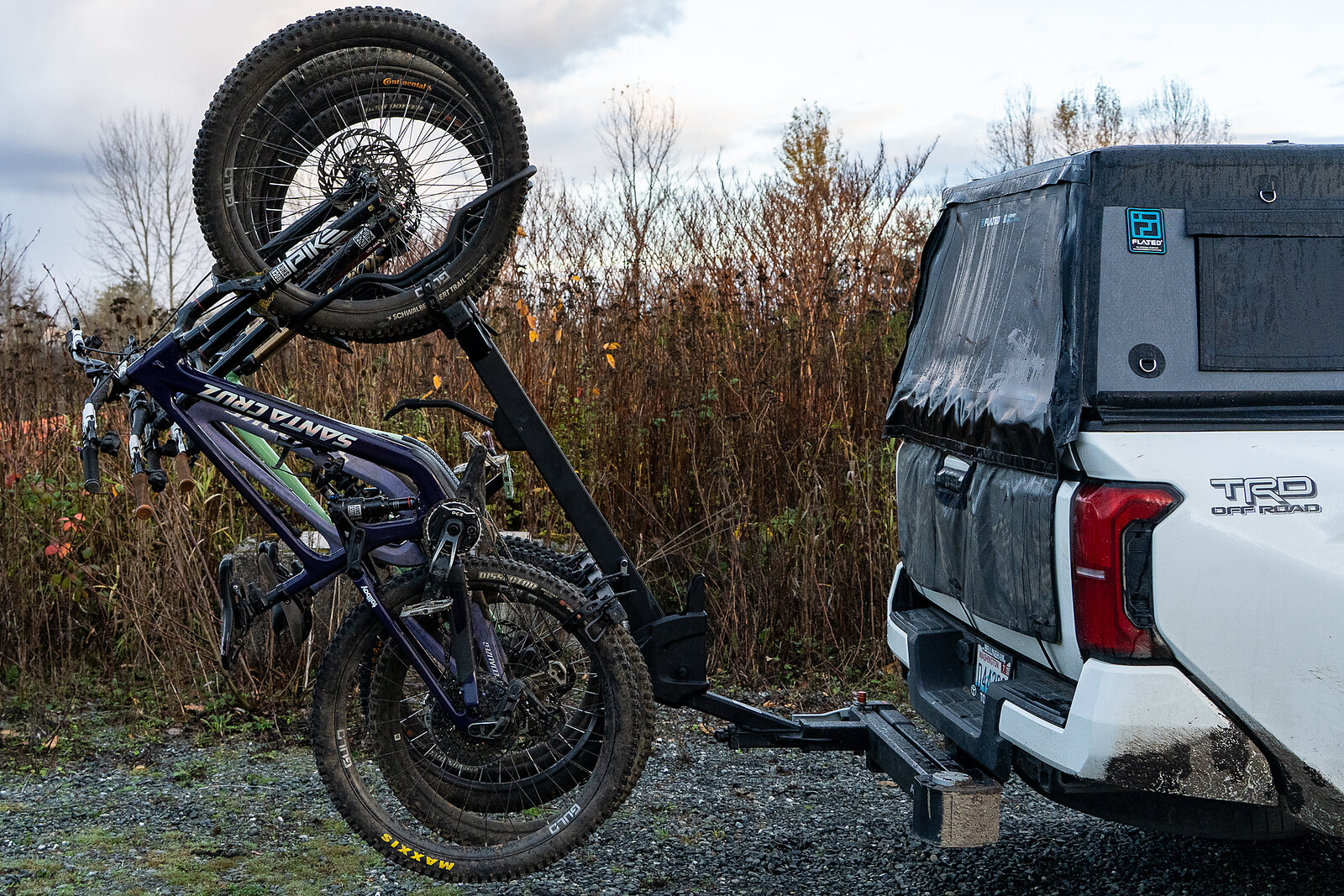
Like most vertical racks, the ReVert loads left to right when viewed from the rear, and there’s a slight preference to load the tallest bikes first so there’s more clearance under their bars. I haven’t run into any weird clearance or rubbing issues though, so it’s not a big deal. Once loaded, the bikes sit securely, with nothing but tires contacting the rack. The ReVert’s basket and strap design means there’s very little side-to-side bike sway even when driving rough roads fast.
When it’s time to unload, I like to have one person stand between the rack and the car, and undo all the straps at once. Then the rack unloads right to left. It is possible to unload it left to right, with a little bit of care, if you just need to grab one bike off the rack.
It’s also easy to use the pneumatic assist to fold down the entire rack, either to make loading and unloading easier, or to access the back of your car. I’ve found that this system makes it easy to fold the loaded rack up and down, even if it’s fully loaded with e-bikes and you’re a fairly small person.
Thule ReVert 4 Performance
I tend to judge a rack on three things: how easy it is to load and unload, how securely it holds the bikes, and a third intangible, “how sketchy do I feel knowing my bike is on this thing while driving fast on bumpy roads?” category. The ReVert scores top marks in the first two categories. And, while I’ve had a solid experience shuttling with the ReVert 4 on my truck, what really sold me was following my friend Luke’s truck, with a ReVert 4 loaded down with my bike as we drove from Lillooet to Pemberton via the Hurley River Forest Service Road, better known as "The Hurley."
That route involves miles and miles of beat up gravel roads, and Luke’s copilot has driven The Hurley a bunch, and was egging him on to drive faster and faster. The Hurley is one of those roads that makes you feel like your body needs a bolt check afterward, and watching the ReVert 4 loaded down with e-bikes stay steady as Luke charged through the washboard in his ancient Chevy really helped build my confidence in the rack. If it can survive that, it’ll be fine with anything I throw at it.
Rack Comparisons
Compared to the 1Up Recon Rack, the ReVert is the same price, easier to use, feels more secure, and doesn’t interfere with fenders. Compared to the Yakima HangTight it is, again, the same price, way easier to use, and way more secure. It also doesn’t rub the finish off your bars. I’ve never owned a VelociRAX, but I’ve used a few, and my impression is that the ReVert’s fit and finish is much nicer, and I prefer the ReVert’s anti-rattle system, but the VelociRAX is probably the ReVert’s best competitor. Khyber Racks makes a sweet system, with less plastic, but the ReVert is a little more affordable.
There are a few smaller hyper-local manufacturers like Let ‘er Buck and Jambo Designs that make sweet racks, and are a good choice if they’re local to you, but it’s hard to match Thule’s dealer network and post-purchase support.
For Now
There are a whole bunch of vertical racks on the market, all with their specific strengths and weaknesses. But in my experience, Thule’s ReVert series of racks stands head-and-shoulders above the field. If I’m going to strap my bike to a truck and go deep into the mountains on questionable roads, the ReVert is by far my top choice of rack.
Learn more: Thule