Six Month Update: Shimano XTR Di2 Keep on trucking.
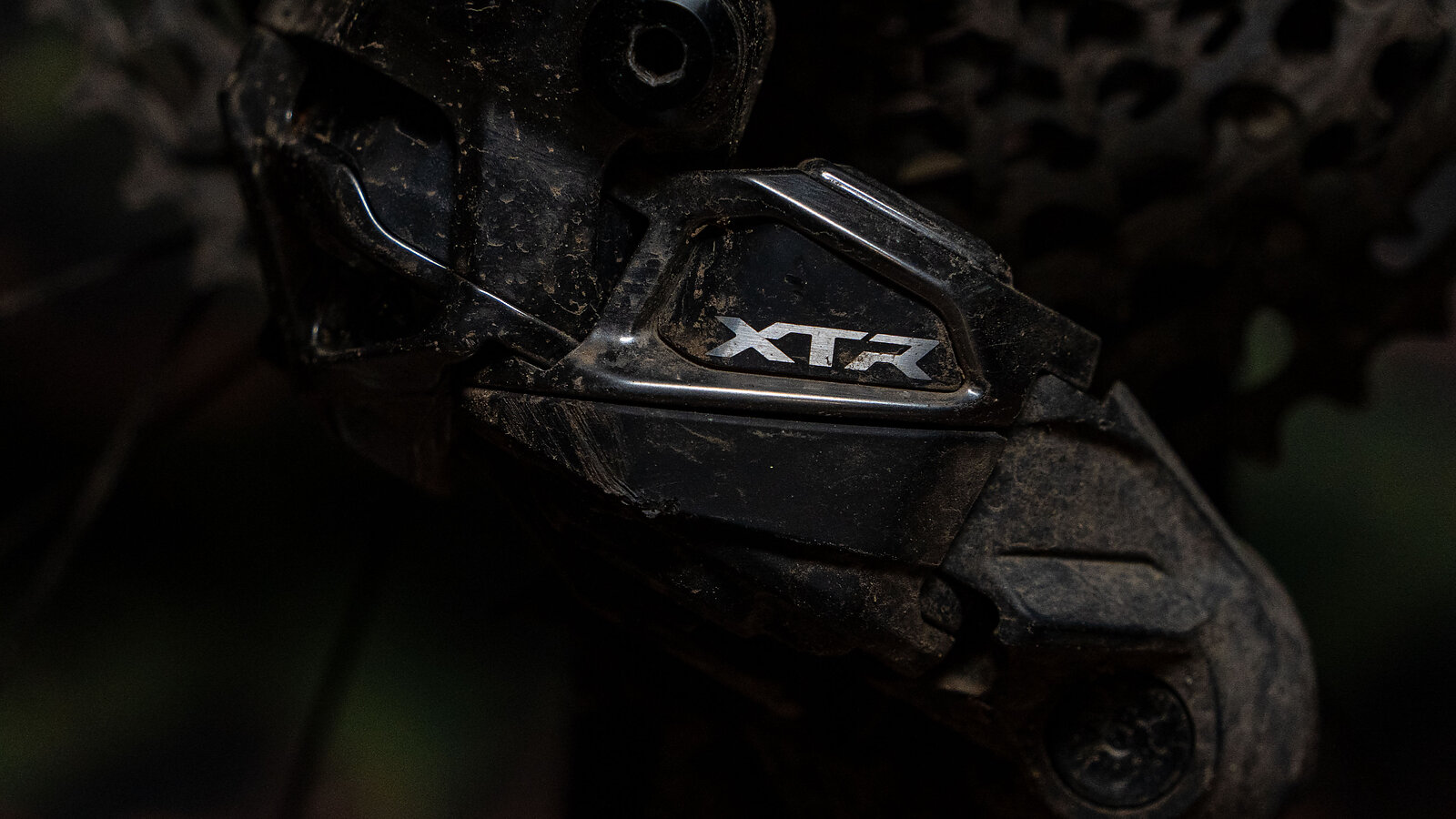
At the beginning of June 2025, Shimano released its long-awaited, fully wireless 12 speed Di2 XTR drivetrain, wheels, and brakes. I wrote an initial review when the groupset dropped, and have been using it on two different bikes in the six months since, doing my best to rack up as many miles as possible.
I’m not going to rehash all of the details and innovations this latest generation of XTR has brought to the table in this piece, since they’re covered in that initial review. Instead, let’s talk about how this drivetrain has held up over the past half-year and what, if any, changes I’ve made to my initial assessment.
I’ve been riding the 10-51 tooth, long-cage version of XTR, with the four-piston trail brakes. For my impressions on the 9-45 tooth mid-cage version of XT, check out that review.
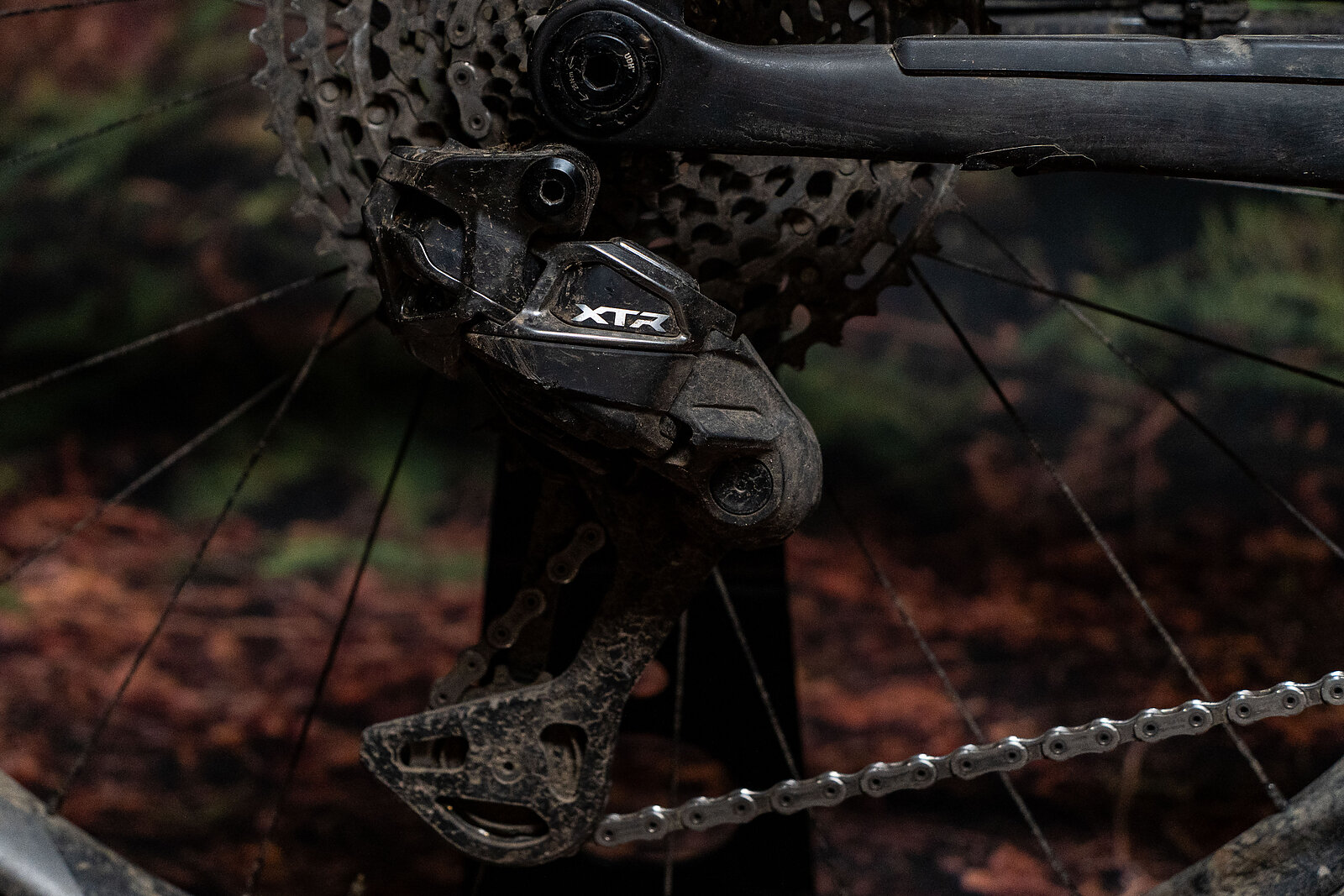
Shimano XTR Di2 Highlights
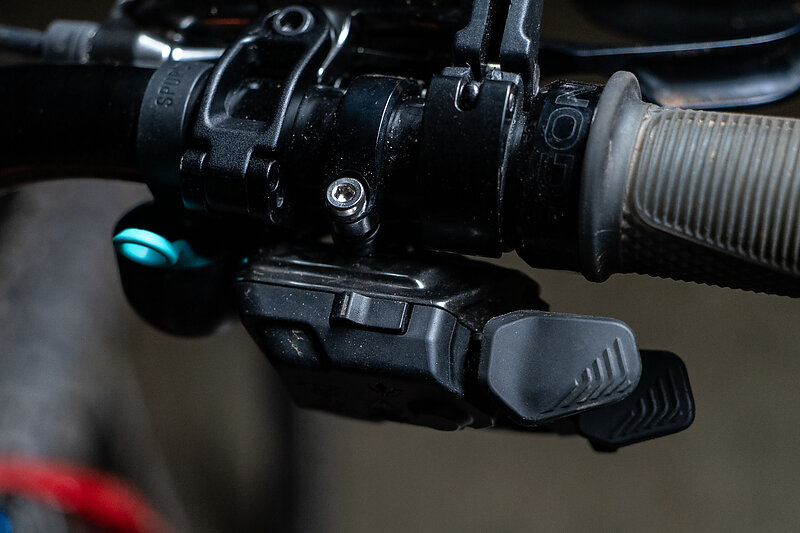
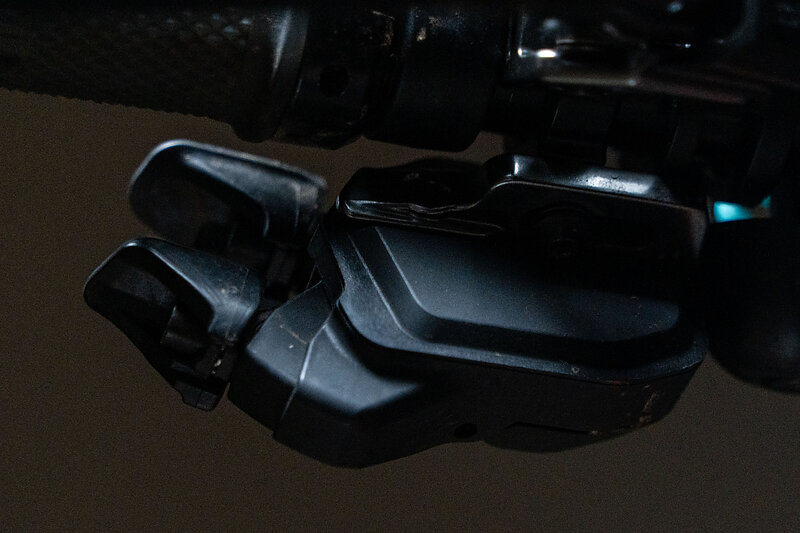
Three things continue to stand out to me every time I spin the cranks of Di2 XTR. First, the haptics—the interface with the controller, how everything feels—is excellent. I prefer this Shimano experience and ergonomics to SRAM’s current pod shifter layout by a fair margin. This is the best feeling electronic shifter I’ve used, and I have a hard time finding room for improvement. The subtle double click as you push deeper into each lever’s travel is absolutely delightful.
Second, the battery life. Anecdotally, I think I’m getting more miles of riding per battery charge than I do with SRAM AXS Transmission. Shimano’s system doesn’t turn the drivetrain on every time it bounces on the back of your car, which contributes to that battery life. Instead, it wakes up after you hit the shifter, and it takes a moment to fully wake up. That’s a little annoying if you’re trying to shift immediately after you pull your bike out of the garage, but it's really not a big deal. That said, I do get just as much or more battery anxiety with XTR, just because there aren’t as many Shimano batteries out in the wild yet, so I’m less likely to find a replacement if mine does die at an inopportune time.
Finally, the shift quality. It’s really good, and really fast. I’m not interested in trying to litigate which brand has the best shifting under load at this point because I think functionally, SRAM and Shimano are neck and neck here. Shimano has the edge when it comes to moving the chain across the cassette as quickly as possible, although, for my riding style, the latest AXS firmware update is also plenty fast. The difference I do notice is in how that shifting feels and sounds. The XTR drivetrain (and the XT one I’ve been running on another bike) move the chain under load just a little bit more quietly than any Transmission drivetrain I’ve used. It’s like SRAM and Shimano are both chewing the same granola, but the crunch is a little less audible with Shimano. Is it make or break? Absolutely not. Is it nice? Sure thing!
Addressing Initial Concerns
My initial assessment of this groupset came with two small frustrations. First, the derailleur was a bit slappy when descending and required a few adjustments to the B-tension screw as it wore in. Second, the brakes didn’t hold up quite as well to “big man rides steep trails poorly” as I’d hoped. They got hot and they didn’t feel as good at the bottom of long, steep descents as they did at the top. I started out with XTR Di2 mounted to a Specialized Stumpjumper 15, but since then have moved it over to a Trek Top Fuel and, interestingly enough, that bike swap has mostly solved both of my complaints.
When I first installed the XTR Di2 drivetrain, I had to adjust the B-tension while out in the field several times to get everything shifting properly. There’s a decent chance this is user error. This was the first current-gen Di2 drivetrain I’d installed so I expected a few hiccups, although the experience did remind me how much I appreciate the “no screws to mess with” philosophy of Transmission. But, once everything bedded in and I got the shifting dialed, it stayed that way. And when I moved the drivetrain over to the Trek Top Fuel, it continued to shift very well.
I’ve run several drivetrains on the Stumpjumper 15, and I’ve noticed throughout that it’s a pretty slappy bike. No matter what drivetrain it’s running, there’s a lot of chain and derailleur noise. I think this probably has something to do with the chainstay shape and location, as well as the Genie shock. Regardless, on the Stumpy, the 10-51T XTR drivetrain was quite loud. It was noticeably more loud and slappy than any other drivetrain I’d run on that bike. I never dropped a chain, (and I double checked to make sure that my chain length was correct) but I was consistently annoyed at how persistent it was.
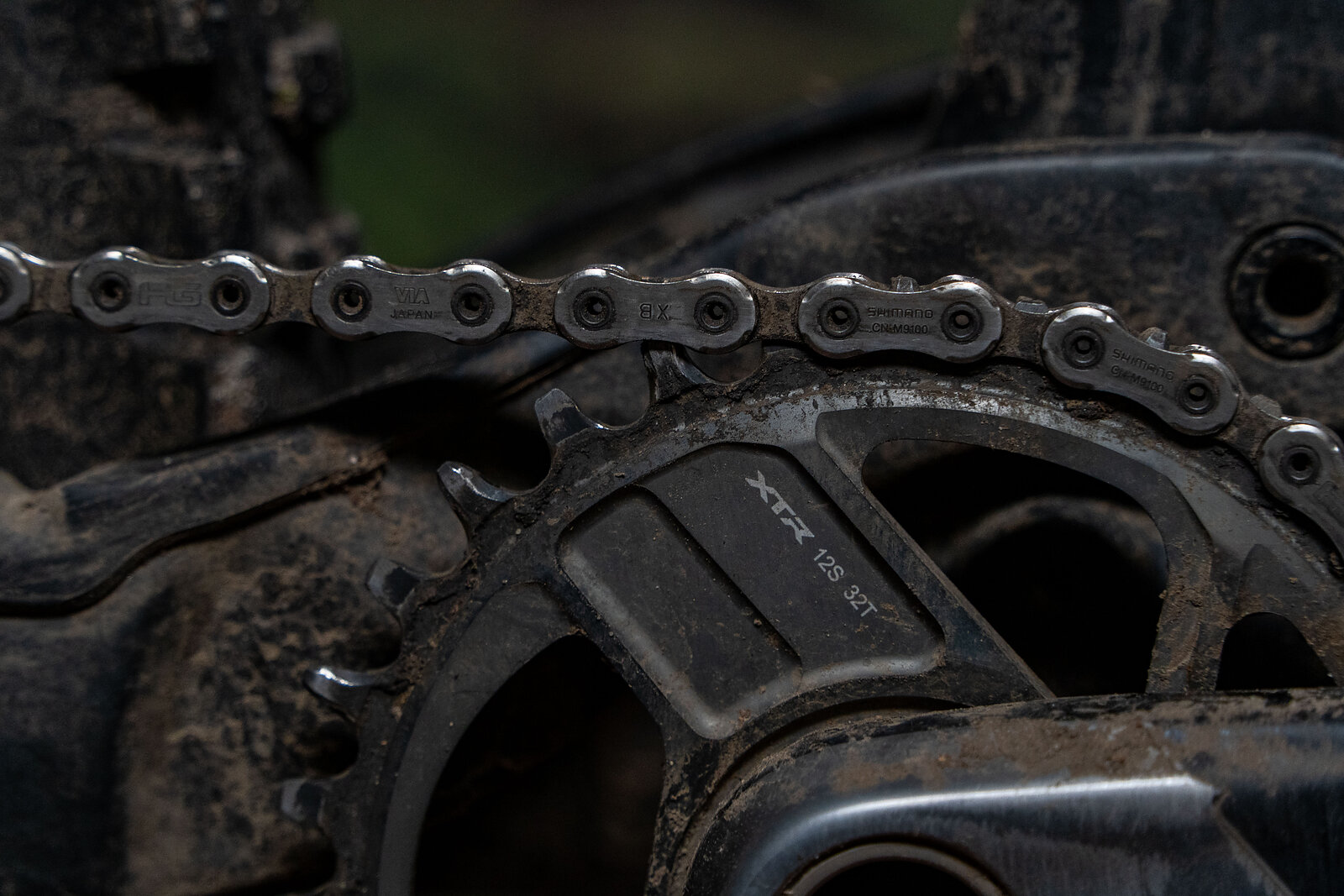
Once I swapped the drivetrain over to the Top Fuel, this issue mostly resolved itself. The drivetrain is still slappier and louder than the Eagle 90 Transmission I had on that bike before, but it’s nowhere near as distracting and annoying as it was initially. I put 9-45T XT on the Stumpjumper, and it was significantly quieter than 10-51T XTR was. My takeaways: The alloy Stumpy is a slappy bike no matter what. The 9-45T setup is quieter than the 10-51T, regardless of what bike it’s mounted to. Both are a little more active than previous Shimano drivetrains or a Transmission drivetrain, but I haven't had any issues with chain retention.
So that covers making the bike move. What about slowing it down? In my initial review I mentioned that I’d managed to find the limit of the new XTR four-piston brakes with 203-millimeter Ice Tech rotors. I’ll shoulder a large part of the blame there. I’m hard on brakes. Right now the list of brakes I’ve used that I can’t easily overheat and make feel crappy on a trail bike is short: Hayes Dominions and SRAM Mavens. The new XTR brakes don’t quite hit that “consistent, awesome power over a long descent” mark. But they’re still really good, and they shine even brighter on the shorter travel Top Fuel. I’ve quite enjoyed pushing the limits of that bike, and these brakes are the perfect companion on that journey. I also think they’re a touch more powerful than the new SRAM Motive brakes.
The new finned pads have been rattle-free, and the bleed has stayed consistent. I still wish the free stroke screw allowed me to tighten up the lever feel a little more but, otherwise, I have no regrets with these brakes. They’re not a downhill brake, and the closer your enduro riding edges towards the downhill spectrum, the more you should consider going up to 220-millimeter rotors or a different brake. For all-round trail riding the XTR four-piston has been great.
Other Miscellaneous Parts
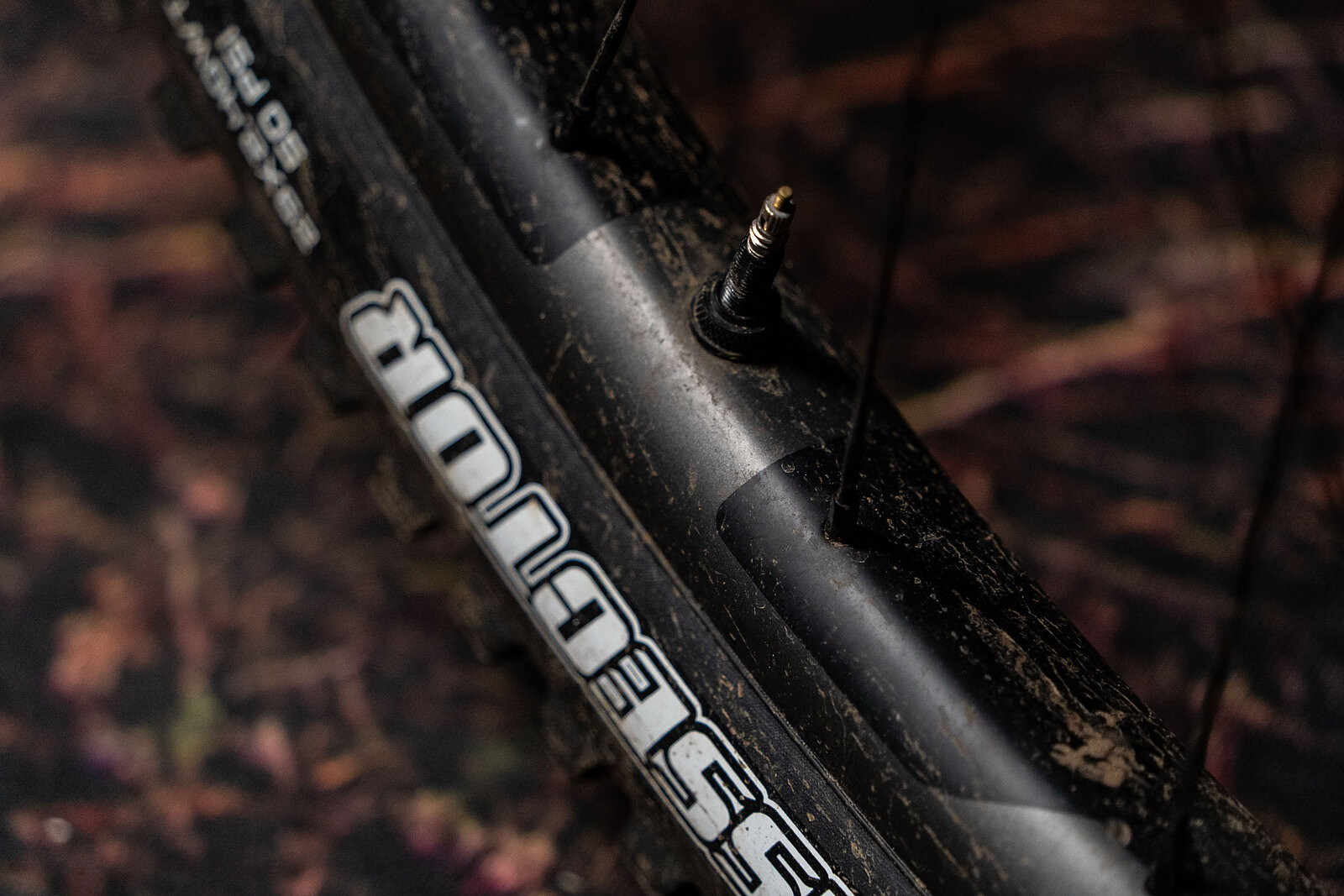
Here’s a quick hit rundown on how everything else has held up. We’re just entering the wet and gritty riding season, so I’ll update if any of this changes. The XTR carbon wheels have been excellent. They have a nice stiffness and compliance blend, and the freehub is quick. I’ve made plenty of mistakes on them and so far they’ve shrugged off every impact.
The cranks are holding up well. I’ve started to wear some of the anodizing off which is the norm for my duck-footed pedal stance, and they’ve lasted longer and show less wear than SRAM offerings. The bottom bracket still spins smoothly, but I’m still a little annoyed that XTR bottom brackets require a silly plastic adapter for the tool that handles all the other Shimano bottom brackets.
The battery life on the shifter has been good (I haven’t changed the batteries yet) and the chain is holding up well. All in all, the groupset has held up exactly like you’d hope a flagship groupset would.
For Now
The more time I spend on Shimano’s new Di2 drivetrains, the more I like them. That’s a little surprising given that generally shift performance degrades over time and I’m usually more frustrated with a drivetrain after six months than I am right when I installed it. I’m stoked to keep spending time on this drivetrain and will check back in after a full year of riding.
Learn More: Shimano.com