Main Artery A Trail Town on the I-5 Corridor Blossoms
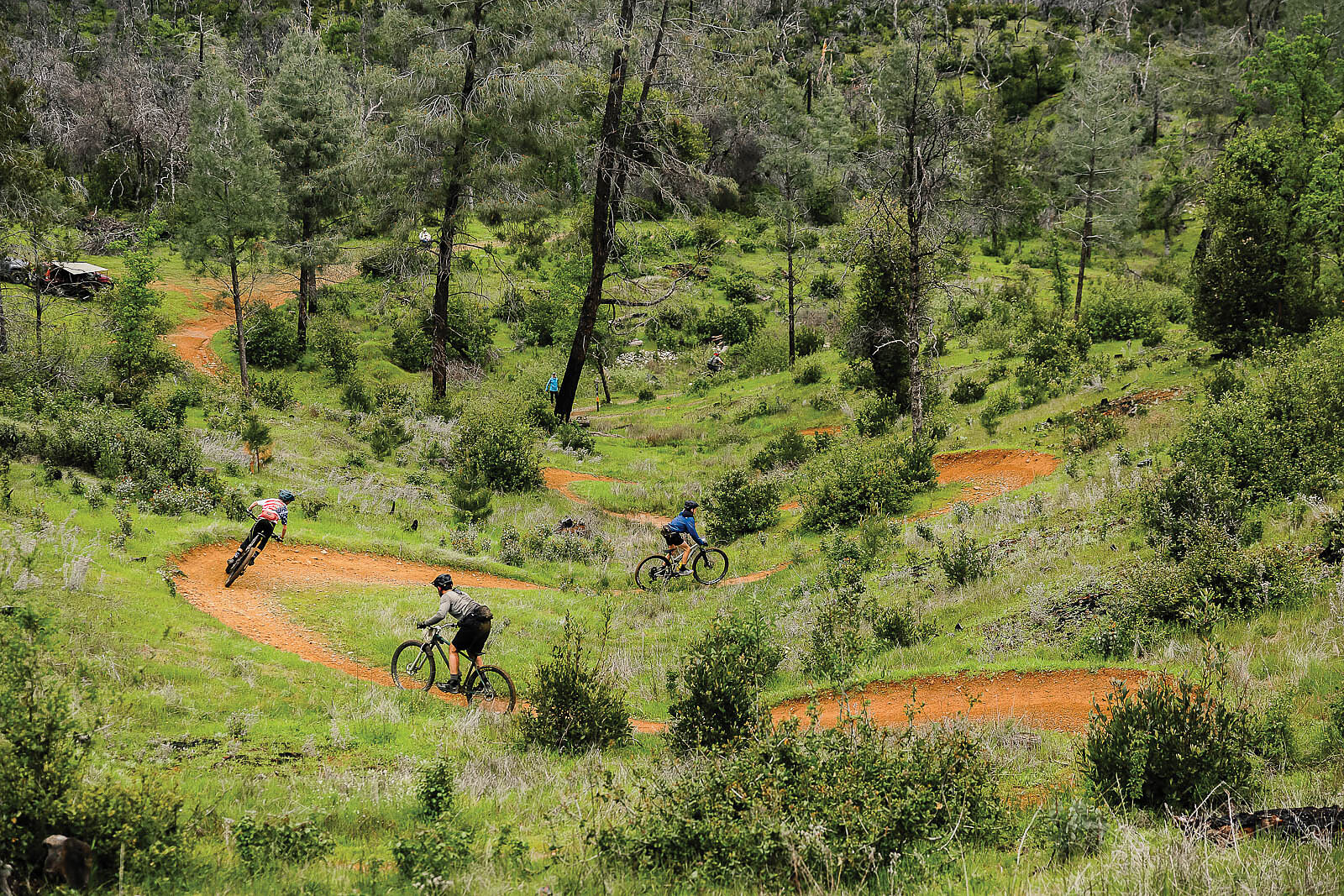
Situated west of Redding, California, near the town of Weaverville, a snaking strip of singletrack descends through ponderosa pine, Douglas fir, and sugar pine.
In one section, the sight of a towering Pacific madrone tree had me squeezing my brakes to admire it. The trail, called Sweepstakes, is a new, purpose-built downhill trail created by the Redding Trail Alliance (RTA) and several partners.
It’s a marvel of perfectly built switchbacks that weave through optional jump lines. When connected to trails below it, Sweepstakes creates a 10-mile route with 3,000 feet of total descending.
“A local bike mechanic who is a very talented rider told me recently that he likes Sweepstakes better than Downieville,” said Nathan Knudsen, RTA’s executive director, over a beer at Trinity Brewing Company. “Now I’m not saying it’s better, more fun, or even that it compares to the epic Downieville Classic downhill, but him saying that has allowed me to recognize that the trail is truly something special.”
Together with his wife, Camille, who works as RTA’s communications director, Knudsen has expanded Redding’s trail scene by strengthening partnerships and looking at what was missing in the area’s current systems. Collaborative efforts with the U.S. Forest Service, the Watershed Center in Hayfork, the Trinity Trail Alliance, and donors ranging from The McConnell Foundation to philanthropist, Craig Muir, have come together to create a recent surge in Redding’s mountain bike community.
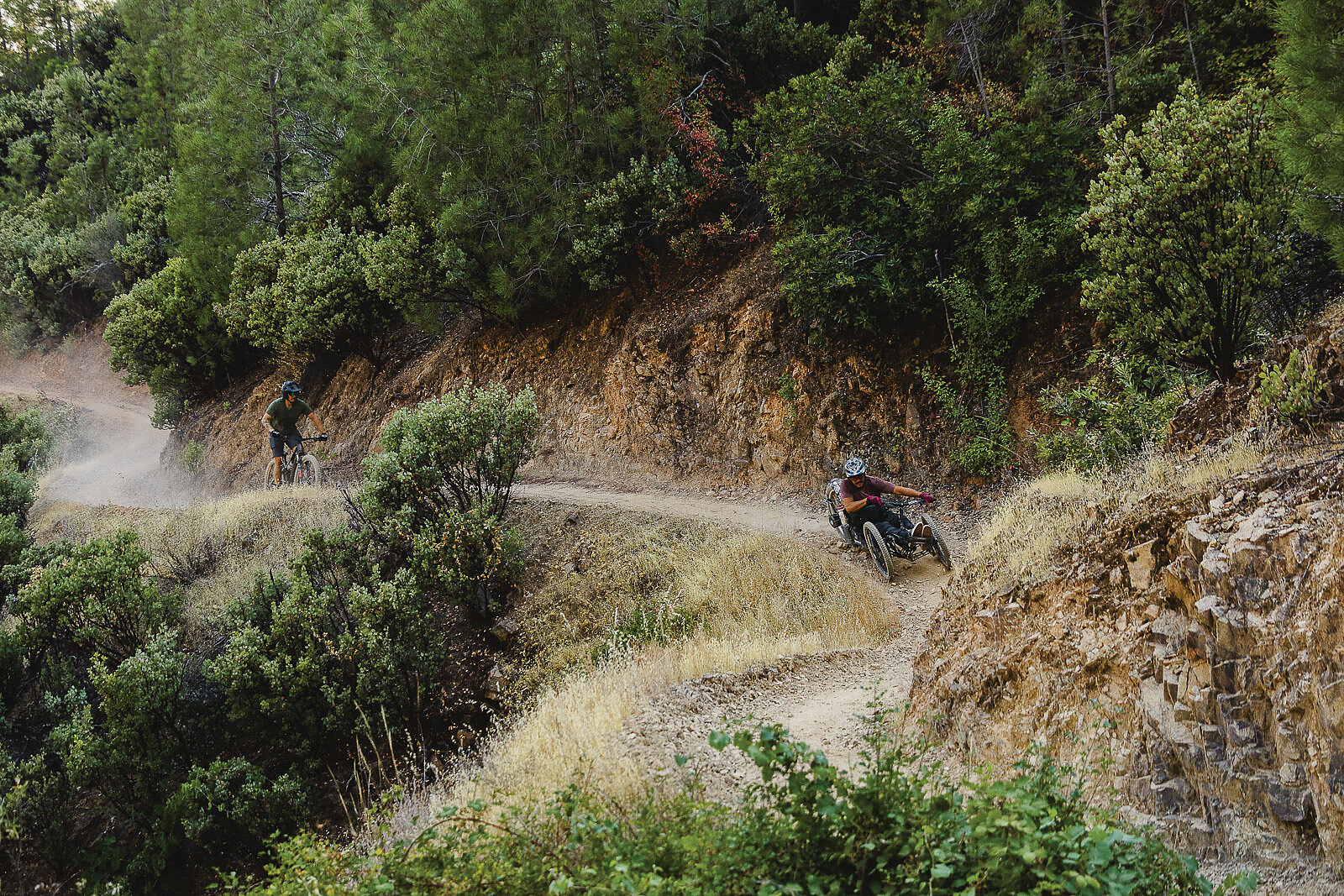
The impetus for Sweepstakes came from the desire to create a new shuttle-able trail near Redding, a city of about 94,000 situated along the Sacramento River, 120 miles south of the Oregon border.
“Josh Smith of the watershed group kept bugging me about building a trail,” said Knudsen. “We looked at maps and then I said I wanted to build what is now called Sweepstakes.”
Work began after the funds were secured to help the Forest Service complete a National Environmental Protection Agency (NEPA) analysis that went beyond the scope of examining a fuels management project. The build took two years and more than 2,000 hours of volunteer work. Little by little, the local mountain bike community joined together to build the new line.
“[Now] when we’re out riding, the memories we have when looking back are about the trail and what we were feeling when we were experiencing it,” said Knudsen.
Local builders wanted Sweepstakes a destination trail that would stick in peoples’ minds long after they left the area, he said.
“Building trails brings people together and trails can build communities,” Knudsen said.
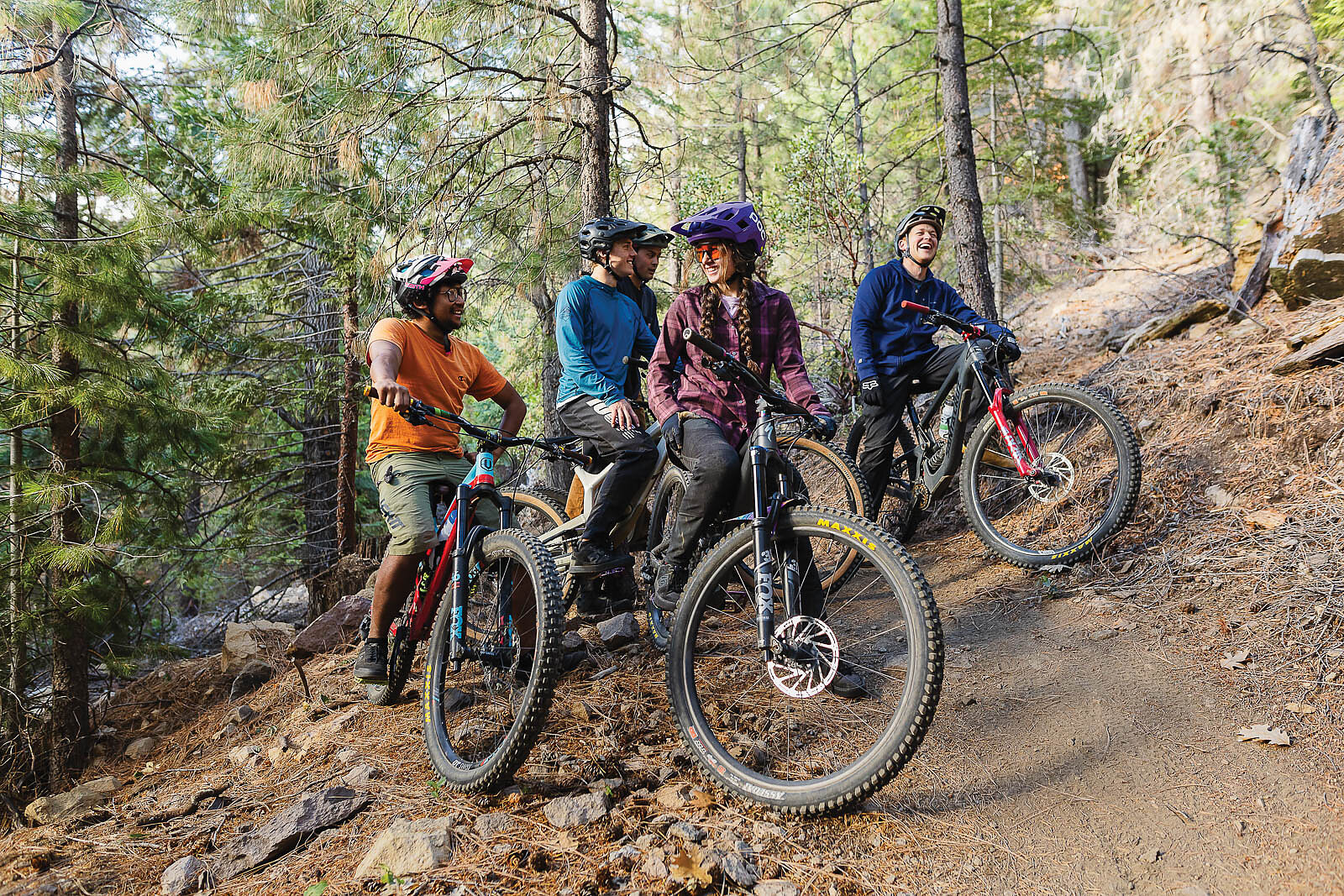
Northern California was built around resource extraction. Forestry and mining were cornerstones of economies that existed there, and still do, for the better part of a century. Globalization, automation, land-use policy, and wildfires are part of the complex story of changing economies in the Redding area. What has emerged during that change over the past several decades is a recognition that recreational opportunities could contribute to emerging economies. While no one I spoke with about this suggested that trails are the only future, it was evident that much enthusiasm and planning around trail development was shared by mountain bikers and city officials alike.
“The City of Redding supports trail development in roles that vary from developer to cheerleader, to funder, partner and more,” said Travis Menne, the City of Redding’s director of community services. “We recognize the tremendous value a strong trail network brings to our community. From economic growth and social connection to cultural enrichment, public health, and environmental stewardship, trails are essential to Redding’s identity and success.”
Menne’s role in trail development for Redding is to actively plan, fund, and construct trail projects that align with development paved multi-use trail projects to recreational singletrack. Most of Menne’s work is in the planning, permitting, and fundraising phases, he said, and then he can hire a contractor or partner with a group such as RTA to move forward. Connectivity is one of the city’s main points of emphasis.
“Tactfully negotiated and surprisingly ripping, connectors get people where they want to go, be that across town to a friend’s house, over to the brewery, to school, or out onto one of many, 20-plus mile backcountry-feeling rides that start right here in Redding,” said Leah Mancabelli, the city’s former community project coordinator.
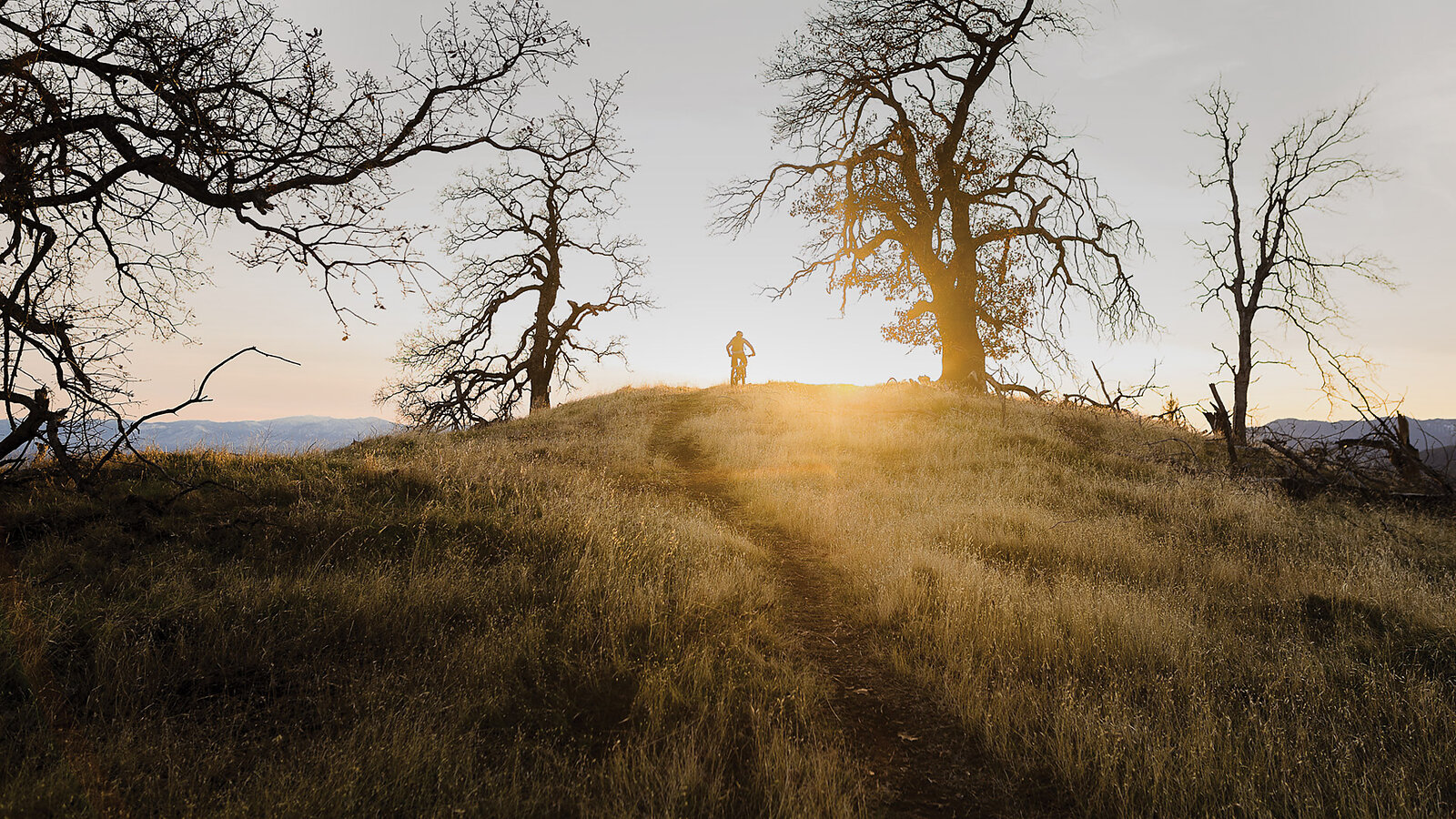
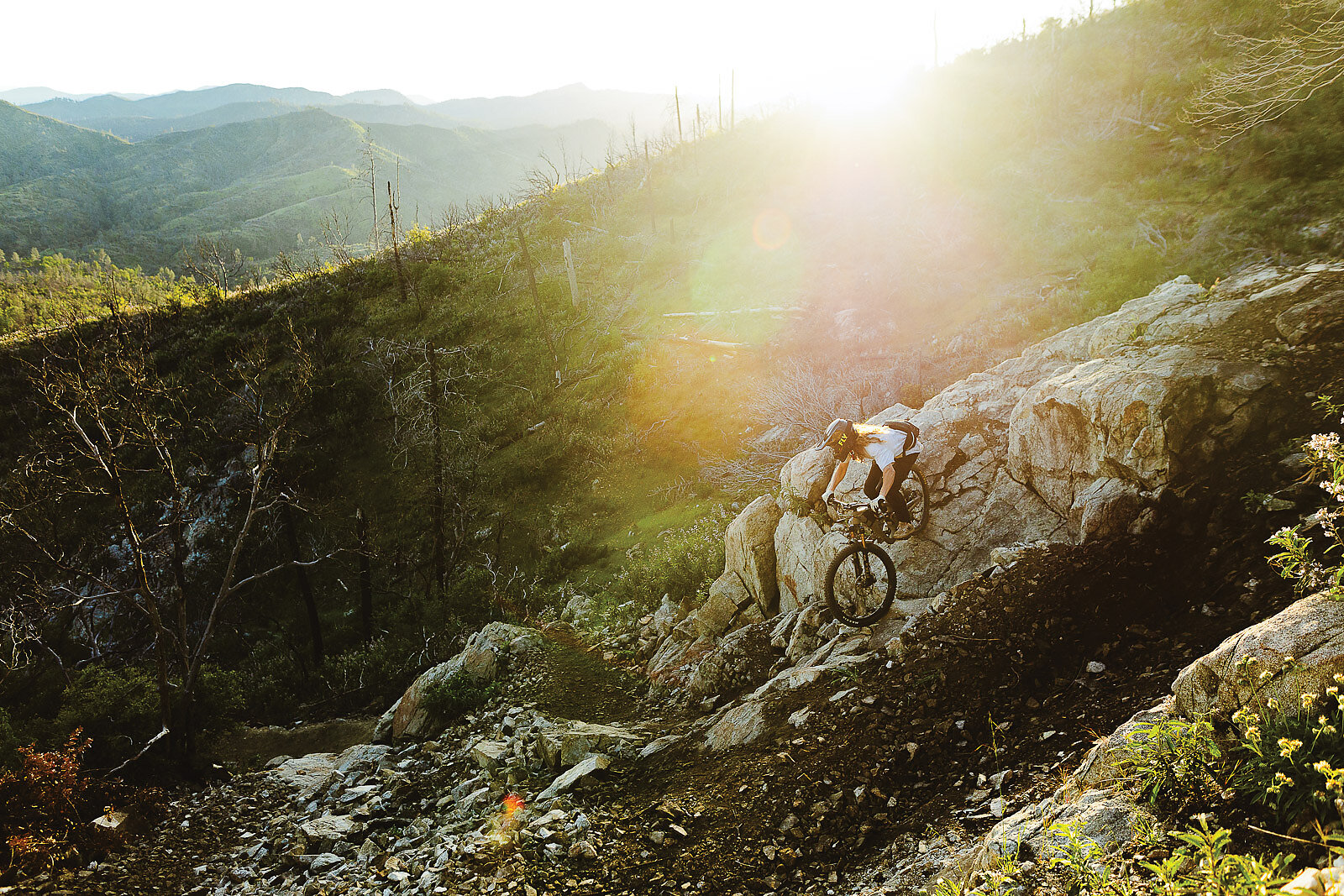
From Top of the World, a local Redding trail, these networks are visible and crisscross the landscape. Here, golden foothills with patches of trees bear scars from the massive Carr Fire of 2018. In the distance, the peaks of Mount Lassen and Mount Shasta loom, the dramatic mountains of the southern Cascade Range.
To further community connectivity, the RTA and the City of Redding have teamed up to create the Bigfoot Adventure Challenge. The premise is simple: Download a Bigfoot Adventure Passport that includes maps of local trails and then go check off the ones you’ve been on. There are different passports for mountain bikers, gravel riders, hikers, trail runners, kids, and even dogs. Participants collect their passports every year, in late March, at a kickoff celebration at Fall River Brewing. During the months of April and May, the challenge is set and those who fill their passports with enough “stamps” during those two months are awarded prizes. Three adventures and you get socks. Blackout the passport and you get a Blackout hat. There are raffle prize drawings for all different types of outdoor activities. Each passport participant is entered with first, second, and third place drawings for all adventures. The prizes are handed out in early June at a closing party held at Caldwell Park. Participants, city officials, and local public land managers all attend. People are discovering trails they never knew existed in the Redding region through the Bigfoot Challenge, the Knudsens said, and it also assists RTA in growing its membership. Danny Orloff, who works for the Visit Redding tourism group, likens the towns trail connections to a network of veins.
“The outdoors is felt and is the heart of our area, where trails are the veins pumping energy to everyone, delivering a level of stoke for all ages,” he said.
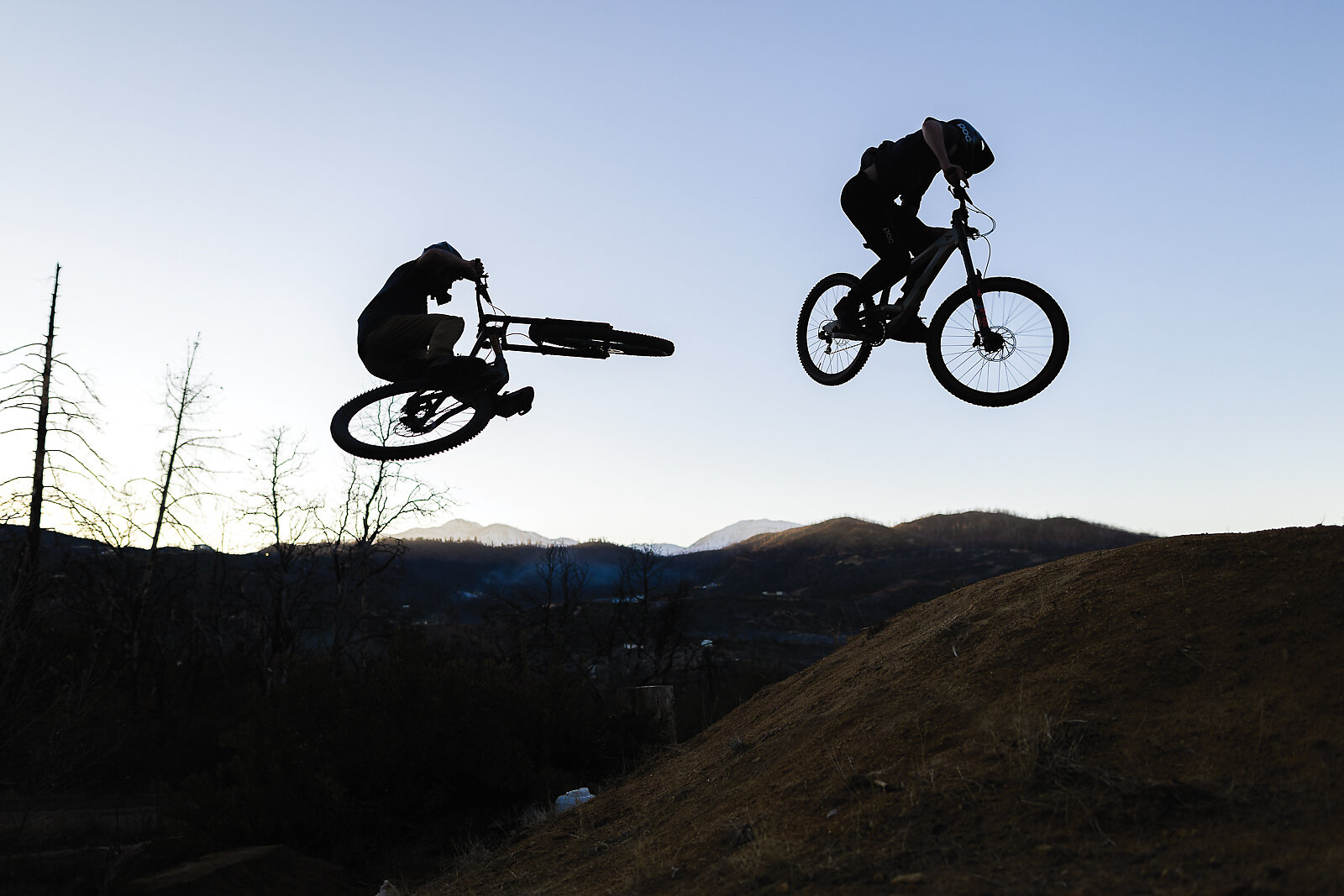
On a beautiful, cool Saturday morning, I rode with RTA board member John Waldrop at the Swasey Recreation Area, which is managed by the Bureau of Land Management (BLM). It is a trail network steeped in Redding’s mountain biking lore. As we pedaled up Escalator and around Mule Mountain, Waldrop explained that Swasey is home to the Lemurian Classic, one of the longest-running mountain bike races in the country, after getting its start in 1987. To him, the race and this place embody real, old school mountain biking.
“It served as the springboard for the birth of Redding Trail Alliance,” Waldrop said, “And the opportunity for RTA, federal land managers, and the local community to work together to build something that’s of great value to present and future generations.”
During our ride, we worked our way in the direction of a new downhill trail called “K’ulu:l”—pronounced K-oo-lul—an indigenous Wintu word for bow. The plan is to build another trail off it called “Doqos,” which means arrow, about halfway down K’ulu:l. Taken together and pictured on a map, it will look like a bow and arrow. The BLM, in consultation with local Native Americans, provided the trail names. Recently opened, K’ulu:l is a beginner-to-intermediate ride and Doqos features 11 massive berms with 30-foot radiuses.
Of course, Redding’s outdoor scene isn’t new. Decades ago, while working at a gear shop during graduate school, a coworker waxed poetic to me about the town’s trails, its easy river access, and the many places you could hike, bike, ski, and paddle. It lodged into my brain then and had always been on my list of places to experience. After four days of riding in and around Redding, where there’s upward of 200 miles of trails open to mountain biking, it was more than what my decades-long mountain biking imagination could have conjured up.
Weekend trips to Redding are already in the making, but it’s more than just trails that make Redding such a great mountain biking town. There are good, friendly, welcoming, and hard-working people in Redding building a community connected through trails. With collaboration and cooperation as its backbone, the future looks bright.
“[As] its surrounding communities continue to develop, cultivate and embrace the potential for trail recreation, Redding will become more of a destination for mountain biking,” Knudsen said. “We have amazing trail access and experiences, unlimited amounts of non-biking outdoor recreation opportunities, too, in a town that finally can say we have great food and beer.”